1554 LANGE, Johann (1485 – 1565)
Medicinalium epistolarum miscellanea.
Epistle xxi, pp. 74-77, contains the first definite description of chlorosis. “De morbo virgineo”. English translation in No. 2241.
GMN 3109 · https://historyofmedicine.com/id/3840
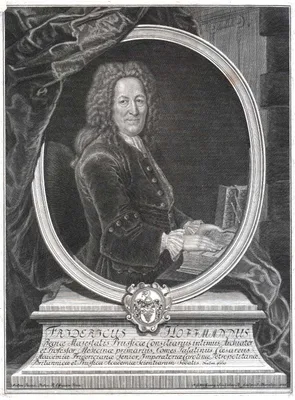
1731 HOFFMANN, Friedrich (1660 – 1742); EMMRICH, Gottfried August (1909 – )
Godofredus Augustus Emmrich: Disseratione inauguralis De genuina chlorosis indole, origine et curatione. Von der wahren Eigenschaft, Ursprung und Cur der Bleichsucht.
Classic description of chlorosis. Lange accurately diagnosed this condition, but it was left to Hoffmann to separate it as a definite entity. Hoffmann published his contribution to this subject in the thesis of his st…
GMN 3110 · https://historyofmedicine.com/id/3862
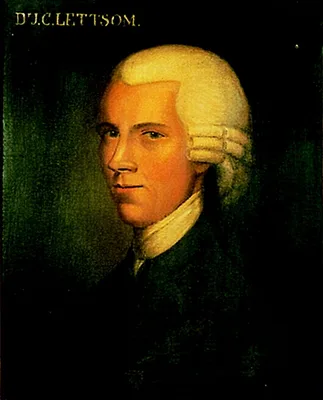
1795 LETTSOM, John Coakley (1744 – 1815)
Hints respecting the chlorosis of boarding schools.
GMN 3111 · https://historyofmedicine.com/id/3864
1824 COMBE, James Scarth (1796 – 1883)
History of a case of anaemia.
First description of pernicious anemia. Paper read May 1, 1822.
GMN 3112 · https://historyofmedicine.com/id/3867
1832 BLAUD, Pierre (Jean-Pierre) (1774 – 1859)
Sur les maladies chlorotiques et sur un mode de traitement spécifique dans ces affections.
For the treatment of chlorosis Blaud prescribed a pill (Blaud’s pill) composed of sulphate of iron and carbonate of potassium. Preliminary report in Bull. gén. Thérap.,1832, 2,154-55.
GMN 3113 · https://historyofmedicine.com/id/3869
1832 FOEDISCH, Ferdinand
Die krankhafte Mischung des Blutes, vorzüglich bei Chlorose, Hysterie und Pneumonie, durch chemische Versuche ausgemittelt, und der Uebergang in den Darmcanal eingebrachten Eisens.
Foedisch showed chlorotic blood to be deficient in iron. See also Gaz. méd. Paris, 1837, 2 sér. 5,7.
GMN 3114 · https://historyofmedicine.com/id/3873
1836 NASSE, Hermann (1807 – 1892)
Das Blut in mehrfacher Beziehung physiologisch und pathologisch untersucht.
Nasse gave the first clear description of anemia in pregnancy; he also noticed erythrocyte sedimentation in certain pathological conditions.
GMN 3115 · https://historyofmedicine.com/id/3878
1842 CHANNING, Walter (1786 – 1876)
Notes on anhaemia, principally in its connections with the puerperal state, and with functional disease of the uterus: with cases.
First description of pernicious anemia of pregnancy. Digital facsimile from the U.S. National Library of Medicine at this link.
GMN 3116 · https://historyofmedicine.com/id/3880
1847 BENNETT, H. N.
Puerperal anaemia; or a peculiar anaemic condition, occurring in gestating and lactating females.
Bennett described the anemia of pregnancy and defined it as resulting from the process of reproduction.
GMN 3117 · https://historyofmedicine.com/id/3882
1849 ADDISON, Thomas (1793 – 1860)
Anaemia; disease of the supra-renal capsules.
Addison included a classic description of pernicious (Addisonian) anemia in his papers on the condition later known as “Addison’s disease”. Although preceded by Combe, his account was more important in bringing the di…
GMN 3118 · https://historyofmedicine.com/id/3884
1855 ADDISON, Thomas (1793 – 1860)
On the constitutional and local effects of disease of the supra-renal capsules.
Addison was the first to draw attention to the importance of the adrenals in clinical medicine. The above work first appeared in the Lond. med. Gaz., 1849, 43, 517-18, and was later expanded into book form. It describ…
GMN 3864 · https://historyofmedicine.com/id/4914
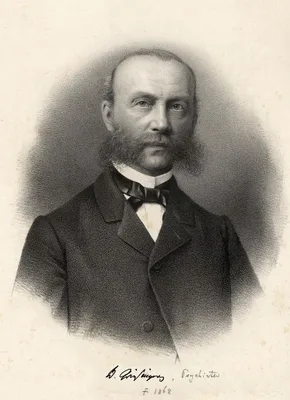
1866 GRIESINGER, Wilhelm (1817 – 1868)
Ein Fall von Anaemia splenica bei einem Kinde
First reported case of (infantile) splenic anemia.
GMN 3119 · https://historyofmedicine.com/id/4646
1867 DUNCAN, Johann
Beiträge zur Pathologie und Therapie der Chlorose.
Duncan showed that the essential feature in chlorosis is a quantitative change in the hemoglobin content and not a great reduction in the number of red blood cells.
GMN 3120 · https://historyofmedicine.com/id/3887
1870 VALSUANI, Emilio
Cachessia puerperale raccolta nella clinica ginecologica dell’ospitale Maggiore di Milano.
“Valsuani’s disease” – progressive anemia in pregnant and lactating women, probably first described by H. N. Bennett (No. 3117).
GMN 3121 · https://historyofmedicine.com/id/3890
1871 GUSSEROW, Adolf Ludwig Sigismund (1836 – 1906)
Ueber hochgradigste Anämie Schwangerer.
An important account of pernicious anemia of pregnancy.
GMN 3122 · https://historyofmedicine.com/id/3893
1871 VANLAIR, Constant François (1839 – 1914); MASIUS, Jean-Baptiste-Nicolas-Voltaire (1836 – 1912)
De la microcythémie
Vanlair and Masius were the first to suggest the concept of hereditary hemolytic anemia. Their paper was republished in book form, Brussels, 1871.
GMN 3766.1 · https://historyofmedicine.com/id/4648
1872 BIERMER, Anton (1827 – 1892)
Eine eigenthumliche Form von progressiver perniciöser Anämie.
In his account of progressive pernicious anemia, Biermer was first to describe the retinal haemorrhages. He was at one time accredited with the first description of pernicious anemia ; later it was shown that Addison …
GMN 3124 · https://historyofmedicine.com/id/3896
1875 PEPPER, William Jr. (1843 – 1898)
Progressive pernicious anaemia, or anaematosis.
Pepper described bone-marrow changes of pernicious anemia, though his actual description more closely resembles leukaemia.
GMN 3125 · https://historyofmedicine.com/id/3899
1876 COHNHEIM, Julius Friedrich (1839 – 1884)
Erkrankung des Knochenmarkes bei perniciöser Anämie.
Cohnheim gave a more convincing account than Pepper of the bone-marrow changes in pernicious anemia.
GMN 3125.1 · https://historyofmedicine.com/id/3902
1877 OSLER, Sir William (1849 – 1919); GARDNER, William (1845 – 1926)
A case of progressive pernicious anaemia (idiopathic of Addison).
First complete account of pernicious anemia. "In 1877, William Gardner and Osler described a patient who was almost certainly the first with the clinical, hematologic, and pathologic features to leave no doubt it was …
GMN 3125.2 · https://historyofmedicine.com/id/3905
1878 EICHHORST, Hermann Ludwig (1849 – 1921)
Die progressive perniziöse Anämie.
Comprehensive account.
GMN 3125.3 · https://historyofmedicine.com/id/3908
1880 EHRLICH, Paul (1854 – 1915)
Über Regeneration und Degeneration der rothen Blutscheiben bei Anämien.
GMN 3125.4 · https://historyofmedicine.com/id/3910
1881 EHRLICH, Paul (1854 – 1915)
Über einige Beobachtungen am anämischen Blut.
In the above contributions to the knowledge of anemia, Ehrlich dealt in the first paper with the blood cells in anemia, and in the second gave the first description of the reticulocyte.
GMN 3125.5 · https://historyofmedicine.com/id/3912
1882 BANTI, Guido (1852 – 1925)
Dell’anemia splenica.
“Banti’s disease”. Banti described the pathological changes in the spleen in splenic anemia. A later paper in Sperimentale, 1894, 48, sez. biol., 407-32, gives an account of hepatic cirrhosis as the sequel of the earl…
GMN 3126 · https://historyofmedicine.com/id/3915
1884 LEICHTENSTERN, Otto Michael Ludwig (1845 – 1900)
Ueber progressive perniciöse Anämie bei Tabeskranken
First description of subacute combined degeneration of the spinal cord, which Leichtenstern termed progressive pernicious anemia in tabetics.
GMN 3128 · https://historyofmedicine.com/id/3922
1888 EHRLICH, Paul (1854 – 1915)
Ueber einen Fall von Anämie mit Bemerkungen über regenerative Veränderungen des Knochenmarks.
Ehrlich was first to distinguish the aplastic type of anemia.
GMN 3129 · https://historyofmedicine.com/id/3926
1889 HAYEM, Georges (1841 – 1933)
Du sang et de ses altérations anatomiques
Includes (pp. 614-751) an important account of chlorosis; Hayem, by his accurate observation, placed knowledge of the disease on a firm basis.
GMN 3130 · https://historyofmedicine.com/id/3930
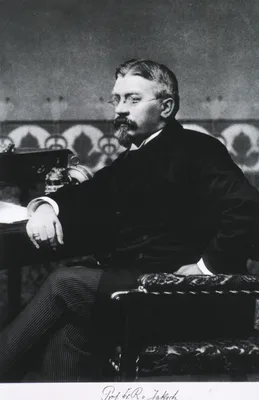
1889 JAKSCH, Rudolf von (1855 – 1947)
Ueber Leukaemia und Leukocytose im Kindesalter.
From this classic description of infantile pseudoleukemic anemia, the condition became known as “von Jaksch’s disease”.
GMN 3131 · https://historyofmedicine.com/id/3932
1890 RINDFLEISCH, Georg Eduard von (1836 – 1908)
Ueber die Fehler der Blutkörperchenbildung bei der perniciösen Anämie.
Rindfleisch made the first clear statement of the bone marrow changes in pernicious anemia.
GMN 3131.1 · https://historyofmedicine.com/id/3935
1894 BANTI, Guido (1852 – 1925)
La splenomegalia con cirrosi del fegato
“Banti’s syndrome”, Splenomegalic anemia. Reprinted with translation in Med. Classics, 1937, 1, 901-27. (For his earlier work on the subject, see No. 3126.)
GMN 3774 · https://historyofmedicine.com/id/4664
1895 BUNGE, Gustav Piers Alexander von (1844 – 1920)
Ueber die Eisentherapie.
Bunge was father to the concept of iron-deficiency anemia.
GMN 3132 · https://historyofmedicine.com/id/3936
1898 HAYEM, Georges (1841 – 1933)
Sur une variété particulière d’ictère chronique splénomégalique.
“Hayem–Widal disease” –acquired hemolytic anemia (see also No. 3783).
GMN 3777 · https://historyofmedicine.com/id/4673
1904 DRESBACH, M
Elliptical human red cell corpuscles.
Hereditary elliptocytosis.
GMN 3132.1 · https://historyofmedicine.com/id/3938
1907 WIDAL, Georges-Fernand Isidor (1862 – 1929); ABRAMI, Pierre (1879 – 1945)
Ictères hémolytiques non congénitaux avec anémie.
“Widal-Abrami disease” (Hayem-Widal disease), acquired hemolytic anemia. (See also No. 3777.)
GMN 3783 · https://historyofmedicine.com/id/4682
1910 HERRICK, James Bryan (1861 – 1954)
Peculiar elongated and sickle-shaped red blood corpuscles in a case of severe anemia.
Identification of the sickle-cell type of anemia. Abstract "This case is reported because of the unusual blood findings, no duplicate of which I have ever seen described. Whether the blood picture represents merely a …
GMN 3133 · https://historyofmedicine.com/id/3939
1913 FABER, Knud Helge (1862 – 1956)
Anämische Zustände bei der chronischen Achylia gastrica.
Simple achlorhydric (idiopathic microcytic) anemia described. Faber advanced the view that achylia gastrica was a cause both of pernicious anemia and of simple chlorotic anemia.
GMN 3134 · https://historyofmedicine.com/id/3940
1918 SCHMIDT, Harry Burke (1882 – )
A clinical study of puerperal anaemia.
Four cases of pernicious anemia of pregnancy treated by blood transfusion.
GMN 3135 · https://historyofmedicine.com/id/3941
1919 OSLER, Sir William (1849 – 1919)
Observations on the severe anaemias of pregnancy and the post-partum state.
Osler described his four-part classification of anemias of pregnancy: anemia from post-partum hemorrhage, severe anemia of pregnancy, post-partum anemia, and the acute anemia of post-partum sepsis. This was Osler's la…
GMN 3136 · https://historyofmedicine.com/id/3942
1922 MASON, Verne Rheem (1889 – 1965)
Sickle-cell anemia.
Mason gave sickle-cell anemia its present name.
GMN 3136.1 · https://historyofmedicine.com/id/3943
1923 GUTHRIE, Clyde Graeme (1880 – 1931); HUCK, John Gardiner (1891 – )
On the existence of more than four isoagglutinin groups in human blood.
First genetic study of sickling.
GMN 3136.2 · https://historyofmedicine.com/id/3944
1925 EDELMANN, Adolf (1885 – 1939)
Ueber Anaemia infectiosa chronica und ihre Aetiologie.
“Edelmann’s disease” – a type of chronic infectious anemia.
GMN 3137 · https://historyofmedicine.com/id/3945
1925 LEDERER, Max (1885 – 1952)
A form of acute hemolytic anemia probably of infectious origin.
“Lederer’s anemia” first described.
GMN 3138 · https://historyofmedicine.com/id/3947
1925 ROBSCHEIT-ROBBINS, Frieda Saur (1893 – 1973); WHIPPLE, George Hoyt (1878 – 1976)
Blood regeneration in severe anaemia. II. Favourable influence of liver, heart and skeletal muscle in diet.
These workers showed the beneficial effect of raw beef liver upon blood regeneration in anemia. Their work paved the way for the liver diet treatment of Minot and Murphy. In 1934 Whipple shared the Nobel Prize in Phys…
GMN 3139 · https://historyofmedicine.com/id/3949
1926 MINOT, George Richards (1885 – 1950); MURPHY, William Parry (1892 – 1987)
Treatment of pernicious anemia by a special diet.
Introduction of raw liver diet in the treatment of pernicious anemia. This treatment ranks as one of the greatest modern advances in therapy. See also the later paper in the same journal, 1927, 89,759-66. Reprinted in…
GMN 3140 · https://historyofmedicine.com/id/3950
1927 COOLEY, Thomas Benton (1871 – 1945); ET AL
Anemia in children, with splenomegaly and peculiar changes in the bones.
“Cooley’s erythroblastic anemia”, thalassemia. With E. R. Witwer and O. P. Lee. An earlier brief account by Cooley and Lee appeared in Trans. Amer. Pediat. Soc.,1925, 37, 29.
GMN 3141 · https://historyofmedicine.com/id/3951
1927 FANCONI, Guido (1892 – 1979)
Familiäre infantile perniziösaartige Anämie (perniziöses Blutbild und Konstitution).
“Fanconi’s syndrome”, congenital hypoplasia of bone marrow with multiple congenital defects occurring as a familial disease.
GMN 3142 · https://historyofmedicine.com/id/3953
1927 PEABODY, Francis Weld (1881 – 1927)
The pathology of the bone marrow in pernicious anaemia.
Peabody studied the bone marrow in pernicious anemia. He suggested that failure of blood formation rather than hemolysis was the main defect in the disease, and that the benefit from liver feeding was due to a factor …
GMN 3142.1 · https://historyofmedicine.com/id/3955
1929 CASTLE, William Bosworth (1897 – 1990)
Observations on the etiologic relationship of achylia gastrica to pernicious anemia. I. The effect of the administration to patients with pernicious anemia of the contents of the normal human stomach recovered after the ingestion of beef muscle.
Castle showed pernicious anemia to be due to absence from the gastric juice of a substance (Castle’s intrinsic factor, hemopoietin) that reacts with an extrinsic factor present in many foodstuffs to form the anti-pern…
GMN 3143 · https://historyofmedicine.com/id/3960
1929 STURGIS, Cyrus Cressey (1891 – 1966); ISAACS, Raphael (1891 – 1965)
Desiccated stomach in the treatment of pernicious anemia.
Sturgis and Isaacs showed that stomach tissue contains a factor active in the treatment of pernicious anemia.
GMN 3144 · https://historyofmedicine.com/id/3964
1930 GÄNSSLEN, Max (1859 – 1969)
Ein hochwirksamer, injizierbarer Leberextrakt.
Gänsslen introduced an injectable liver extract in the treatment of pernicious anemia.
GMN 3144.1 · https://historyofmedicine.com/id/3968