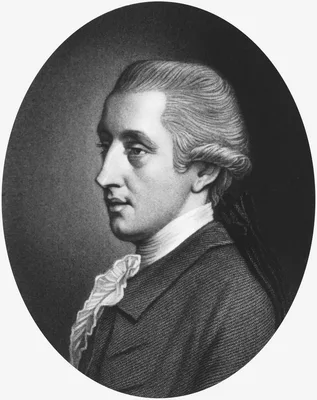
1771 HEWSON, William (1739 – 1774)
1. Experiments on the blood, with some remarks on its morbid appearances (pp. 368-83). 2. On the degree of heat which coagulates the lymph, and the serum of the blood; with an inquiry into the causes of the inflammatory crust, or size, as it is called (pp. 384-97). 3. Further remarks on the properties of the coagulable lymph, on the stopping of haemorrhages, and on the effects of cold upon the blood (pp. 398-413).
In papers 2 and 3 of this set of 3 contiguously published papers Hewson was the first to describe fibrinogen. "Before Hewson, although the fibrin mesh had been recognised and admired from as far back as Plato, it was …
GMN 863 · https://historyofmedicine.com/id/777
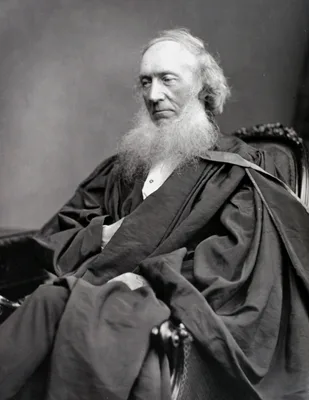
1845 BUCHANAN, Andrew (1798 – 1882)
On the coagulation of blood and other fibriniferous liquids.
Buchanan extracted the fibrin ferment of blood. He showed that it was capable of coagulating blood and other serous fluids not in themselves coagulable.
GMN 865 · https://historyofmedicine.com/id/790
1853 PRAVAZ, Charles Gabriel (1791 – 1853)
Sur un nouveau moyen d’opérer la coagulation du sang dans les artères, applicable à la guérison des anéurismes.
Pravaz invented galvanocautery.
GMN 5603 · https://historyofmedicine.com/id/7108
1859 DENIS, Prosper Sylvain (1799 – 1863)
Mémoire sur le sang quand il est fluide, pendant qu’il se coagule et lorsqu’il est coagulé.
The first attempt to isolate and describe fibrinogen, the blood protein essential for clotting. “Prosper-Sylvain Denis, in his Mémoire sur le sang (1859), was the first to recognize that plasma contained a clottable s…
GMN 12874 · https://historyofmedicine.com/id/15121
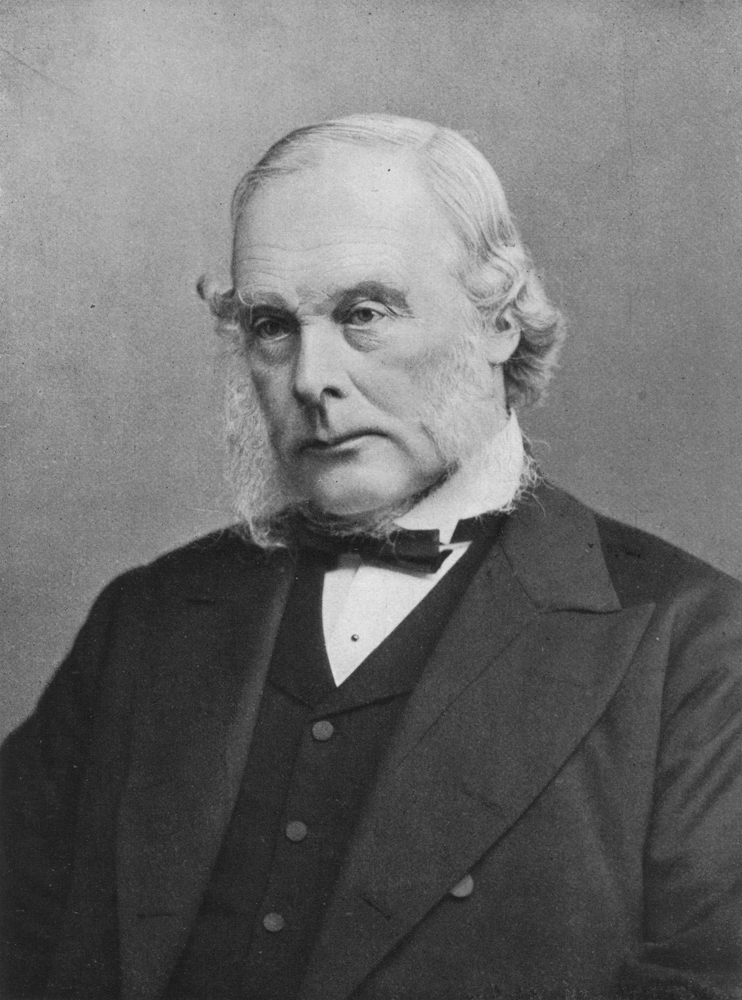
1863 LISTER, Joseph, 1st Baron Lister (1827 – 1912)
On the coagulation of the blood.
In his Croonian Lecture Lister exploded the theory that blood coagulation is due to ammonia and showed that, in the blood vessels, it depends upon their injury. He further showed that by carrying out the strictest pre…
GMN 871 · https://historyofmedicine.com/id/835
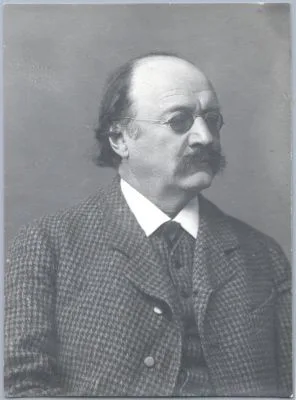
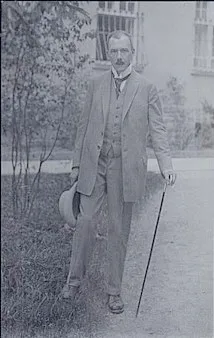
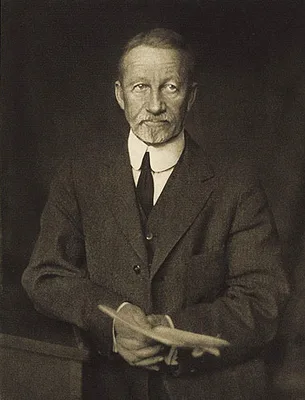
1875 –1876 HAMMARSTEN, Olof (1841 – 1932)
Undersökningar af de s.k. fibringeneratorema fibrinet samt fibrinogenets koagulation.
Investigating the mechanism of blood coagulation, Hammarsten showed it to be accomplished by the splitting up of fibrinogen into fibrin and other substances.
GMN 877 · https://historyofmedicine.com/id/887
1882 BIZZOZERO, Giulio (1846 – 1901)
Su di un nuovo elemento morfologico del sangue dei mammiferi e della sua importanza nella trombosi e nella coagulazione.
Bizzozero gave the blood platelets their name and found that they play a part in blood coagulation. A German translation with additions is in Virchows Arch. path. Anat., 1882, 90, 261-332. The expanded German version …
GMN 881 · https://historyofmedicine.com/id/901
1890 ARTHUS, Nicolas Maurice (1862 – 1945); PAGES, Calixte
Nouvelle théorie chimique de la coagulation du sang.
First demonstration of the essential role of calcium in the mechanism of blood coagulation.
GMN 884 · https://historyofmedicine.com/id/918
1892 SCHMIDT, Alexander (1831 – 1894)
Zur Blutlehre.
Schmidt established several new facts regarding blood coagulation.
GMN 888 · https://historyofmedicine.com/id/933
1903 –1904 MORAWITZ, Paul Oskar (1879 – 1936)
Beiträge zur Kenntniss der Blutgerinnung.
Morawitz’s theory of blood coagulation.
GMN 894 · https://historyofmedicine.com/id/1006
1905 MORAWITZ, Paul Oskar (1879 – 1936)
Die Chemie der Blutgerinnung.
In this paper Morawitz perfected observations made earlier by Alexander Schmidt, and described four coagulation factors: fibrinogen (I), prothrombin (II), thrombokinase (III) and calcium (IV).
GMN 12273 · https://historyofmedicine.com/id/14491
1910 HOWELL, William Henry (1860 – 1945)
The preparation and properties of thrombin, together with observations on antithrombin and prothrombin.
GMN 899 · https://historyofmedicine.com/id/1019
1911 –1912 HOWELL, William Henry (1860 – 1945)
The role of antithrombin and thromboplastin (thromboplastic substance) in the coagulation of blood.
GMN 902 · https://historyofmedicine.com/id/1028
1935 QUICK, Armand James (1894 – 1977)
The prothrombin in hemophilia and in obstructive jaundice.
Quick’s method for determination of prothrombin clotting time. See also Amer. J. med. Sci.,1935, 190,501-11.
GMN 3095 · https://historyofmedicine.com/id/3782
1937 PATEK, Arthur Jackson Jr. (1904 – 1991); TAYLOR, Francis Henry Laskey (1900 – 1959)
Hemophilia. II. Some properties of a substance obtained from normal human plasma effective in accelerating the coagulation of hemophilic blood.
Antihemophilic globulin (factor VIII).
GMN 3096.1 · https://historyofmedicine.com/id/3787
1947 OWREN, Paul Arnor (1905 – 1990)
The coagulation of blood. Investigations on a new clotting factor.
Discovery of the Factor V. Preliminary account in Proc. Norwegian Acad. Sci., 1941, 17, 21.
GMN 912.5 · https://historyofmedicine.com/id/1085
1975 HAMBERG, Mats; ET AL
Thromboxanes: a new group of biologically active compounds derived from prostaglandin endoperoxides.
With J. Stevenson and B. Samuelsson.
GMN 1931.7 · https://historyofmedicine.com/id/2762
2001 OWEN, Charles Archibald Jr. (1915 – 2001)
A history of blood coagulation.
GMN 7101 · https://historyofmedicine.com/id/9268