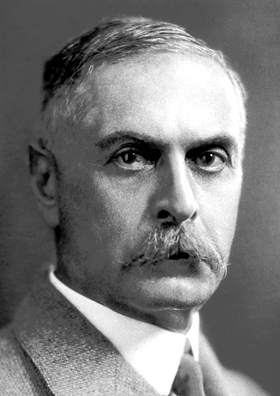
1900 LANDSTEINER, Karl (1868 – 1943)
Zur Kenntniss der antifermentativen, lytischen und agglutinierenden Wirkungen des Blutserums und der Lymphe.
Also: Landsteiner, "Ueber Agglutinationsercheinungen normalen menschlichen Blutes," Wiener klinische Wochenschrift, 14, 1901, 1132-1134. Landsteiner discovered that human blood contains iso-agglutinins capable of aggl…
GMN 889 · https://historyofmedicine.com/id/936
1902 DECASTELLO, Alfred von (1872 – 1960); STURLI, Adriano (1873 – 1964)
Ueber die Isoagglutinine im Serum gesunder und kranker Menschen.
Following Landsteiner’s division of human blood into three groups (A, B and O which he named A, B, C), Decastello and Sturli discovered a fourth (the rarest) group, later named AB.
GMN 893 · https://historyofmedicine.com/id/1002
1907 JANSKÝ, Jan (1873 – 1921)
Haematologické studie u psychotiků.
Janský, a Czech serologist, neurologist and psychiatrist, tried to find a correlation between mental diseases and blood diseases. He found no such correlation, and published a study, the title of which translates as H…
GMN 896 · https://historyofmedicine.com/id/1012
1910 DUNGERN, Emil von (1867 – 1961); HIRSZFELD, Ludwik Maurycy [Hirschfeld] (1884 – 1954)
Ueber Vererbung gruppenspezifischer Strukturen des Blutes.
Proof that blood groups are inherited according to Mendelian laws.
GMN 898 · https://historyofmedicine.com/id/1017
1927 LANDSTEINER, Karl (1868 – 1943); LEVINE, Philip (1900 – 1987)
A new agglutinable factor differentiating individual human bloods.
Discovery of M and N agglutinogens. See also the same journal, pp. 941-42.
GMN 910 · https://historyofmedicine.com/id/1064
1937 GORER, Peter Alfred (1907 – 1961)
The genetic and antigenic basis of tumour transplantation.
Gorer made the initial discoveries which formed the basis of transplantation genetics. He studied mouse blood groups and described an antigen in erythrocytes (antigen II). His studies established the laws of transplan…
GMN 2576.5 · https://historyofmedicine.com/id/4121
1939 BOYD, William Clouser (1903 – 1983)
Blood groups.
Boyd showed that blood groups are inherited and not changed by environment.
GMN 912 · https://historyofmedicine.com/id/1069
1939 LEVINE, Philip (1900 – 1987); STETSON, Rufus Edwin (1914 – 1967)
An unusual case of intra-group agglutination.
Discovery of the Rh antigen.
GMN 912.1 · https://historyofmedicine.com/id/1074
1940 LANDSTEINER, Karl (1868 – 1943); WIENER, Alexander Solomon (1907 – 1976)
An agglutinable factor in human blood recognized by immune sera for Rhesus blood.
Recognition of the Rh antigen
GMN 912.2 · https://historyofmedicine.com/id/1078
1941 MOUREAU, Paul (1904 – 1968)
Recherches sur un nouvel hémo-agglutinogéne du sang humain.
Moureau discovered the Rh factor independently of Levine and others whose work was not known to him owing to the military occupation of Belgium. See also his paper in Amer. J. clin. Path., 1946, 16, 373-79.
GMN 912.3 · https://historyofmedicine.com/id/1081
1947 WALSH, Robert John (1917 – 1983); MONTGOMERY, Carmel M.
A new human iso-agglutinin subdividing the MN blood groups.
S blood-group antigen.
GMN 913 · https://historyofmedicine.com/id/1089
1947 MOURANT, Arthur Ernest (1904 – 1994)
The use of blood groups in anthropology.
GMN 195 · https://historyofmedicine.com/id/3482
1976 MILLER, Louis Howard (1935 – ); MASON, Steven J.; CLYDE, David Francis (1925 – 2002); ET AL
The resistance factor to Plasmodium vivax in blacks.
The authors showed that the Plasmodium vivax parasite requires the Fya/Fyb Duffy antigen/chemokine receptor on the surface of red blood cells for penetration of human red blood cells. Because most African and American…
GMN 11888 · https://historyofmedicine.com/id/14093
2016 PIERCE, Stephen R.; REID, Marion E.
Bloody brilliant! A history of blood groups and blood groupers.
GMN 8859 · https://historyofmedicine.com/id/11037