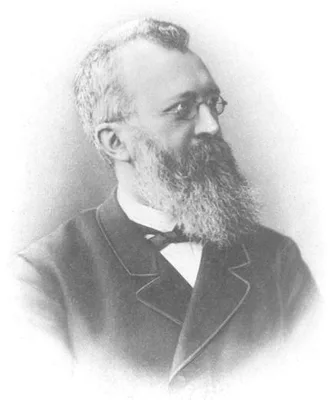
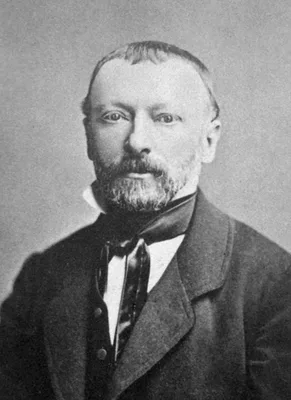
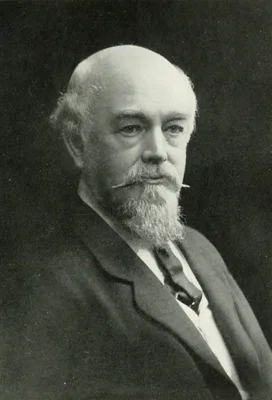
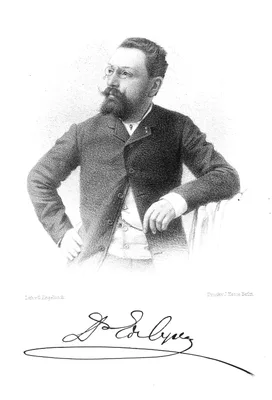
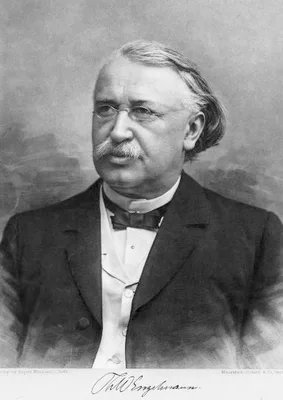
1855 REMAK, Robert (1815 – 1865)
Ueber methodische Electrisirung gelähmter Muskeln.
Discovery of the motor points, the entry points of the nerves into the muscles – essential for stimulating the muscles by electricity.
GMN 1995.1 · https://historyofmedicine.com/id/1850
1856 FICK, Adolph Eugen (1829 – 1901)
Die medizinische Physik.
GMN 617 · https://historyofmedicine.com/id/500
1856 KÖLLIKER, Rudolph Albert von (1817 – 1905); MÜLLER, Heinrich (1820 – 1864)
Nachweis der negativen Schwankung des Muskelstroms am natürlich sich contrahirenden Muskel.
Kölliker and Müller were the first to measure action currents from cardiac muscle.
GMN 618 · https://historyofmedicine.com/id/501
1856 KÖLLIKER, Rudolph Albert von (1817 – 1905)
Physiologische Untersuchungen über die Wirkung einiger Gifte.
First investigation of the effects of poisons on muscular contraction.
GMN 2078 · https://historyofmedicine.com/id/2553
1857 RAINEY, George (1801 – 1884)
On the formation of the skeletons of animals, and other hard structures formed in connexion with living tissues.
Includes description of “Rainey’s tubes” or “corpuscles” in connexion with the process of calcification of tissues.
GMN 619 · https://historyofmedicine.com/id/502
1857 ZIEMSSEN, Hugo Wilhelm von (1829 – 1902)
Die Electricität in der Medicin.
Ziemssen confirmed Remak’s discovery of the motor points, established their exact location, and published exact instructions for finding the motor points for stimulating the various muscles of the body.
GMN 1996 · https://historyofmedicine.com/id/1855
1857 –1881 MILNE-EDWARDS, Henri (1800 – 1885)
Leçons sur la physiologie et l'anatomie comparée de l'homme et des animaux faites a la Faculté des Sciences de Paris. 14 vols.
Digital facsimile of all the volumes from Google Books; vol. 1 at this link.
GMN 12016 · https://historyofmedicine.com/id/14224
1858 JOBERT DE LAMBALLE, Antoine Joseph (1799 – 1867)
Des appareils l'electriques des poissons l'electriques. 2 vols. (Text and atlas).
Digital facsimile of the text from the Hathi Trust at this link.
GMN 12256 · https://historyofmedicine.com/id/14472
1859 PFLÜGER, Eduard Friedrich Wilhelm (1829 – 1910)
Untersuchungen über die Physiologie des Electrotonus.
One of the most interesting works of its time on the physiology of nerve. In it Pflüger first stated the laws governing the make and break stimulation of nerve with the galvanic current. Pflüger was a pupil of Müller …
GMN 621 · https://historyofmedicine.com/id/504
1861 HUNTER, John (1728 – 1793); OWEN, Sir Richard (1804 – 1892)
Essays and observations on natural history, anatomy, physiology, psychology, and geology by John Hunter, F.R.S. Being his posthumous papers on those subjects, arranged and revised, with notes; to which are added the introductory lectures on the Hunterian collection of fossil remains delivered in the theatre of the Royal College of Surgeons of England, March 8th, 10th and 12th, 1855 by Richard Owen .... 2 vols.
Digital facsimiles from the Hathi Trust at this link.
GMN 7608 · https://historyofmedicine.com/id/9780
1862 DUCHENNE DE BOULOGNE, Guillaume Benjamin Armand (1806 – 1875)
Mécanisme de la physionomie humaine, ou analyse électro-physiologique de l’expression des passions applicable à la pratique des arts plastiques. Premier fascicule. [All published]. 1 volume of text plus atlas of photographs by Duchenne.
Duchenne studied the mechanism of facial expression during emotion; his atlas of photographs was the first medical book illustrated with photographs of living subjects. Darwin reproduced a number of his photographs in…
GMN 4973 · https://historyofmedicine.com/id/6392
1863 ECKHARD, Conrad (1822 – 1915)
Untersuchungen über die Erection des Penis beim Hunde.
Important studies of the erector mechanism.
GMN 1223 · https://historyofmedicine.com/id/1910
1864 FICK, Adolph Eugen (1829 – 1901)
Untersuchungen über elektrische Nervenreizung.
Among the instruments introduced by Fick for the study of muscle and nerve physiology were the myotonograph, the cosine lever, and an improved thermopile.
GMN 623 · https://historyofmedicine.com/id/506
1865 LEE, Robert (1793 – 1867)
History of the discoveries of the circulation of the blood, of the ganglia and nerves, and of the action of the heart.
Lee, an obstetrician, published one of the earliest studies of the history of the circulation of the blood in English. Digital facsimile from Google Books at this link.
GMN 12357 · https://historyofmedicine.com/id/14581
1866 –1868 OWEN, Sir Richard (1804 – 1892)
On the anatomy and physiology of the vertebrates. 3 vols.
Vol. 1. Fishes and reptiles; Vol. 2. Birds; Vol. 3. Mammals. The most important work on the subject after Cuvier, based entirely on personal observations. Owen entitled his 40th and concluding chapter "Derivative hypo…
GMN 336 · https://historyofmedicine.com/id/224
1866 MARTÍNEZ DE ANGUIANO, Pedro (1827 – 1903)
Recopilación histórico-bibliográfica de la circulación de la sangre en el hombre y los animales.
Digital facsimile from bdh-rd.bne.es at this link.
GMN 12358 · https://historyofmedicine.com/id/14582
1867 DUCHENNE DE BOULOGNE, Guillaume Benjamin Armand (1806 – 1875)
Physiologie des mouvements demontrée à l’aide de l’expérimentation électrique et de l’observation clinique, et applicable à l’étude des paralysies et des déformations.
A monumental work, the result of twenty years’ study of electro-muscular stimulation “to determine the proper action which the muscles possess in life”. The book contains an excellent record of the kinesiology of the …
GMN 624 · https://historyofmedicine.com/id/507
1870 FRITSCH, Gustav Theodor (1838 – 1891); HITZIG, Eduard (1838 – 1907)
Ueber die elektrische Erregbarkeit des Grosshirns.
These workers showed that electrical stimulation of the frontal cortex in various experimental animals caused movements of the extremities of the opposite side of the body, thus proving the existence of a motor area i…
GMN 1405 · https://historyofmedicine.com/id/2049
1871 FLINT (YOUNGER), Austin (1836 – 1915)
On the physiological effects of severe and protracted muscular exercise; with special reference to the influence of exercise upon the excretion of nitrogen.
Flint made investigations on the nitrogen output of a long-distance walker, before, during, and after the latter’s attempt to walk 400 miles in five days. The useful data in this paper are often referred to in discuss…
GMN 626 · https://historyofmedicine.com/id/633
1871 –1878 TRAUBE, Ludwig (1818 – 1876)
Gesammelte Beiträge zur Pathologie und Physiologie. 3 vols.
Digital facsimile from Google Books at this link.
GMN 11715 · https://historyofmedicine.com/id/13916
1872 DUCHENNE DE BOULOGNE, Guillaume Benjamin Armand (1806 – 1875)
De l’électrisation localisée et de son application à la pathologie et à la thérapeutique. 3me. éd.
Early description, page 357, of partial brachial plexus paralysis, upper type (“Duchenne-Erb palsy”: see No. 4548). An English translation of the 3rd ed., by H. Tibbitts, actually appeared London in 1871, one year bef…
GMN 4543 · https://historyofmedicine.com/id/8906
1875 STIRLING, William (1851 – 1932)
Ueber die summation elektrischer Hautreize.
Stirling, a pupil of Ludwig, became a great teacher of physiology. His paper on the summation of electrical stimuli to the skin was a prize thesis.
GMN 629 · https://historyofmedicine.com/id/511
1875 CATON, Richard (1842 – 1926)
The electric currents of the brain.
Caton succeeded in leading off action potentials from the brains of animals, a first step towards the development of the electroencephalograph. See also Brit. med. J., 1877, 1, Suppl. 62-75.
GMN 1408.1 · https://historyofmedicine.com/id/2077
1876 CYON, Elias von (Elie de Cyon; Ilya Fadeyevich Tsion) (1842 – 1912)
Methodik der physiologischen experimente und vivisectionen. 2 vols.
"This textbook and its remarkable atlas [of 54 plates] was used by Europe's leading physiologists as they expanded animal experimentation in an attempt to understand human function in health and disease" (W. Bruce Fye…
GMN 11574 · https://historyofmedicine.com/id/13773
1877 FOSTER, Sir Michael (1836 – 1907)
A text-book of physiology.
Foster was one of the greatest of the modern teachers of physiology. He became professor at Cambridge in 1883. Many great scientists are numbered among his pupils. See G.L. Geisen, Michael Foster and the Cambridge Sch…
GMN 631 · https://historyofmedicine.com/id/512
1877 –1880 ROMANES, George John (1848 – 1894)
Observations on the locomotor system of Medusae. 3 pts.
Charles Sherrington described the significance of Romanes' research on jellyfish in terms of its impact on cardiac physiology: "Romanes's observations carried out with simple means were novel and fundamental. The ques…
GMN 632 · https://historyofmedicine.com/id/573
1878 MAREY, Étienne Jules (1830 – 1904)
La méthode graphique dans les sciences expérimentales et particulièrement en physiologie et en médecine.
Marey pioneered the use of graphical recording in the experimental sciences, using instruments (many of his own invention) to capture and display data impossible to observe with the senses alone, and to record the pro…
GMN 7294 · https://historyofmedicine.com/id/9464
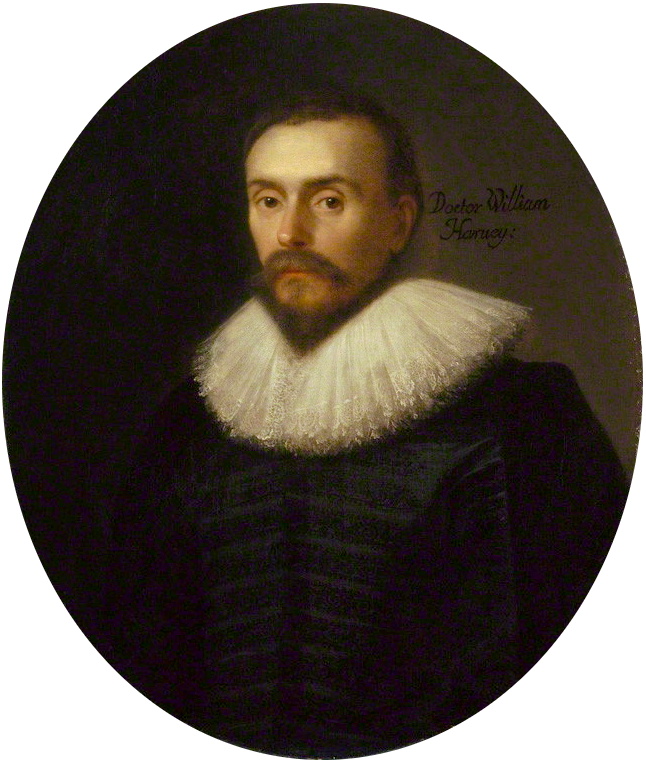
1878 HARVEY, William (1578 – 1657); WILLIS, Robert (1799 – 1878)
William Harvey: A history of the discovery of the circulation of the blood
Digital facsimile from the Hathi Trust at this link.
GMN 12401 · https://historyofmedicine.com/id/14631
1879 BERNARD, Claude (1813 – 1878)
Leçons de physiologie opératoire.
In this, his last work, Bernard showed himself “the unapproachable master in the technique of experimental procedure” (Garrison).
GMN 634 · https://historyofmedicine.com/id/514
1880 –1882 RINGER, Sydney (1834 – 1910)
Regarding the action of hydrate of soda, hydrate of ammonia, and hydrate of potash on the ventricle of the frog’s heart.
“Ringer’s solution”
GMN 826 · https://historyofmedicine.com/id/292
1880 STEVENSON, Sarah Ann Hackett (1841 – 1909)
The physiology of woman, embracing girlhood, maternity, and mature age, with essays on the "Coeducation of the sexes in medicine," "The physiological basis of education," "Temperance from a physician's point of view, and "A plea for moderation."
Stevenson was the first woman member of the American Medical Association (AMA), the first woman appointed on the Illinois State Board of Health, and the first woman to be on staff at the Cook County Hospital in Chicag…
GMN 13169 · https://historyofmedicine.com/id/15429
1881 VOIT, Carl von (1831 – 1908)
Handbuch der Physiologie des Gesammt-Stoffwechsels und der Fortpflanzung.
Forms vol. 6, pt. 1 of Hermann’s Handbuch der Physiologie.
GMN 635 · https://historyofmedicine.com/id/515
1882 GRÉHANT, Nestor (1838 – 1910); QUINQUAUD, Charles Eugene (1841 – 1894)
Mésure du volume de sang contenu dans l’organisme d’un mammifére vivant.
A method of determining blood volume with carbon monoxide.
GMN 882 · https://historyofmedicine.com/id/907
1882 DALTON, John Call (1825 – 1889)
The experimental method in medical science.
Dalton, Professor of Physiology at the universities of Buffalo and Vermont, and the College of Physicians and Surgeons, New York, was the first American to devote his time exclusively to that subject. He was present a…
GMN 1571 · https://historyofmedicine.com/id/1297
1882 OWEN, Sir Richard (1804 – 1892)
Experimental physiology: Its benefits to mankind, with an address on unveiling the statue of William Harvey at Folkestone 6th August 1881.
A little-known historical work on the history of physiology and the history of medicine by Owen, who, even though he was trained in medicine, most often wrote on topics in comparative anatomy, zoology, paleontology an…
GMN 14028 · https://historyofmedicine.com/id/16335
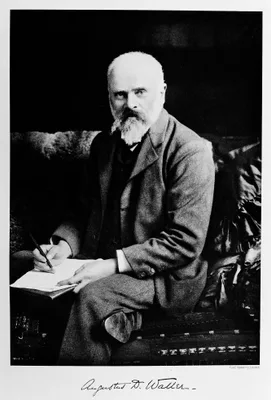
1883 WALLER, Augustus Désiré (1856 – 1922); WATTEVILLE, Armand de (1846 – 1925)
On the influence of the galvanic current on the excitability of the motor nerves of man.
GMN 1279 · https://historyofmedicine.com/id/2282
1884 DALTON, John Call (1825 – 1889)
Doctrines of the circulation.
GMN 1572 · https://historyofmedicine.com/id/1302
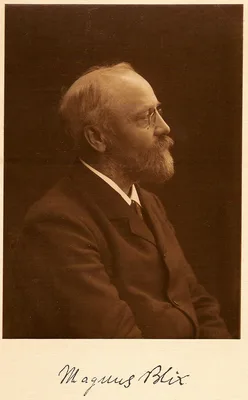
1884 BLIX, Magnus Gustav (1849 – 1904)
Experimentelle Beiträge zur Lösung der Frage über die specifische Energieder Hautnerven
Besides his investigation of the specific energies of cutaneous nerves, Blix is remembered for his work on the thermodynamics of muscular contraction; he designed a muscle indicator diagram; he was also the first to s…
GMN 1468 · https://historyofmedicine.com/id/2422
1884 BRYAN, Benjamin; COBBE, Frances Power (1822 – 1904)
The vivisectors' directory; being a list of the licensed vivisectors in the United Kingdom; together with the leading physiologists in foreign laboratories. Compiled from authentic sources. Edited by Benjamin Bryan, with a preface by Frances Power Cobbe.
A remarkably detailed listing of scientific and medical researchers conducting research involving vivisection with address information and details of their research. This information was published in order to supply d…
GMN 11682 · https://historyofmedicine.com/id/13883
1886 MILLS, Thomas Wesley (1847 – 1915)
Outlines of lectures on physiology, with an introductory chapter on general biology, and an appendix containing laboratory exercises in practical physiology.
Mills, a student of Osler, became the first professional physiologist in Canada. This outline of his lectures is probably the first Canadian physiology textbook. Digital facsimile from the Internet Archive at this link.
GMN 12269 · https://historyofmedicine.com/id/14486
1889 LUCIANI, Luigi (1840 – 1919)
Fisiologia del digiuni.
Luciani distinguished three stages of starvation in man – hunger, physiological inanition, and pathological inanition. Digital facsimile from Google Books at this link.
GMN 1013 · https://historyofmedicine.com/id/852
1889 SHARPEY-SCHAFER, Sir Edward Albert (1850 – 1935); HORSLEY, Sir Victor Alexander Haden (1857 – 1916)
A record of experiments upon the functions of the cerebral cortex.
A detailed analysis, by means of faradic stimulation, of the motor responses of the cerebral cortex, internal capsule, and spinal cord of higher primates.
GMN 1419 · https://historyofmedicine.com/id/2115
1890 MOSSO, Angelo (1846 – 1910)
Les lois de la fatigue étudiées dans les muscles de l’homme.
Mosso invented the ergograph from the study of voluntary contraction. The description of the instrument is on pages 124-41 of the above article.
GMN 636 · https://historyofmedicine.com/id/516
1890 TARCHANOFF, Ivan Romanovich [TARKHANOFF] (1848 – 1909)
Ueber die galvanischen Erscheinungen in der Haut des Menschen bei Reizungen der Sinnesorgane und bei verschiedenen Formen der psychischen Thätigkeit.
Psycho-galvanic reflex described.
GMN 1471 · https://historyofmedicine.com/id/2434
1891 BRAUNE, Christian Wilhelm (1831 – 1892); FISCHER, Otto (1861 – 1917)
Die Bewegungen des Kniegelenkes.
Investigation of the mechanics of motion of the knee joint on mathematical lines. See also No. 645.
GMN 637 · https://historyofmedicine.com/id/517
1891 CHAUVEAU, Jean Baptiste Auguste (1827 – 1917)
Le travail musculaire et l’énergie qu’il représente.
Important studies on thermodynamics of muscular work.
GMN 638 · https://historyofmedicine.com/id/518
1891 HORSLEY, Sir Victor Alexander Haden (1857 – 1916); GOTCH, Francis (1853 – 1913)
On the mammalian nervous system, its functions, and their localisation determined by an electrical method.
Gotch and Horsley showed that electric currents are produced in the mammalian brain, and they recorded them with the string galvanometer of the capillary electrometer. Their work led eventually to the development of t…
GMN 1420.1 · https://historyofmedicine.com/id/2137
1892 WOLFF, Julius (1836 – 1902)
Das Gesetz der Transformation der Knochen.
“Wolff’s law” stated that every change in form and function of a bone, or in its function alone, is followed by certain definite changes in its internal architecture and equally definite secondary alterations in its m…
GMN 641 · https://historyofmedicine.com/id/520
1893 ENGELMANN, Theodor Wilhelm (1843 – 1909)
Ueber den Ursprung der Muskelkraft.
GMN 642 · https://historyofmedicine.com/id/521
1895 BIEDERMANN, Wilhelm (1852 – 1929)
Elektrophysiologie.
First exhaustive treatise on electrophysiology. English translation, 2 vols., London, 1896-98.
GMN 644 · https://historyofmedicine.com/id/523