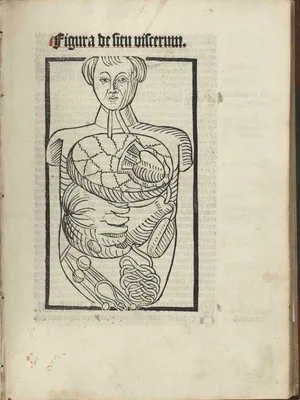
1491 KETHAM, Johannes de [Johannes von Kirchheim] ( – 1490); TOSSIGNANO, Pietro da (PETRUS DE TUSSIGNANO) (1350 – 1401)
Fasciculus medicinae. Add: Petrus de Tussignano: Consilium pro peste evitanda.
A collection of short medical treatises which circulated widely in manuscript, some as early as the 13th century, and was perhaps attributed by the printers to its former owner, Johannes von Kirchheim, a professor of …
GMN 363 · https://historyofmedicine.com/id/322
1493 –1494 MONDINO DE LUZZI, [MUNDINUS] (1270 – 1326); KETHAM, Johannes de [Johannes von Kirchheim] ( – 1490); TOSSIGNANO, Pietro da (PETRUS DE TUSSIGNANO) (1350 – 1401); MANILIO, Sebastiano (Sebastianus Manilius); MORSIANUS, Petrus Andreas ( – 1501)
Fascicolo di medicina. Tr: Sebastianus Manilius. Add: Petrus de Tussignano: Consilium pro peste evitanda. Mundinus: Anatomia (Ed: Petrus Andreas Morsianus).
This Italian translation contains an entirely new and more extensive series of woodcuts and additional text. The dramatically improved and more realistic illustrations, which were reproduced in the numerous later edit…
GMN 363.1 · https://historyofmedicine.com/id/327
1499 PEYLIGK, Johannes (1474 – 1522)
Philosophie naturalis compendium.
The last section of this commentary on Aristotle is an illustrated summary of anatomy, the text of which was derived, with some modifications, from medieval manuscripts. The series of eleven woodcuts has been called “…
GMN 363.2 · https://historyofmedicine.com/id/330
1501 HUNDT, Magnus (1449 – 1519)
Antropologium de ho[min]is dignitate, natura, et p[ro]prietatibus.
Includes the first illustrations of the viscera in a printed book. The four woodcuts are derived with modifications from Peyligk (No. 363.2). This work also contains the first mention ever of the word anthropology (in…
GMN 363.3 · https://historyofmedicine.com/id/337
1521 BERENGARIO DA CARPI, Giacomo (1460 – 1530)
Commentaria cum amplissimis additionibus super anatomia Mundini una cum textu ejusdem in pristinum et verum nitorem redacto.
Giacomo Berengario da Carpi (Jacobus Berengarius Carpensis, Jacopo Barigazzi, Giacomo Berengario da Carpi or simply Carpus) introduced iconography and independent anatomical observation into the teaching of anatomy. H…
GMN 367 · https://historyofmedicine.com/id/441
1522 BERENGARIO DA CARPI, Giacomo (1460 – 1530)
Isagoge breves perlucide ac uberime in anatomiam humani corporis a communi medicorum academia usitatam.
One year after publishing his Commentary on Mondino, Giacomo Berengario da Carpi issued an abbreviated version or Isagoge, with most of the same woodcuts. This was the book by which Berengario's contributions to anato…
GMN 368 · https://historyofmedicine.com/id/445
1528 DÜRER, Albrecht (1471 – 1528)
Vier Bücher von menschlicher Proportion.
Written, designed, and illustrated by Dürer, this work is notable for its extraordinary series of anthropometrical woodcuts. The first two books deal with the proper proportions of the human form; the third changes th…
GMN 149 · https://historyofmedicine.com/id/2731
1536 DRYANDER, Johann [EICHMANN] (1500 – 1560)
Anatomia capitis humani.
The first work on the anatomy of the head. Elegantly illustrated with 11 woodcuts. English translation in No. 461.3.
GMN 370 · https://historyofmedicine.com/id/465
1537 ZERBI, Gabriele (1445 – 1505); DRYANDER, Johann [EICHMANN] (1500 – 1560); COPHO OF SALERNO (1150 – )
Anatomiae, hoc est, corporis humani dissectionis pars prior.
Dryander was among the first to make illustrations after his own dissections. His unfinished guide to dissection entitled Anatomiae, expanded from the Anatomia published the previous year, is one of the most important…
GMN 371 · https://historyofmedicine.com/id/467
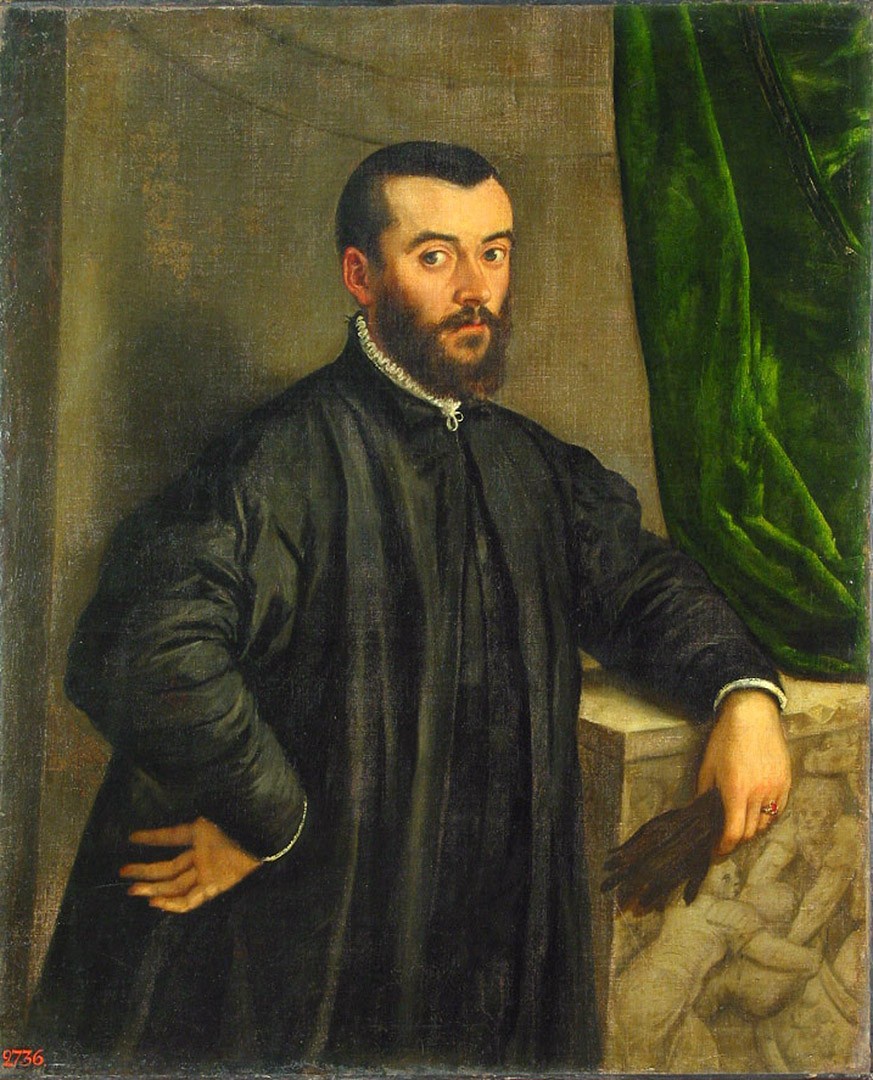
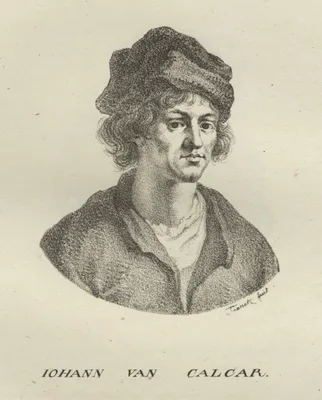
1538 VESALIUS, Andreas (1514 – 1564); CALCAR, Jan Steven van (1499 – 1546)
Tabulae anatomicae sex.
Vesalius’ first anatomical publication, consisting of six oversized anatomical charts, resembling fugitive sheets. The three skeletal woodcuts are signed by the artist, Jan Stephan van Calcar, who also acted as the pu…
GMN 372 · https://historyofmedicine.com/id/468
1541 CANANO, Giovanni Battista (1515 – 1579)
Musculorum humani corporis picturata dissectio.
The first book in which each muscle was illustrated separately, with copper-plates of the bones and muscles of the upper limb from drawings by Girolamo da Carpi, which in realism and exactitude surpassed anything betw…
GMN 373 · https://historyofmedicine.com/id/488
1541 RYFF, Walther Hermann [RYF, REIFF, REIF, RUEFF, RUFF] (1500 – 1548); GRIEN, Hans Baldung (1484 – 1545)
Des aller fürtrefflichsten…erschaffen. Das is des menchen…warhafftige beschreibung oder Anatomi…
This plagiarism of Vesalius’s Tabulae anatomicae sex contains 25 woodcuts by Hans Baldung Grien (1484/1485-1545), and represents the artist’s only contribution to medical illustration. The woodcuts include the best il…
GMN 373.1 · https://historyofmedicine.com/id/494
1543 VESALIUS, Andreas (1514 – 1564)
Suorum de humani corporis fabrica librorum epitome.
Shortly after publishing his encyclopedic De humani corporis fabrica libri septem, Vesalius issued De humani corporis fabrica epitome, also from the press of Johannes Oporinus of Basel. This thin set of 14 unnumbered …
GMN 376 · https://historyofmedicine.com/id/492
1543 VESALIUS, Andreas (1514 – 1564)
De humani corporis fabrica libri septem.
Published when the author was only 29 years old, the Fabrica revolutionized not only the science of anatomy but how it was taught. Throughout this encylopedic work on the structure and workings of the human body, Vesa…
GMN 375 · https://historyofmedicine.com/id/497
1545 GEMINUS, Thomas [Thomas Lambrit; Thomas Lambert] (1510 – 1562)
Compendiosa totius anatomie delineatio, aere exarata.
Compendiosa totius anatomie delineatio by Belgian engraver, mathematical and surgical instrument maker, Thomas Geminus (Thomas Lambert or Lambrit) was a slightly abridged version of Vesalius's Epitome illustrated with…
GMN 376.1 · https://historyofmedicine.com/id/498
1545 ESTIENNE, Charles [Stephanus] (1504 – 1564); LA RIVIÈRE, Estienne de (1500 – )
De dissectione partium corporis humani.
De dissectione partium corporis humani libri tres by French physician, writer, and translator, Charles Estienne, of the Estienne printing dynasty, is one of the most interesting woodcut books of the French Renaissance…
GMN 378 · https://historyofmedicine.com/id/546
1551 MONTAÑA DE MONTSERRATE, Bernardino (1480 – 1558)
Libro de la anathomia del hombre.
The first Spanish anatomy book in the Spanish language, the second anatomy book ever published in Spain, and the work that introduced Vesalian illustrations to Spain. The text is a version of Henri de Mondeville’s med…
GMN 378.01 · https://historyofmedicine.com/id/550
1554 RUF, Jacob [RUEFF; RÜFF; RUOFF] (1500 – 1558)
Ein schön lustig Trostbüchle von den Empfengknussen und Geburten der Menschen…
An improved version of Rösslin’s Swangern frawen. This contains the first true anatomical pictures in an obstetrics book. Rueff described smooth-edged forceps for delivery of a live baby, preceding Chamberlen, and a t…
GMN 463 · https://historyofmedicine.com/id/7685
1555 VESALIUS, Andreas (1514 – 1564)
De humani corporis fabrica libri septem.
Containing Vesalius’s final published revisions of the text, this edition is also superior for its enlarged format, improved typography and printing, better paper, larger woodcut initials, and changes to the lettering…
GMN 377 · https://historyofmedicine.com/id/547
1556 VALVERDE DE HAMUSCO, Juan (1525 – 1587)
Historia de la composicion del cuerpo humano…
Historia de la composicion del cuerpo humano Spanish physician Juan Valverde de Amusco was issued in Rome at the press of Antonio Salamanca. This was the first great original medical book in Spanish and the most origi…
GMN 378.02 · https://historyofmedicine.com/id/551
1559 COLOMBO, Matteo Realdo [Renaldus Columbus] (1515 – 1559)
De re anatomica libri xv.
Colombo was a pupil of Vesalius, and succeeded him in the chair of anatomy at Padua before proceeding to chairs first at Pisa and later at Rome. His book, published just after his death, rectified a number of anatomic…
GMN 378.1 · https://historyofmedicine.com/id/560
1563 –1564 EUSTACHI, Bartolomeo [EUSTACHIUS] (1510 – 1574)
Opuscula anatomica.
Eustachius is credited with several anatomical discoveries, among them the tensor tympani muscle and the Eustachian tube, published in his chapter entitled De auditus organis. In the last respect, however, he was anti…
GMN 1093 · https://historyofmedicine.com/id/159
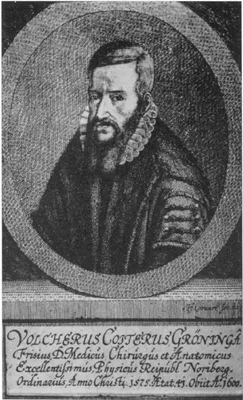
1575 FALLOPPIO, Gabriele [FALLOPPIUS] (1523 – 1562); COITER, Volcher (1534 – 1576)
Lectiones Gabrielis Falloppi de partibus similaribus humani corporis, ex diversis exemplari eus a Volchero Coiter summa cum diligentia collecta. His accessere diversorum animalium sceletorum explicationes iconibus artificiosis, et genuinis illustratae.
Coiter, a pupil of Fallopius and Eustachius, became town physician of Nuremberg. His book on comparative osteology, contained in his edition of the lectures of Fallopius, extended his studies begun in his work of 1572…
GMN 284 · https://historyofmedicine.com/id/8820
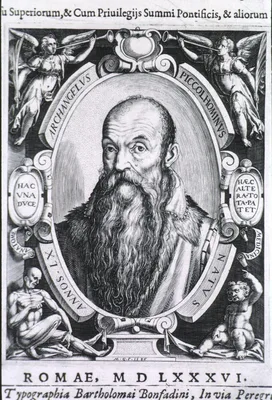
1585 PICCOLOMINI, Archangelo (1525 – 1586)
Anatomicae praelectiones.
First description of a clear distinction between what is now known as gray and white matter in the central nervous system. The work also includes the first attempt to illustrate the brain in a sagittal view. The nine …
GMN 7595 · https://historyofmedicine.com/id/9767
1598 RUINI, Carlo (1530 – 1598)
Dell’anotomia, et dell’infermità del cavallo.
In 1598 Conte Ottavio Ruini edited and had published in Bologna, with a dedication to Cardinal Pietro Aldobrandini, Dell'anotomia [sic], et dell'infirmita del cavallo [Book ii: Dell'infirmita del cavallo] by il marche…
GMN 285 · https://historyofmedicine.com/id/8821
1600 –1601 CASSERI, Giulio Cesare [Julius Casserius Placentinus; Giulio Casserio] (1552 – 1616)
De vocis auditusque organis historia anatomica. 2 pts.
Casseri, originally a servant to Fabrizio, was personally trained by his employer and eventually succeeded to Fabrizio’s chair of anatomy. Like Fabrizio, who studied the development of the chick for clues to human emb…
GMN 1540 · https://historyofmedicine.com/id/2863
1608 FIALETTI, Odoardo (1573 – 1638)
Il vero modo et ordine per dissegnar tutte le parti et membra del corpo humano.
An entirely etched book of 40 leaves, drawn and etched by Fialetti, this was probably the first printed manual on drawing the human body, as distinct from earlier manuals on anatomy for artists. For further informatio…
GMN 8002 · https://historyofmedicine.com/id/10178
1611 GUIDI, Guido [VIDIUS] (1508 – 1569)
De anatome corporis humani libri vii.
Guidi, professor of philosophy and medicine at Pisa, discovered the Vidian nerve, the Vidian canal, and the Vidian artery. The above was edited by his nephew.
GMN 380 · https://historyofmedicine.com/id/574
1613 REMMELIN, Johann (1583 – 1632)
Catoptri micorcosmici absolutam admirandae partium hominis creaturarum divinarum praestantissimi fabricae eximio artificio sculptam structuram revidendam exhibentis. Engraved by Stephan Michelspacher.
Three large anatomical plates with numerous flaps, in the tradition of fugitive sheets, but larger and more complex. The first edition was issued anonymously without identifying the place of publication or the publish…
GMN 11237 · https://historyofmedicine.com/id/13434
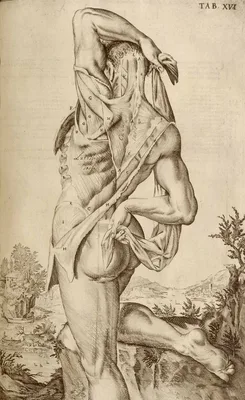
1627 CASSERI, Giulio Cesare [Julius Casserius Placentinus; Giulio Casserio] (1552 – 1616)
Tabulae anatomicae lxxiix.
First publication of the very beautiful copperplates engraved by Francesco Valesio after Odoardo Fialetti, a pupil of Titian. Casseri commissioned these plates covering the whole field of human anatomy for his unfinis…
GMN 381 · https://historyofmedicine.com/id/577
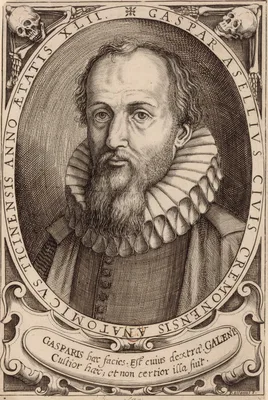
1627 ASELLI, Gaspare (1581 – 1626)
De lactibus sive lacteis venis.
Records the discovery of the lacteal vessels. While performing vivisection on a dog that had recently fed, Aselli noticed a network of vessels in the mesentery and along the peritoneal surface of the intestine. The ve…
GMN 1094 · https://historyofmedicine.com/id/916
1634 GRACHT, Jacob van der (1593 – 1652)
Anatomie der uuterlicke deelen van het menschelick lichaem: Dienende om te verstaen ende volkometlick wt te beelden alle beroerlicheit des selven lichaems.
The earliest of all independent works on anatomy for graphic or plastic artists. The author, a painter and etcher, drew and engraved all the images himself. Digital facsimile from Google Books at this link.
GMN 381.1 · https://historyofmedicine.com/id/579
1645 SPIEGHEL, Adriaan van der [SPIGELIUS] (1578 – 1625); LINDEN, Johannes Antonides van der (1609 – 1664)
Opera quae extant omnia. Ex recension Joh. Antonidae vander Linden.
Spieghel succeeded Casseri in the chair of anatomy at Padua. This edition of his collected writings contains the second printing of the 97 copperplates first printed in Casseri’s Tabulae anatomicae (No. 381) plus 9 ex…
GMN 61.2 · https://historyofmedicine.com/id/8777
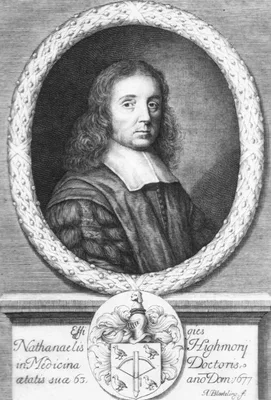
1651 HIGHMORE, Nathaniel (1613 – 1685)
Corporis humani disquisitio anatomica.
Highmore is remembered for his description of the maxillary sinus, known eponymically as the “antrum of Highmore” (already noticed by Casserius and figured by Leonardo da Vinci), the seminal ducts and the epididymis. …
GMN 382 · https://historyofmedicine.com/id/581
1664 WILLIS, Thomas (1621 – 1675)
Cerebri anatome: cui accessit nervorum descriptio et usus.
The most complete and accurate account of the nervous system which had hitherto appeared, and the work that coined the term, “neurology". In its preparation Willis was helped by his students Richard Lower and Thomas M…
GMN 1378 · https://historyofmedicine.com/id/1789
1670 KERCKRING, Thomas Theodor (1640 – 1693)
Spicilegium anatomicum.
Kerckring made important investigations on the development of the foetal bones. He was the first to describe the large ossicle sometimes present at the lambdoidal suture; his name is remembered in the valvulae connive…
GMN 383 · https://historyofmedicine.com/id/587
1684 VIEUSSENS, Raymond (1641 – 1715)
Neurographia universalis.
Vieussens, professor at Montpellier, was the first to describe the centrum ovale correctly. The publication of the above work threw new light on the subject of the configuration and structure of the brain, spinal cord…
GMN 1379 · https://historyofmedicine.com/id/1784
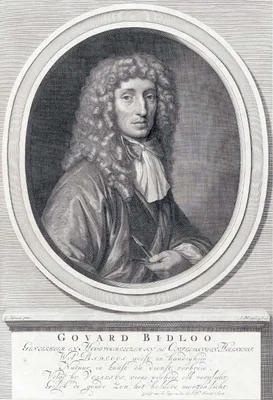
1685 BIDLOO, Govert (1649 – 1713); LAIRESSE, Gerard de (1641 – 1711)
Anatomia humani corporis, centum et quinque tabulis, per artificiosiss. G. de Lairesse ad vivum delineatis.
This large folio by Dutch physician, anatomist, poet, and playwright Govert Bidloo contains an engraved title, engraved portrait of Bidloo by Abraham Bloteling after Gérard de Lairesse and 105 engraved plates after La…
GMN 385 · https://historyofmedicine.com/id/602
1691 GENGA, Bernardino (1665 – 1734); LANCISI, Giovanni Maria (1654 – 1720)
Anatomia per uso et intelligenza del disegno ricercata non solo su gl’ossi, e muscoli del corpo humano.
Contains 56 copper-plates, excellent anatomically and artistically, with commentary by Giovanni Maria Lancisi. This is one of the finest of all books on anatomy for artists. English translation with plates re-engraved…
GMN 386 · https://historyofmedicine.com/id/611
1693 VERHEYEN, Philippe (1648 – 1710)
Anatomia corporis humani, in qua omnia tam veterum, quam recentiorum anatomicarum inventa methodo nova & intellectu facillima describuntur, ac tabulis aenis repaesentantur.
This work was widely used for some years after publication, superseding Bartholin in popularity. Second edition, with supplement, 2 vols., Louvain, 1706-12.
GMN 388 · https://historyofmedicine.com/id/620
1698 COWPER, William (1666 – 1709)
The anatomy of humane bodies, with figures drawn after the life by some of the best masters in Europe.
The largest in format, and most elaborate and beautiful of all 17th century English treatises on anatomy, and also one of the most extraordinary plagiarisms in the entire history of medicine. Cowper purchased sets of …
GMN 385.1 · https://historyofmedicine.com/id/605
1701 –1715 RUYSCH, Frederik (1638 – 1731)
Thesaurus anatomicus primus [-decimus]... Het eerste [-tiende] anatomisch cabinet....
Probably the most original artist in the history of anatomical preparations, Ruysch enjoyed making up elaborate three-dimensional emblems of mortality from his specimens. These fantastic, dream-like concoctions constr…
GMN 389 · https://historyofmedicine.com/id/623
1713 CHESELDEN, William (1688 – 1752)
The anatomy of the humane body.
Although Cheselden is best known for his accomplishments in the field of surgery, he wrote two important books on anatomy. The above was for many years a textbook of the English medical schools and ran through 13 edit…
GMN 390 · https://historyofmedicine.com/id/626
1714 EUSTACHI, Bartolomeo [EUSTACHIUS] (1510 – 1574)
Tabulae anatomicae.
A romantic history attaches to this fine collection of plates, drawn by Eustachius himself and completed in 1552. They remained unprinted and forgotten in the Vatican Library until discovered in the early 18th century…
GMN 1312 · https://historyofmedicine.com/id/631
1724 COWPER, William (1666 – 1709)
Myotomia reformata.
This work made a modest first appearance in 1694 as an octavo, but Cowper worked until his death on a new edition which was finally published posthumously under the supervision and at the expense of Richard Mead (1673…
GMN 392.1 · https://historyofmedicine.com/id/654
1725 BOERHAAVE, Herman (1668 – 1738); VESALIUS, Andreas (1514 – 1564); ALBINUS, Bernhard Siegfried (1697 – 1770)
Opera omnia anatomica & chirurgica. Edited by Herman Boerhaave and Bernhard Siegfried Albinus. 2 vols.
Vesalius's collected works with the famous woodcuts reproduced as copperplate engravings by Jan Wandelaar (1690-1759). Notably Boerhaave and Albinus had this edition published because Vesalius's works still had practi…
GMN 8095 · https://historyofmedicine.com/id/10271
1733 CHESELDEN, William (1688 – 1752)
Osteographia, or the anatomy of the bones.
This splendidly designed and illustrated work contained full and accurate descriptions of all the human bones, as well as many of animals. Cheselden is the first person to have used the camera obscura to gain precisio…
GMN 395 · https://historyofmedicine.com/id/671
1734 ALBINUS, Bernhard Siegfried (1697 – 1770)
Historia musculorum hominis.
Very detailed descriptions of all the muscles of the human body, with illustrations drawn and engraved by Jan Wandelaar depicting the muscles of the hand, life-size with all the muscles, tendons, ligaments, and bones.…
GMN 7552 · https://historyofmedicine.com/id/9724
1736 ALBINUS, Bernhard Siegfried (1697 – 1770); LADMIRAL, Jan [l'Admiral] (1698 – 1773)
Dissertatio de arteries et venis intestinorum hominis. Adjecta icon coloribus distincta.
The small color mezzotint printed by the painter Jan Ladmiral included with this pamphlet on the arteries and veins of the human intestine was among the earliest applications of full color printing, and the first use …
GMN 7507 · https://historyofmedicine.com/id/9679
1737 –1747 ALBINUS, Bernhard Siegfried (1697 – 1770)
Tabulae sceleti et musculorum corporis humani.
The splendid series of 40 large copperplates of the bones and muscles in this work were drawn and engraved by Jan Wandelaar (1690-1759). They established a newstandard in anatomical illustration, and remain unsurpasse…
GMN 399 · https://historyofmedicine.com/id/745