1490 ALBERTUS MAGNUS, [Albert von Bollstädt] (1195 – 1280)
Philosophia pauperum, sive Isagoge in libros Aristotelis physicorum, de coelo et mundo, de generatione et corruptione, meteororum et de anima.
This edition, chronologically the fourth printed, of Albertus's commentaries on various works of Aristotle, contains the first printed illustration of the brain, showing in profile the three-cell theory of brain funct…
GMN 6949 · https://historyofmedicine.com/id/9114
1499 PEYLIGK, Johannes (1474 – 1522)
Philosophie naturalis compendium.
The last section of this commentary on Aristotle is an illustrated summary of anatomy, the text of which was derived, with some modifications, from medieval manuscripts. The series of eleven woodcuts has been called “…
GMN 363.2 · https://historyofmedicine.com/id/330
1501 HUNDT, Magnus (1449 – 1519)
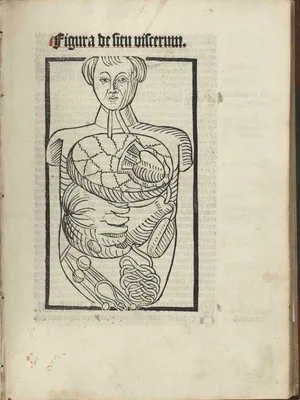
Antropologium de ho[min]is dignitate, natura, et p[ro]prietatibus.
Includes the first illustrations of the viscera in a printed book. The four woodcuts are derived with modifications from Peyligk (No. 363.2). This work also contains the first mention ever of the word anthropology (in…
GMN 363.3 · https://historyofmedicine.com/id/337
1512 NEMESIUS (ΝΕΜΈΣΙΟΣ), Bishop of Emesa (350 – )
Divini Gregorii Nyssae episcopi qui fuit frater Basilii Magni libri octo. I. De homine. II. De anima. III. De elementis. IIII. De viribus animae. V. De voltario etinuoltario. VI. De fato. VII. De libero arbitrio. VIII. De prouidentia.
Nemesius’ De natura hominis, a physiological and psychological study of man, was highly esteemed during the Middle Ages. Nemesius, who wrote in the 4th century CE, was one of the first to propose that mental processes…
GMN 571 · https://historyofmedicine.com/id/339
1522 BERENGARIO DA CARPI, Giacomo (1460 – 1530)
Isagoge breves perlucide ac uberime in anatomiam humani corporis a communi medicorum academia usitatam.
One year after publishing his Commentary on Mondino, Giacomo Berengario da Carpi issued an abbreviated version or Isagoge, with most of the same woodcuts. This was the book by which Berengario's contributions to anato…
GMN 368 · https://historyofmedicine.com/id/445
1536 DRYANDER, Johann [EICHMANN] (1500 – 1560)
Anatomia capitis humani.
The first work on the anatomy of the head. Elegantly illustrated with 11 woodcuts. English translation in No. 461.3.
GMN 370 · https://historyofmedicine.com/id/465
1537 ZERBI, Gabriele (1445 – 1505); DRYANDER, Johann [EICHMANN] (1500 – 1560); COPHO OF SALERNO (1150 – )
Anatomiae, hoc est, corporis humani dissectionis pars prior.
Dryander was among the first to make illustrations after his own dissections. His unfinished guide to dissection entitled Anatomiae, expanded from the Anatomia published the previous year, is one of the most important…
GMN 371 · https://historyofmedicine.com/id/467
1541 RYFF, Walther Hermann [RYF, REIFF, REIF, RUEFF, RUFF] (1500 – 1548); GRIEN, Hans Baldung (1484 – 1545)
Des aller fürtrefflichsten…erschaffen. Das is des menchen…warhafftige beschreibung oder Anatomi…
This plagiarism of Vesalius’s Tabulae anatomicae sex contains 25 woodcuts by Hans Baldung Grien (1484/1485-1545), and represents the artist’s only contribution to medical illustration. The woodcuts include the best il…
GMN 373.1 · https://historyofmedicine.com/id/494
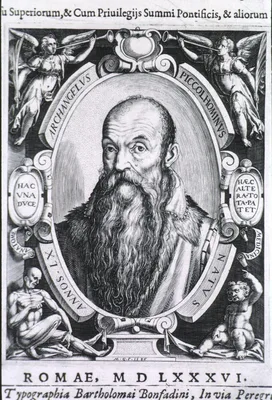
1585 PICCOLOMINI, Archangelo (1525 – 1586)
Anatomicae praelectiones.
First description of a clear distinction between what is now known as gray and white matter in the central nervous system. The work also includes the first attempt to illustrate the brain in a sagittal view. The nine …
GMN 7595 · https://historyofmedicine.com/id/9767
1587 ARANZI, Giulio Cesare [ARANZIO; ARANTIUS] (1530 – 1589)
De humano foetu liber tertio editus, ac recognitus. Eiusdem anatomicarum observationum liber: ac De tumoribus secundum locos affectos liber nunc primum editi.
First edition of Aranzi's Anatomicarum observationum published with the third edition of De humano foetu. In the Anatomicarum observationum Aranzi pointed out that the eye muscles arise from the margin of the optic ca…
GMN 7337 · https://historyofmedicine.com/id/9508
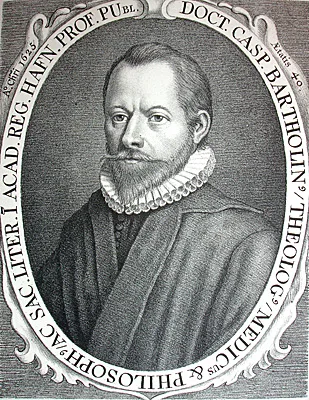
1611 BARTHOLIN, Caspar Senior (1585 – 1629)
Anatomicae institutiones corporis humani.
The elder Caspar Bartholin was the first to describe the workings of the olfactory nerve, and introduced the terms nervus olfactorius and nervus vagus. This was a standard textbook for many years, undergoing numerous …
GMN 6964 · https://historyofmedicine.com/id/9129
1641 BARTHOLIN, Thomas (1616 – 1680); LE BÖE, Franz de [FRANCISCUS SYLVIUS] (1614 – 1672); BARTHOLIN, Caspar Senior (1585 – 1629)
Institutiones anatomicae, novis recentiorum opinionibus & observationibus, quarum innumerae hactenus editae non sunt, figurisque auctae ab auctoris filio Thoma Bartholino.
In this revision of his father’s anatomical treatise, Thomas Bartholin included the first depiction of the fissure of Sylvius, the lateral cerebral fissure, and the only part of the surface of the cerebral hemispheres…
GMN 1377.3 · https://historyofmedicine.com/id/1791
1664 WILLIS, Thomas (1621 – 1675)
Cerebri anatome: cui accessit nervorum descriptio et usus.
The most complete and accurate account of the nervous system which had hitherto appeared, and the work that coined the term, “neurology". In its preparation Willis was helped by his students Richard Lower and Thomas M…
GMN 1378 · https://historyofmedicine.com/id/1789
1666 BLASIUS, Gerard "Gerrit" Leendertszoon [Blaes] (162 – 1682)
Anatome medullae spinalis, et nervorum.
The first separate work on the spinal cord. Blasius “illustrated the separate origin of the anterior and posterior roots, the dorsal root ganglia and the differentiation between the gray and white matter of the spinal…
GMN 1354.9 · https://historyofmedicine.com/id/1626
1669 STENO, Nicolas [Niels Steensen, Nicholaus Stenonis] (1638 – 1686)
Discours sur l’anatomie du cerveau.
In this remarkably prescient argument for, and critique of, anatomical research into brain function Stensen opposed Descartes (No. 574) arguing that it was idle to speculate about cerebral function when so little was …
GMN 1378.1 · https://historyofmedicine.com/id/1783
1676 –1680 WILLIS, Thomas (1621 – 1675)
Opera omnia. 2 vols.
Willis was remarkable for his careful clinical observation. He was second only to Sydenham in his day. To him we owe the original descriptions of several conditions. Digital facsimile of the Lyon, 1681 edition from th…
GMN 62 · https://historyofmedicine.com/id/990
1684 VIEUSSENS, Raymond (1641 – 1715)
Neurographia universalis.
Vieussens, professor at Montpellier, was the first to describe the centrum ovale correctly. The publication of the above work threw new light on the subject of the configuration and structure of the brain, spinal cord…
GMN 1379 · https://historyofmedicine.com/id/1784
1684 WILLIS, Thomas (1621 – 1675); PORDAGE, Samuel (1633 – 1691)
Dr. Willis's practice of physick.
The only complete edition of Willis's works in English, translated by the poet Samuel Pordage. It contains the translations of all his works except his Affectionum quae dicuntur hystericae (1671). The collection inclu…
GMN 1311 · https://historyofmedicine.com/id/10280
1695 RIDLEY, Humphrey (1653 – 1708)
The anatomy of the brain.
The first book on the brain in the English language, including the first account of the circular venous sinus which Ridley names, and the first English account of a pineal tumor. In it Ridley gives the first account o…
GMN 1379.1 · https://historyofmedicine.com/id/1785
1705 PACCHIONI, Antonio (1665 – 1726)
Dissertatio epistolaris ad Lucam Schroeckium de glandulis conglobatis durae meningis humanae.
Includes a description and illustration of the Pacchionian bodies of the arachnoid tissue under the dura, producing by pressure slight depressions (“Pacchionian depressions”). See also Pacchioni’s De durae meningis fa…
GMN 1380 · https://historyofmedicine.com/id/1786
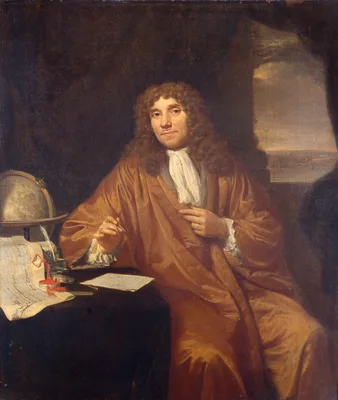
1718 LEEUWENHOEK, Antonie van (1632 – 1723)
Send-Brieven, zoo aan de Hoog-edele Heeren van de Koninklyke Societeit te Londen, als aan andere Aansienelyke en Geleerde Lieden....
In his letter of 2 March 1717 (letter XXXII) addressed to Abraham van Bleyswyk and first published in this edition, Leewenhoek provided the first morphologic description of nerve fibers accompanied by illustrations. “…
GMN 9494 · https://historyofmedicine.com/id/11679
1727 POURFOUR DU PETIT, François (1664 – 1741)
Mémoire dans lequel il est démontré que les nerfs intercostaux fournissent des rameaux que portent des espirits dans les yeux.
Discovery of the vasomotor nerves (see also No. 1313).
GMN 764 · https://historyofmedicine.com/id/1751
1732 WINSLOW, Jacques-Bénigne [Jacob Benignus Winsløw] (1669 – 1760)
Exposition anatomique de la structure du corps humain.
The foramen between the greater and lesser sacs of the peritoneum (described on pages 352-65), is named after Winslow. His Exposition is distinguished as being the first book on descriptive anatomy to discard physiolo…
GMN 1314 · https://historyofmedicine.com/id/664
1750 TARIN, Pierre (1725 – 1761)
Adversaria anatomica, de omnibus corporis humani partium, tum descriptionibus, cum picturis, Adversaria anatomica Prima, De omnibus cerebri, nervorum & organorum functionibus animalibus inserventium, descriptionibus & iconismis.
The first pictorial history of neuroanatomy, which contains some of the very first color engravings of the brain. The three colored copperplates were by “a certain Robert", a pupil of Le Blon, the inventor of three-co…
GMN 6950 · https://historyofmedicine.com/id/9115
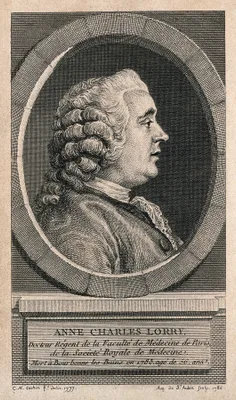
1760 LORRY, Anne-Charles (1726 – 1783)
Sur les mouvements du cerveau et de la dure-mere. Premier mémoire, sur le mouvement des parties contenues dans le crâne, considérées dans leur état naturel. Second mémoire. Sur les mouvements contre nature de ce viscère, & sur les organes qui sont le principe de son action.
Probably the first example in the literature of a definite localization of function in the brain. In the first memoir Lorry examined the normal movements of the brain; in the second memoir he set out specifically, sys…
GMN 6951 · https://historyofmedicine.com/id/9116
1765 HIRSCH, Antonius Balthazar Raymundus (1744 – 1778)
Pars quinti nervorum encephali disquisitio anatomica.
The “Gasserian ganglion”, already described by Santorini and others, was named after Johann Ludwig Gasser (fl. 1757-65), Professor of Anatomy at Vienna, by his pupil Hirsch. Also published in Ludwig, C. F., Scriptores…
GMN 1251 · https://historyofmedicine.com/id/2089
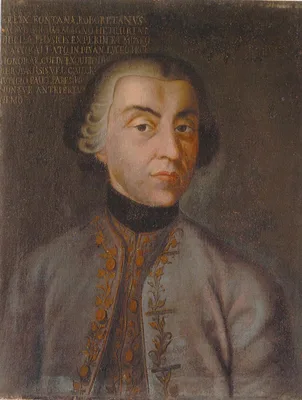
1767 FONTANA, Felice (1730 – 1805)
Ricerche fisiche sopra il veleno della vipera.
The starting point of modern investigations of serpent venoms and their antidotes. This work also includes Fontana’s description of the ciliary canal in the eye of an ox. This structure does not appear in the human ey…
GMN 2103 · https://historyofmedicine.com/id/2601
1786 VICQ D’AZYR, Félix (1748 – 1794)
Traité d’anatomie et de physiologie avec des planches coloriées répresentant au naturel les divers organes de l’homme et des animaux. Tome premier [all published].
The most accurate neuroanatomical work produced before the advent of microscopic staining techniques. Vicq d’Azyr identified accurately for the first time many of the cerebral convolutions, along with various internal…
GMN 401.2 · https://historyofmedicine.com/id/792
1794 SCARPA, Antonio (1752 – 1832)
Tabulae nevrologicae, ad illustrandum historiam anatomicam cardiacorum nervorum, noni nervorum cerebri, glossopharyngaei et pharyngaei ex octavo cerebri.
This elegantly illustrated anatomical atlas is regarded as Scarpa’s greatest work. The result of 20 years of research, it includes the first proper delineation of the glossopharyngeal, vagus, hypoglossal, and cardiac …
GMN 1253 · https://historyofmedicine.com/id/2100
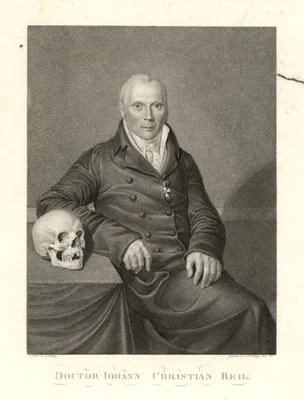
1796 REIL, Johann Christian (1759 – 1813)
Exercitationum anatomicarum fasciculus primus. De structura nervorum, tribus tabulis aeneis illustratus [All published].
Description of the “island of Reil”. This was the first part of the surface of the cerebral hemispheres to be given a name since 1641 (No. 1377.3). See also Reil’s follow-up paper in Arch. Physiol. (Halle), 1809, 9, 1…
GMN 1387 · https://historyofmedicine.com/id/1913
1805 VICQ D’AZYR, Félix (1748 – 1794); MOREAU DE LA SARTHE, Jacques-Louis (1771 – 1826)
Oeuvres de Vicq-d'Azyr recueillie et publiées avec des notes et un discours sur sa vie et ses ouvrages par Jacq[ues] L[ouis]- Moreau [de la Sarthe]. 6 vols. and atlas.
Vicq d’Azyr has been called the greatest comparative anatomist of the 18th century. The mammillo-thalamic tract is named the “bundle of Vicq d’Azyr”. See No. 401.2. Digital facsimile of from the Internet Archive at th…
GMN 313 · https://historyofmedicine.com/id/133
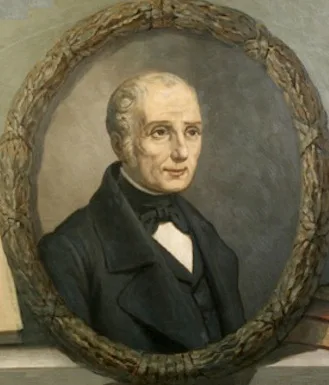
1809 ROLANDO, Luigi (1773 – 1831)
Saggio sopra la vera struttura del cervello dell’uomo e degl’animali e sopra le funzioni del sistema nervoso.
Includes description of “Rolando’s substance”, “tubercle”, and “funiculus”. Rolando described ablation experiments for brain localization similar to Flourens (No. 1391). They were largely unknown until Magendie publis…
GMN 1388 · https://historyofmedicine.com/id/1920
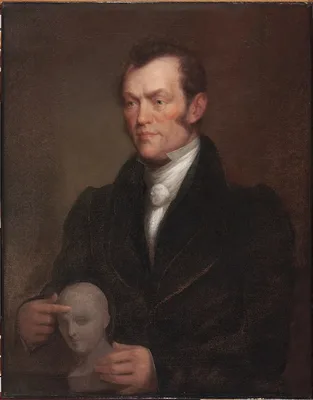
1810 –1819 GALL, Franz Joseph (1758 – 1828); SPURZHEIM, Johann Caspar (1776 – 1832)
Anatomie et physiologie du système nerveux en général, et du cerveau en particulier. 4 vols. and atlas.
Introduced the theory of localization of cerebral function, although in a somewhat fantastic form. This pioneer attempt to map out the cerebral cortex according to function gave rise to the pseudo-science of phrenolog…
GMN 1389 · https://historyofmedicine.com/id/1922
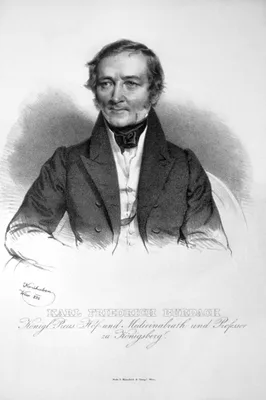
1819 –1826 BURDACH, Karl Friedrich (1776 – 1847)
Vom Baue und Leben des Gehirns. 3 vols.
Includes description of “Burdach’s column”, the posterior column of the spinal cord. This work is also “an unrivalled source of historical information on macroscopical neuroanatomy” (Meyer).
GMN 1358 · https://historyofmedicine.com/id/1661
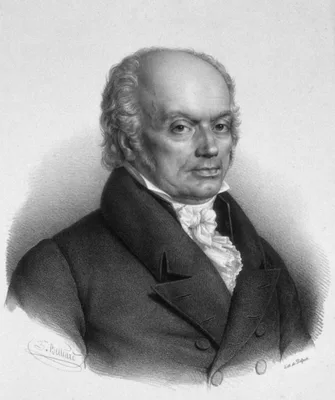
1821 TIEDEMANN, Friedrich (1781 – 1861)
Icones cerebri simiarum et quorundam mammalium rariorum.
"Although a few more reports were published furing the next hundred years [after Tyson] it was Tiedemann alone who gave a more detailed account, on monkeys, in his... Icones Simiarum.... In monkeys he found the brain …
GMN 9700 · https://historyofmedicine.com/id/11887
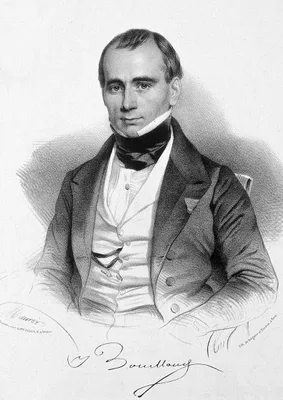
1827 BOUILLAUD, Jean Baptiste (1796 – 1881)
Recherches expérimentales tendant à prouver que le cervelet préside aux actes de la station et de la progression, et non à l’instinct de la propagation.
Bouillaud identified the anterior lobes as the speech center. Refuting Gall, he showed that the brain controls equilibration, station, and progression. Title of second paper varies. His earlier Traité clinique et phys…
GMN 1395 · https://historyofmedicine.com/id/1967
1829 ROLANDO, Luigi (1773 – 1831)
Della struttura degli emisferi cerebrali.
GMN 1394 · https://historyofmedicine.com/id/1962
1830 SWAN, Joseph (1791 – 1874)
A demonstration of the nerves of the human body.
The largest and most splendidly produced atlas of neuroanatomy originally published in English, with plates that remain unsurpassed as works of art. Later editions were in reduced format.
GMN 6952 · https://historyofmedicine.com/id/9117
1836 REMAK, Robert (1815 – 1865)
Vorläufige Mittheilungen microscopischer Beobachtungen über den inner Bau der Cerebrospinalnerven und über die Entwickelung ihrer Formelemente.
Remak identified for the first time the myelinated fiber with its central “band of Remak” (the axon), and the unmyelinated axon or “fiber of Remak.” Fuller account in his Observationes anatomicae (No. 1262).
GMN 1260 · https://historyofmedicine.com/id/2145
1836 TIEDEMANN, Friedrich (1781 – 1861)
On the brain of the negro, compared with that of the European and the orang-outang.
In this very thoroughly researched, highly documented, and well-illustrated paper Tiedemann demonstrated that there are no significant anatomical differences between the brains and mental capacities of Black people an…
GMN 11309 · https://historyofmedicine.com/id/13507
1836 –1842 QUAIN, Jones (1796 – 1865); WILSON, Sir William James Erasmus (1809 – 1884)
A series of anatomical plates. 5 vols.: The muscles of the human body. The vessels of the human body. The nerves of the human body. The viscera of the human body. The bones and ligaments of the human body.
The most ambitious 19th century English anatomy illustrated by lithography. Some copies were issued with hand-colored plates. The five volumes, containing a total of 201 plates, describe the muscles, blood vessels, ne…
GMN 13300 · https://historyofmedicine.com/id/15566
1837 PURKYNĔ, Jan Evangelista [PURKINJE] (1787 – 1869)
Neueste Untersuchungen aus der Nerven-und Hirnanatomie.
Description of the “flask-shaped ganglionic bodies” known as “Purkinje cells”. Reprinted in his Opera Omnia, 1939, 3, 47-9. Also published in Oken’s Isis, 1838, pp. 582-84.
GMN 1396 · https://historyofmedicine.com/id/1980
1837 BURDACH, Ernst (1801 – 1876)
Beitrag zur mikroskopischen Anatomie der Nerven.
GMN 1261 · https://historyofmedicine.com/id/2156
1838 REMAK, Robert (1815 – 1865)
Observationes anatomicae et microscopicae de systematis nervosi structura.
See No. 1260.
GMN 1262 · https://historyofmedicine.com/id/2161
1839 –1857 LEURET, François (1797 – 1851); GRATIOLET, Louis Pierre (1815 – 1865)
Anatomie comparée du système nerveux. 2 vols. and atlas.
The first comprehensive systematic investigation of the mammalian brain. Leuret wrote vol. 1 without Gratiolet, who later became his collaborator, publishing vol. 2 and the atlas after Leuret’s death.
GMN 1396.01 · https://historyofmedicine.com/id/1988
1840 BAILLARGER, Jules Gabriel François (1809 – 1890)
Recherches sur la structure de la couche cortical des circonvolutions du cerveau.
Baillarger demonstrated that the cortex is made up of layers and that fibers connect the cortex with the internal white matter. English translation in von Bonin, Some papers on the cerebral cortex, Springfield: Charle…
GMN 1396.1 · https://historyofmedicine.com/id/1991
1843 STILLING (BENEDICT), Benedikt (1810 – 1879)
Ueber die Textur und Function der Medulla oblongata. 2 vols. (Text and atlas).
“In this book, there are many transverse section figures from the origin of the 2nd cervical nerve pair up to the pons. Stilling aimed to reveal the difference between the spinal cord and medulla oblongata by presenti…
GMN 14213 · https://historyofmedicine.com/id/16529
1844 REMAK, Robert (1815 – 1865)
Neurologische Erlauterungen.
Remak was first to describe the intrinsic ganglia of the heart.
GMN 806 · https://historyofmedicine.com/id/569
1845 PACINI, Filippo (1812 – 1883)
Nuove ricerche microscopiche sulla tessiture intima della retina nell’ uomo, nei vertebrati, nei cefalapodi, e negli insetti precedute da alcune riflessioni sugli elementi morfologici globulari del sisteme nervoso.
Pacini was the first to provide an accurate description of all the layers of the retina. Digital facsimile of the separate (offprint) edition from the Internet Archive at this link.
GMN 7330 · https://historyofmedicine.com/id/9501
1846 STILLING (BENEDICT), Benedikt (1810 – 1879)
Disquisitiones de structura protuberantia annularis sive pontis Varolii. Untersuchungen über den Bau des Hirnknotens oder der Varoli’schen Brucke. Text and atlas.
Stilling’s great work on the pons Varolii, the structure that links the brain to the spinal cord, includes the first accurate description of the red nucleus (superior olive), a structure in the midbrain involved in mo…
GMN 14337 · https://historyofmedicine.com/id/16665

![WINSLOW, Jacques-Bénigne [Jacob Benignus Winsløw] (1669 – 1760)](/media/portraits/708)