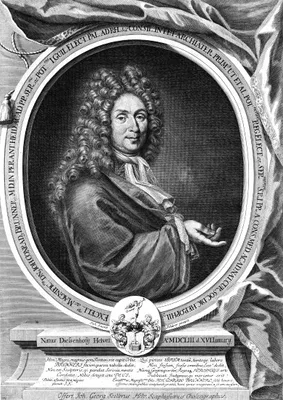
1603 FABRIZIO, Girolamo [FABRICIUS AB AQUAPENDENTE] (1537 – 1619)
De venarum ostiolis.
Fabricius, teacher of Harvey at Padua, discovered the venous valves, and illustrated them in life-size copperplates in this monograph. He failed to recognize their true function, however, considering their function si…
GMN 757 · https://historyofmedicine.com/id/1744
1611 GUIDI, Guido [VIDIUS] (1508 – 1569)
De anatome corporis humani libri vii.
Guidi, professor of philosophy and medicine at Pisa, discovered the Vidian nerve, the Vidian canal, and the Vidian artery. The above was edited by his nephew.
GMN 380 · https://historyofmedicine.com/id/574
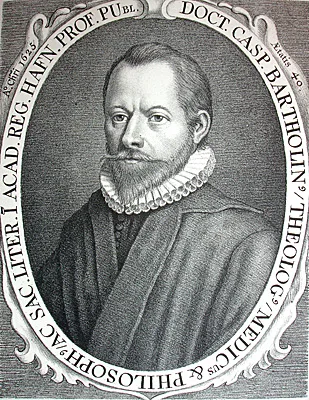
1611 BARTHOLIN, Caspar Senior (1585 – 1629)
Anatomicae institutiones corporis humani.
The elder Caspar Bartholin was the first to describe the workings of the olfactory nerve, and introduced the terms nervus olfactorius and nervus vagus. This was a standard textbook for many years, undergoing numerous …
GMN 6964 · https://historyofmedicine.com/id/9129
1613 REMMELIN, Johann (1583 – 1632)
Catoptri micorcosmici absolutam admirandae partium hominis creaturarum divinarum praestantissimi fabricae eximio artificio sculptam structuram revidendam exhibentis. Engraved by Stephan Michelspacher.
Three large anatomical plates with numerous flaps, in the tradition of fugitive sheets, but larger and more complex. The first edition was issued anonymously without identifying the place of publication or the publish…
GMN 11237 · https://historyofmedicine.com/id/13434
1615 CROOKE, Helkiah (1576 – 1648)
Microcosmographia [In Greek]. A description of the body of man. Together with the controversies thereto belonging. Collected and translated out of all the best authors of anatomy especially out of Gasper Bauhinus and Andreas Laurentius.
As the title page states, the work was a compilation. There were reissues in 1616 and 1618. The second edition (1631) included an engraved title page with the first illustration of a brain dissection. That edition als…
GMN 13123 · https://historyofmedicine.com/id/15379
1627 CASSERI, Giulio Cesare [Julius Casserius Placentinus; Giulio Casserio] (1552 – 1616)
Tabulae anatomicae lxxiix.
First publication of the very beautiful copperplates engraved by Francesco Valesio after Odoardo Fialetti, a pupil of Titian. Casseri commissioned these plates covering the whole field of human anatomy for his unfinis…
GMN 381 · https://historyofmedicine.com/id/577
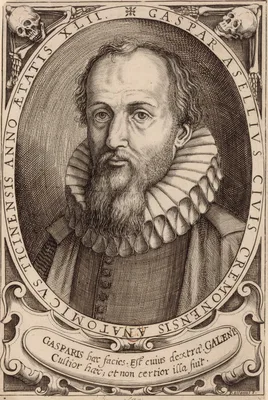
1627 ASELLI, Gaspare (1581 – 1626)
De lactibus sive lacteis venis.
Records the discovery of the lacteal vessels. While performing vivisection on a dog that had recently fed, Aselli noticed a network of vessels in the mesentery and along the peritoneal surface of the intestine. The ve…
GMN 1094 · https://historyofmedicine.com/id/916
1634 GRACHT, Jacob van der (1593 – 1652)
Anatomie der uuterlicke deelen van het menschelick lichaem: Dienende om te verstaen ende volkometlick wt te beelden alle beroerlicheit des selven lichaems.
The earliest of all independent works on anatomy for graphic or plastic artists. The author, a painter and etcher, drew and engraved all the images himself. Digital facsimile from Google Books at this link.
GMN 381.1 · https://historyofmedicine.com/id/579
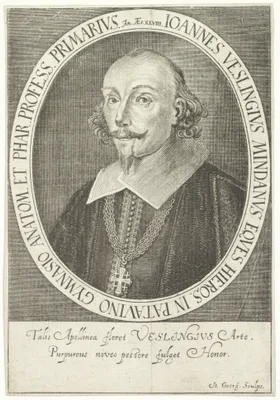
1641 VESLING, Johann (1598 – 1649)
Syntagma anatomicum, publicis dissectionibus, in auditorum usum, diligenter aptatum.
Vesling provided an early discussion of the human lymphatic system. He was one of the first physicians to describe the brain's circle of Willis. Digital facsimile from the Internet Archive at this link.
GMN 9417 · https://historyofmedicine.com/id/11600
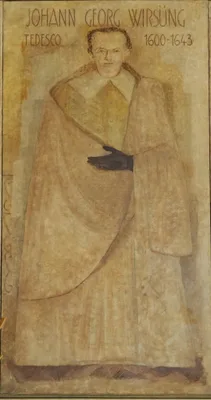
1642 WIRSUNG, Johann Georg (1589 – 1643)
Figura ductus cuiusdam cum multiplicibus suis ramulis noviter in pancreate in diversis corporibus humanis observati.
Wirsung, assistant to the celebrated German anatomist Johann Vesling, discovered the excretory duct of the pancreas named for him in 1642. To announce his discovery, Wirsung chose the extremely unusual method of publi…
GMN 7879 · https://historyofmedicine.com/id/10051
1645 FOLLI, Cecilio [FOLIUS, FUOLI] (1615 – 1660)
Nova auris internae delineatio.
An article which announces the discovery of the long process of the malleus. Folius “accurately discussed the general configuration of the middle ear, described the round and oval windows, delineated the three ossicle…
GMN 1542 · https://historyofmedicine.com/id/2865
1645 SPIEGHEL, Adriaan van der [SPIGELIUS] (1578 – 1625); LINDEN, Johannes Antonides van der (1609 – 1664)
Opera quae extant omnia. Ex recension Joh. Antonidae vander Linden.
Spieghel succeeded Casseri in the chair of anatomy at Padua. This edition of his collected writings contains the second printing of the 97 copperplates first printed in Casseri’s Tabulae anatomicae (No. 381) plus 9 ex…
GMN 61.2 · https://historyofmedicine.com/id/8777
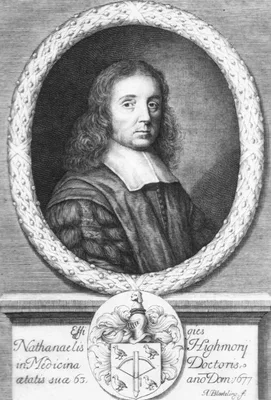
1651 HIGHMORE, Nathaniel (1613 – 1685)
Corporis humani disquisitio anatomica.
Highmore is remembered for his description of the maxillary sinus, known eponymically as the “antrum of Highmore” (already noticed by Casserius and figured by Leonardo da Vinci), the seminal ducts and the epididymis. …
GMN 382 · https://historyofmedicine.com/id/581
1651 PECQUET, Jean (1622 – 1674)
Experimenta nova anatomica, quibus incognitum chyli receptaculum, et ab eo per thoracem in ramos usque subclavis vasa lactea deteguntur.
Pecquet discovered the thoracic duct in dogs and its relation to the lacteals. Using a dog that was digesting, he described the thoracic duct, its entry into the subclavian veins, and the receptaculum chyli or chyle r…
GMN 1095 · https://historyofmedicine.com/id/929
1652 BARTHOLIN, Thomas (1616 – 1680)
De lacteis thoracicis in homine brutisque.
Contains Bartholin’s discovery of the thoracic duct. English translation, 1653.
GMN 1096 · https://historyofmedicine.com/id/932
1652 TULP, Nicolaes (1593 – 1674)
Observationes medicae.
One of the earliest accounts of beri-beri is on pp. 300-05 of this work. Tulp, notable as the demonstrator in Rembrandt’s “Anatomy Lesson”, was among the first, in the same book, to describe the ileo-caecal valve (“Tu…
GMN 3737 · https://historyofmedicine.com/id/4530
1653 BARTHOLIN, Thomas (1616 – 1680)
Vasa lymphatica.
Bartholin disputed the claim of Rudbeck as to priority in the discovery of the intestinal lymphatics. Although anticipated in this by Rudbeck, there is no doubt that Bartholinus was the first to appreciate the signifi…
GMN 1097 · https://historyofmedicine.com/id/1036
1653 RUDBECK, Olof (1630 – 1702)
Nova exercitatio anatomica, exhibens ductus hepaticos aquosos, et vasa glandularum serosa.
Rudbeck claimed to have discovered the intestinal lymphatics and their connexion with the thoracic duct in 1651, a claim disputed as to priority by Bartholin (Nos. 1096-97). This book was reproduced in facsimile in 19…
GMN 1098 · https://historyofmedicine.com/id/1045
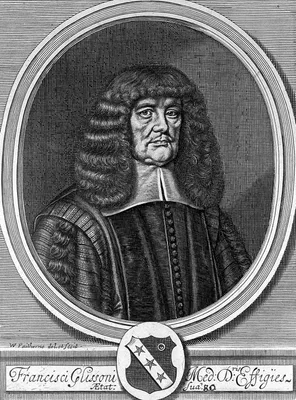
1654 GLISSON, Francis (1597 – 1677)
Anatomia hepatis.
First accurate description of the capsule of the liver (Glisson’s capsule) and its blood-supply. He also described the sphincter of the bile duct (“Glisson’s sphincter”, the sphincter of Oddi). This is the first book …
GMN 972 · https://historyofmedicine.com/id/563
1654 GLISSON, Francis (1597 – 1677)
Anatomia hepatis … subjiciuntur nonnulla de lymphae-ductibus nuper repertis.
Independently of Bartholin and Rudbeck, George Joyliffe (1621-58) observed the lymphatics. He communicated his discovery to Glisson early in 1652 and the latter included an account in the above work (Cap. xxxi). See N…
GMN 1098.1 · https://historyofmedicine.com/id/1120
1656 WHARTON, Thomas (1614 – 1673)
Adenographia: sive, glandularum totius corporis descriptio.
Wharton described the duct of the submaxillary salivary gland (“Wharton’s duct”). He described the thyroid more accurately than his predecessors, naming it. He also described “Wharton’s jelly” of the umbilical cord (p…
GMN 1116 · https://historyofmedicine.com/id/1196
1661 MALPIGHI, Marcello (1628 – 1694)
De pulmonibus observations anatomicae.
Discovery of the capillary circulation. Malpighi demonstrated that the pulmonary tissues are vesicular in nature and showed that the trachea ends in bronchial filaments. His De pulmonibus includes his demonstration of…
GMN 760 · https://historyofmedicine.com/id/1747
1662 STENO, Nicolas [Niels Steensen, Nicholaus Stenonis] (1638 – 1686)
Observationes anatomicae, quibus varia oris, oculorum & narium vas describuntur novique salivae, lacrymarum & muci fontes deteguntur.
Includes the first account of the excretory duct of the parotid gland (“Stensen’s duct”), discovered by Stensen. He first reported his discovery in a letter to his teacher, Thomas Bartholin, dated April, 22, 1661. Ste…
GMN 1543 · https://historyofmedicine.com/id/567
1662 BARTHOLIN, Thomas (1616 – 1680)
Cista medica Hafniensis: variis consiliis, curationibus, casibus rarioribus, Vitis medicorum Hafniensium, aliisq; ad rem medicam, anatomicam, botanicam & chymicam spectantibus referta. Accedit eiusdem Domus anatomica brevissime descripta.
Histories of famous physicians in Copenhagen along with the description of the building designed for the teaching of anatomy there, designated the "Anatomy House". Bartholin's Domus anatomica brevissime descripta was …
GMN 7690 · https://historyofmedicine.com/id/9862
1665 RUYSCH, Frederik (1638 – 1731)
Dilucidatio valvularum in vasis lymphaticis et lacteis.
First description of the valves of the lymphatics, discovered by Ruysch. Facsimile reprint, Niewkoop, De Graaf, 1964.
GMN 1099 · https://historyofmedicine.com/id/1121
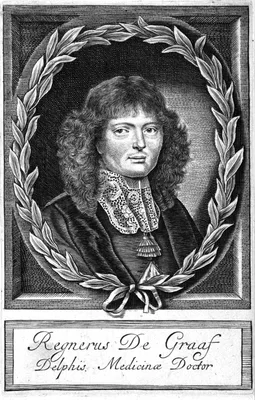
1668 GRAAF, Regnier de (1641 – 1673)
De virorum organis generationi inservientibus, de clysteribus et de usu siphonis in anatomia.
Exact and detailed account of the male reproductive system. This work and No. 1209 were translated into English and published as Suppl. 17 to J. Reprod. Fertil, 1972. Facsimile of originals, Nieuwkoop, De Graaf, 1965.
GMN 1210 · https://historyofmedicine.com/id/1867
1670 KERCKRING, Thomas Theodor (1640 – 1693)
Spicilegium anatomicum.
Kerckring made important investigations on the development of the foetal bones. He was the first to describe the large ossicle sometimes present at the lambdoidal suture; his name is remembered in the valvulae connive…
GMN 383 · https://historyofmedicine.com/id/587
1672 GENGA, Bernardino (1665 – 1734)
Anatomia chirurgica.
First book devoted entirely to surgical anatomy.
GMN 384 · https://historyofmedicine.com/id/591
1672 GRAAF, Regnier de (1641 – 1673)
De mulierum organis generationi inservientibus.
De Graaf demonstrated ovulation anatomically, pathologically and experimentally. In the above work he included the first account of the “Graafian follicle”. Translation of Chapter XII, dealing with the ovaries, by G. …
GMN 1209 · https://historyofmedicine.com/id/1863
1677 PEYER, Johann Conrad (1653 – 1712)
Exercitatio anatomico-medica de glandulis intestinorum, earumque usu et affectionibus.
Independently of Bartholin and Rudbeck, George Joyliffe (1621-58) observed the lymphatics. He communicated his discovery to Glisson early in 1652 and the latter included an account in the above work (Cap. xxxi). See N…
GMN 1100 · https://historyofmedicine.com/id/1075
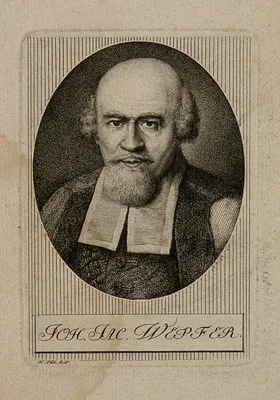
1679 WEPFER, Johann Jacob (1620 – 1695)
Cicutae aquaticae historia et noxae.
This is primarily a work on the poisonous water hemlock, its dangerous effects, its medicinal uses, and antidotes to counter the poison. However, it also contains the first description of the tiny glands in the mucosa…
GMN 974.1 · https://historyofmedicine.com/id/576
1684 BARTHOLIN, Caspar Junior (1655 – 1738)
Du ductu salivati hactenus non descriptio.
“Bartholin’s duct” and “gland”, the sublingual salivary gland and ducts.
GMN 974.2 · https://historyofmedicine.com/id/588
1684 VIEUSSENS, Raymond (1641 – 1715)
Neurographia universalis.
Vieussens, professor at Montpellier, was the first to describe the centrum ovale correctly. The publication of the above work threw new light on the subject of the configuration and structure of the brain, spinal cord…
GMN 1379 · https://historyofmedicine.com/id/1784
1684 MÉRY, Jean (1645 – 1722)
Observations anatomiques.
Includes a brief description of “Cowper’s glands”.
GMN 1212 · https://historyofmedicine.com/id/1877
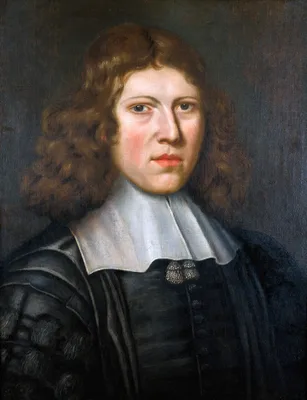
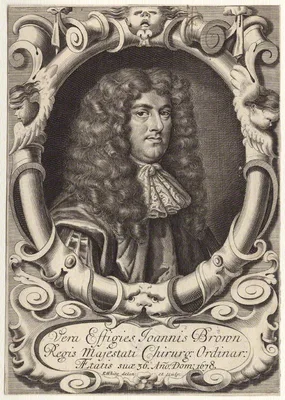
1684 LOWER, Richard (1631 – 1691); BROWNE, John (1642 – 1702)
Myographia nova, or a graphical description of all the muscles in the human body; with one and forty copper-plates.
Browne's treatise on the muscles consisted of six lectures, illustrated by copperplates. It was, however, a plagiarism, as was pointed out by James Yonge: it put together text from the Muskotomia by William Molins wit…
GMN 11684 · https://historyofmedicine.com/id/13885
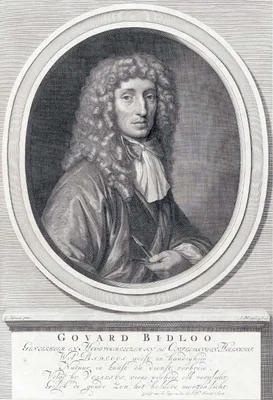
1685 BIDLOO, Govert (1649 – 1713); LAIRESSE, Gerard de (1641 – 1711)
Anatomia humani corporis, centum et quinque tabulis, per artificiosiss. G. de Lairesse ad vivum delineatis.
This large folio by Dutch physician, anatomist, poet, and playwright Govert Bidloo contains an engraved title, engraved portrait of Bidloo by Abraham Bloteling after Gérard de Lairesse and 105 engraved plates after La…
GMN 385 · https://historyofmedicine.com/id/602
1685 NUCK, Anton (1650 – 1692)
De ductu salivali novo, saliva, ductibus oculorum aquosis, et humore oculi aqueo.
Nuck’s name has been attached to the glands and duct described by him.
GMN 1101 · https://historyofmedicine.com/id/1080
1685 DIEMERBROECK, Ysbrand van (Isbrand) (1609 – 1674)
Opera omnia, anatomica et medica partim jam antea excusa, sed plurimis locis ab ipso auctore emendata, & aucta, partim nondum edita. Nunc simul collecta, & diligenter recognita, per Timannum de Diemerbroeck ... quorum elenchum sequens pagina indicabit.
Edited by the author's son.
GMN 9575 · https://historyofmedicine.com/id/11762
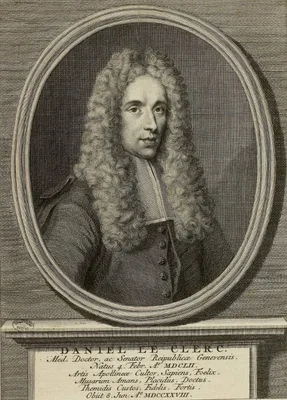
1685 LE CLERC, Daniel (1652 – 1728); MANGET, Jean-Jacques [Johann Jacob Mangetus] (1652 – 1742)
Bibliotheca anatomica sive recens in anatomia inventorum thesaurus locupletissimus, in quo integra qtque absolutissima totius corporis humani descriptio, eiusdémque oeconomia è praestantissimorum quorumque anatomicorum tractatibus singularibus, tum facenus in lucem edis, tum etiam indeditis, concinnata exhiibetur....2 vols.
With reproductions of the original engraved plates, Bibliotheca anatomica was the most extensive compilation of anatomical treatises published in the 17th century. It was an extensive anatomical library in 2 thick vol…
GMN 11174 · https://historyofmedicine.com/id/13371
1687 BRUNNER, Johann Conrad (1653 – 1727)
De glandulis in intestino duodeno hominis detectis.
“Brunner’s glands”, earlier described by Wepfer (No. 974.1).
GMN 975 · https://historyofmedicine.com/id/592
1689 GAGLIARDI, Domenico (1660 – 1745)
Anatome ossium novis inventis illustrata.
Gagliardi, a papal physician, fiirst described the lamellar structure of the bones. He also carried out some tests and comparative research between human and calf bones, and probably first described a case of bone tub…
GMN 12782 · https://historyofmedicine.com/id/15028
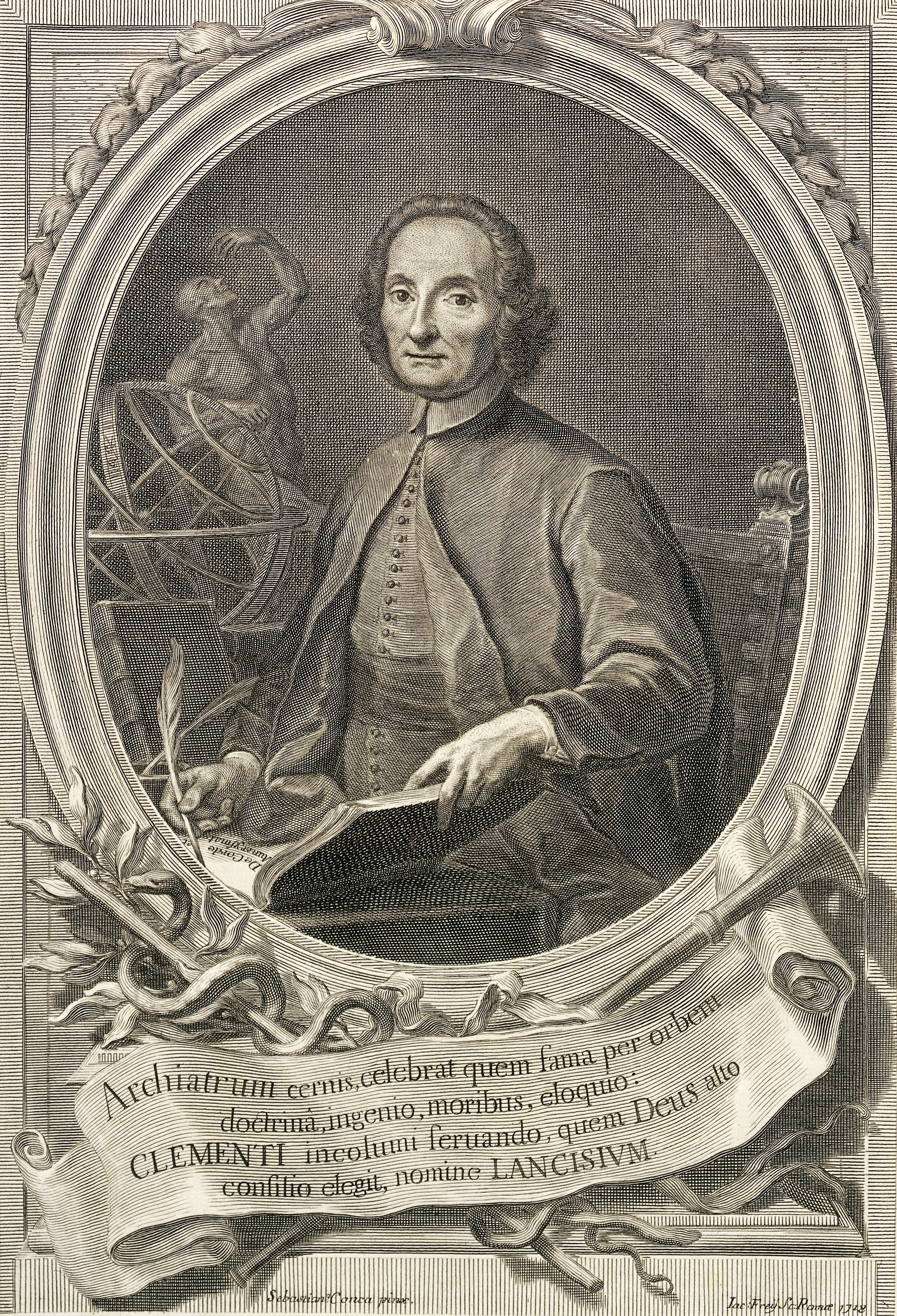
1691 GENGA, Bernardino (1665 – 1734); LANCISI, Giovanni Maria (1654 – 1720)
Anatomia per uso et intelligenza del disegno ricercata non solo su gl’ossi, e muscoli del corpo humano.
Contains 56 copper-plates, excellent anatomically and artistically, with commentary by Giovanni Maria Lancisi. This is one of the finest of all books on anatomy for artists. English translation with plates re-engraved…
GMN 386 · https://historyofmedicine.com/id/611
1691 HAVERS, Clopton (1657 – 1702)
Osteologia nova, or some new observations of the bones.
Havers discovered the Haversian canals and made important observations of the physiology of bone growth and repair. The Haversian lamellae, glands, and folds, are also named after him. The Haversian canals were observ…
GMN 387 · https://historyofmedicine.com/id/615
1691 NUCK, Anton (1650 – 1692)
Adenographia curiosa et uteri foeminei anatome nova.
Description of the “canal of Nuck”.
GMN 1213 · https://historyofmedicine.com/id/1883
1693 VERHEYEN, Philippe (1648 – 1710)
Anatomia corporis humani, in qua omnia tam veterum, quam recentiorum anatomicarum inventa methodo nova & intellectu facillima describuntur, ac tabulis aenis repaesentantur.
This work was widely used for some years after publication, superseding Bartholin in popularity. Second edition, with supplement, 2 vols., Louvain, 1706-12.
GMN 388 · https://historyofmedicine.com/id/620
1698 COWPER, William (1666 – 1709)
The anatomy of humane bodies, with figures drawn after the life by some of the best masters in Europe.
The largest in format, and most elaborate and beautiful of all 17th century English treatises on anatomy, and also one of the most extraordinary plagiarisms in the entire history of medicine. Cowper purchased sets of …
GMN 385.1 · https://historyofmedicine.com/id/605
1699 COWPER, William (1666 – 1709)
An account of two new glands and their excretory ducts, lately discovered in human bodies.
Cowper’s description of the glands which bear his name. He was forestalled in their discovery by Jean Méry.
GMN 1214 · https://historyofmedicine.com/id/1885
1910 STENO, Nicolas [Niels Steensen, Nicholaus Stenonis] (1638 – 1686); MAAR, Edward Vihelm Emil (1871 – 1940)
Opera philosophica. Edited by Vilhelm Maar. 2 vols.
Steno's collected works, presented in the original Latin with an introduction in English. Digital facsimile from biusante.parisdescartes.fr at this link.
GMN 7474 · https://historyofmedicine.com/id/9646
1981 PARENNIN, Dominique (1665 – 1741); SAUNDERS, John Bertrand deCusance Morant (1903 – 1991); LEE, Francis Ruey-Shuang (1929 – 2008)
The Manchu anatomy and its historical origin. With annotations and translations by John B. de C. M. Saunders and Francis R. Lee.
The Anatomie Manchoue, a series of graphic illustrations taken from Western anatomical works, with notes in the Manchu-Tungus language. This was compiled under the supervision of Father Parrenin, a French Jesuit worki…
GMN 6958 · https://historyofmedicine.com/id/9123
1986 STENO, Nicolas [Niels Steensen, Nicholaus Stenonis] (1638 – 1686)
Opere scientifiche. Traduzione integrale dai testi originali. Coordinatore Luciano Casella. Revisione e note a cura di Enrico Coturri. 2 vols.
Steno's collected works translated from Latin into Italian. Reproduces Steno's original engraved illustrations, plus others from the time (some in color).
GMN 7475 · https://historyofmedicine.com/id/9647