1819 LAWRENCE, Sir William (1783 – 1867)
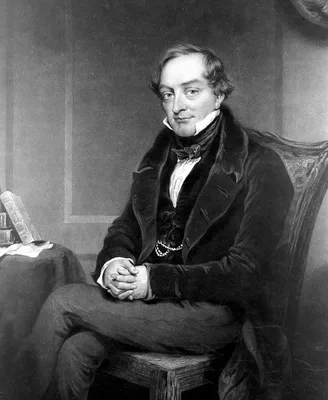
Lectures on physiology, zoology and the natural history of man.
This work set forth Lawrence's then radical and remarkably advanced ideas concerning evolution and heredity. Arguing that theology and metaphysics had no place in science, Lawrence relied instead on empirical evidence…
GMN 11240 · https://historyofmedicine.com/id/13437
1833 –1834 SCHMERLING, Phillipe-Charles (1791 – 1836)
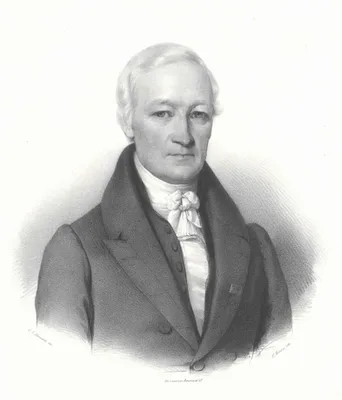
Recherches sur les ossemens fossiles découvertes dans les cavernes de la province de Liège. 2 vols. and atlas.
A physician from Delft, Schmerling found extensive human remains and artifacts associated with the remains of extinct animals in the caverns around Liège. These human remains were distinctively different anatomically …
GMN 203.8 · https://historyofmedicine.com/id/3638
1835 QUETELET, Lambert Adolphe Jacques (1796 – 1874)
Sur l’homme et le développement des facultés, ou essai de physique sociale. 2 vols.
Quetelet’s statistical researches on the development of the physical and intellectual qualities of man, and an exposition of his concept of the “average man”, which became the by-word of quantitative studies. "Quétele…
GMN 1698.1 · https://historyofmedicine.com/id/2457
1836 TIEDEMANN, Friedrich (1781 – 1861)
On the brain of the negro, compared with that of the European and the orang-outang.
In this very thoroughly researched, highly documented, and well-illustrated paper Tiedemann demonstrated that there are no significant anatomical differences between the brains and mental capacities of Black people an…
GMN 11309 · https://historyofmedicine.com/id/13507
1840 MORTON, Samuel George (1799 – 1851)
Catalogue of skulls of man, and the inferior animals, in the collection of Samuel George Morton.
Numbers 901-929 in Morton's catalogue are "Thirty Skulls of genuine unmixed NEGROES born in Africa. This interesting series series was collected by Don José Rodriguez Cisnerso, M. D. of Havana, in the island of Cuba, …
GMN 8828 · https://historyofmedicine.com/id/11006
1854 AGASSIZ, Louis Jean Rodolphe (1807 – 1873); MORTON, Samuel George (1799 – 1851); NOTT, Josiah Clark (1804 – 1873); GLIDDON, George Robbins (1809 – 1857); PATTERSON, Henry Stuart (1815 – 1854); USHER, William
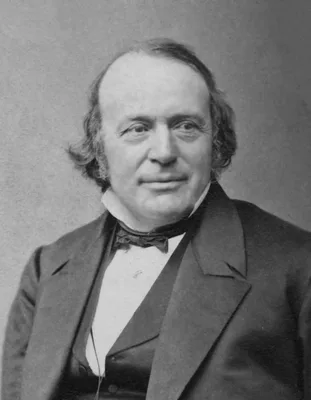
Types of mankind: or, ethnological researches based upon the ancient monuments, paintings, sculptures and crania of races, and upon their natural, geographical, philological, and biblical history; illustrated by selections from the indedited papers of Samuel George Morton, and by additional contributions by L. Agassiz, W. Usher, and H. S. Patterson
Nott, a prominent physician and anthropologist in Mobile, Alabama, employed polygenist arguments to justify slavery. This required resoilving the problem of racial hybridity. Polygenists claimed that different races w…
GMN 8827 · https://historyofmedicine.com/id/11005
1857 SCHAAFHAUSEN, Hermann (1816 – 1893); FUHLROTT, Johann Carl (1804 – 1877)
[On the Feldhofer Neanderthal.]
The first account of the Neanderthal remains (Neanderthal 1), discovered in 1856 in the the Feldhofer cave of the Neander valley. The remains, which consist of a partial skull, pelvis and assorted long bones, were sen…
GMN 7250 · https://historyofmedicine.com/id/9419
1857 AGASSIZ, Louis Jean Rodolphe (1807 – 1873); LEIDY, Joseph (1823 – 1891); NOTT, Josiah Clark (1804 – 1873); GLIDDON, George Robbins (1809 – 1857); MAURY, Louis Ferdinand Alfred (1817 – 1892); PULSZKY DE CESLFALVA ET LUBÓCZ, Ferenc Aurél (Francis Pulszky) (1814 – 1897); MEIGS, James Aitken (1829 – 1879)
Indigenous races of the earth; or new chapters of ethnological enquiry: Including monographs on special departments of philology, iconography, cranioscopy, palaeontology, pathology, archaeology, comparative geography and natural history: Contributed by Alfred Maury, Francis Pulszky, and J. Aiken Meigs. With contributions from Jos. Leiden and L. Agassiz. Presenting fresh investigations by J. C. Nott and Geo. R. Glidden.
Expensively produced, and sold in both standard and large paper subscriber editions, Nott and Gliddon's work was one of the most egregiously racist publications in the history of physical anthropology. Nott, a promine…
GMN 8825 · https://historyofmedicine.com/id/11003
1857 MORTON, Samuel George (1799 – 1851); MEIGS, James Aitken (1829 – 1879)
Catalogue of human crania, in the collection of the Academy of Natural Sciences of Philadelphia: Based upon the third edition of Dr. Morton's "Catalogue of Skulls," &c.
"Since the death of the late lamented President of the Academy of Natural Sciences,- Dr. Samuel George Morton,- his magnifcent Collection of Human Crania, recently increased by the receipt of 67 skulls from various so…
GMN 8829 · https://historyofmedicine.com/id/11007
1857 WILLIAMSON, George (1818 – 1865)
Observations on the human crania contained in the Museum of the Army Medical Department, Fort Pitt, Chatham.
Reprinted from the Dublin Quarterly Journal of Medical Science, May and August, 1857. Digital facsimile from the Internet Archive at this link.
GMN 10376 · https://historyofmedicine.com/id/12568
1858 SCHAAFHAUSEN, Hermann (1816 – 1893)
Zur Kenntniss der ältesten Rassenschädel.
The first comprehensive description of the Neanderthal skull, following Schaaffhausen’s and Fuhlrott’s preliminary announcements of the discovery in the Verhandlungen des naturhistorischen Vereines der preussischen Rh…
GMN 204 · https://historyofmedicine.com/id/3844
1859 FUHLROTT, Johann Carl (1804 – 1877)
Menschliche Ueberreste aus einer Felsengrotte des Düssenthals. Ein Beitrag zur Frage über die Existenz fossiler Menschen.
Fuhlrott’s first detailed account of the “Neanderthal 1” skeleton discovered in 1856 in the Kleine Feldhofer Grotte, located in the Düssel River gorge in southwestern Germany.
GMN 7251 · https://historyofmedicine.com/id/9420
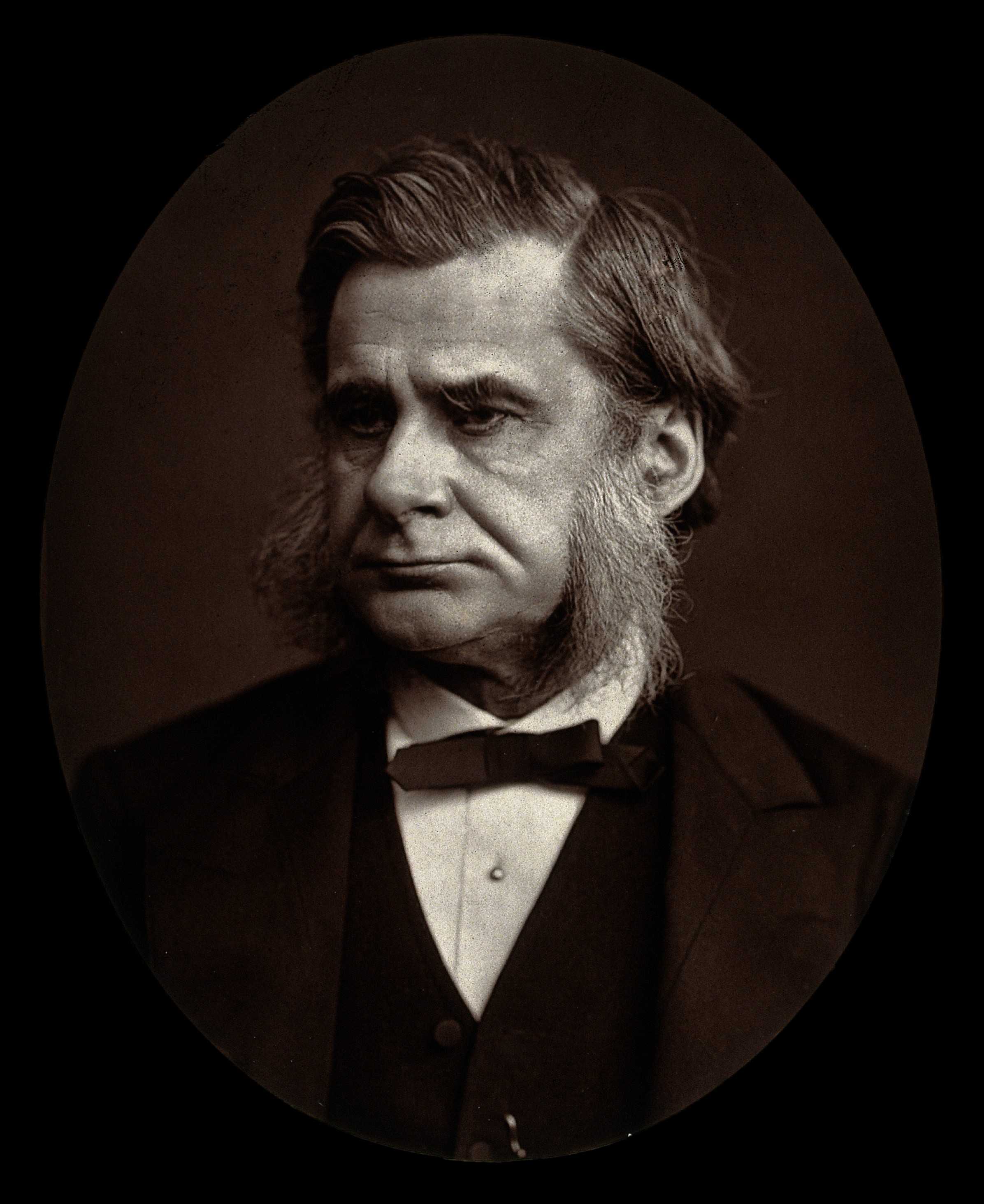
1863 HUXLEY, Thomas Henry (1825 – 1895)
Evidence as to man’s place in nature.
Huxley showed that in the visible characters man differs less from the higher apes than do the latter from lower members of the same order of primates. He also provided the first thorough and detailed comparative desc…
GMN 165 · https://historyofmedicine.com/id/3242
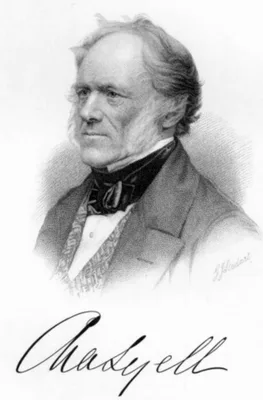
1863 LYELL, Sir Charles (1797 – 1875)
The geological evidences of the antiquity of man with remarks on theories of the origin of species by variation.
Lyell’s summary discussion of the evidence for human antiquity “introduced a wide readership to the new view and to the facts that supported it, thus laying the synthetic foundation for future work” (Grayson). This wo…
GMN 204.1 · https://historyofmedicine.com/id/3847
1864 HIS, Wilhelm Sr. (1831 – 1904); RÜTIMEYER, Ludwig (1825 – 1895)
Crania Helvetica: Sammlung schweizerischer Schädelformen.
Digital facsimile from Google Books at this link.
GMN 203.1 · https://historyofmedicine.com/id/3575
1864 KING, William (1809 – 1886)
The reputed fossil man of the Neanderthal.
King believed that the Feldhofer Neanderthal skull discovered by Fuhrott and Schaafhausen differed significantly from all known ancient and modern human crania. In this paper he proposed the name Homo neanderthalensis…
GMN 14042 · https://historyofmedicine.com/id/16350
1868 LARTET, Louis (1840 – 1899)
Mémoire sur une sépulture des anciens troglodytes du Périgord.
In March 1868, railway workers clearing away debris from a rock shelter known locally as the Abri de Crô-Magnon (shelter of Crô-Magnon) at Les Eyzies, Dordogne, noticed stone tools and pieces of skeleton imbedded in t…
GMN 7252 · https://historyofmedicine.com/id/9421
1871 –1888 BROCA, Pierre Paul (1824 – 1880)
Mémoires d’anthropologie. 5 vols.
Most often remembered for his contributions to neurology, Broca was also among the greatest of the French anthropologists. He originated modern craniometry and in that connection devised many craniometric and craniosc…
GMN 169 · https://historyofmedicine.com/id/3253
1877 VIRCHOW, Rudolf Ludwig Karl (1821 – 1902)
Beiträge zur physischen Anthropologie der Deutschen. Mit besonderer Berücksichtigung der Friesen.
Virchow made an important survey of the physical characters of the German people. Outside pathology of which he was the Master, Virchow’s greatest scientific interest was anthropology.
GMN 176 · https://historyofmedicine.com/id/3335
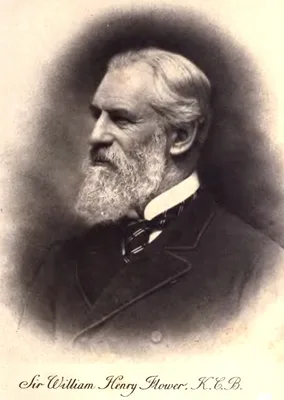
1879 –1891 HUNTER, John (1728 – 1793); FLOWER, William Henry (1831 – 1899); SHARPE, Richard Bowdler (1847 – 1909)
Catalogue of the specimens illustrating the osteology and dentition of vertebrated animals, recent and extinct, contained in the Museum of the Royal College of Surgeons of England. 3 vols.: Part 1. Man: Homo sapiens.... Part II: Class Mammalia, other than man... Part III: Class Aves.
Parts 1 and 2 by Flower; part 3 by Sharpe. Digital facsimile of Part 1 from the Biodiversity Heritage Library at this link, of Part 2 at this link, and Part 3 at this link.
GMN 7591 · https://historyofmedicine.com/id/9763
1882 QUATREFAGES DE BRÉAU, Jean Louis Armand de (1810 – 1892); HAMY, Ernest Théodore Jules (1842 – 1908)
Crania ethnica. Les crânes des races humaines décrits et figurés d 'après les collections du Muséum d'Histoire Naturelle de Paris, de la Société d'Anthropologie de Paris et les principales collections de la France et de l'étranger par A. de Quatrefages et Ernest T. Hamy: Ouvrage accompagné de planches lithographiées d'après nature par H. Formant et illustré de nombreuses figures intercalées. 2 vols.
Digital facsimile from the Bayerische StaatsBibliothek at this link.
GMN 203.2 · https://historyofmedicine.com/id/3584
1894 DUBOIS, Marie Eugène François Thomas (1858 – 1940)
Pithecanthropus erectus. Eine menschenähnliche Uebergangsform aus Java.
Privately issued first report on Homo erectus. In 1891 Dubois discovered remains of what he described as "a species in between humans and apes" at Trinil, Java. He called his finds Pithecanthropus erectus ("ape-human …
GMN 210 · https://historyofmedicine.com/id/3848
1895 HIS, Wilhelm Sr. (1831 – 1904)
Anatomische Forschungen über Johann Sebastian Bach's Gebeine und Anlitz nebst Bemerkungen über dessen Bilder. Abh. Sächs. Ges. Wiss., 22/5.
To authenticate the remains of Johann Sebastian Bach, Wilhelm His senior performed one of the earliest examples of scientific facial reconstructions, reconstructing the soft tissues onto a plaster cast of the skull us…
GMN 7408 · https://historyofmedicine.com/id/9580
1908 HRDLIČKA, Aleš (1869 – 1943)
Physiological and medical observations among the Indians of Southwestern United States and Northern Mexico.
Digital facsimile from the Internet Archive at this link.
GMN 6455.1 · https://historyofmedicine.com/id/8626
1908 SCHOETENSACK, Otto (1850 – 1912)
Der Unterkiefer des Homo heidelbergensis aus den Sanden von Mauer bei Heidelberg. Ein Beitrag zur Paläontologie des Menschens.
First report on the Mauer jaw discovered by Schoetensack in a sandpit or quarry in the environs of Heidelberg. This was the first fossil specimen unearthed of an extinct hominin species which Schoetensack named Homo h…
GMN 7253 · https://historyofmedicine.com/id/9422
1908 ADLOFF, Paul Max Eugen (1870 – 1944)
Das Gebiss des Menschen und der Anthropomorphen. Vergleichend anatomische Untersuchungen.
GMN 11329 · https://historyofmedicine.com/id/13527
1910 KEITH, Sir Arthur (1866 – 1955)
Illustrated guide to the museum of the Royal College of Surgeons.
Vistor's guide to the museum, including the collections formed by John Hunter, when it was intact, before the destruction it suffered in World War II. Digital facsimile from the Internet Archive at this link.
GMN 10364 · https://historyofmedicine.com/id/12556
1913 SMITH, Sir Grafton Elliot (1871 – 1937); DAWSON, Charles (1864 – 1916); WOODWARD, Arthur Smith (1864 – 1944)
On the discovery of a palaeolithic skull and mandible in a flint-bearing gravel overlying the Wealden (Hastings Beds) at Piltdown, Fletching (Sussex). With appendix by Grafton Elliot Smith.
Order of authorship in the original publication: Dawson, Woodward. The first "scientific" report on “Piltdown man” (Eoanthropus dawsoni,) one of the longest-lasting and most influential hoaxes ever perpetrated in scie…
GMN 211 · https://historyofmedicine.com/id/3866
1921 WOODWARD, Arthur Smith (1864 – 1944)
A new cave man from Rhodesia, South Africa.
The first fossil human discovered in Africa: Homo rhodesiensis, commonly referred to as the Broken Hill Skull or the Kabwe Cranium.The skull, which most current experts classify as Homo heidelbergensis, was discovered…
GMN 7309 · https://historyofmedicine.com/id/9479
1922 SMITH, Sir Grafton Elliot (1871 – 1937)
The Rhodesian skull.
Description of the skull found at Broken Hill, Rhodesia, in 1921.
GMN 212 · https://historyofmedicine.com/id/3875
1922 GREGORY, William King (1897 – 1970)
The origin and evolution of the human dentition.
Reprinted with revisions and new index from J. dent. Res., 1920, 2, 89-175, 215-426, 604-717; 1921, 3, 87-228.
GMN 3691.1 · https://historyofmedicine.com/id/5728
1925 DART, Raymond Arthur (1893 – 1988)
Australopithecus africanus: The man-ape of South Africa.
First report on Dart's discovery in 1924 of the first member of the genus Australopithecus, the first hominin found in Africa. In their 150th anniversary issue published on November 4, 2019 the editors of Nature inclu…
GMN 211.1 · https://historyofmedicine.com/id/3871
1927 BLACK, Davidson (1884 – 1934)
The lower molar hominid tooth from the Chou Kou Tien deposit.
In this report on a single hominid tooth found by Swedish archeologist Birger Bohlin at the Zhoukoudian site in 1927 Black named a new genus and species of hominid, Sinanthropus pekinensis. He characterized the specim…
GMN 7255 · https://historyofmedicine.com/id/9424
1928 ADACHI, Buntarō (1865 – 1945); HASEBE, Kotondo (1882 – 1969)
Das Arteriensystem der Japaner von Dr. Buntaro Adachi unter Mitwirkung von Dr. Kotondo Hasebe ... mit 539 Abbildungen im Text und auf vier farbigen Tafeln sowie mit etwa 700 Tabellen.
GMN 9516 · https://historyofmedicine.com/id/11701
1931 SMITH, Sir Grafton Elliot (1871 – 1937)
Sinanthropus – Peking Man, its discovery and significance.
Elliot Smith visited Peking to view the skull of Sinanthropus pekinensis, discovered by W. C. Pei on December 2, 1929. A preliminary description by Pei is to be found in Bull. geol. Soc. China, 1929, 8, 3.
GMN 213 · https://historyofmedicine.com/id/3877
1938 BROOM, Robert (1866 – 1951)
The Pleistocene anthropoid apes of South Africa.
Paranthropus robustus, discovered by Broom in Kromdraal, South Africa, in 1938. The species is generally dated from about 2 million to 1.2 million years before present.
GMN 7281 · https://historyofmedicine.com/id/9451
1943 WEIDENREICH, Franz (1873 – 1948)
The skull of Sinanthropus pekinensis: A comparative study on a primitive hominid skull.
Digital facsimile from the Internet Archive at this link.
GMN 214 · https://historyofmedicine.com/id/8936
1946 BROOM, Robert (1866 – 1951); SCHEPERS, Gerrit Willem Hendrik (1914 – )
Pretoria: The South African fossil ape-men. The Australopithecinae. Part I. The occurrence and general structure of the South African ape-men.
With this comprehensive report Broom presented his case to the scientific establishment that Australopithecus probably represented the stock from which mankind had evolved.
GMN 214.1 · https://historyofmedicine.com/id/3948
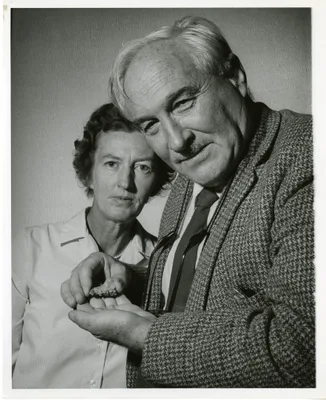
1959 LEAKEY, Louis Seymour Bazett (1903 – 1972)
A new fossil from Olduvai.
In 1959 Mary Leakey discovered the "Zinj" skull (OH 5) at Olduvai Gorge. This became the type specimen for Paranthropus boisei, arguably the most famous early human fossil from Olduvai in Northern Tanzania. The specie…
GMN 7288 · https://historyofmedicine.com/id/9458
1961 LEAKEY, Louis Seymour Bazett (1903 – 1972); ET AL
Age of Bed I, Olduvai Gorge, Tanganyika.
Introduction of the potassium-argon dating method to paleoanthropology, showing that lava at the base of the site of Olduvai Gorge was about 1.8 million years old, and proving that fossils, Australopithecus (Zinjanthr…
GMN 214.2 · https://historyofmedicine.com/id/8937
1962 KROGMAN, Wilton Marion (1903 – 1987)
The human skeleton in forensic medicine.
GMN 9887 · https://historyofmedicine.com/id/12075
1964 LEAKEY, Louis Seymour Bazett (1903 – 1972); TOBIAS, Phillip Valentine (1925 – 2012); NAPIER, John Russell (1917 – 1987)
A new species of the genus Homo from Olduvai Gorge.
First report on Homo habilis.
GMN 7270 · https://historyofmedicine.com/id/9440
1968 COPPENS, Yves (1934 – ); ARAMBOURG, Camille (1885 – 1969)
Sur la decouverte dans le Pleistocene inferieur de la valle de l'Omo (Ethiopie) d'une mandibule d'Australopithecien.
In 1967 Arambourg and Coppens discovered Omo 18, the first specimen of Paranthropus aethiopicus, also known as Paraustralopithecus aethiopicus; however it's classification as a new species was initially dismissed. In …
GMN 7282 · https://historyofmedicine.com/id/9452
1976 JOHANSON, Donald Carl (1943 – ); TAIEB, Maurice (1935 – )
Plio-Pleistocene hominid discoveries in Hadar, Ethiopia.
Report on the Afar fossils (formally classified and named Australopithiecus afaranesis in 1998) representing a minimum of 35 and a maximum of 65 individuals, all about 3,000,000 years old. The most famous of these, AL…
GMN 214.3 · https://historyofmedicine.com/id/8938
1978 JOHANSON, Donald Carl (1943 – ); WHITE, Timothy Douglas (1950 – ); COPPENS, Yves (1934 – )
A new species of the genus Australopithecus (Primates: Hominidae) from the Pliocene of Eastern Africa.
Johanson and colleagues formally named the species Afarensis of the genus Australopithecus in 1978.
GMN 7277 · https://historyofmedicine.com/id/9447
1981 TANNER, James Mourilyan (1920 – 2010)
A history of the study of human growth.
GMN 197.1 · https://historyofmedicine.com/id/8211
1984 SPENCER, Frank (1941 – 1999); SMITH, Fred H.
The origins of modern humans: A world survey of the fossil evidence.
An historical and analytical review of the literature up to 1984, with detailed bibliographies, by several outstanding authorities, edited by Smith and Spencer. Includes, pp. 411-483, Milford H. Wolpott, Wu Xin Zhi, a…
GMN 7272 · https://historyofmedicine.com/id/9442
1985 BROWN, Frank Harold (1943 – 2017); HARRIS, John W. K.; LEAKEY, Richard Erskine Frere (1944 – )
Early Homo erectus skeleton from west Lake Turkana, Kenya.
The Turkana Boy, (KNM-WT 15000) now called Nariokotome Boy, a Homo erectus fossil which was in 2016 the most complete early human skeleton found. It is a nearly complete skeleton of a hominin youth believed to be 1.5 …
GMN 7284 · https://historyofmedicine.com/id/9454
1986 SPENCER, Frank (1941 – 1999)
Ecce Homo: An annotated bibliographic history of physical anthropology.
GMN 6979 · https://historyofmedicine.com/id/9145
1986 ALEKSEYEV, Valery Pavlovich (ALEXEEV) (1929 – 1991)
The origin of the human race.
First publication in English by Alekseyev of Homo rudolfensis, primarily known from KNM-ER 1470, discovered in Koobi Fora in the Lake Turkana basin, Kenya. Alekseyev (Alexeev) first proposed the species in 1978, initi…
GMN 7283 · https://historyofmedicine.com/id/9453