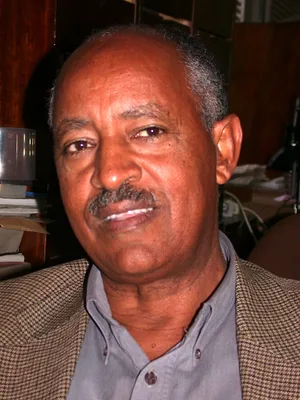
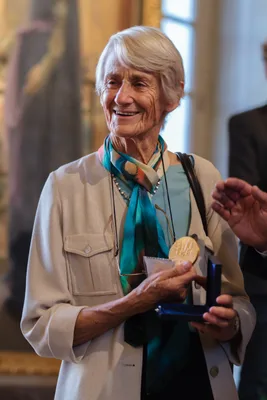
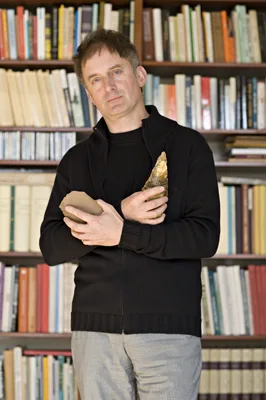
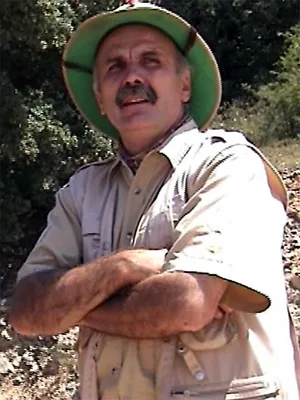
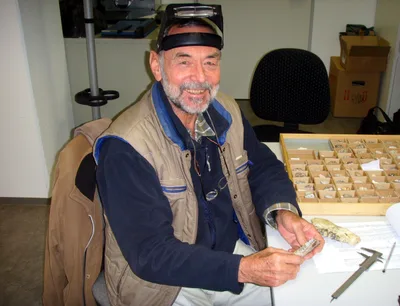
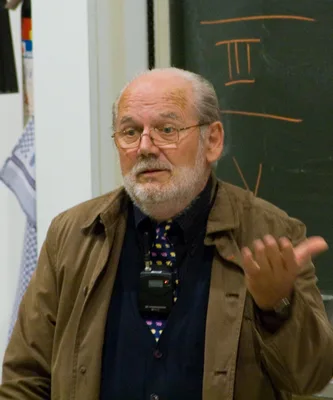
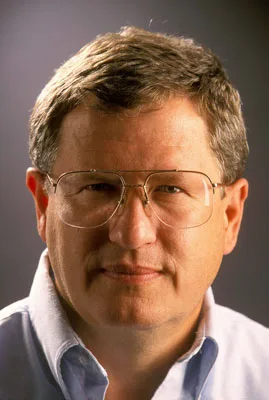
1994 WHITE, Timothy Douglas (1950 – ); SUWA, Gen (1954 – ); ASFAW, Berhane (1954 – )
Australopithecus ramidus, a new species of early hominid from Aramis, Ethiopia.
Between 1992 and 1994 White and his team discovered the first Ardipithecus ramidus fossils in the Middle Awash area of Ethiopia. They named their discovery Ardipithecus ramidus (‘ramid’ means ‘root’ in the Afar langua…
GMN 7276 · https://historyofmedicine.com/id/9446
1995 LEAKEY, Meave G. (1942 – ); FEIBEL, Craig S.
New four-million-year-old hominid species from Kanapoi and Allia Bay, Kenya.
In 1965, a research team led by Bryan Patterson from Harvard University discovered a single arm bone (KNM-KP 271) of an early human at Kanapoi in northern Kenya, but without additional fossils Patterson could not conf…
GMN 7278 · https://historyofmedicine.com/id/9448
1995 ROEBROEKS, Wil (1955 – ); KOLFSCHOTEN, Matthijs van (1952 – )
The earliest occupation of Europe. Proceedings of the European Science Foundation workshop at Tautavel (France) 1993.
The first effort to present summaries of the evidence for earliest occupation in all the regions of Europe including Russia, edited by Roebroeks and van Kolfschoten.
GMN 7525 · https://historyofmedicine.com/id/9697
1997 SPENCER, Frank (1941 – 1999)
History of physical anthropology: An encyclopedia edited by Frank Spencer. 2 vols.
GMN 6978 · https://historyofmedicine.com/id/9144
1997 CARBONELL, Eudald (1953 – ); ARSUAGA, Juan Luis (1954 – ); BERMÚDEZ DE CASTRO Y RISUEÑO, José María (1952 – ); ET AL
A hominid from the Lower Pleistocene of Atapuerca, Spain: possible ancestor to Neandertals and modern humans.
Homo antecessor, an extinct human species (or subspecies) dating from 1.2 million to 800,000 years ago, discovered in the Sierra de Atapuerca region of Northern Spain. With A. Rosas, I Martinez and M. Mosquera.
GMN 7285 · https://historyofmedicine.com/id/9455
2001 SENUT, Brigitte (1954 – ); PICKFORD, Martin (1943 – )
'Millennium Ancestor', a 6-million-year-old bipedal hominid from Kenya - Recent discoveries push back human origins by 1.5 million years.
Living around 6 million years ago, in the Tugen hills region of central Kenya, this species, named Orrorin tugenensis, had small teeth with thick enamel similar to modern humans. It climbed trees, but also probably wa…
GMN 7275 · https://historyofmedicine.com/id/9445
2001 LEAKEY, Meave G. (1942 – )
New hominin genus from eastern Africa shows diverse middle Pliocene lineages.
In 1998 and 1999, working in the Lake Turkana region of northern Kenya, Meave Leakey and her team found a cranium and other fossil remains of a 3.5 million year old hominin with a mixture of features unseen in other e…
GMN 7279 · https://historyofmedicine.com/id/9449
2001 QUIGLEY, Christine (1963 – )
Skulls and skeletons: Human bone collections and accumulations.
GMN 10707 · https://historyofmedicine.com/id/12901
2002 BRUNET, Michel (1940 – )
A new hominid from the Upper Miocene of Chad, central Africa.
The first paper on Sahelanthropus tchadensis, dating from between 7 and 6 million years ago in West Central Africa (northern Chad). This species had a combination of ape-like and human-like features. Ape-like elements…
GMN 7274 · https://historyofmedicine.com/id/9444
2002 –2005 SCHWARTZ, Jeffrey Hugh (1948 – ); TATTERSALL, Ian (1945 – ); HOLLOWAY, Ralph Leslie Jr. (1935 – ); BROADFIELD, Douglas C.; YUAN, Michael S.
The human fossil record. 4 vols.
Vol. 1: Terminology and Craniodental Morphology of Genus Homo (Europe). Vol. 2: Craniodental morphology of Genus Homo (Africa and Asia). Vol. 3: Brain endocasts—the paleoneurological evidence. Vol. 4: Crandiodental mo…
GMN 11243 · https://historyofmedicine.com/id/13440
2003 SPOOR, Fred; HUBLIN, Jean-Jacques (1953 – ); ZONNEFELD, Frans W.
The bony labyrinth of Neanderthals.
Computed tomography of the inner ear of 20 Neanderthal specimens directed by Spoor showed that the Neanderthal semicircular canal is subtly distinct in size, shape, and orientation from that of modern humans. With Mar…
GMN 7261 · https://historyofmedicine.com/id/9430
2004 BROWN, Peter; MORWOOD, Michael John (1950 – 2013)
A new small-bodied hominin from the Late Pleistocene of Flores, Indonesia.
In 2003 a joint Indonesian-Australian research team led by Michael Morwood found LB-1—a nearly complete female skeleton of a tiny human that lived about 80,000 years ago—in Liang Bua cave on the island of Flores, Indo…
GMN 7286 · https://historyofmedicine.com/id/9456
2006 SCHWARTZ, Jeffrey Hugh (1948 – )
Race and the odd history of human paleontology.
Abstract: "Although the late 17th century witnessed the recognition of fossils as the remains of extinct organisms—because they could be incorporated into the creation story embodied in the Great Chain of Being—accept…
GMN 14041 · https://historyofmedicine.com/id/16349
2007 RETZIUS, Magnus Gustaf (1842 – 1919); LINDBLAD, Thomas
Gustaf Retzius: A Biography by Thomas Lindblad. With special contributions by Gunnar Grant, Björn Afzelius, Olle Johansson & Markku Virtanen, Helge Rask-Andersen, Torstein Sjøvold. Editor: Ove Hagelin.
A finely written and superbly illustrated and produced study of Retzius's life and published works, issued in the style of Retzius's magnificent publications.
GMN 14074 · https://historyofmedicine.com/id/16385
2010 BERGER, Lee Rogers (1960 – )
Australopithecus sediba: A New Species of Homo-Like Australopith from South Africa.
Matthew Berger, the young son of Lee Berger, discovered the first specimen of Australopithecus sediba, the right clavicle of MH1, on the 15th of August in 2008. This species of Australopithecus dates to about 2 millio…
GMN 7280 · https://historyofmedicine.com/id/9450
2014 OWSLEY, Douglas W. (1951 – ); JANTZ, Richard L.
Kennewick man: The scientific investigation of an ancient American skeleton. Edited by Douglas W. Owsley and Richard L. Jantz.
" This volume resents the results of the most comprehensive scientific study of one of the most complete ancient human skeletons ever found in North America" (from the introduction). "Kennewick Man is the name general…
GMN 10087 · https://historyofmedicine.com/id/12276