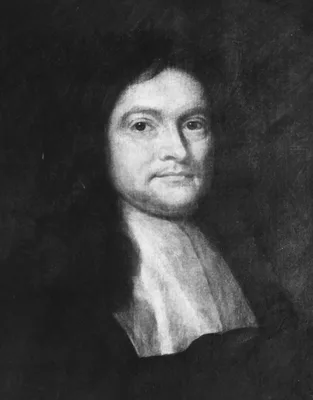
1645 WHISTLER, Daniel (1619 – 1684)
Disputatio medica inauguralis, de morbo puerili Anglorum, quem patrio idiomate indigenae vocant The Rickets.
In his 26th year Whistler published his graduation thesis at Leiden; this was the first description of rickets as a definite disease manifesting itself by a more or less constant association of symptoms. Still (No. 63…
GMN 3727 · https://historyofmedicine.com/id/4502
1649 BOATE, Arnold [BOOTIUS]. (1600 – 1653)
Observationes medicae de affectibus omissis.
Boate who spent many years in Ireland, included a full first-hand account of rickets in Chapter 12 of the above book (“De tabe pectorea”). He showed how widespread the disease was at that time. Reprinted in Opuscula S…
GMN 3728 · https://historyofmedicine.com/id/4506
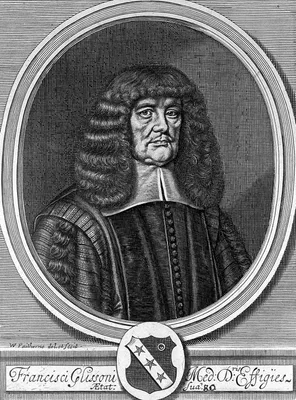
1650 GLISSON, Francis (1597 – 1677); BATE, George (1608 – 1668); REGEMORTER, Ahasuerus (Assuerus Regimorter) (1614 – 1650)
De rachitide sive morbo puerili, qui vulgo The Rickets dicitur tractatus.
Although anticipated by Whistler and others in the description of infantile rickets, Glisson’s account was the fullest that had till then appeared. He was first (Chap. 22) to describe infantile scurvy. Glisson’s book …
GMN 3729 · https://historyofmedicine.com/id/4509
1824 SCHÜTTE, D
Beobachtungen Über den Nutzen des Berger Leberthrans (Oleum jecoris Aselli, von Gadus asellus L.)
First report of the value of cod-liver oil in the treatment of rickets.
GMN 3730 · https://historyofmedicine.com/id/4511
1859 MÖLLER, Julius Otto Ludwig (1819 – 1887)
Ueber akute Rachitis.
Möller was the first to describe the acute form of rickets combined with scurvy now associated with the name of Barlow (No. 3720).
GMN 3718 · https://historyofmedicine.com/id/4483
1878 CHEADLE, Walter Butler (1836 – 1910)
Three cases of scurvy supervening on rickets in young children.
Infantile scurvy was confused with rickets until Cheadle differentiated between the two conditions.
GMN 3719 · https://historyofmedicine.com/id/4486
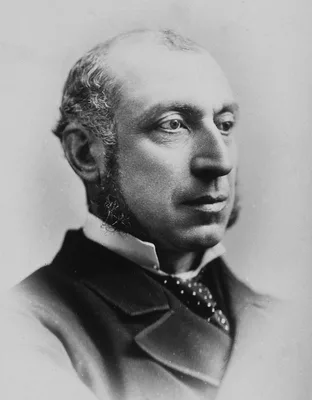
1883 BARLOW, Sir Thomas (1845 – 1945)
On cases described as “acute rickets” which are probably a combination of scurvy and rickets, the scurvy being an essential, and the rickets a variable, element.
Classic description of infantile scurvy (“Barlow’s disease”), which includes the pathology of the condition. See also his earlier paper in Trans. int. med. Congr., 1881, 4, 116-28. Reprinted, but without the colored l…
GMN 3720 · https://historyofmedicine.com/id/4487
1885 POMMER, Gustav (1851 – 1935)
Untersuchungen über Osteomalacie und Rachitis.
Hess considered this the foremost contribution to the subject during the 19th century.
GMN 3731 · https://historyofmedicine.com/id/4514
1918 –1919 MELLANBY, Sir Edward (1884 – 1955)
The part played by an “accessory factor” in the production of experimental rickets.
First convincing experimental evidence that rickets is a deficiency disease, curable by correct diet.
GMN 3733 · https://historyofmedicine.com/id/4520
1919 HULDSCHINSKY, Kurt (1883 – 1941)
Heilung von Rachitis durch künstliche Höhensonne.
Rickets cured by ultraviolet irradiation.
GMN 3732 · https://historyofmedicine.com/id/4516
1919 MELLANBY, Sir Edward (1884 – 1955)
An experimental investigation on rickets.
In his important experiments on rickets, Mellanby both induced and controlled the disease by diet.
GMN 3734 · https://historyofmedicine.com/id/4522
1922 MCCOLLUM, Elmer Verner (1879 – 1967); ET AL
Studies on experimental rickets. XXI. An experimental demonstration of the existence of a vitamin which promotes calcium deposition.
Discovery of vitamin D. with N. Simmonds, J. E. Becker, and P. G. Shipley.
GMN 1054.1 · https://historyofmedicine.com/id/637
1925 STEENBOCK, Harry (1886 – 1967); ET AL
Fat-soluble vitamin. XXVI. Antirachitic property of milk and its increase by direct irradiation and by irradiation of the animal.
Demonstration that the therapeutic properties of ultra-violet light could be effectively stored in foods and later released after consumption. With E. B. Hart, C. A. Hoppert, and A. Black.
GMN 1056 · https://historyofmedicine.com/id/652
1926 ROSENHEIM, Sigmund Otto (1871 – 1955); WEBSTER, Thomas Arthur
The anti-rachitic properties of irradiated sterols.
Proof that the irradiation of ergosterol formed vitamin D.
GMN 1058.1 · https://historyofmedicine.com/id/669
1926 BUER, M. C.
Health, wealth and population in the early days of the industrial revolution.
Chapters on water supply, 18th physicians and pioneers of public health, the hospital and dispensary movement, general hygiene and midwifery, rickets and scurvy, antiseptics, smallpox, anti-typhus campaign, malaria, etc.
GMN 10467 · https://historyofmedicine.com/id/12660
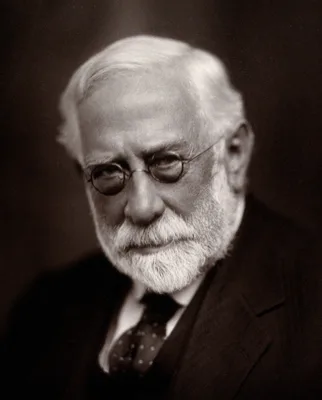
1929 HESS, Alfred Fabian (1875 – 1933)
Rickets, including osteomalacia and tetany.
Hess made numerous clinical observations on rickets and scurvy and discovered that antirachitic properties could be imparted to certain oils and to food by exposing them to ultra-violet rays. His book includes an impo…
GMN 3735 · https://historyofmedicine.com/id/4524
1930 MILKMAN, Louis Arthur (1895 – 1951)
Pseudofractures (hunger osteopathy, late rickets, osteomalacia): report of a case.
“Milkman’s syndrome”.
GMN 4398 · https://historyofmedicine.com/id/6005