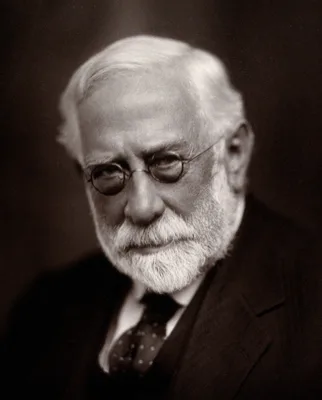
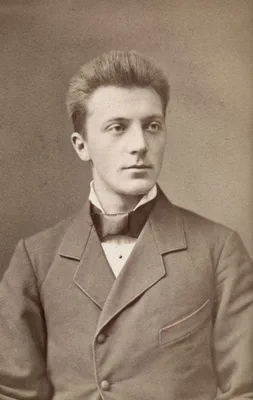
1564 RONSSE, Boudewijn [Balduinus Ronsseus] (1525 – 1597)
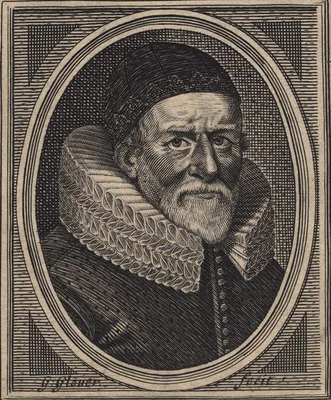
De magnis Hippocratis lienibus, Pliniique stomacace, ac sceletyrbe, seu vulgo dicto scorbuto, libellus.
Jean de Joinville was probably the first, about 1250, to describe scurvy; Vasco da Gama noted its occurrence at sea, and Jacques Cartier mentioned it. Ronsse gave an early medical account describing how sailors cured …
GMN 3710 · https://historyofmedicine.com/id/4462
1598 WATESON, George
The cures of the diseased, in remote regions. Preventing mortalitie, incident in forraine attempts, of the English nation.
This book is the earliest work in English devoted to tropical medicine. It discusses sunstroke, tabardilla (possibly typhus or yellow fever), prickly heat, dysentery, erysipelas and scurvy. Facsimile reproduction, wit…
GMN 2262 · https://historyofmedicine.com/id/2805
1617 WOODALL, John (1570 – 1643)
The surgions mate, or, A treatise discouering faithfully and plainely the due contents of the surgions chest: the uses of the instruments, the vertues and operations of the medicines, the cures of the most frequent diseases at sea: namely, wounds, apostumes, vlcers, fistulaes, fractures, dislocations, with the true maner of amputation, the cure of the scuruie, the fluxes of the belly, of the collica and illiaca passio, tenasmus, and exitus ani, the callenture; with a briefe explanation of sal, sulphur, and mercury; with certaine characters, and tearmes of arte.
Woodall was the surgeon-general to the East India Company. This was the first textbook for naval surgeons. Woodall, surgeon to Saint Bartholomew's Hospital, was an early advocate of limes and lemons as a preventive me…
GMN 2144 · https://historyofmedicine.com/id/2726
1623 ABREU, Aleixo de (1568 – 1630)
Tratado de las siete enfermedades, de la inflammacion universal del higado, zirbo, pyloron, y riñones, y de la obstrucion, de la satiriasi, de la terciana y febre maligna, y passion hipocondriaca. Lleva otros tres tratados, del mal de Loanda, del guzano, y de las fuentes y sedales.
The first important work on tropical diseases. Only six copies of the original edition of this book are known. It includes full accounts of malaria, typhoid, and scurvy, and the first accurate descriptions of yellow f…
GMN 2262.1 · https://historyofmedicine.com/id/2808
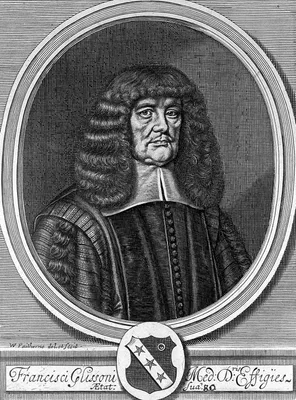
1650 GLISSON, Francis (1597 – 1677); BATE, George (1608 – 1668); REGEMORTER, Ahasuerus (Assuerus Regimorter) (1614 – 1650)
De rachitide sive morbo puerili, qui vulgo The Rickets dicitur tractatus.
Although anticipated by Whistler and others in the description of infantile rickets, Glisson’s account was the fullest that had till then appeared. He was first (Chap. 22) to describe infantile scurvy. Glisson’s book …
GMN 3729 · https://historyofmedicine.com/id/4509
1685 DELLON, Charles Gabriel (1649 – 1710)
Traité des maladies particulières aux pays orientaux, et dans la route, et de leurs Remèdes. Par M.C.D.D.E.M.
At the age of 17, Dellon, who is sometimes referred to as Gabriel Dellon, embarked as second surgeon aboard the ship La Force. He arrived at Darman, in the Portuguese Indies, in 1673, where he was doctor to Luis de Me…
GMN 11128 · https://historyofmedicine.com/id/13324
1752 KNOLL, Johann Christian Friedrich (1726 – 1757)
Sendschreiben von den Wirkungen des Kafeetranks.
Discussing the consumption and reception of coffee from Britain to Turkey, Knoll dismissed criticisms of coffee, including that it reduced beauty and virility, or that it was contrary to Islam, instead promoting the m…
GMN 11719 · https://historyofmedicine.com/id/13920
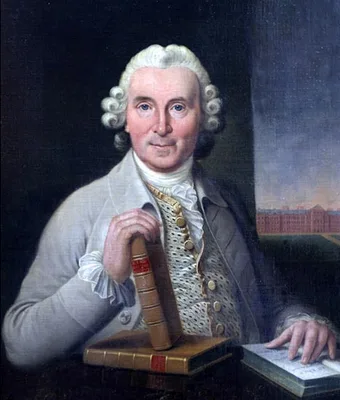
1753 LIND, James (1716 – 1794)
A treatise of the scurvy.
Lind, founder of naval hygiene in England, wrote a classic treatise on scurvy, in which he described many important experiments he made on the disease. These experiments have been called “the first deliberately planne…
GMN 3713 · https://historyofmedicine.com/id/4467
1757 LIND, James (1716 – 1794)
An essay on the most effectual means, of preserving the health of seamen, in the Royal Navy.
Lind is regarded as the founder of naval hygiene in England. Besides his work on scurvy (see No.3713), he is notable for the above book, which deals not only with the men but also with the appalling conditions in whic…
GMN 2151 · https://historyofmedicine.com/id/2746
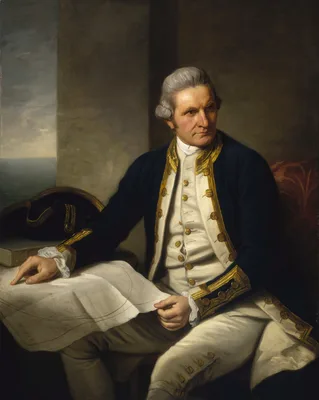
1776 PRINGLE, Sir John (1707 – 1782); COOK, James (1728 – 1779)
The method taken for preserving the health of the crew of H.M.S. the Resolution during her late voyage round the world. In: Sir John Pringle, A discourse upon some late improvements in the means for preserving the health of mariners.
Following the scurvy-preventing suggestions of James Lind, Cook lost only one man to disease on his second voyage from 1768-1771. Reprinted in Phil. Trans., 1776, 66, 402-06. See No. 2156.
GMN 3714 · https://historyofmedicine.com/id/4470
1785 BLANE, Sir Gilbert (1749 – 1834)
Observations on the diseases incident to seamen.
William Hunter recommended Blane as private physician to Admiral Rodney; Blane sailed with him to the W. Indies and became physician to the British Fleet. He was held in great esteem in the navy and was instrumental i…
GMN 2158 · https://historyofmedicine.com/id/842
1786 TROTTER, Thomas (1760 – 1832)
Observations on the scurvy.
GMN 3716 · https://historyofmedicine.com/id/4478
1803 BALME, Claude (1766 – 1850)
Observations et réflexions sur le scorbut, d'après celui qui a régné parmi les troupes françaises formant la garnison d'Alexandrie (en Egypte), pendant le Blocus et le Siége de cette ville, en l'an IX (1801), par les Armées combinées des Turcs et des Anglais.
The author was a military surgeon on Napoleon's Egyptian campaign. Digital facsimile from BnF Gallica at this link. (32pp.)
GMN 13611 · https://historyofmedicine.com/id/15891
1819 BALME, Claude (1766 – 1850)
Traité historique et pratique du scorbut, chez l'homme et les animaux, dans lequel se trouvent des observations intéressantes sur le traitement de quelques maladies, comme de la vénérienne, de la scrophuleuse, etc., et qui est suivi de plusieurs considérations sur les qualités, les devoirs et les prérogative du vrai médecin, et sur ses relations avec ses collégues et les différents membres de la société.
Digital facsimile from Google Books at this link.
GMN 13610 · https://historyofmedicine.com/id/15890
1836 KREBEL, Rudolph
Der Scorbut in geschichtlich-literarischer, pathologischer, prophylactischer und therapeutischer Beziehung.
GMN 3717 · https://historyofmedicine.com/id/4481
1859 MÖLLER, Julius Otto Ludwig (1819 – 1887)
Ueber akute Rachitis.
Möller was the first to describe the acute form of rickets combined with scurvy now associated with the name of Barlow (No. 3720).
GMN 3718 · https://historyofmedicine.com/id/4483
1878 CHEADLE, Walter Butler (1836 – 1910)
Three cases of scurvy supervening on rickets in young children.
Infantile scurvy was confused with rickets until Cheadle differentiated between the two conditions.
GMN 3719 · https://historyofmedicine.com/id/4486
1883 BARLOW, Sir Thomas (1845 – 1945)
On cases described as “acute rickets” which are probably a combination of scurvy and rickets, the scurvy being an essential, and the rickets a variable, element.
Classic description of infantile scurvy (“Barlow’s disease”), which includes the pathology of the condition. See also his earlier paper in Trans. int. med. Congr., 1881, 4, 116-28. Reprinted, but without the colored l…
GMN 3720 · https://historyofmedicine.com/id/4487
1907 HOLST, Axel (1860 – 1931)
Experimental studies relating to “ship-beri-beri” and scurvy
Experimental production of scurvy in guinea-pigs. Holst published further papers on the subject in the same journal, 1907, 7, 634-71, and in Z. Hyg., 1912, 72, 1-120, both with Theodor Froelich. Their work made it pos…
GMN 3721 · https://historyofmedicine.com/id/4489
1919 DRUMMOND, Sir Jack Cecil (1891 – 1952)
Note on the role of the antiscorbutic factor in nutrition.
In 1920 Drummond suggested the term “vitamin”.
GMN 1053 · https://historyofmedicine.com/id/616
1919 ASCHOFF, Karl Albert Ludwig (1866 – 1942); KOCH, Walter Karl (1880 – 1962)
Der Skorbut.
GMN 3722 · https://historyofmedicine.com/id/4490
1926 BUER, M. C.
Health, wealth and population in the early days of the industrial revolution.
Chapters on water supply, 18th physicians and pioneers of public health, the hospital and dispensary movement, general hygiene and midwifery, rickets and scurvy, antiseptics, smallpox, anti-typhus campaign, malaria, etc.
GMN 10467 · https://historyofmedicine.com/id/12660
1927 FIXSEN, Margaret Averil Boas (1899 – )
The effect of desiccation upon the nutritive properties of egg-white.
Demonstration of the effect of deprivation of biotin.
GMN 3724 · https://historyofmedicine.com/id/4495
1933 PARSONS, Sir Leonard Gregory (1879 – 1950)
Scurvy treated with ascorbic acid.
First case of infantile scurvy cured by the administration of ascorbic acid.
GMN 3725 · https://historyofmedicine.com/id/4497
1986 CARPENTER, Kenneth John (1923 – 2016)
The history of scurvy and vitamin C.
GMN 3726 · https://historyofmedicine.com/id/4499