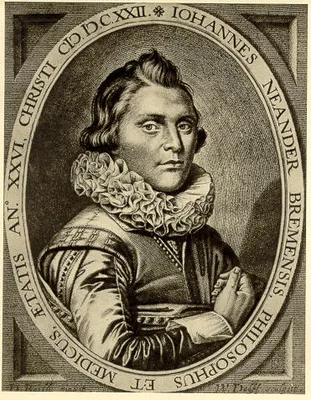
1622 NEANDER, Johann (1596 – 1630)
Tabacologia: Hoc est, tabaci, seu nicotianae descriptio medico-cheirurgico-pharmaceutica: Vel eius praeparatio & usus in omnibus corporis humani incommodis.
Neander described tobacco, its processing, and medical-pharmaceutical use. His book Includes images of the plants, of Indian, Oriental and European types of pipes, as well as depictions of cultivation and processing b…
GMN 9633 · https://historyofmedicine.com/id/11820
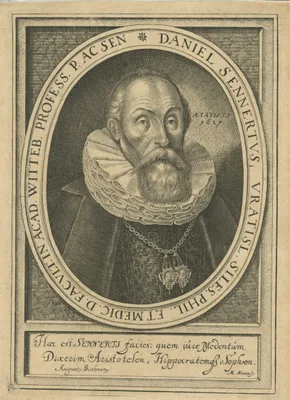
1676 SENNERT, Daniel (1572 – 1637)
Opera. 6 vols.
Besides giving early accounts of scarlatina and rubella, Sennert added to the knowledge of scurvy, dysentery and alcoholism. He was an able clinician and also a believer in witchcraft. His Opera was first published in…
GMN 61 · https://historyofmedicine.com/id/975
1700 JONES, John [English] (1645 – 1709)
The mysteries of opium revealed.
Includes the earliest English description of drug addiction, and withdrawal. Jones attempted to use wine as a partial substitute until withdrawal was complete.
GMN 2070.1 · https://historyofmedicine.com/id/2498
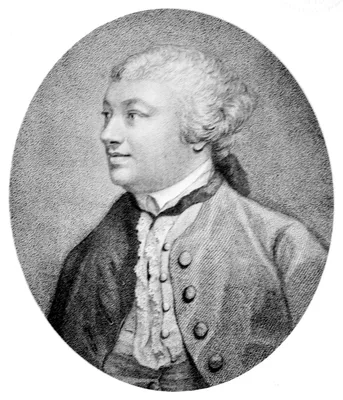
1761 HILL, (Sir) John (1714 – 1775)
Cautions against the immoderate use of snuff. Founded on the known qualities of the tobacco Plant; and the effects it must produce when this way taken Into the body: And by instances of persons who have perished miserably of diseases, occasioned, or rendered incurable by its use,
First clinical report (pp. 30-31) of an association between tobacco and cancer, in this case “polypusses” of the nose caused by taking snuff. Hill was a distinguished botanist and apothecary, although regarded by some…
GMN 2607.1 · https://historyofmedicine.com/id/3063
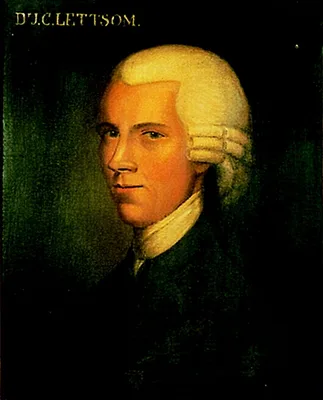
1779 –1787 LETTSOM, John Coakley (1744 – 1815)
Some remarks on the effects of lignum quassiae amarae.
Includes (p. 151) “original account of alcoholism, which is incidentally the first paper on the drug habit” (Garrison).
GMN 2071 · https://historyofmedicine.com/id/2523
1793 CRUMPE, Samuel (1766 – 1796)
An inquiry into the nature and properties of opium: Wherein its component principles, mode of operation, and use or abuse in particular diseases, are experimentally investigated, and the opinions of former authors on these points impartially examined.
Crumpe undertook extensive experiments to understand the effects of opium. His book provided the first detailed description of the effects of narcotic withdrawal. Digital facsimile from the Hathi Trust at this link.
GMN 10590 · https://historyofmedicine.com/id/12783
1795 SOEMMERRING, Samuel Thomas von (1755 – 1830)
De morbis vasorum absorbentium corporis humani.
Soemmerring noted an association between pipe smoking and cancer of the lip (p. 109).
GMN 2609.1 · https://historyofmedicine.com/id/3088
1804 TROTTER, Thomas (1760 – 1832)
An essay, medical, philosophical, and chemical, on drunkenness, and its effects on the human body.
The first book on alcoholism, expanded from Trotter's MD dissertation: Dissertatio medica inauguralis, quædam de ebrietate, ejusque effectibus in corpus humanum complectens, quam ... pro gradu doctoris ... (Edinburgh:…
GMN 2071.1 · https://historyofmedicine.com/id/2527
1813 SUTTON, Thomas (1767 – 1835)
Tracts on Delirium tremens, on peritonitis, and on some other internal inflammatory affections, and on the gout.
Sutton named and described alcoholic delirium tremens, differentiating the condition from phrenitis. Digital facsimile from the Internet Archive at this link.
GMN 4925 · https://historyofmedicine.com/id/6126
1822 JACKSON, James (1777 – 1867)
On a peculiar disease resulting from the use of ardent spirits.
Jackson drew attention to alcoholic neuritis – arthrodynia a potu. Jackson was professor at Boston Medical School.
GMN 4521 · https://historyofmedicine.com/id/383
1822 DE QUINCEY, Thomas Penson (1785 – 1859)
Confessions of an opium eater.
First published anonymously in September and October 1821 in the London Magazine, 4, No. xxi, 293-312, and No. xxii, 353-79, the Confessions was released in book form in 1822, and, after various reprints, again in 185…
GMN 8904 · https://historyofmedicine.com/id/11082
1828 DRAKE, Daniel (1785 – 1852)
Discourse on intemperance; delivered at Cincinnati, March 1, 1828, before The Agricultural Society of Hamilton County, and subsequently pronounced, by request, to a popular audience.
Digital facsimile from U.S. National Library of Medicine at this link.
GMN 13268 · https://historyofmedicine.com/id/15534
1841 SEWALL, Thomas (1786 – 1845)
The pathology of drunkeness, or the effects of alcoholic drinks with drawings of the drunkard's stomach.
Including four chromolithographed plates by J. H. Hall, Albany, N.Y., this is the earliest illustrated book published in the U.S. on the pathological effects of alcoholism. Digital facsimile from the U.S. National Lib…
GMN 13521 · https://historyofmedicine.com/id/15796
1849 –1851 HUSS, Magnus (1807 – 1890)
Alkoholismus Chronicus eller Chronik Alkoholssjukdom. Ett bidrag till dyskrasiernas kännedom; enligt egen och andras erfarenheit. . . . Första afdelningen.
The first monograph on alcoholism considered as a disease. Huss was the first to define alcoholism and to give a scientific analysis of its physical, psychological, moral and social effects. Translated into German, 1852.
GMN 12168 · https://historyofmedicine.com/id/14378
1854 LIZARS, John (1794 – 1860)
Practical observations on the use and abuse of tobacco. Greatly enlarged from the original communication on the effects of tobacco smoking, which appeared in Medical Times and Gazette, August 5, 1854.
Lizars was one of the first to recognize the addictive nature of tobacco and its potential damage to health. Digital facsimile of the 6th edition (1857) from wellcomecollection.org at this link.
GMN 13504 · https://historyofmedicine.com/id/15779
1866 WINSLOW, Forbes Benignus (1810 – 1874)
On uncontrollable drunkenness considered as a form of mental disorder. With suggestions for its treatment, and the organization of sanitoria for dipsomanics.
Digital facsimile from Google Books at this link.
GMN 13251 · https://historyofmedicine.com/id/15516
1868 WILKS, Sir Samuel (1824 – 1911)
Drunkard’s or alcoholic paraplegia.
Classic account of alcoholic paraplegia.
GMN 4539 · https://historyofmedicine.com/id/400
1878 BAER, Abraham Adolf (1834 – 1908)
Der Alkoholismus seine Verbreitung und Wirkung auf den Individuellen und sozialen Organismus, sowie die Mittel Ihn zu Bekämpfen.
GMN 13475 · https://historyofmedicine.com/id/15749
1882 KANE, Harry Hubbell (1854 – )
Opium-smoking in America and China: A study of its prevalence, and effects, immediate and remote, on the individual and the nation.
The author claims (p. 1) that "the first white man who smoked opium in America is said to have been a sporting character named Clendenyn. The second—induced to try it by the first—smoked in 1871." Digital facsimile fr…
GMN 9506 · https://historyofmedicine.com/id/11691
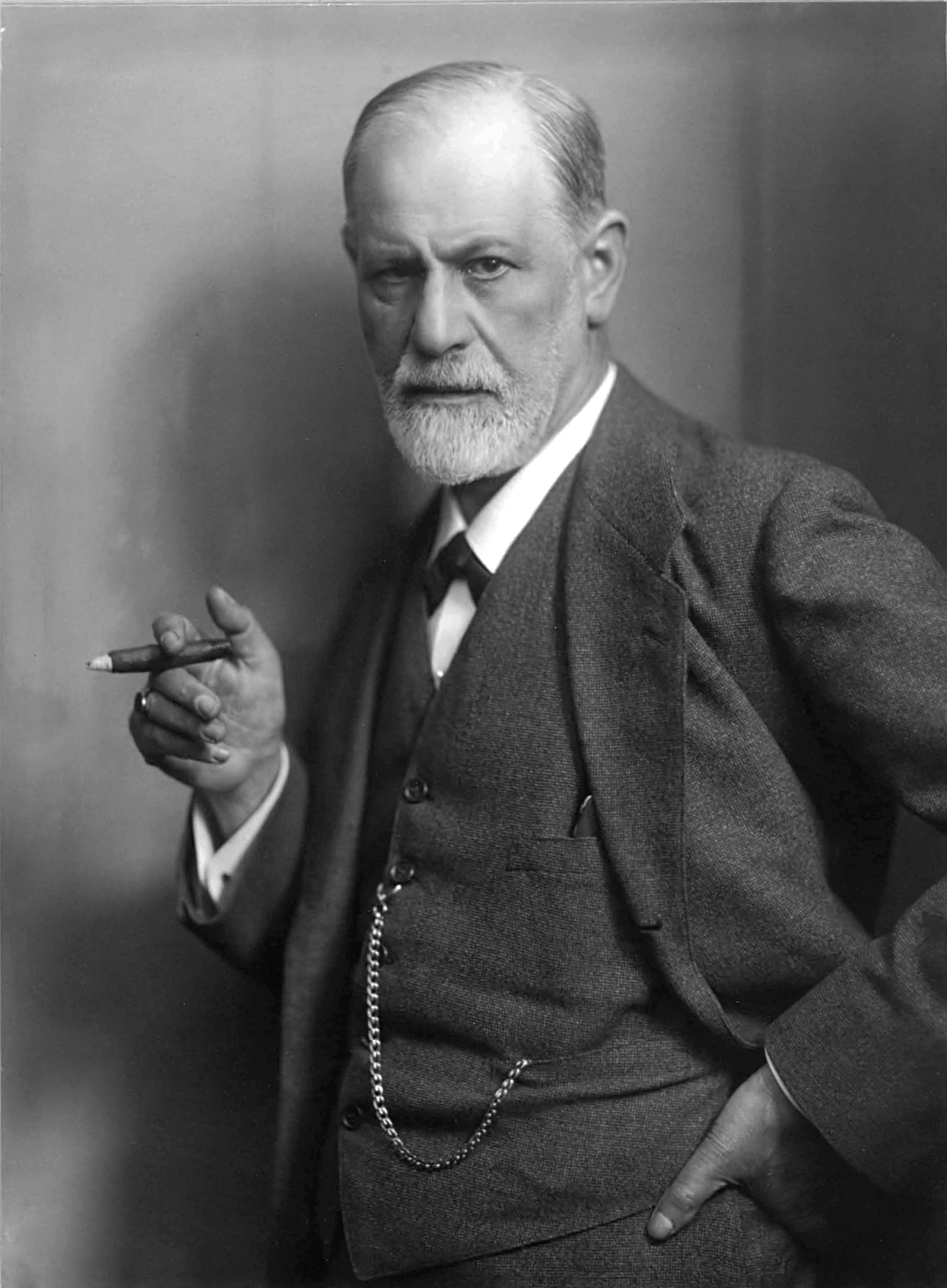
1884 FREUD, Sigmund (1856 – 1939)
Ueber coca.
Freud described his observations (with himself as subject) on the effects of cocaine, including its abolition of hunger and fatigue, the “exhilaration and lasting euphoria”. He also described its supposed non-addictiv…
GMN 1880.1 · https://historyofmedicine.com/id/2515
1887 KORSAKOFF, Sergei Sergeievich (1853 – 1900)
Disturbance of psychic activity in alcoholic paralysis.
“Korsakoff’s psychosis” or syndrome – alcoholic polyneuritis with loss and falsification of memory. A second paper on the subject in Ezhened. klin. Gaz., 1889, 9, 85, 115, 136, is translated into English in Neurology,…
GMN 4945 · https://historyofmedicine.com/id/6233
1903 MARCHIAFAVA, Ettore (1847 – 1935); BIGNAMI, Amico (1862 – 1929)
Sopra un’ alterazione del corpo calloso osservata in soggetti alcoolisti.
Marchiafava–Bignami disease – degeneration of the corpus callosum in alcoholism.
GMN 4955 · https://historyofmedicine.com/id/6287
1903 BOWDITCH, Henry Pickering (1840 – 1911); ATWATER, Wilbur Olin (1844 – 1907); CHITTENDEN, Russell Henry (1856 – 1943); WELCH, William Henry (1850 – 1934); BILLINGS, John Shaw (1838 – 1913)
Physiological aspects of the liquor problem. Investigations made by and under the direction of W. O. Atwater, John S. Billings, H. P. Bowditch, R. H. Chittenden, and W. H. Welch Sub-Committee of the Committee of Fifty to Investigate the Liquor Problem. 2 vols.
Digital facsimile from the Internet Archive at this link.
GMN 11627 · https://historyofmedicine.com/id/13827
1924 HALSTED, William Stewart (1852 – 1922); BURKET, Walter Cleveland (1888 – 1974)
Surgical papers.[Edited by Walter C. Burket]. 2 vols.
In spite of an addiction to cocaine hydrochlorate from experimentation with it as a surgical anesthetic in 1884 until his death, Halsted was among the greatest of all surgical innovators and teachers. While pioneering…
GMN 86.3 · https://historyofmedicine.com/id/1447
1937 PATEK, Arthur Jackson Jr. (1904 – 1991)
Treatment of alcoholic cirrhosis of the liver with high vitamin therapy.
A pioneer paper on the dietary treatment of cirrhosis.
GMN 3661 · https://historyofmedicine.com/id/4808
1937 –1969 BROOKS, Jerome E. (1895 – 1983); ARENTS, George Jr. (1875 – 1960)
Tobacco: Its history illustrated by the books, manuscripts and engravings in the library of George Arents, Jr. 5 vols. + 10 Supplements.
GMN 11629 · https://historyofmedicine.com/id/13829
1939 MÜLLER, Franz Hermann
Tabakmissbrauch und Lungencarcinom.
In the first case-control epidemiological study of the effects of tobacco Müller recorded a statistically significant correlation between cigarette smoking and lung cancer. See Alfredo Morabia, "Quality, originality, …
GMN 3213 · https://historyofmedicine.com/id/4354
1939 WILSON, William Griffith (1895 – 1971)
Alcoholics Anonymous: The story of how many thousands of men and women have recovered from alcoholism.
"Describes how to recover from alcoholism, primarily written by William G. "Bill W." Wilson, one of the founders of Alcoholics Anonymous (AA). It is the originator of the seminal "twelve-step method" widely used to tr…
GMN 10226 · https://historyofmedicine.com/id/12416
1948 HALD, Jens
The sensitizing effect of tetraethylthiuramdisulphide (Antabuse) to ethyl alcohol.
Introduction of “antabuse” in the treatment of alcoholism. With E. Jacobsen and V. Larsen. See also Lancet, 1948, 2, 1004.
GMN 2091 · https://historyofmedicine.com/id/2572
1950 GRAHAM, Evarts Ambrose (1883 – 1957); WYNDER, Ernst Ludwig (1922 – 1999)
Tobacco smoking as a possible etiologic factor in bronchogenic carcinoma: A study of 684 proved cases.
A case-control study proving an association between heavy prolonged cigarette smoking and bronchogenic carcinoma. See also the following paper on pp. 336-38. Reprinted in J. Amer. med. Assoc. 1985, 253, 2986-97.
GMN 3215.1 · https://historyofmedicine.com/id/4362
1950 DOLL, Sir William Richard Shaboe (1912 – 2005); HILL, Sir Austin Bradford (1897 – 1999)
Smoking and carcinoma of the lung. Preliminary report.
A study of 1,465 cases of lung cancer and 1,465 matched controls, which confirmed and extended the studies of Wynder and Graham, and others. See also later papers by the same authors in Brit. med. J., 1952, 2,1271-86;…
GMN 3215.2 · https://historyofmedicine.com/id/4373
1951 ROTH, Grace M. (1894 – 1982)
Tobacco and the cardiovascular system: The effects of smoking and of nicotine on normal persons.
GMN 11699 · https://historyofmedicine.com/id/13900
1964 U.S. PUBLIC HEALTH SERVICE; TERRY, Luther (1911 – 1985)
Smoking and health: report of the Advisory Committee to the Surgeon General of the Public Health Service.
Definitive 386-page throughly documented study of the carcinogenic and pulmonologic effects of smoking, and the addictive aspects of nicotine. It was published under the supervision of Surgeon-General Luther Terry. Di…
GMN 7385 · https://historyofmedicine.com/id/9557
1973 MUSTO, David Franklin (1936 – 2010)
The American disease: Origins of narcotic control.
Third expanded edition (1999). "Supporting the theory that Americans' attitudes toward drugs have followed a cyclic pattern of tolerance and restraint, author David F. Musto examines the relations between public outcr…
GMN 8902 · https://historyofmedicine.com/id/11080
1982 COURTWRIGHT, David T. (1952 – )
Dark paradise: Opiate addiction in America before 1940.
Enlarged edition retitled: Dark paradise: A history of opiate addiction in America (2002).
GMN 9775 · https://historyofmedicine.com/id/11963
1984 PARSSINEN, Terry M.
Secret passions, secret remedies: Narcotic drugs in British Society, 1820-1930.
"....The major orientation is to opium, with two chapters on its alkaloid, morphine, occasional references to cocaine, and a mention of heroin. There is an enlightening discussion of reasons for the initial acceptance…
GMN 10243 · https://historyofmedicine.com/id/12433
1989 ESCOHOTADO, Antonio (1941 – )
Historia general de las drogas.
The following works were issued separately and added as appendices to later editions: El libro de los venenos (1990), Para una fenomenología de las drogas (1992) and Aprendiendo de las drogas (1995). English translati…
GMN 10757 · https://historyofmedicine.com/id/12953
1994 GOODMAN, Jordan
Tobacco in history: The cultures of dependence.
GMN 9684 · https://historyofmedicine.com/id/11871
1995 MANCALL, Peter C. (1959 – )
Deadly medicine: Indians and alcohol in early America.
GMN 9630 · https://historyofmedicine.com/id/11817
1996 GLANTZ, Stanton Arnold (1945 – ); ET AL
The cigarette papers. Edited by Stanton A. Glantz, John Slade, Lisa A. Bero, Peter Hanauer, and Deborah E. Barnes.
Analysis and selective reproduction of 4000 pages of internal tobacco industry documents proving that a tobacco company was fully aware that it was promoting and marketing a highly addictive carcinogenic substance. El…
GMN 8660 · https://historyofmedicine.com/id/10837
1996
Industry Documents Library. University of California, San Francisco.
https://www.library.ucsf.edu/industry-documents/ "The Industry Documents Library (IDL) provides public access to internal corporate documents to facilitate research about cross-industry practices that harm public heal…
GMN 8661 · https://historyofmedicine.com/id/10838
1996 JONNES, Jill (1952 – )
Hep-cats, narcs, and pipe dreams: A history of America's romance with illegal drugs.
GMN 9787 · https://historyofmedicine.com/id/11975
1999 SPILLANE, Joseph P.
Cocaine: From medical marvel to modern menace in the United States, 1884-1920.
GMN 8767 · https://historyofmedicine.com/id/10945
1999 GOOTENBERG, Paul Eliot (1954 – )
Cocaine: Global histories.
GMN 9034 · https://historyofmedicine.com/id/11213
1999 PROCTOR, Robert N. (1954 – )
The Nazi war on cancer.
GMN 10229 · https://historyofmedicine.com/id/12419
2001 GATELY, Iain (1965 – )
Tobacco: A cultural history of how an exotic plant seduced civilization.
GMN 9686 · https://historyofmedicine.com/id/11873
2001 DAVENPORT-HINES, Richard (1953 – )
The pursuit of oblivion: A global history of narcotics.
GMN 10895 · https://historyofmedicine.com/id/13091
2002 MUSTO, David Franklin (1936 – 2010)
Drugs in America: A historical reader. [Compiled by] David F. Musto.
GMN 8903 · https://historyofmedicine.com/id/11081
2002 HUGHES, Jason
Learning to smoke: Tobacco use in the West.
GMN 9685 · https://historyofmedicine.com/id/11872
2002 MUSTO, David Franklin (1936 – 2010); KORSMEYER, Pamela (1945 – )
The quest for drug control: Politics and federal policy in a period of increasing substance abuse, 1963-1981.
GMN 12415 · https://historyofmedicine.com/id/14645