1528 PAUL OF AEGINA (ΠΑΥ͂ΛΟΣ ΑἸΓΙΝΉΤΗΣ; PAULUS AEGINETA) (625 – 690)
In principio singulorum librorum omnia indicantur, quae in eo libro continentur. [Title in Greek and Latin].
Paul of Aegiina was the most famous physician and surgeon in the Byzantine Empire during the seventh century, and probably thereafter. According to Eugene F. Rice, "Paulus Aegineta", Catalogus translationum et comment…
GMN 36 · https://historyofmedicine.com/id/8760
1616 CITOIS, François [CITESIUS] (1572 – 1652)
De novo et populari apud Pictones dolore colico bilioso diatriba.
Citois described Poitou colic, “colica Pictonum”, in great detail, and it was this description which was responsible for the condition being recognized as a definite syndrome. Partial English translation in No. 2241.
GMN 2092 · https://historyofmedicine.com/id/2582
1656 STOCKHAUSEN, Samuel (1619 – 1656)
Libellus de lithargyrii fumo noxio morbifico eiusque metallico frequentiori morbo vulgo dicto: Die Hütten Katze Oder Hütten Rauch: Cum Appendice de montano ffaectu asthmatico metallicidis familiari, quem Germanica lingua appellamus Die Bergsuche oder Berg Kranckheit.
Stockhausen had considerable experience in treating the diseases of miners. His book on industrial diseases did much to clarify contemporary knowledge regarding the relative toxicity of lead, mercury, arsenic, cobalt,…
GMN 2120 · https://historyofmedicine.com/id/2632
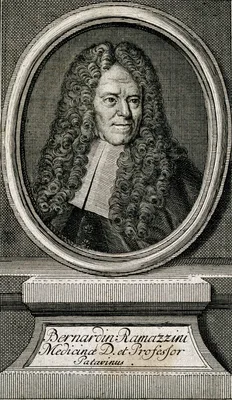
1700 RAMAZZINI, Bernardino (1633 – 1714)
De morbis artificum diatriba.
Ramazzini's study of the diseases of workers, De morbis artificium diatriba, was the first comprehensive and systematic treatise on occupational medicine; it was also the foundation work in ergonomics. It deals with p…
GMN 2121 · https://historyofmedicine.com/id/79
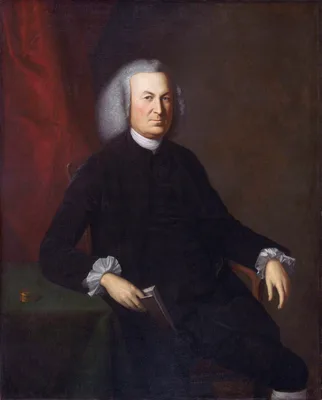
1745 CADWALADER, Thomas (1708 – 1779)
An essay on the West-India dry-gripes… to which is added, an extraordinary case in physick.
Cadwalader, an American pupil of Cheselden, left a classical account of lead colic and lead palsy. This was later shown by Benjamin Franklin, printer of the above work, to be due to the consumption of Jamaica rum whic…
GMN 2094 · https://historyofmedicine.com/id/2586
1757 TRONCHIN, Théodore (1709 – 1781)
De colica pictonum.
Tronchin, sometime physician to Voltaire, showed that the so-called “Poitou colic” was caused by drinking water which had passed through lead gutters. Tronchin introduced inoculation into Holland, France, and Switzerl…
GMN 2095 · https://historyofmedicine.com/id/2587
1759 HILLARY, William (1697 – 1763)
Observations on the changes of the air and the concomitant epidemical diseases, in the Island of Barbados.
Hillary included good accounts of lead colic and infective hepatitis, and probably the first description of sprue (celiac disease).
GMN 1770 · https://historyofmedicine.com/id/3314
1767 BAKER, Sir George (1722 – 1809)
An essay concerning the cause of the endemial colic of Devonshire.
Baker demonstrated that the cider of Devonshire contained lead, while that made in other parts of England did not. He further showed that it was common practice in Devon to line cider presses with lead, and proved tha…
GMN 2096 · https://historyofmedicine.com/id/2588
1803 MÉRAT DE VAUMARTOISE, François Victor (1780 – 1851)
Sur la colique, vulgairement appelée colique des peintres, des plombiers, du plomb, etc.
GMN 2097 · https://historyofmedicine.com/id/2590
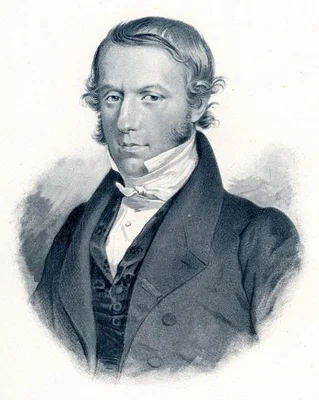
1822 RAMAZZINI, Bernardino (1633 – 1714); PATISSIER, Philibert (1791 – 1863)
Traité des maladies des artisans, et de celles qui résultent des diverse professions, d'après Ramazzini; Ouvrage dans lequel on indique les précautions que doivent prendre, sous le rapport de la salubrité publique et particulière, les fabricans, les manufacturiers, les chefs d'ateliers, les artistes, et toutes les personnes qui exercent des professions insalubres.
This second French edition of Ramazzini's De morbis artificum diabriba by Philibert Patissier provides so much new material on the diseases of workers in France as to virtually double the length of Ramazzini’s text. D…
GMN 9326 · https://historyofmedicine.com/id/11508
1839 TANQUEREL DES PLANCHES, Louis Jean Charles Marie (1810 – 1862)
Traité des maladies de plomb ou saturnines. 2 vols.
Classical description of the diseases found among lead workers. Reporting on 1200 cases of lead poisoning, Tanquerel’s studies were so complete that later studies added little to knowledge of the symptoms and signs of…
GMN 2098 · https://historyofmedicine.com/id/2592
1840 BURTON, Henry (1799 – 1849)
On a remarkable effect upon the human gums produced by the absorption of lead.
Burton was the first to note the blue line on the gums in lead poisoning – “Burton’s blue line" – an important diagnostic sign. He was physician to St. Thomas’s Hospital, London.
GMN 2099 · https://historyofmedicine.com/id/2594
1843 ANDRAL, Gabriel (1797 – 1876)
Essai d’hématologie pathologique.
The first monograph on hematology in its "modern" sense. Andral established analysis of the blood on the basis of exact knowledge of the blood components. He analysed the blood fibrin and albumin. He recognized severa…
GMN 3060 · https://historyofmedicine.com/id/3706
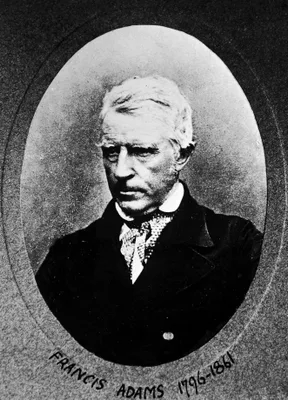
1844 –1847 PAUL OF AEGINA (ΠΑΥ͂ΛΟΣ ΑἸΓΙΝΉΤΗΣ; PAULUS AEGINETA) (625 – 690); ADAMS, Francis (1796 – 1861)
The seven books of Paulus Aegineta: Translated from the Greek, with a commentary embracing a complete view of the knowledge possessed by the Greeks, Romans, and Arabians on all subjects connected with medicine and surgery by Francis Adams. 3 vols.
Book VI is entirely devoted to operative surgery. Adams himself says that it “contains the most complete system of operative surgery which has come down to us from ancient times”. Book IV contains much information on …
GMN 8306 · https://historyofmedicine.com/id/10482
1889 DEJERINE-KLUMPKE, Augusta (1859 – 1927)
Des polynévrites en général et des paralysies et atrophies saturnines en particulier.
Madame Dejerine-Klumpke, famous neurologist, contributed an important work on lead palsies.
GMN 2100 · https://historyofmedicine.com/id/2596
1912 LEGGE, Sir Thomas Morison (1863 – 1932); GOADBY, Sir Kenneth Weldon (1873 – 1958)
Lead poisoning and lead absorption.
GMN 2101 · https://historyofmedicine.com/id/8943
2000 WARREN, Christian S.
Brush with death: A social history of lead poisoning.
GMN 8102 · https://historyofmedicine.com/id/10278
2008 KARRI, Sunya K.; SAPER, Robert B.; KALES, Stefanos N.
Lead encephalopathy due to traditional medicines.
Abstract: "Traditional medicine use is common in developing countries and increasingly popular in the western world. Despite the popularity of traditional medicines, scientific research on safety and efficacy is limit…
GMN 12724 · https://historyofmedicine.com/id/14970