1614 PLATER, Felix [PLATTER] (1536 – 1614)
Observationum in hominis affectibus plerisque, corpori & animo, functionum laesione, dolore, aliave molestia & vitio incommodantibus, libri tres.
First known report of a case of death from hypertrophy of the thymus, in an infant, is reported on p. 172; it is reproduced on p. 239 of J. Ruhräh’s Pediatrics of the past, New York, 1925. Platter first described flex…
GMN 3789 · https://historyofmedicine.com/id/4706
1831 DUPUYTREN, Guillaume, Le Baron (1777 – 1835)
De la rétraction des doigts par suite d’une affection de l’aponévrose palmaire, opération chirurgicale qui convient dans ce cas.
Dupuytren devised an operation for the treatment of contracture of the palmar fascia (“Dupuytren’s contracture”). Reprinted, with translation, in Med. Classics, 1939, 4, 127-50. The condition was first mentioned by Pl…
GMN 4317 · https://historyofmedicine.com/id/5532
1865 BABINGTON, Benjamin Guy (1794 – 1866)
Hereditary epistaxis.
GMN 3064.2 · https://historyofmedicine.com/id/3717
1876 LEGG, John Wickham (1843 – 1921)
A case of haemophilia complicated with multiple naevi.
First description of multiple hereditary telangiectasis (“Rendu–Osler–Weber disease”).
GMN 2707 · https://historyofmedicine.com/id/4422
1886 HUTCHINSON, Sir Jonathan (1828 – 1913)
Congenital absence of hair and mammary glands with atrophic condition of the skin and its appendages in a boy whose mother had been almost wholly bald from alopecia areata from the age of six.
First description of progeria.
GMN 3790 · https://historyofmedicine.com/id/4710
1896 RENDU, Henri Jules Louis (1844 – 1902)
Epistaxis répété chez un sujet porteur de petits angiomes cutanés et muqueux.
Rendu’s account of multiple hereditary telangiectasis (“Rendu–Osler–Weber disease”).
GMN 2710 · https://historyofmedicine.com/id/4428
1896 PENDRED, Vaughan (1869 – 1946)
Deaf-mutism and goitre.
Pendred syndrome, a genetic disorder leading to congenital bilateral (both sides) sensorineural hearing loss and goitre with euthyroid or mild hypothyroidism (decreased thyroid gland function).
GMN 3840.1 · https://historyofmedicine.com/id/4864
1896 MARFAN, Antoine Bernard-Jean (1858 – 1942)
Un cas de déformation congénitale des quatre membres, plus prononcée aux extrémités, charactérisée par l’allongement des os avec un certain degré d’amincissement.
“Marfan syndrome”. Marfan described only the skeletal deformities. He called the condition dolichostenomelia. Later writers recorded bilateral ectopia lentis and cardiovascular complications in this syndrome.
GMN 4365.1 · https://historyofmedicine.com/id/5831
1897 GILFORD, Hastings (1861 – 1941)
On a condition of mixed premature and immature development.
Hastings Gilford gave progeria its name; it was first fully reported by him in Practitioner, 1904, 73, 188-217. Digital facsimile of the 1897 paper from PubMedCentral at this link.
GMN 3792 · https://historyofmedicine.com/id/4716
1901 OSLER, Sir William (1849 – 1919)
On a family form of recurring epistaxis, associated with multiple telangiectases of the skin and mucous membranes.
“Rendu–Osler–Weber disease.” Multiple hereditary telangiectasis was first described by Legg (No. 2707) in 1876 and later by Rendu (No. 2710) and Weber (No. 2714). Reprinted in Medical Classics, 1939, 4, 243-53.
GMN 2711 · https://historyofmedicine.com/id/4430
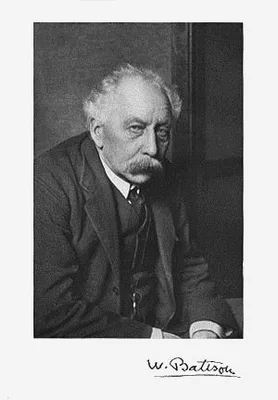
1902 –1910 BATESON, William (1861 – 1926); PUNNETT, Reginald Crundall (1875 – 1967); SAUNDERS, Edith Rebecca (1865 – 1945)
Reports to the evolution committee of the Royal Society. Reports I-V. 1902-1909.
In 1908 Archibald Garrod delivered the Croonian Lectures at the Royal College of Physicians in London on inborn errors of metabolism. In his studies of the rare disease alkaptonuria, which affects about one in one mil…
GMN 13048 · https://historyofmedicine.com/id/15299
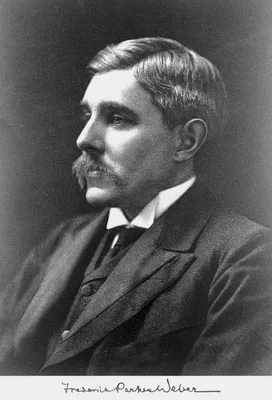
1907 WEBER, Frederick Parkes (1863 – 1962)
Multiple hereditary developmental angiomata (telangiectases) of the skin and mucous membranes associated with recurring haemorrhages.
“Rendu–Osler–Weber disease.”
GMN 2714 · https://historyofmedicine.com/id/4436
1919 HURLER, Gertrud (1889 – 1965)
Ueber einen Typ multipier Abartungen, vorwiegend am Sklettsystem.
Hurler syndrome (lipochondrodystrophy, gargoylism), earlier described by Hunter (No. 6371.1).
GMN 6371.2 · https://historyofmedicine.com/id/8308
1928 BROUSSEAU, Kate ( – 1938)
Mongolism. A study of the physical and mental characteristics of mongolian imbeciles. Revised by H. G. Brainerd.
Down syndrome.
GMN 4958 · https://historyofmedicine.com/id/6301
1931 WEVE, Henricus Jacobus Marie (1888 – 1962)
Ueber Arachnodaktylie (Dystrophia mesodermalis congenita, Typus Marfan).
Weve of Utrecht first clearly demonstrated the heritable nature of the Marfan syndrome (see No. 4365.1).
GMN 6372.1 · https://historyofmedicine.com/id/8311
1933 KARTAGENER, Manes (1897 – 1975)
Zur Pathogenese der Bronchiektasien. I. Mitteilung: Bronchiektasien bei Situs viscerum inversus.
Bronchiectasis and sinus maldevelopment associated with transposition of viscera – “Kartageners syndrome”.
GMN 3206 · https://historyofmedicine.com/id/4327
1934 FØLLING, Ivar Asbjørn (1888 – 1973)
Utskillelse av fenylpyrodruesyre i urinen som stoffskifteanomali i forbindelse med imbecilletet.
Phenylketonuria (PKU) first described. This was the first hereditary metabolic disorder shown to be responsible for mental retardation. German translation in Hoppe-Seyl. Z. physiol. Chem., 1934, 227, 169-76. English t…
GMN 3924 · https://historyofmedicine.com/id/5067
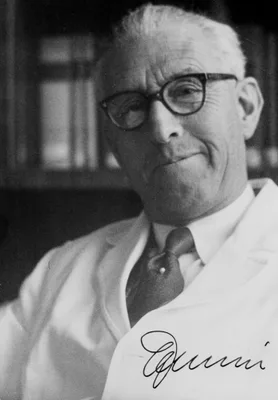
1936 FANCONI, Guido (1892 – 1979); ET AL
Das Coeliakiesyndrom bei angeborener zysticher Pankreasfibromatose und Bronchiektasien.
Cystic fibrosis (mucoviscidosis) described. With E. Uehlinger and C. Knauer.
GMN 3659.2 · https://historyofmedicine.com/id/4793
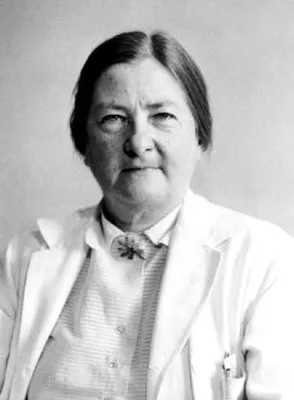
1938 ANDERSEN, Dorothy Hansine (1901 – 1963)
Cystic fibrosis of the pancreas and its relation to celiac disease: A clinical and pathological study.
Andersen was the first to describe the characteristic cystic fibrosis of the pancreas, and to correlate it with the lung and intestinal disease prominent in CF. She also was the first to hypotheize that cystic fibrosi…
GMN 13827 · https://historyofmedicine.com/id/16117
1949 SEEDORFF, Knud Stakemann (1915 – 1991)
Osteogenesis imperfecta: A study of clinical features and heredity based on 55 Danish families comprising 180 affected members.
Includes a translation of Ekman’s thesis (No. 4304.1). Also gives a case reported in 1678.
GMN 4404.1 · https://historyofmedicine.com/id/6075
1949 PENROSE, Lionel Sharples (1898 – 1972)
The biology of mental defect.
GMN 4962.2 · https://historyofmedicine.com/id/6328
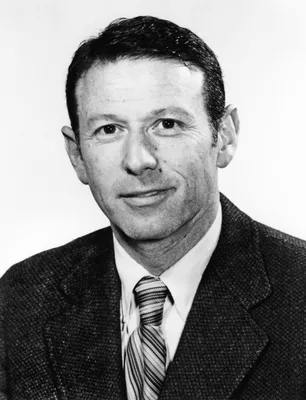
1957 MOTULKSY, Arno G. (1923 – 2018)
Drug reactions, enzymes and biochemical genetics.
Motulsky clearly stated that inheritance might explain many individual differences in the efficacy of drugs and in the occurence of adverse drug reactions.
GMN 9726 · https://historyofmedicine.com/id/11913
1959 LEJEUNE, Jérôme (1926 – 1994)
Étude des chromosomes somatiques de neuf enfants mongoliens.
Discovery of trisomy-21, cause of Down’s syndrome. With M. Gautier and R. Turpin.
GMN 4962.5 · https://historyofmedicine.com/id/6338
1959 VOGEL, Friedrich Otto (1925 – 2006)
Moderne problem der humangenetik.
In this paper Vogel coined the term pharmacogenetics, as the study of the role of genetics in drug response.
GMN 9727 · https://historyofmedicine.com/id/11914
1963 HUESTON, John (1926 – 1993)
Recurrent Dupuytren's contracture.
Hueston described Dupuytren's diathesis, including early onset, bilateral involvement, postive family history, and presence of ectopic lesions. He noted that patents presenting Dupuytren's diathesis experience more se…
GMN 14103 · https://historyofmedicine.com/id/16414
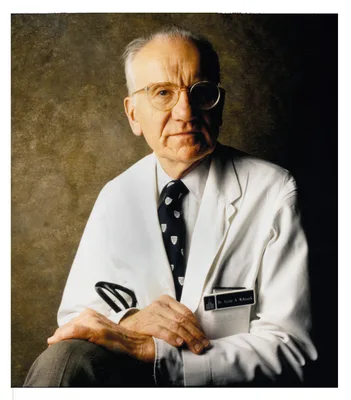
1966 MCKUSICK, Victor Almon (1921 – 2008)
Mendelian inheritance in man; catalogs of autosomal dominant, autosomal recessive, and X-linked phenotypes.
Last expanded printed edition: 12th edition, 3 vols., 1998. "Dr Victor A. McKusick wrote an article in 1962 for the Quarterly Review of Biology titled ‘On the X Chromosome of Man’ (1). At that time, X-linkage had been…
GMN 14202 · https://historyofmedicine.com/id/16518
1967 JACOBSON, Cecil Bryan (1936 – ); BARTER, Robert Henry (1913 – 1999)
Intrauterine diagnosis and management of genetic defects.
Amniocentesis used to diagnose genetic disorders in utero. First detailed report. See also Fuchs, F., Genetic information from amniotic fluid contents. Lancet, 1960, 2, 180. "During the course of the criminal investig…
GMN 6235.2 · https://historyofmedicine.com/id/7874
1972 STACK, H. Graham
The palmar fascia.
"There have been many descriptions of the palmar fascia by anatomists and in papers dealing with the surgical treatment of Dupuytren's contracture, but what seems to be lacking is an overall view of the problem, based…
GMN 7433 · https://historyofmedicine.com/id/9605
1980 BERG, Paul (1926 – ); MULLIGAN, Richard C. (1954 – )
Expression of a bacterial gene in mammalian cells.
(Order of authorship in the original publication: Mulligan, Berg.) In an understated paper the authors suggested the potential of treating recessive diseases like Lesch-Nyhan syndrome by gene therapy. (Thanks to Juan …
GMN 12304 · https://historyofmedicine.com/id/14526
1989 ROMMENS, Johanna M.; IANNUZZI, Michael C.; RIORDAN, John Richard (1943 – ); COLLINS, Francis Sellers (1950 – ); TSUI, Lap-Chee (1950 – ); ET AL
Identification of the cystic fibrosis gene: Chromosome walking and jumping.
Utilizing the chromosome "walking and and jumping" technique developed by Collins, the authors showed how they cloned the cystic fibrosis locus on the basis of its chromosomal location without the benefit of genomic r…
GMN 13568 · https://historyofmedicine.com/id/15846
1989 ROMMENS, Johanna M.; RIORDAN, John Richard (1943 – ); COLLINS, Francis Sellers (1950 – ); TSUI, Lap-Chee (1950 – ); ET AL
Identification of the cystic fibrosis gene: Cloning and characterization of complimentary DNA.
The authors first published a ‘map’ of the cystic fibrosis (CF) gene and on p. 1071, they published an illustration/schematic model of the predicted CFTR (cystic fibrosis transmembrane conductance regulator). They fir…
GMN 13569 · https://historyofmedicine.com/id/15847
1989 ROMMENS, Johanna M.; TSUI, Lap-Chee (1950 – ); KEREM, Batsheva (1955 – ); ET AL
Identification of the cystic fibrosis gene: Genetic analysis.
The authors demonstrated that about 70% of the crucial mutation in cystic fibrosis (CF) patients corresponds to the specific deletion of 3 base pairs, which results in the loss of a phenylalanine residue at A.A. posit…
GMN 13570 · https://historyofmedicine.com/id/15848
2003 COLLINS, Francis Sellers (1950 – ); ERIKSSON, Maria; BROWN, William Ted; GORDON, Leslie Beth; ET AL
Recurrent de novo point mutations in lamin A cause Hutchinson-Gilford progeria syndrome.
The authors showed that mutations in lamin A (LMNA) are the cause of Hutchinson-Gilford progeria sundrom (HGPS). At the end of their abstract they stated that "The discovery of the molecular basis of this disease may …
GMN 14217 · https://historyofmedicine.com/id/16533
2011 NEGULESCU, Paul A.; VAN GOOR, Frederick; HADIDA, Sabine; GROOTENHUIS, Peter D. J. (1960 – 2019); ET AL
Correction of the 508del-CFTR protein processing defect in vitro by the investigational drug VX-809.
Negulescu and colleagues published a "proof of concept" experiment showing that the novel molecule called VX-809 could correct in vitro the very common and critical 508del-CFTR mutation identified by Collins. (See GM …
GMN 13571 · https://historyofmedicine.com/id/15849
2013 PAUL, Diane B.; BROSCO, Jeffrey P.
The PKU paradox: A short history of a genetic disease.
GMN 13532 · https://historyofmedicine.com/id/15809
2021 LIU, David Ruchien (1973 – ); COLLINS, Francis Sellers (1950 – ); KOBLAN, Luke W.; ERDOS, Michael R.; WILSON, Christopher; ET AL
In vivo base editing rescues Hutchinson-Gilford progeria syndrome in mice.
Using the base editor enzyme developed by Liu (GM11865), the authors report that they can “correct the pathogenic HGPS mutation in cultured fibroblasts derived from children with progeria and in a mouse model of HGPS.…
GMN 14218 · https://historyofmedicine.com/id/16535