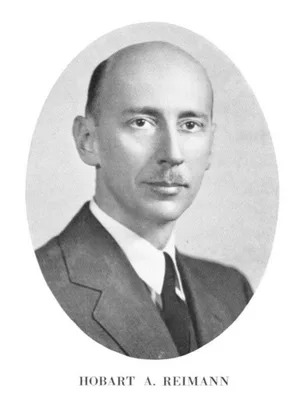
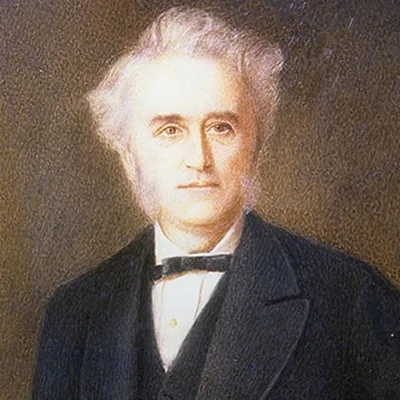
REIMANN, Hobart Ansteth (1897 – 1986)
Periodic Disease: A probable syndrome including periodic fever, benign paroxysmal peritonitis, cyclic neutropenia and intermittent arthralgia.
One of the earliest accounts of periodic disease and fevers, later variously categorized as Periodic fever syndrome and Reimann syndrome. With Siegal-Cattan-Mamou disease, this was renamed Familial Mediterranean fever.
GMN 13511 · https://historyofmedicine.com/id/15786
1519 ABULCASIS (ABU AL-QASIM KHALAF IBN AL-ABBAS AL-ZAHRAWI; أبو القاسم خلف بن العباس الزهراوي), [Albucasis] (936 – 1013)
Liber theoricae nec non practicae Alsaharavii.
This is the first printing of the medical and therapeutic section of Abul Qasim’s medical encyclopedia or al-Tasrif. It contains what is probably the earliest description of hemophilia (fol. 145). Digital facsimile fr…
GMN 3048 · https://historyofmedicine.com/id/3653
1553 PARACELSUS, [Philippus Aureolus Theophrastus Bombastus von Hohenheim] (1493 – 1541)
Von der frantzösischen kranckheit drey Bücher.
Paracelsus suggested the hereditary transmission of syphilis and advocated mercury internally, as an antisyphilitic. He called the disease “French gonorrhoea” and thus started the confusion over the geographic origins…
GMN 2369 · https://historyofmedicine.com/id/3221
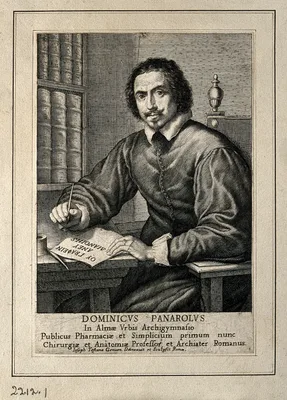
1652 PANAROLI, Domenico (1587 – 1657)
Iatrologismorum seu medicinalium observationum pentecostae quinque utilibus praeceptis.
Panaroli described hemolytic jaundice of the newborn.
GMN 3050 · https://historyofmedicine.com/id/3657
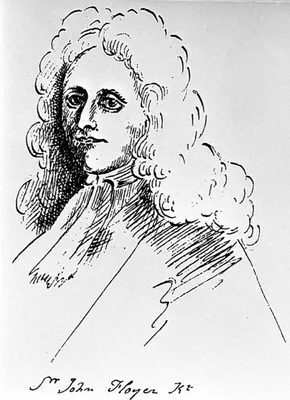
1698 FLOYER, Sir John (1649 – 1734)
A treatise of the asthma.
Floyer provided the first clear descriptions of cases of bronchial asthma. Floyer himself suffered from asthma for over 30 years. He recognized the influence of heredity in asthma. The above includes (p. 239) an impor…
GMN 3166 · https://historyofmedicine.com/id/4120
1717 BLAIR, Patrick (1660 – 1728)
An account of the dissection of a child.
First description of congenital hypertrophic pyloric stenosis. Reprinted in Mark M. Ravitch, "The story of pyloric stenosis," Surgery, 48 (1960) 1117-1143.
GMN 3419 · https://historyofmedicine.com/id/5338
1731 MACHIN, John ( – 1751)
An extract from the minutes of the Royal Society, March 16, 1731, containing an uncommon case of a distempered skin.
First known description of Ichthyosis hystrix, a group of rare skin disorders in the ichthyosis family of skin disorders characterized by massive hyperkeratosis with an appearance like spiny scales. Digital facsimile …
GMN 4013 · https://historyofmedicine.com/id/5180
1733 CALDER, James
Two examples of children born with preternatural conformations of the guts.
First description of congenital atresia of the ileum.
GMN 3422 · https://historyofmedicine.com/id/5345
1766 MORAND, Sauveur-François (1697 – 1773)
Sur un enfant auquel il manquoit les deux clavicules, le sternum et les cartilages, qui dans l’état naturel l’attachent aux côtes.
First description of cleido-cranial dysostosis.
GMN 4302.2 · https://historyofmedicine.com/id/5465
1777 ARMSTRONG, George (1719 – 1789)
An account of the diseases most incident to children, from their birth till the age of puberty.
This is an enlarged and more important (third) edition of his An essay on the diseases most fatal to infants (1767) No. 6324. Page 49: Important description of congenital hypertrophic pyloric stenosis.
GMN 3425 · https://historyofmedicine.com/id/5358
1777 HUDDART, Joseph (1741 – 1816)
An account of persons who could not distinguish colours.
First reliable record of color blindness. Written in the form of a letter to Joseph Priestley, who communicated it to the Royal Society. Huddart was a British hydrographer, engineer and inventor.
GMN 5832 · https://historyofmedicine.com/id/7085
1784 HUNTER, William (1718 – 1783)
Three cases of mal-conformation of the heart.
Three cases of congenital heart disease recorded. Two plates are opposite pp. 417-18 of the journal.
GMN 2734.3 · https://historyofmedicine.com/id/4526
1784 UNDERWOOD, Michael (1737 – 1820)
A treatise on the diseases of children.
Underwood laid the foundation of modern pediatrics. His work was superior to anything that had previously appeared and remained the most important book on the subject for sixty years, passing through many editions. Th…
GMN 2734.4 · https://historyofmedicine.com/id/8101
1788 BEARDSLEY, Hezekiah (1748 – 1790)
Case of a scirrhus in the pylorus of an infant.
First American case report on congenital hypertrophic pyloric stenosis. Cases and observations by the Medical Society of New-Haven County…was the first American medical periodical. Only one volume was published. Beard…
GMN 3426 · https://historyofmedicine.com/id/5363
1788 EKMAN, Olaus Jacob
Dissertatio medica descriptionem et casus aliquot osteomalaciae sistens.
In his doctoral thesis Ekman gave an account of osteogenesis imperfecta in three generations. For extensive translation see No. 4404.1. K.S. Seedorff, Osteogenesis imperfecta, Copenhagen, 1949.
GMN 4304.1 · https://historyofmedicine.com/id/5474
1791 SOEMMERRING, Samuel Thomas von (1755 – 1830)
Abbildungen und Beschreibungen einiger Misgeburten.
Achondroplasia is first described on page 30 and pictured on plate 11. English translation in No. 2241.
GMN 4306 · https://historyofmedicine.com/id/5488
1792 DANZ, Ferdinand Georg (1761 – 1793)
Von Menschen ohne Haare und Zähne.
Hereditary ectodermal dysplasia first described. Digital facsimile from Google Books at this link.
GMN 6358 · https://historyofmedicine.com/id/8255
1798 DURET, Pierre (1745 – 1851)
Observation sur un enfant né sans anus, et auquel il a été fait une ouverture pour y suppléer.
First successful construction of artificial anus, for congenital atresia, Oct. 20, 1793.
GMN 3429 · https://historyofmedicine.com/id/5378
1798 DALTON, John (1766 – 1844)
Extraordinary facts relating to the vision of colours.
First scientific description of color-blindness, or “Daltonism”. Dalton himself suffered from red–green blindness. His paper was read to the Society in 1794.
GMN 5834 · https://historyofmedicine.com/id/7106
1803 OTTO, John Conrad (1774 – 1844)
An account of an haemorrhagic disposition existing in certain families.
Otto recognized and adequately described hemophilia, noting that females are not affected but may transmit the disease. His paper is one of the first great contributions to medicine in North America. Reproduced in Maj…
GMN 3054 · https://historyofmedicine.com/id/3680
1803 SCARPA, Antonio (1752 – 1832)
Memoria chirurgica sui piedi torti congenita dei fanciulli.
First accurate description of the pathological anatomy of congenital club-foot. English translation, Edinburgh, 1818.
GMN 4308 · https://historyofmedicine.com/id/5497
1810 WOLLASTON, William Hyde (1766 – 1828)
On cystic oxide, a new species of urinary calculus.
Cystine, the first amino-acid to be isolated, was prepared by Wollaston from a urinary calculus. This was also the first report of cystinuria.
GMN 668.1 · https://historyofmedicine.com/id/622
1810 BERTIN, René Joseph Hyacinthe (1757 – 1828)
Traité de la maladie vénérienne chez les enfans nouveau-nés, les femmes enceintes et les nourrices.
The first systematic work on congenital syphilis.
GMN 2378.1 · https://historyofmedicine.com/id/3269
1814 ADAMS, Joseph (1756 – 1818)
A treatise on the supposed hereditary properties of diseases, containing remarks on the unfounded terrors and ill-judged cautions consequent on such erroneous opinions; with notes, illustrative of the subject, particularly in madness and scrofula.
Adams was a pioneer in medical genetics. He distinguished between familial and hereditary diseases, saw that an increase in hereditary disease frequency in isolated areas could be caused by inbreeding, and suggested t…
GMN 216.1 · https://historyofmedicine.com/id/4032
1814 FARRE, John Richard (1775 – 1862)
Pathological researches. Essay I. On malformations of the human heart. [All published.]
The first monograph on congenital defects of the heart.
GMN 2740.1 · https://historyofmedicine.com/id/4585
1817 ROMBERG, Moritz Heinrich (1795 – 1873)
De rachitide congenita.
Classic description of achondroplasia. Romberg’s graduation thesis. English translation (Sydenham Society), 1853.
GMN 4310 · https://historyofmedicine.com/id/5513
1822 –1823 MARCET, Alexander John Gaspard (1770 – 1822)
Account of a singular variety of urine, which turned black soon after being discharged; with some particulars respecting its chemical properties.
Alkaptonuria described.
GMN 3912 · https://historyofmedicine.com/id/5014
1827 CAZAUVIELH, Jean-Baptiste [Cazauvielle] (1802 – 1849)
Recherches sur l’agénésie cérébrale et la paralysie congénitale.
“The first scientific paper on paralysis in children was published in 1827 by Jean Baptiste Cazauvieilh, who […] noted that congenital hemiplegia was associated with cerebral atrophy and differentiated those due to ‘l…
GMN 11126 · https://historyofmedicine.com/id/13322
1831 AXMANN, Edmund
Merkwürdige Fragilität der Knochen ohne dyskrasische Ursache als krankhafte Eigenthümlichkeit dreier Geschwister.
Axmann of Wertheim described osteogenesis imperfecta occurring in himself and his two brothers. He referred to the occurrence of articular dislocations and blue sclerotics. See also No. 6367.
GMN 6358.1 · https://historyofmedicine.com/id/8256
1832 ALIBERT, Jean Louis Marc (1768 – 1837)
Monographie des dermatoses.
This includes the first published illustration of Alibert’s famous “family tree” for the classification of skin diseases, a concept which Alibert borrowed freely from Torti (No. 5231). This classification was never wi…
GMN 3990.1 · https://historyofmedicine.com/id/5021
1833 STROMEYER, Georg Friedrich Ludwig (1804 – 1876)
Die Durchschneidung der Achillessehne, als Heilmethode des Klumpfusses, durch zwei Fälle erläutert.
Successful tenotomy for clubfoot established the reputation of Stromeyer as an orthopedic surgeon.
GMN 4320 · https://historyofmedicine.com/id/5537
1839 LITTLE, William John (1810 – 1894)
On the nature of club-foot and analogous distortions.
Little suffered from club-foot himself. This is the greatest English classic on the subject. See No. 4329.
GMN 4322.1 · https://historyofmedicine.com/id/5540
1839 BROWN, John Ball (1784 – 1862)
Operations on club-feet.
Brown was the first surgeon in the United States to specialize in orthopedics, founding the Orthopedic Infirmary of the City of Boston (soon renamed the Boston Orthopedic Institution) in 1838. Brown was also the first…
GMN 4322.2 · https://historyofmedicine.com/id/5541
1842 DUNGLISON, Robley (1798 – 1869); WATERS, Charles Oscar (1816 – 1892)
Practice of medicine: A treatise on special pathology and therapeutics. 2 vols.
A case of chronic hereditary chorea in adults (“Huntington’s chorea”, see No. 4699) is described on pp. 312-13 of vol. 2. This is in the form of a letter from one of Dunglison's recently graduated students at Jefferso…
GMN 4691 · https://historyofmedicine.com/id/974
1846 –1848 GARROD, Sir Alfred Baring (1819 – 1907)
Several specimens of cystine exhibited, with the particulars of two cases in which this deposit occurred in the urine.
Cystinuria described.
GMN 3912.1 · https://historyofmedicine.com/id/5016
1852 ROKITANSKY, Carl Freiherr von (1804 – 1878)
Ueber einige der wichtigsen Krankheiten der Arterien.
One of Rokitansky’s best works. He described atheroma and calcification in the intima of arteries, and various congenital malformations. Rokitansky "is credited with the initial case report of polyarteritis nodosa in …
GMN 2904 · https://historyofmedicine.com/id/4855
1854 DIDAY, Charles Joseph Paul Edouard (1812 – 1894)
Traité de la syphilis des nouveau-nés et des enfants à la mamelle.
An important work on congenital syphilis. English translation, 1859.
GMN 2383 · https://historyofmedicine.com/id/3284
1855 GRANDIDIER, Johann Ludwig (1810 – )
Die Haemophilie oder die Bluterkrankheit.
First full clinical description of hemophilia.
GMN 3063 · https://historyofmedicine.com/id/3715
1857 MOREL, Bénédict Augustin (1809 – 1873)
Traité des dégénérescences physiques, intellectuelles et morales de l’espèce humaine. 1 vol. and atlas.
The main support for the theory of mental illness as regression which dominated psychiatric practice for several decades. Morel described and illustrated the nature, causes, and signs of human degeneration. He focused…
GMN 4933.1 · https://historyofmedicine.com/id/6176
1858 HUTCHINSON, Sir Jonathan (1828 – 1913)
Report on the effects of infantile syphilis in marring the development of the teeth.
Hutchinson of St. Bartholomew’s Hospital, is memorable for his original description of the notched incisors (“Hutchinson’s teeth”) in congenital syphilis. His name is also associated with “Hutchinson’s triad” (interst…
GMN 2386 · https://historyofmedicine.com/id/3298
1859 GROUX, Eugène Alexandre (1833 – 1878); UPHAM, Jabez Baxter (1820 – 1902)
Fissura sterni congenita. New observations and experiments made in Amerika [sic] and Great Britain with illustrations of the case and instruments.
Records first use of telegraphy to record and measure the heart beat and pulse, written and published by the patient, who lived to the age of 45. This was done in Boston with an instrument placed against Groux’s chest…
GMN 812.2 · https://historyofmedicine.com/id/213
1859 BOEDEKER, Carl Wilhelm (1815 – 1895)
Lieber das Alcapton; ein neuer Beitrag zur Frage: welche Stoffe des Harns können Kupferreduction bewirken?
Excretion of homogentisic acid (in alkaptonuria) first described.
GMN 3913 · https://historyofmedicine.com/id/5024
1860 BODENHAMER, William (1808 – 1905)
A practical treatise on the aetiology, pathology, and treatment of the congenital malformations of the rectum and anus.
The first systematic treatise on the subject, and a landmark in pediatric surgery. Includes an early account of colostomy and one of the earliest histories of that procedure. Digital facsimile from the Hathi Trust at …
GMN 3459.1 · https://historyofmedicine.com/id/8221
1861 FRERICHS, Friedrich Theodor von (1819 – 1885)
Klinik der Leberkrankheiten. Bd. 2.
Pp. 62-64: First description of progressive familial hepatolenticular degeneration (“Kinnier Wilson’s disease”; see No. 4717).
GMN 4693 · https://historyofmedicine.com/id/978
1863 EULENBURG, Moritz Michael (1811 – 1877)
Hochgradige Dislocation der Scapula.
First description of congenital high-scapula “Sprengel’s deformity”; see also No. 4359.
GMN 4332 · https://historyofmedicine.com/id/5563
1863 HENKE, Philipp Jakob Wilhelm von (1834 – 1896)
Contractur des Metatarsus.
Congenital metatarsus varus described.
GMN 4333 · https://historyofmedicine.com/id/5564
1863 FRIEDREICH, Nikolaus (1825 – 1882)
Ueber degenerative Atrophie der spinalen Hinterstränge.
Friedreich was the first to describe a form of ataxia (“Friedreich’s ataxia”), hereditary, attended with impairment of speech, lateral curvature of the spine, and with paralysis of the muscles of the lower limbs. The …
GMN 4696 · https://historyofmedicine.com/id/8889
1865 TROUSSEAU, Armand (1801 – 1867)
Glycosurie, diabète sucré. In his Clinique médicale de l’Hôtel-Dieu, 2me. éd., 2, 663-98.
First description of hemochromatosis.
GMN 3915 · https://historyofmedicine.com/id/5031
1865 SMITH, Sir Thomas (1833 – 1909)
Skull-cap showing congenital deficiencies of bone.
GMN 6359 · https://historyofmedicine.com/id/8258
1866 DOWN, John Langdon Haydon (1828 – 1896)
Observations on an ethnic classification of idiots.
Langdon Down suggested that the physiognomical features of certain defectives enabled them to be arranged in ethnic groups; of these he differentiated Mongolian, Ethiopian, Caucasian, and American Indian. Such an ethn…
GMN 4936 · https://historyofmedicine.com/id/6184