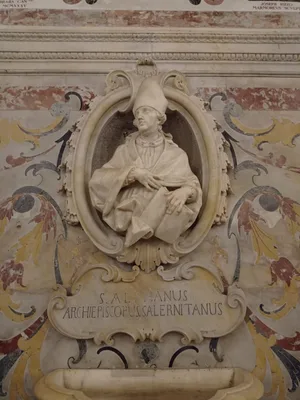
1471 NICOLAUS SALERNITANUS, (Nicolaus Praepostius) (1120 – )
Antidotarium. Add: Quid pro quo; Synonyma.
This work, which first circulated in manuscript in 1140, was the first formulary to be printed. It consists of 139 prescriptions and includes the original formula for the “anesthetic sponge” (spongia somnifera), the e…
GMN 1789 · https://historyofmedicine.com/id/1846
c. 1477 –c. 1483 ARNALD OF VILLANOVA, (Arnaldus de Villa Nova; Arnau de Vilanova; Arnaldus Villanovanus; Arnaud de Ville-Neuve; Arnaldo de Villanueva) (1240 – 1311)
Regimen sanitatis Salernitanum (With commentary by [Pseudo-Arnoldus de Villa Nova]). Add: Arnoldus de Villa Nova: Regimen sanitatis ad regem Aragonum.
Probably originating about 1160, the Regimen sanitatis from the medical school at Salerno (where medicine was first treated as a separate science) had greater popular influence than virtually any other medieval medica…
GMN 1959.3 · https://historyofmedicine.com/id/8802
1497 GALEN, [Κλαύδιος Γαληνός; Galen of Pergamon] (129 – 216); ALEXANDER OF TRALLES [ἈΛΈΞΑΝΔΡΟΣ Ὁ ΤΡΑΛΛΙΑΝΌΣ; ALEXANDER TRALLIANUS] (525 – 605); PLATEARIUS, Matthaeus (1130 – 1180); SERAPION, Johannes (Yahya ibn Sarafyun) The Elder (850 – ); SERAPION THE YOUNGER (1150 – 1250); SIMON GENUENSIS, (Simon a Cordo; Simon Januensis; Simon of Genoa) (1250 – ); ABRAHAM TORTUOSIENSIS, [Abraham Judeus of Tortosa, Abraham ben Schem Tob]; PLATEARIUS, Johannes (1050 – 1120)
Breviarium medicinae. Tr: Gerardus Cremonensis. Add: Serapion the Younger: In medicinis simplicibus. Tr: Simon a Cordo Januensis and Abraham Judaeus Tortuosiensis. Galenus: De virtute centaureae; Johannes Platearius: Practica brevis; Matthaeus Platearius: De simplici medicina "Circa instans".
Serapion the Elder and Serapion the Younger were Syrian Christians who wrote in Arabic. Breviarum medicinae was an abridgement of the opinions of the Greek and Arabic physicians concerning diseases and their treatment…
GMN 1790 · https://historyofmedicine.com/id/1872
1526 GARIOPONTO, [Guarimpoto, Guaripoto, Guarimpot, Warimbod, Gariopontus]
Passionarius Galeni (Galeni Pergamini passionarius) a doctis medicis multum desideratus; ægritudines a capite ad pedes usque complectens; in quinque libros particulares divisus, una cum febrium tractatu eorumque sintomatibus. Lege igitur, et in tibi mens hebes fuerit, eundem Galeni et non alterius, ut falso quidam credunt, esse perpendes.
Regarding Garioponto or Gariopontus see Florence Eliza Glaze, "Galen refashioned: Gariopontus in the Later Middle Ages and Reniassance," Textual healing: Essays on Medieval and early modern medicine, edited by Elizabe…
GMN 11910 · https://historyofmedicine.com/id/14115
1531 GARIOPONTO, [Guarimpoto, Guaripoto, Guarimpot, Warimbod, Gariopontus]
Garioponti Vetusti admodum medici ad totius corporis aegritudines remediorum praxeōn libri V. Eiusdem de febribus, atque earum symptomatis libri ii. Recens typis commissi, & multis in locis suae integritati restituti.
Digital facsimile from Bayerische StaatsBibliothek at this link.
GMN 8967 · https://historyofmedicine.com/id/11146
1536 CONSTANTINE THE AFRICAN (CONSTANTINUS AFRICANUS) (1015 – 1087); PETRUS HISPANUS, Pope John XXI (Pedro Hispano; Peter of Spain) (1226 – 1277); ISAAC JUDAEUS [ABU YA'QUB ISHAQ IBN SULAIMAN AL ISRA’ILI’], (Isaac Israeli ben Solomon) (832 – 932); TURINI, Andrea (Andreas Turinus) (1473 – 1543)
Omnia opera Ysaac in hoc volumini contenta: cum quibusdam alijs opusculis: Liber de definitionibus. Liber de elementis. Liber dietaru[m] vniversalium: cum co[m]me[n]to Petri Hispani. Liber dietarum particularium ... Liber de vrinis cum commento eiusdem. Liber de febribus. Pantechni decem libri theorices: et decem practices: cum tractatu de gradibus medicinarum Constantini. Viaticum Ysaac quod constantinus sibi attribuit. Liber de oculis Constantini. Liber des stomacho Constantini. Liber virtutum de simplici medicina Constantini. Compendium megatechni Galeni a Constantino compositum ; Cum tabula [et] repertorio omnium operum et questionum in co[m]mentis contentarum. Edited by Andreas Turinus.
Constantine was a Muslim from North Africa who converted to Christianity. His writings were first published with those of Isaac Judaeus in the above edition which includes many separate texts. Many of the writings of …
GMN 46 · https://historyofmedicine.com/id/8767
1544 TROTA OF SALERNO, (Trotula) (1150 – )
Experimentarius medicinae. Continens Trotulae curandarum aegriudinum muliebrium ante, in & post partium lib. unicum, nusquam antea editum…[Georg Kraut]
First printed edition of the gynecological writings attributed to the woman physician, Trota, who is frequently called Trotula after the name of the collection of works with whom she is associated. Trota is said to ha…
GMN 6009.1 · https://historyofmedicine.com/id/7186
1645 SEVERINO, Marco Aurelio [SEVERINUS] (1580 – 1656); COPHO OF SALERNO (1150 – )
Zootomia Democritaea: Id est, anatome generalis totius animantium opificii....
One of the most important of the early works on comparative anatomy. It includes the Anatomia porci, attributed to Copho of Salerno. Severinus dissected many animals and was convinced that the microscope would throw l…
GMN 289 · https://historyofmedicine.com/id/8830
1852 –1859 DAREMBERG, Charles Victor (1817 – 1872); RENZI, Salvatore de (1801 – 1871); HENSCHEL, August Wilhelm Eduard Theodor (1790 – 1856)
Collectio Salernitana: Ossia documenti inediti, e trattati di medicina appartenenti alla scuola medica Salernitana, raccolti ed illustrati da G.E.T Henschel, C. Daremberg, E.S. deRenzi; premessa la storia della scuola e publicati a cura di Salvatore de Renzi. 5 vols.
The School of Medicine at Salerno dispelled the stagnation of medicine which had persisted throughout the early Middle Ages. Its masters were the first medieval physicians to cultivate medicine as an independent scien…
GMN 49 · https://historyofmedicine.com/id/47
1854 ROGER OF SALERNO, (Rogerius Salernitanus, Frugard, Frugardi, Roggerio Frugardo, Rüdiger Frutgard, Roger of Parma) (1140 – 1195); DAREMBERG, Charles Victor (1817 – 1872)
Glossulae quatuor magistrorum super chirurgiam Rogerii et Rolandi nunc primum ad fidem codicis Mazarinei edidit
In Roger of Salerno's Practica chirurgiae, which appeared about 1180, end-to-end suture is described, as is the value of mercurial inunction in chronic skin diseases; in his recommendation of seaweed for the treatment…
GMN 5551 · https://historyofmedicine.com/id/6850
1857 RENZI, Salvatore de (1801 – 1871)
Storia documentata della scuola medica di Salerno. 2nd. ed.
An account of the School was provided by P.O. Kristeller in Bull. Hist. Med., 1945, 17, 138-94. Digital facsimile from the Internet Archive at this link.
GMN 6518 · https://historyofmedicine.com/id/8088
1901 GIACOSA, Piero (1853 – 1928); GABOTTO, Ferdinando Maria (1866 – 1918)
Magistri salernitani nondum editi. Catalogo ragionato della Esposizione di storia della medicina aperta in Torino nel 1898. By Piero Giacosa, with the assistance of Ferdinando Gabotto. 2 vols.
Reproduction of some of the texts produced at the School of Salerno. In all, it is believed that the total output from the School numbered 100 texts, including the famous poem Regimen Sanitatis Salernitanum, or Flos M…
GMN 50 · https://historyofmedicine.com/id/8770
1920 HARINGTON, Sir John (1560 – 1612); PACKARD, Francis Randolph (1870 – 1950); GARRISON, Fielding Hudson (1870 – 1935)
The school of Salernum. Regimen sanitatis Salernitanum, the English version by Sir John Harrington. History of the School of Salernum by Francis R. Packard and a note on the prehistory of the Regimen Sanitatis by Fielding H. Garrison.
Digital facsimile from the Internet Archive at this link.
GMN 51 · https://historyofmedicine.com/id/48
1923 CAPPARONI, Pietro (1868 – 1947)
"Magistri Salernitani nondum cogniti": A contribution to the history of the Medical School of Salerno. By Pietro Capparoni. With a foreward by D'Arcy Power. (Wellcome Historical medical Museum. Research Studies in Medical History No. 2).
Physicans from the medical school at Salerno who were unknown to de Renzi (No. 6518). Digital facsimile from the Internet Archive at this link.
GMN 8552 · https://historyofmedicine.com/id/10729
1936 CAPPARONI, Pietro (1868 – 1947); ALFANUS I, (Alfano I) ( – 1085)
Il "Tractatus de pulsibus," di Alfano Io arcivescovo di Salerno, sec. xi: Trascrizione del codice 1024 della biblioteca dell'Arsenale di Parigi (da carta 16 v. a carta 18 r). Annotazioni e commento con tavoli di riproduzione del testo [di] Pietro Capparoni.
Alfanus I or Alfano I, a physician before he became archbishop, was one of the earliest doctors of the Schola Medica Salernitana. He was Archbishop of Salerno from 1058 to his death. He was famed as a translator, writ…
GMN 8551 · https://historyofmedicine.com/id/10728
1972 MAURUS OF SALERNO, Maurus Salernitanus) (1130 – ); SAFFRON, Morris Harold (1905 – 1993)
Maurus of Salerno, twelfth-century "optimus physicus" with his commentary on the prognostics of Hippocrates, now first transcribed from manuscript and translated into English by Morris Harold Saffron. (Transactions of the American Philosophical Society, N.S. Vol. 62, pt. 1).
GMN 8354 · https://historyofmedicine.com/id/10530
1983 CONSTANTINE THE AFRICAN (CONSTANTINUS AFRICANUS) (1015 – 1087); MONTERO CARTELLE, Enrique
Constantini Liber de coitu: El tratado de andrología de Constantino el Africano. Edited by Enrique Montero Cartelle.
GMN 12956 · https://historyofmedicine.com/id/15203
1986 KRISTELLER, Paul Oskar (1905 – 1999)
Studi sulla Scuola medica salernitana.
GMN 8549 · https://historyofmedicine.com/id/10726
1987 CONSTANTINE THE AFRICAN (CONSTANTINUS AFRICANUS) (1015 – 1087); MONTERO CARTELLE, Enrique
Liber minor de coitu: Tratado menor de andrología anónimo Salernitano: Edicíon crítica, traducción y notas, by Enrique Montero Cartelle.
GMN 12957 · https://historyofmedicine.com/id/15204
1992 ROGER OF SALERNO, (Rogerius Salernitanus, Frugard, Frugardi, Roggerio Frugardo, Rüdiger Frutgard, Roger of Parma) (1140 – 1195); HUNT, Anthony "Tony" B. (1944 – )
The medieval surgery by Tony Hunt.
Reproduction of 51 drawings from Trinity College, Cambridge, MS 0.1.20 of the surgery of Roger of Parma, best known as Roger of Salerno, with detailed explanation of each drawing by Tony Hunt.
GMN 7131 · https://historyofmedicine.com/id/9298
1993 BARTHOLOMAEUS OF SALERNO, (Bartholomaeus Salernitanus) (1150 – ); WARDALE, Walter Lawrence
The High German Bartholomaeus: Text, with critical commentary of a mediaeval medical book based on the London manuscripts Brit. Mus. Add. 16, 892, Brit. Mus. Arundel 164, Brit. Mus. Add. 17, 527, Brit. Mus. Add. 34, 304, by Walter L. Wardale.
GMN 8355 · https://historyofmedicine.com/id/10531
1994 CONSTANTINE THE AFRICAN (CONSTANTINUS AFRICANUS) (1015 – 1087); JACQUART, Danielle (1947 – ); BURNETT, Charles S. F. (1951 – )
Constantine the African and ‘Alī Ibn al-‘Abbās al-Mağdūsī: The Pantegni and related texts. Edited by Charles Burnett and Danielle Jacquart.
The first book on Constantine the African, which sheds light on the School of Salerno, with which Constantine was associated, and the formation of a medical corpus in the High Middle Ages.
GMN 8309 · https://historyofmedicine.com/id/10485
1994 –1997 ROGER OF SALERNO, (Rogerius Salernitanus, Frugard, Frugardi, Roggerio Frugardo, Rüdiger Frutgard, Roger of Parma) (1140 – 1195); PLATEARIUS, Johannes (1050 – 1120); HUNT, Anthony "Tony" B. (1944 – )
Anglo-Norman Medicine I: Roger Frugard's Chirurgia and the Practica Brevis of [Johannes] Platearius. II: Shorter treatises. Edited by Tony Hunt. 2 vols.
Vol. 1: First published edition of two 13th century Anglo-Norman medical treatises translated from Latin. Matthaeus Platearius and his brother Johannes were the sons of a female physician from the Salerno school who w…
GMN 8578 · https://historyofmedicine.com/id/10755
1995 TROTA OF SALERNO, (Trotula) (1150 – ); CANTALUPO, Piero
La practica secundum Trotam: Testo, traduzione, appendici e glossario
GMN 11838 · https://historyofmedicine.com/id/14042
2002 ROGER OF SALERNO, (Rogerius Salernitanus, Frugard, Frugardi, Roggerio Frugardo, Rüdiger Frutgard, Roger of Parma) (1140 – 1195); ROSENMAN, Leonard Daniel (1918 – 2011)
The surgery of Roger Frugard. Translated into Italian from the Latin Venetian edition by Dario Spallone and Luigi Stroppiana, and into English by Leonard D. Rosenman.
GMN 8450 · https://historyofmedicine.com/id/10627
2002 GREEN, Monica Helen; TROTA OF SALERNO, (Trotula) (1150 – )
The Trotula: A medieval compendium of women's medicine, edited and translated by Monica H. Green.
A new translation of a new edition of the texts based on collation of 9 MSS from the second half of the 13th or early 14th century. "The Trotula was the most influential compendium on women's medicine in medieval Euro…
GMN 8577 · https://historyofmedicine.com/id/10754
2007 GREEN, Monica Helen; JACQUART, Danielle (1947 – ); BAGLIANI, Agostino Paravicini; TROTA OF SALERNO, (Trotula) (1150 – )
La Scuola Medica Salernitana. Gli autori e i testi. Convegno internazionale, Università degli studi di Salerno, 3-5 novembre 2004. A cura di Danielle Jacquart e Agostino Paravicini Bagliani. Edizione Nazionale La Scuola Medica Salernitana, 01.
Includes on pp. 185-188, and 211-13, Monica H. Green, "Reconstructing the oeuvre of Trota of Salerno." Also, on pp. 15-60, Monica H. Green, “Rethinking the manuscript basis of Salvatore De Renzi’s Collectio Salernitan…
GMN 8556 · https://historyofmedicine.com/id/10733
2007 GONZÁLEZ, Alejandro García
Alphita: Edición crítica y comentario de Alejandro García González. Edizione Nazionale La Scuola Medica Salernitana, 02.
Alphita, farina ordei idem, an anonymous collection of glosses, documents the linguistic renewal of the medical and botanical technical lexicon, derived from Greco-Latin as well as Arabic sources, at the School of Sal…
GMN 8557 · https://historyofmedicine.com/id/10734
2009 MINI DE SENIS, Bartholomaeus (1325 – ); VENTURA, Iolanda
Ps. Bartholomaeus Mini de Senis: Tractatus de herbis (Ms London, British Library, Egerton 747). A cura di Iolanda Ventura. Edizione Nazionale La Scuola Medica Salernitana, 05.
Bartholomaeus Mini de Senis, probably active in the 14th century, was the copyist of British Library Ms Egerton 747, Tractatus de herbis. The identity of the author of the original work, probably written a century ear…
GMN 8555 · https://historyofmedicine.com/id/10732
2019 CONSTANTINE THE AFRICAN (CONSTANTINUS AFRICANUS) (1015 – 1087); KWAKKEL, Erik (1970 – ); NEWTON, Francis
Medicine at Monte Cassino: Constantine the African and the oldest manuscript of his Pantegni.
"Medicine at Monte Cassino offers unprecedented insights into the revolutionary arrival of Arabic medicine to medieval Europe by exploring the oldest manuscript of Constantine the African’s Pantegni, which is identifi…
GMN 13015 · https://historyofmedicine.com/id/15265

![GALEN, [Κλαύδιος Γαληνός; Galen of Pergamon] (129 – 216)](/media/portraits/21)