1846 WILD, F
Ueber die peristaltische Bewegung des Oesophagus, nebst einigen Bemerkungen über diejenigen des Darms.
Includes (pp. 76-77) a description of what is probably the first perfusion of the isolated heart.
GMN 808 · https://historyofmedicine.com/id/191
1846 BURROWS, Sir George (1801 – 1887)
On the disorders of the cerebral circulation; and on the connection between affections of the brain and diseases of the heart.
"Burrows was the first to indicate that the effects of cerebral anemia could be produced not only by obvious anemia itself, but also from a fall in blood pressure. He carried out some of the earliest studies of the ph…
GMN 11558 · https://historyofmedicine.com/id/13757
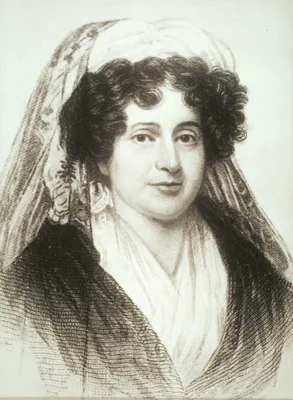
1846 WILLARD, Emma (1787 – 1870)
A treatise on the motive powers which produce the circulation of the blood.
The author was an American women's rights activist and educator rather than a physician or physiologist. Digital facsimile from U.S. National Library of Medicine at this link.
GMN 11734 · https://historyofmedicine.com/id/13935
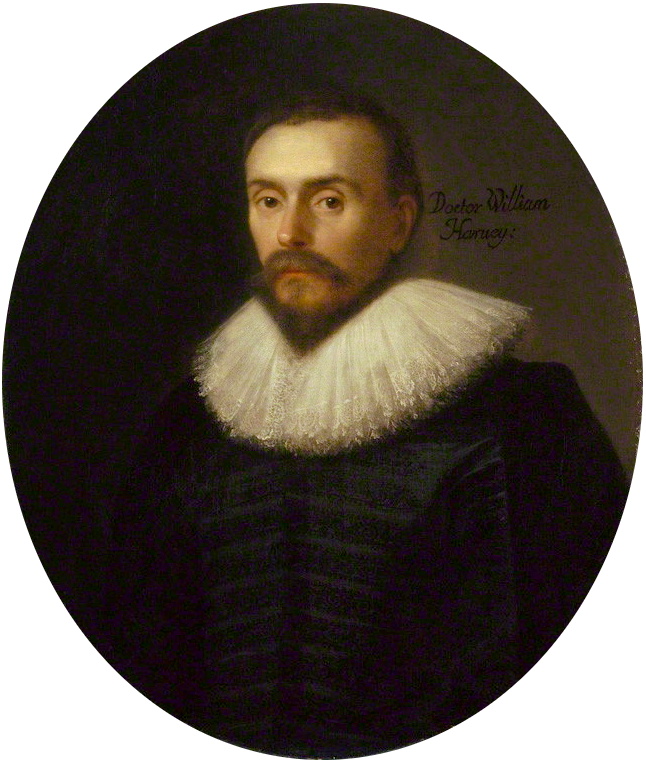
1847 HARVEY, William (1578 – 1657); WILLIS, Robert (1799 – 1878)
The works of William Harvey. Translated from the Latin, with a life of the author by Robert Willis.
See Sir Geoffrey Keynes’s Life of William Harvey, Oxford, 1966, (2nd printing, with corrections, 1978) and his Bibliography of the writings of William Harvey, 3rd ed., revised by Gweneth Whitteridge and Christine Engl…
GMN 61.1 · https://historyofmedicine.com/id/981
1847 LUDWIG, Carl Friedrich Wilhelm (1816 – 1895)
Beiträge zur Kenntniss des Einflusses der Respirationsbewegungen auf den Blutlauf im Aortensystem.
Ludwig changed Poiseuille’s hemodynamometer into the kymograph by the addition of a float and caused this float to write on a recording cylinder. Abridged English translation in Ruskin (No. 3160.1).
GMN 770 · https://historyofmedicine.com/id/1758
1848 LUDWIG, Carl Friedrich Wilhelm (1816 – 1895)
Über die Herznerven des Frosches.
GMN 809 · https://historyofmedicine.com/id/196
1850 VOLKMANN, Alfred Wilhelm (1800 – 1877)
Die Hämodynamik nach Versuchen.
GMN 771 · https://historyofmedicine.com/id/1759
1852 BIDDER, Friedrich Karl Heinrich von (1810 – 1894)
Ueber functionell verschiedene und räumlich getrennte Nervencentra im Froschherzen.
Discovery of the ganglion cells at the auriculo-ventricular junction, “Bidder’s ganglion”.
GMN 811 · https://historyofmedicine.com/id/203
1852 STANNIUS, Hermann Friedrich (1808 – 1883)
Zwei Reihen physiologischer Versuche.
Stannius initiated research on the physiology of the conduction system of the heart. He illustrated vagal inhibition of the heart beat and indicated the existence of the pacemaker of the heart. Stannius also showed th…
GMN 812 · https://historyofmedicine.com/id/206
1854 VIERORDT, Karl von (1818 – 1884)
Die bildliche Darstellung des menschlichen Arterienpulses.
Vierordt invented a sphygmograph which acted on the principle that indirect estimation of blood-pressure could be accomplished by measuring the counter-pressure necessary to obliterate the arterial pulsation. This was…
GMN 2759 · https://historyofmedicine.com/id/1760
1856 KÖLLIKER, Rudolph Albert von (1817 – 1905); MÜLLER, Heinrich (1820 – 1864)
Nachweis der negativen Schwankung des Muskelstroms am natürlich sich contrahirenden Muskel.
Kölliker and Müller were the first to measure action currents from cardiac muscle.
GMN 618 · https://historyofmedicine.com/id/501
1856 FAIVRE, Jean
Études expérimentales sur les lésions organiques du coeur.
Faivre made the first accurate estimation of the blood-pressure in man, by connecting the artery with a mercury manometer and making direct readings. These investigations were important, since they established normal …
GMN 773 · https://historyofmedicine.com/id/1761
1858 BERNARD, Claude (1813 – 1878)
De l’influence de deux ordres de nerfs qui déterminent les variations de couleur du sang veineux dans les organes glondulaires.
Discovery of the vasoconstrictor and vasodilator nerves and description of their function of regulating the blood supply to the different parts of the body.
GMN 774 · https://historyofmedicine.com/id/1762
1858 VIERORDT, Karl von (1818 – 1884)
Die Erscheinungen und Gesetze der Stromgeschwindigkeiten des Blutes.
Vierordt estimated, by means of a “hemotachometer” of his own invention, the rate of the blood flow in various arteries, and also the influence of the blood volume, pulse rate and respiratory rate upon it.
GMN 775 · https://historyofmedicine.com/id/1886
1859 GROUX, Eugène Alexandre (1833 – 1878); UPHAM, Jabez Baxter (1820 – 1902)
Fissura sterni congenita. New observations and experiments made in Amerika [sic] and Great Britain with illustrations of the case and instruments.
Records first use of telegraphy to record and measure the heart beat and pulse, written and published by the patient, who lived to the age of 45. This was done in Boston with an instrument placed against Groux’s chest…
GMN 812.2 · https://historyofmedicine.com/id/213
1860 MAREY, Étienne Jules (1830 – 1904)
Recherches sur le pouls au moyen d’un nouvel appareil enregistreur le sphygmographe.
Invention of the modern sphygmograph. Also published in C.R. Acad. Sci. (Paris), 1860, 51, 281-309. Preliminary paper in same journal, 1860, 50, 634-37.
GMN 776 · https://historyofmedicine.com/id/1763
1860 POISEUILLE, Jean Léonard Marie (1799 – 1869)
Sur la pression du sang dans le système artériel.
GMN 777 · https://historyofmedicine.com/id/1764
1861 MAREY, Étienne Jules (1830 – 1904)
Loi qui préside à la fréquence des battements du coeur.
Marey’s law of the heart. Marey was the first to realize the relationship between the blood pressure and the heart rate.
GMN 813 · https://historyofmedicine.com/id/216
1862 GOLTZ, Friedrich Leopold (1834 – 1902)
Ueber Reflexionen von und zum Herzen (Klopfversuch).
Rapidly-repeated blows on the belly of a frog caused cessation of the heart-beat, which Goltz concluded was brought about by reflex inhibition through the vagus, an important contribution to the knowledge of the mecha…
GMN 814 · https://historyofmedicine.com/id/221
1863 BEZOLD, Albert von (1836 – 1868)
Untersuchungen über die Innervation des Herzens
Discovery of the accelerator or excitatory nerve fibres of the heart (pp. 191-232), “Bezold’s ganglia”.
GMN 815 · https://historyofmedicine.com/id/226
1863 MAREY, Étienne Jules (1830 – 1904); CHAUVEAU, Jean Baptiste Auguste (1827 – 1917)
Appareils et expériences cardiographiques.
First direct records of the heart impulse by means of a “cardiac sound” and the sphygmograph – recording tambours, which wrote on a moving drum covered with smoked paper.
GMN 816 · https://historyofmedicine.com/id/235
1863 MAREY, Étienne Jules (1830 – 1904)
Physiologie médicale de la circulation du sang basée sur l'étude graphique des mouvements du coeur et du pouls artériel avec application aux maladies du l'appareil circulatoire.
Marey first recorded atrial fibrillation in this work work in which he used pulse tracings to establish the interelationship of heart rate and blood pressure. The work also includes the first detailed description of t…
GMN 11690 · https://historyofmedicine.com/id/13891
1865 –1866 CZERMAK, Johann Nepomuk (1828 – 1873)
Ueber mechanische Vagus-Reizung beim Menschen.
“Czermak’s vagus pressure”. Czermak found that mechanical pressure on a spot of the carotid triangle in the neck produced lowering of the heart rate.
GMN 817 · https://historyofmedicine.com/id/237
1865 TRAUBE, Ludwig (1818 – 1876)
Ueber periodische Thätigkeits-Aeusserungen des vasomotorischen und Hemmungs-Nervencentrums.
First description of the rhythmic variations in tone of the vasoconstrictor center (Traube-Hering waves).
GMN 818 · https://historyofmedicine.com/id/240
1865 LUDWIG, Carl Friedrich Wilhelm (1816 – 1895)
Die physiologischen Leistungen des Blutdrucks.
Ludwig’s inaugural address at Leipzig, in which he introduced the idea of keeping alive excised portions of organs by means of artificial circulation, or perfusion. He suggested that the blood-pressure had a stimulati…
GMN 778 · https://historyofmedicine.com/id/1765
1867 LUDWIG, Carl Friedrich Wilhelm (1816 – 1895); CYON, Elias von (Elie de Cyon; Ilya Fadeyevich Tsion) (1842 – 1912)
Die Reflexe eines der sensiblen Nerven des Herzens auf die motorischen der Blutgefässe.
Discovery of the vasomotor reflexes.
GMN 819 · https://historyofmedicine.com/id/244
1868 BERNSTEIN, Julius (1839 – 1917)
Über den zeitlichen Verlauf der negativen Schwankung des Nervenstroms.
Bernstein introduced the differential rheotome, and the first electrocardiograms were obtained with it by Marchand in 1877 (No. 823.1).
GMN 819.1 · https://historyofmedicine.com/id/247
1868 DOGIEL, Jan (1830 – 1905)
Die Ausmessung der strömenden Blutvolumina.
Invention of the Stromuhr, for measurement of the velocity of the blood. Dogiel was a pupil of Ludwig.
GMN 779 · https://historyofmedicine.com/id/1766
1870 FICK, Adolph Eugen (1829 – 1901)
Ueber die Messung des Blutquantums in den Herzventrikeln.
Fick principle for the calculation of cardiac output based on measuring the minute volume of oxygen consumption and the arteriovenous oxygen difference. Digital facsimile from the Hathi Trust at this link.
GMN 820 · https://historyofmedicine.com/id/251
1871 SCHMIEDEBERG, Johann Ernst Oswald (1838 – 1921)
Untersuchungen über einige Giftwirkungen am Froschherzen.
First investigation of the effect of poisons on the frog’s heart. In some cases Schmiedeberg found that stimulation of the vagus after administration of poisons produced acceleration of the heart rate.
GMN 821 · https://historyofmedicine.com/id/255
1871 –1878 TRAUBE, Ludwig (1818 – 1876)
Gesammelte Beiträge zur Pathologie und Physiologie. 3 vols.
Digital facsimile from Google Books at this link.
GMN 11715 · https://historyofmedicine.com/id/13916
1872 BOWDITCH, Henry Pickering (1840 – 1911)
Ueber die Eigenthümlichkeiten der Reizbarkeit, welche die Muskelfasern des Herzens zeigen.
Bowditch was the first to research the relationship between the strength of the heart beat and the interval between beats. He established the “all-or-nothing” principle of heart muscle contraction. He founded, at Harv…
GMN 822 · https://historyofmedicine.com/id/260
1872 CERADINI, Guilio (1844 – 1894)
Der Mechanismus der halbmondformigen Herzklappen.
Using an excised pig heart preparation with tubes, a manometer, and a visualizing apparatus, Ceradini working in Carl Ludwig’s laboratory, illustrated the mechanism of closure of the semilunar valves. He was the first …
GMN 12225 · https://historyofmedicine.com/id/14437
1873 LUCIANI, Luigi (1840 – 1919)
Eine periodische Function des isolirten Froschherzen.
"Using an isolated frog heart preparation with ligatures around the atria, Luigi Luciani, an Italian physiologist working in 1873 in Carl Ludwig’s famous laboratory in Leipzig, was the first to demonstrate cardiac gro…
GMN 12261 · https://historyofmedicine.com/id/14478
1874 TALMA, Sape (1847 – 1918)
Beiträge zur Theorie der Herz-und Arterientöne.
GMN 823 · https://historyofmedicine.com/id/266
1875 THANHOFFER, Lajos (1843 – 1909)
Die beiderseitige mechanische Reizung des Nv. vagus beim Menschen.
GMN 780 · https://historyofmedicine.com/id/1888
1876 KRIES, Nathanael von
Ueber den Druck in den Blutcapillaren der menschlichen Haut.
Kries attempted to measure blood pressure in the capillaries by using a skin blanching method.
GMN 781 · https://historyofmedicine.com/id/1767
1876 STRICKER, Salomon (1834 – 1898)
Untersuchungen über die Gefässernerven-Wurzeln des Ischiadicus.
Stricker was the first to describe vasodilatation on stimulation of the posterior nerve roots.
GMN 782 · https://historyofmedicine.com/id/1892
1876 LEGG, John Wickham (1843 – 1921)
A case of haemophilia complicated with multiple naevi.
First description of multiple hereditary telangiectasis (“Rendu–Osler–Weber disease”).
GMN 2707 · https://historyofmedicine.com/id/4422
1877 MARCHAND, Richard
Beiträge zur Kenntniss der Reizwell und Contractionswelle des Herzmuskels.
Marchand obtained the first electrocardiogram. Using the differential rheotome he measured the time course of the potential variations from the frog’s heart.
GMN 823.1 · https://historyofmedicine.com/id/271
1877 –1880 ROMANES, George John (1848 – 1894)
Observations on the locomotor system of Medusae. 3 pts.
Charles Sherrington described the significance of Romanes' research on jellyfish in terms of its impact on cardiac physiology: "Romanes's observations carried out with simple means were novel and fundamental. The ques…
GMN 632 · https://historyofmedicine.com/id/573
1879 –1880 BURDON-SANDERSON, Sir John Scott (1828 – 1905); PAGE, Frederick James Montague (1848 – 1907)
On the time-relations of the excitatory process in the ventricle of the heart of the frog.
These workers were among the first to study the action currents of the heart, and made the first records (with the capillary electrometer) of the minute electrical current produced by the beating of the heart. See als…
GMN 824 · https://historyofmedicine.com/id/278
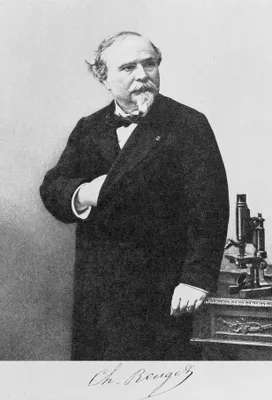
1879 ROUGET, Charles Marie Benjamin (1824 – 1904)
Sur la contractilité capillaires sanguins.
Rouget made an important investigation of the control of capillary circulation. He described cells (“Rouget’s cells”) on the outer surfaces of capillary walls, considered to be contractile. English translation in No. …
GMN 782.1 · https://historyofmedicine.com/id/1768
1879 MOSSO, Angelo (1846 – 1910)
Die Diagnostik des Pulses in Bezug auf die localen Veränderungen desselben.
Bedford 56: "Pulse reporting by hydrosphygmograph by Italian physiologist Angelo Mosso (1846-1910), who was professor of pharmacology at Turin University." Digital facsimile from the Internet Archive at this link.
GMN 12274 · https://historyofmedicine.com/id/14493
1880 TALMA, Sape (1847 – 1918)
Zur Genese der Herztöne.
GMN 825 · https://historyofmedicine.com/id/282
1880 –1882 RINGER, Sydney (1834 – 1910)
Regarding the action of hydrate of soda, hydrate of ammonia, and hydrate of potash on the ventricle of the frog’s heart.
“Ringer’s solution”
GMN 826 · https://historyofmedicine.com/id/292
1881 MARTIN, Henry Newell (1848 – 1896)
On a method of isolating the mammalian heart.
Martin devised a form of perfusion of the isolated mammalian heart – one of the greatest single contributions ever to come from an American physiological laboratory. This made possible his later work on the heart. See…
GMN 827 · https://historyofmedicine.com/id/295
1881 MAREY, Étienne Jules (1830 – 1904)
La circulation du sang à l’état physiologique et dans les maladies.
GMN 783 · https://historyofmedicine.com/id/1769
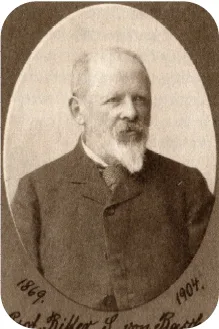
1881 BASCH, Samuel Siegfried Karl von (1837 – 1905)
Ueber die Messung des Blutdrucks am Menschen.
Basch’s important modifications of the methods of blood-pressure recording mark the beginning of clinical sphygmomanometry. English translation in Ruskin (No. 3160.1).
GMN 2784 · https://historyofmedicine.com/id/3383
1882 MARTIN, Henry Newell (1848 – 1896)
Observations on the direct influence of variations of arterial pressure upon the rate of beat of the mammalian heart.
GMN 828 · https://historyofmedicine.com/id/302