1553 SERVETUS, Michael [Miguel Serveto Conesa; also known as Miguel Servet, Miguel Serveto, Revés, or Michel de Villeneuve] (1511 – 1553)
Christianismi restitutio.
Contains (pp. 168-73) the first printed description of the lesser circulation. Because of the heretical nature of this book on the reform of Christianity, it was printed secretly and anonymously at Vienne, France. Cop…
GMN 754 · https://historyofmedicine.com/id/1741
1571 CESALPINO, Andrea [CAESALPINUS] (1525 – 1603)
Peripateticarum quaestionum libri quinque.
Cesalpino preceded Harvey in the discovery of the concept of the circulation, and Harvey must have known of his ideas, but Cesalpino’s idea of the circulation was not supported by convincing experimental work or quant…
GMN 755 · https://historyofmedicine.com/id/1742
1593 CESALPINO, Andrea [CAESALPINUS] (1525 – 1603)
Quaestionum peripateticum, libri V.
A greatly expanded second edition. The results of tying a vein and the centripetal flow in veins were first recorded in print by Cesalpino (lib. ii, Qu. xvii, p. 234). See the English translation, with commentary, of …
GMN 756 · https://historyofmedicine.com/id/1743
1603 FABRIZIO, Girolamo [FABRICIUS AB AQUAPENDENTE] (1537 – 1619)
De venarum ostiolis.
Fabricius, teacher of Harvey at Padua, discovered the venous valves, and illustrated them in life-size copperplates in this monograph. He failed to recognize their true function, however, considering their function si…
GMN 757 · https://historyofmedicine.com/id/1744
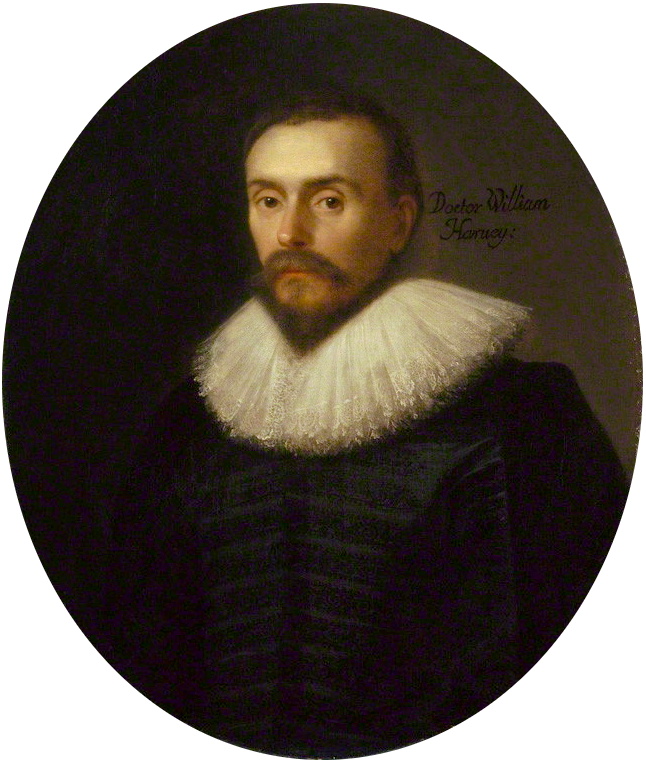
1628 HARVEY, William (1578 – 1657)
Exercitatio anatomica de motu cordis et sanguinis in animalibus.
Discovery and experimental proof of the circulation of the blood. Together with Vesalius’s Fabrica (1543), Harvey’s De motu cordus shares the honor as the greatest book in the history of medicine. Since antiquity, ide…
GMN 759 · https://historyofmedicine.com/id/1746
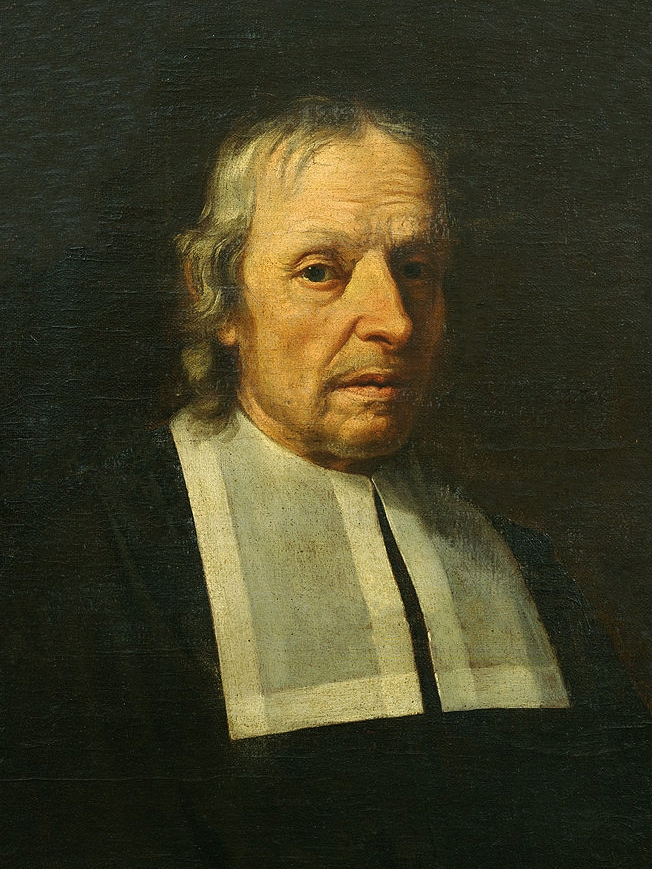
1661 MALPIGHI, Marcello (1628 – 1694)
De pulmonibus observations anatomicae.
Discovery of the capillary circulation. Malpighi demonstrated that the pulmonary tissues are vesicular in nature and showed that the trachea ends in bronchial filaments. His De pulmonibus includes his demonstration of…
GMN 760 · https://historyofmedicine.com/id/1747
1669 LOWER, Richard (1631 – 1691)
Tractatus de corde.
Lower was the first to demonstrate the scroll-like structure of the cardiac muscle. He was one of the first to transfuse blood. Chapter III of the above work records how Lower injected dark venous blood into the insuf…
GMN 761 · https://historyofmedicine.com/id/1748
1680 –1681 BORELLI, Giovanni Alfonso (1608 – 1679)
De motu animalium. 2 pts.
Borelli originated the neurogenic theory of the heart’s action and first suggested that the circulation resembled a simple hydraulic system. He was the first to insist that the heart beat was a simple muscular contrac…
GMN 3669.3 · https://historyofmedicine.com/id/1749
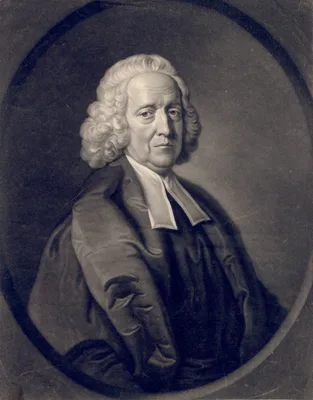
1727 –1733 HALES, Stephen (1677 – 1761)
Vegetable staticks: Or, an account of some statical experiments on the sap in vegetables. Statical essays, containing haemastaticks. 2 vols.
Hales initiated a new stage in physiological experimentation with his "statical" methods, which were characterized by precise quantitative measurements, repetition and the used of controls, and were based on the assum…
GMN 765 · https://historyofmedicine.com/id/1752
1743 TAUBE, Hartwig Wilhelm Ludwig (1706 – )
Dissertationem inauguralem de vera nervi intercostalis origine.
Taube described the carotid body and named it “ganglion minutum”, See J. Pick, J. Hist. Med., 1959, 14, 61-73.
GMN 765.1 · https://historyofmedicine.com/id/1753
1773 SPALLANZANI, Lazzaro (1729 – 1799)
De' fenomeni della circolazione osservata nel giro universale de' vasi; de' fenomeni della circolazione languente; de' moti del sangue independenti dall'azione del cuore; e del pulsar delle arterie.
In four memoirs on the dynamics of the circulatory system resulting from 337 experiments recorded in this workSpallanzani studied the role of the circulation in every stage from embryo to adult, and it was through his…
GMN 11706 · https://historyofmedicine.com/id/13907
1831 HALL, Marshall (1790 – 1857)
A critical and experimental essay on the circulation of the blood.
Marshall Hall clearly distinguished arterioles and venules from capillaries, and he described arteriovenous shunts.
GMN 768.1 · https://historyofmedicine.com/id/1757
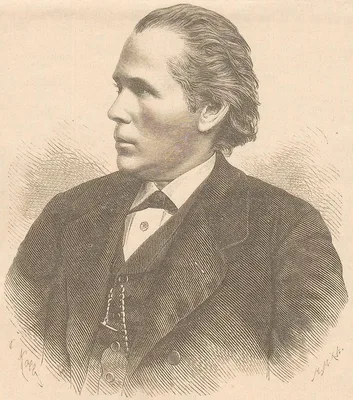
1850 VOLKMANN, Alfred Wilhelm (1800 – 1877)
Die Hämodynamik nach Versuchen.
GMN 771 · https://historyofmedicine.com/id/1759
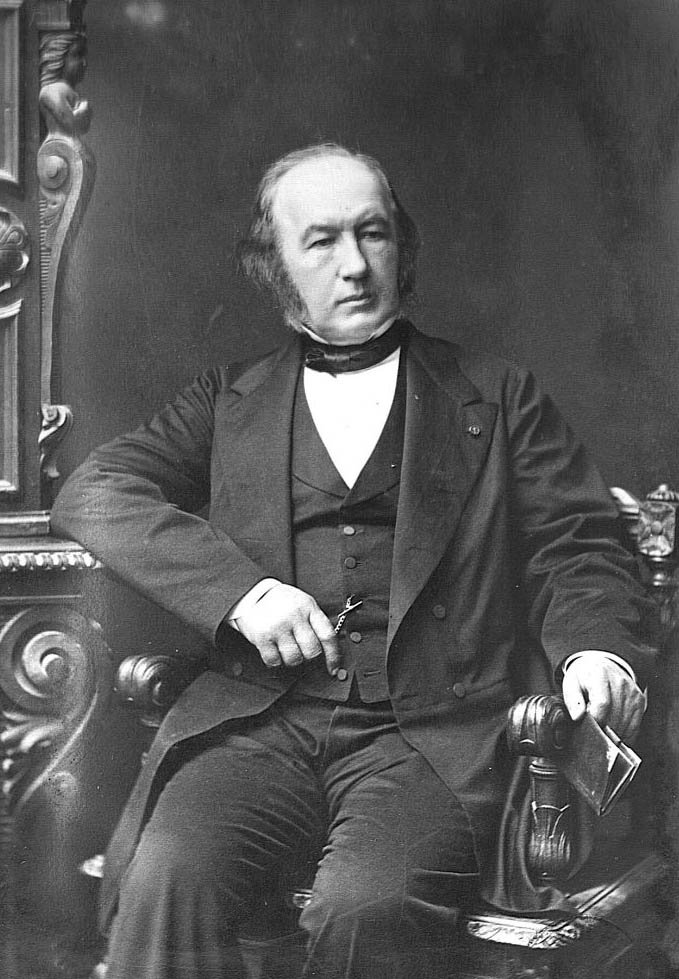
1858 BERNARD, Claude (1813 – 1878)
De l’influence de deux ordres de nerfs qui déterminent les variations de couleur du sang veineux dans les organes glondulaires.
Discovery of the vasoconstrictor and vasodilator nerves and description of their function of regulating the blood supply to the different parts of the body.
GMN 774 · https://historyofmedicine.com/id/1762
1872 CERADINI, Guilio (1844 – 1894)
Der Mechanismus der halbmondformigen Herzklappen.
Using an excised pig heart preparation with tubes, a manometer, and a visualizing apparatus, Ceradini working in Carl Ludwig’s laboratory, illustrated the mechanism of closure of the semilunar valves. He was the first …
GMN 12225 · https://historyofmedicine.com/id/14437
1876 LEGG, John Wickham (1843 – 1921)
A case of haemophilia complicated with multiple naevi.
First description of multiple hereditary telangiectasis (“Rendu–Osler–Weber disease”).
GMN 2707 · https://historyofmedicine.com/id/4422
1884 OERTEL, Max Joseph (1835 – 1934)
Therapie der Kreislauf-Störungen.
English translation in von Ziemssen’s Handbook of general therapeutics, Vol. 7, London, 1887.
GMN 2708 · https://historyofmedicine.com/id/4424
1886 HARVEY, William (1578 – 1657)
Praelectiones anatomiae universalis.
Facsimile reproduction with transliteration of Harvey’s manuscript notes for a Lumleian Lecture, 1616. These show that at that date Harvey had already completed his demonstration of the circulation of the blood. Engli…
GMN 758 · https://historyofmedicine.com/id/1745
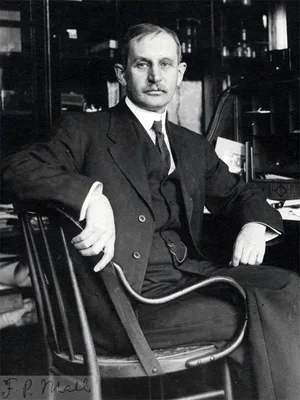
1892 MALL, Franklin Paine (1862 – 1917)
Der Einfluss der Systems der Vena portae auf die Vertheilung des Blutes.
Translated into English as "The contraction of the vena portae and its influence upon the circulation," Johns Hopkins Hospital Reports, I (1896) 111-157. Digital facsimile of the English translation from Google Books …
GMN 785 · https://historyofmedicine.com/id/1771
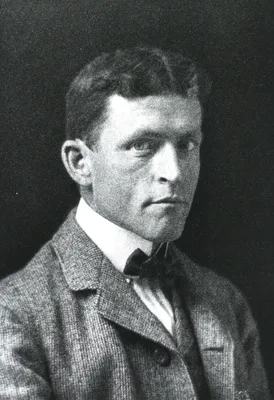
1893 PORTER, William Townsend (1862 – 1949)
On the results of ligation of the coronary arteries.
“Following coronary ligation Porter noted that the procedure frequently resulted in fibrillary contractions of the heart and sudden death. However, death did not always occur and this led him to conclude that Cohnheim…
GMN 786 · https://historyofmedicine.com/id/1772
1896 RENDU, Henri Jules Louis (1844 – 1902)
Epistaxis répété chez un sujet porteur de petits angiomes cutanés et muqueux.
Rendu’s account of multiple hereditary telangiectasis (“Rendu–Osler–Weber disease”).
GMN 2710 · https://historyofmedicine.com/id/4428
1903 PAULI, Wolfgang Joseph (1869 – 1955)
Ueber Ionenwirkung und ihre therapeutische Verwendung.
Hypotensive action of thiocyanates first noted. Pauli was the father of the physicist Wolfgang Pauli (1900-1958).
GMN 2712 · https://historyofmedicine.com/id/4432
1905 PÁL, Jakob (1863 – 1936)
Gefässkrisen.
GMN 2713 · https://historyofmedicine.com/id/4434
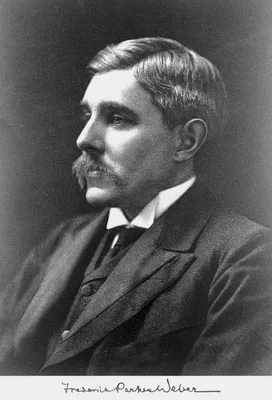
1907 WEBER, Frederick Parkes (1863 – 1962)
Multiple hereditary developmental angiomata (telangiectases) of the skin and mucous membranes associated with recurring haemorrhages.
“Rendu–Osler–Weber disease.”
GMN 2714 · https://historyofmedicine.com/id/4436
1918 –1919 DALE, Sir Henry Hallett (1875 – 1968); RICHARDS, Alfred Newton (1876 – 1966)
The vasodilator action of histamine and of some other substances.
Dale and Richards studied the effect of histamine on the control of the circulation and showed its peripheral action to be located in the capillaries and smaller arterioles.
GMN 792 · https://historyofmedicine.com/id/114
1923 HERING, Heinrich Ewald (1866 – 1948)
Der Karotisdruckversuch.
GMN 794 · https://historyofmedicine.com/id/121
1924 HERING, Heinrich Ewald (1866 – 1948)
Die Aenderung der Herzschlagzahl durch Aenderung des arteriellen Blutdruckes erfolgt aus reflektorischem Wege; gleichzeitig eine Mitteilung über die Funktion des Sinus caroticus, beziehungsweise der Sinusnerven.
First description of the structure and function of the sinus nerve and the reflex character of carotid pressure.
GMN 795 · https://historyofmedicine.com/id/572
1927 MOSCHCOWITZ, Eli (1879 – 1964)
Hypertension of the pulmonary circulation.
GMN 2715 · https://historyofmedicine.com/id/4438
1929 KEITH, Norman Macdonnell (1885 – 1976); WAGENER, Henry Patrick (1890 – 1961); ET AL
Some different types of essential hypertension; their course and prognosis.
The Keith-Wagener-Barker classification of hypertension. With N. W. Barker.
GMN 2716 · https://historyofmedicine.com/id/4440
1932 HINES, Edgar Alphonso Jr. (1905 – 1978); BROWN, George Elgie (1885 – 1935)
A standard stimulus for measuring vasomotor reactions: its application in the study of hypertension.
Cold-pressor test.
GMN 2717 · https://historyofmedicine.com/id/4441
1933 TARR, Leonard (1901 – ); ET AL
The circulation time in various clinical conditions determined by the use of sodium dehydrocholate.
Use of decholin sodium for estimation of circulation time. With B. S. Oppenheimer and R. V. Sagar.
GMN 2718 · https://historyofmedicine.com/id/4443
1934 GOLDBLATT, Harry (1891 – 1977); ET AL
Studies on experimental hypertension. 1. The production of persistent elevation of systolic blood pressure by means of renal ischemia.
Goldblatt discovered the role of the kidneys in the regulation of blood pressure. This was the first of Goldblatt’s papers on experimental hypertension, which established an aetiologic role for renal ischemia in the p…
GMN 2719 · https://historyofmedicine.com/id/4445
1935 IBN-AL-NAFIS (ALA-AL-DIN ABU AL-HASSAN ALI IBN ABI-HAZM AL-QARSHI AL-DIMASHQI; علاء الدين أبو الحسن عليّ بن أبي حزم القرشي الدمشقي ) (1210 – 1288); MEYERHOF, Max (1874 – 1945)
Ibn an Nafis und seine Theorie des Lungenkreislaufs.
Ibn-al-Nafis, a Syrian physician, described the lesser circulation in his commentary on the anatomy of the Canon of Avicenna, 1268. This was discovered in three Arabic MSS by Mohyi el Din el Tatawi, who included a Ger…
GMN 753 · https://historyofmedicine.com/id/1873
1936 BARKER, Marion Herbert (1899 – 1947)
The blood cyanates in the treatment of hypertension.
Barker made thiocyanate treatment a practical proposition in hypertension.
GMN 2720 · https://historyofmedicine.com/id/4447
1939 HOMANS, John (1877 – 1955)
Circulatory diseases of the extremities.
GMN 2722 · https://historyofmedicine.com/id/4452
1944 KEMPNER, Walter (1903 – 1997)
Treatment of kidney disease and hypertensive vascular disease with rice diet.
Kempner rice diet for the treatment of hypertension.
GMN 2725 · https://historyofmedicine.com/id/4461
1944 FRANKLIN, Kenneth James (1897 – 1966); BARCLAY, Alfred Ernest (1876 – 1949); PRICHARD, Marjorie M. L.
The foetal circulation and cardiovascular system, and the changes that they undergo at birth.
The authors describe the first direct recording of the blood flow in an intact fetus, a fetal lamb. The authors performed this experiment cooperation with Sir Joseph Bancroft and Dr. D. H. Barron.
GMN 11548 · https://historyofmedicine.com/id/13747
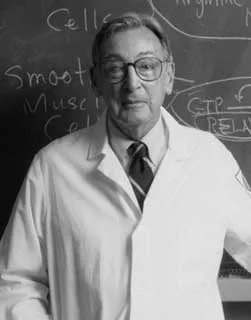
1980 FURCHGOTT, Robert Francis (1916 – 2009)
The obligatory role of endothelial cells in the relaxation of arterial smooth muscle by acetylcholine.
In 1978 Furchgott discovered a substance in endothelial cells that relaxes blood vessels, calling it endothelium-derived relaxing factor (EDRF). By 1986, he had worked out EDRF's nature and mechanism of action, and de…
GMN 14246 · https://historyofmedicine.com/id/16565
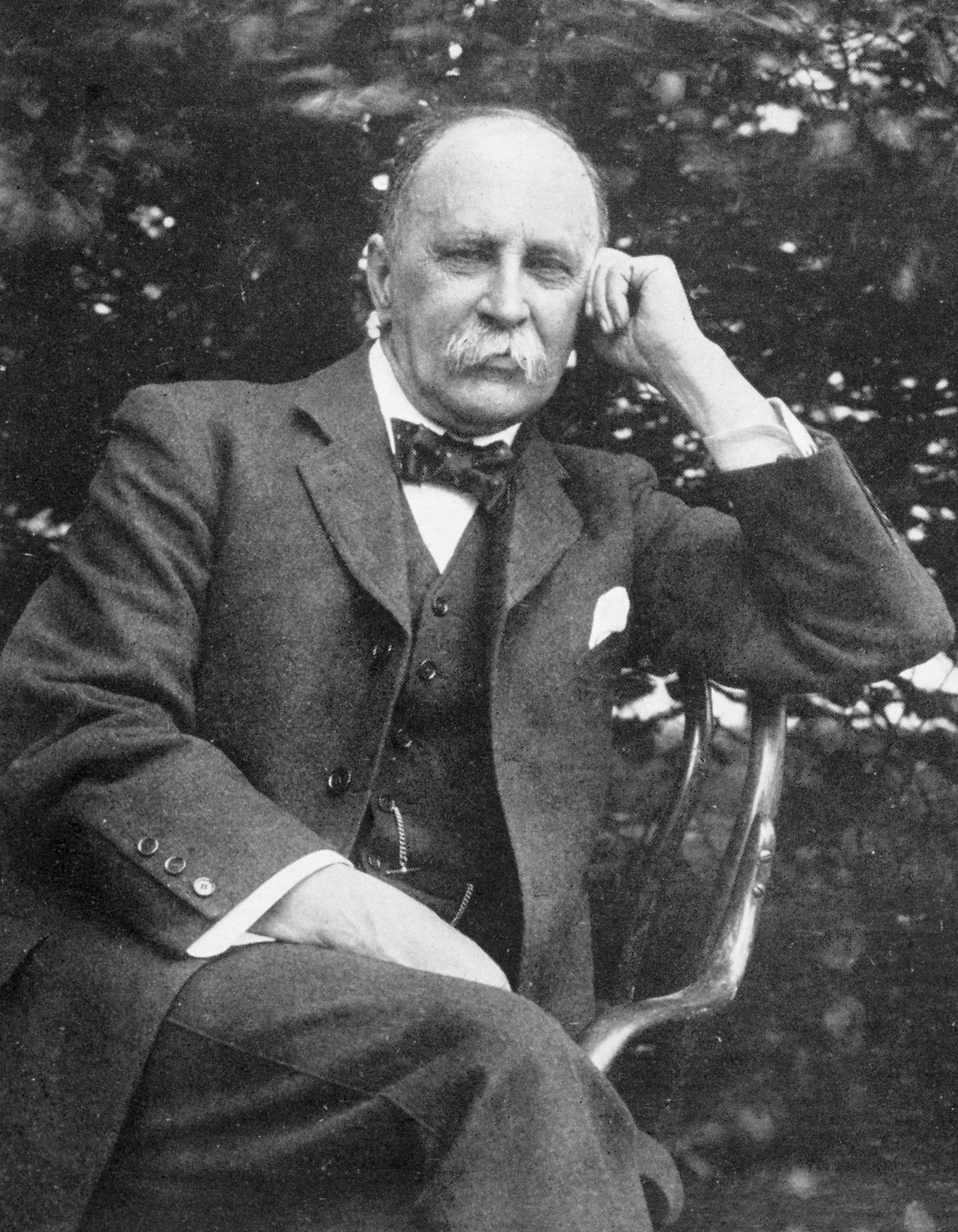
1985 OSLER, Sir William (1849 – 1919); FYE, W. Bruce (1946 – )
William Osler's collected papers on the cardiovascular system. Edited by W. Bruce Fye.
Includes a previously unpublished essay by Maude Abbott, "Osler's contributions to our knowledge of heart disease."
GMN 8882 · https://historyofmedicine.com/id/11060