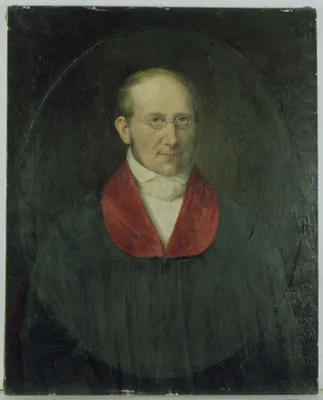
1839 PURKYNĔ, Jan Evangelista [PURKINJE] (1787 – 1869)
Nowe spostrzezenia i badainia w przedmiocie fizyologii i drobnowidzowéj anatomii.
The “Purkinjĕ fibres”; identification of the conductor system of the heart. Reprinted in his Opera omnia, 1939, 3, 52-63. German version in Arch. Anat. Physiol, wiss. Med., 1845, 281-95; English translation by W. W. G…
GMN 805 · https://historyofmedicine.com/id/177
1852 STANNIUS, Hermann Friedrich (1808 – 1883)
Zwei Reihen physiologischer Versuche.
Stannius initiated research on the physiology of the conduction system of the heart. He illustrated vagal inhibition of the heart beat and indicated the existence of the pacemaker of the heart. Stannius also showed th…
GMN 812 · https://historyofmedicine.com/id/206
1859 GROUX, Eugène Alexandre (1833 – 1878); UPHAM, Jabez Baxter (1820 – 1902)
Fissura sterni congenita. New observations and experiments made in Amerika [sic] and Great Britain with illustrations of the case and instruments.
Records first use of telegraphy to record and measure the heart beat and pulse, written and published by the patient, who lived to the age of 45. This was done in Boston with an instrument placed against Groux’s chest…
GMN 812.2 · https://historyofmedicine.com/id/213
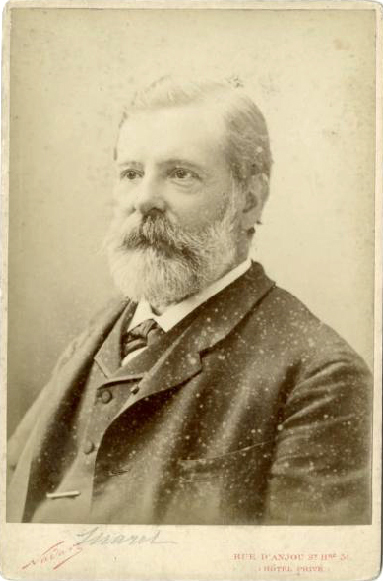
1863 MAREY, Étienne Jules (1830 – 1904); CHAUVEAU, Jean Baptiste Auguste (1827 – 1917)
Appareils et expériences cardiographiques.
First direct records of the heart impulse by means of a “cardiac sound” and the sphygmograph – recording tambours, which wrote on a moving drum covered with smoked paper.
GMN 816 · https://historyofmedicine.com/id/235
1868 BERNSTEIN, Julius (1839 – 1917)
Über den zeitlichen Verlauf der negativen Schwankung des Nervenstroms.
Bernstein introduced the differential rheotome, and the first electrocardiograms were obtained with it by Marchand in 1877 (No. 823.1).
GMN 819.1 · https://historyofmedicine.com/id/247
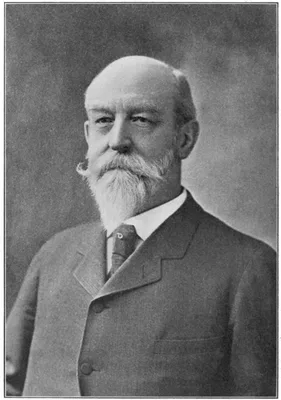
1872 BOWDITCH, Henry Pickering (1840 – 1911)
Ueber die Eigenthümlichkeiten der Reizbarkeit, welche die Muskelfasern des Herzens zeigen.
Bowditch was the first to research the relationship between the strength of the heart beat and the interval between beats. He established the “all-or-nothing” principle of heart muscle contraction. He founded, at Harv…
GMN 822 · https://historyofmedicine.com/id/260
1873 LUCIANI, Luigi (1840 – 1919)
Eine periodische Function des isolirten Froschherzen.
"Using an isolated frog heart preparation with ligatures around the atria, Luigi Luciani, an Italian physiologist working in 1873 in Carl Ludwig’s famous laboratory in Leipzig, was the first to demonstrate cardiac gro…
GMN 12261 · https://historyofmedicine.com/id/14478
1877 MARCHAND, Richard
Beiträge zur Kenntniss der Reizwell und Contractionswelle des Herzmuskels.
Marchand obtained the first electrocardiogram. Using the differential rheotome he measured the time course of the potential variations from the frog’s heart.
GMN 823.1 · https://historyofmedicine.com/id/271
1877 –1880 ROMANES, George John (1848 – 1894)
Observations on the locomotor system of Medusae. 3 pts.
Charles Sherrington described the significance of Romanes' research on jellyfish in terms of its impact on cardiac physiology: "Romanes's observations carried out with simple means were novel and fundamental. The ques…
GMN 632 · https://historyofmedicine.com/id/573
1879 –1880 BURDON-SANDERSON, Sir John Scott (1828 – 1905); PAGE, Frederick James Montague (1848 – 1907)
On the time-relations of the excitatory process in the ventricle of the heart of the frog.
These workers were among the first to study the action currents of the heart, and made the first records (with the capillary electrometer) of the minute electrical current produced by the beating of the heart. See als…
GMN 824 · https://historyofmedicine.com/id/278
1879 MOSSO, Angelo (1846 – 1910)
Die Diagnostik des Pulses in Bezug auf die localen Veränderungen desselben.
Bedford 56: "Pulse reporting by hydrosphygmograph by Italian physiologist Angelo Mosso (1846-1910), who was professor of pharmacology at Turin University." Digital facsimile from the Internet Archive at this link.
GMN 12274 · https://historyofmedicine.com/id/14493
1883 –1884 BURDON-SANDERSON, Sir John Scott (1828 – 1905); PAGE, Frederick James Montague (1848 – 1907)
On the electrical phemomena of the excitatory process in the heart of the frog and of the tortoise, as investigated photographically.
See No. 824. This paper contains several tracings of the heart's electrical activity recorded with a capillary electrometer, the earliest graphic recorder of bioelectric signals. These were the "first undistorted trac…
GMN 831 · https://historyofmedicine.com/id/318
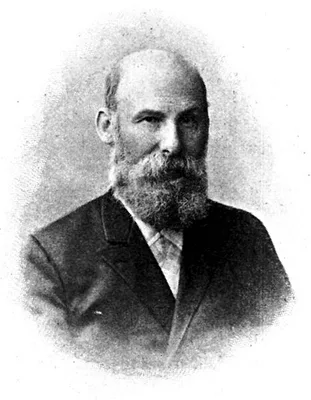
1886 VVEDENSKII, Nikolai Evgenevich [WEDENSKII, Wedensky (1852 – 1922)
Über die Beziehung zwischen Reizung und Erregung im Tetanus.
One mechanism that has been implicated in the origin of arrhythmias is the Wedensky effect. This was first described in neuromuscular studies by Wedensky as a prolonged lowered threshold of excitability induced by a s…
GMN 12293 · https://historyofmedicine.com/id/14514
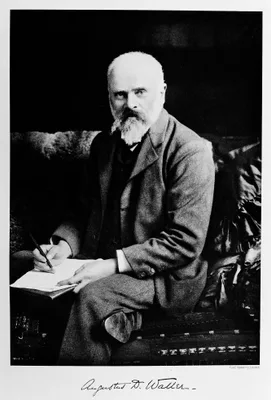
1887 WALLER, Augustus Désiré (1856 – 1922)
A demonstration on man of electromotive changes accompanying the heart’s beat.
Waller was first to use electrodes and leads in demonstrating the action currents of the heart, avoiding the necessity of opening the chest of laboratory animals and preparing the way for present-day clinical electroc…
GMN 833 · https://historyofmedicine.com/id/329
1889 MACWILLIAM, John Alexander (1857 – 1937)
Electrical stimulation of the heart in man.
MacWilliams described experiments in which application of an electrical impulse to the human heart in asystole caused a ventricular contraction, and that a heart rhythm of 60–70 beats per minute could be evoked by imp…
GMN 7996 · https://historyofmedicine.com/id/10172
1889 MACWILLIAM, John Alexander (1857 – 1937)
Cardiac failure and sudden death.
"Physiologists and physicians had proposed various theories to explain transient and fatal cardiac standstill in animals and humans who were apparently healthy. MacWilliam defined two distinct mechanisms depending on …
GMN 12267 · https://historyofmedicine.com/id/14484
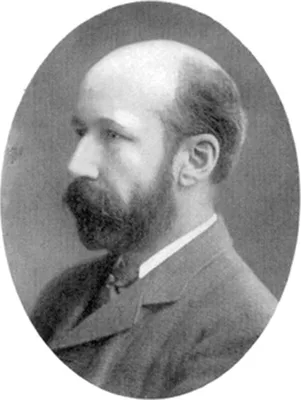
1893 KENT, Albert Frank Stanley (1863 – 1958)
Researches on the structure and function of the mammalian heart.
Kent also discovered the atrioventricular bundle (“bundle of Kent”), a narrow band of muscle between the auricles and ventricles of the heart. Its purpose is to act as a bridge for contractile impulses between the aur…
GMN 837 · https://historyofmedicine.com/id/580
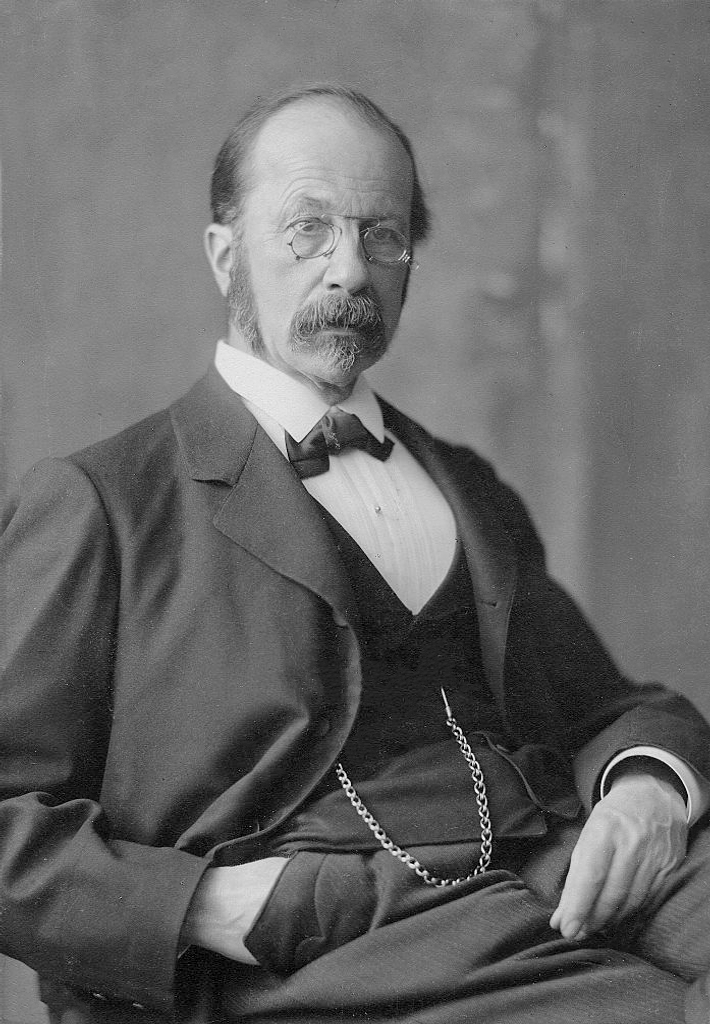
1893 HIS, Wilhelm Sr. (1831 – 1904)
Die Thätigkeit des embryonalen Herzens und deren Bedeutung für die Lehre von der Herzbewegung beim Erwachsenen.
His described the atrioventricular bundle which was later named after him. English translation in F. A. Willius and T. E. Keys, Cardiac classics, 1941, p. 695.
GMN 836 · https://historyofmedicine.com/id/610
1899 PRÉVOST, Jean-Louis (1790 – 1850); BATTELLI, Federico
La mort par les décharges électriques.
The first defibrillation. “Prévost and Battelli produced ventricular fibrillation in dogs by shocking with weak currents. They then shocked the fibrillating heart with a stronger current—the second, or counter, shock.…
GMN 838.1 · https://historyofmedicine.com/id/606
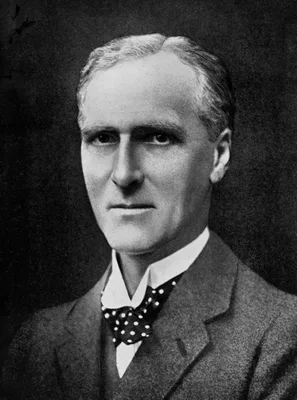
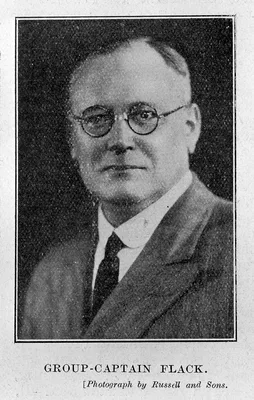
1906 –1907 KEITH, Sir Arthur (1866 – 1955); FLACK, Martin William (1882 – 1931)
The form and nature of the muscular connections between the primary divisions of the vertebrate heart.
Discovery of the sinoatrial node, the “pacemaker of the heart”. Reprinted in Willius & Keys, Cardiac classics, 1941, pp. 747-62.
GMN 844 · https://historyofmedicine.com/id/627
1907 GIBSON, Alexander George (1875 – 1950)
The significance of a hitherto undescribed wave in the jugular pulse.
The physiological wave sometimes found in mid-diastole, when the pulse is slow, was first described by Gibson. He termed it the b-wave. Gibson worked with William Osler at the Radcliffe Infirmary in Oxford, and cared …
GMN 788 · https://historyofmedicine.com/id/1774
1910 EPPINGER, Hans (1879 – 1946); ROTHBERGER, Carl Julius (1871 – 1945)
Ueber die Folgen der Durchschneidung der Tawaraschen Schenkel der Reizleitungssystems.
First experimental study of the electrocardiographic changes in bundle-branch block. "Later, as professor and director of the internal clinic at the Allgemeines Krankenhaus in Vienna, Eppinger became one of the most n…
GMN 848 · https://historyofmedicine.com/id/638
1914 LEWIS, Sir Thomas (1881 – 1945); WHITE, Paul Dudley (1886 – 1973); MEAKINS, Jonathan Campbell (1882 – 1959)
The excitatory process in the dog's heart. Part 1. The auricles.
Experiments designed to identify the "origin of the contraction wave in the mammalian heart." Three photographic plates depict numerous electrocardiographic recordings. "From 1910 to 1916, Lewis and his associates per…
GMN 12258 · https://historyofmedicine.com/id/14474
1927 CRAIB, William Hofmeyr (1895 – 1982)
A study of the electrical field surrounding active heart muscle.
At Johns Hopkins Hospital Craib evolved his fundamental theory of the doublet hypothesis which revolutionized electrocardiographic thinking. Until then, it was held that electricity in the heart differed from electric…
GMN 12226 · https://historyofmedicine.com/id/14438
1969 SCHERLAG, Benjamin J. (1932 – ); ET AL
Catheter technique for recording His bundle activity in man.
Scherlag was the first person to consistently record atrial ventricular bundle ("His bundle") potentials, which served as one of the cornerstones of clinical electrophysiology. With 5 co-authors.
GMN 2883.8 · https://historyofmedicine.com/id/4284
1982 GALLAGHER, John J.; CRITELLI, G.; ET AL
Catheter technique for closed-chest ablation of the atrioventricular conduction system.
The catheter ablation technique, pioneered by Gallagher and team. Abstract "This report describes a catheter technique for ablating the His bundle and its application in nine patients with recurrent supraventricular t…
GMN 12236 · https://historyofmedicine.com/id/14450