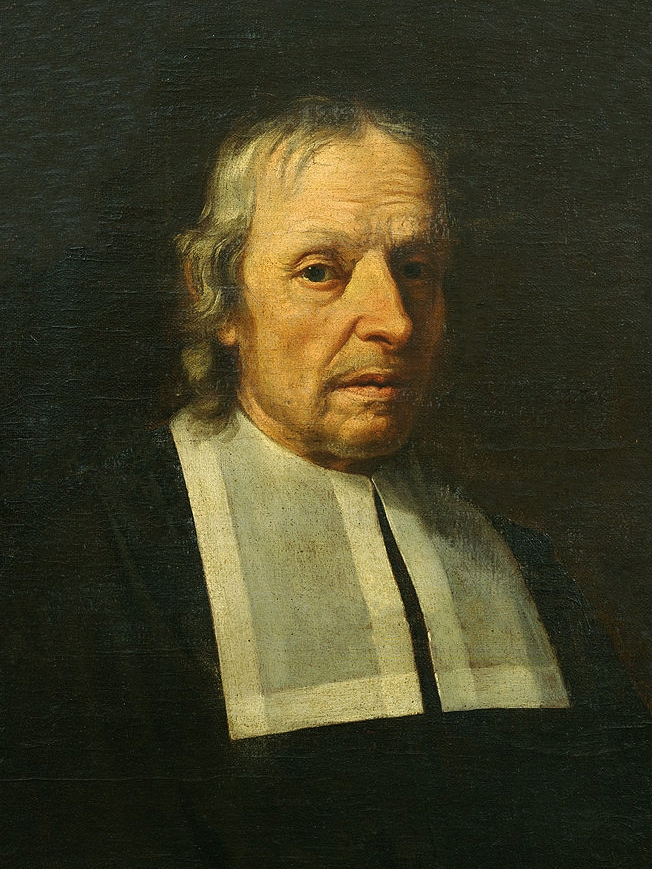
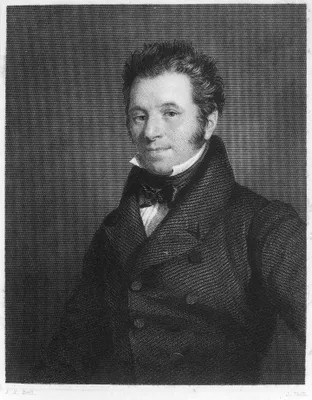
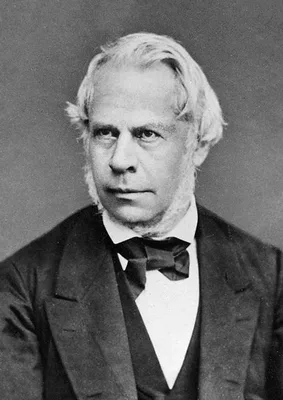
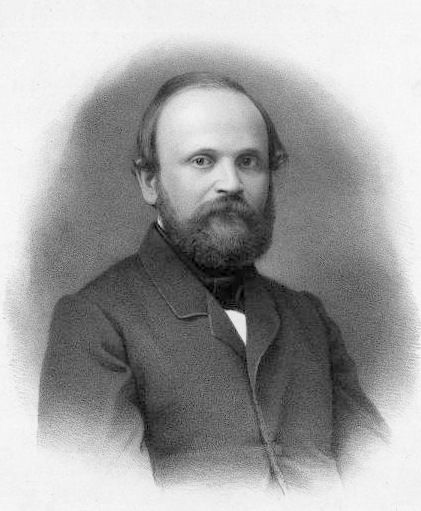
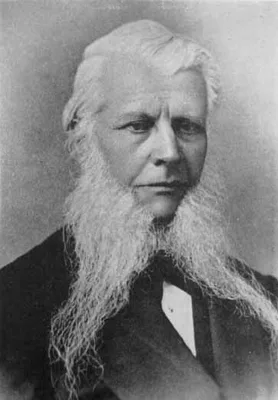
1551 RODRIGUES DE CASTELO BRANCO, João (Amato Lusitano; Amatus Lusitanus) (1511 – 1568)
Curationum medicinalium centuria prima, multiplici variaque rerum cognitione referta. Praexfixa est eiusdem auctoris commentatio, in qua docetur, quomodo se medicus habere debeat in introitu ad aegrotantem, simulque de crisi, & diebus decretoriis, in qui artem medicam exercent, & quotidie pro salute aegrotorum in collegium descendunt longe utilissima.
Lusitano has been credited with early recognition of the circulation of the blood. How much he might have understood the circulation remains in doubt; however, through dissections of the Azygos vein, he was the first …
GMN 12945 · https://historyofmedicine.com/id/15192
1563 –1564 EUSTACHI, Bartolomeo [EUSTACHIUS] (1510 – 1574)
Opuscula anatomica.
Eustachius is credited with several anatomical discoveries, among them the tensor tympani muscle and the Eustachian tube, published in his chapter entitled De auditus organis. In the last respect, however, he was anti…
GMN 1093 · https://historyofmedicine.com/id/159
1597 PINEAU, Séverin ( – 1619)
Opusculum physiologum & anatomicum in duos libellos distinctum: In quibus primùm, de integritatis & corruptionis virginum notis, deinde, de grauiditate & partu naturali mulierum in quo ossa pubis & ilium distrahi, dilucidè tractatur ....
In 1595 Pineau demonstrated the vestigial foramen ovale in the adult heart, settling the question of the perviousness of the septum of the heart. His work was first published in 1597. He published this study in a fran…
GMN 802 · https://historyofmedicine.com/id/163
1603 FABRIZIO, Girolamo [FABRICIUS AB AQUAPENDENTE] (1537 – 1619)
De venarum ostiolis.
Fabricius, teacher of Harvey at Padua, discovered the venous valves, and illustrated them in life-size copperplates in this monograph. He failed to recognize their true function, however, considering their function si…
GMN 757 · https://historyofmedicine.com/id/1744
1660 BOTALLO, Leonardo (BOTALLUS) (1519 – 1587)
Opera omnia medica et chirurgica.
“Botallo’s duct”, the ductus arteriosus; “Botallo’s foramen”, the foramen ovale interauriculare; and “Botallo’s ligament”, the ligamentum arteriosum, are described in this work. However two of these traditional attrib…
GMN 802.1 · https://historyofmedicine.com/id/559
1661 MALPIGHI, Marcello (1628 – 1694)
De pulmonibus observations anatomicae.
Discovery of the capillary circulation. Malpighi demonstrated that the pulmonary tissues are vesicular in nature and showed that the trachea ends in bronchial filaments. His De pulmonibus includes his demonstration of…
GMN 760 · https://historyofmedicine.com/id/1747
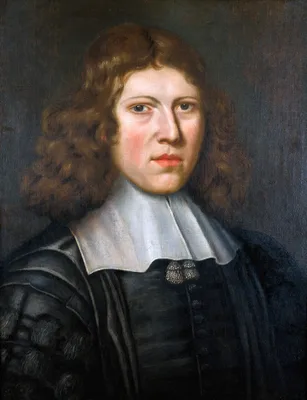
1669 LOWER, Richard (1631 – 1691)
Tractatus de corde.
Lower was the first to demonstrate the scroll-like structure of the cardiac muscle. He was one of the first to transfuse blood. Chapter III of the above work records how Lower injected dark venous blood into the insuf…
GMN 761 · https://historyofmedicine.com/id/1748
1685 VOSSIUS, Isaak (Isaac Voss) (1618 – 1689)
Variarum observationum liber.
Vossius, a Dutch scholar and manuscript collector, was one of the first European writers to suggest that the Chinese had anticipated William Harvey's discovery of the circulation of the blood. In his chapter on Chines…
GMN 11718 · https://historyofmedicine.com/id/13919
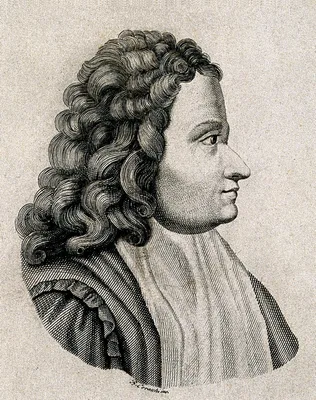
1705 VIEUSSENS, Raymond (1641 – 1715)
Novum vasorum corporis humani systema.
Vieussens was among the first to describe the morbid changes in mitral stenosis, the throbbing pulse in aortic insufficiency, and the first correctly to describe the structure of the left ventricle, the course of the …
GMN 2729 · https://historyofmedicine.com/id/4484
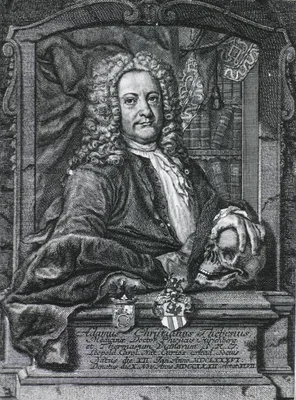
1708 THEBESIUS, Adam Christian (1686 – 1732)
Disputatio medica inauguralis de circulo sanguinis in corde.
First description of the coronary valves and the venae thebesii.
GMN 763 · https://historyofmedicine.com/id/1750
1715 VIEUSSENS, Raymond (1641 – 1715)
Traité nouveau de la structure et des causes du mouvement naturel du coeur. IN: Oeuvres françoises de M. Vieussens dédiées a nosseigneurs des états de la province de Languedoc.
The first work on cardiac anatomy and pathology. Vieussens was the first to describe the course of the coronary arteries and the coronary sinus. He also described collateral vessels connecting the left anterior descen…
GMN 7247 · https://historyofmedicine.com/id/9416
1740 VALSALVA, Antonio Maria (1666 – 1723)
Opera.
Valsalva described the aortic “sinus of Valsalva”.
GMN 803 · https://historyofmedicine.com/id/169
1749 SÉNAC, Jean Baptiste (1693 – 1770)
Traité de la structure du coeur, de son action, et de ses maladies. 2 vols.
Senac’s valuable treatise on the heart added much to the knowledge of the anatomy and diseases of that organ; he mentioned the leucocytes, which he considered to belong to the chyle, and he described pericarditis. Sen…
GMN 2733 · https://historyofmedicine.com/id/4505
1831 HALL, Marshall (1790 – 1857)
A critical and experimental essay on the circulation of the blood.
Marshall Hall clearly distinguished arterioles and venules from capillaries, and he described arteriovenous shunts.
GMN 768.1 · https://historyofmedicine.com/id/1757
1837 –1841 PIROGOV, Nikolai Ivanovich (Pirogoff) (1810 – 1881)
Anatomia chirurgica truncorum arteriarum nec non fasciarum fibrosarum.
An atlas of arterial stems and fasciae. Translated into German as Chirurgische anatomie der Arterienstamme und Fascien neu Bearbeitet von Julius Szymanowski. Leipzig und Heidelberg: C. F. Winter, 1850. Digital facsimi…
GMN 11697 · https://historyofmedicine.com/id/13898
1839 PURKYNĔ, Jan Evangelista [PURKINJE] (1787 – 1869)
Nowe spostrzezenia i badainia w przedmiocie fizyologii i drobnowidzowéj anatomii.
The “Purkinjĕ fibres”; identification of the conductor system of the heart. Reprinted in his Opera omnia, 1939, 3, 52-63. German version in Arch. Anat. Physiol, wiss. Med., 1845, 281-95; English translation by W. W. G…
GMN 805 · https://historyofmedicine.com/id/177
1841 HENLE, Friedrich Gustav Jakob (1809 – 1885)
Allgemeine Anatomie. Lehre von den Mischungs- und Formbestandtheilen des menschlichen Körpers.
Many of the histological discoveries of Henle are described in the above. He classified tissues histologically. In the section on Gefässnerven (pp. 510, 690) Henle demonstrated the presence of smooth muscle in the end…
GMN 543 · https://historyofmedicine.com/id/268
1844 REMAK, Robert (1815 – 1865)
Neurologische Erlauterungen.
Remak was first to describe the intrinsic ganglia of the heart.
GMN 806 · https://historyofmedicine.com/id/569
1852 BIDDER, Friedrich Karl Heinrich von (1810 – 1894)
Ueber functionell verschiedene und räumlich getrennte Nervencentra im Froschherzen.
Discovery of the ganglion cells at the auriculo-ventricular junction, “Bidder’s ganglion”.
GMN 811 · https://historyofmedicine.com/id/203
1863 BEZOLD, Albert von (1836 – 1868)
Untersuchungen über die Innervation des Herzens
Discovery of the accelerator or excitatory nerve fibres of the heart (pp. 191-232), “Bezold’s ganglia”.
GMN 815 · https://historyofmedicine.com/id/226
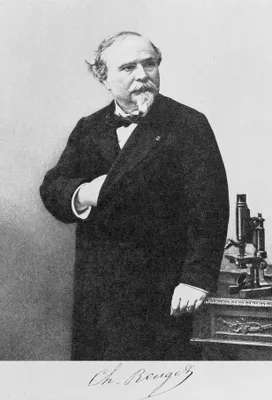
1879 ROUGET, Charles Marie Benjamin (1824 – 1904)
Sur la contractilité capillaires sanguins.
Rouget made an important investigation of the control of capillary circulation. He described cells (“Rouget’s cells”) on the outer surfaces of capillary walls, considered to be contractile. English translation in No. …
GMN 782.1 · https://historyofmedicine.com/id/1768
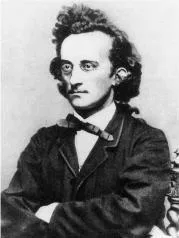
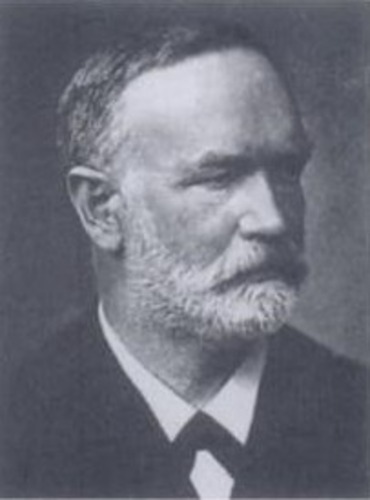
1884 –1889 BRAUNE, Christian Wilhelm (1831 – 1892)
Das Venensystem des menschlichen Körpers. 2 pts. and atlas.
Like Braune’s other anatomical works, this is notable for its excellent illustrations.
GMN 784 · https://historyofmedicine.com/id/1770
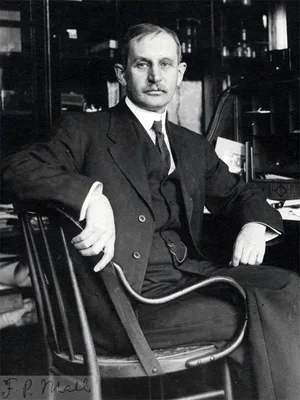
1892 MALL, Franklin Paine (1862 – 1917)
Der Einfluss der Systems der Vena portae auf die Vertheilung des Blutes.
Translated into English as "The contraction of the vena portae and its influence upon the circulation," Johns Hopkins Hospital Reports, I (1896) 111-157. Digital facsimile of the English translation from Google Books …
GMN 785 · https://historyofmedicine.com/id/1771
1893 KENT, Albert Frank Stanley (1863 – 1958)
Researches on the structure and function of the mammalian heart.
Kent also discovered the atrioventricular bundle (“bundle of Kent”), a narrow band of muscle between the auricles and ventricles of the heart. Its purpose is to act as a bridge for contractile impulses between the aur…
GMN 837 · https://historyofmedicine.com/id/580
1893 HIS, Wilhelm Sr. (1831 – 1904)
Die Thätigkeit des embryonalen Herzens und deren Bedeutung für die Lehre von der Herzbewegung beim Erwachsenen.
His described the atrioventricular bundle which was later named after him. English translation in F. A. Willius and T. E. Keys, Cardiac classics, 1941, p. 695.
GMN 836 · https://historyofmedicine.com/id/610
1895 FRANK, Otto (1865 – 1944)
Zur Dynamik des Herzmuskels.
"In his postdoctoral work (Habilitationsschrift) Frank investigated the isometric and isotonic contractile behaviour of the heart and it is this work that he is best known for. Frank's work on this topic preceded that…
GMN 12284 · https://historyofmedicine.com/id/14505
1899 MEIGS, Arthur Vincent (1850 – 1912)
The penetration of the muscular fibres of the human heart by capillaries, and the existence in that organ of very large capillaries.
Meigs discovered that the capillaries of the heart enter the heart muscle fibers. These became known as "Meigs capillaries." Digital facsimile from PubMedCentral at this link.
GMN 12268 · https://historyofmedicine.com/id/14485
1900 MACCALLUM, John Bruce (1876 – 1906)
On the muscular architecture and growth of the ventricles of the heart.
A classic account of the development and architecture of the muscular wall of the heart.
GMN 839 · https://historyofmedicine.com/id/603
1904 FRANK, Otto (1865 – 1944)
Die unmittelbare Registrierung der Herztöne.
Frank obtained the first perfect pulse curves with special manometers, the so-called “Frank capsules”.
GMN 843 · https://historyofmedicine.com/id/621
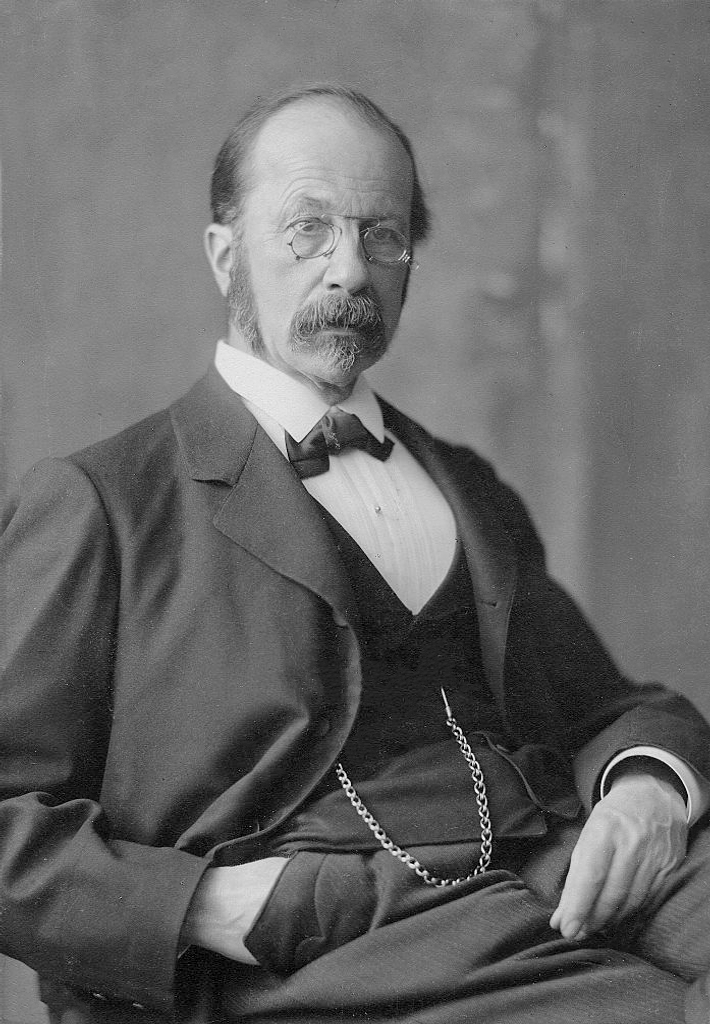
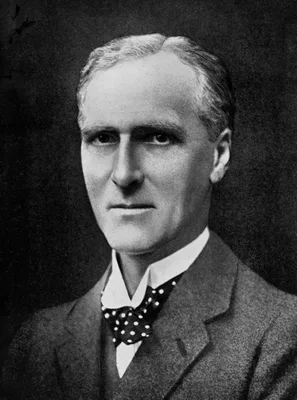
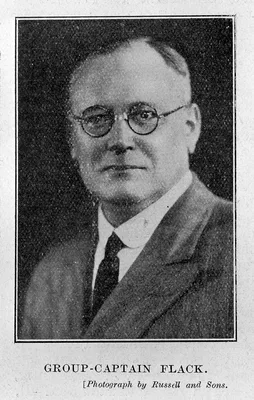
1906 –1907 KEITH, Sir Arthur (1866 – 1955); FLACK, Martin William (1882 – 1931)
The form and nature of the muscular connections between the primary divisions of the vertebrate heart.
Discovery of the sinoatrial node, the “pacemaker of the heart”. Reprinted in Willius & Keys, Cardiac classics, 1941, pp. 747-62.
GMN 844 · https://historyofmedicine.com/id/627
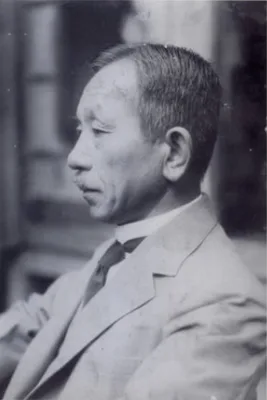
1906 TAWARA, Sunao (1873 – 1952)
Das Reizleitungssystem des Säugethierherzens.
Tawara discovered and described the atrioventricular node – “node of Tawara”. Translated into English by Kozo Suma and Munehiro Shimada as The conduction system of the mammalian heart: An anatomical-histological study…
GMN 845 · https://historyofmedicine.com/id/629
1911 –1912 LOMBARD, Warren Plimpton (1855 – 1939)
The blood-vessels in the arterioles, capillaries and small veins of the human skin.
Lombard soaked the skin in cedarwood oil, rendering transparent the superficial epidermal layers, and thus making possible many direct observations on it.
GMN 790 · https://historyofmedicine.com/id/108
1911 MALL, Franklin Paine (1862 – 1917)
On the muscular architecture of the ventricles of the human heart.
GMN 12262 · https://historyofmedicine.com/id/14479
1921 GROSS, Louis (1894 – 1937)
The blood supply to the heart.
Coronary arterial anatomy studied by radiography of the injected arteries by a standard technique.
GMN 855 · https://historyofmedicine.com/id/712
1924 SPALTEHOLZ, Karl Werner (1861 – 1940)
Die Arterien der Herzwand.
GMN 856 · https://historyofmedicine.com/id/715
1975 MCALPINE, Wallace Arnold (1920 – 2005)
Heart and coronary arteries: An anatomical atlas for clinical diagnosis, radiological investigation, and surgical treatment.
With 1,098 images this is "probablly the highest quality atlas of the heart ever produced" (W. Bruce Fye). This atlas received recognition throughout the world, including a Gold Medal at the International Book Festiva…
GMN 11691 · https://historyofmedicine.com/id/13892