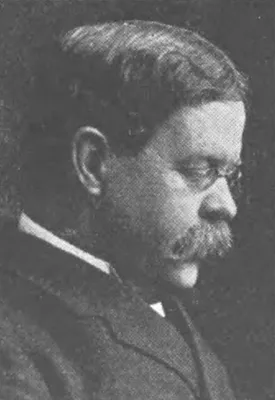
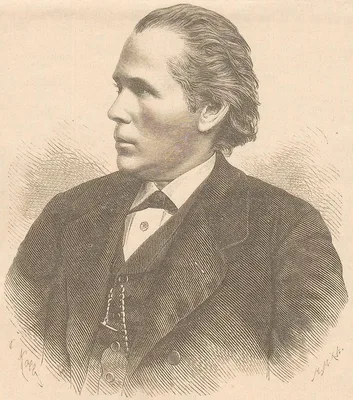
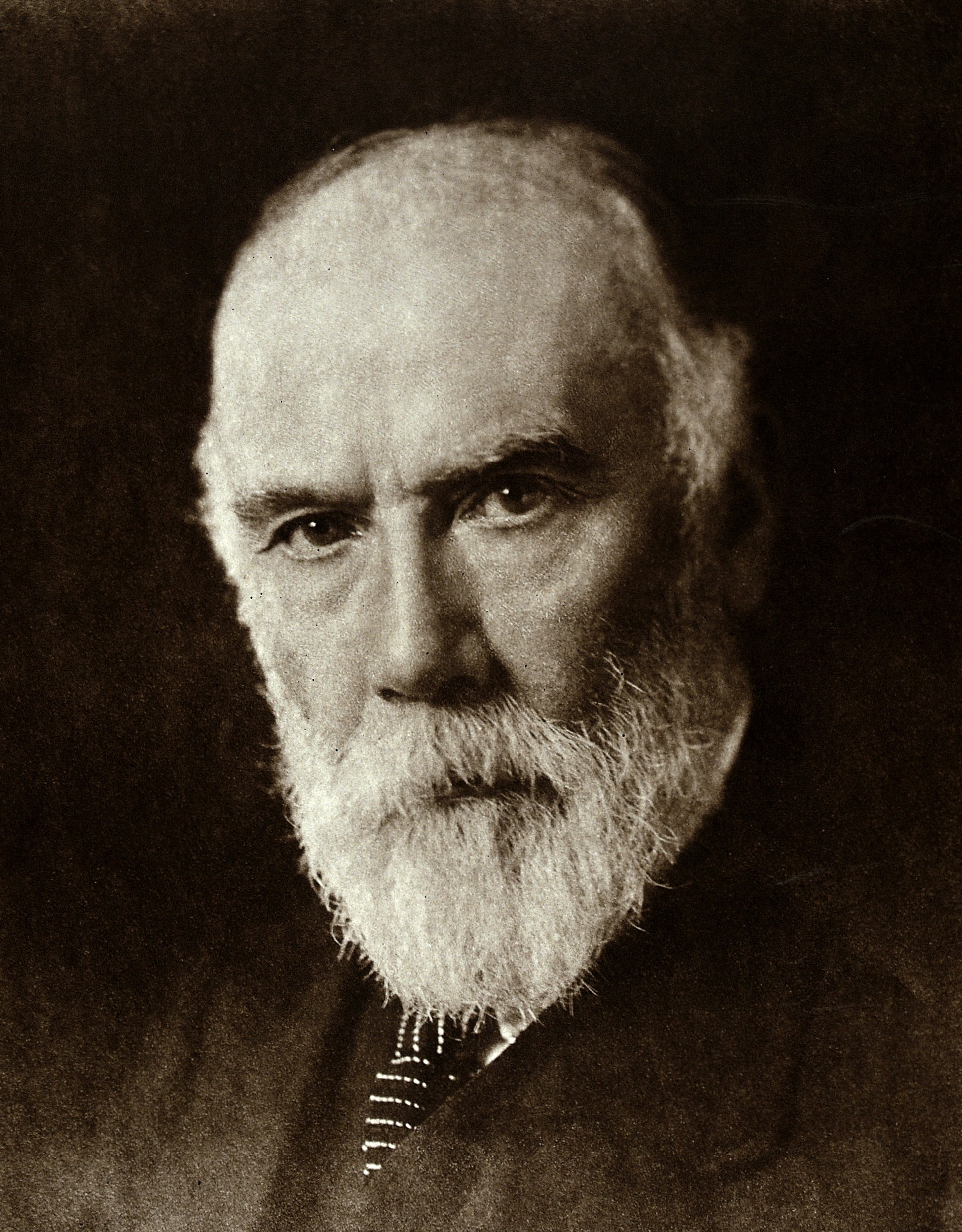
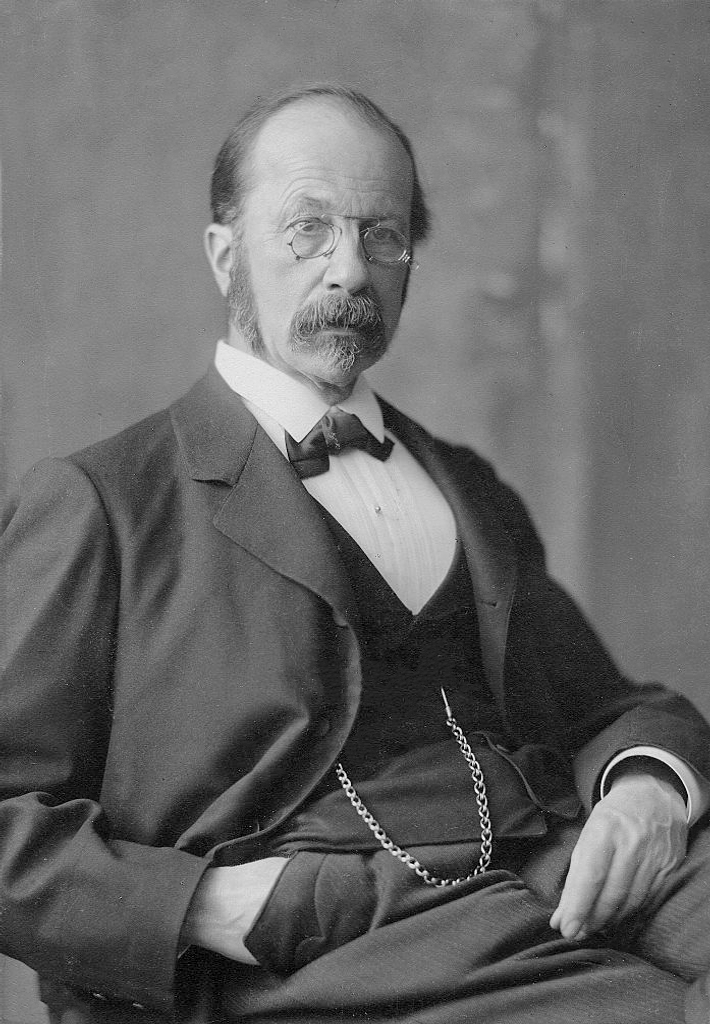
1882 GASKELL, Walter Holbrook (1847 – 1914)
On the rhythm of the heart of the frog, and on the nature of the action of the vagus nerve.
Croonian Lectures, 1881. Gaskell’s classical memoir on the muscles and nerves of the heart included a description of “Gaskell’s nerves”, the accelerator nerves of the heart. He showed that the motor impulses from the …
GMN 829 · https://historyofmedicine.com/id/309
1882 MARTIN, Henry Newell (1848 – 1896); SEDGWICK, William Thompson (1855 – 1921)
Observations on the mean pressure and the characters of the pulse wave in the coronary arteries of the heart.
GMN 12264 · https://historyofmedicine.com/id/14481
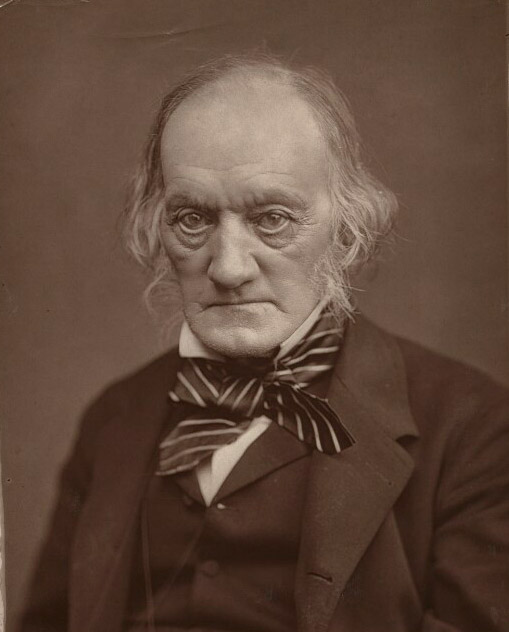
1882 OWEN, Sir Richard (1804 – 1892)
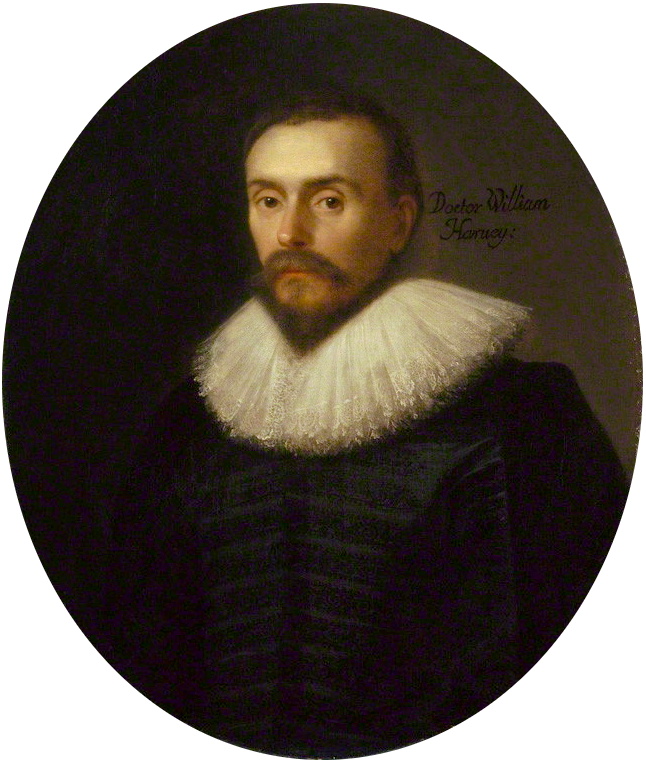
Experimental physiology: Its benefits to mankind, with an address on unveiling the statue of William Harvey at Folkestone 6th August 1881.
A little-known historical work on the history of physiology and the history of medicine by Owen, who, even though he was trained in medicine, most often wrote on topics in comparative anatomy, zoology, paleontology an…
GMN 14028 · https://historyofmedicine.com/id/16335
1883 –1884 GASKELL, Walter Holbrook (1847 – 1914)
On the innervation of the heart, with special reference to the heart of the tortoise.
Gaskell showed that the efferent vasoconstrictor fibers of the heart originated from the lateral horn of the spinal cord.
GMN 830 · https://historyofmedicine.com/id/312
1883 –1884 BURDON-SANDERSON, Sir John Scott (1828 – 1905); PAGE, Frederick James Montague (1848 – 1907)
On the electrical phemomena of the excitatory process in the heart of the frog and of the tortoise, as investigated photographically.
See No. 824. This paper contains several tracings of the heart's electrical activity recorded with a capillary electrometer, the earliest graphic recorder of bioelectric signals. These were the "first undistorted trac…
GMN 831 · https://historyofmedicine.com/id/318
1883 MARTIN, Henry Newell (1848 – 1896)
The direct influence of gradual variations of temperature upon the rate of beat of the dog’s heart.
Martin was among the first to study the effect of temperature changes upon the isolated heart.
GMN 832 · https://historyofmedicine.com/id/328
1883 SCHMIEDEBERG, Johann Ernst Oswald (1838 – 1921)
Grundriss der Arzneimittellehre.
Schmiedeberg, leading German pharmacologist, was professor at Dorpat and Strasburg. Among his many valuable investigations may be mentioned his study of the effect of drugs on the circulation.
GMN 1875 · https://historyofmedicine.com/id/2490
1884 –1889 BRAUNE, Christian Wilhelm (1831 – 1892)
Das Venensystem des menschlichen Körpers. 2 pts. and atlas.
Like Braune’s other anatomical works, this is notable for its excellent illustrations.
GMN 784 · https://historyofmedicine.com/id/1770
1884 OERTEL, Max Joseph (1835 – 1934)
Therapie der Kreislauf-Störungen.
English translation in von Ziemssen’s Handbook of general therapeutics, Vol. 7, London, 1887.
GMN 2708 · https://historyofmedicine.com/id/4424
1886 HARVEY, William (1578 – 1657)
Praelectiones anatomiae universalis.
Facsimile reproduction with transliteration of Harvey’s manuscript notes for a Lumleian Lecture, 1616. These show that at that date Harvey had already completed his demonstration of the circulation of the blood. Engli…
GMN 758 · https://historyofmedicine.com/id/1745
1886 VVEDENSKII, Nikolai Evgenevich [WEDENSKII, Wedensky (1852 – 1922)
Über die Beziehung zwischen Reizung und Erregung im Tetanus.
One mechanism that has been implicated in the origin of arrhythmias is the Wedensky effect. This was first described in neuromuscular studies by Wedensky as a prolonged lowered threshold of excitability induced by a s…
GMN 12293 · https://historyofmedicine.com/id/14514
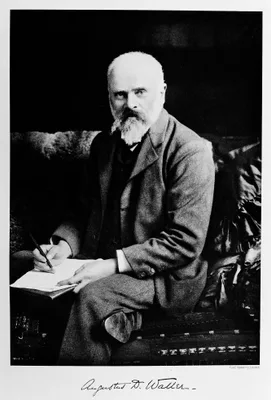
1887 WALLER, Augustus Désiré (1856 – 1922)
A demonstration on man of electromotive changes accompanying the heart’s beat.
Waller was first to use electrodes and leads in demonstrating the action currents of the heart, avoiding the necessity of opening the chest of laboratory animals and preparing the way for present-day clinical electroc…
GMN 833 · https://historyofmedicine.com/id/329
1887 MACWILLIAM, John Alexander (1857 – 1937)
Fibrillar contraction of the heart.
MacWilliam discovered that fibrillar contraction of the heart is due to “a rapid succession of incoordinated peristaltic contractions.” He clearly described auricular and ventricular fibrillation, and showed that vent…
GMN 2791 · https://historyofmedicine.com/id/3398
1889 MACWILLIAM, John Alexander (1857 – 1937)
Electrical stimulation of the heart in man.
MacWilliams described experiments in which application of an electrical impulse to the human heart in asystole caused a ventricular contraction, and that a heart rhythm of 60–70 beats per minute could be evoked by imp…
GMN 7996 · https://historyofmedicine.com/id/10172
1889 MACWILLIAM, John Alexander (1857 – 1937)
Cardiac failure and sudden death.
"Physiologists and physicians had proposed various theories to explain transient and fatal cardiac standstill in animals and humans who were apparently healthy. MacWilliam defined two distinct mechanisms depending on …
GMN 12267 · https://historyofmedicine.com/id/14484
1892 MACKENZIE, Sir James (1853 – 1925)
Pulsation in the veins, with the description of a method for graphically recording them.
The phlebograph, which developed into the polygraph. With it Mackenzie obtained simultaneous tracings of the pulsations of the jugular vein and radial artery.
GMN 834 · https://historyofmedicine.com/id/331
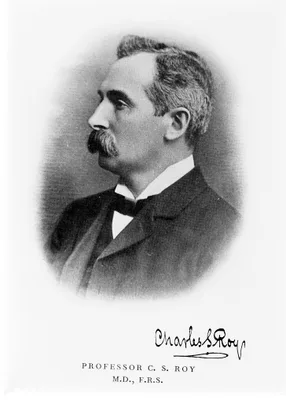
1892 ROY, Charles Smart (1854 – 1897); ADAMI, John George (1862 – 1926)
Contributions to the physiology and pathology of the mammalian heart.
GMN 835 · https://historyofmedicine.com/id/334
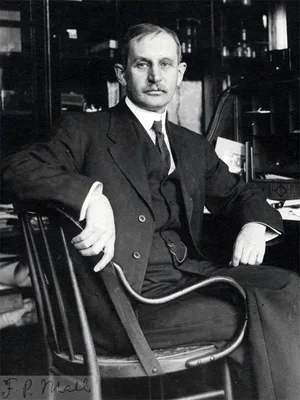
1892 MALL, Franklin Paine (1862 – 1917)
Der Einfluss der Systems der Vena portae auf die Vertheilung des Blutes.
Translated into English as "The contraction of the vena portae and its influence upon the circulation," Johns Hopkins Hospital Reports, I (1896) 111-157. Digital facsimile of the English translation from Google Books …
GMN 785 · https://historyofmedicine.com/id/1771
1893 KENT, Albert Frank Stanley (1863 – 1958)
Researches on the structure and function of the mammalian heart.
Kent also discovered the atrioventricular bundle (“bundle of Kent”), a narrow band of muscle between the auricles and ventricles of the heart. Its purpose is to act as a bridge for contractile impulses between the aur…
GMN 837 · https://historyofmedicine.com/id/580
1893 HIS, Wilhelm Sr. (1831 – 1904)
Die Thätigkeit des embryonalen Herzens und deren Bedeutung für die Lehre von der Herzbewegung beim Erwachsenen.
His described the atrioventricular bundle which was later named after him. English translation in F. A. Willius and T. E. Keys, Cardiac classics, 1941, p. 695.
GMN 836 · https://historyofmedicine.com/id/610
1893 PORTER, William Townsend (1862 – 1949)
On the results of ligation of the coronary arteries.
“Following coronary ligation Porter noted that the procedure frequently resulted in fibrillary contractions of the heart and sudden death. However, death did not always occur and this led him to conclude that Cohnheim…
GMN 786 · https://historyofmedicine.com/id/1772
1893 TIGERSTEDT, Robert Adolf Armand (1853 – 1923)
Lehrbuch der Physiologie des Kreislaufes.
GMN 787 · https://historyofmedicine.com/id/1773
1895 FRANK, Otto (1865 – 1944)
Zur Dynamik des Herzmuskels.
"In his postdoctoral work (Habilitationsschrift) Frank investigated the isometric and isotonic contractile behaviour of the heart and it is this work that he is best known for. Frank's work on this topic preceded that…
GMN 12284 · https://historyofmedicine.com/id/14505
1896 RENDU, Henri Jules Louis (1844 – 1902)
Epistaxis répété chez un sujet porteur de petits angiomes cutanés et muqueux.
Rendu’s account of multiple hereditary telangiectasis (“Rendu–Osler–Weber disease”).
GMN 2710 · https://historyofmedicine.com/id/4428
1897 HILL, Sir Leonard Erskine (1866 – 1952); BARNARD, Harold Leslie (1868 – 1908)
A simple and accurate form of sphygmomanometer or arterial pressure gauge contrived for clinical use.
Hill and Barnard made an important modification to the Riva-Rocci sphygmomanometer when they substituted a pressure gauge in place of the mercury manometer used for pressure readings.
GMN 2807 · https://historyofmedicine.com/id/3446
1897 STEWART, George Neil (1860 – 1930)
Researches on the circulation time in organs and on the influences which affect it.
This was a continuation of researches undertaken by Stewart for the Goodsir Prize Essay at the University of Edinburgh (1892). His autograph manuscript for the 1892 essay was digitized by the university at made availa…
GMN 12288 · https://historyofmedicine.com/id/14509
1898 BRAUN, Ludwig (1867 – 1936)
Ueber Herzbewegung und Herzstoss.
First employment of cinematograph to record the cardiac changes during all phases of heart contraction.
GMN 838 · https://historyofmedicine.com/id/583
1899 DARLING, Eugene Abraham (1868 – 1934)
The effects of training. A study of the Harvard University Crews.
Pioneering study of the physiological effects of training.
GMN 4478.105 · https://historyofmedicine.com/id/83
1899 PRÉVOST, Jean-Louis (1790 – 1850); BATTELLI, Federico
La mort par les décharges électriques.
The first defibrillation. “Prévost and Battelli produced ventricular fibrillation in dogs by shocking with weak currents. They then shocked the fibrillating heart with a stronger current—the second, or counter, shock.…
GMN 838.1 · https://historyofmedicine.com/id/606
1899 GÄRTNER, Gustav (1855 – 1937)
Ueber einen neuen Blutdruckmesser (Tonometer).
Gaertner, an Austrian physician, invented an instrument for measuring blood-pressure by means of a compressing ring applied to the finger.
GMN 2810 · https://historyofmedicine.com/id/3467
1899 MEIGS, Arthur Vincent (1850 – 1912)
The penetration of the muscular fibres of the human heart by capillaries, and the existence in that organ of very large capillaries.
Meigs discovered that the capillaries of the heart enter the heart muscle fibers. These became known as "Meigs capillaries." Digital facsimile from PubMedCentral at this link.
GMN 12268 · https://historyofmedicine.com/id/14485
1899 FRANK, Otto (1865 – 1944)
Die Grundform des arteriellen Pulses.
"The First Mathematical Description of the Pressure-Volume Diagram "Not until 60 years after 1899 Otto Frank's mathematical formulation of the volume-pressure diagram and his concept of the mechanism of the cardiac wo…
GMN 12286 · https://historyofmedicine.com/id/14507
1900 MACCALLUM, John Bruce (1876 – 1906)
On the muscular architecture and growth of the ventricles of the heart.
A classic account of the development and architecture of the muscular wall of the heart.
GMN 839 · https://historyofmedicine.com/id/603
1902 FRIEDENTHAL, Hans Wilhelm Carl (1870 – 1942)
Ueber die Entfemung der extracardialen Herznerven bei Saügethieren.
GMN 841 · https://historyofmedicine.com/id/614
1902 MACKENZIE, Sir James (1853 – 1925)
The study of the pulse.
In his classic monograph Mackenzie included (p. 10) a description and illustration of his polygraph, with which he made simultaneous tracings of the pulse, apex beat, etc.
GMN 2812 · https://historyofmedicine.com/id/3474
1903 PAULI, Wolfgang Joseph (1869 – 1955)
Ueber Ionenwirkung und ihre therapeutische Verwendung.
Hypotensive action of thiocyanates first noted. Pauli was the father of the physicist Wolfgang Pauli (1900-1958).
GMN 2712 · https://historyofmedicine.com/id/4432
1904 FRANK, Otto (1865 – 1944)
Die unmittelbare Registrierung der Herztöne.
Frank obtained the first perfect pulse curves with special manometers, the so-called “Frank capsules”.
GMN 843 · https://historyofmedicine.com/id/621
1905 PÁL, Jakob (1863 – 1936)
Gefässkrisen.
GMN 2713 · https://historyofmedicine.com/id/4434
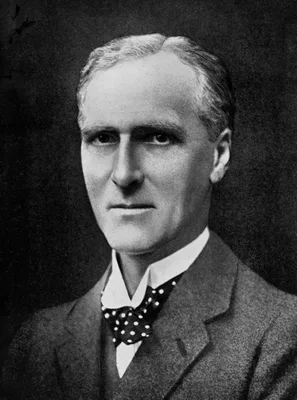
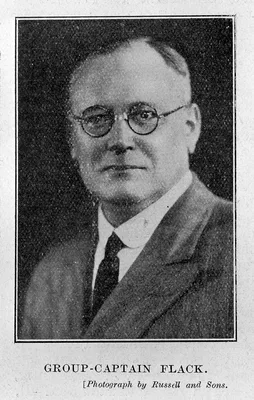
1906 –1907 KEITH, Sir Arthur (1866 – 1955); FLACK, Martin William (1882 – 1931)
The form and nature of the muscular connections between the primary divisions of the vertebrate heart.
Discovery of the sinoatrial node, the “pacemaker of the heart”. Reprinted in Willius & Keys, Cardiac classics, 1941, pp. 747-62.
GMN 844 · https://historyofmedicine.com/id/627
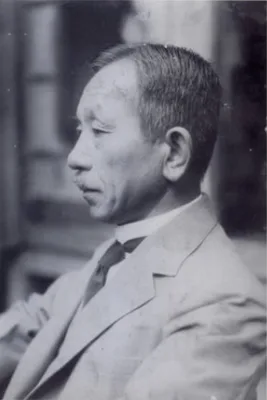
1906 TAWARA, Sunao (1873 – 1952)
Das Reizleitungssystem des Säugethierherzens.
Tawara discovered and described the atrioventricular node – “node of Tawara”. Translated into English by Kozo Suma and Munehiro Shimada as The conduction system of the mammalian heart: An anatomical-histological study…
GMN 845 · https://historyofmedicine.com/id/629
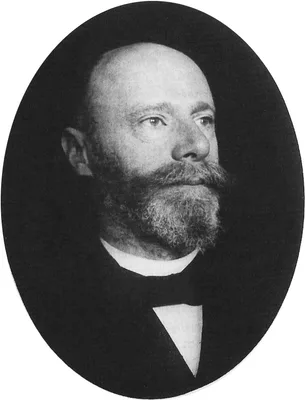
1907 EINTHOVEN, Willem (1860 – 1927)
Die Registrierung der menschlichen Herztone mittels des Saitengalvanometers
Phonocardiography.
GMN 846 · https://historyofmedicine.com/id/634
1907 –1908 MACKENZIE, Sir James (1853 – 1925)
The extra-systole. A contribution to the functional pathology of the primitive cardiac tissue.
GMN 847 · https://historyofmedicine.com/id/636
1907 GIBSON, Alexander George (1875 – 1950)
The significance of a hitherto undescribed wave in the jugular pulse.
The physiological wave sometimes found in mid-diastole, when the pulse is slow, was first described by Gibson. He termed it the b-wave. Gibson worked with William Osler at the Radcliffe Infirmary in Oxford, and cared …
GMN 788 · https://historyofmedicine.com/id/1774
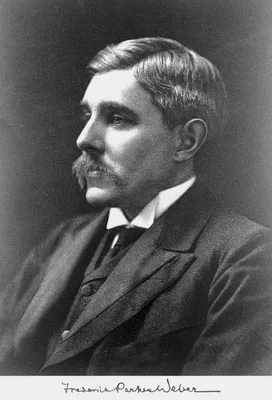
1907 WEBER, Frederick Parkes (1863 – 1962)
Multiple hereditary developmental angiomata (telangiectases) of the skin and mucous membranes associated with recurring haemorrhages.
“Rendu–Osler–Weber disease.”
GMN 2714 · https://historyofmedicine.com/id/4436
1910 EPPINGER, Hans (1879 – 1946); ROTHBERGER, Carl Julius (1871 – 1945)
Ueber die Folgen der Durchschneidung der Tawaraschen Schenkel der Reizleitungssystems.
First experimental study of the electrocardiographic changes in bundle-branch block. "Later, as professor and director of the internal clinic at the Allgemeines Krankenhaus in Vienna, Eppinger became one of the most n…
GMN 848 · https://historyofmedicine.com/id/638
1911 –1912 LOMBARD, Warren Plimpton (1855 – 1939)
The blood-vessels in the arterioles, capillaries and small veins of the human skin.
Lombard soaked the skin in cedarwood oil, rendering transparent the superficial epidermal layers, and thus making possible many direct observations on it.
GMN 790 · https://historyofmedicine.com/id/108
1911 MALL, Franklin Paine (1862 – 1917)
On the muscular architecture of the ventricles of the human heart.
GMN 12262 · https://historyofmedicine.com/id/14479
1912 SOLLMANN, Torald Hermann (1874 – 1965); BROWN, Edgar Dwight (1869 – 1961)
The blood pressure fall produced by traction on the carotid artery.
First description of the carotid sinus depressor reflex.
GMN 791 · https://historyofmedicine.com/id/112
1914 BAINBRIDGE, Francis Arthur (1874 – 1921)
On some cardiac reflexes.
Bainbridge found that cardiac reflex action is produced by inhibition of vagus tone and excitation of the accelerator nerves.
GMN 851 · https://historyofmedicine.com/id/657
1914 LEWIS, Sir Thomas (1881 – 1945); WHITE, Paul Dudley (1886 – 1973); MEAKINS, Jonathan Campbell (1882 – 1959)
The excitatory process in the dog's heart. Part 1. The auricles.
Experiments designed to identify the "origin of the contraction wave in the mammalian heart." Three photographic plates depict numerous electrocardiographic recordings. "From 1910 to 1916, Lewis and his associates per…
GMN 12258 · https://historyofmedicine.com/id/14474