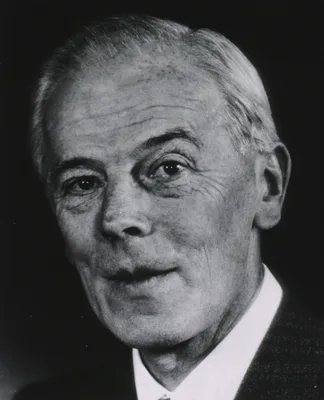
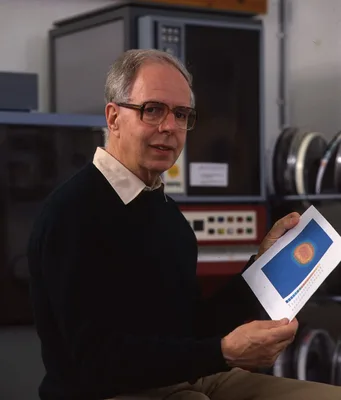
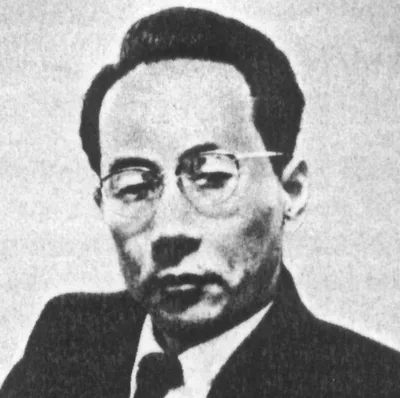
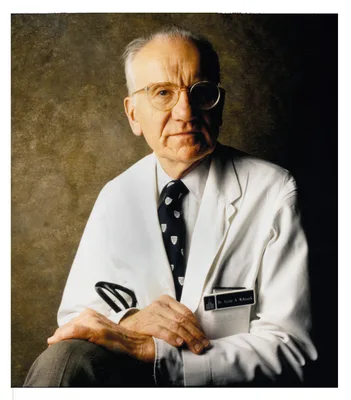
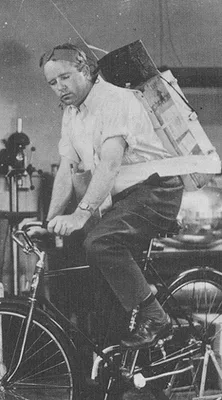
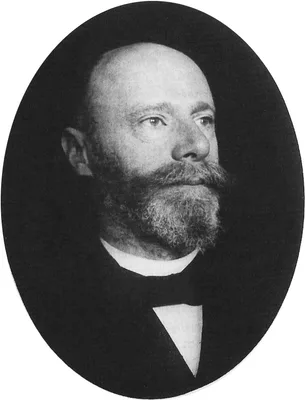
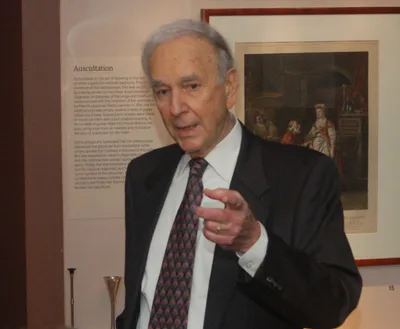
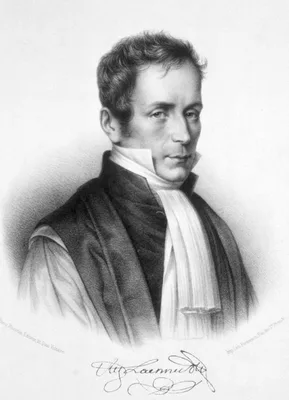
1935 MASTER, Arthur M. (1896 – 1973)
The two-step test of myocardial function.
The “Master TwoStep” exercise tolerance test for the diagnosis of heart disease. Abstract "A simple quantitative “two-step” test of myocardial function is described, and tables of climbs are given for normal individua…
GMN 12265 · https://historyofmedicine.com/id/14482
1936 SCHELLONG, Fritz (1891 – 1953)
Elektrographische Diagnostik der Herzmuskelerkrankungen.
Introduction of the vectorcardiogram.
GMN 2865.1 · https://historyofmedicine.com/id/4158
1937 ROESLER, Hugo (1899 – 1961)
Clinical roentgenology of the cardiovascular system.
GMN 2866 · https://historyofmedicine.com/id/4163
1937 CASTELLANOS, Agustin Walfredo (1902 – 2000); ET AL
La angio-cardiografía radio-opaca.
Intravenous angiocardiography. This was the first publication that dealt with the normal cardiac structure and the changes seen in ventricular septal defect and pulmonary stenosis.
GMN 11568 · https://historyofmedicine.com/id/13767
1938
Praecordial leads in electrocardiography. A joint memorandum of a committee of the Cardiac Society of Gt. Britain and Ireland and the Committee of the American Heart Association.
PRECORDIAL LEADS
Also in Amer. Heart J.,1938, 15,107-08, 235-39. Precordial leads are also called unipolar leads.
GMN 2868 · https://historyofmedicine.com/id/4177
1938 ROBB, George Porter (1898 – 1983); STEINBERG, Israel (1902 – 1983)
A practical method of visualization of the chambers of the heart, the pulmonary circulation, and the great vessels in man.
Introduction of angiocardiography, which for the first time revealed the internal structure of the living heart. A fuller account by the same authors is in Amer. J. Roentgenol.,1939, 41,1-17.
GMN 2869 · https://historyofmedicine.com/id/4184
1939 STARR, Isaac (1895 – 1989); ET AL
Studies on the estimation of cardiac output in man, and abnormalities in cardiac function, from the heart’s recoil and the blood’s impacts; the ballistocardiogram.
Introduction of the ballistocardiogram. With A. J. Rawson, H. A. Schroeder, and N. R. Joseph.
GMN 2870 · https://historyofmedicine.com/id/4189
1942 GOLDBERGER, Emanuel (1913 – 1994)
A simple indifferent electrocardiographic electrode of zero potential and a technique of obtaining augmented, unipolar, extremity leads.
Augmented unipolar leads.
GMN 2875 · https://historyofmedicine.com/id/4197
1947 HENNY, George Christian (1899 – 1988); ET AL
Electrokymograph for recording heart motion, improved type.
With B. R. Boone and W. E. Chamberlain.
GMN 2876 · https://historyofmedicine.com/id/4202
1948 BRODÉN, Bror Leonhardt Johan (1910 – ); ET AL
Thoracic aortography. Preliminary report.
With H. E. Hanson and J. Karnell.
GMN 2879 · https://historyofmedicine.com/id/4220
1954 EDLER, Inge Gudmar (1911 – 2001); HERTZ, Carl Hellmuth (1920 – 1990)
The use of ultrasonic reflectoscope for the continuous recording the movements of heart walls.
Echocardiography, from which the field of medical ultrasonics developed.
GMN 2883.01 · https://historyofmedicine.com/id/4242
1957 SATOMURA, Shigeo (1919 – 1960)
Ultrasonic Doppler method for the inspection of cardiac functions.
Demonstration of the Doppler shift in the frequency of ultrasound backscattered by moving cardiac structures.
GMN 2883.21 · https://historyofmedicine.com/id/4254
1958 MCKUSICK, Victor Almon (1921 – 2008)
Cardiovascular sound in health and disease. Being a comprehensive treatise, introduced by a historical survey, illustrated mainly by sound spectrograms (spectral phonocardiograms) and supplemented by an extensive bibliography. With a section on respiratory sound.
Digital facsimile from the Hathi Trust at this link.
GMN 11543 · https://historyofmedicine.com/id/13742
1959 TABAK, L.; MARDEN, E.; MASON, H. L.; PIPBERGER, Hubert V.
Digital recording of electrocardiographic data for analysis by a digital computer.
This is probably the earliest paper on the use of computers to analyze electrocardiograms. The abstract: "A corrected orthogonal 3-lead system has been used to record electrocardiograms directly from patients at Veter…
GMN 11560 · https://historyofmedicine.com/id/13759
1961 HOLTER, Norman Jefferis (1914 – 1983)
New method for heart studies.
Probably the first publication on the Holter Monitor, which was released for commercial production in 1962. Abstract "I have proposed that orthodox electrocardiography be implemented, both for research and medical pur…
GMN 12250 · https://historyofmedicine.com/id/14465
1964 HOLTER, Norman Jefferis (1914 – 1983); GLASSCOCK, Wilford R. (1925 – 1998); GILSON, John S. (1995 – 1928)
Clinical observations using the Electrocardiocorder-AVSEP continuous electrocardiographic system. Tentative standards and typical patterns.
Documentation of the value of the Holter monitor in clinical work. Abstract "We have described characteristic patterns observed using the Electrocardiocorder-AVSEP system for recording continuous electrocardiograms on…
GMN 12251 · https://historyofmedicine.com/id/14466
1970 CACERES, Cesar Augusto (1927 – 2020); DREIFUS, Leonard S. (1925 – 2017)
Clinical electrocardiography and computers.
"The definitive text of the emerging field of computerized electrocardiography" (W. Bruce Fye).
GMN 11564 · https://historyofmedicine.com/id/13763
1974 TAUSSIG, Helen Brooke (1898 – 1986); HENRY, Walter L.; MARON, Barry Joel; ET AL
Diagnosis of cyanotic congenital heart malformations in infants by real-time, two-dimensional echocardiography.
Two-dimensional (cross-sectional) echocardiography.
GMN 12245 · https://historyofmedicine.com/id/14460
1974 HENRY, Walter L.; GRIFFITH, James M.
A sector scanner for real time two-dimensional echocardiography.
Abstract "During the past several years one-dimensional pulse-echo ultrasound techniques have proven extremely useful in cardiac diagnosis. A one-dimensional system, however, only visualizes structures lying along a s…
GMN 12246 · https://historyofmedicine.com/id/14461
1977 EINTHOVEN, Willem (1860 – 1927); SNELLEN, Hermann A.
Selected papers on electrocardiography of Willem Einthoven with bibliography, biographical notes and comments by H. A. Snellen.
GMN 12338 · https://historyofmedicine.com/id/14562
1978 HATLE, Liv Kristin (1936 – ); ANGELSEN, Bjorn A. J. (1948 – ); BRUBAKK, Alf O.; TROMSDAL, Arve
Noninvasive assessment of pressure drop in mitral stenosis by Doppler ultrasound.
Order of authorship in the original paper: Hatle, Brubakk, Tromsdal, Angelsen. "Hatle (born 1936) was the pioneer of continuous wave Doppler echocardiography. "Today, Doppler echocardiography is central to our ability…
GMN 12243 · https://historyofmedicine.com/id/14457
1982 HATLE, Liv Kristin (1936 – ); ANGELSEN, Bjorn A. J. (1948 – )
Doppler ultrasound in cardiology: Physical principles and clinical applications.
GMN 12244 · https://historyofmedicine.com/id/14458
1998 BLAUFOX, M. Donald; NAQVI, Nasir H.
Blood pressure measurement: An illustrated history.
GMN 11591 · https://historyofmedicine.com/id/13790
1998 LAENNEC, René Théophile Hyacinthe (1781 – 1826); DUFFIN, Jacalyn Mary (1950 – )
The see with a better eye: A life of R. T. H. Laennec
"....relies on a vastly expanded foundation of primary source material, including thousands of pages of handwritten patient records, lecture notes, unpublished essays, and letters.... "Laennec’s famous Treatise on Med…
GMN 13599 · https://historyofmedicine.com/id/15878
2018 MOSS, Sandra W.
Writing the pulse: The origins and career of the sphygmograph and its American masters.
"The definitive history of a technology that was used in research and practice in Europe and America beginning with the invention of the sphygmograph by German physiologist Karl Vierordt in 1854" (W. Bruce Fye).
GMN 12362 · https://historyofmedicine.com/id/14586