1700 MALPIGHI, Marcello (1628 – 1694)
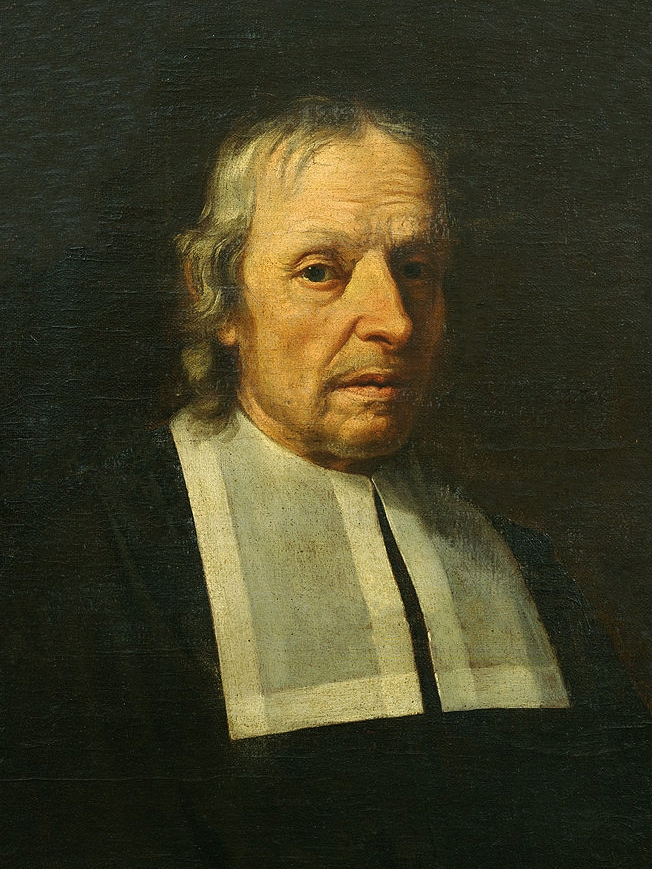
Opera posthuma.
Page 68: first description of leontiasis ossea.
GMN 4299 · https://historyofmedicine.com/id/5453
1766 MORAND, Sauveur-François (1697 – 1773)
Sur un enfant auquel il manquoit les deux clavicules, le sternum et les cartilages, qui dans l’état naturel l’attachent aux côtes.
First description of cleido-cranial dysostosis.
GMN 4302.2 · https://historyofmedicine.com/id/5465
1788 EKMAN, Olaus Jacob
Dissertatio medica descriptionem et casus aliquot osteomalaciae sistens.
In his doctoral thesis Ekman gave an account of osteogenesis imperfecta in three generations. For extensive translation see No. 4404.1. K.S. Seedorff, Osteogenesis imperfecta, Copenhagen, 1949.
GMN 4304.1 · https://historyofmedicine.com/id/5474
1791 SOEMMERRING, Samuel Thomas von (1755 – 1830)
Abbildungen und Beschreibungen einiger Misgeburten.
Achondroplasia is first described on page 30 and pictured on plate 11. English translation in No. 2241.
GMN 4306 · https://historyofmedicine.com/id/5488
1817 ROMBERG, Moritz Heinrich (1795 – 1873)
De rachitide congenita.
Classic description of achondroplasia. Romberg’s graduation thesis. English translation (Sydenham Society), 1853.
GMN 4310 · https://historyofmedicine.com/id/5513
1827 PRAVAZ, Charles Gabriel (1791 – 1853)
Méthode nouvelle pour le traitement des déviations de la colonne vertébrale; précédée d'un examen critique des divers moyens employés par les orthopédistes modernes.
Digital facsimile from Google Books at this link.
GMN 14199 · https://historyofmedicine.com/id/16515
1829 –1833 LOBSTEIN, Jean Georges Chrétien Frédéric Martin (1777 – 1835)
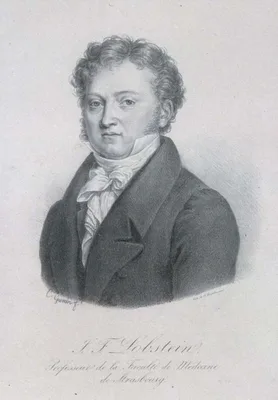
Traité d’anatomie pathologique. 2 vols. and atlas.
Includes a historical review of the subject from the time of the Ancient Egyptians to Corvisart, and a summary of the advances in pathology during the preceding 50 years. Vol. 2, pp. 553-600 deals with diseases of the…
GMN 2288 · https://historyofmedicine.com/id/2915
1831 AXMANN, Edmund
Merkwürdige Fragilität der Knochen ohne dyskrasische Ursache als krankhafte Eigenthümlichkeit dreier Geschwister.
Axmann of Wertheim described osteogenesis imperfecta occurring in himself and his two brothers. He referred to the occurrence of articular dislocations and blue sclerotics. See also No. 6367.
GMN 6358.1 · https://historyofmedicine.com/id/8256
1863 HENKE, Philipp Jakob Wilhelm von (1834 – 1896)
Contractur des Metatarsus.
Congenital metatarsus varus described.
GMN 4333 · https://historyofmedicine.com/id/5564
1870 WEGNER, Friedrich Rudolph Georg (1843 – 1917)
Ueber hereditäre Knochensyphilis bei jungen Kindern.
“Wegner’s disease” – osteochondritic separation of the epiphyses in congenital syphilis.
GMN 4339 · https://historyofmedicine.com/id/5678
1876 SAYRE, Lewis Albert (1820 – 1900)
Report on Pott’s disease, or caries of the spine; treated by extension, and the plaster of Paris bandage.
Sayre was the first to use plaster of Paris as a support for the spinal column in scoliosis and Pott’s disease. His name is eponymically linked with Sayre’s jacket, a plaster of Paris jacket applied while the patient …
GMN 4344 · https://historyofmedicine.com/id/5714
1877 SAYRE, Lewis Albert (1820 – 1900)
Spinal disease and spinal curvature, their treatment by suspension and the use of the plaster of Paris bandage.
Sayre’s monograph on his methods of treating tuberculosis of the spine and scoliosis is the first American surgical textbook to contain actual mounted photographs, some of which are remarkable for their artistic quali…
GMN 4344.1 · https://historyofmedicine.com/id/5717
1879 HELFERICH, Heinrich (1851 – 1945)
Ein Fall von sogenannter Myositis ossificans progressiver.
Helferich described the association of microdactyly with myositis ossificans progressiva.
GMN 4346.1 · https://historyofmedicine.com/id/5726
1890 HOFFA, Albert (1859 – 1908)
Zur operativen Behandlung der angeborenen Hüftgelenksverrenkungen.
Hoffa’s method of operative treatment of congenital dislocation of the hip-joint.
GMN 4355 · https://historyofmedicine.com/id/5771
1891 SPRENGEL, Otto Gerhard Karl (1852 – 1915)
Die angeborene Verschiebung des Schulterblattes nach oben.
Classic description of “Sprengel’s deformity”, a congenital upward displacement of the scapula.
GMN 4359 · https://historyofmedicine.com/id/5797
1892 KAUFMANN, Edouard (1860 – 1931)
Untersuchungen über die sogenannte foetale Rachitis (Chondrodystrophia foetalis).
First study of the cartilage changes in achondroplasia.
GMN 4361 · https://historyofmedicine.com/id/5807
1895 LORENZ, Adolf (1854 – 1946)
The operative treatment of congenital dislocation of the hip-joint.
Lorenz suggested a bloodless method for closed reduction of congenital dislocation of the hip-joint – the “Hoffa–Lorenz” method.
GMN 4365 · https://historyofmedicine.com/id/5828
1895 TRENDELENBURG, Friedrich (1844 – 1924)
Ueber den Gang bei angeborener Hüftgelenksluxation.
“Trendelenburg’s sign” of congenital dislocation of the hip-joint.
GMN 4428 · https://historyofmedicine.com/id/6259
1896 MARFAN, Antoine Bernard-Jean (1858 – 1942)
Un cas de déformation congénitale des quatre membres, plus prononcée aux extrémités, charactérisée par l’allongement des os avec un certain degré d’amincissement.
“Marfan syndrome”. Marfan described only the skeletal deformities. He called the condition dolichostenomelia. Later writers recorded bilateral ectopia lentis and cardiovascular complications in this syndrome.
GMN 4365.1 · https://historyofmedicine.com/id/5831
1896 TUBBY, Alfred Herbert (1862 – 1930)
Deformities: A treatise on orthopaedic surgery.
Includes a valuable discussion of congenital anomalies of the bones and joints from the orthopedic point of view. Greatly expanded second edition, 2 vols., London, 1912.
GMN 4366 · https://historyofmedicine.com/id/5833
1897 BRUCK, Alfred (1865 – )
Ueber eine seltene Form von Erkrankung der Knochen und Gelenke.
“Bruck’s disease” – deformity of bones, multiple fractures, ankylosis of joints, and muscular atrophy.
GMN 4367 · https://historyofmedicine.com/id/5837
1898 MARIE, Pierre (1853 – 1940); SAINTON, Paul (1868 – 1958)
Sur la dysostose cléido-crânienne héréditaire.
In their important description of cleido-cranial dysostosis, Marie and Sainton gave to it its present name. It was first described by Morand (No. 4302.1) in 1760. English translation in Bick, Classics of orthopaedics,…
GMN 4369 · https://historyofmedicine.com/id/5850
1904 NAU, Pierre
Les scolioses congénitales.
First description of platyspondylia.
GMN 4375 · https://historyofmedicine.com/id/5872
1905 CODIVILLA, Alessandro (1861 – 1912)
On the means of lengthening in the lower limbs, the muscles and tissues which are shortened through deformity.
First attempt at surgical lengthening of limbs.
GMN 4375.1 · https://historyofmedicine.com/id/5875
1906 LOOSER, Emil (1877 – 1936)
Ueber Osteogenesis imperfecta tarda.
Looser’s syndrome.
GMN 4376.1 · https://historyofmedicine.com/id/5880
1908 KÖHLER, Alban (1874 – 1947)
Ueber eine häufige, bisher anscheinend unbekannte Erkrankung einzelner kindlicher Knochen.
“Köhler’s disease” of the scaphoid bone of the foot in children. See No. 4387.
GMN 4377 · https://historyofmedicine.com/id/5882
1912 CROUZON, Octave (1874 – 1938)
Dysostose cranio-faciale héréditaire.
First description of cranio-facial dysostosis, hypertelorism (Crouzon's syndrome).
GMN 4385 · https://historyofmedicine.com/id/5913
1912 KLIPPEL, Maurice (1858 – 1942); FEIL, André (1884 – )
Un cas d’absence des vertèbres cervicales avec cage thoracique remontant jusqu’à la base du crâne (cage thoracique cervicale).
“Klippel–Feil syndrome” – absence or incomplete development of cervical vertebrae. English translation in Bick, Classics of orthopaedics, 511-16.
GMN 4386 · https://historyofmedicine.com/id/5919
1921 LÉRI, André (1875 – 1930)
Une maladie congénitale et héréditaire de l’ossification: la pléonostéose familiale.
“Léri’s pleonosteosis” first described.
GMN 4388.1 · https://historyofmedicine.com/id/5952
1923 APERT, Eugène Charles (1868 – 1940); ET AL
Nouvelle observation d’acrocéphalosyndactylie.
With Tixier, Hue, and Kermorgant.
GMN 4390 · https://historyofmedicine.com/id/5961
1924 GREIG, David Middleton (1864 – 1936)
Hypertelorism. A hitherto undifferentiated congenital cranio-facial deformity.
First description of hypertelorism as a separate entity.
GMN 4392 · https://historyofmedicine.com/id/5970
1929 ENGELMANN, Guido (1876 – 1959)
Ein Fall von Osteopathia hyperostotica (sclerotisans) multiplex infantilis.
“Engelmann’s disease”, also known as "Camurati-Engelmann disease" — a very rare autosomal dominant genetic disorder that causes characteristic anomalies in the skeleton. It is a form of dysplasia, causing osteoscleros…
GMN 4395.1 · https://historyofmedicine.com/id/5989
1929 MORQUIO, Luis (1867 – 1935)
Sur une forme de dystrophie osseuse familiale.
“Morquio’s disease”, eccentro-osteochondrodysplasia.
GMN 4397 · https://historyofmedicine.com/id/5998
1949 SEEDORFF, Knud Stakemann (1915 – 1991)
Osteogenesis imperfecta: A study of clinical features and heredity based on 55 Danish families comprising 180 affected members.
Includes a translation of Ekman’s thesis (No. 4304.1). Also gives a case reported in 1678.
GMN 4404.1 · https://historyofmedicine.com/id/6075