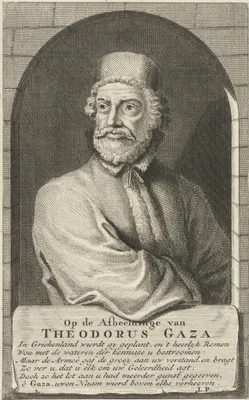
1483 THEOPHRASTUS OF ERESOS (ΘΕΌΦΡΑΣΤΟΣ) (371 – 287); MERULA, Georgius (1430 – 1494); GAZA, Theodorus (Θεόδωρος Γαζῆς) (1398 – 1475)
De historia et causis plantarum. Edited, with a table, by Georgius Merula. Translated by Theodorus Gaza.
A student of Aristotle, Theophrastus succeeded his teacher as head of the Athens Peripatetic School. This is the earliest work of scientific botany, a subject not addressed in any of the writings of Aristotle. Theophr…
GMN 1783 · https://historyofmedicine.com/id/8782
1534 CORDUS, Euricius (1486 – 1535)
Botanologicon. Heus medice vis uariat aliter quam doctuses hactenus herbas scrire, nouus multas iste libellus habet. Ut retinax primum sibi testa referuet odorem, sex nisi quadrantes & brevis hora perit. Quae si quam nostris lusorum perdere chartis malis, tunc aliquid doctius aede tuum.
"generally considered to be the first attempt at a scientific systemization of plants" (D.S.B., 3, 412-13.) Digital facsimile from Biodiversity Heritage Library at this link.
GMN 11870 · https://historyofmedicine.com/id/14074
1554 DODOENS, Rempert [DODONAEUS] (1517 – 1585)
Cruÿdeboeck.
Dodoens was the first Belgian botanist of international repute. Drawing on the illustrations of Fuchs, but preparing his own text, Dodoens improved on the alphabetical Fuchs organization scheme by grouping plants acco…
GMN 1812 · https://historyofmedicine.com/id/2012
1583 CESALPINO, Andrea [CAESALPINUS] (1525 – 1603)
De plantis libri XVI.
Cesalpino developed the first scientific classification system for flowering plants. "Unlike the "herbals" of that period, it contains no illustrations. The first section, including thirty pages of the work, is the pa…
GMN 8940 · https://historyofmedicine.com/id/11118
1623 BAUHIN, Caspar [BAUHINUS] (1560 – 1624)
Pinax theatri botanici.
The Pinax theatri botanici (English, Illustrated exposition of plants) described and classified about 6,000 species. "The classification system was not particularly innovative, using traditional groups such as "trees"…
GMN 9868 · https://historyofmedicine.com/id/12056
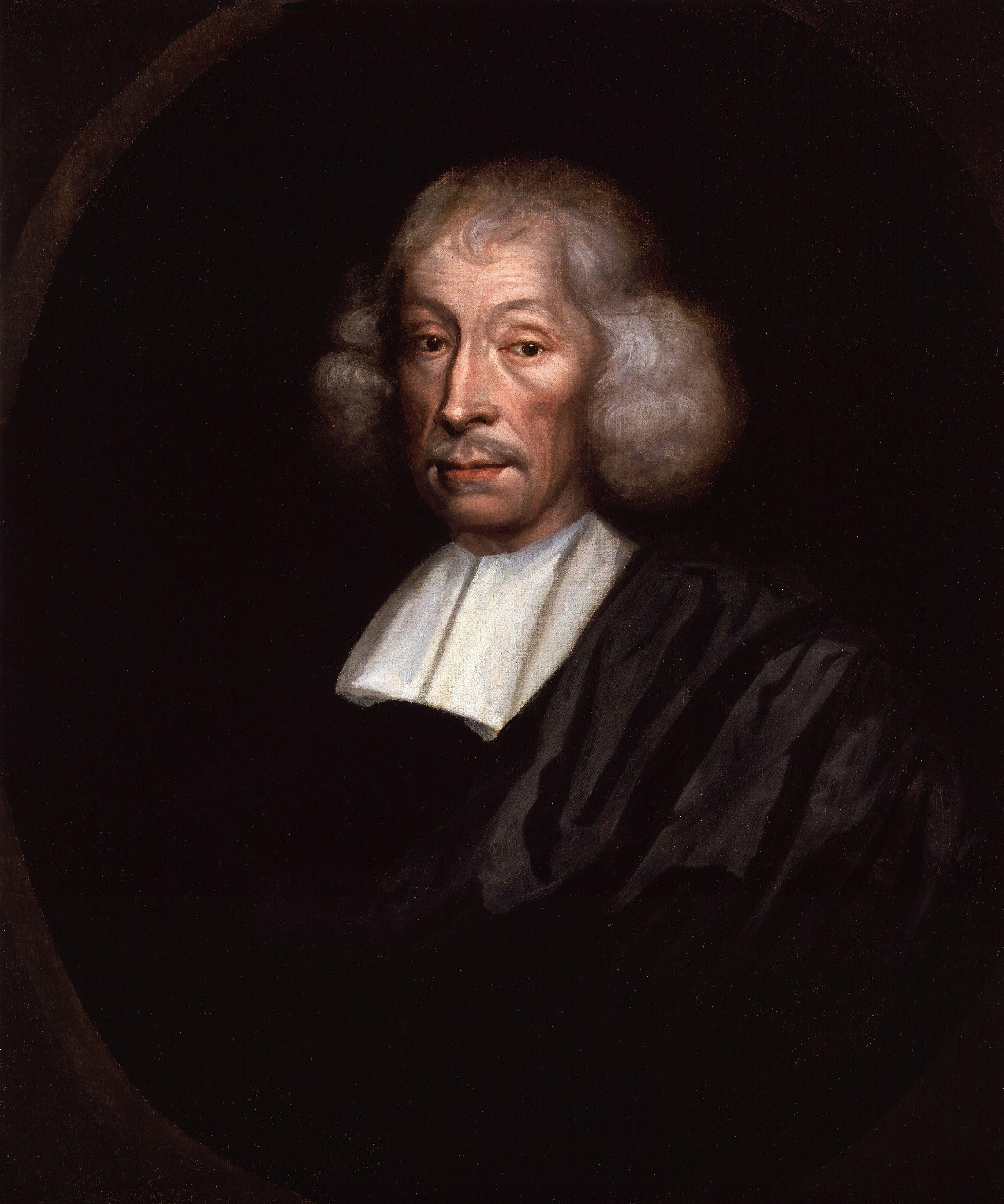
1660 RAY, John (1628 – 1705)
Catalogus plantarum circa Cantabrigiam nascentium: In qua exhibentur quotquot hactenus inventae sunt, qua vel sponte proveniunt, vel in agris seruntur; un cum synomyis selectioribus, locis natalibus & observationibus quibusdam oppido raris. Adjiciuntur in gratiam tyronum, index Anglo-latinus, Index locorum, etymologia nominum, & explicatio quorundam terminorum.
This study of the plants around Cambridge includes some of the classification work of Joachim Jungius, whose classification system did not begin to be published until 1662. Digital facsimile from Google Books at this …
GMN 11878 · https://historyofmedicine.com/id/14082
1662 JUNGIUS, Joachim (1587 – 1657); FOGEL, Martin
Doxoscopiae physicae minores, sive isagoge physica doxoscopica. In qua praecipuae opiniones in physica passim receptae breviter quidem, sed accuratissime examinantur. Ex recensione et distinctione M. F. H., cuius annotationes quaedam accedunt.
Jungius was the first to appreciate and expand upon the botanical ideas of Cesalpino. In this posthumously published work, edited by his student Martin Fogel, and in his Isagoge phytoscopica published in 1669, Jungius…
GMN 11882 · https://historyofmedicine.com/id/14086
1679 JUNGIUS, Joachim (1587 – 1657); FOGEL, Martin
Praecipuae opiniones physicae, passim recetae, breviter quidem sed accuratissime examinate, ex recension & distinctione Martini Fogelii ...cum annotationes quaedam accedunt accessit nunc primum eiusdem auctoris Harmonica & Isagoge phytoscopica.
Posthumous first publication of Jungius's Isagoge phytoscopia, an expansion or supplement to his system of botanical classification first published in his Doxoscopiae physicae minores (1662). The second edition of the…
GMN 11881 · https://historyofmedicine.com/id/14085
1686 –1704 RAY, John (1628 – 1705)
Historia plantarum.... 3 vols.
This massive catalogue begins with an extensive general botanical treatise covering plant physiology, plant nutrition and, most importantly, Ray's principles and methodology of botanical classification. Ray adopted Ju…
GMN 7090 · https://historyofmedicine.com/id/9257
1689 MAGNOL, Pierre (1638 – 1715)
Prodromus historiae generalis plantarum, in quo familiae plantarum per tabulas disponuntur.
Magnol invented of the concept of plant families, a natural classification, based on combinations of morphological character. "In his Prodromus he developed 75 tables, which not only grouped plants into families but a…
GMN 13411 · https://historyofmedicine.com/id/15683
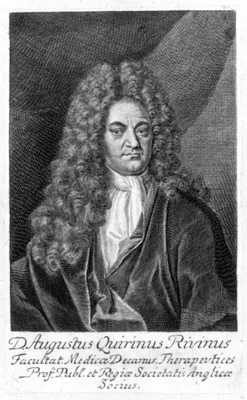
1690 RIVINUS, Augustus Quirinus (August Bachmann) (1652 – 1723)
Introductio generalis in rem herbariam.
Rivinus (Bachmann) introduced the concept of classification of plants based upon the structure of the flower. He also introduced the ORDER as a distinct rank of biological classification having its own distinctive nam…
GMN 13406 · https://historyofmedicine.com/id/15678
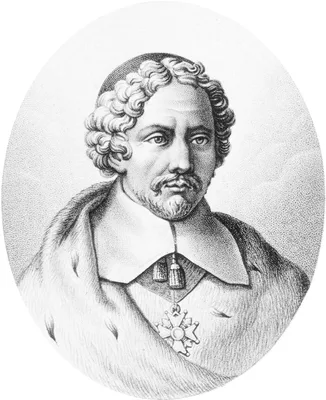
1694 TOURNEFORT, Joseph Pitton de (1656 – 1708)
Elemens de botanique, ou methode pour connoître les plantes.
Though Tournefort's classification was completely artificial, and neglected some important divisions established by earlier botanists, and was a step backwards in systematics, the text was so clearly written and well …
GMN 11975 · https://historyofmedicine.com/id/14183
1730 MILLER, Philip (1691 – 1771)
Catalogus plantarum, tum exoticarum tum domesticarum.... A catalogue of trees, shrubs, plants, and flowers, both exotic and domestic, which are proposed for Sale, In the gardens near London. Divided, according to their different degrees of hardiness, into particular books, or parts; in each of which the plants are ranged in an alphabetical order. To which are added, the characters of the genus; and an enumeration of all particular species which are at present to be found in the several nurseries near London, with directions for the proper soil and situation, in which each particular kind is found to thrive
A deluxe sale catalogue illustrated with 21 plates, including 7 mezzotints. "The Catalogus Plantarum is notable as one of the earliest flower books to contain plates printed in colors. It is perhaps unique in that one…
GMN 11974 · https://historyofmedicine.com/id/14182
1732 DILLENIUS, Johann Jacob Dillen (1684 – 1747); SHERARD, James (1666 – 1738)
Hortus Elthamensis seu plantarum rariorum quas in horto suo Elthami in cantio coluit vir ornatissimus et praestantissimus Jacobus Sherard, M. D. Soc. Reg. et Coll. Med. Lond. Soc. Guilielmi P.M. frater, delineationes et descriptiones quarum historia vel plane non, vel imperfecte a rei herbariae scriptoribus tradita fuit.
Catalogue of the rare plants growing at Eltham, London, in the collection of James Sherard, who, after making a fortune as an apothecary, devoted himself to gardening and music. For this work Dillenius wrote the text …
GMN 11747 · https://historyofmedicine.com/id/13947
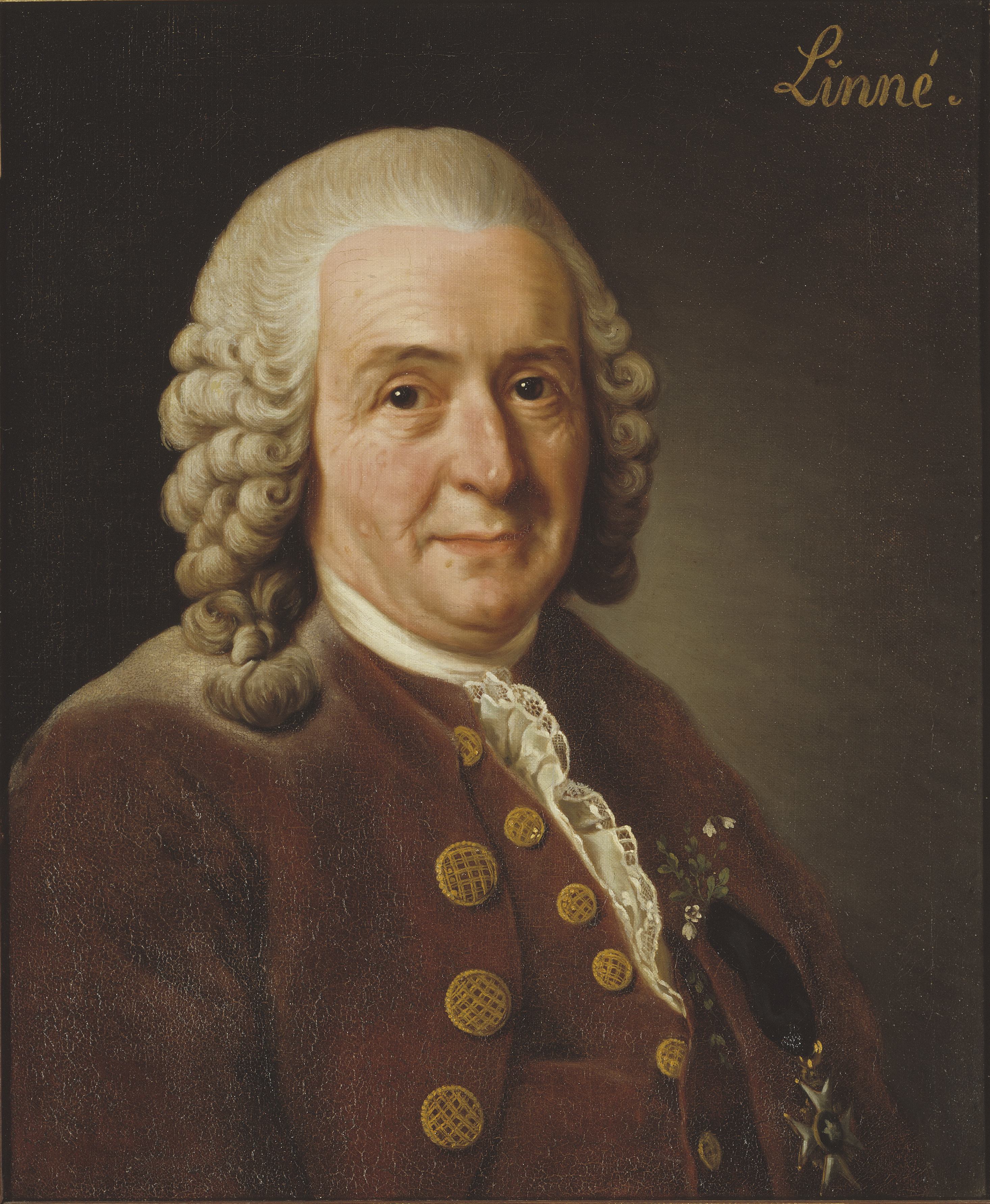
1735 LINNAEUS, Carl (Linné) (1707 – 1778)
Systema naturae per regna tria naturae, secundum classes, ordines, genera, species, cum characteribus, differentiis, synonymis, locis.
In Systema naturae Linnaeus developed the first logical and modern classifications of plants, animals and minerals. Its most valuable feature, the binomial nomenclature (genus and species), was probably devised in the…
GMN 99 · https://historyofmedicine.com/id/1498
1737 LINNAEUS, Carl (Linné) (1707 – 1778)
Genera plantarum.
Linnaeus’s botanical classification, the starting-point of modern systematic botany. The book is dedicated to Boerhaave. English translation by Erasmus Darwin, Lichfield, 1787.
GMN 1829 · https://historyofmedicine.com/id/2165
1737 LINNAEUS, Carl (Linné) (1707 – 1778); CLIFFORD, George III (1685 – 1760)
Hortus Cliffortianus plantas exhibens quas in hortistam vivis quam siccis, Hartecampi in Hollandia, coluit ...Georgius Clifford.
The largest and most attractive book by Linnaeus, describing and illustrating plants in the garden and herbarium of George Clifford, governor of the Dutch East India Company, at Clifford's summer estate, Harlecamp. Th…
GMN 7462 · https://historyofmedicine.com/id/9634
1751 LINNAEUS, Carl (Linné) (1707 – 1778)
Philosophia botanica in qua explicantur fundamenta botanica cum definitionibus partium, exemplis terminorum, observationibus rariorum, adjectis figuris aeneis.
This work was "the first textbook of descriptive systematic botany and botanical Latin".[1] It also contains Linnaeus's first published description of his binomial nomenclature. "Philosophia Botanica represents a matu…
GMN 11972 · https://historyofmedicine.com/id/14179
1753 LINNAEUS, Carl (Linné) (1707 – 1778)
Species plantarum. Exhibentes plantas rite cognitas ad genera relatas. Cum diferentiis specificis, nominibus trivialibus, synonymis selectis, locis natalibus, secundum systema sexuale digestas. 2 vols.
In this work Linnaeus introduced his full binomial naming system for plants (binomial nomenclature). Describing about 8,000 plant species from all over the world, the book demonstrated the value of a binomial system o…
GMN 99.1 · https://historyofmedicine.com/id/1501
1758 –1759 LINNAEUS, Carl (Linné) (1707 – 1778)
Systema naturae per regna tria naturae, secundum classes, ordines, genera, species, cum characteribus, differentiis, synonymis, locis. Editio decima, reformata. 2 vols.
In the 10th edition of his Systema naturae, Linnaeus introduced binomial nomenclature for animals. He had previously introduced binomial nomenclature for plants in his Species Plantarum (1753). In this edition Linnaeu…
GMN 11880 · https://historyofmedicine.com/id/14084
1759 –1775 HILL, (Sir) John (1714 – 1775)
The vegetable system. Or, the internal structure and the life of plants; their parts, and nourishment explained; their classes, orders, genera, and species, ascertained, and described; in a method altogether new: Comprehending an artificial index and a natural system. With figures of all plants designed and engraved by the author. The whole from nature only. 26 vols.
This very extensive work consisting of 26 vols. in folio, with a total of 1548 plates, was the first comprehensive vernacular presentation of botany adopting Linnean generic names and binary nomenclature. It describes…
GMN 10227 · https://historyofmedicine.com/id/12417
1760 LINNAEUS, Carl (Linné) (1707 – 1778)
Caroli Linnaei ... disquisitio de qvaestione ab Academia Imperiali Scientiarum Petropol. in annvm MDCCLIX. pro praemio proposita: sexum plantarum argumentis et experimentis nouis, praeter adhuc iam cognita, vel corroborare, vel impugnare, praemissa expositione historica et physica omnium plantae partium, quae aliquid ad foecundationem et perfectionem seminis et fructus conferre creduntur, ab eadem Academia die VI. Septembris MDCCLX. in conuentu publico praemio ornata.
This work is typically referred to as Disquisitio de sexu plantarum. Translated into English as A dissertation on the sexes of plants translated from the Latin of Linnaeus by James Edward Smith. London: Printed for th…
GMN 13640 · https://historyofmedicine.com/id/15921
1776 WITHERING, William (1741 – 1799)
A botanical arrangement of all the vegetables naturally growing in Great Britain, with descriptions of the genera and species, according to the system of the celebrated Linnaeus. Being an attempt to render them familiar to those who are unacquainted with the learned languages. Under each species are added, the most remarkable varieties, the natural places of growth, the duration, the time of flowering, the peculiarities of structure, the common English names; the names of Gerard, Parkinson, Ray and Bauhine. The uses as medicines, or as poisons; as food for men, for brutes, and for insects. With their application in oeconomy and in the arts. With an easy introduction to the study of botany. Shewing the method of investigating plants, and directions how to dry and preserve specimens. The whole illustrated by copper plates and a copious glossary. 2 vols.
The first flora of Great Britain using Linnean binomial nomenclature, and the first complete scientific classification and description of British plants in the English language. Withering included much information on …
GMN 1833.1 · https://historyofmedicine.com/id/2178
1783 LINNAEUS, Carl (Linné) (1707 – 1778); DARWIN, Erasmus (1731 – 1802)
A system of vegetables, according to their classes, orders, genera, species with their characters and differences.... Translated from the thirteenth edition (As published by Dr. Murray) of the Systema vegetabilium of the late professor Linneus; and from the Supplementum plantarum of the present professor Linneus
English translation of Linneus's Species plantarum (No. 99.1), edited by Charles Darwin's grandfather. Digital facsimile from the Biodiversity Heritage Library, Internet Archive, at this link.
GMN 8923 · https://historyofmedicine.com/id/11101
1789 JUSSIEU, Antoine Laurent de (1748 – 1836); JUSSIEU, Bernard de (1699 – 1777)
Genera plantarum: Secundum ordines naturales disposita, juxta methodum in horto regio parisiensi exaratam, anno M.DCC.LXXIV
Jussieu was the first to publish a natural classification of flowering plants, basing his system on a extensive unpublished work by his deceased uncle, the botanist Bernard de Jussieu. "In his study of flowering plant…
GMN 11976 · https://historyofmedicine.com/id/14184
1794 LINNAEUS, Carl (Linné) (1707 – 1778); STOEVER, Dietrich Johan Heinrich (1767 – 1822)
The life of Sir Charles Linnaeus, Knight of the Swedish Order of the Polar Star, &c. &c. To which is added a copious list of his works, and a biographical sketch of the life of his son, by D. H. Stoever. Translated from the original German by Joseph Trapp.
Digital facsimile from Google Books at this link.
GMN 12686 · https://historyofmedicine.com/id/14931
1862 –1883 HOOKER, Sir Joseph Dalton (1817 – 1911); BENTHAM, George (1800 – 1884)
Genera plantarum: Ad exemplaria imprimis in Herberiis Kewensibus servata definita; auctoribus G. Bentham et J.D. Hooker. 3 vols. in 9 parts.
First publication of the Bentham & Hooker taxonomic system for seed plants published before there were internationally accepted rules for botanical nomenclature. Digital facsimile from the Biodiversity Heritage Archiv…
GMN 9173 · https://historyofmedicine.com/id/11352
1867 CANDOLLE, Alphonse Pyramus de (1806 – 1893)
Lois de la nomenclature botanique rédigées et commentées par M. Alph. de Candolle. Texte préparé sur la demande da Comité d'organisation du Congrès international de botanique de Paris, du 16 août 1867, pour servir de base aux discussions sur les points controversés en nomenclature.
This was the first system of botanical nomenclature adopted by an international governing body. Digital facsimile from Biodiversity Heritage Library at this link. Translated into English as Laws of botanical nomenclat…
GMN 11883 · https://historyofmedicine.com/id/14087
1971 STAFLEU, Frans Antonie (1921 – 1997)
Linnaeus and the Linneans: The spreading of their ideas in systematic botany, 1735-1789.
GMN 11963 · https://historyofmedicine.com/id/14170
1976 –2009 STAFLEU, Frans Antonie (1921 – 1997); COWAN, Richard Sumner (1921 – 1997)
Taxonomic literature: A selective guide to botanical publications and collections with dates, commentaries and types
The entire set is available in digital facsimile from the Biodiversity Heritage Library at this link. (Authors and publishers of the Supplements vary.)
GMN 8857 · https://historyofmedicine.com/id/11035
1991 NICHOLSON, Dan H.
A history of botanical nomenclature.
Pages 42-46 are an extremely detailed, briefly annotated bibliography.
GMN 11977 · https://historyofmedicine.com/id/14185
2017 SPENCER, Roger David (1945 – ); CROSS, Rob
The origins of botanic gardens and their relation to plant science, with special reference to horticultural botany and cultivated plant taxonomy.
Unusually well illustrated in color, with detailed bibliography, surveying the history from its origins in prehistory, the Neolithic revolution, to the present. Digital facsimile rbg.vic.gov.au at this link.
GMN 11964 · https://historyofmedicine.com/id/14171