1484 KAUB, Johann Wonnecke von (1430 – 1503)
Herbarius latinus.
The first herbal printed in Germany, and the prototype for most of the herbals printed during the remainder of the 15th century. It also contains some fanciful pictures of animals. With text in Latin and with German s…
GMN 1795 · https://historyofmedicine.com/id/8785
1485 KAUB, Johann Wonnecke von (1430 – 1503)
Gart der Gesundheit. Ed. Johann von Cube.
The first herbal written and printed in a modern language, sometimes called the "German Herbarius” and Gart der Gesundheit. Like the Herbarius latinus issued the previous year, the text of this work was compiled by Jo…
GMN 1796 · https://historyofmedicine.com/id/1898
c. 1486 –1488
Arbolayre... Le grant herbier en francois.
GRANT HERBIER
The “Grant herbier” or Arbolayre, the only medieval herbal printed in French, was probably derived from Platearius (No. 1790). Its authorship remains unknown. The “Grete Herball” (No. 1802) is a translation of it. It …
GMN 1801 · https://historyofmedicine.com/id/1938
1491
Hortus sanitatis.
HORTUS SANITATIS
First edition of an herbal and general treatise on natural history which became very popular; based on the unusually large number of surviving copies in institutions it must have also been a bestseller. The plant illu…
GMN 1797 · https://historyofmedicine.com/id/1481
1526
The grete herball whiche geveth parfyt knowlege and understandyng of all maner of herbes and there gracyous vertues.
GRETE HERBAL
The first illustrated English herbal. It was mainly a translation of the French “Grant Herbier”.
GMN 1802 · https://historyofmedicine.com/id/1941
1530 –1536 BRUNFELS, Otto (1488 – 1534); BOCK [TRAGUS], Hieronymus (1498 – 1554); FUCHS, Leonhart (1501 – 1566); WEIDITZ, Hans The Younger (1495 – 1537)
Herbarum vivae eicones ad naturae imitationem, summa cum diligentia & artificio effigiatae, una cum effectibus earundem, in gratiam veteris illius, & jamjam renascentis herbariae medicinae ... Quibus adjecta ad calcem, appendix isagogica de usu & administratione simplicium. 3 vols.
Brunfels published the first two volumes of Herbarum vivae eicones ad nature imitationem, sum[m]a cum diligentia et artificio effigiatae. . .. in 1530 and 1532; the third volume was edited by Michael Heer and publishe…
GMN 1803 · https://historyofmedicine.com/id/1945
1539 BOCK [TRAGUS], Hieronymus (1498 – 1554)
New Kreütter Buch.
Bock was the first to describe the local flora of Germany, discovering many new species. His work gave a fresh impetus to plant description, With Brunfels and Fuchs he was one of the three “German fathers of botany”. …
GMN 1806 · https://historyofmedicine.com/id/1959
1542 FUCHS, Leonhart (1501 – 1566)
De historia stirpium commentarii.
Illustrated with full-page woodcut illustrations drawn by Albrecht Meyer, copied onto the blocks by Heinrich Füllmaurer and cut by Veit Rudolf Speckle; the artists' self-portraits appear on the final leaf. Describing …
GMN 1808 · https://historyofmedicine.com/id/1969
1544 DIOSCORIDES, Pedanius [Πεδάνιος Διοσκουρίδης] (40 – 90); MATTIOLI, Pietro Andrea Gregorio (Matthiolus) (1500 – 1577)
Di Pedacio Dioscoride Anazarbeo Libri cinque della historia, et materia medicinale tradotti in lingua volgare italiana da M. Pietro Andrea Matthiolo Sanese Medico, con amplissimi discorsi, et comenti, et dottissime annotationi, et censure del medesimo interprete.
Mattioli's translation and commentary on Dioscorides provided much new botanical information. As Mattioli continued to expand the commentary, adding new botanical and pharmacological information, through editions in L…
GMN 7820 · https://historyofmedicine.com/id/9992
1551 –1568 TURNER, William (1508 – 1568)
A new herball. 3 vols.
The first original scientific herbal written by an Englishman, and the first scientific herbal published in the English language. The illustrations were taken from the blocks cut for the 8vo edition of Fuchs (1546). T…
GMN 1811 · https://historyofmedicine.com/id/1999
1553 BELON, Pierre [Pierre Belon du Mans; Petrus Bellonius Cenomanus] (1517 – 1564)
De arboribus coniferis, resiniferis, aliis quoque nonnullis sempiterna fronde virentibus, cum earundem iconibus ad viuum expressis. Item de melle cedrino, cedria, agarico, resinis, & iis quae ex coniferis proficiscuntur.
One of the first treatises on conifers and other evergreen plants. Digital facsimile from Google Books at this link.
GMN 8983 · https://historyofmedicine.com/id/11162
1554 DODOENS, Rempert [DODONAEUS] (1517 – 1585)
Cruÿdeboeck.
Dodoens was the first Belgian botanist of international repute. Drawing on the illustrations of Fuchs, but preparing his own text, Dodoens improved on the alphabetical Fuchs organization scheme by grouping plants acco…
GMN 1812 · https://historyofmedicine.com/id/2012
1565 MONARDES, Nicolás Bautista (1493 – 1588)
Dos libros. El uno trata de todas las cosas que traen de nuestras Indias Occidentales, que sirven al uso de medicina, y como se ha de usar dela rayz del Mechoacan, purga excelentissima. El otro libro, trata de dos medicinas maravillosas que son contra todo veneno, la piedra Bezaar, y la yerva Escuerçonera. Con la cura de los venenados. Do veran muchos secretos de naturaleza y de medicina, con grandes experiencias.
The first treatise on Central and South American medicinal plants, and for many years the most important work on the medicinal plants of the New World. Working from Seville, Spanish doctor Nicolás Monardes managed to …
GMN 1817 · https://historyofmedicine.com/id/2068
1578 ACOSTA, Cristóbal [Cristóvão da Costa; Christophorus Acosta Africanus] (1540 – 1599)
Tractado de las drogas, y medicinas de las Indias Orientales, con sus plantas debuxadas al bivo.
This is mainly a translation of Garcia d’Orta’s Coloquios (No. 1815) with the addition of some illustrations. Acosta, a Portuguese Jesuit physician and surgeon, travelled to India where he met Garcia d’Orta. Acosta pi…
GMN 1819 · https://historyofmedicine.com/id/2084
1582 RAUWOLF, Leonhard (1535 – 1596)
Aigentlich Beschreibung der Raiss, so er vor diser Zeit gegen Auffgang inn die Morgenländer, fürnemlich Syriam, Iudaeam, Arabiam, Mesopotamiam, Babyloniam, Assyriam, Armeniam etc....
Rauwolf provided the first modern descriptions of the flora of the area east of the Levantine coast. He was also the first to describe the riparian flora of the Euphrates, and the first European to publish an account …
GMN 7327 · https://historyofmedicine.com/id/9498
1597 GERARD, John (Gerarde) (1545 – 1612)
The herball or generall historie of plantes.
Gerard is perhaps the best remembered of ail the English herbalists. The most important edition of his book is the second, published by T. Johnson in 1633 (reprinted in facsimile, New York, Dover, 1975). Johnson great…
GMN 1820 · https://historyofmedicine.com/id/2091
1601 L'ÉCLUSE (L'ESCLUSE), Charles de (Carolus Clusius) (1526 – 1609)
Rariorum plantarum historia.
Describing approximately 100 new species, the Rariorum plantarum historia gathers accounts from Clusius’s earlier botanical tours of Spain (Rariorum aliquot stirpium per Hispanias observatarum historia, 1576) and Aust…
GMN 13812 · https://historyofmedicine.com/id/16101
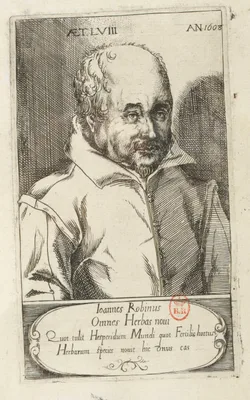
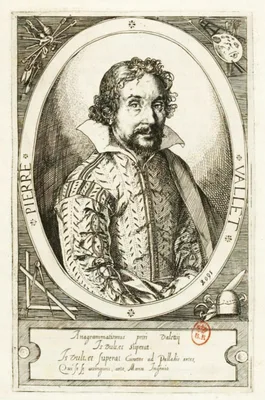
1608 ROBIN, Jean (1550 – 1629); VALLET, Pierre (1575 – 1657)
Le Jardin du Roy tres chrestien Henry IV Roy de France et de Navarre dedie a la Royne.
Text by Robin, illustrations by Vallet. "The first important florilegium," (Blunt, The art of botanical illustration, 89-91). Digital facsimile from BnF Gallica at this link.
GMN 13205 · https://historyofmedicine.com/id/15466
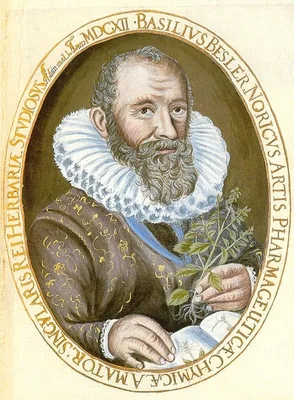
1613 BESLER, Basilius (1561 – 1629)
Hortus Eystettensis: Sive, diligens et accurata omnium plantarum, florum, stirpium, ex variis orbis terrae partibus, singulari studio collectarum, quae in celeberrimis viridariis arcem episcopalem ibidem cingentibus, hoc tempore conspiciuntur, delineatio et aduiuum repræsentatio.
"The Hortus Eystettensis is itself a ‘paper museum’, a pictorial record of the flowers grown in the greatest German garden of its time, that of the Prince Bishop of Eichstätt, Johann Conrad von Gemmingen. As part of a…
GMN 9512 · https://historyofmedicine.com/id/11697
1628 CONSTANT, Jacques ( – 1588); CONSTANT, Paul (1562 – 1629)
Les oeuvres de Jacques et Paul Contant pere et fils maistres apoticaires de la ville de Poictiers. Divisées en cinq traictez. 1. Les commentaires sur Dioscoride. 2. Le second Eden. 3. Exagoge mirabilium naturae e gazophylacio. 4. Synopsis plantarum cum ethymologiis. 5. Le jardin & cabinet poëtique ....
Jacques and Paul Contant were Huguenot apothecaries in Poitiers, and notable collectors. There were among the first in France to assemble a cabinet of curiosities or Wunderkammer. The first work, a commentary on Diosc…
GMN 11499 · https://historyofmedicine.com/id/13698
1629 PARKINSON, John (1567 – 1650)
Paradisi in sole paradisus terrestris. Or a garden of all sorts of pleasant flowers which our English ayre will permitt to be noursed vp: with a kitchen garden of all manner of herbes, rootes, & fruites, for meate or sause vsed with vs, and an orchard of all sorte of fruitbearing trees and shrubbes fit for our land together with the right orderinge planting & preseruing of them and their vses & vertues.
The title is a pun on the author’s name (park-in-sun). Digital facsimile from Biodiversity Heritage Library at this link.
GMN 1822 · https://historyofmedicine.com/id/2111
1635 CORNUT, Jacques-Philippe [Cornuti] (1606 – 1651)
Canadensium plantarum, aliarúmque nondum editarum historia.
First description of the Canadian Flora. Cornut was a French botanist and physician who never visited North America, but instead received the majority of his plant specimens from the Robins family, who supervised the …
GMN 8953 · https://historyofmedicine.com/id/11132
1640 PARKINSON, John (1567 – 1650)
Theatrum botanicum: The theater of plants: Or, An herball of large extent: containing therein a more ample and exact history and declaration of the physicall herbs and plants ... distributed into sundry classes or tribes, for the more easie knowledge of the many herbes of one nature and property ... / collected by the many yeares travaile, industry and experience in this subject.
Parkinson, the last of the old English herbalists, was Apothecary to James I. His massive herbal of 1,755 pages described nearly 3,800 plants, nearly double the number described in the first edition of Gerard. Parkins…
GMN 1823 · https://historyofmedicine.com/id/2113
1648 PISO, Willem [Guillaume le Pois] (1611 – 1678); MARGGRAF, Georg (Marcgrave) (1610 – 1644)
Historia naturalis Brasiliae.
Piso's study of the natural history of Brazil was also a pioneer work on tropical medicine, and also the largest work from the standpoint of format published by the Elzeviers. The folio includes De medicina brasiliens…
GMN 2263.1 · https://historyofmedicine.com/id/2828
1675 –1679 MALPIGHI, Marcello (1628 – 1694)
Anatome plantarum.
Malpighi was the founder of microscopic anatomy and a pioneer in the study of plant development. He approached the subject through the study of plant tissues. His Appendix adds to the work on chick embryology Malpighi…
GMN 536 · https://historyofmedicine.com/id/156
1697 –1701 COMMELIN, Jan [COMMELIJN] (1629 – 1692); COMMELIN, Caspar [COMMELIJN] (1668 – 1731)
Horti medici Amstelodamensis rariorum tam orientalis, quam occidentalis Indiae, aliarumque peregrinarum plantarum magno studio ac labore, sumptibus civitatis Amstelodamensis, longâ annorum serie collectarum, descriptio et icones ad vivum æri incisæ. Opus posthumum, latinitate donatum, notisque & observationibus illustratum, à Frederico Ruyschio & Francisco Kiggelario. 2 vols.
In 1682 Jan Commelin helped establish the Amsterdam Botanical Garden, which introduced many new exotic plants to Europe, collected during the voyages of the Dutch East and West India Companies (VOC and WIC) in the Eas…
GMN 7756 · https://historyofmedicine.com/id/9928
1698 HERMANN, Paul (1646 – 1695); SHERARD, William (1659 – 1728)
Paradisus Batavus, continens plus centum plantas affabrè aere incisas & descriptionibus illustratas. Cui accesit catalogus plantarum, quas pro tomis nondum editis, delineandas curaverat Paulus Hermannus, M. D. In Academia Lugduno-Batava nuper medicinae ac botanices professor. Opus posthumum.
Catalogue of the plants in the Hortus Botanicus Leiden, posthumously edited from Hermann's unpublished manuscript, and reproducing 111 of Hermann's botanical illustrations, by William Sherard. Digital facsimile from R…
GMN 11471 · https://historyofmedicine.com/id/13670
1728 –1737 MARTYN, John (1699 – 1768); KIRKALL, Elisha (1682 – 1742); VAN HUYSUM, Jacob (1688 – 1740)
Historia plantarum rariorum [centuriae primae decas prima-quinta].
Contains some of the earliest attempts at printing copper plates in color. The plates were "engraved by [Elisha] Kirkall in what is generally called 'mezzotint printed in colour.' The phrase is misleading. ... Kirkall…
GMN 13676 · https://historyofmedicine.com/id/15958
1730 MILLER, Philip (1691 – 1771)
Catalogus plantarum, tum exoticarum tum domesticarum.... A catalogue of trees, shrubs, plants, and flowers, both exotic and domestic, which are proposed for Sale, In the gardens near London. Divided, according to their different degrees of hardiness, into particular books, or parts; in each of which the plants are ranged in an alphabetical order. To which are added, the characters of the genus; and an enumeration of all particular species which are at present to be found in the several nurseries near London, with directions for the proper soil and situation, in which each particular kind is found to thrive
A deluxe sale catalogue illustrated with 21 plates, including 7 mezzotints. "The Catalogus Plantarum is notable as one of the earliest flower books to contain plates printed in colors. It is perhaps unique in that one…
GMN 11974 · https://historyofmedicine.com/id/14182
1732 DILLENIUS, Johann Jacob Dillen (1684 – 1747); SHERARD, James (1666 – 1738)
Hortus Elthamensis seu plantarum rariorum quas in horto suo Elthami in cantio coluit vir ornatissimus et praestantissimus Jacobus Sherard, M. D. Soc. Reg. et Coll. Med. Lond. Soc. Guilielmi P.M. frater, delineationes et descriptiones quarum historia vel plane non, vel imperfecte a rei herbariae scriptoribus tradita fuit.
Catalogue of the rare plants growing at Eltham, London, in the collection of James Sherard, who, after making a fortune as an apothecary, devoted himself to gardening and music. For this work Dillenius wrote the text …
GMN 11747 · https://historyofmedicine.com/id/13947
1737 LINNAEUS, Carl (Linné) (1707 – 1778); CLIFFORD, George III (1685 – 1760)
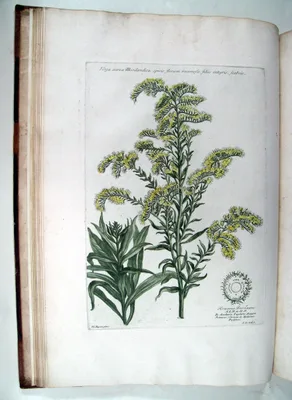
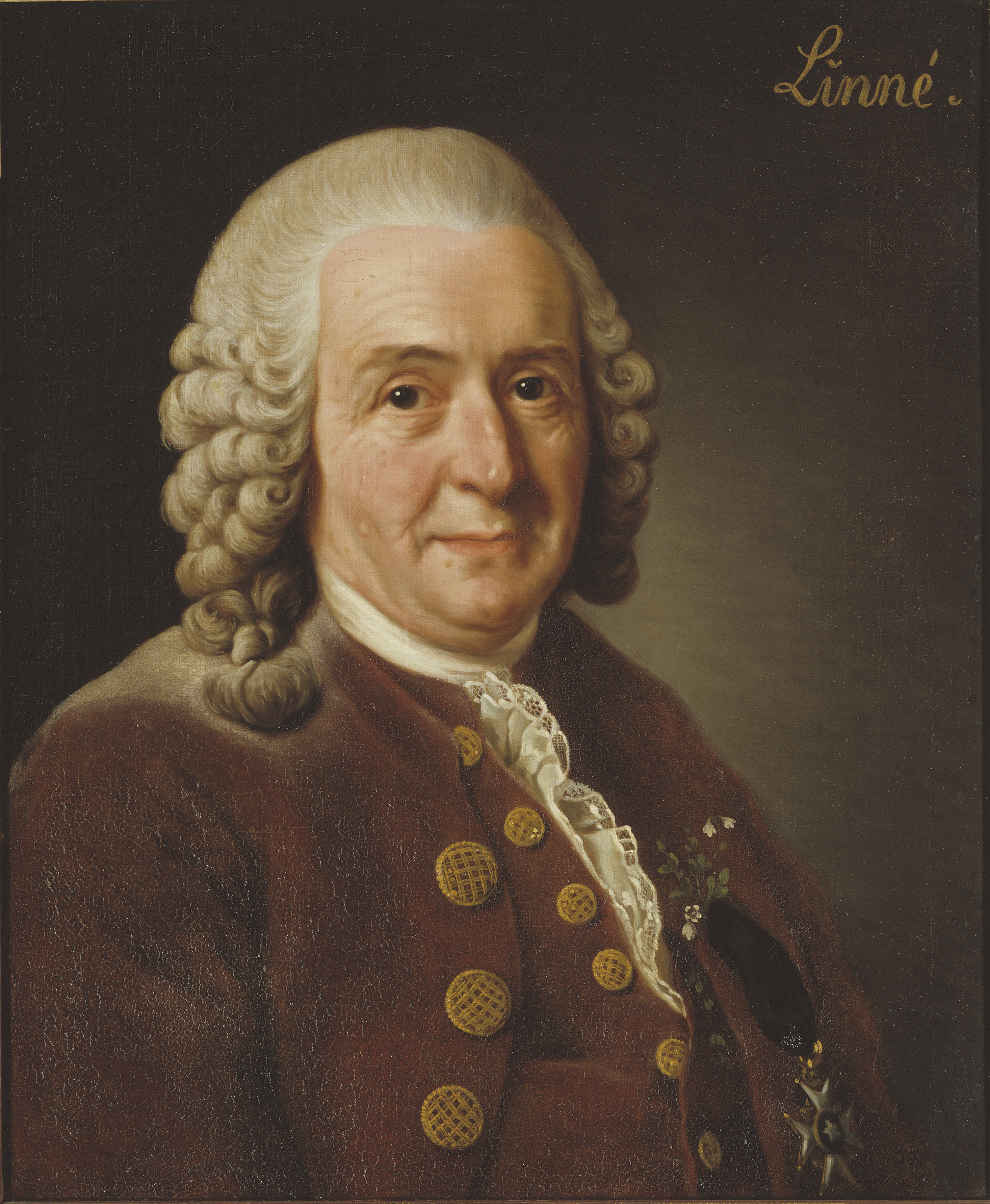
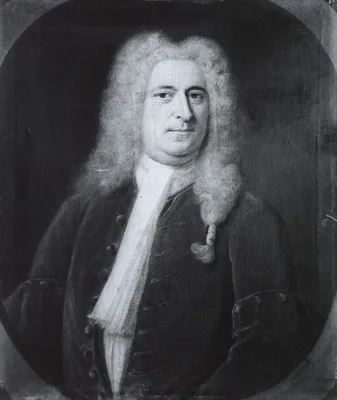
Hortus Cliffortianus plantas exhibens quas in hortistam vivis quam siccis, Hartecampi in Hollandia, coluit ...Georgius Clifford.
The largest and most attractive book by Linnaeus, describing and illustrating plants in the garden and herbarium of George Clifford, governor of the Dutch East India Company, at Clifford's summer estate, Harlecamp. Th…
GMN 7462 · https://historyofmedicine.com/id/9634
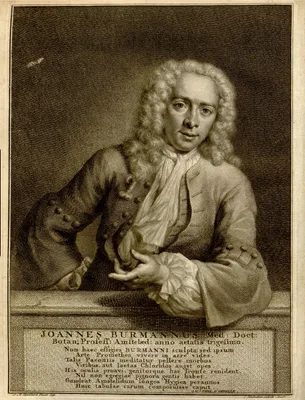
1741 –1750 RUMPHIUS, Georg Eberhard (1627 – 1702); BURMAN, Johannes (1707 – 1780)
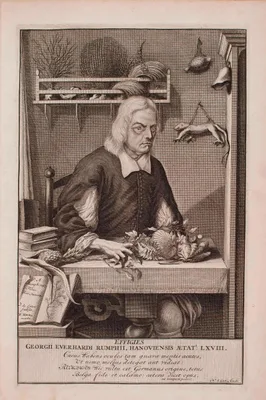
Het Amboinsche Kruidboek . . . Herbarium Amboinense . . . nunc primum in lucem edidit & in Latinum semonem vertit Joannes Burmannus. 6 vols.
Het Amboinsche kruidboek or Herbarium Amboinense, a catalogue of the plants of Ambon in the Maluku Islands of Indonesia, by Georg Eberhard Rumphius, a German-born soldier and botanist employed by the Dutch East India …
GMN 6837 · https://historyofmedicine.com/id/9001
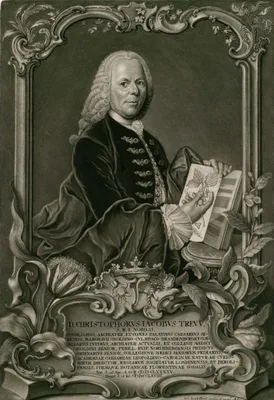
1754 –1759 GESNER, Conrad [Konrad Gessner] (1516 – 1565); SCHMIEDEL, Casimir Christoph (1718 – 1792); TREW, Christoph Jakob (1695 – 1769)
Opera botanica per duo saecula desiderata vitam auctoris et operis historiam cordi librum quintum cum adnotationibus Gesneri in totum opus ut et Wolphii fragmentum historiae plantarum Gesnerianae adiunctis indicibus iconum tam olim editarum... ex bibliotheca C.J. Trew. Nunc primum in lucem edidit et praefatus est Casimirus Christophorus Schmiedel. 2 vols.
Stricken with the plague at the age of 49, Gesner was unable to complete his Historia plantarum (See No. 1807.) His collection of botanical watercolors changed hands several times until they were acquired by the physi…
GMN 1809.1 · https://historyofmedicine.com/id/2032
1763 JACQUIN, Nikolaus Joseph von (1727 – 1817)
Nicolai Josephi Jacquin Selectarum stirpium Americanarum historia, in qua ad Linneanum systema determinatae descriptaeque sistuntur plantse illae, quas in insulis Martinica, Jamaica, Domingo, aliisque, et in vicinae continentis parte, observavit rariores; : adjectis iconibus in solo natali delineatis. 2 vols.
Digital facsimile from the Internet Archive at this link.
GMN 8288 · https://historyofmedicine.com/id/10464
1767 CATESBY, Mark (1683 – 1749)
Hortus Europae americanus, or, A collection of 85 curious trees and shrubs: the produce of North America, adapted to the climates and soils of Great-Britain, Ireland, and most parts of Europe, &c together with their blossoms, fruits and seeds, observations on their culture, growth, constitution and virtues, with directions how to collect, pack up and secure them in their passage.
Digital facsimile from the Biodiversity Heritage Library at this link. First published as Hortus Britanno-Americanus (1763).
GMN 7679 · https://historyofmedicine.com/id/9851
1774 REGNAULT, Nicolas-François (1746 – 1810); REGNAULT, Geneviève de Nangis (1746 – 1802)
La botanique mise à la portée de tout le monde ou collection des plantes d'usage dans la médecine, dans les alimens et dans les arts. Avec des notices instructives puisées dans les auteurs les plus celebres, contenant la description, le climât, la culture, les proprietes et les vertus propres a chaque plante, precedé d’une introduction a la botanique, ou dictionnaire abregé des principaux termes emploiés dans cette science. 3 vols.
One of the most spectacular works of medical botany ever published, in 3 folio volumes with 472 hand-colored plates and 3 hand-colored engraved title pages. Many of the plates by by Genéviève de Nangis Regnault. Digit…
GMN 13707 · https://historyofmedicine.com/id/15991
1790 –1794 WOODVILLE, William (1752 – 1805)
Medical botany, containing systematic and general descriptions, with plates, of all the medicinal plants, indigenous and exotic, comprehended in the catalogues of the materia medica, as published by the Royal Colleges of Physicians of London and Edinburgh: Accompanied with a circumstantial detail of their medicinal effects, and of the diseases in which they have been most successfully employed. 3 vols. & Supplement.
Issued in numbers from 1790-1795, this is the first edition in book form. This work, which underwent several later editions, remained the standard work on the plants of the British pharmacopoeia until the 1880s. Digit…
GMN 1838.1 · https://historyofmedicine.com/id/2205
1790 –1814 SMITH, Sir James Edward (1759 – 1828); SOWERBY, James (1757 – 1822)
English botany; or, coloured figures of British plants, with their essential characters, synonyms, and places of growth. To which will be added, occasional remarks. 36 vols.
Issued in parts. Images by Sowerby; text by Sir James Edward Smith. Only Sowerby is credited on the title page. Includes 2,592 hand-colored plates of British plants. "Buyers of this work today must exercise extreme ca…
GMN 13642 · https://historyofmedicine.com/id/15923
1793 SPRENGEL, Christian Konrad (1750 – 1816)
Das entdeckte Geheimnis der Natur im Bau und in der Befruchtung der Blumen.
Sprengel demonstrated for the first time that the whole structure of nectar-bearing flowers is adapted for fertilization by insects. In his study of the Rose-bay Sprengel discovered dichogamy – that in some plants the…
GMN 104.1 · https://historyofmedicine.com/id/1592
1793 –1795 WHITE, John (1756 – 1832); SMITH, Sir James Edward (1759 – 1828); SOWERBY, James (1757 – 1822)
A specimen of the botany of New Holland
The first published book on the flora of Australia, issued by Sowerby in four parts between 1793 and 1795. It included 16 hand-colored plates reproducing paintings by Sowerby, mostly based on sketches by John White, a…
GMN 12951 · https://historyofmedicine.com/id/15198
1803 MICHAUX, André (1746 – 1802); REDOUTÉ, Pierre-Joseph (1759 – 1840)
Flora Boreali-Americana, sistens caracteres plantarum quas in America septentrionali collegit et detexit Andreas Michaux, Instituti Gallici Scientiarum, necnon Societatis Agriculturae Caroliniensis socius. Tabulis Aeneis 51 ornata [after Pierre-Joseph Redouté]. 2 vols.
"The French government sent Michaux to the United States to collect North American seeds, shrubs, and trees ; he landed at New York City on 1 October, accompanied by his son [François-André Michaux] and a gardener. In…
GMN 12399 · https://historyofmedicine.com/id/14629
1809 –1840 HOFFMANNSEGG (HOFFMANSEGG), Johann Centurius Graf von (1766 – 1849)
Flore portugaise ou description de toutes les plantes qui croissent naturellement en Portugal. 2 vols.
The most spectacular illustrated book on the flora of Portugal. The delicate illustrations, mostly stipple-engraved and colored by hand, based on the travels of Hoffmannsegg through Portugal between 1797 and 1801, wer…
GMN 12798 · https://historyofmedicine.com/id/15044
1814 PURSH, Frederick Traugott (1774 – 1820)
Flora Americae septentrionalis; or, a systematic arrangement and description of the plants of North America. Containing, besides what have been described by preceding authors, many new and rare species, collected during twelve years travels and residence in that country. 2 vols.
The first survey of all plants of North America above Mexico, including more than 3,000 species and 470 genera; describes more than 100 species collected by the Lewis and Clark expedition. Digital facsimile from Botan…
GMN 7876 · https://historyofmedicine.com/id/10048
1814 –1819 CHAUMETON, François-Pierre (1775 – 1819); POIRET, Jean Louis Marie (1755 – 1834); TYRBAS DE CHAMBERET, Jean-Baptiste-Joseph-Anne-César (1779 – 1870); PANCKOUCKE, Ernestine (1784 – 1860); TURPIN, Pierre Jean François (1775 – 1840)
Flore médicale. 7 vols.
The greatest work of medical botany published during the Napoleonic period; considered a masterpiece of color print production with 425 plates printed in color and finished by hand. The medicinal aspect appears to hav…
GMN 11036 · https://historyofmedicine.com/id/13232
1817 –1819 BARTON, William Paul Crillon (1786 – 1856)
Vegetable materia medica of the United States. 2 vols.
Barton served as a naval surgeon and, in 1815, became Professor of Botany at Philadelphia. Along with Bigelow (No. 1842) Barton’s work is one of the first two botanical works with colored plates issued in the United S…
GMN 1841 · https://historyofmedicine.com/id/2277
1817 –1820 BIGELOW, Jacob (1786 – 1879)
American medical botany, being a collection of the native medicinal plants of the United States, containing their botanical history and chemical analysis, and properties and uses in medicine, diet and the arts. 3 vols.
Bigelow was professor of materia medica and botany at Harvard. This work included native American remedies. It was the first book printed in the United States to include color plates printed in color. See R.J. Wolfe, …
GMN 1842 · https://historyofmedicine.com/id/2280
1820 –1824 BARTON, William Paul Crillon (1786 – 1856)
A flora of North America. Illustrated by coloured figures, drawn from nature. 3 vols.
This work represents the first successful use of stipple engravings for the reproduction of images in a book published in the United States. 29 of the 106 hand-colored plates were engraved by Cornelius Tiebout (1773-1…
GMN 12471 · https://historyofmedicine.com/id/14704
1828 –1830 RAFINESQUE, Constantine Samuel (1783 – 1840)
Medical flora; or, manual of the medical botany of the United States of North America. Containing a selection of above 100 figures and descriptions of medical plants, with their names, qualities, properties, history &c; and notes or remarks on nearly 500 equivalent substitutes. 2 vols.
Rafinesque was a great botanist, conchologist, archaeologist, and economist. Born in a suburb of Istanbul, he was also a world citizen and a prolific writer with 939 works to his credit. He died in extreme poverty in …
GMN 1849 · https://historyofmedicine.com/id/2331
1837 HEY, Rebecca
The spirit of the woods, illustrated by coloured engravings
Little is known of the anonymous author of this early illustrated work on trees except that she was also "Mrs. William Hey" and had previously published The moral of flowers. The beautiful hand-colored plates presumab…
GMN 11467 · https://historyofmedicine.com/id/13666
1841 –1849 NUTTALL, Thomas (1786 – 1859); MICHAUX, François André (1770 – 1855)
The North American sylva; or, A description of the forest trees of the United States, Canada, and Nova Scotia, considered particularly with respect to their use in the arts, and their introduction into commerce; to which is added a description of the most useful of the European trees. Illustrated by 156 coloured engravings. Translated from the French of F. Andrew Michaux ... With three additional volumes, containing all the forest trees discovered in the Rocky Mountains, the Territory of Oregon, down to the shores of the Pacific and into the confines of California, as well as in various parts of the United States. Illustrated by 122 finely coloured plates. 6 vols.
The first study of all the trees of North America. Digital facsimile of all 6 vols. from the Hathi Trust at this link.
GMN 7774 · https://historyofmedicine.com/id/9946

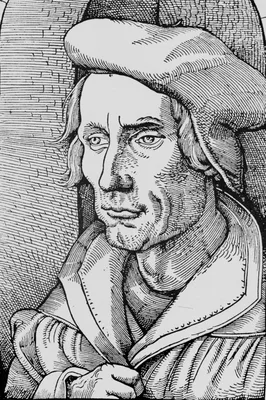
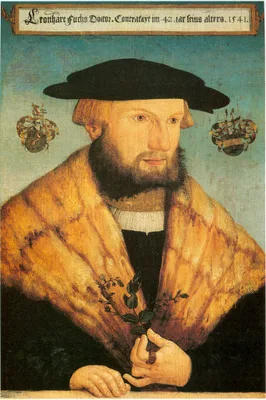
![DIOSCORIDES, Pedanius [Πεδάνιος Διοσκουρίδης] (40 – 90)](/media/portraits/2028)
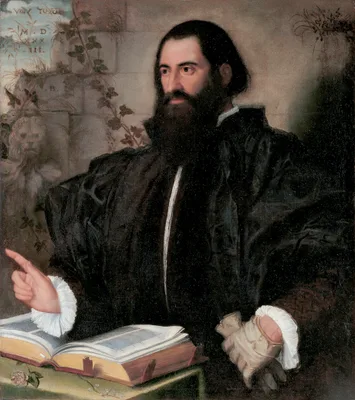
![BELON, Pierre [Pierre Belon du Mans; Petrus Bellonius Cenomanus] (1517 – 1564)](/media/portraits/9632)