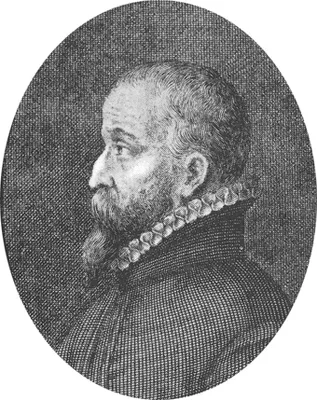
1530 GALEN, [Κλαύδιος Γαληνός; Galen of Pergamon] (129 – 216); GUINTER VON ANDERNACH, Johannes [Johannes Guinterius; Johannes Winter; Jean Guenther] (1505 – 1574); ALCIATO, Andrea (1492 – 1550)
De compositione medicamentorum... lib VII per Ioannem Guinterium Andernacum imprimum latinitate donati. Eiusdem De ponderibus & mensuris liber, D. Andrea Alciato interprete.
First separate edition in Latin of Galen's De compositione medicamentorum, On the Composition of medicines, translated by Johann Winter of Andernach, to which was added Galen's treatise on weights and measures transla…
GMN 11083 · https://historyofmedicine.com/id/13279
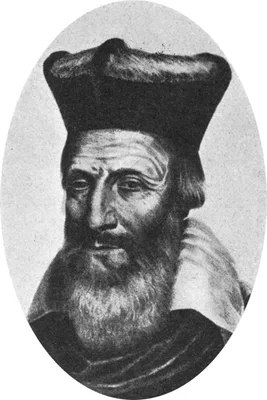
1555 LAGUNA DE SEGOVIA, Andrés [LACUNA] (1499 – 1559); DIOSCORIDES, Pedanius [Πεδάνιος Διοσκουρίδης] (40 – 90)
Acerca de la materia medicinal, y de los venenos mortiferos, traduzido de lengua griege, en la vulgar castellana, & illustrado con claras y substantiales annotationes, y con las figuras de innumeras plantas exquisitas y raras, por el Doctor Andres de Laguna....
Laguna' translation of Dioscorides into Spanish included commentaries and additions that double the original text. It included very beautiful botanical woodcuts of plants and animals, and is considered one of the best…
GMN 13125 · https://historyofmedicine.com/id/15381
1558 BELON, Pierre [Pierre Belon du Mans; Petrus Bellonius Cenomanus] (1517 – 1564)
Les remonstrances sur le default du labour et culture des plantes, et de la cognoissance d'icelles, contenant la maniere d'affranchir et appriuoiser les arbres sauuages.
The first work on agriculture written in French. As an apothecary, Belon was especially interested in the pharmaceutical value of plants. Having learned about them on his travels, he introduced numerous foreign plants…
GMN 8984 · https://historyofmedicine.com/id/11163
1588 CAMERARIUS, Joachim the Younger (1534 – 1598)
Hortus medicus et philosophicus: In quo plurimarum stirpium breves descriptiones, novae icones non paucae, indicationes locorum natalium, observationes de cultura earum peculiares, atque insuper nonnulla remedia euporista, nec non philologicae quadame continenteur. Item sylva Hercynia: sive catalgus plantarum sponte nascentium in montibus & locis plerisque.
Digital facsimile from Google Books at this link.
GMN 13350 · https://historyofmedicine.com/id/15621
1591 CORTUSO, Giacomo Antonio (Cortusi) (1513 – )
L'horto dei semplici di Padova, oue si vede primieramente la forma di tutta la pianta con le sue misure: & indi i suoi partimenti distinti per numeri in ciascuna arella, intagliato in rame.
First catalogue of the Orto botanico di Padova, the oldest academic botanical garden that remains in its original location., Digital facsimile from fc.cab.unipd.it at this link.
GMN 13351 · https://historyofmedicine.com/id/15622
1597 LANGHAM, William
The garden of health conteyning the sundry rare and hidden vertues and properties of all kindes of simples and plants, together with the maner how they are to be vsed and applyed in medicine for the health of mans body, against diuers diseases and infirmities most common amongst men. Gathered by the long experience and industrie of William Langham, practitioner in phisicke.
An alphabetically arranged handbook of herbal remedies. The title page was misprinted 1579, but the work was actually printed in 1597. A list of the plants discussed is available from Early English Books Online at thi…
GMN 11381 · https://historyofmedicine.com/id/13580
1598 BELLEVAL, Pierre Richer de (1564 – 1632)
Onomatologia, seu nomenclatura stirpium quae in Horto Regio Monspeliensi recens constructo coluntur.
The first catalogue of medicinal plants in the Jardin des plantes de Montpellier, founded by Richer de Belleval in 1593. This was the first medical botanical garden in France. Reprinted in Opuscules de Pierre Richer d…
GMN 13347 · https://historyofmedicine.com/id/15618
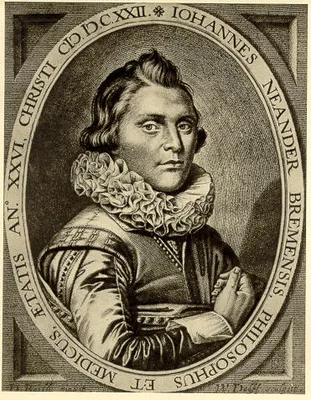
1622 NEANDER, Johann (1596 – 1630)
Tabacologia: Hoc est, tabaci, seu nicotianae descriptio medico-cheirurgico-pharmaceutica: Vel eius praeparatio & usus in omnibus corporis humani incommodis.
Neander described tobacco, its processing, and medical-pharmaceutical use. His book Includes images of the plants, of Indian, Oriental and European types of pipes, as well as depictions of cultivation and processing b…
GMN 9633 · https://historyofmedicine.com/id/11820
1640 LA BROSSE, Guy de (1589 – 1641)
L'ouverture du Jardin Royal de Paris, pour la demonstration des plantes medecinales.
La Brosse founded the Jardin des Plantes (originally Jardin du Roi), the first botanical garden in Paris. It was the second garden of this type in France, after the Jardin des plantes de Montpellier founded in 1593. D…
GMN 13346 · https://historyofmedicine.com/id/15617
1689 COMMELIN, Jan [COMMELIJN] (1629 – 1692)
Catalogus plantarum Horti Medici Amstelodamensis. Pars prior.
First published catalogue of plants of the Hortus Medicus, precursor of the Hortus Botanicus. The Hortus Medicus, founded in 1682 under Commelin's guidance, was ranked among the most comprehensive in Europe, including…
GMN 13100 · https://historyofmedicine.com/id/15352
1697 –1701 COMMELIN, Jan [COMMELIJN] (1629 – 1692); COMMELIN, Caspar [COMMELIJN] (1668 – 1731)
Horti medici Amstelodamensis rariorum tam orientalis, quam occidentalis Indiae, aliarumque peregrinarum plantarum magno studio ac labore, sumptibus civitatis Amstelodamensis, longâ annorum serie collectarum, descriptio et icones ad vivum æri incisæ. Opus posthumum, latinitate donatum, notisque & observationibus illustratum, à Frederico Ruyschio & Francisco Kiggelario. 2 vols.
In 1682 Jan Commelin helped establish the Amsterdam Botanical Garden, which introduced many new exotic plants to Europe, collected during the voyages of the Dutch East and West India Companies (VOC and WIC) in the Eas…
GMN 7756 · https://historyofmedicine.com/id/9928
1712 KAEMPFER, Engelbert (1651 – 1716)
Amoentitatum exoticarum politico-physico-medicarum fasciculi V.
Kaempfer’s illustrated accounts of Japanese acupuncture and moxibustion are among the best of the 17th century. They appeared for the first time in the above work and were translated into English in his The History of…
GMN 6374.11 · https://historyofmedicine.com/id/8317
1714 –1725 FEUILLÉE, Louis (1660 – 1732)
Journal des observations physiques, mathematiques et botaniques, faites par l'ordre du roi sur les côtes orientales de l'Amerique meridionale, & dans les Indes occidentales, depuis l'année 1707, jusques en 1712. 3 vols.
Includes in vols. 2 and 3: Histoire des plantes medecinales qui sont le plus en usage aux royaumes de l'Amerique meridionale, du Perou & du Chily, : composée sur les lieux par ordre du Roy, dans les années 1709. 1710.…
GMN 13449 · https://historyofmedicine.com/id/15722
1721 BRADLEY, Richard (1688 – 1732)
The virtue and use of coffee, with regard to the plague, and other infectious distempers: containing the most remarkable observations of the greatest men in Europe concerning it ... To which is prefix'd an exact figure of the tree, flower, and fruit taken from the life.
Digital facsimile from wellcomecollection.org at this link.
GMN 13879 · https://historyofmedicine.com/id/16169
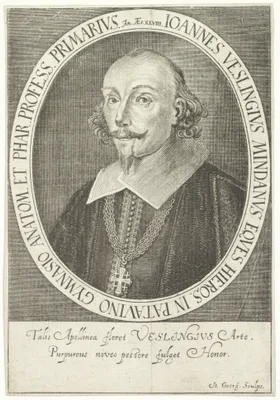
1735 ALPINI, Prospero [ALPINUS] (1553 – 1617); VESLING, Johann (1598 – 1649)
Historiae Aegypti naturalis qua continentur rerum Aegyptiarum libri quatuor. Opus posthumum nunc primum ex auctoris autographo, diligentissime recognito, editum; atque ex eodem tabellis aeneis XXV illustratum et uberimmo indice auctem. (2 vols.) Vol. 2: Pars secunda, sive, de Plantis Aegypti liber auctus & emendatus. Accedunt tabella aenae LXXVII plantis summo artificio incisis; ut & dissertatio eiusdem de laserpitio, & lotoaegyptia. Cum observationibus & notis Joannis Veslingii, equitis, In Patavino Gymnasio Anatomiae & Pharmaciae professoris primarii. Accedunt Eiusdem Joannis Veslingii paraeneses ad rem herbariam & vindiciae opobalsami cum indicibus necessariis.
Posthumously published works of Alpini on the natural history and botany of Egypt, and Vesling on the botany of Egypt. The second volume, on botany by Alpini was edited by Johannes Vesling, with the addition of his ow…
GMN 9416 · https://historyofmedicine.com/id/11599
1774 REGNAULT, Nicolas-François (1746 – 1810); REGNAULT, Geneviève de Nangis (1746 – 1802)
La botanique mise à la portée de tout le monde ou collection des plantes d'usage dans la médecine, dans les alimens et dans les arts. Avec des notices instructives puisées dans les auteurs les plus celebres, contenant la description, le climât, la culture, les proprietes et les vertus propres a chaque plante, precedé d’une introduction a la botanique, ou dictionnaire abregé des principaux termes emploiés dans cette science. 3 vols.
One of the most spectacular works of medical botany ever published, in 3 folio volumes with 472 hand-colored plates and 3 hand-colored engraved title pages. Many of the plates by by Genéviève de Nangis Regnault. Digit…
GMN 13707 · https://historyofmedicine.com/id/15991
1781 BUC'HOZ, Pierre-Joseph (1731 – 1807)
Herbier ou collection des plantes médicinales de la Chine: D'après un manuscrit peint et unique qui se trouve dans la Bibliothèque de l'Empereur de la Chine, pour servir suitte [sic] à la collection des fleurs qui se cultivent dans les Jardins de la Chine et de l'Europe.
Digital facsimile from Google Books at this link.
GMN 13004 · https://historyofmedicine.com/id/15254
1784 HALLE, Johann Samuel (1727 – 1810)
Die Deutsche [sic] Giftpflanzen, zur Verhütung der tragischen Vorfälle in den Haushaltungen, nach ihren botanischen Kennzeichen, nebst den Heilungsmitteln.
On poisonous plants in Germany, for prevention of tragic household accidents, and remedies for the poisons. Illustrated with 16 plates. Digital facsimile from Google Books at this link.
GMN 14210 · https://historyofmedicine.com/id/16526
1787 HALLE, Johann Samuel (1727 – 1810)
Gifthistorie des Thier- Pflanzen- und Mineralreichs, nebst den Gegengiften, und der medicinischen Anwendung der Gifte, nach den neuesten Toxicologen.
This work was not illustrated. Digital facsimile from Bayerische StaatsBibliothek at this link.
GMN 10480 · https://historyofmedicine.com/id/12673
1813 AINSLIE, Whitelaw (1767 – 1837)
Materia medica of Hindoostan, and artisan’s and agriculturist’s nomenclature.
The first book in English on the materia medica of India, and a pioneering work in the field of Indian medical history. Ainslie joined the British East India Company as an assistant surgeon in 1788 and spent the next …
GMN 6975 · https://historyofmedicine.com/id/9141
1814 –1819 CHAUMETON, François-Pierre (1775 – 1819); POIRET, Jean Louis Marie (1755 – 1834); TYRBAS DE CHAMBERET, Jean-Baptiste-Joseph-Anne-César (1779 – 1870); PANCKOUCKE, Ernestine (1784 – 1860); TURPIN, Pierre Jean François (1775 – 1840)
Flore médicale. 7 vols.
The greatest work of medical botany published during the Napoleonic period; considered a masterpiece of color print production with 425 plates printed in color and finished by hand. The medicinal aspect appears to hav…
GMN 11036 · https://historyofmedicine.com/id/13232
1817 –1819 BARTON, William Paul Crillon (1786 – 1856)
Vegetable materia medica of the United States. 2 vols.
Barton served as a naval surgeon and, in 1815, became Professor of Botany at Philadelphia. Along with Bigelow (No. 1842) Barton’s work is one of the first two botanical works with colored plates issued in the United S…
GMN 1841 · https://historyofmedicine.com/id/2277
1817 –1820 BIGELOW, Jacob (1786 – 1879)
American medical botany, being a collection of the native medicinal plants of the United States, containing their botanical history and chemical analysis, and properties and uses in medicine, diet and the arts. 3 vols.
Bigelow was professor of materia medica and botany at Harvard. This work included native American remedies. It was the first book printed in the United States to include color plates printed in color. See R.J. Wolfe, …
GMN 1842 · https://historyofmedicine.com/id/2280
1821 –1829 DESCOURTILZ, Michel Étienne (1777 – 1835); DESCOURTILZ, Jean-Théodore (1796 – 1855)
Flore pittoresque et médicale des Antilles, ou, Histoire naturelle des plantes usuelles des colonies françaises, anglaises, espagnoles et portugaises; par M. E. Descourtilz. Peinte par J. Th. Descourtilz. 8 vols.
Medical botany of the Caribbean, finely illustrated with colored plates after paintings by the author's son. Digital facsimile from the Biodiversity Heritage Library at this link.
GMN 8547 · https://historyofmedicine.com/id/10724
1827 –1834 GOEBEL, Karl Christian Traugott Friedemann (1794 – 1851); KUNZE, Gustav (1793 – 1851); SCHENK, Ernst
Pharmaceutische Waarenkunde mit illuminirten Kupfern nach der Natur gezeichnet von Ernst Schenk. Begonnen von Friedemann Goebel. Fortgesetzt von Gustav Kunze. 14 parts in 2 vols.
GMN 9545 · https://historyofmedicine.com/id/11731
1828 –1830 RAFINESQUE, Constantine Samuel (1783 – 1840)
Medical flora; or, manual of the medical botany of the United States of North America. Containing a selection of above 100 figures and descriptions of medical plants, with their names, qualities, properties, history &c; and notes or remarks on nearly 500 equivalent substitutes. 2 vols.
Rafinesque was a great botanist, conchologist, archaeologist, and economist. Born in a suburb of Istanbul, he was also a world citizen and a prolific writer with 939 works to his credit. He died in extreme poverty in …
GMN 1849 · https://historyofmedicine.com/id/2331
1830 SMITH, Elisha
The Botanic physician: Being a compendium of the practice of physic, upon botanical principles, containing all the principal branches necessary to the study of medicine, as anatomy; physiology; surgery; causes, symptoms and cure of diseases; midwifery; materia medica; pharmacy, botany, &c. Together with a great variety of useful recipes.
“The first treatise to attempt a scientific synthesis of the botanic practice....The first significant attempt to synthesize and systematize the prevailing botanic practice and plant materia medica” (Berman & Flannery…
GMN 12481 · https://historyofmedicine.com/id/14714
1833 BACHE, Franklin (1792 – 1864); WOOD, George Bacon (1797 – 1879)
The dispensatory of the United States of America.
Digital facsimile of this, the first, and later editions from the Hathi Trust at this link.
GMN 10824 · https://historyofmedicine.com/id/13020
1834 GRAVES, George (1754 – 1839); MORRIES, John Davie
Hortus medicus, or figures and descriptions of the more important plants used in medicine, or possessed of poisonous qualities; with their medical properties, chemical analysis, &c. &c
This materia medica, with fine hand-colored plates, also includes and illustrates poisonous plants with detailed discussion of their properties. It includes recommended dosages for pharmaceutical preparations. Digital…
GMN 8662 · https://historyofmedicine.com/id/10839
1841 MATTSON, Morris
The American vegetable practice, or, a new and improved guide to health: Designed for the use of families. : In six Parts. Part I. Concise view of the human body, with engraved and wood-cut illustrations. Part II. Glance at the old school practice of physic. Part III. Vegetable materia medica, with colored Illustrations. Part IV. Compounds. Part V. Practice of medicine, based upon what are deemed correct physiological and pathological principles. Part VI. Guide for women, containing a simplified treatise on childbirth, with a description of the diseases peculiar to females and infant. 2 vols.
The first American book with chromolithographed illustrations printed in America. The chromolithographed images depict American medicinal plants. Digital facsimile from Google Books at this link.
GMN 10723 · https://historyofmedicine.com/id/12917
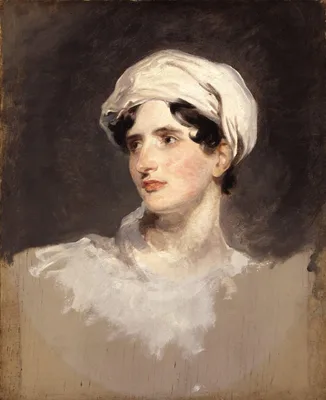
1842 GRAHAM, Maria (later Maria, Lady Callcott) (1785 – 1842)
A scripture herbal.
Digital facsimile from the Internet Archive at this link.
GMN 13747 · https://historyofmedicine.com/id/16031
1847 GRIFFITH, Robert Eglesfeld (1798 – 1850)
Medical botany: or, Descriptions of the more important plants used in medicine, with their history, properties, and mode of administration.
The author intended to update and correct the earlier works on American materia medica by Barton, Bigelow and Rafinesque, and to make this information available at a reasonable price. Digital facsimile from the Biodiv…
GMN 8545 · https://historyofmedicine.com/id/10722
1847 –1852 CASSONE, Felice (1815 – 1854)
Flora medico-farmaceutica. 6 vols.
Digital facsimile of the complete set from the Internet Archive at this link.
GMN 11808 · https://historyofmedicine.com/id/14010
1852 –1853 HAMILTON, Edward (1815 – 1903)
The flora homoeopathica: Or, illustrations and descriptions of the medicinal plants used as homoeopathic remedies. 2 vols.
Hamilton detailed the symptoms of poisoning, records of successful use of the plant, and a description of its homeopathic uses. Finely illustrated with hand-colored plates, mostly by Henry Sowerby and his sister Charl…
GMN 10129 · https://historyofmedicine.com/id/12318
1877 –1883 LECLERC, Lucien (1816 – 1893); IBN AL-BAYTĀR AL-MĀLAQĪ, Ḍiyāʾ Al-Dīn Abū Muḥammad ʿAbdllāh Ibn Aḥmad (Ibn al-Baytar) (1197 – 1248)
Traité des simples. 3 vols. Notices et extraits des manuscrits de la Bibliothèque nationale et autres bibliothèques, 1877, tome 23,1; tome 25,1; tome 26,1. Traduit par Lucien Leclerc.
Ibn al-Baytar systematically recorded the additions to pharmacy made by medieval Islamic physicians, who added between 300 and 400 types of medicines to the roughly one thousand known since antiquity. "Ibn al-Baitar’s…
GMN 8528 · https://historyofmedicine.com/id/10705
1880 BENTLEY, Robert (1821 – 1893); TRIMEN, Henry (1843 – 1896)
Medicinal plants, being descriptions with original figures of the principal plants employed in medicine. 4 vols.
GMN 1870 · https://historyofmedicine.com/id/2467
1889 MAIDEN, Joseph Henry (1859 – 1925)
The useful native plants of Australia. (Including Tasmania).
Maiden, a botanist, was Curator and Secretary of The Technological, Industrial, and Sanitary Museum of New South Wales. Chapters include. 1. Human Food and Food adjuncts; 2. Forage Plants; 3. Drugs; 4. Gums, Resins, a…
GMN 13509 · https://historyofmedicine.com/id/15784
1901 PARDO DE TAVERA, Trinidad Hermenegildo José Maria Francisco (1857 – 1925); THOMAS, Jerome B. Jr.
The medicinal plants of the Philippines. Translated and revised by Jerome B. Thomas, Jr.
Digital facsimile from the Internet Archive at this link.
GMN 8540 · https://historyofmedicine.com/id/10717
1914 KELLY, Howard Atwood (1858 – 1943)
Some American medical botanists commemorated in our botanical nomenclature.
Digital facsimile from the Internet Archive at this link.
GMN 8548 · https://historyofmedicine.com/id/10725
1937 HOOPER, David (1858 – 1947); FIELD, Henry (1902 – 1986)
Useful plants and drugs of Iran and Iraq. By David Hooper with notes by Henry Field.
Digital facsimile from the Biodiversity Heritage Library at this link.
GMN 9242 · https://historyofmedicine.com/id/11424
1949 THOMPSON, Reginald Campbell (1876 – 1941)
A dictionary of Assyrian botany.
GMN 8514 · https://historyofmedicine.com/id/10691
1953 LEWIN, Bernhard; IBN DAWŪD DĪNAWARĪ, Ābu Ḥanīfah Āḥmad (815 – 896)
The book of plants [Kitâb al-nabât] of Abū Hanīfa ad-Dīnawari: Part of the alphabetical section (j-i). Edited and translated by Bernhard Lewin.
GMN 9243 · https://historyofmedicine.com/id/11425
1988 DIETRICH, Albert (1912 – 2015)
Dioscurides triumphans: Ein anonymer arabischer Kommentar (Ende 12. Jh. n. Chr.) zur Materia medica. Arabischer Text nebst kommentierter deutscher Übersetzung. 2 vols.
GMN 13357 · https://historyofmedicine.com/id/15628
1991 DIOSCORIDES, Pedanius [Πεδάνιος Διοσκουρίδης] (40 – 90); DIETRICH, Albert (1912 – 2015); IBN AL-BAYTĀR AL-MĀLAQĪ, Ḍiyāʾ Al-Dīn Abū Muḥammad ʿAbdllāh Ibn Aḥmad (Ibn al-Baytar) (1197 – 1248)
Die Dioskurides-Erklärung des Ibn-al-Baitār: Ein Beitrag zur arabischen Pfanzensynonymik des Mittelalters. Edited and translated by Albert Dietrich. (Abhandlungen der Akademie der Wissenschaften in Göttingen, phil.-hist. Kl., fol. 3, no. 191).
GMN 12521 · https://historyofmedicine.com/id/14756
1993 ABEBE, Dawit; AYEHU, Ahadu
Medicinal plants and enigmatic health practices of Northern Ethiopia.
GMN 13535 · https://historyofmedicine.com/id/15812
1997 HERRICK, James W.
Iroquois medical botany.
"The first book to provide a guide to understanding the use of herbal medicines in traditional Iroquois culture. The world view of the Iroquois League or Confederacy - the Mohawk, Oneida, Onondaga, Cayuga, Seneca, and…
GMN 8544 · https://historyofmedicine.com/id/10721
1999 JASHEMSKI, Wilhelmina Mary Feemster (1910 – 2007)
A Pompeian herbal: Ancient and modern medicinal plants. Plant portraits by Victoria I and Lillian Nicholson Meyer. Photographs by Stanley A. Jashemki and others.
GMN 9602 · https://historyofmedicine.com/id/11789
2000 DIOSCORIDES, Pedanius [Πεδάνιος Διοσκουρίδης] (40 – 90); OSBALDESTON, Tess Anne; WOOD, Robert P. A.
Dioscorides: De Materia Medica, being an herbal with many other medicinal materials, written in Greek in the first century of the common era. A new indexed version in Modern English by Tess Anne Osbaldeston and Robert P. A Wood.
Rather than a new translation from the Greek, this is a updated and usefully indexed version, in modern English, of Goodyer's paraphrase from the 17th century. See No. 8564.
GMN 8565 · https://historyofmedicine.com/id/10742
2001 HUNT, Anthony "Tony" B. (1944 – ); BENSKIN, Michael
Three receptaria from Medieval England: The languages of medicine in the fourteenth century. Edited by Tony Hunt with the collaboration of Michael Benskin.
An edition of just over 1500 medical receipts transmitted in three fourteenth-century compendia. The particular interest of these multilingual compilations lies in their date – earlier than most published receipts – a…
GMN 8875 · https://historyofmedicine.com/id/11053
2001 PEARN, John Hemsley (1940 – )
A doctor in the garden: Nomen medici in botanicis. Australian flora and the world of medicine.
GMN 10892 · https://historyofmedicine.com/id/13088

![GALEN, [Κλαύδιος Γαληνός; Galen of Pergamon] (129 – 216)](/media/portraits/21)
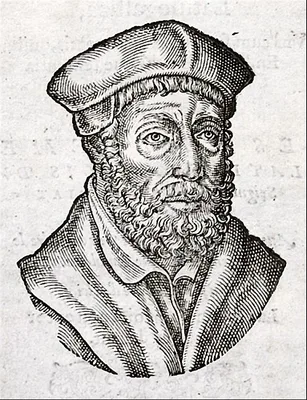
![DIOSCORIDES, Pedanius [Πεδάνιος Διοσκουρίδης] (40 – 90)](/media/portraits/2028)
![BELON, Pierre [Pierre Belon du Mans; Petrus Bellonius Cenomanus] (1517 – 1564)](/media/portraits/9632)