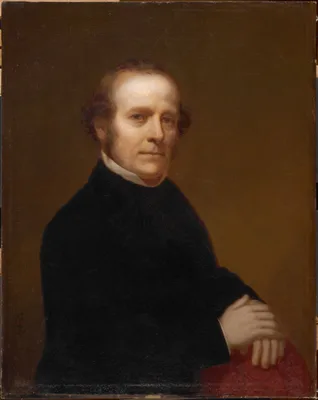
1800 DAVY, Sir Humphrey (1778 – 1829)
Researches, chemical and philosophical, chiefly concerning nitrous oxide.
Davy discovered the anesthetic properties of nitrous oxide and suggested its use during surgical operations. This suggestion was applied until 1844 when the American dentist Horace Wells volunteered to have the effect…
GMN 5646 · https://historyofmedicine.com/id/7281
1847 WELLS, Horace (1815 – 1848)
A history of the discovery of the application of nitrous oxide gas, ether, and other vapours, to surgical operations.
In 1844 Wells, a Hartford dentist, successfully used nitrous oxide as a dental anesthetic. To publicize his discovery, he arranged a demonstration at Harvard Medical School in January 1845, but this proved a fiasco. W…
GMN 5660 · https://historyofmedicine.com/id/7303
1894 HEWITT, Sir Frederic William (1857 – 1916)
Further observations on the use of oxygen with nitrous oxide.
Includes description of Hewitt’s nitrous oxide/oxygen stopcock.
GMN 5682.1 · https://historyofmedicine.com/id/7384
1912 BOOTHBY, Walter Meredith (1880 – 1953); COTTON, Frederick Jay (1869 – 1938)
Nitrous oxide-oxygen-ether anesthesia: notes on administration; a perfected apparatus.
Boothby and Cotton’s flowmeter.
GMN 5698 · https://historyofmedicine.com/id/7448
1914 GWATHMEY, James Tayloe (1865 – 1944)
Anesthesia.
Gwathmey was one of the first physicians in the United States to specialize exclusively in anesthesiology. This work includes (p. 334) a description of his nitrous oxide-oxygen-ether apparatus.

GMN 5699.1 · https://historyofmedicine.com/id/8961
1915 LYNCH, Frank Worthington (1871 – 1945)
Eutocia by means of nitrous oxide gas analgesia; a safe substitute for the Freiburg method.
GMN 6218 · https://historyofmedicine.com/id/7634
1917 –1918 BOYLE, Henry Edmund Gaskin (1875 – 1941)
Nitrous oxide-oxygen-ether outfit.
Boyle’s continous-flow anesthetic machine.
GMN 5700 · https://historyofmedicine.com/id/7462