1684 MÉRY, Jean (1645 – 1722)
Observations anatomiques.
Includes a brief description of “Cowper’s glands”.
GMN 1212 · https://historyofmedicine.com/id/1877
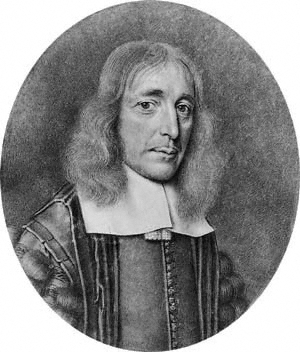
1684 WILLIS, Thomas (1621 – 1675); PORDAGE, Samuel (1633 – 1691)
Dr. Willis's practice of physick.
The only complete edition of Willis's works in English, translated by the poet Samuel Pordage. It contains the translations of all his works except his Affectionum quae dicuntur hystericae (1671). The collection inclu…
GMN 1311 · https://historyofmedicine.com/id/10280
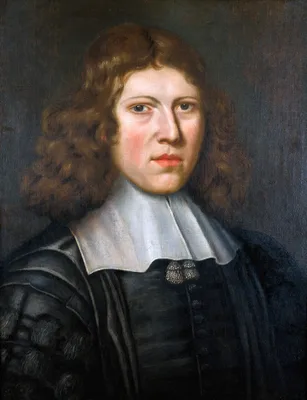
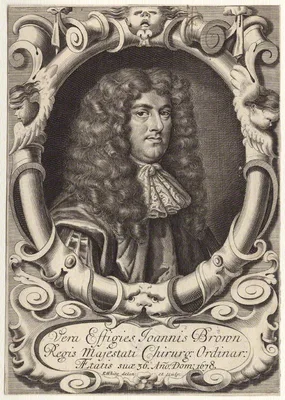
1684 LOWER, Richard (1631 – 1691); BROWNE, John (1642 – 1702)
Myographia nova, or a graphical description of all the muscles in the human body; with one and forty copper-plates.
Browne's treatise on the muscles consisted of six lectures, illustrated by copperplates. It was, however, a plagiarism, as was pointed out by James Yonge: it put together text from the Muskotomia by William Molins wit…
GMN 11684 · https://historyofmedicine.com/id/13885
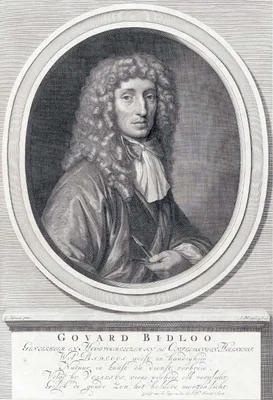
1685 BIDLOO, Govert (1649 – 1713); LAIRESSE, Gerard de (1641 – 1711)
Anatomia humani corporis, centum et quinque tabulis, per artificiosiss. G. de Lairesse ad vivum delineatis.
This large folio by Dutch physician, anatomist, poet, and playwright Govert Bidloo contains an engraved title, engraved portrait of Bidloo by Abraham Bloteling after Gérard de Lairesse and 105 engraved plates after La…
GMN 385 · https://historyofmedicine.com/id/602
1685 NUCK, Anton (1650 – 1692)
De ductu salivali novo, saliva, ductibus oculorum aquosis, et humore oculi aqueo.
Nuck’s name has been attached to the glands and duct described by him.
GMN 1101 · https://historyofmedicine.com/id/1080
1685 DIEMERBROECK, Ysbrand van (Isbrand) (1609 – 1674)
Opera omnia, anatomica et medica partim jam antea excusa, sed plurimis locis ab ipso auctore emendata, & aucta, partim nondum edita. Nunc simul collecta, & diligenter recognita, per Timannum de Diemerbroeck ... quorum elenchum sequens pagina indicabit.
Edited by the author's son.
GMN 9575 · https://historyofmedicine.com/id/11762
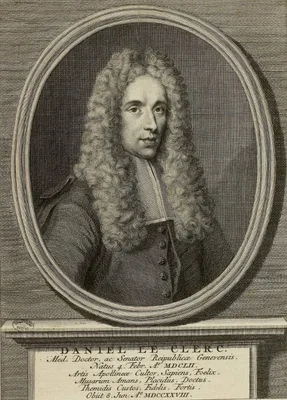
1685 LE CLERC, Daniel (1652 – 1728); MANGET, Jean-Jacques [Johann Jacob Mangetus] (1652 – 1742)
Bibliotheca anatomica sive recens in anatomia inventorum thesaurus locupletissimus, in quo integra qtque absolutissima totius corporis humani descriptio, eiusdémque oeconomia è praestantissimorum quorumque anatomicorum tractatibus singularibus, tum facenus in lucem edis, tum etiam indeditis, concinnata exhiibetur....2 vols.
With reproductions of the original engraved plates, Bibliotheca anatomica was the most extensive compilation of anatomical treatises published in the 17th century. It was an extensive anatomical library in 2 thick vol…
GMN 11174 · https://historyofmedicine.com/id/13371
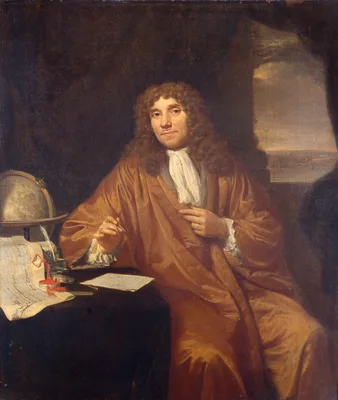
1686 –1718 LEEUWENHOEK, Antonie van (1632 – 1723)
Ontledingen en ontdekkingen.... 6 vols.
Leeuwenhoek, one of the first and also one of the greatest of the microbiologists, communicated many of his discoveries to the Royal Society in London. This set is a collection in Dutch of many contributions that van …
GMN 265 · https://historyofmedicine.com/id/1222
1686 MALPIGHI, Marcello (1628 – 1694)
Opera omnia. 2 vols.
Malpighi was the founder of histology. In 1660 he was the first to see the capillary anastomosis between the arteries and the veins, thus contributing to the completion of Harvey’s work on the circulation. Malpighi wa…
GMN 66 · https://historyofmedicine.com/id/8778
1687 BRUNNER, Johann Conrad (1653 – 1727)
De glandulis in intestino duodeno hominis detectis.
“Brunner’s glands”, earlier described by Wepfer (No. 974.1).
GMN 975 · https://historyofmedicine.com/id/592
1689 GAGLIARDI, Domenico (1660 – 1745)
Anatome ossium novis inventis illustrata.
Gagliardi, a papal physician, fiirst described the lamellar structure of the bones. He also carried out some tests and comparative research between human and calf bones, and probably first described a case of bone tub…
GMN 12782 · https://historyofmedicine.com/id/15028
1691 GENGA, Bernardino (1665 – 1734); LANCISI, Giovanni Maria (1654 – 1720)
Anatomia per uso et intelligenza del disegno ricercata non solo su gl’ossi, e muscoli del corpo humano.
Contains 56 copper-plates, excellent anatomically and artistically, with commentary by Giovanni Maria Lancisi. This is one of the finest of all books on anatomy for artists. English translation with plates re-engraved…
GMN 386 · https://historyofmedicine.com/id/611
1691 HAVERS, Clopton (1657 – 1702)
Osteologia nova, or some new observations of the bones.
Havers discovered the Haversian canals and made important observations of the physiology of bone growth and repair. The Haversian lamellae, glands, and folds, are also named after him. The Haversian canals were observ…
GMN 387 · https://historyofmedicine.com/id/615
1691 NUCK, Anton (1650 – 1692)
Adenographia curiosa et uteri foeminei anatome nova.
Description of the “canal of Nuck”.
GMN 1213 · https://historyofmedicine.com/id/1883
1693 VERHEYEN, Philippe (1648 – 1710)
Anatomia corporis humani, in qua omnia tam veterum, quam recentiorum anatomicarum inventa methodo nova & intellectu facillima describuntur, ac tabulis aenis repaesentantur.
This work was widely used for some years after publication, superseding Bartholin in popularity. Second edition, with supplement, 2 vols., Louvain, 1706-12.
GMN 388 · https://historyofmedicine.com/id/620
1695 RIDLEY, Humphrey (1653 – 1708)
The anatomy of the brain.
The first book on the brain in the English language, including the first account of the circular venous sinus which Ridley names, and the first English account of a pineal tumor. In it Ridley gives the first account o…
GMN 1379.1 · https://historyofmedicine.com/id/1785
1698 COWPER, William (1666 – 1709)
The anatomy of humane bodies, with figures drawn after the life by some of the best masters in Europe.
The largest in format, and most elaborate and beautiful of all 17th century English treatises on anatomy, and also one of the most extraordinary plagiarisms in the entire history of medicine. Cowper purchased sets of …
GMN 385.1 · https://historyofmedicine.com/id/605
1699 COWPER, William (1666 – 1709)
An account of two new glands and their excretory ducts, lately discovered in human bodies.
Cowper’s description of the glands which bear his name. He was forestalled in their discovery by Jean Méry.
GMN 1214 · https://historyofmedicine.com/id/1885
1701 –1715 RUYSCH, Frederik (1638 – 1731)
Thesaurus anatomicus primus [-decimus]... Het eerste [-tiende] anatomisch cabinet....
Probably the most original artist in the history of anatomical preparations, Ruysch enjoyed making up elaborate three-dimensional emblems of mortality from his specimens. These fantastic, dream-like concoctions constr…
GMN 389 · https://historyofmedicine.com/id/623
1704 BAGLIVI, Giorgio (1668 – 1707)
Opera omnia medico-practica et anatomica.
Baglivi, Professor of Anatomy at Rome, had a short but brilliant career. He wrote Praxis medica and De fibra motrice, and originated the so-called “solidar” pathology; he also devoted much time to experimental physiol…
GMN 68 · https://historyofmedicine.com/id/1252
1705 PACCHIONI, Antonio (1665 – 1726)
Dissertatio epistolaris ad Lucam Schroeckium de glandulis conglobatis durae meningis humanae.
Includes a description and illustration of the Pacchionian bodies of the arachnoid tissue under the dura, producing by pressure slight depressions (“Pacchionian depressions”). See also Pacchioni’s De durae meningis fa…
GMN 1380 · https://historyofmedicine.com/id/1786
1707 NABOTH, Martin (1675 – 1721)
De sterilitate mulierum.
The Nabothian cysts and glands of the cervix uteri first described (sect. xv).
GMN 1216 · https://historyofmedicine.com/id/1891
1707 DOUGLAS, James (1675 – 1742)
Myographiae comparatae specimen: or, a comparative description of all the muscles in a man and in a quadruped. Shewing their discoverer, origin, progress, insertion, use, and difference. To which is added, an account of the muscles peculiar to a woman. With an etymological table, and several useful index's.
"As for the comparative part of this treatise, or the interlacing the descriptions of the human muscles with these of the canine, that needs no apology. The many useful discoveries known from the dissection of quadrup…
GMN 13900 · https://historyofmedicine.com/id/16192
1708 THEBESIUS, Adam Christian (1686 – 1732)
Disputatio medica inauguralis de circulo sanguinis in corde.
First description of the coronary valves and the venae thebesii.
GMN 763 · https://historyofmedicine.com/id/1750
1713 CHESELDEN, William (1688 – 1752)
The anatomy of the humane body.
Although Cheselden is best known for his accomplishments in the field of surgery, he wrote two important books on anatomy. The above was for many years a textbook of the English medical schools and ran through 13 edit…
GMN 390 · https://historyofmedicine.com/id/626
1714 EUSTACHI, Bartolomeo [EUSTACHIUS] (1510 – 1574)
Tabulae anatomicae.
A romantic history attaches to this fine collection of plates, drawn by Eustachius himself and completed in 1552. They remained unprinted and forgotten in the Vatican Library until discovered in the early 18th century…
GMN 1312 · https://historyofmedicine.com/id/631
1715 VIEUSSENS, Raymond (1641 – 1715)
Traité nouveau de la structure et des causes du mouvement naturel du coeur. IN: Oeuvres françoises de M. Vieussens dédiées a nosseigneurs des états de la province de Languedoc.
The first work on cardiac anatomy and pathology. Vieussens was the first to describe the course of the coronary arteries and the coronary sinus. He also described collateral vessels connecting the left anterior descen…
GMN 7247 · https://historyofmedicine.com/id/9416
1718 LEEUWENHOEK, Antonie van (1632 – 1723)
Send-Brieven, zoo aan de Hoog-edele Heeren van de Koninklyke Societeit te Londen, als aan andere Aansienelyke en Geleerde Lieden....
In his letter of 2 March 1717 (letter XXXII) addressed to Abraham van Bleyswyk and first published in this edition, Leewenhoek provided the first morphologic description of nerve fibers accompanied by illustrations. “…
GMN 9494 · https://historyofmedicine.com/id/11679
1719 LITTRÉ, Alexis (1658 – 1726)
Description de l’urèthre de l’homme.
“Littre’s glands” described.
GMN 1215 · https://historyofmedicine.com/id/1889
1720 VATER, Abraham (1684 – 1751)
Dissertatio anatomica qua novum bilis diverticulum circa orificium ductus choledochi ut et valvulosam colli vesicae felleae constructionem ad disceptandum proponit.
Following Vater’s classic description of the ampulla of the bile duct, it was named the “ampulla of Vater”.
GMN 976 · https://historyofmedicine.com/id/600
1721 SCHUYL, Franciscus
Catalogus rerum memorabilium quae in theatro anatomico academia, quae Lugduni Batavorum floret, demonstantur per Franciscum Schuyl.
Numerous editions and translations of the catalogue of the anatomical museum of the University of Leiden were published, probably to supply the needs of medical students from various countries. Digital facsimile of th…
GMN 11314 · https://historyofmedicine.com/id/13512
1724 SANTORINI, Giovanni Domenico (1681 – 1737)
Observationes anatomicae.
Santorini was one of the ablest dissectors of his day. In the above work many new discoveries of anatomical details are set forth, together with corrections of some of the errors of earlier anatomists. The work descri…
GMN 392 · https://historyofmedicine.com/id/649
1724 COWPER, William (1666 – 1709)
Myotomia reformata.
This work made a modest first appearance in 1694 as an octavo, but Cowper worked until his death on a new edition which was finally published posthumously under the supervision and at the expense of Richard Mead (1673…
GMN 392.1 · https://historyofmedicine.com/id/654
1725 BOERHAAVE, Herman (1668 – 1738); VESALIUS, Andreas (1514 – 1564); ALBINUS, Bernhard Siegfried (1697 – 1770)
Opera omnia anatomica & chirurgica. Edited by Herman Boerhaave and Bernhard Siegfried Albinus. 2 vols.
Vesalius's collected works with the famous woodcuts reproduced as copperplate engravings by Jan Wandelaar (1690-1759). Notably Boerhaave and Albinus had this edition published because Vesalius's works still had practi…
GMN 8095 · https://historyofmedicine.com/id/10271
1727 POURFOUR DU PETIT, François (1664 – 1741)
Mémoire dans lequel il est démontré que les nerfs intercostaux fournissent des rameaux que portent des espirits dans les yeux.
Discovery of the vasomotor nerves (see also No. 1313).
GMN 764 · https://historyofmedicine.com/id/1751
1730 POUPART, François (1661 – 1709)
Suspenseurs de l’abdomen.
“Poupart’s ligament”, the inguinal ligament.
GMN 977 · https://historyofmedicine.com/id/609
1730 DOUGLAS, James (1675 – 1742)
A description of the peritonaeum, and of that part of the membrane cellularis which lies on its outside. With an account of the true situation of all the abdominal viscera, in respect of these two membranes.
Douglas described the peritoneum in detail; his name is perpetuated in the “pouch”, “line”, and “fold of Douglas”. He was a friend of John Hunter and brother of John Douglas, the lithotomist.
GMN 1217 · https://historyofmedicine.com/id/1894
1732 CHOVET, Abraham (1704 – 1799)
A syllabus or index, of all the parts that enter the composition of the human body…For the use of those that go through courses of anatomy.
Chovet was born in England and died in Philadelphia. He made many beautiful wax models to illustrate his lectures, and was among the first to popularize the use of wax and natural preparations in the teaching of anato…
GMN 393 · https://historyofmedicine.com/id/659
1732 WINSLOW, Jacques-Bénigne [Jacob Benignus Winsløw] (1669 – 1760)
Exposition anatomique de la structure du corps humain.
The foramen between the greater and lesser sacs of the peritoneum (described on pages 352-65), is named after Winslow. His Exposition is distinguished as being the first book on descriptive anatomy to discard physiolo…
GMN 1314 · https://historyofmedicine.com/id/664
1733 CHESELDEN, William (1688 – 1752)
Osteographia, or the anatomy of the bones.
This splendidly designed and illustrated work contained full and accurate descriptions of all the human bones, as well as many of animals. Cheselden is the first person to have used the camera obscura to gain precisio…
GMN 395 · https://historyofmedicine.com/id/671
1734 –1735 CASSEBOHM, Johann Friedrich (1699 – 1743)
Tractatus quatuor anatomici de aure humana. Tractatus quintus anatomicus de aure humana. Cui accedit tractatus sextus de aure monstri humani.
Important tracts on the anatomy and physiology of the ear. Cassebohm’s studies of the embryonic ear far surpassed his predecessors, including Valsalva and Morgagni, and were not themselves surpassed until the work of …
GMN 1547 · https://historyofmedicine.com/id/1280
1734 ALBINUS, Bernhard Siegfried (1697 – 1770)
Historia musculorum hominis.
Very detailed descriptions of all the muscles of the human body, with illustrations drawn and engraved by Jan Wandelaar depicting the muscles of the hand, life-size with all the muscles, tendons, ligaments, and bones.…
GMN 7552 · https://historyofmedicine.com/id/9724
1736 ALBINUS, Bernhard Siegfried (1697 – 1770); LADMIRAL, Jan [l'Admiral] (1698 – 1773)
Dissertatio de arteries et venis intestinorum hominis. Adjecta icon coloribus distincta.
The small color mezzotint printed by the painter Jan Ladmiral included with this pamphlet on the arteries and veins of the human intestine was among the earliest applications of full color printing, and the first use …
GMN 7507 · https://historyofmedicine.com/id/9679
1737 –1747 ALBINUS, Bernhard Siegfried (1697 – 1770)
Tabulae sceleti et musculorum corporis humani.
The splendid series of 40 large copperplates of the bones and muscles in this work were drawn and engraved by Jan Wandelaar (1690-1759). They established a newstandard in anatomical illustration, and remain unsurpasse…
GMN 399 · https://historyofmedicine.com/id/745
1738 GOELICKE, Andreas Ottomar (1670 – 1744)
Introductio in historiam litterarium anatomes nova aeque ac antiqua, bseu, Conspectus plerorumque, si non omnium, tam veterum quam recentiorum scriptorum, qui a primis artis medicae originibus usque ad praesentia nostra tempora anatomiam operibus suis illustrarunt: Una cum indice nominum rerumque locupletissimo.
GMN 8356 · https://historyofmedicine.com/id/10532
1739 SANTUCCI, Bernardo (1701 – 1764)
Anatomia do corpo humano, recopilada com doutrinas medicas, chimicas, filosoficas, mathematicas, com indices, e estampas, representantes todas as partes do corpo humano.
The first textbook of anatomy published by a Portuguese author in Portuguese. Digital facsimile from Google Books at this link.
GMN 13152 · https://historyofmedicine.com/id/15411
1740 ROTTERDAM ANATOMICAL THEATRE
Catalogus ofte naamlyst der voornaamste zaken, dewelke op de anatomie-kamer der stadt Rotterdam te zien zyn.
Catalogue of the cabinet of curiosities of the anatomical theatre of Rotterdam, founded in 1642. Although anatomy theatres were originally established to teach anatomy and medical and surgical techniques to students a…
GMN 13098 · https://historyofmedicine.com/id/15350
1741 PIETRO DA CORTONA, [Pietro BERRETINI] (1596 – 1669)
Tabulae anatomicae.
27 anatomical copperplates after drawings by the most influential painter of the Italian Baroque movement, who also excelled as an architect. The editor, Cajetano Petrioli, supplied the text and small numbered anatomi…
GMN 395.2 · https://historyofmedicine.com/id/695
1742 LIEUTAUD, Joseph (1703 – 1780)
Essais anatomiques.
Lieutaud rectified many anatomical errors, described carefully the structure and relations of the heart and its cavities, and added to the contemporary knowledge concerning the bladder. The trigonum vesicae is named “…
GMN 396 · https://historyofmedicine.com/id/697
1742 WEITBRECHT, Josias (1702 – 1747)
Syndesmologia sive historia ligamentorum corporis humani.
Weitbrecht is known for “Weitbrecht’s ligament” (of the elbow), “Weitbrecht’s foramen ovale” (gap in the capsule of the shoulder joint between the glenohumeral ligaments), and “Weitbrecht’s fibers” (retinacular fibers…
GMN 396.1 · https://historyofmedicine.com/id/705

![WINSLOW, Jacques-Bénigne [Jacob Benignus Winsløw] (1669 – 1760)](/media/portraits/708)
![PIETRO DA CORTONA, [Pietro BERRETINI] (1596 – 1669)](/media/portraits/743)