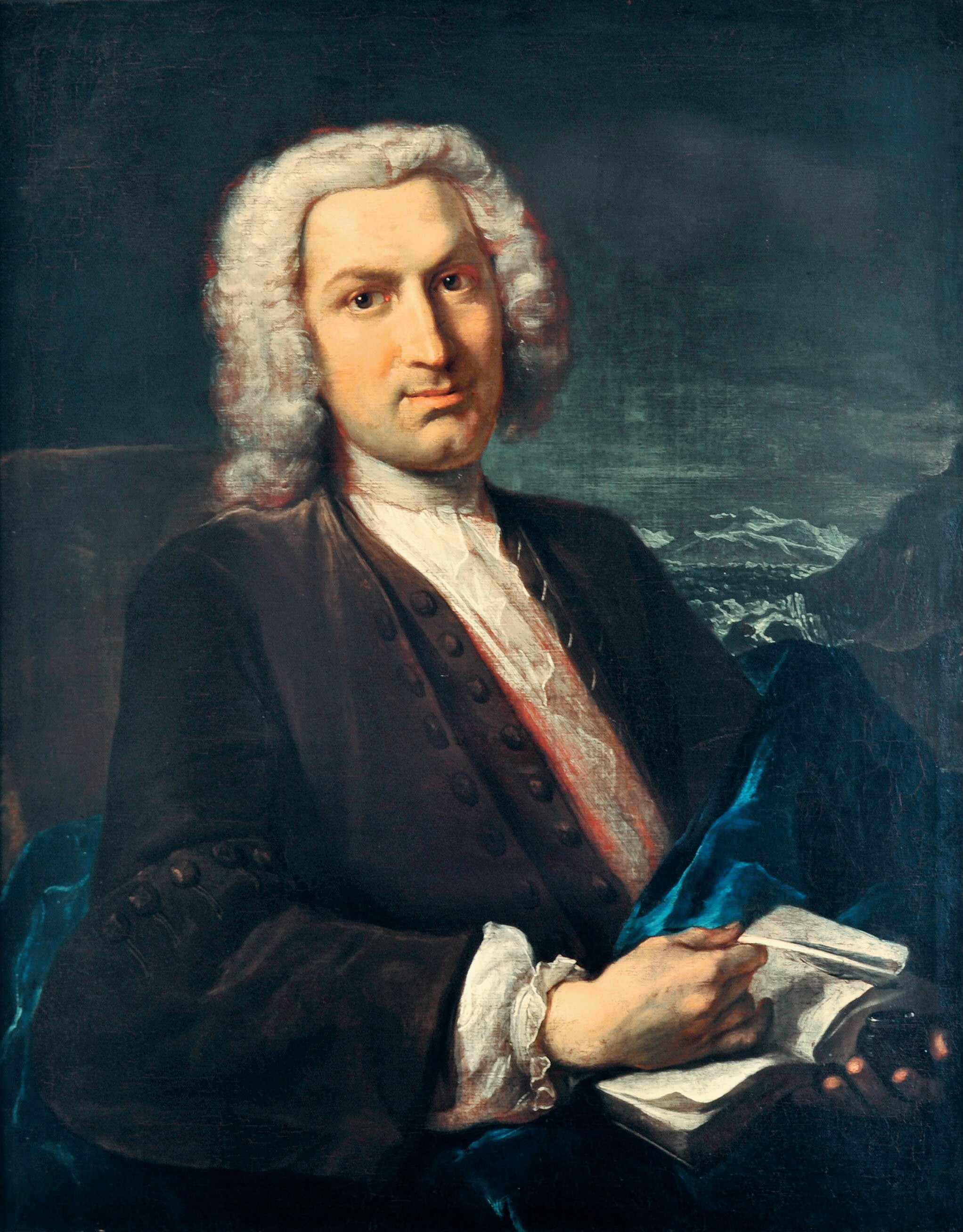
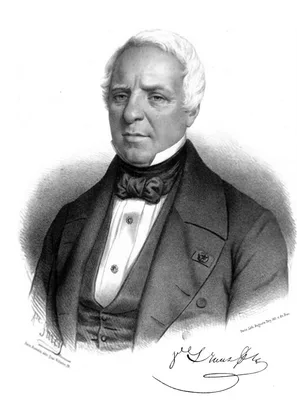
1743 –1756 HALLER, Albrecht von (1708 – 1777)
Icones anatomicae. 8 pts.
Accurate and beautiful engravings of the diaphragm, uterus, ovaries, vagina, arteries, with explanatory observations. About fifty years after they were originally published the most visually spectacular versions of Ha…
GMN 397 · https://historyofmedicine.com/id/725
1743 TAUBE, Hartwig Wilhelm Ludwig (1706 – )
Dissertationem inauguralem de vera nervi intercostalis origine.
Taube described the carotid body and named it “ganglion minutum”, See J. Pick, J. Hist. Med., 1959, 14, 61-73.
GMN 765.1 · https://historyofmedicine.com/id/1753
1745 LIEBERKÜHN, Johann Nathanael (1711 – 1756)
De fabrica et actione villorum intestinorum tenuium hominis.
“Lieberkühn’s glands” or “crypts” described. They were discovered by Malpighi in 1688.
GMN 978 · https://historyofmedicine.com/id/613
1745 GAUTIER D’AGOTY, Jacques Fabien (1716 – 1785); DU VERNEY, Guichard-Joseph (Guichard Joseph Duverney) (1648 – 1730)
Essai d’anatomie en tableaux imprimés, qui represent au naturel tous les muscles de la face, du col, de la tête, de la langue & du larinx. d'après les parties disséquées & préparées par Monsieur Duverney....comprenant hit grandes planches.
Remarkable for its striking mezzotints printed in color. Digital facsimile from the Internet Archive at this link.
GMN 398 · https://historyofmedicine.com/id/739
1748 GAUTIER D’AGOTY, Jacques Fabien (1716 – 1785); DU VERNEY, Guichard-Joseph (Guichard Joseph Duverney) (1648 – 1730)
Anatomie de la tête, en tableaux imprimés qui représentent au naturel le cerveau sous différentes coupes, la distribution des vaisseaux dans toutes les parties de la tête, les organes des sens et une partie de la névrologie, d'après les pièces disséquées et préparées par M. Duverney, en huit grandes planches dessinées, peintes, gravées et imprimées en couleur et grandeur naturelle....
Includes eight spectacular plates printed in color by Gautier d'Agoty with text by Duvereny. Digital facsimile from the Internet Archive at this link.
GMN 7491 · https://historyofmedicine.com/id/9663
1750 TARIN, Pierre (1725 – 1761)
Adversaria anatomica, de omnibus corporis humani partium, tum descriptionibus, cum picturis, Adversaria anatomica Prima, De omnibus cerebri, nervorum & organorum functionibus animalibus inserventium, descriptionibus & iconismis.
The first pictorial history of neuroanatomy, which contains some of the very first color engravings of the brain. The three colored copperplates were by “a certain Robert", a pupil of Le Blon, the inventor of three-co…
GMN 6950 · https://historyofmedicine.com/id/9115
1750 TARIN, Pierre (1725 – 1761)
Anthropotomie, ou L'Art de disséquer les muscles, les ligamens, les nerfs, & les vaisseaux sanguins du corps humain; auquel on a joint une histoire succincte de ces vaisseaux; avec la manière de faire les injections; de préparer, de blanchir les os & de dresser les squelettes. De préparer toutes les différentes parties & de les conserver préparées, soit dans une liqueur propre à cet effet, soit en les faisant sécher; celle d'ouvrir & d'embaumer les cadavres. On y donne aussi la description des matières propres à chacune de ces préparations, & la figure des instrumens. 2 vols.
An exceptionally thorough manual on dissection, dressing skeletons, and creating "anatomical preparations," and embalming. Digital facsimile from BnFGallica at this link.
GMN 10122 · https://historyofmedicine.com/id/12311
1752 EISENMANN, George Heinrich (1693 – 1768)
Tabulae anatomicae quatuor uteri duplicis.
Atlas of bipartite and double uterus.
GMN 6018 · https://historyofmedicine.com/id/7219
1753 TARIN, Pierre (1725 – 1761)
Dictionaire anatomique suivi d'une bibliothèque anatomique et physiologique.
An anatomical dictionary with most of the entries cross referenced to related structures, followed by a very extensive bibliography of anatomical and physiological works. Digital facsimile from Google Books at this link.
GMN 7800 · https://historyofmedicine.com/id/9972
1754 GAUTIER D’AGOTY, Jacques Fabien (1716 – 1785)
Anatomie generale des visceres, et de la nevrologie, angeologie et osteologie du corps humain, en figures, de couleurs et grandeurs naturelles dediée et présentée.
Includes 18 full-page color-printed mezzotints, 12 of the plates designed to fit together in threes to make four life-size human figures. Gautier credited Mertrud, the King's Surgeon with some of the anatomical work i…
GMN 7492 · https://historyofmedicine.com/id/9664
1755 ZINN, Johann Gottfried (1727 – 1759)
Descriptio anatomica oculi humani.
The first complete study of the anatomy of the eye, including the first description of the “zonule of Zinn” and the “annulus of Zinn”.
GMN 1484 · https://historyofmedicine.com/id/2499
1756 JENTY, Charles Nicholas (1720 – 1770)
An essay on the demonstration of the human structure, half as large as nature, in four tables, from the pictures painted after dissections, for that purpose.
Four large mezzotint plates issued with an accompanying text.
GMN 7489 · https://historyofmedicine.com/id/9661
1759 MONRO, Alexander, Primus (1697 – 1767); SUE, Jean-Joseph (1710 – 1792)
Traité d'ostéologie. 2 vols.
Monro Primus' textbook on the anatomy of the bones was originally published in 1726 as an octavo volume without plates, and went through more than ten editions. The French translation, published in large folio, transl…
GMN 7006 · https://historyofmedicine.com/id/9172
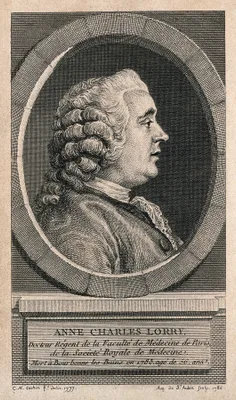
1760 LORRY, Anne-Charles (1726 – 1783)
Sur les mouvements du cerveau et de la dure-mere. Premier mémoire, sur le mouvement des parties contenues dans le crâne, considérées dans leur état naturel. Second mémoire. Sur les mouvements contre nature de ce viscère, & sur les organes qui sont le principe de son action.
Probably the first example in the literature of a definite localization of function in the brain. In the first memoir Lorry examined the normal movements of the brain; in the second memoir he set out specifically, sys…
GMN 6951 · https://historyofmedicine.com/id/9116
1760 WESTPHAL, Andreas (1720 – 1788)
Verzeichnis der Práparaten welche auf dem anatomischen Theater der Akademie zu Greifswald befindlich sich nebst einer Vorrede von dem Einfluß der Zergliederungskunst in die glückseligkeit eines Staats.
First printed catalogue of the anatomical preparations in the Anatomical Theatre and Institute directed by the professor of anatomy, Andreas Westphal.
GMN 13238 · https://historyofmedicine.com/id/15503
1763 CLOSSY, Samuel (1724 – 1786)
Observations on some of the diseases of the parts of the human body. Chiefly taken from the dissections of morbid bodies.
Clossy, an Irish physician, previously at Trinity College, Dublin, gave the first anatomy classes and dissections at King’s College in New York City (now Columbia) in 1763. Clossy worked closely with other King’s Coll…
GMN 10989 · https://historyofmedicine.com/id/13185
1765 HIRSCH, Antonius Balthazar Raymundus (1744 – 1778)
Pars quinti nervorum encephali disquisitio anatomica.
The “Gasserian ganglion”, already described by Santorini and others, was named after Johann Ludwig Gasser (fl. 1757-65), Professor of Anatomy at Vienna, by his pupil Hirsch. Also published in Ludwig, C. F., Scriptores…
GMN 1251 · https://historyofmedicine.com/id/2089
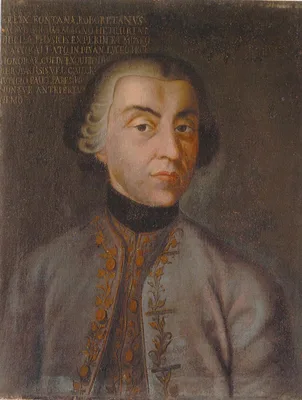
1767 FONTANA, Felice (1730 – 1805)
Ricerche fisiche sopra il veleno della vipera.
The starting point of modern investigations of serpent venoms and their antidotes. This work also includes Fontana’s description of the ciliary canal in the eye of an ox. This structure does not appear in the human ey…
GMN 2103 · https://historyofmedicine.com/id/2601
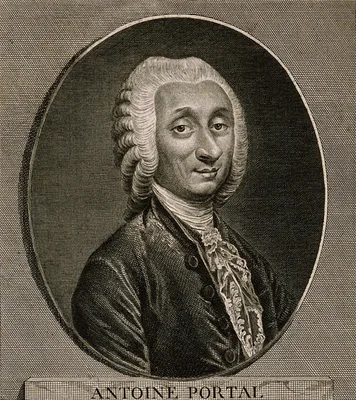
1770 –1773 PORTAL, Antoine (1742 – 1832)
Histoire de l’anatomie et de la chirurgie. 6 vols.
A biobibliographical survey to 1755, including dentistry.
GMN 437.1 · https://historyofmedicine.com/id/1091
1771 MOEHSEN, Johann Karl Wilhelm (1722 – 1795)
Verzeichnis einer Samlung von Bildnissen, gröstentheils berühmter Aerzte; so wohl in Kupferstichen, schwarzer Kunst und Holzschnitten, als auch in einigen Handzeichungen: diesem sin verschiedene Nachrichten und Unmerkungen Vorgesekt, die so wohl zur Geschichte der Arzenengelahrtheit; als vornehinsich zur Geschichte der Künste gehören.
“Very valuable reports on artistic anatomy and the history of anatomic illustration” (Choulant). Probably represents the first history of medical portraiture. Digital facsimile from Googe Books at this link.
GMN 6604.9 · https://historyofmedicine.com/id/8565
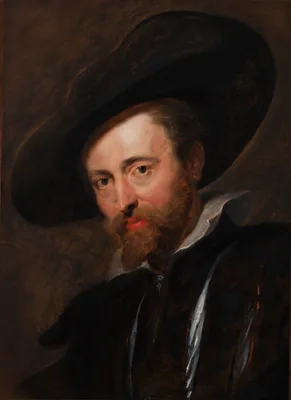
1773 RUBENS, Peter Paul (1577 – 1640)
Théorie de la figure humaine.
This work on the human figure, published more than 100 years after the death of Rubens, is one of a handful of anatomical treatises illustrated by an artist of the first magnitude.
GMN 155 · https://historyofmedicine.com/id/3164
1774 –1777 HALLER, Albrecht von (1708 – 1777)
Bibliotheca anatomica. 2 vols.
Haller is one of the greatest names in medical bibliography. While pursuing his monumental scientific career he found time to compile bibliographies of botany, anatomy, medicine and surgery which together form the mos…
GMN 438 · https://historyofmedicine.com/id/1094
1774 HEWSON, William (1739 – 1774)
Experimental inquiries: Part the second. Containing a description of the lymphatic system in the human subject and in other animals. Together with observations on the lymph, and the changes which it undergoes in some diseases.
Hewson gave the first complete account of the anatomical peculiarities of the lymphatics. He divided the lymphatics into two groups – superficial and deep. He described the leucocytes as derived from the lymphatic gla…
GMN 1102 · https://historyofmedicine.com/id/1122
1774 KULMUS, Johann Adam (1689 – 1745); SUGITA, Genpaku (杉田 玄白) (1733 – 1817)
Kaitai Shinsho (解体新書 Kyūjitai: 解體新書,(Anatomical Tables). A translation of Johan Adam Kulmus's Ontleedkundige Tafelen by Sugita Genpaku.
The first translation of any Western medical text into Japanese. "Kaitai Shinsho represented the beginning of two epoch-making developments. First and most directly Gempaku's work set in motion the modern transformati…
GMN 6835 · https://historyofmedicine.com/id/8999
1775 SANTORINI, Giovanni Domenico (1681 – 1737)
Septemdecim tabulae…
Santorini died before the completion of these anatomical plates which he intended to be his chef d’oeuvre. This elegantly printed volume is the only significant medical book printed by the celebrated Giambattista Bodo…
GMN 399.1 · https://historyofmedicine.com/id/748
1778 SOEMMERRING, Samuel Thomas von (1755 – 1830)
Dissertatio inauguralis anatomica de basi encephali et originibus nervorum cranio egredientium libri quinque.
The first accurate enumeration of the 12 cranial nerves, superseding that of Willis (No. 1378). Soemmerring is notable for his accuracy in anatomical illustration. This was his thesis. The same publisher issued an edi…
GMN 1383 · https://historyofmedicine.com/id/1808
1779 GAMELIN, Jacques (1738 – 1803)
Nouveau recueil d’ostéologie et de myologie…
“Without contest the most beautiful of all anatomies for the artist and one of the most remarkable books of its time” (Hahn & Dumaitre). The plates in this work are more fantastic than any other anatomy, suggesting th…
GMN 401.1 · https://historyofmedicine.com/id/781
1780 CATTANI, Antonio
Osteografia e miografia della testa, mani, e piedi del corpo umano in misura naturale con il catalogo de' nomi propri.
Very distinctive engravings with the captions included within the engraved surfaces. Printed and sold by the artist.
GMN 9547 · https://historyofmedicine.com/id/11733
1784 –1790 CAMPER, Petrus (Pieter) (1722 – 1789)
Sämmtliche kleinere Schriften. 3 vols.
Camper, an artist of skill, made his mark as an anthropologist and craniologist. He discovered the processus vaginalis of the peritoneum and the fibrous structure of the eye, and made several other important contribut…
GMN 77 · https://historyofmedicine.com/id/1303
1786 HUNTER, John (1728 – 1793)
Observations on certain parts of the animal oeconomy.
Includes John Hunter’s observations on the secondary sexual characteristics in birds, on the descent of the testis, on the air sac in birds, on the structure of the placenta, etc., together with the original descripti…
GMN 309 · https://historyofmedicine.com/id/124
1786 VICQ D’AZYR, Félix (1748 – 1794)
Traité d’anatomie et de physiologie avec des planches coloriées répresentant au naturel les divers organes de l’homme et des animaux. Tome premier [all published].
The most accurate neuroanatomical work produced before the advent of microscopic staining techniques. Vicq d’Azyr identified accurately for the first time many of the cerebral convolutions, along with various internal…
GMN 401.2 · https://historyofmedicine.com/id/792
1786 CRUIKSHANK, William Cumberland (1745 – 1800)
The anatomy of the absorbing vessels of the human body.
With Hunter and Hewson, Cruikshank laid the foundation of modern knowledge concerning the lymphatics. He was Dr. Johnson’s physician and William Hunter’s assistant.
GMN 1103 · https://historyofmedicine.com/id/1148
1787 MASCAGNI, Paolo (1752 – 1815)
Vasorum lymphaticorum corporis humani historia et ichnographia.
Mascagni, Professor of Anatomy at Siena, made several discoveries regarding the lymphatics. His beautiful atlas contained 41 engravings of the lymphatics and gained him lasting fame. He had previously published a Prod…
GMN 1104 · https://historyofmedicine.com/id/1151
1788 MONRO, Alexander, Secundus (1733 – 1817)
A description of all the bursae mucosae of the human body.
The first serious study of this subject and the most original anatomical work by the greatest of the Monro dynasty. See No. 1385.
GMN 399.2 · https://historyofmedicine.com/id/757
1790 POLE, Thomas (1753 – 1829)
The anatomical instructor; or, an illustration of the modern and most approved methods of preparing and preserving the different parts of the human body, and of quadrupeds, by injection, corrosion, maceration, distention, articulation, modelling, &c.
The first monograph on the preparation of anatomical specimens for museums, from various parts of the human body. Includes a method for injecting colored solutions to show the blood vessels of the head, and a method f…
GMN 7329 · https://historyofmedicine.com/id/9500
1791 –1796 SOEMMERRING, Samuel Thomas von (1755 – 1830)
Vom Baue des menschlichen Körpers. 5 pts.
Soemmerring’s text-book contained only facts actually observed by him. He departed from the usual practice of including physiology with anatomy. The book was very popular in German medical schools, and Meckel consider…
GMN 400 · https://historyofmedicine.com/id/768
1794 SCARPA, Antonio (1752 – 1832)
Tabulae nevrologicae, ad illustrandum historiam anatomicam cardiacorum nervorum, noni nervorum cerebri, glossopharyngaei et pharyngaei ex octavo cerebri.
This elegantly illustrated anatomical atlas is regarded as Scarpa’s greatest work. The result of 20 years of research, it includes the first proper delineation of the glossopharyngeal, vagus, hypoglossal, and cardiac …
GMN 1253 · https://historyofmedicine.com/id/2100
1794 BELL, John (1763 – 1820)
Engravings, explaining the anatomy of the bones, muscles and joints.
Bell’s atlas of the bones, muscles and joints was issued as a separate work a year after his text, The Anatomy of the Bones, Muscles, and Joints. Bell’s illustrations are some of the most striking in the entire litera…
GMN 9833 · https://historyofmedicine.com/id/12021
1796 REIL, Johann Christian (1759 – 1813)
Exercitationum anatomicarum fasciculus primus. De structura nervorum, tribus tabulis aeneis illustratus [All published].
Description of the “island of Reil”. This was the first part of the surface of the cerebral hemispheres to be given a name since 1641 (No. 1377.3). See also Reil’s follow-up paper in Arch. Physiol. (Halle), 1809, 9, 1…
GMN 1387 · https://historyofmedicine.com/id/1913
1797 SOEMMERRING, Samuel Thomas von (1755 – 1830)
Tabula sceleti feminini juncta descriptione.
Soemmerring was noted for his accuracy in anatomical illustration, and the above work is a fine example of his artistic sense. For it he selected the skeleton of a well-built girl of 20 years. Great care was taken in …
GMN 401 · https://historyofmedicine.com/id/775
1797 –1804 BELL, Sir Charles (1774 – 1842); BELL, John (1763 – 1820)
The anatomy of the human body. 4 vols.
“The first great textbook contributed by the British school to modern anatomy” (Russell, No. 461).
GMN 401.3 · https://historyofmedicine.com/id/797
1798 –1803 BELL, Sir Charles (1774 – 1842)
A system of dissections. 2 vols.
Published in 7 fascicules and appendix while Bell was still a student, this was Bell’s first independent venture as an author. The anatomical work of Charles Bell and his brother John was among the most significant in…
GMN 402 · https://historyofmedicine.com/id/813
1800 BICHAT, Marie François Xavier (1771 – 1802)
Traité des membranes en général et diverses membranes en particulier.
Bichat conceived the idea of a science of anatomy and pathology based upon an accurate classification of the various tissues of the body, their distribution in the various organs and parts, and their particular suscep…
GMN 537 · https://historyofmedicine.com/id/164
1801 BICHAT, Marie François Xavier (1771 – 1802)
Anatomie générale, appliquée à la physiologie et à la médecine. 4 vols.
Bichat revolutionized descriptive anatomy. Where Morgagni and others had conceived of whole organs being diseased, Bichat showed how individual tissues could be separately affected. He covered tissue pathology, system…
GMN 403 · https://historyofmedicine.com/id/820
1801 SOEMMERRING, Samuel Thomas von (1755 – 1830)
Abbildungen des menschlichen Auges.
Soemmerring is best remembered for his fine anatomical illustrations, of which those devoted to the human eye are a good example. In 1791 he made important observations on the macula lutea: "De foramine centrali limbo…
GMN 1489 · https://historyofmedicine.com/id/2536
1801 –1803 ROUX, Philibert Joseph (1780 – 1854); BICHAT, Marie François Xavier (1771 – 1802); BUISSON, Mathieu-François-Régis (1776 – 1806)
Traité d’anatomie descriptive. 5 vols.
Bichat was the creator of descriptive anatomy. He introduced the terms “animal” and “vegetative” system. This was his last work, unfinished at his death. Vol. 4 was prepared by Bichat's student and cousin, Mathieu-Fra…
GMN 1315 · https://historyofmedicine.com/id/10106
1805 VICQ D’AZYR, Félix (1748 – 1794); MOREAU DE LA SARTHE, Jacques-Louis (1771 – 1826)
Oeuvres de Vicq-d'Azyr recueillie et publiées avec des notes et un discours sur sa vie et ses ouvrages par Jacq[ues] L[ouis]- Moreau [de la Sarthe]. 6 vols. and atlas.
Vicq d’Azyr has been called the greatest comparative anatomist of the 18th century. The mammillo-thalamic tract is named the “bundle of Vicq d’Azyr”. See No. 401.2. Digital facsimile of from the Internet Archive at th…
GMN 313 · https://historyofmedicine.com/id/133
1806 SOEMMERRING, Samuel Thomas von (1755 – 1830)
Abbildungen des menschlichen Hoerorganes
GMN 1554 · https://historyofmedicine.com/id/1173
1806 HESSELBACH, Franz Kaspar (1759 – 1816)
Anatomisch-chirurgische Abhandlung über den Ursprung der Leistenbrüche
Includes description of “Hesselbach’s hernia” and “triangle”. He wrote a further volume on the subject in 1814.
GMN 3582 · https://historyofmedicine.com/id/5360
1806 BELL, Sir Charles (1774 – 1842)
Essays on the anatomy of expression in painting.
Bell’s artistic and literary skills combined with his knowledge of anatomy and physiology to make this work a tour de force of art history and the anatomical and physiological basis of facial expression.
GMN 6604.92 · https://historyofmedicine.com/id/8566