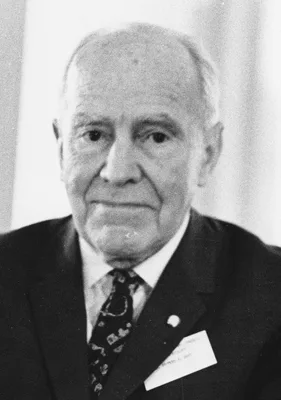
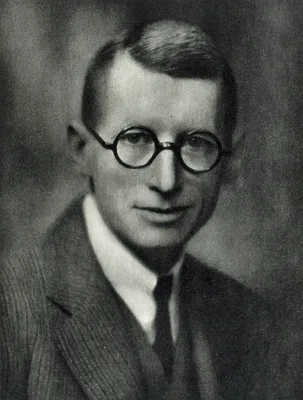
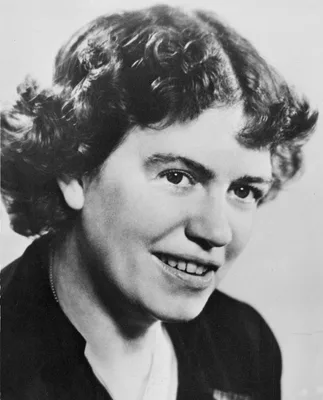
1882 QUATREFAGES DE BRÉAU, Jean Louis Armand de (1810 – 1892); HAMY, Ernest Théodore Jules (1842 – 1908)
Crania ethnica. Les crânes des races humaines décrits et figurés d 'après les collections du Muséum d'Histoire Naturelle de Paris, de la Société d'Anthropologie de Paris et les principales collections de la France et de l'étranger par A. de Quatrefages et Ernest T. Hamy: Ouvrage accompagné de planches lithographiées d'après nature par H. Formant et illustré de nombreuses figures intercalées. 2 vols.
Digital facsimile from the Bayerische StaatsBibliothek at this link.
GMN 203.2 · https://historyofmedicine.com/id/3584
1882 ENGELMANN, George Julius (1847 – 1903)
Labor among primitive peoples.
Third edition, revised, 1884.
GMN 6284 · https://historyofmedicine.com/id/8011
1884 REID, Robert William (1851 – 1939)
Observations on the relation of the principal fissures and convolutions of the cerebrum to the outer surface of the scalp.
Reid’s base line – the anthropometric base line on the skull.
GMN 426 · https://historyofmedicine.com/id/1020
1885 PLOSS, Hermann Heinrich (1819 – 1885); BARTELS, Maximillian Carl August (1843 – 1904); BARTELS, Paul Rudolf August (1874 – 1914); REITZENSTEIN, Ferdinand Freiherr von (1876 – 1925)
Das Weib in der Natur-und Völkerkunde. 2 vols.
Ploss incorporated a vast amount of data concerning every aspect of woman in the unillustrated first edition, and died the year it was published. He covered anthropology, psychology, aesthetics, physiology, sexuality,…
GMN 179 · https://historyofmedicine.com/id/3354
1885 –1888 RATZEL, Friedrich (1844 – 1904)
Völkerkunde. 2 vols.
Ratzel emphasized the importance of the investigation of the history of primitive peoples in the study of ethnology.
GMN 180 · https://historyofmedicine.com/id/3360
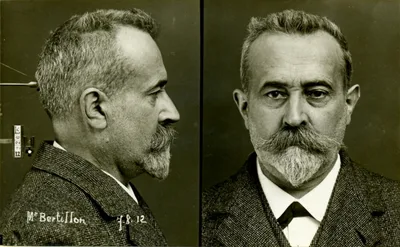
1886 BERTILLON, Alphonse (1853 – 1914)
Les signalements anthropométriques.
Bertillon invented a method (“Bertillonage”) of identifying persons by means of selected measurements, the five following measurements being used as the basis of his system: head length, head breadth, length of middle…
GMN 181 · https://historyofmedicine.com/id/3362
1886 WHITNEY, William Fiske (1850 – 1921)
Notes on the anomalies, injuries and diseases of the bones of the native races of North America.
The first American contribution to paleopathology. Digital facsimile from Google Books at this link.
GMN 7708 · https://historyofmedicine.com/id/9880
1887 QUATREFAGES DE BRÉAU, Jean Louis Armand de (1810 – 1892)
Les pygmées.
De Quatrefages showed that pygmies are descended from ancient races and are not, as was believed by many, a retrograde or degenerate type of negro of comparatively recent growth. English translation by Frederick Starr…
GMN 182 · https://historyofmedicine.com/id/3364
1887 WIEDERSHEIM, Robert Ernst Eduard (1848 – 1923)
Der Bau des Menschen als Zeugniss für seine Vergangenheit.
English translation, London, 1893.
GMN 183 · https://historyofmedicine.com/id/3369
1887 WITKOWSKI, Gustave-Joseph (1844 – 1922)
Histoire des accouchements chez tous les peuples.
182-page appendix: "L'arsenal obstétrical", containing numerous illustrations of instruments, at end. Digital facsimile from the Internet Archive at this link.
GMN 6286 · https://historyofmedicine.com/id/8015
1890 FRAZER, Sir James George (1854 – 1941)
The golden bough. 2 vols.
Frazer’s theoretical evolutionary sequence of magical, religious, and scientific thought is no longer accepted, and his broad general psychological theory has proved unsatisfactory; however it enabled him to compare a…
GMN 184 · https://historyofmedicine.com/id/3373
1890 TÖRÖK, Aurél von (1842 – 1912)
Grundzüge einer systematischen Kraniometrie. Methodische Anleitung zur kraniometrischen Analyse der Schädelform für die Zwecke der physischen Anthropologie, der vergleichenden Anatomie sowie für die Zwecke der medizinischen Disziplinen (Pyschiatrie, Okulistik, Zahnheilkunde, Geburtshilfe, gerichtliche Medizin) und der bildenden Künste (plastische Anatomie) ein Handbuch fürs Laboratorium.
Török made an exhaustive study of craniometry as applied to an unusually wide range of fields in medicine, and art, and proposed 5,000 different measurements of a single skull. Digital facsimile from the Internet Arch…
GMN 203.4 · https://historyofmedicine.com/id/3600
1890 BÜTTIKOFER, Johann (1850 – 1928)
Reisebilder aus Liberia: Resultate geographischer, naturwissenschaftlicher und ethnographischer untersuchungen während der jahre 1879-1882 und 1886-1887. 2 vols.
The first comprehensive monograph on the Republic of Liberia, published 50 years after its colonization by freed American slaves and their descendents. Digital facsimile from the Internet Archive at this link. Transla…
GMN 8287 · https://historyofmedicine.com/id/10463
1891 BRÜCKE, Ernst Wilhelm von (1819 – 1892)
Schönheit und Fehler der menschlichen Gestalt.
GMN 185 · https://historyofmedicine.com/id/3430
1891 BOURKE, John Gregory (1846 – 1896)
Scatologic rites of all nations. A dissertation upon the employment of excrementitious remedial agents in religion, therapeutics, divination, witchcraft, love-philters, etc., in all parts of the globe. Based upon original notes and person observation, and upon compilation from over one thousand authorities. Not for general perusal.
Digital facsimile of the 1891 edition from the Internet Archive at this link. Translated in to German as: Der Unrat in Sitte, Brauch, Glauben und Gewohnheitrecht der Völker, von John Gregory Bourke. Verdeutscht und ne…
GMN 9888 · https://historyofmedicine.com/id/12076
1892 VIRCHOW, Rudolf Ludwig Karl (1821 – 1902)
Crania ethnica Americana. Sammlung auserlesener Amerikanischer Schädeltypen. Herausgegeben von R. Virchow.
GMN 203.5 · https://historyofmedicine.com/id/3608
1892 BOURKE, John Gregory (1846 – 1896)
The medicine-men of the Apache.
Bourke, a U.S. Army officer with experience on the American Indian frontier, was a pioneer student of native American medicine and anthropology. Digital facsimile from the Internet Archive at this link.
GMN 6452.1 · https://historyofmedicine.com/id/7595
1894 ELLIS, Henry Havelock (1859 – 1939)
Man and woman.
A study of the constitutional differences between man and woman.
GMN 187 · https://historyofmedicine.com/id/3437
1894 DUBOIS, Marie Eugène François Thomas (1858 – 1940)
Pithecanthropus erectus. Eine menschenähnliche Uebergangsform aus Java.
Privately issued first report on Homo erectus. In 1891 Dubois discovered remains of what he described as "a species in between humans and apes" at Trinil, Java. He called his finds Pithecanthropus erectus ("ape-human …
GMN 210 · https://historyofmedicine.com/id/3848
1895 HIS, Wilhelm Sr. (1831 – 1904)
Anatomische Forschungen über Johann Sebastian Bach's Gebeine und Anlitz nebst Bemerkungen über dessen Bilder. Abh. Sächs. Ges. Wiss., 22/5.
To authenticate the remains of Johann Sebastian Bach, Wilhelm His senior performed one of the earliest examples of scientific facial reconstructions, reconstructing the soft tissues onto a plaster cast of the skull us…
GMN 7408 · https://historyofmedicine.com/id/9580
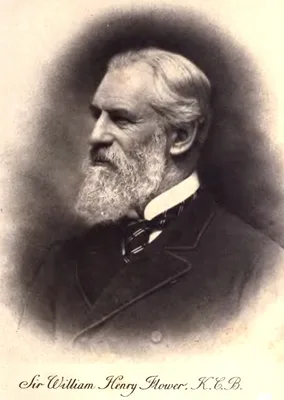
1898 FLOWER, William Henry (1831 – 1899)
Essays on museums and other subjects connected with natural history.
Essays on medical and natural historical museums, anthropology, and biography. Digital facsimile from Biodiversity Heritage Library at this link.
GMN 7670 · https://historyofmedicine.com/id/9842
1899 STRATZ, Carl Heinrich (1858 – 1924)
Die Schönheit des weiblichen Körpers.
GMN 188 · https://historyofmedicine.com/id/3456
1900 BARROWS, David Prescott (1873 – 1954)
The ethno-botany of the Coahuilla Indians.
"The ʔívil̃uqaletem (or Ivilyuqaletem) are Native Americans of the inland areas of southern California.[2] Their original territory included an area of about 2,400 square miles (6,200 km2). The traditional Cahuilla te…
GMN 9475 · https://historyofmedicine.com/id/11659
1903 WITKOWSKI, Gustave-Joseph (1844 – 1922)
Les seins dans l'histoire.
Digital facsimile from the Internet Archive at this link.
GMN 11119 · https://historyofmedicine.com/id/13315
1904 DUCKWORTH, Wynfrid Laurence Henry (1870 – 1956)
Morphology and anthropology. A handbook for students.
Digital facsimile from Google Books at this link.
GMN 347 · https://historyofmedicine.com/id/257
1904 GALEN, [Κλαύδιος Γαληνός; Galen of Pergamon] (129 – 216); HELMREICH, Georg (1849 – 1921)
Galeni De temperamentis libri III recensuit Georgius Helmreich.
Digital facsimile from the Hathi Trust at this link.
GMN 148 · https://historyofmedicine.com/id/8801
1908 HRDLIČKA, Aleš (1869 – 1943)
Physiological and medical observations among the Indians of Southwestern United States and Northern Mexico.
Digital facsimile from the Internet Archive at this link.
GMN 6455.1 · https://historyofmedicine.com/id/8626
1908 SCHOETENSACK, Otto (1850 – 1912)
Der Unterkiefer des Homo heidelbergensis aus den Sanden von Mauer bei Heidelberg. Ein Beitrag zur Paläontologie des Menschens.
First report on the Mauer jaw discovered by Schoetensack in a sandpit or quarry in the environs of Heidelberg. This was the first fossil specimen unearthed of an extinct hominin species which Schoetensack named Homo h…
GMN 7253 · https://historyofmedicine.com/id/9422
1908 ADLOFF, Paul Max Eugen (1870 – 1944)
Das Gebiss des Menschen und der Anthropomorphen. Vergleichend anatomische Untersuchungen.
GMN 11329 · https://historyofmedicine.com/id/13527
1910 HADDON, Alfred Cort (1855 – 1940); QUIGGIN, Alison Hingston (1874 – 1971)
History of anthropology. With the help of A. Hingston Quiggin.
Revised edition, 1934.
GMN 196 · https://historyofmedicine.com/id/3488
1910 KEITH, Sir Arthur (1866 – 1955)
Illustrated guide to the museum of the Royal College of Surgeons.
Vistor's guide to the museum, including the collections formed by John Hunter, when it was intact, before the destruction it suffered in World War II. Digital facsimile from the Internet Archive at this link.
GMN 10364 · https://historyofmedicine.com/id/12556
1913 SMITH, Sir Grafton Elliot (1871 – 1937); DAWSON, Charles (1864 – 1916); WOODWARD, Arthur Smith (1864 – 1944)
On the discovery of a palaeolithic skull and mandible in a flint-bearing gravel overlying the Wealden (Hastings Beds) at Piltdown, Fletching (Sussex). With appendix by Grafton Elliot Smith.
Order of authorship in the original publication: Dawson, Woodward. The first "scientific" report on “Piltdown man” (Eoanthropus dawsoni,) one of the longest-lasting and most influential hoaxes ever perpetrated in scie…
GMN 211 · https://historyofmedicine.com/id/3866
1913 FREUD, Sigmund (1856 – 1939)
Totem und Tabu: Einige Übereinstimmungen im Seelenleben der Wilden und der Neurotiker.
Freud's primary contribution to medical anthropology. First translated into English by A. A. Brill as Totem and taboo: Resemblances between the psychic lives of savages and neurotics (1919). Digital facsimile of the 1…
GMN 9380 · https://historyofmedicine.com/id/11563
1914 MARTIN, Rudolf (1864 – 1925)
Lehrbuch der Anthropologie.
Exhaustive bibliography. 2nd ed., 1928.
GMN 190 · https://historyofmedicine.com/id/3466
1914 KRULISH, Emil (1878 – 1965)
Sanitary conditions among the Eskimos: A report on conditions in native villages along the Arctic coast of Alaska. Supplement No. 9 to Public Health Reports, December 12, 1913.
In 1912 the U.S. Public Health Service assigned Dr. Emil Krulish to supervise health care in the Territory of Alaska. Digital facsimile from Google Books at this link.
GMN 10520 · https://historyofmedicine.com/id/12713
1915 WHIFFEN, Thomas
The north-west Amazons: Notes of some months spent among cannibal tribes.
"This 1915 volume recounts Captain Thomas Whiffen’s travels in Brazil and Colombia in the region between the rivers Issa (or Içá) and Apaporis, and the Putumayo District. The study looks at the way in which the indige…
GMN 9182 · https://historyofmedicine.com/id/11361
1921 WOODWARD, Arthur Smith (1864 – 1944)
A new cave man from Rhodesia, South Africa.
The first fossil human discovered in Africa: Homo rhodesiensis, commonly referred to as the Broken Hill Skull or the Kabwe Cranium.The skull, which most current experts classify as Homo heidelbergensis, was discovered…
GMN 7309 · https://historyofmedicine.com/id/9479
1922 SMITH, Sir Grafton Elliot (1871 – 1937)
The Rhodesian skull.
Description of the skull found at Broken Hill, Rhodesia, in 1921.
GMN 212 · https://historyofmedicine.com/id/3875
1922 GREGORY, William King (1897 – 1970)
The origin and evolution of the human dentition.
Reprinted with revisions and new index from J. dent. Res., 1920, 2, 89-175, 215-426, 604-717; 1921, 3, 87-228.
GMN 3691.1 · https://historyofmedicine.com/id/5728
1923 LEWIN, Louis (1850 – 1929)
Die Pfeilgifte, nach eigenen toxikologischen und ethnologischen Untersuchungen.
Digital facsimile from the Internet Archive at this link.
GMN 2117 · https://historyofmedicine.com/id/2627
1923 JONES, William Henry Samuel (1876 – 1963); HIPPOCRATES, [Ἱπποκράτης; Hippocrates of Kos] (-460 – -370)
On airs, waters, and places. IN: his [Works] with an English translation by W. H. S. Jones, 1, pp. 65-137
“The first book ever written on medical geography, climatology, and anthropology” (Garrison). The Latin translation of this text was first published in Rhazes’ Liber ad Almansorem, Milan, 1481. See No. 39.1. The stand…
GMN 1767 · https://historyofmedicine.com/id/3302
1923 MADDOX, John Lee (1878 – 1946)
The medicine man: A sociological study of the character and evolution of shamanism.
Digital facsimile from the Internet Archive at this link.
GMN 6456 · https://historyofmedicine.com/id/7612
1924 SMITH, Sir Grafton Elliot (1871 – 1937); RIVERS, William Halse Rivers (1864 – 1922)
Medicine, magic and religion. [Edited] with a preface by G. Elliot Smith.
Fitzpatrick Lectures 1915-16. Originally published in Lancet , 94, 59–65, 117–23.
GMN 13374 · https://historyofmedicine.com/id/15645
1925 DART, Raymond Arthur (1893 – 1988)
Australopithecus africanus: The man-ape of South Africa.
First report on Dart's discovery in 1924 of the first member of the genus Australopithecus, the first hominin found in Africa. In their 150th anniversary issue published on November 4, 2019 the editors of Nature inclu…
GMN 211.1 · https://historyofmedicine.com/id/3871
1927 BLACK, Davidson (1884 – 1934)
The lower molar hominid tooth from the Chou Kou Tien deposit.
In this report on a single hominid tooth found by Swedish archeologist Birger Bohlin at the Zhoukoudian site in 1927 Black named a new genus and species of hominid, Sinanthropus pekinensis. He characterized the specim…
GMN 7255 · https://historyofmedicine.com/id/9424
1928 TILNEY, Frederick (1875 – 1938); RILEY, Henry Alsop (1887 – 1966)
The brain from ape to man: A contribution to the study of the evolution and development of the human brain by Frederick Tilney. With chapters on the reconstruction of the gray matter in the primate brain stem by Henry Alsop Riley. 2 vols.
Classic study of the evolution of the central nervous system in the higher mammals. Digital facsimile from the Internet Archive at this link.
GMN 350 · https://historyofmedicine.com/id/269
1928 HOLLANDER, Eugen (1867 – 1932)
Äskulap und Venus. Eine Kultur- und Sittengeschichte im Spiegel des Ärztes.
An exhaustive and well-illustrated survey of medical anthropology with emphasis on sexuality.
GMN 194.1 · https://historyofmedicine.com/id/3478
1928 ADACHI, Buntarō (1865 – 1945); HASEBE, Kotondo (1882 – 1969)
Das Arteriensystem der Japaner von Dr. Buntaro Adachi unter Mitwirkung von Dr. Kotondo Hasebe ... mit 539 Abbildungen im Text und auf vier farbigen Tafeln sowie mit etwa 700 Tabellen.
GMN 9516 · https://historyofmedicine.com/id/11701
1928 MEAD, Margaret (1901 – 1978)
Coming of age in Samoa: A psychological study of primitive youth for western civilisation.
Mead based her study primarily on adolescent girls on the island of Ta'u in the Samoan Islands. The book detailed the sexual life of teenagers in Samoan society in the early 20th century, and theorized that culture ha…
GMN 10118 · https://historyofmedicine.com/id/12307
1930 MEYER, Johann Jakob (1870 – 1939)
Sexual life in ancient India: A study in the comparative history of Indian Culture.
Extensively revised by the author, with additional notes by the translator (unidentified), from Das Weib im altindischen Epos. Ein Beitrag zur indischen und zur vergleichenden Kulturgeschichte. Von Johann Jacob Meyer.…
GMN 8322 · https://historyofmedicine.com/id/10498

![GALEN, [Κλαύδιος Γαληνός; Galen of Pergamon] (129 – 216)](/media/portraits/21)
![HIPPOCRATES, [Ἱπποκράτης; Hippocrates of Kos] (-460 – -370)](/media/portraits/50)