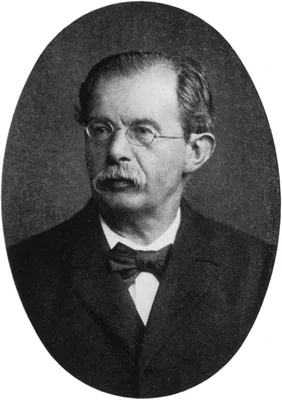
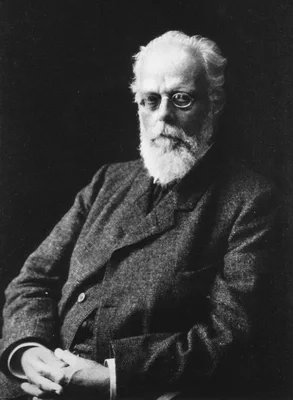
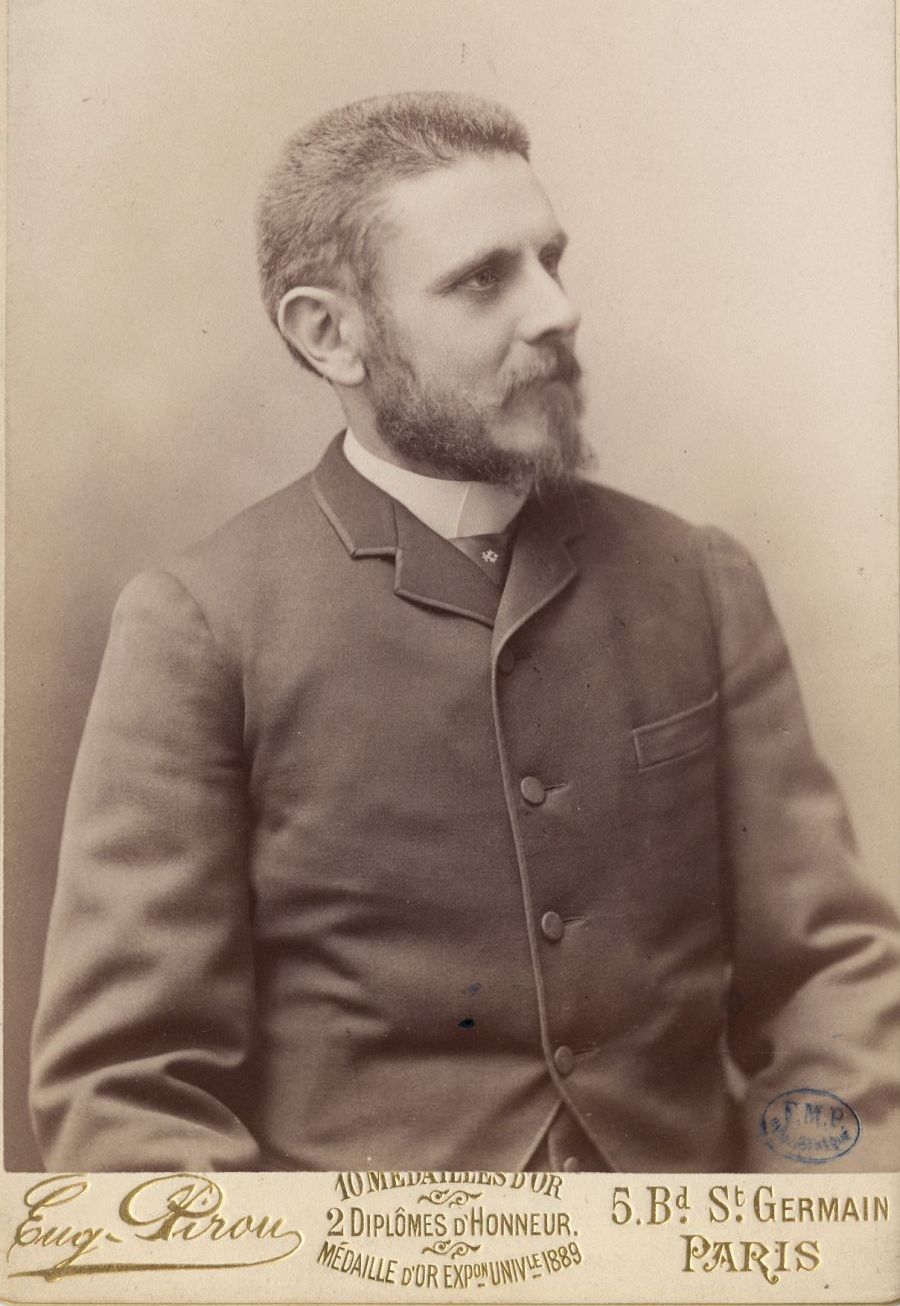
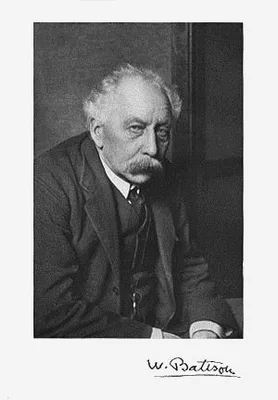
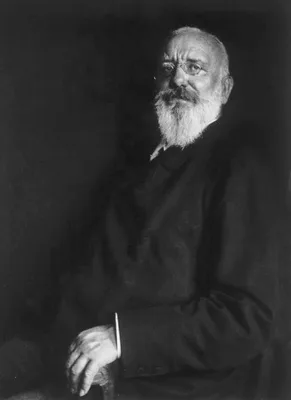
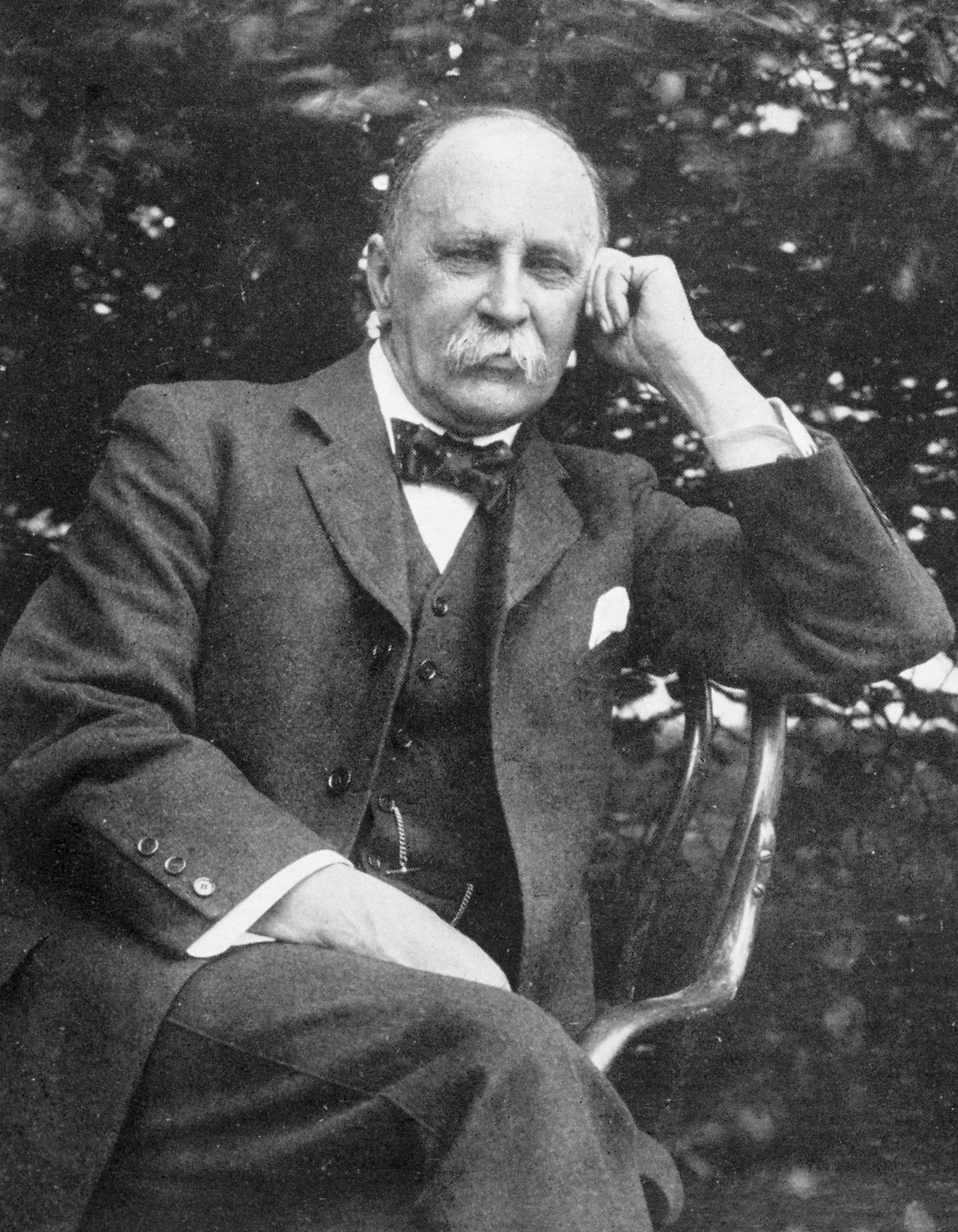
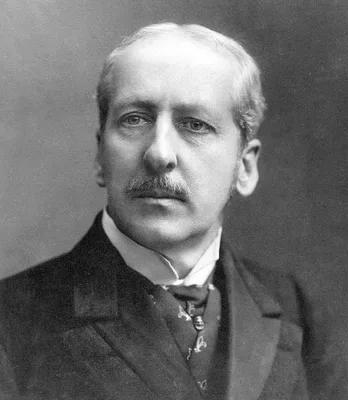
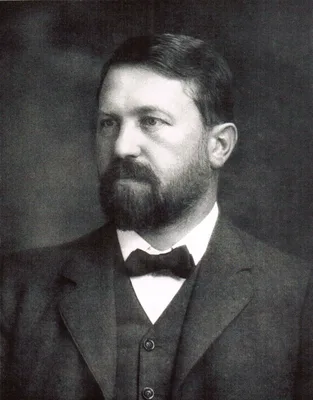
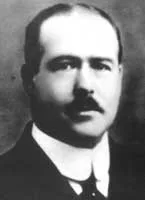
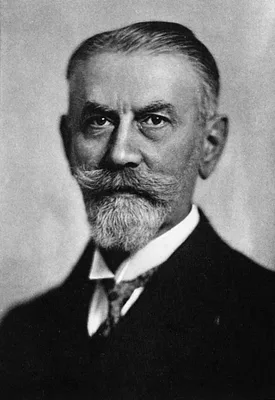
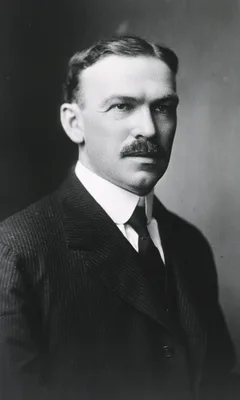
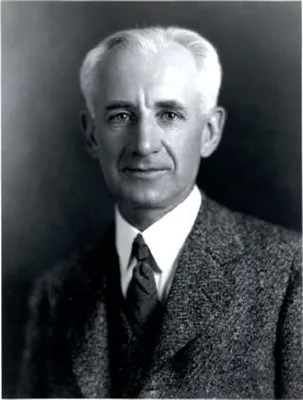
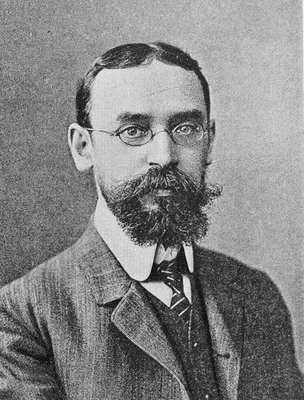
1889 RECKLINGHAUSEN, Friedrich Daniel von (1833 – 1910)
Ueber Haemochromatose.
Recklinghausen gave to hemochromatosis its present name.
GMN 3916 · https://historyofmedicine.com/id/5034
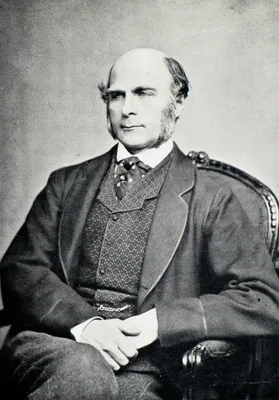
1889 GALTON, Sir Francis (1822 – 1911)
Natural inheritance.
By the employment of statistical methods Galton propounded a “law of filial regression”. This book represents the first statistical study of biological variation and inheritance.
GMN 233 · https://historyofmedicine.com/id/8336
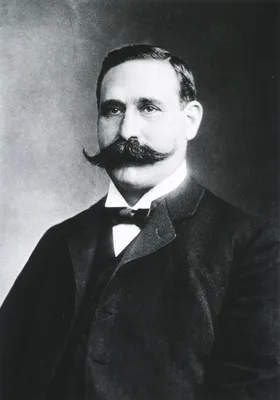
1890 KÖNIG, Franz (1832 – 1910)
Die Gelenkerkrankungen bei Blutern mit Berücksichtigung der Diagnose.
König gave a detailed description of joint involvement in hemophilia.
GMN 3069 · https://historyofmedicine.com/id/3723
1890 HOFFA, Albert (1859 – 1908)
Zur operativen Behandlung der angeborenen Hüftgelenksverrenkungen.
Hoffa’s method of operative treatment of congenital dislocation of the hip-joint.
GMN 4355 · https://historyofmedicine.com/id/5771
1891 SPRENGEL, Otto Gerhard Karl (1852 – 1915)
Die angeborene Verschiebung des Schulterblattes nach oben.
Classic description of “Sprengel’s deformity”, a congenital upward displacement of the scapula.
GMN 4359 · https://historyofmedicine.com/id/5797
1891 EDRIDGE-GREEN, Frederick William (1863 – 1953)
Colour-blindness and colour-perception.
Includes (p. 262 et seq.) description of Edridge-Green’s lantern test for color-blindness. This was officially adopted in Great Britain in 1915 in place of the Holmgren test.
GMN 5937 · https://historyofmedicine.com/id/6893
1891 WEISMANN, August Friedrich Leopold (1834 – 1914)
Amphimixis, oder die Vermischung der Individuen.
By “amphimixis” Weismann meant the union of the two parent germs, which he considered the principal source of heritable variation in evolution by natural selection. English translation in Weismann’s Essays upon Heredi…
GMN 234 · https://historyofmedicine.com/id/8338
1892 WEISMANN, August Friedrich Leopold (1834 – 1914)
Aufsätze über Vererbung und verwandte biologische Fragen.
Weismann produced experimental evidence that acquired characters are not transmitted.
GMN 235 · https://historyofmedicine.com/id/8340
1892 WEISMANN, August Friedrich Leopold (1834 – 1914)
Das Keimplasma.
Weismann elaborated the theory of the continuity of the germ plasm. English edition, 1893.
GMN 236 · https://historyofmedicine.com/id/8351
1893 MARIE, Pierre (1853 – 1940)
Sur l’hérédo-ataxie cérébelleuse.
Original description of hereditary cerebellar ataxia.
GMN 4708.1 · https://historyofmedicine.com/id/1146
1894 BATESON, William (1861 – 1926)
Materials for the study of variation treated with especial regard to discontinuity in the origin of species.
Bateson was convinced that discontinuity was the more important type of variation among animals and plants “in some unknown way a part of their nature and not directly dependent upon natural selection at all”. He show…
GMN 237 · https://historyofmedicine.com/id/8353
1894 CURSCHMANN, Heinrich (1846 – 1910)
Klinische Abbildungen: Sammlung von Darstellungen der Veränderung der äusseren Körperform bei inneren Krankheiten.
Includes 57 fine heliogravure reproductions of artistic photographs of disease, including numerous congenital deformities. Digital facsimile from Google Books at this link.
GMN 10595 · https://historyofmedicine.com/id/12788
1895 SALKOWSKI, Ernst Leopold (1844 – 1923)
Ueber die Pentosurie, eine neue Anomalie des Stoffwechsels.
Pentosuria first described.
GMN 3918 · https://historyofmedicine.com/id/5041
1896 RENDU, Henri Jules Louis (1844 – 1902)
Epistaxis répété chez un sujet porteur de petits angiomes cutanés et muqueux.
Rendu’s account of multiple hereditary telangiectasis (“Rendu–Osler–Weber disease”).
GMN 2710 · https://historyofmedicine.com/id/4428
1896 PENDRED, Vaughan (1869 – 1946)
Deaf-mutism and goitre.
Pendred syndrome, a genetic disorder leading to congenital bilateral (both sides) sensorineural hearing loss and goitre with euthyroid or mild hypothyroidism (decreased thyroid gland function).
GMN 3840.1 · https://historyofmedicine.com/id/4864
1896 MARFAN, Antoine Bernard-Jean (1858 – 1942)
Un cas de déformation congénitale des quatre membres, plus prononcée aux extrémités, charactérisée par l’allongement des os avec un certain degré d’amincissement.
“Marfan syndrome”. Marfan described only the skeletal deformities. He called the condition dolichostenomelia. Later writers recorded bilateral ectopia lentis and cardiovascular complications in this syndrome.
GMN 4365.1 · https://historyofmedicine.com/id/5831
1896 TUBBY, Alfred Herbert (1862 – 1930)
Deformities: A treatise on orthopaedic surgery.
Includes a valuable discussion of congenital anomalies of the bones and joints from the orthopedic point of view. Greatly expanded second edition, 2 vols., London, 1912.
GMN 4366 · https://historyofmedicine.com/id/5833
1897 EISENMENGER, Victor (1864 – 1932)
Die angeborenen Defecte der Kammerscheidewand des Herzens.
“Riding aorta”, patent interventricular septum and right ventricular enlargement – the “Eisenmenger syndrome”.
GMN 2806 · https://historyofmedicine.com/id/3444
1897 GILFORD, Hastings (1861 – 1941)
On a condition of mixed premature and immature development.
Hastings Gilford gave progeria its name; it was first fully reported by him in Practitioner, 1904, 73, 188-217. Digital facsimile of the 1897 paper from PubMedCentral at this link.
GMN 3792 · https://historyofmedicine.com/id/4716
1897 GALTON, Sir Francis (1822 – 1911)
The average contribution of each several ancestor to the total heritage of the offspring.
Galton’s “law of ancestral heredity”.
GMN 239 · https://historyofmedicine.com/id/8355
1898 MARIE, Pierre (1853 – 1940); SAINTON, Paul (1868 – 1958)
Sur la dysostose cléido-crânienne héréditaire.
In their important description of cleido-cranial dysostosis, Marie and Sainton gave to it its present name. It was first described by Morand (No. 4302.1) in 1760. English translation in Bick, Classics of orthopaedics,…
GMN 4369 · https://historyofmedicine.com/id/5850
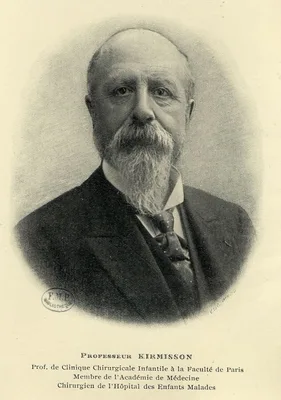
1898 KIRMISSON, Édouard François (1848 – 1927)
Traité des maladies chirurgicales d'origine congénitale.
The first book entirely devoted to the surgical treatment of congenital abnormalities. The work also contains pp. 593-698 an exposition of Kirmisson's staged reduction of congenital dislocations of the hip, and discus…
GMN 10269 · https://historyofmedicine.com/id/12460
1898 VIERORDT, Karl Hermann (1853 – 1943)
Die angeborenen Herzkrankheiten.
The first systematic treatise on congenital heart defects. Digital facsimile from the Internet Archive at this link.
GMN 11716 · https://historyofmedicine.com/id/13917
1899 MEIGE, Henri (1866 – 1940)
Le trophoedème chronique héréditaire.
“Meige’s disease” – first described by Nonne (No. 4106).
GMN 4129 · https://historyofmedicine.com/id/5743
1900 EDDOWES, Alfred (1850 – 1946)
Dark sclerotics and fragilitas ossium.
“Eddowes’s syndrome” – blue sclerotics and fragility of the bones, occurring as a familial syndrome; osteogenesis imperfecta. See also No. 6358.1.
GMN 6367 · https://historyofmedicine.com/id/8290
1900 VRIES, Hugo Marie de (1848 – 1935)
Das Spaltungsgesetz der Bastarde.
De Vries and Correns independently rediscovered and confirmed Mendel’s laws. This is De Vries’s most important paper on the subject. De Vries’s first published paper on the topic is “Sur la loi de disjonction des hybr…
GMN 239.01 · https://historyofmedicine.com/id/8356
1900 CORRENS, Carl Franz Joseph Erich (1864 – 1933)
G. Mendel’s Regel über das Verhalten der Nachkommenschaft der Rassenbastarde.
Correns had come to the same conclusions as Mendel before seeing the latter’s 1865 paper. Of the three “rediscoverers” of Mendel’s laws, Correns showed the greatest understanding of them. English translation in No. 25…
GMN 239.1 · https://historyofmedicine.com/id/8357
1900 TSCHERMAK VON SEYSENEGG, Erich (1871 – 1962)
Über künstliche Kreuzung von Pisum sativum.
With Correns and de Vries, Tschermak brought Mendel’s work into prominence and confirmed it, although Tschermak may not have fully understood the Mendelian laws before he had read Mendel’s work. See also Tschermak’s f…
GMN 239.2 · https://historyofmedicine.com/id/8660
1900 COLLINS, Edward Treacher (1862 – 1932)
Cases with symmetrical congenital notches in the outer part of each lid and defective development of the malar bones.
Treacher Collins syndrome (TCS), a genetic disorder characterized by deformities of the ears, eyes, cheekbones, and chin. Also known as mandibulofacial dysostosis.
GMN 11360 · https://historyofmedicine.com/id/13559
1901 OSLER, Sir William (1849 – 1919)
On a family form of recurring epistaxis, associated with multiple telangiectases of the skin and mucous membranes.
“Rendu–Osler–Weber disease.” Multiple hereditary telangiectasis was first described by Legg (No. 2707) in 1876 and later by Rendu (No. 2710) and Weber (No. 2714). Reprinted in Medical Classics, 1939, 4, 243-53.
GMN 2711 · https://historyofmedicine.com/id/4430
1901 PEPPER, William Jr. (1843 – 1898)
A study of congenital sarcoma of the liver and suprarenal. With report of a case.
Pepper’s type of adrenal medullary tumor.
GMN 3866 · https://historyofmedicine.com/id/4917
1901 –1903 VRIES, Hugo Marie de (1848 – 1935)
Die Mutationstheorie. 2 vols.
The theory of mutation was first advanced by de Vries. English translation, 2 vols., Chicago, 1909-10.
GMN 240 · https://historyofmedicine.com/id/8661
1902 BATESON, William (1861 – 1926)
Mendel’s principles of heredity: A defence.
The first book on Mendelism in English, and the first English textbook of genetics. It contains a reprint of the first English translation of Mendel’s “Versuch über Pflanzen-Hybriden” from the J. Roy. Horticult. Soc.,…
GMN 241 · https://historyofmedicine.com/id/8662
1902 –1910 BATESON, William (1861 – 1926); PUNNETT, Reginald Crundall (1875 – 1967); SAUNDERS, Edith Rebecca (1865 – 1945)
Reports to the evolution committee of the Royal Society. Reports I-V. 1902-1909.
In 1908 Archibald Garrod delivered the Croonian Lectures at the Royal College of Physicians in London on inborn errors of metabolism. In his studies of the rare disease alkaptonuria, which affects about one in one mil…
GMN 13048 · https://historyofmedicine.com/id/15299
1903 BONNET, L. M.
Sur la lésion dite sténose congénitale de l’aorte dans la région de l’isthme.
Distinction of infantile and adult types of coarctation of the aorta.
GMN 2814 · https://historyofmedicine.com/id/3483
1903 BOVERI, Theodor (1862 – 1915)
Über mehrpolige Mitosen als Mittel zur Analyse des Zellkerns.
Boveri’s experiments, involving multipolar mitoses in sea urchin eggs fertilized by two sperm, demonstrated that different chromosomes perform different functions in development. English translation in No. 534.3.
GMN 241.1 · https://historyofmedicine.com/id/8663
1903 JOHANNSEN, Wilhelm Ludvig (1857 – 1927)
Ueber Erblichkeit in Populationen und in reinen Linien.
More support for the Mendelian law of inheritance was provided by Johannsen, a Danish botanist, who showed that in certain self-fertilizing plants a pure line of descendants can be maintained indefinitely, in which ca…
GMN 242 · https://historyofmedicine.com/id/8664
1903 SUTTON, Walter Stanborough (1877 – 1916)
The chromosomes in heredity.
Sutton advanced the theory that Mendel’s factors were hereditary particles borne by the chromosomes and that Mendel’s laws for his factors were the direct result of the behaviour of chromosomes in meiosis. Boveri inde…
GMN 242.1 · https://historyofmedicine.com/id/8665
1904 DRESBACH, M
Elliptical human red cell corpuscles.
Hereditary elliptocytosis.
GMN 3132.1 · https://historyofmedicine.com/id/3938
1904 NAU, Pierre
Les scolioses congénitales.
First description of platyspondylia.
GMN 4375 · https://historyofmedicine.com/id/5872
1904 BOVERI, Theodor (1862 – 1915)
Ergebnisse über die Konstitution der chromatischen Substanz des Zellkerns.
See No. 242.1.
GMN 242.2 · https://historyofmedicine.com/id/8666
1904 HIPPEL, Eugen von (1867 – 1939)
Über eine sehr seltene Erkrankung der Netzhaut. Klinische Beobachtungen.
First description of angiomas in the eye (retinal hemangioblastomas), (Von Hippel-Lindau disease) (VHL). Von Hippel was preceded in his description of this disease by Edward Treacher Collins, "Two cases, brother and s…
GMN 14271 · https://historyofmedicine.com/id/16592
1906 BATESON, William (1861 – 1926)
Further experiments on inheritance in sweet peas and stocks; preliminary account.
W. Bateson, E. R. Saunders and R. C. Punnett noted the phenomena of linkage of genes.
GMN 242.3 · https://historyofmedicine.com/id/8667
1906 APERT, Eugène Charles (1868 – 1940)
De l'acrocéphalosyndactylie.
"Apert syndrome", consisting of a triad of disorders: craniosynostosis, syndactyly and maxillary underdevelopment. Digital facsimile from Google Books at this link.
GMN 7733 · https://historyofmedicine.com/id/9905
1907 GALTON, Sir Francis (1822 – 1911)
Probability: The foundation of eugenics.
GMN 1709 · https://historyofmedicine.com/id/2524
1907 –1908 TYZZER, Ernest Edward (1875 – 1965)
A study of heredity in relation to the development of tumours in mice.
First experimental study of the heredity of mouse cancer.
GMN 2633 · https://historyofmedicine.com/id/3222
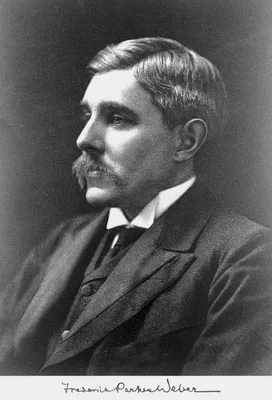
1907 WEBER, Frederick Parkes (1863 – 1962)
Multiple hereditary developmental angiomata (telangiectases) of the skin and mucous membranes associated with recurring haemorrhages.
“Rendu–Osler–Weber disease.”
GMN 2714 · https://historyofmedicine.com/id/4436
1907 MUNRO, John Cummings (1858 – 1910)
Ligation of the ductus arteriosus.
Munro was first to suggest the feasibility of ligation of a patent ductus arteriosus.
GMN 3025.3 · https://historyofmedicine.com/id/5492
1907 YERKES, Robert Means (1876 – 1956)
The dancing mouse: A study in animal behavior.
The first work to examine the characteristics of deaf mice, which became the most important model for the study of genetic deafness. Digital facsimile from the Biodiversity Heritage Library, Internet Archive at this l…
GMN 7226 · https://historyofmedicine.com/id/9394
1908 PFANNENSTIEL, Hermann Johann (1862 – 1909)
Ueber den habituellen Ikterus de Neugeborenen.
First detailed description of familial icterus gravis neonatorum.
GMN 3080.1 · https://historyofmedicine.com/id/3740