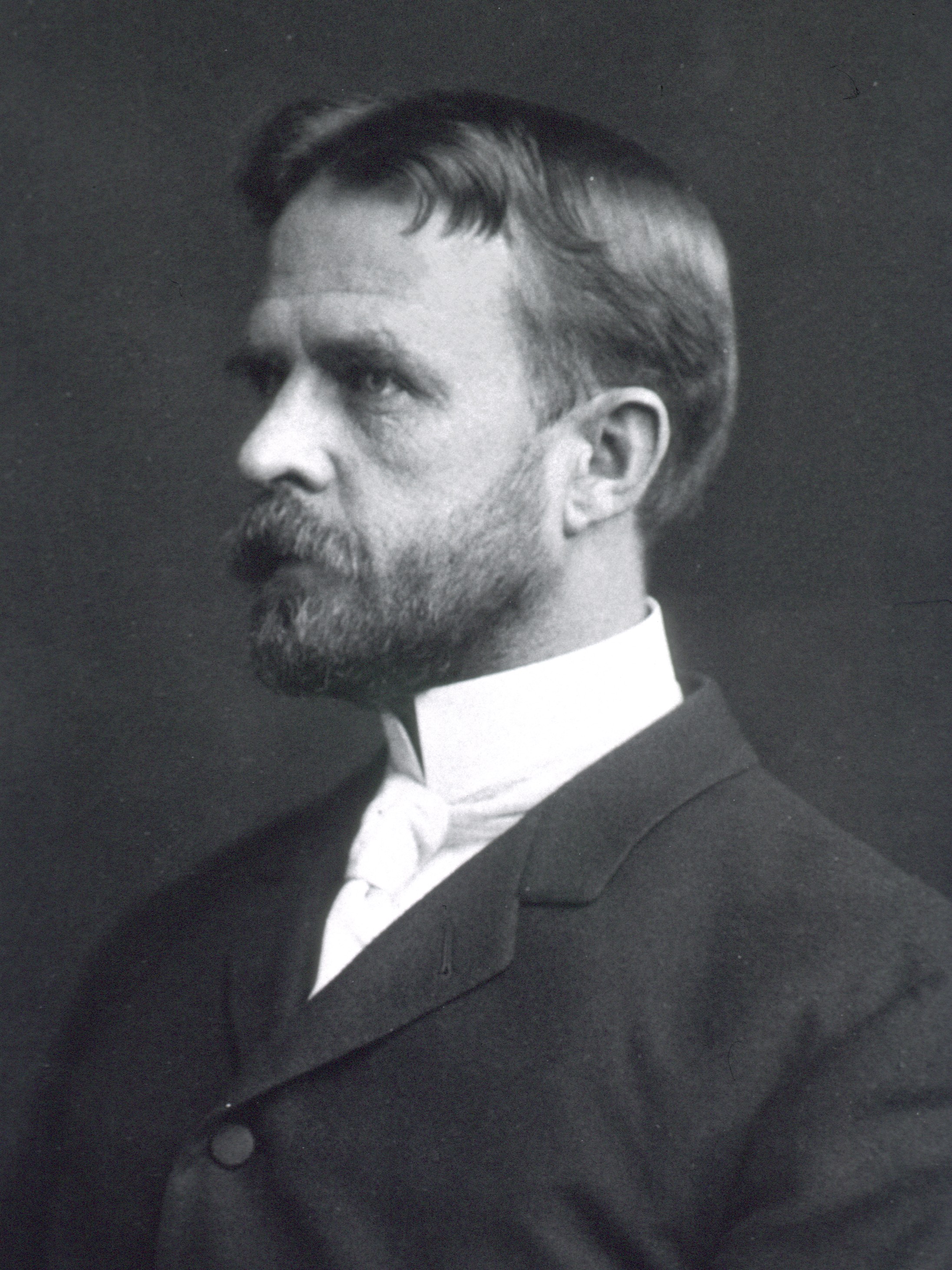
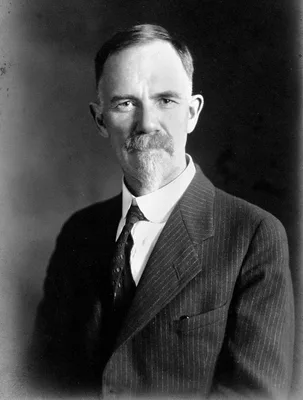
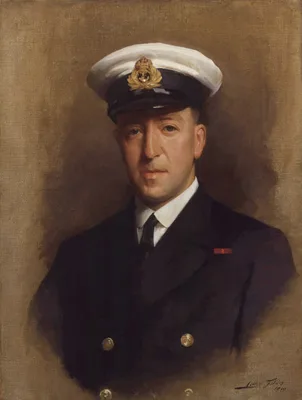
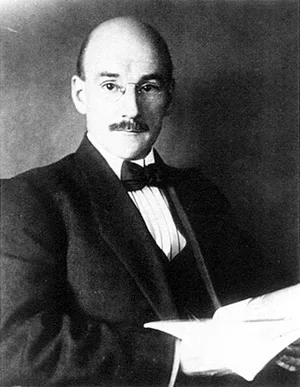
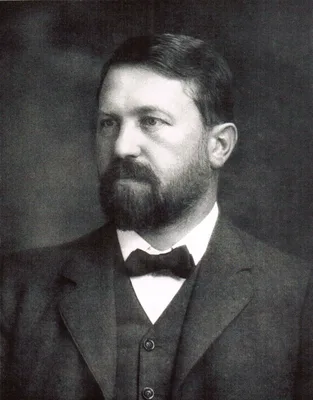
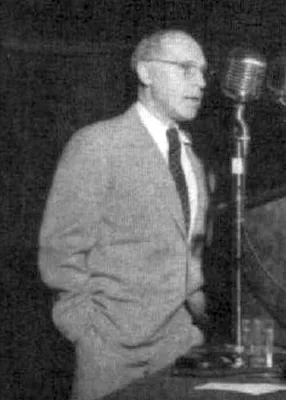
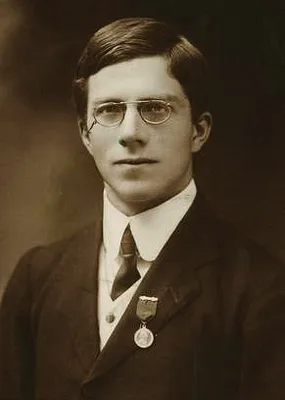
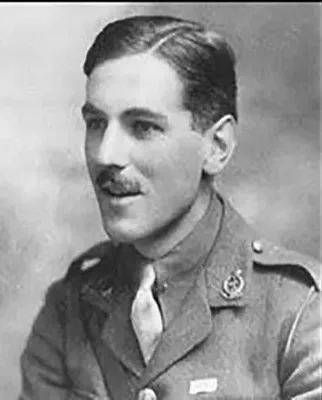
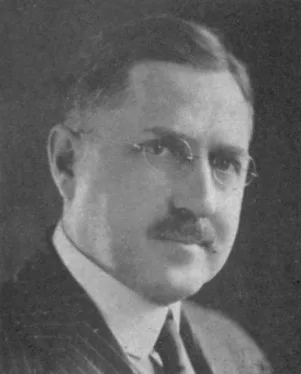
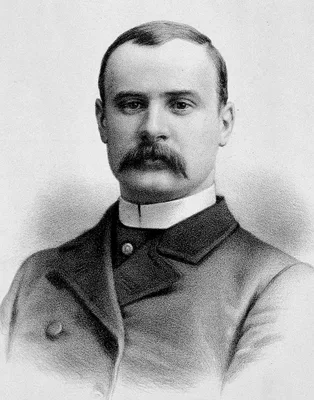
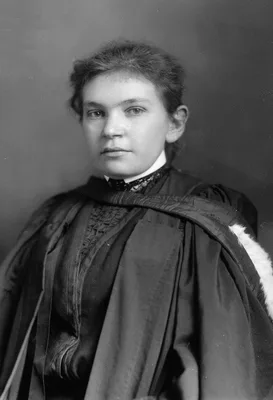
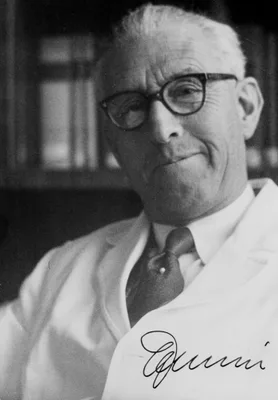
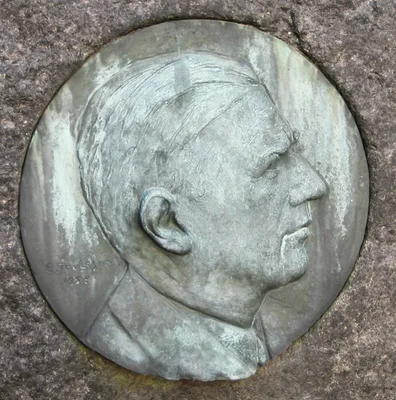
1908 HARDY, Godfrey Harold (1877 – 1947)
Mendelian proportions in a mixed population.
Hardy–Weinberg equilibrium.
GMN 243 · https://historyofmedicine.com/id/8668
1908 WEINBERG, Wilhelm (1836 – 1937)
Überden Nachweis der Vererbung beim Menschen.
Weinberg, a general practitioner and obstetrician in Stuttgart, was also a founder of population genetics. He co-discovered the Hardy–Weinberg equilibrium.
GMN 244 · https://historyofmedicine.com/id/8669
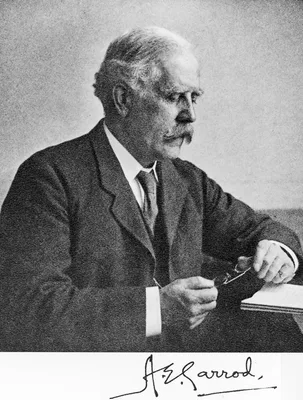
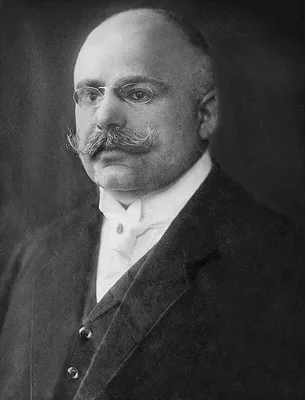
1909 GARROD, Sir Archibald Edward (1857 – 1936)
Inborn errors of metabolism.
Garrod established chemical individuality as a paradigm of Mendelian variation. His study, which he began around the turn of the 20th century, coincided with the rediscovery of Mendel's laws of inheritance in 1900. He…
GMN 244.1 · https://historyofmedicine.com/id/5049
1909 NILSSON-EHLE, Nils Herman (1873 – 1949)
Kreuzungsuntersuchungen an Hafer und Weizen.
The “multiple factor” theory advanced by Nilsson-Ehle brought under the Mendelian law cases which, by their extreme variability of inheritance, might be considered exceptions to it.
GMN 245 · https://historyofmedicine.com/id/8671
1909 JOHANNSEN, Wilhelm Ludvig (1857 – 1927)
Elemente der exacten Erblichkeitslehre.
In this work Johannsen coined the term “gene” as the “underlying structure in the organism, that which was transmitted during hybridzation.” He also coined the term "phenotype" to express what is actually observed and…
GMN 6844 · https://historyofmedicine.com/id/9008
1910 DUNGERN, Emil von (1867 – 1961); HIRSZFELD, Ludwik Maurycy [Hirschfeld] (1884 – 1954)
Ueber Vererbung gruppenspezifischer Strukturen des Blutes.
Proof that blood groups are inherited according to Mendelian laws.
GMN 898 · https://historyofmedicine.com/id/1017
1910 HERRICK, James Bryan (1861 – 1954)
Peculiar elongated and sickle-shaped red blood corpuscles in a case of severe anemia.
Identification of the sickle-cell type of anemia. Abstract "This case is reported because of the unusual blood findings, no duplicate of which I have ever seen described. Whether the blood picture represents merely a …
GMN 3133 · https://historyofmedicine.com/id/3939
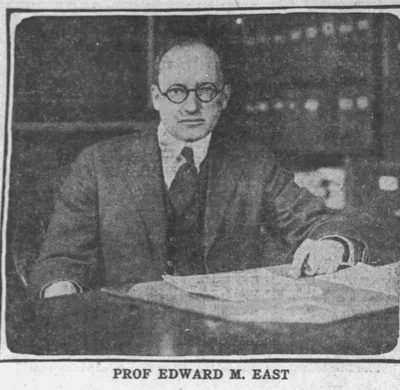
1910 EAST, Edward Murray (1879 – 1938)
A Mendelian interpretation of variation that is apparently continuous.
East published simultaneously and independently a theory essentially identical to Nilsson-Ehle (No. 245).
GMN 245.1 · https://historyofmedicine.com/id/8672
1910 MORGAN, Thomas Hunt (1866 – 1945)
Sex-limited inheritance in Drosophila.
Morgan demonstrated sex-limited inheritance. In 1933 Morgan was awarded the Nobel Prize in Physology or Medicine "for discoveries elucidating the role that the chromosome plays in heredity." See also Nos. 245.3, 246, …
GMN 245.2 · https://historyofmedicine.com/id/8676
1911 DAVENPORT, Charles Benedict (1866 – 1944); WEEKS, David Fairchild (1874 – 1929)
A first study of inheritance of epilepsy.
Davenport and Weeks produced strong evidence in support of the hereditary origin of epilepsy.
GMN 4822 · https://historyofmedicine.com/id/1630
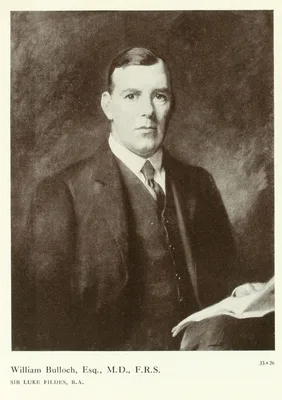
1911 BULLOCH, William (1868 – 1941); FILDES, Sir Paul Gordon (1882 – 1971)
Haemophilia.
Bulloch and Fildes, in their detailed account of hemophilia, claimed to have established immunity to the disease in females, and denied the authenticity of published cases of female hemophilia. They confirmed the law …
GMN 3081 · https://historyofmedicine.com/id/3741
1911 FOCKENS, P
Ein operativ geheilter Fall von kongenitaler Dünndarmatresie.
Treatment of congenital atresia of ileum by lateral anastomosis.
GMN 3536 · https://historyofmedicine.com/id/4036
1911 MORGAN, Thomas Hunt (1866 – 1945)
Random segregation versus coupling in Mendelian inheritance.
Morgan proposed that what he called Mendelian factors (genes) are arranged in a linear series on chromosomes and that the degree of linkage between two genes on the same chromosome depends upon the distance between th…
GMN 245.3 · https://historyofmedicine.com/id/8673
1912 RAMMSTEDT, Wilhelm Conrad (Ramstedt) (1867 – 1963)
Zur Operation der angeborenen Pylorusstenose.
The first pyloromyotomy for pyloric stenosis, incising the pyloric muscle while leaving the mucosa intact and leaving the muscle to heal: “Rammstedt’s operation.” In 1920 Rammstedt discovered that the family name had …
GMN 3539 · https://historyofmedicine.com/id/4043
1912 CROUZON, Octave (1874 – 1938)
Dysostose cranio-faciale héréditaire.
First description of cranio-facial dysostosis, hypertelorism (Crouzon's syndrome).
GMN 4385 · https://historyofmedicine.com/id/5913
1912 GODDARD, Henry Herbert (1866 – 1957)
The Kallikak family: A study in the heredity of feeble-mindedness.
When this book was published Goddard was Director of the Research Laboratory of the Training School at Vineland, New Jersey, for Feeble-minded Girls and Boys. Though this work drew wide attention to the problems of pe…
GMN 11535 · https://historyofmedicine.com/id/13734
1913 DOYEN, Eugène-Louis (1859 – 1916)
Chirurgie des malformations congénitales ou acquises du coeur.
First attempt at surgical relief of valvular disease of the heart (congenital pulmonary stenosis). Experimental valvotomy.
GMN 3028.1 · https://historyofmedicine.com/id/5511
1913 STURTEVANT, Alfred Henry (1891 – 1970)
The linear arrangement of six sex-linked factors in Drosophila, as shown by their mode of association.
Proof that the genes are arranged in a linear sequence along the chromosome. Sturtevant determined the relative positions of six genetic factors on a fly’s chromosome by creating a process called gene mapping. The wor…
GMN 245.4 · https://historyofmedicine.com/id/8674
1913 BRIDGES, Calvin Blackman (1889 – 1938)
Non-disjunction of the sex chromosome of Drosophila.
Bridges discovered non-disjunction, failure of chromosome pairs to segregate regularly during meiosis.
GMN 245.5 · https://historyofmedicine.com/id/8677
1913 WARTHIN, Aldred Scott (1866 – 1931)
Heredity with reference to carcinoma: As shown by the study of the cases examined in the pathological laboratory of the University of Michigan, 1895-1913.
"In 1895, a young seamstress of his [Warthin's] acquaintance told him about her family's long history of cancer deaths.[6] Intrigued, he researched her family's history, searching death records and administering quest…
GMN 9443 · https://historyofmedicine.com/id/11626
1914 NIEMANN, Albert (1834 – 1861)
Ein unbekanntes Krankheitsbild.
First description of that form of xanthomatosis which Pick described more fully in 1926 (No. 3785) and to which the eponym “Niemann-Pick disease” has been applied.
GMN 3784 · https://historyofmedicine.com/id/4684
1914 BOVERI, Theodor (1862 – 1915)
Zur Frage der Entstehung maligner Tumoren.
Boveri argued that malignancy arises as a consequence of chromosomal abnormalities, and that multiplication is an inherent property of cells. He predicted the existence of tumor suppressor mechanisms and was perhaps t…
GMN 7759 · https://historyofmedicine.com/id/9931
1915 MORGAN, Thomas Hunt (1866 – 1945); STURTEVANT, Alfred Henry (1891 – 1970); BRIDGES, Calvin Blackman (1889 – 1938); MULLER, Hermann Joseph (1890 – 1967)
The mechanism of Mendelian heredity.
Summarizes the major early findings of Morgan’s Drosophila research group, which based its research on the rapidly reproducing small vinegar fly, Drosophila melanogaster, often called the fruit fly. This epoch-making …
GMN 246 · https://historyofmedicine.com/id/8675
1917 HINSELWOOD, James (1859 – 1919)
Congenital word-blindness.
GMN 4631 · https://historyofmedicine.com/id/691
1918 ROBERTS, John Bingham (1852 – 1924)
Congenital clefts of the face.
Roberts introduced the push-back procedure - backward displacement of the velum to ensure adequate speech.
GMN 5757.3 · https://historyofmedicine.com/id/6687
1918 FISHER, Sir Ronald Aylmer (1890 – 1962)
The correlation between relatives on the supposition of Mendelian inheritance.
"Fisher put forward a genetics conceptual model that shows that continuous variation amongst phenotypic traits could be the result of Mendelian inheritance. The paper also contains the first use of the statistical ter…
GMN 248 · https://historyofmedicine.com/id/8678
1919 HURLER, Gertrud (1889 – 1965)
Ueber einen Typ multipier Abartungen, vorwiegend am Sklettsystem.
Hurler syndrome (lipochondrodystrophy, gargoylism), earlier described by Hunter (No. 6371.1).
GMN 6371.2 · https://historyofmedicine.com/id/8308
1919 MORGAN, Thomas Hunt (1866 – 1945)
The physical basis of heredity.
In this book Morgan first used the word gene. Previously he had used the term "Mendelian unit" or "factor." On the basis of genetic analysis Morgan presented a number of characteristics of genes: 1. A gene could have …
GMN 13915 · https://historyofmedicine.com/id/16209
1920 GOLDSCHMIDT, Richard Benedict (1878 – 1958)
Mechanismus und Physiologie der Geschlechtsbestimmung.
Translated into English William J. Dakin as The Mechanism and Physiology of Sex Determination (London: Methuen & Co., 1923). Digital facsimile of the 1920 edition from Google Books at this link. Digital facsimile of t…
GMN 529 · https://historyofmedicine.com/id/1684
1921 LÉRI, André (1875 – 1930)
Une maladie congénitale et héréditaire de l’ossification: la pléonostéose familiale.
“Léri’s pleonosteosis” first described.
GMN 4388.1 · https://historyofmedicine.com/id/5952
1921 GILLIES, Sir Harold Delf (1882 – 1960); FRY, Sir William Kelsey (1889 – 1963)
A new principle in the surgical treatment of “congenital cleft palate”, and its mechanical counterpart.
Gillies’s operation for cleft palate.
GMN 5759 · https://historyofmedicine.com/id/6697
1921 D'HÉRELLE, Félix Hubert (1873 – 1949)
Le bactériophage: Son rôle dans l'immunité.
D'Hérrelle cited several actual reports of successful treatment of bacterial infections by the injection of bacteriophages in animals and humans. These may be considered early attempts at direct gene transfer in vivo …
GMN 10196 · https://historyofmedicine.com/id/12385
1922 MASON, Verne Rheem (1889 – 1965)
Sickle-cell anemia.
Mason gave sickle-cell anemia its present name.
GMN 3136.1 · https://historyofmedicine.com/id/3943
1922 HESS, Julius Hays (1876 – 1955)
Premature and congenitally diseased infants.
“The first book ever written dealing solely with premature and congenitally diseased infants” (Cone). Hess founded the first premature infant center in the United States at Michael Reese Hospital in Chicago.
GMN 6348.1 · https://historyofmedicine.com/id/8183
1922 CAMURATI, M
Di un raro caso di osteite simmetrica ereditaria degli arti inferior.
"Camurati-Engelmann disease", a very rare autosomal dominant genetic disorder that causes characteristic anomalies in the skeleton. It is a form of dysplasia. See No. 4395.1.
GMN 7832 · https://historyofmedicine.com/id/10004
1923 APERT, Eugène Charles (1868 – 1940); ET AL
Nouvelle observation d’acrocéphalosyndactylie.
With Tixier, Hue, and Kermorgant.
GMN 4390 · https://historyofmedicine.com/id/5961
1923 TREVES, Sir Frederick (1853 – 1923)
The elephant man and other reminiscences.
The story of Treves's patient, Joseph Carey Merrick (1862-1890), incorrected identified by Treves in these reminiscences as "John Merrick." The story was retold in The elephant man, Bernard Pomerance's 1977 play about…
GMN 7407 · https://historyofmedicine.com/id/9579
1924 BERNSTEIN, Felix (1878 – 1956)
Ergebniss einer biostatischen zusammenfassenden Betrachtung über die erblichen Blutstrukturen des Menschen.
Bernstein, a mathematician, determined the correct blood group inheritance pattern of multiple alleles at one locus through statistical analysis.
GMN 907.1 · https://historyofmedicine.com/id/1049
1924 LITTLE, Clarence Cook (1888 – 1971)
The genetics of tissue transplantation in mammals.
Little established that the homograft reaction was due to genetic differences between donor and recipient.
GMN 2573.1 · https://historyofmedicine.com/id/3699
1924 GREIG, David Middleton (1864 – 1936)
Hypertelorism. A hitherto undifferentiated congenital cranio-facial deformity.
First description of hypertelorism as a separate entity.
GMN 4392 · https://historyofmedicine.com/id/5970
1925 HART, Alfred Purvis (1887 – 1954)
Familial icterus gravis of the new-born and its treatment.
Successful exchange transfusion.
GMN 3087.1 · https://historyofmedicine.com/id/3757
1926 SCHAFFER, Károly (1864 – 1939)
Über das morphologische Wesen und die Histopathologie der hereditaersystematischen Nervenkrankheiten.
Schaffer was a pioneer Hungarian neuropathologist. He laid down a triad of criteria for judging whether or not a neurological disease is hereditary.
GMN 4609 · https://historyofmedicine.com/id/575
1926 WILLEBRAND, Erik Adolf von (1870 – 1949)
Hereditär pseudohemofili.
Von Willebrand’s disease, pseudo-hemophilia type B, an hereditary bleeding disorder affecting both sexes.
GMN 3087.2 · https://historyofmedicine.com/id/3759
1926 PICK, Ludwig (1868 – 1935)
Der Morbus Gaucher und die ihm ähnlichen Erkrankungen. (Die lipoidzellige Splenohepatomegalie Typus Niemann und die diabetische Lipoidzellenhyperplasie der Milz.)
“Niemann-Pick disease” – a group of inherited, severe metabolic disorders, first noted by Albert Niemann in 1914, (No. 3784) in 1914. Pick’s account is of greater importance.
GMN 3785 · https://historyofmedicine.com/id/4686
1926 MORGAN, Thomas Hunt (1866 – 1945)
The theory of the gene.
GMN 251 · https://historyofmedicine.com/id/8679
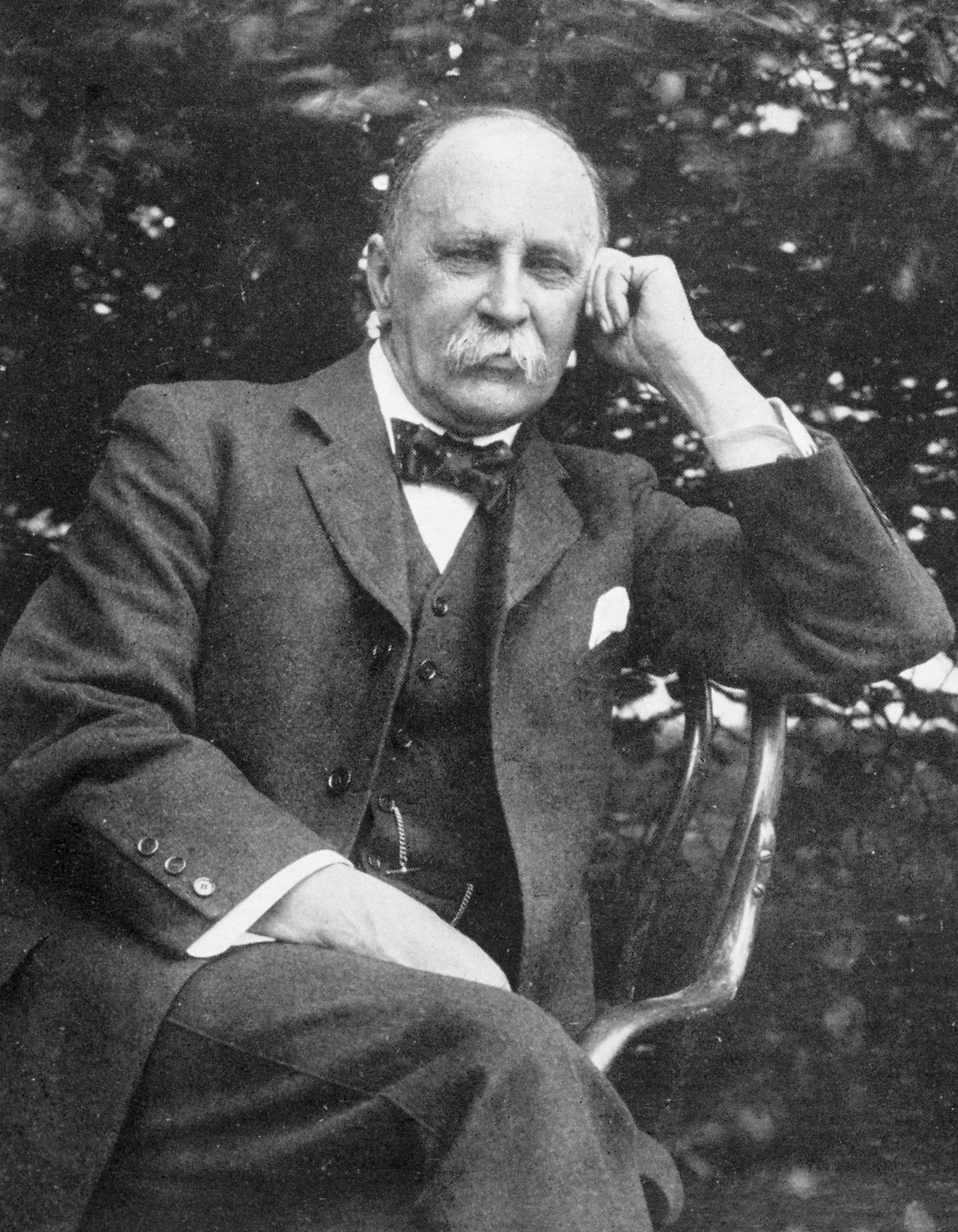
1927 OSLER, Sir William (1849 – 1919); ABBOTT, Maude Elizabeth Seymour (1869 – 1940); MCCRAE, Thomas (1870 – 1935)
Congenital cardiac disease by Maude Abbott. IN: Modern medicine: Its theory and practice, edited by Sir William Osler, assisted by Thomas McCrae. 3rd ed., 4, 612-812.
GMN 2856 · https://historyofmedicine.com/id/3647
1927 COOLEY, Thomas Benton (1871 – 1945); ET AL
Anemia in children, with splenomegaly and peculiar changes in the bones.
“Cooley’s erythroblastic anemia”, thalassemia. With E. R. Witwer and O. P. Lee. An earlier brief account by Cooley and Lee appeared in Trans. Amer. Pediat. Soc.,1925, 37, 29.
GMN 3141 · https://historyofmedicine.com/id/3951
1927 FANCONI, Guido (1892 – 1979)
Familiäre infantile perniziösaartige Anämie (perniziöses Blutbild und Konstitution).
“Fanconi’s syndrome”, congenital hypoplasia of bone marrow with multiple congenital defects occurring as a familial disease.
GMN 3142 · https://historyofmedicine.com/id/3953
1927 MULLER, Hermann Joseph (1890 – 1967)
Artificial transmutation of the gene.
Muller showed that radiation causes mutations that are passed on from one generation to the next. This was the first suggestion that inherited traits might be altered or controlled, and it created a sensation: “Man’s …
GMN 251.1 · https://historyofmedicine.com/id/8680
1927 LINDAU, Arvid Vilhelm (1892 – 1958)
Zur Frage der Angiomatosis Retinae und Ihrer Hirncomplikation.
Lindau described the angiomas of the cerebellum and spine found in Von Hippel-Lindau disease (VHL).
GMN 14272 · https://historyofmedicine.com/id/16594