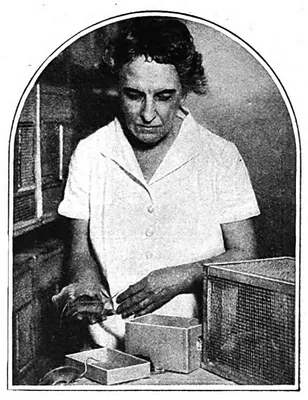
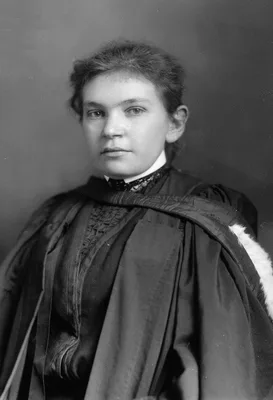
1928 SLYE, Maud (1879 – 1954)
Cancer and heredity.
By selective breeding over a period of 15 years, Slye produced generations of mice absolutely resistant to, or particularly susceptible to, cancer. She demonstrated that resistance is a Mendelian dominant and suscepti…
GMN 2652 · https://historyofmedicine.com/id/3307
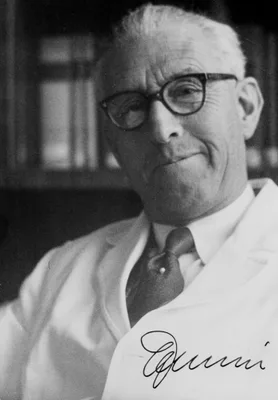
1928 ROESLER, Hugo (1899 – 1961)
Beiträge zur Lehre von den angeborenen Herzfehlern.
Roesler described the most important roentgenologic sign of aortic coarctation.
GMN 2856.1 · https://historyofmedicine.com/id/3649
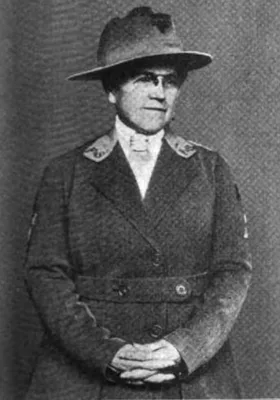
1928 BROUSSEAU, Kate ( – 1938)
Mongolism. A study of the physical and mental characteristics of mongolian imbeciles. Revised by H. G. Brainerd.
Down syndrome.
GMN 4958 · https://historyofmedicine.com/id/6301
1929 ENGELMANN, Guido (1876 – 1959)
Ein Fall von Osteopathia hyperostotica (sclerotisans) multiplex infantilis.
“Engelmann’s disease”, also known as "Camurati-Engelmann disease" — a very rare autosomal dominant genetic disorder that causes characteristic anomalies in the skeleton. It is a form of dysplasia, causing osteoscleros…
GMN 4395.1 · https://historyofmedicine.com/id/5989
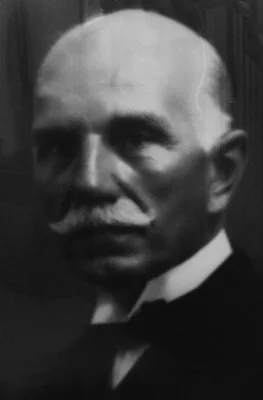
1929 MORQUIO, Luis (1867 – 1935)
Sur une forme de dystrophie osseuse familiale.
“Morquio’s disease”, eccentro-osteochondrodysplasia.
GMN 4397 · https://historyofmedicine.com/id/5998
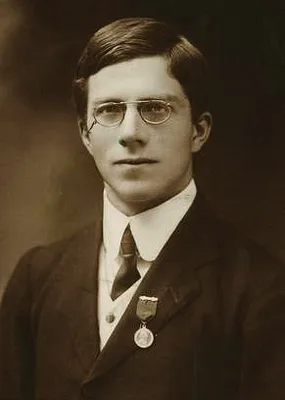
1930 FISHER, Sir Ronald Aylmer (1890 – 1962)
The genetical theory of natural selection.
The first coherent general algebraic analysis of Mendelian population behavior. The work contains Fisher’s rigorous development of his “fundamental theorem of natural selection”–”the rate of increase in fitness of any…
GMN 253 · https://historyofmedicine.com/id/8682
1931 WEVE, Henricus Jacobus Marie (1888 – 1962)
Ueber Arachnodaktylie (Dystrophia mesodermalis congenita, Typus Marfan).
Weve of Utrecht first clearly demonstrated the heritable nature of the Marfan syndrome (see No. 4365.1).
GMN 6372.1 · https://historyofmedicine.com/id/8311
1931 WRIGHT, Sewall Green (1889 – 1988)
Evolution in Mendelian populations.
First detailed presentation of Wright’s quantitative theory of the effects of mutation, migration, selection, and population size on changes in gene frequencies in populations. Digital facsimile from Genetics.org at t…
GMN 253.1 · https://historyofmedicine.com/id/8683
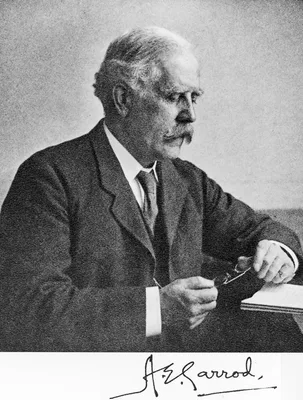
1931 GARROD, Sir Archibald Edward (1857 – 1936)
The inborn factors in disease.
Garrod argued that chemical individuality could result in individuals having a predisposition to certain diseases. This view has become particularly significant in light of the establishment of recombinant DNA methods…
GMN 253.2 · https://historyofmedicine.com/id/8684
1932 HALDANE, John Burdon Sanderson (1892 – 1964)
The causes of evolution.
Haldane’s summary of his mathematical theory of natural selection. The detailed mathematical theory appeared as Mathematical theory of natural and artificial selection, first published (Pt. I) in Trans. Camb. philos. …
GMN 254 · https://historyofmedicine.com/id/8685
1932 DIAMOND, Louis Klein (1902 – 1999); BLACKFAN, Kenneth Daniel (1883 – 1941); BATY, James M.
Erythroblastosis fetalis and its association with universal edema of the fetus, icterus gravis neonatorum and anemia of the newborn.
The authors described and named this syndrome/illness of newborns for the first time, including pathological findings, clinical data, lab abnormalities, presentation and course of illness. Order of authorship in the o…
GMN 14087 · https://historyofmedicine.com/id/16398
1933 KARTAGENER, Manes (1897 – 1975)
Zur Pathogenese der Bronchiektasien. I. Mitteilung: Bronchiektasien bei Situs viscerum inversus.
Bronchiectasis and sinus maldevelopment associated with transposition of viscera – “Kartageners syndrome”.
GMN 3206 · https://historyofmedicine.com/id/4327
1933 COCKAYNE, Edward Alfred (1880 – 1956)
Inherited abnormalities of the skin and its appendages.
GMN 4008 · https://historyofmedicine.com/id/5136
1934 MACFARLANE, Robert Gwyn (1907 – 1987); BARNETT, Burgess (1888 – 1944)
The haemostatic possibilities of snake-venom.
Snake venom used in the treatment of hemophilia.
GMN 3093 · https://historyofmedicine.com/id/3777
1934 FØLLING, Ivar Asbjørn (1888 – 1973)
Utskillelse av fenylpyrodruesyre i urinen som stoffskifteanomali i forbindelse med imbecilletet.
Phenylketonuria (PKU) first described. This was the first hereditary metabolic disorder shown to be responsible for mental retardation. German translation in Hoppe-Seyl. Z. physiol. Chem., 1934, 227, 169-76. English t…
GMN 3924 · https://historyofmedicine.com/id/5067
1935 QUICK, Armand James (1894 – 1977)
The prothrombin in hemophilia and in obstructive jaundice.
Quick’s method for determination of prothrombin clotting time. See also Amer. J. med. Sci.,1935, 190,501-11.
GMN 3095 · https://historyofmedicine.com/id/3782
1935 DELBRÜCK, Max (1906 – 1981); TIMOFEEV-RESSOVSKIJ, Nikolaj Vladmirovich (Timofeeff-Ressovsky; Николай Владимирович Тимофеев-Ресовский) (1900 – 1981); ZIMMER, Karl Günter (1911 – 1988)
Ueber die Natur der Genmutation und der Genstruktur.
This paper is divided into four sections. The first, by Timofeev-Ressovskij, describes the mutagenic effects of x-rays and gamma rays on Drosophila melanogaster; the second part, by Zimmer, analyzes Timofeev-Ressovski…
GMN 254.1 · https://historyofmedicine.com/id/8686
1935 PUTTI, Vittorio (1880 – 1940)
Anatomia della lussazione congenita dell'anca.
Putti made many contributions to the understanding of congenital dislocation of the hip, a condition which was then endemic in Northern Italy.
GMN 7798 · https://historyofmedicine.com/id/9970
1936 WHIPPLE, George Hoyt (1878 – 1976); BRADFORD, William Leslie (1898 – 1983)
Mediterranean disease – thalassemia (erythroblastic anemia of Cooley); associated pigment abnormalities simulating hemochromatosis.
Whipple and Bradford contributed a classic paper on the pathology of thalassemia, a name introduced by them.
GMN 3148.1 · https://historyofmedicine.com/id/3991
1936 IRWIN, M. Robert (1897 – 1987); COLE, Leon Jacob (1877 – 1948)
Immunogenetic studies of species and of species hybrids in doves, and the separation of species-specific substances in the backcross.
Irwin coined the term, “immunogenetics” to describe the union of immunology with genetics. He attempted to determine the genetic control of antigenicity through genetic cross matings.
GMN 2576.4 · https://historyofmedicine.com/id/4116
1936 ABBOTT, Maude Elizabeth Seymour (1869 – 1940)
Atlas of congenital cardiac disease.
GMN 2865 · https://historyofmedicine.com/id/4156
1936 FANCONI, Guido (1892 – 1979); ET AL
Das Coeliakiesyndrom bei angeborener zysticher Pankreasfibromatose und Bronchiektasien.
Cystic fibrosis (mucoviscidosis) described. With E. Uehlinger and C. Knauer.
GMN 3659.2 · https://historyofmedicine.com/id/4793
1937 PATEK, Arthur Jackson Jr. (1904 – 1991); TAYLOR, Francis Henry Laskey (1900 – 1959)
Hemophilia. II. Some properties of a substance obtained from normal human plasma effective in accelerating the coagulation of hemophilic blood.
Antihemophilic globulin (factor VIII).
GMN 3096.1 · https://historyofmedicine.com/id/3787
1937 GORER, Peter Alfred (1907 – 1961)
The genetic and antigenic basis of tumour transplantation.
Gorer made the initial discoveries which formed the basis of transplantation genetics. He studied mouse blood groups and described an antigen in erythrocytes (antigen II). His studies established the laws of transplan…
GMN 2576.5 · https://historyofmedicine.com/id/4121
1937 BEHÇET, Hulusi (1889 – 1948)
Über rezidivierende, aphthöse, durch ein Virus verursachte Geschwüre am Mund, am Auge und an den Genitalien.
Behçet’s disease, previously described by H. Planner and F. Remenovsky, Arch. Derm. Syph. (Berlin), 1922, 140, 162-88.
GMN 6374 · https://historyofmedicine.com/id/8313
1937 DOBZHANSKY, Theodosius Grygorovych (1900 – 1975)
Genetics and the origin of species.
Dobzhansky, an emigrant from the Soviet Union to the United States, and a postdoctoral worker in Thomas Hunt Morgan's fruit fly lab, was one of the first to apply genetics to natural populations. He worked mostly with…
GMN 254.2 · https://historyofmedicine.com/id/8687
1937 PRITCHER, Jacob Leon
A sex starved world.
A eugenic utopian fantasy, in which we accompany a doctor in his dream journey to the liberated land of Amor. Pritcher presents an impassioned argument for free universal health care, contraception, no-fault divorce, …
GMN 11797 · https://historyofmedicine.com/id/13999
1938 CAMINOPETROS, J
Recherches sur l’anémie érythroblastique infantile des peuples de la Méditerranée orientale. Étude anthropologique, étiologique et pathogénique. La transmission héréditaire de la maladie.
First evidence that thalassemia is genetically determined. Earlier report in Kliniki, Athens, 1936, 12, No. 5.
GMN 3148.2 · https://historyofmedicine.com/id/3993
1938 PENROSE, Lionel Sharples (1898 – 1972)
A clinical and genetic study of 1,280 cases of mental defect.
In this exhaustive study Penrose showed (p. 36) the significance of maternal age in the etiology of Down syndrome.
GMN 4962.1 · https://historyofmedicine.com/id/6325
1938 MCINDOE, Sir Archibald Hector (1900 – 1960); BANISTER, John Bright (1880 – 1938)
An operation for the cure of congenital absence of the vagina.
Mclndoe’s operation for the construction of an artificial vagina.
GMN 6133 · https://historyofmedicine.com/id/7657
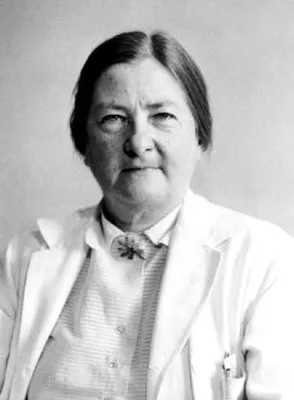
1938 ANDERSEN, Dorothy Hansine (1901 – 1963)
Cystic fibrosis of the pancreas and its relation to celiac disease: A clinical and pathological study.
Andersen was the first to describe the characteristic cystic fibrosis of the pancreas, and to correlate it with the lung and intestinal disease prominent in CF. She also was the first to hypotheize that cystic fibrosi…
GMN 13827 · https://historyofmedicine.com/id/16117
1938 DARROW, Ruth Renter (1895 – 1956)
Icterus gravis (erythroblastosis) neonatorum.
Darrow was the first to identify the cause of hemolytic disease of the newborn (HDN). Three years prior to the discovery of antibodies against the Rh antigen, Darrow correctly hypothesized that the disease was caused …
GMN 14088 · https://historyofmedicine.com/id/16399
1939 BOYD, William Clouser (1903 – 1983)
Blood groups.
Boyd showed that blood groups are inherited and not changed by environment.
GMN 912 · https://historyofmedicine.com/id/1069
1939 GROSS, Robert Edward (1905 – 1988); HUBBARD, John Perry (1903 – 1990)
Surgical ligation of a patent ductus arteriosus: Report of first successful case.
One of the earliest successful surgical repairs for congenital heart disease. See also later paper in Ann. Surg.,1939, 110, 321-56.
GMN 3039 · https://historyofmedicine.com/id/3459
1939 KITE, Joseph Hiram (1891 – 1986)
Principles involved in the treatment of congenital clubfoot.
Kite’s method, involving “a series of plaster casts and wedgings, without the use of anesthetics, forcible manipulations, or operative procedures”, became standard practice.
GMN 4403.1 · https://historyofmedicine.com/id/6049
1940 LAUBRY, Charles (1872 – 1960); ET AL
Grosse pulmonaire. Petite aorte. Affection congénitale.
Idiopathic dilatation of the pulmonary artery reported. With D. Routier and R. Heim de Balsac.
GMN 2923 · https://historyofmedicine.com/id/4919
1941 LEVINE, Philip (1900 – 1987); ET AL
The rôle of iso-immunization in the pathogenesis of erythroblastosis fetalis.
Erythroblastosis fetalis due to rhesus incompatibility (Rh disease) between mother and child. With L. Burnham, E. M. Katzin, and P. Vogel.
GMN 3100 · https://historyofmedicine.com/id/3796
1941 MORCH, Ernst Trier (1908 – 1996)
Chondrodystrophic dwarfs in Denmark (supplemented with investigations from Sweden and Norway) with special reference to the inheritance of chondrodystrophy.
Morch established the fact that chondrodystrophy may be inherited.
GMN 4404 · https://historyofmedicine.com/id/6063
1941 GREGG, Sir Norman McAlister (1892 – 1966)
Congenital cataract following German measles in the mother.
Gregg drew attention to congenital defects in infants following rubella in the mother during the early part of pregnancy.
GMN 5507 · https://historyofmedicine.com/id/6499
1941 BEADLE, George Wells (1903 – 1989); TATUM, Edward Lawrie (1909 – 1975)
Genetic control of biochemical reactions in Neurospora.
Beadle and Tatum proposed the "one gene, one enzyme" hypothesis in 1941. This was a restatement of ideas originally proposed by Archibald Garrod (No. 244.1) in 1908. 1958 Beadle and Tatum shared the Nobel Prize in Phy…
GMN 254.3 · https://historyofmedicine.com/id/8688
1942 WADDINGTON, Conrad Hal (1905 – 1975)
The epigenotype.
Waddington coined the term epigenetics: "For the purpose of a study of inheritance, the relation between phenotypes and genotypes [...] is, from a wider biological point of view, of crucial importance, since it is the…
GMN 13316 · https://historyofmedicine.com/id/15583
1943 SWAN, Charles Spencer (1912 – 1963)
Congenital defects in infants following infectious diseases during pregnancy.
Figures demonstrating that rubella in the first or second month of pregnancy always results in an abnormal infant. With A. L. Tostevin, B. Moore, H. Mayo, and G. H. B. Black.
GMN 5509 · https://historyofmedicine.com/id/6503
1943 HAIGHT, Cameron (1901 – 1970); TOWSLEY, Harry Albert (1906 – 1993)
Congenital atresia of the esophagus with tracheo-esophageal fistula. Extrapleural ligation of fistula and end-to-end anastomosis of esophageal segments.
Ablation of the tracheo-oesophageal fistula and primary end-to-end oesophageal anastomosis, first achieved in 1941.
GMN 6357.58 · https://historyofmedicine.com/id/8250
1944 MCCARTY, Maclyn (1911 – 2005); AVERY, Oswald Theodore Jr. (1877 – 1955); MACLEOD, Colin Munro (1909 – 1972)
Studies on the chemical nature of the substance inducing transformation of pneumococcal types. Induction of transformation by a deoxyribonucleic acid fraction isolated from pneumococcus type III.
Demonstration that deoxyribonucleic acid (DNA) is the basic material responsible for genetic transformation. Digital facsimile from PubMedCentral at this link. Followed by: McCarty & Avery, "Studies on the chemical na…
GMN 255.3 · https://historyofmedicine.com/id/8692
1945 BLALOCK, Alfred (1899 – 1964); TAUSSIG, Helen Brooke (1898 – 1986)
The surgical treatment of malformations of the heart in which there is pulmonary stenosis or pulmonary atresia.
The “Blalock-Taussig operation” for the relief of congenital defects of the pulmonary artery, Tetralogy of Fallot ("blue baby syndrome"). "The first surgical repair was carried out in 1944 at Johns Hopkins.[70] The pr…
GMN 3043 · https://historyofmedicine.com/id/3475
1945 GROSS, Robert Edward (1905 – 1988)
Surgical correction for coarctation of the aorta.
Resection of coarctation and direct anastomosis of remaining ends. See also his report of 60 cases in J. Amer.med.Assoc.,1949, 139,285-92.
GMN 3044.1 · https://historyofmedicine.com/id/3490
1945 BRANNON, Emmett S.; WARREN, James Vaughn (1915 – 1990); WEENS, H. Stephen
Atrial septal defect: Study of hemodynamics by the technique of right heart catheterization.
The first description of the use of a cardiac catheter as a diagnostic tool, in this case a congenital heart defect. The authors worked in the laboratory of Eugene Stead, Jr. at Grady Memorial Hospital, Atlanta, Georgia.
GMN 10653 · https://historyofmedicine.com/id/12846
1946 POTTS, Willis John (1895 – 1968); ET AL
Anastomosis of the aorta to a pulmonary artery. Certain types in congenital heart disease.
With S. Smith and S. Gibson.
GMN 3045 · https://historyofmedicine.com/id/3495
1946 REFSUM, Sigvald Bernhard (1907 – 1991)
Heredopathia atactica polyneuritiformis; a familial syndrome not hitherto described.
“Refsum’s syndrome”, an inherited disorder of lipid metabolism.
GMN 3924.2 · https://historyofmedicine.com/id/5074
1946 TATUM, Edward Lawrie (1909 – 1975); LEDERBERG, Joshua (1925 – 2008)
Gene recombination in Escherichia coli.
Discovery of sexual processes in the reproduction of bacteria. In 1958 Lederberg shared the Nobel Prize in Physiology or Medicine with Tatum and Beadle (No. 254.3) "for his discoveries concerning genetic recombination…
GMN 255.4 · https://historyofmedicine.com/id/8693