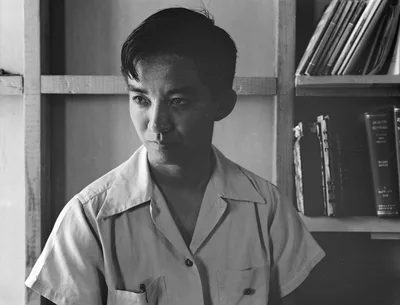
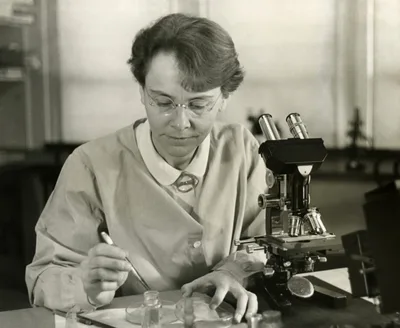
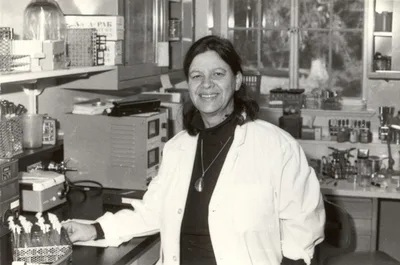
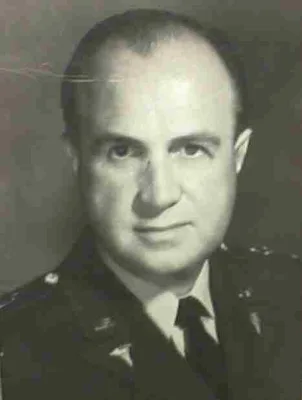
1947 TAUSSIG, Helen Brooke (1898 – 1986)
Congenital malformations of the heart.
This 618-page work, which required ten years to write, was the first "definitive textbook" of congenital heart defects, a subspecialty of pediatrics that Taussig created. The second edition, published in 1960, was ess…
GMN 2878 · https://historyofmedicine.com/id/4208
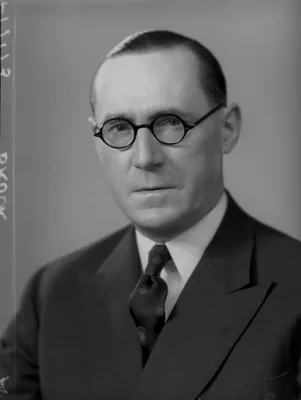
1948 BROCK, Russell Claude (1903 – 1980)
Pulmonary valvulotomy for the relief of congenital pulmonary stenosis. Report of three cases.
"Brock performed the first successful valvotomies for isolated pulmonary stenosis in 1948. He gained access to the blood-filled beating heart through a small incision in the right ventricle through which he passed a v…
GMN 3046 · https://historyofmedicine.com/id/3497
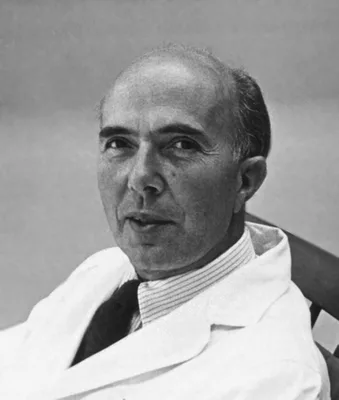
1948 DIAMOND, Louis Klein (1902 – 1999)
Replacement transfusion as a treatment for erythroblastosis fetalis.
Exchange transfusion.
GMN 3107.1 · https://historyofmedicine.com/id/3816
1948 GIBSON, Quentin Howieson (1918 – 2011)
The reduction of methaemoglobin in red blood cells and studies on the cause of idiopathic methaemoglobinaemia.
Cause of hereditary methemoglobinemia elucidated.
GMN 3107.2 · https://historyofmedicine.com/id/3819
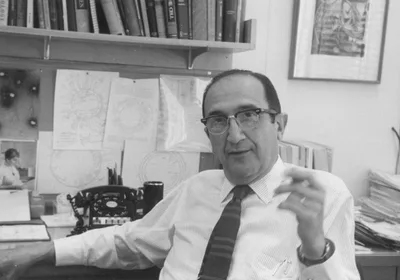
1949 DULBECCO, Renato (1914 – 2012); LURIA, Salvador Edward (1912 – 1991)
Genetic recombinations leading to production of active bacteriophage from ultraviolet inactivated bacteriophage particles.
In 1969 Luria shared the Nobel Prize in Physiology or Medicine in with Delbrück (No. 2578.5) and A. D. Hershey (No. 256) "for their discoveries concerning the replication mechanism and the genetic structure of viruses."
GMN 2526.1 · https://historyofmedicine.com/id/3458
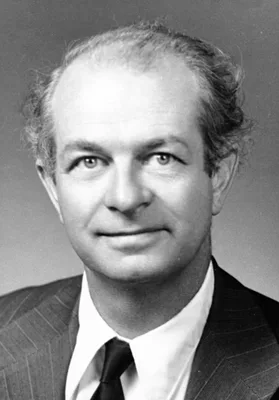
1949 PAULING, Linus Carl (1901 – 1994); ITANO, Harvey Akio (1920 – 2010); SINGER, Seymour Jonathan (1924 – 2017); WELLS, Ibert C. (1921 – 2011)
Sickle cell anemia, a molecular disease.
First recognition, by Pauling and colleagues, of a structural hemoglobin variant, and the beginning of the molecular approach to disease.
GMN 3154.1 · https://historyofmedicine.com/id/4015
1949 NEEL, James Van Gundia (1915 – 2000)
The inheritance of sickle cell anemia.
Genetic evidence that sickle-cell disease is inherited in a simple Mendelian manner.
GMN 3154.2 · https://historyofmedicine.com/id/4053
1949 SEEDORFF, Knud Stakemann (1915 – 1991)
Osteogenesis imperfecta: A study of clinical features and heredity based on 55 Danish families comprising 180 affected members.
Includes a translation of Ekman’s thesis (No. 4304.1). Also gives a case reported in 1678.
GMN 4404.1 · https://historyofmedicine.com/id/6075
1949 PENROSE, Lionel Sharples (1898 – 1972)
The biology of mental defect.
GMN 4962.2 · https://historyofmedicine.com/id/6328
1950 WOOD, Paul Hamilton (1907 – 1962)
Congenital heart disease.
A new classification proposed.
GMN 2882 · https://historyofmedicine.com/id/4232
1950 LESKY, Erna (1911 – 1986)
Die Zeugungs- und Vererbungslehren der Antike und ihr Nachwirken.
A study of the earliest “scientific” theories of heredity and genetics.
GMN 258.1 · https://historyofmedicine.com/id/8718
1950 MCCLINTOCK, Barbara (1902 – 1992)
The origin and behavior of mutable loci in maize.
"In the summer of 1944 at Cold Spring Harbor Laboratory, McClintock systematic studies on the mechanisms of the mosaic color patterns of maize seed and the unstable inheritance of this mosaicism.[44] She identified tw…
GMN 12063 · https://historyofmedicine.com/id/14272
1950 LEDERBERG, Esther (1922 – 2006)
Lysogenicity in Escherichia coli strain K-12.
Discovery of phage λ (lambda phage). According to estherlederberg.com, only about 100 people received the first issue of Microbial Genetics Bulletin, a typed and mimeographed publication. Digital facsimile from esther…
GMN 13525 · https://historyofmedicine.com/id/15802
1951 WAARDENBURG, Petrus Johannes (1886 – 1979)
A new syndrome combining developmental anomalies of the eyelids, eyebrows and nose root with pigmentary defects of the iris and head hair with congenital deafness.
“Waardenburg’s syndrome”.
GMN 4154.4 · https://historyofmedicine.com/id/5883
1951 GEDDA, Luigi (1902 – 2000)
Studio dei gemelli.
The first truly comprehensive work on the scientific study of twins. (1381pp., 547 illustrations, 161 tables). English translation of the first half of the work, with some revisions: Twins in history and science, Spri…
GMN 255.7 · https://historyofmedicine.com/id/8696
1952 BIGGS, Rosemary Peyton (1921 – 2001); ET AL
Christmas disease, a condition previously mistaken for haemophilia.
Christmas disease, hemophilia B, due to lack of Factor IX. Named after the patient whose case was the first recorded example. With six co-authors.
GMN 3108.1 · https://historyofmedicine.com/id/3824
1952 BRUTON, Ogden Carr (1908 – 2003)
Agammaglobulinemia.
First report.
GMN 2578.9 · https://historyofmedicine.com/id/4146
1952 HSU, T. C. (1917 – 2003)
Mammalian chromosomes in vitro I: The karyotype of man.
Since the turn of the twentieth century, chromosomes prepared on microscope slides formed clumps that made it extremely difficult to distinguish them. Although the preparations made the identification of individual ch…
GMN 13941 · https://historyofmedicine.com/id/16238
1952 HAYES, William (1913 – 1994)
Recombination in Bact. coli K 12: Unidirectional transfer of genetic material.
Hayes "developed the concept of a donor–recipient partnership with uni-directional transfer of genetic material. The importance of this discovery was quickly emphasised and widely recognised when he found that only a …
GMN 13983 · https://historyofmedicine.com/id/16286
1953 BARR, Murray Llewellyn (1908 – 1995); MOORE, Keith Leon (1925 – ); GRAHAM, Margaret A.
The detection of chromosomal sex in hermaphrodites from a skin biopsy.
Sex chromatin demonstrated in humans.
GMN 256.2 · https://historyofmedicine.com/id/8699
1953 WATSON, James Dewey (1928 – ); CRICK, Francis Harry Compton (1916 – 2004)
Genetical implications of the structure of deoxyribonucleic acid.
In this paper published on May 30, 1953 Watson and Crick proposed the method of replication of DNA. This discovery has been called as significant, or possibly even more significant, than their discovery of the double-…
GMN 7138 · https://historyofmedicine.com/id/9305
1953 MCCLINTOCK, Barbara (1902 – 1992)
Induction of instability at selected loci in maize.
McClintock (Nobel Prize 1983) discovered transposable elements or jumping genes. She found that certain parts of chromosome had switched position. This refuted the then-popular theory that genes were fixed in their po…
GMN 14072 · https://historyofmedicine.com/id/16383
1954 WARDEN, Herbert Edgar (1920 – 2002); LILLEHEI, Clarence Walton (1918 – 1999); ET AL
Controlled cross circulation for open intracardiac surgery; physiologic studies and results of creation and closure of ventricular septal defects.
Warden and colleagues undertook the first repair of various cardiac anomalies. With M. Cohen, and R.C. Read.
GMN 3047.6 · https://historyofmedicine.com/id/3568
1954 ALLISON, Anthony Clifford (1925 – 2014)
Protection afforded by sickle-cell trait against subtertian malarial infection.
Allison was the first to connect a hereditary disease (sickle cell disease) to an infectious disease (malaria). He proved that heterozygous and homozygous individuals to the sickle cell trait or disease respectively s…
GMN 11887 · https://historyofmedicine.com/id/14091
1956 TJIO, Joe Hin (1919 – 2001); LEVAN, Albert (1905 – 1998)
The chromosome number in man.
Proof that the normal chromosome number in man is 46.
GMN 256.5 · https://historyofmedicine.com/id/8702
1957 INGRAM, Vernon Martin (1924 – 2006)
Gene mutations in human haemoglobin: the chemical difference between normal and sickle cell haemoglobin.
Sickle-cell hemoglobin differs from normal hemoglobin by a single amino acid (valine for glutamic acid).
GMN 3155.1 · https://historyofmedicine.com/id/4055
1957 MOTULKSY, Arno G. (1923 – 2018)
Drug reactions, enzymes and biochemical genetics.
Motulsky clearly stated that inheritance might explain many individual differences in the efficacy of drugs and in the occurence of adverse drug reactions.
GMN 9726 · https://historyofmedicine.com/id/11913
1958 SNELL, George Davis (1903 – 1996)
Histocompatibility genes of the mouse.
Snell made fundamental contributions to transplantation genetics. At his suggestion genes governing transplantation were called histocompatibility genes and Gorer’s Antigen II became Histocompatibility-2 (H-2). In 198…
GMN 2578.30 · https://historyofmedicine.com/id/4268
1958 FRANÇOIS, Jules (1907 – 1984)
L’Hérédité en ophtalmologie.
English translation St. Louis: C.V. Mosby, 1961.
GMN 7401 · https://historyofmedicine.com/id/9573
1958 CREMER, Richard J.; PERRYMAN, P. W.; RICHARDS, D. H.
Influence of light on the hyperbilirubinaemia of infants.
In 1956 Sister Jean Ward of the Premature Unit of the Rochford General Hospital in Essex, England noted the benefit of phototherapy when she took infants outside because she assumed that fresh air had healing benefits…
GMN 12971 · https://historyofmedicine.com/id/15219
1958 MCCLINTOCK, Barbara (1902 – 1992)
The suppressor-mutator system of control of gene action in maize.
In this paper McClintock described a novel mobile genetic element that she called Suppressor-Mutator (Spm), and its complex regulation. She discovered that Spm could switch back and forth between an “inactive” form an…
GMN 13560 · https://historyofmedicine.com/id/15837
1959 INGRAM, Vernon Martin (1924 – 2006); STRETTON, Antony Oliver Ward (1936 – )
Genetic basis of the thalassaemia diseases.
GMN 3155.2 · https://historyofmedicine.com/id/4056
1959 LEJEUNE, Jérôme (1926 – 1994)
Étude des chromosomes somatiques de neuf enfants mongoliens.
Discovery of trisomy-21, cause of Down’s syndrome. With M. Gautier and R. Turpin.
GMN 4962.5 · https://historyofmedicine.com/id/6338
1959 PETERS, James Arthur (1922 – 1972)
Classic papers in genetics.
GMN 258.2 · https://historyofmedicine.com/id/8719
1959 FRANÇOIS, Jules (1907 – 1984)
Les cataractes congénitales.
GMN 7402 · https://historyofmedicine.com/id/9574
1959 VOGEL, Friedrich Otto (1925 – 2006)
Moderne problem der humangenetik.
In this paper Vogel coined the term pharmacogenetics, as the study of the role of genetics in drug response.
GMN 9727 · https://historyofmedicine.com/id/11914
1959 BENZER, Seymour (1921 – 2007)
On the topology of the genetic fine structure.
Benzer developed "the T4 rII system, a new genetic technique involving recombination in T4 bacteriophage rII mutants. After observing that a particular rII mutant, a mutation that caused the bacteriophage to eliminate…
GMN 13942 · https://historyofmedicine.com/id/16240
1960 JACOB, François (1920 – 2013); MONOD, Jacques (1910 – 1976); ET AL
L'opéron: Groupe de gènes à expression coordonnée par un opérateur.
Jacob and Monod received their share of the Nobel Prize in 1965 for their discoveries concerning the operon and viral synthesis. The first operon they described was the lac operon in E. coli. Their operon theory sugge…
GMN 13995 · https://historyofmedicine.com/id/16299
1961 LOCK, Stephen Penford (1929 – ); ET AL
Stomatocytosis: a hereditary red cell anomaly associated with haemolytic anaemia.
With R. Sephton Smith and R. M. Hardisty.
GMN 3155.3 · https://historyofmedicine.com/id/4090
1961 LYON, Mary Frances (1925 – 2014)
Gene action in the X-chromosome of the mouse (Mus musculus L).
Theory of differential inactivation of the X-chromosome. See also Amer. J. hum. Genet., 1962, 14, 135-48.
GMN 256.7 · https://historyofmedicine.com/id/8704
1961 MULLER, Hermann Joseph (1890 – 1967)
Genetic nucleic acid: Key material in the origin of life.
Muller was one of the earliest proponents of a genetics-first theory for the origin of life.
GMN 7468 · https://historyofmedicine.com/id/9640
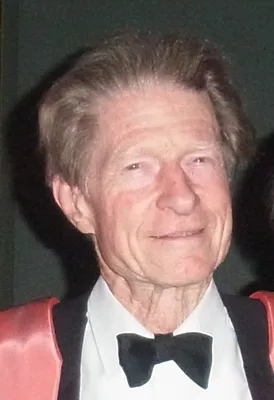
1962 GURDON, Sir John Bertrand (1933 – )
Adult frogs derived from the nuclei of single somatic cells.
Demonstration that somatic and germinal nuclei are genetically equivalent. Using somatic cell nuclear transfer (SCNT), Gurdon (Nobel Prize 2012) transplanted cell nuclei from mature intestinal tadpole cells into enucl…
GMN 256.12 · https://historyofmedicine.com/id/8709
1963 GUTHRIE, Robert (1916 – 1995); SUSI, Ada J. (1918 – 2002)
A simple phenylalanine method for detecting phenylketonuria in large populations of newborn infants.
Bacterial inhibition test for phenylketonuria.
GMN 3924.4 · https://historyofmedicine.com/id/5084
1963 HUESTON, John (1926 – 1993)
Recurrent Dupuytren's contracture.
Hueston described Dupuytren's diathesis, including early onset, bilateral involvement, postive family history, and presence of ectopic lesions. He noted that patents presenting Dupuytren's diathesis experience more se…
GMN 14103 · https://historyofmedicine.com/id/16414
1964 HAMILTON, William Donald (1936 – 2000)
The genetical evolution of social behaviour I, II.
Hamilton’s mathematical theory of kin selection as an explanation for the evolution of social behavior (including supposedly altruistic behavior), is the foundation of sociobiology.
GMN 257.1 · https://historyofmedicine.com/id/8711
1964 PFEIFFER, Rudolf Arthur (1921 – 2012)
Dominant erbliche Akrocephalosyndaktylie.
Pfeiffer syndrome, a rare genetic disorder characterized by the premature fusion of certain bones of the skull (craniosynostosis) which affects the shape of the head and face. In addition, the syndrome includes abnorm…
GMN 11372 · https://historyofmedicine.com/id/13571
1965 WELLS, Robert Stuart; KERR, Charles Baldwin (1933 – )
Genetic classification of ichthyosis.
Sex-linked recessive ichthyosis shown to be an important but not uncommon entity. See also Kerr & Wells: Sex-linked ichthyosis. Ann. hum. Genet., 1965, 29, 33-50.
GMN 4154.8 · https://historyofmedicine.com/id/5916
1965 STURTEVANT, Alfred Henry (1891 – 1970)
A history of genetics.
GMN 258.3 · https://historyofmedicine.com/id/8720
1965 DUNN, Leslie Clarence (1893 – 1974)
A short history of genetics. The development of the main lines of thought: 1864-1939.
GMN 258.4 · https://historyofmedicine.com/id/8721
1965 STUBBE, Hans Karl Oskar (1902 – 1989)
Kurze Geschichte der Genetik bis zur Wiederentdeckung der Vererbungsregeln Gregor Mendels. Zweite Ausgabe.
Revised and enlarged English translation, Cambridge, Mass., Massachusetts Institute of Technology Press,1972.
GMN 258.8 · https://historyofmedicine.com/id/8725