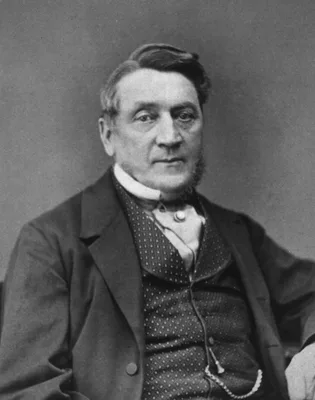
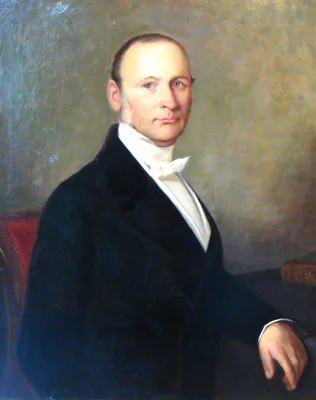
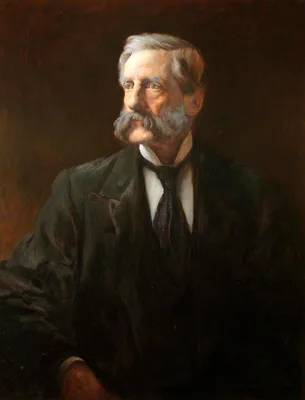
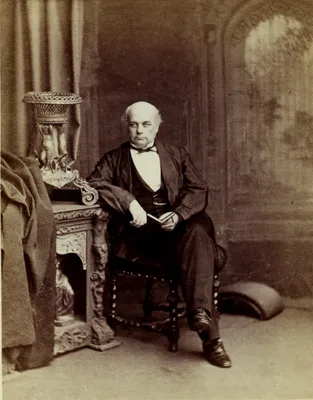
1820 PARIS, John Ayrton (1785 – 1856)
Pharmacologia; or the history of medicinal substances, with a view to establish the art of prescribing. 3rd ed.
First description of cancer caused by arsenic (p. 133).
GMN 2073 · https://historyofmedicine.com/id/2539
1821 ROQUES, Joseph R. (1772 – 1850)
Phytographie médicale, ornée de figures coloriées de grandeur naturelle, ou l’on expose l’histoire des poisons tirés du règne végétal, et les moyens de remédier a leurs effets délétères, avec des observations sur les propriétés et les usages des plantes héroïques. 2 vols.
Perhaps the most beautiful book on botanic poisons and their antidotes, including narcotics. Plates 1-15 cover mushrooms, and plate 175 depicts Cannabis sativa. With 180 plates printed in color à la poupée and finishe…
GMN 10647 · https://historyofmedicine.com/id/12840
1821 –1823 ORFILA, Mathieu Joseph Bonaventure (1787 – 1853)
Leçons de médecine légale. 2 vols.
Vol. 1, illustrated with 22 plates, of which 7 were hand-colored, was issued in 1823. Digital facsimile from Google Books at this link.
GMN 13191 · https://historyofmedicine.com/id/15452
1822 JACKSON, James (1777 – 1867)
On a peculiar disease resulting from the use of ardent spirits.
Jackson drew attention to alcoholic neuritis – arthrodynia a potu. Jackson was professor at Boston Medical School.
GMN 4521 · https://historyofmedicine.com/id/383
1822 DE QUINCEY, Thomas Penson (1785 – 1859)
Confessions of an opium eater.
First published anonymously in September and October 1821 in the London Magazine, 4, No. xxi, 293-312, and No. xxii, 353-79, the Confessions was released in book form in 1822, and, after various reprints, again in 185…
GMN 8904 · https://historyofmedicine.com/id/11082
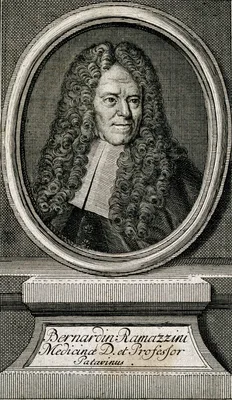
1822 RAMAZZINI, Bernardino (1633 – 1714); PATISSIER, Philibert (1791 – 1863)
Traité des maladies des artisans, et de celles qui résultent des diverse professions, d'après Ramazzini; Ouvrage dans lequel on indique les précautions que doivent prendre, sous le rapport de la salubrité publique et particulière, les fabricans, les manufacturiers, les chefs d'ateliers, les artistes, et toutes les personnes qui exercent des professions insalubres.
This second French edition of Ramazzini's De morbis artificum diabriba by Philibert Patissier provides so much new material on the diseases of workers in France as to virtually double the length of Ramazzini’s text. D…
GMN 9326 · https://historyofmedicine.com/id/11508
1824 CHAUSSIER, François (1746 – 1828); MONTMAHOU, Etienne S. de (1793 – )
Manuel médico-légal des poisons, précédé de considérations sur l'empoisonnement, des moyens de le constater, du résultat d'expériences faites sur l'acétate de morphine et les autres alcalis végétaux; suivi d'une méthode de traiter les morsures des animaux enragés et de la vipère; d'un précis sur la pustule maligne; des secours à donner aux personnes empoisonnées, noyées ou asphyxiées, etc. Rédigé sous les yeux de M. le Professeur Chaussier, par E. Montmahou.
Digital facsimile from the Hathi Trust at this link.
GMN 13408 · https://historyofmedicine.com/id/15680
1825 WATERTON, Charles (1782 – 1865)
Wanderings in South America, the North-West of the United States, and the Antilles, in the years 1812, 1816, 1820, and 1824.
Waterton traveled to the Guyana region of South America to obtain curare. He provided a detailed description of its paralyzing effects, its preparation by distillation, and the blowpipe and darts used to deliver it. O…
GMN 2074 · https://historyofmedicine.com/id/2541
1826 RICORD, Jean Baptiste (1777 – 1837)
Recherches et expériences sur les poisons d'Amérique: Tirés des trois règnes de La nature, et envisagés sous les rapports de l'histoire naturelle, de la physiologie, de le pathologie et de la chimie, avec un essai sur l'empoisonnement par Les miasmes des marais, le mal d'estomac des nègres (cachexia Africana), et les maladies qui ressemblent aux empoisonnemens; pour servir à la toxicologie générale du continent d'Amérique et des Antilles.
GMN 13365 · https://historyofmedicine.com/id/15636
1828 DRAKE, Daniel (1785 – 1852)
Discourse on intemperance; delivered at Cincinnati, March 1, 1828, before The Agricultural Society of Hamilton County, and subsequently pronounced, by request, to a popular audience.
Digital facsimile from U.S. National Library of Medicine at this link.
GMN 13268 · https://historyofmedicine.com/id/15534
1829 ADDISON, Thomas (1793 – 1860); MORGAN, John (1797 – 1847)
An essay on the operation of poisonous agents upon the living body.
The first book in English on the action of poisons on the living body.
GMN 2075 · https://historyofmedicine.com/id/2544
1829 CHRISTISON, Sir Robert (1797 – 1882)
A treatise on poisons.
Christison, a famous toxicologist, was a Professor of Medical Jurisprudence at Edinburgh. During the trial of Burke and Hare he performed an autopsy on the body of one of the victims and gave evidence as to the cause …
GMN 2076 · https://historyofmedicine.com/id/2546
1829 –1830 SPRATT, George
Flora medica: Containing coloured delineations of the various medicinal plants, admitted into the London, Edinburgh, and Dublin pharmacopoeias; with their natural history, botanical descriptions, medical and chemical properties, &c. &c.; together with a concise introduction to botany; a copious glossary of botanical terms and a list of poisonous plants, &c. &c. Edited by a member of the Royal college of physicians, and fellow of the Linnaean society; with the assistance of several eminent botanists; in two volumes.
Digital facsimile from Google Books at this link.
GMN 14124 · https://historyofmedicine.com/id/16435
1831 CHURCHILL, James Morss (1796 – 1863); STEPHENSON, John (1790 – 1864)
Medical botany: Or, illustrations of the medicinal plants of the London, Edinburgh, and Dublin pharmacopoeias; comprising a popular and scientific account of those poisonous vegetables that are indigenous to Great Britain. 4 vols.
Includes 185 hand-colored plates. Digital facsimile from Biodiversity Heritage Library at this link.
GMN 9679 · https://historyofmedicine.com/id/11866
1832 STEPHENSON, John (1790 – 1864)
Medical zoology, and mineralogy; or, illustrations and descriptions of the animals and minerals employed in medicine and of the preparations derived from them: Including also an account of animal and mineral poisons: With figures coloured from nature.
Includes 42 hand-colored plates. Digital facsimile from the Biodiversity Heritage Library at this link.
GMN 9680 · https://historyofmedicine.com/id/11867
1833 AUTENREITH, Hermann Friedrich (1799 – 1874)
Ueber das Gift der Fische: mit vergleichender Berücksichtigung des Giftes von Muscheln, Käse, Gehirn, Fleisch, Fett und Würsten, so wie der sogenannten mechanischen Gifte.
Discusses all then known posionsous and venomous fishes, including freshwater and marine species, and includes a "thorough review of practically all the early literature on poisonous and venomous fishes, a list of all…
GMN 9668 · https://historyofmedicine.com/id/11855
1834 GRAVES, George (1754 – 1839); MORRIES, John Davie
Hortus medicus, or figures and descriptions of the more important plants used in medicine, or possessed of poisonous qualities; with their medical properties, chemical analysis, &c. &c
This materia medica, with fine hand-colored plates, also includes and illustrates poisonous plants with detailed discussion of their properties. It includes recommended dosages for pharmaceutical preparations. Digital…
GMN 8662 · https://historyofmedicine.com/id/10839
1836 MARSH, James (1794 – 1846)
Account of a method of separating small quantities of arsenic from substances with which it may be mixed.
Marsh method for the detection of arsenic.
GMN 2077 · https://historyofmedicine.com/id/2547
1837 HERING, Constantine (1800 – 1880)
Wirkungen des Schlangengiftes, zum aerztichen Gebrauche vergleichend zusammengestellt. Mit einer Einleigung über das Studium der homöopathischen Arzneimittellehr.
An early American homeopathic title on The Effects of Snake Poison Comparatively Arranged for Therapeutic Use. Hering assumed an analogy between snake venom and bacterial toxins. He drew his work from provings and tes…
GMN 6865 · https://historyofmedicine.com/id/9029
1839 TANQUEREL DES PLANCHES, Louis Jean Charles Marie (1810 – 1862)
Traité des maladies de plomb ou saturnines. 2 vols.
Classical description of the diseases found among lead workers. Reporting on 1200 cases of lead poisoning, Tanquerel’s studies were so complete that later studies added little to knowledge of the symptoms and signs of…
GMN 2098 · https://historyofmedicine.com/id/2592
c. 1839 ANONYMOUS
Deadly adulteration and slow poisoning unmasked; or, Disease and death in the pot and the bottle; in which the blood-empoisoning and life-destroying adulterations of wines, spirits, beer, bread, flour, tea, sugar, spices, cheese-mongery, pastry, confectionary medicines, &c. &c. &c. are laid open to the public, with tests or methods for the ascertaining and detecting the fraudulent and deleterious adulterations and the good and bad qualities of those articles: with an exposé of medical empiricism and imposture, quacks and quackery, regular and irregular, legitimate and illegitimate: and the frauds and mal-practices of the pawn-brokers and madhouse keepers. New edition
Digital facsimile from the Hathi Trust at this link.
GMN 10003 · https://historyofmedicine.com/id/12192
1840 BURTON, Henry (1799 – 1849)
On a remarkable effect upon the human gums produced by the absorption of lead.
Burton was the first to note the blue line on the gums in lead poisoning – “Burton’s blue line" – an important diagnostic sign. He was physician to St. Thomas’s Hospital, London.
GMN 2099 · https://historyofmedicine.com/id/2594
1841 SEWALL, Thomas (1786 – 1845)
The pathology of drunkeness, or the effects of alcoholic drinks with drawings of the drunkard's stomach.
Including four chromolithographed plates by J. H. Hall, Albany, N.Y., this is the earliest illustrated book published in the U.S. on the pathological effects of alcoholism. Digital facsimile from the U.S. National Lib…
GMN 13521 · https://historyofmedicine.com/id/15796
1843 ANDRAL, Gabriel (1797 – 1876)
Essai d’hématologie pathologique.
The first monograph on hematology in its "modern" sense. Andral established analysis of the blood on the basis of exact knowledge of the blood components. He analysed the blood fibrin and albumin. He recognized severa…
GMN 3060 · https://historyofmedicine.com/id/3706
1844 SLEEMAN, Sir William Henry (1788 – 1856)
Rambles and recollections of an Indian official. 2 vols.
Lathyrism, a disease occuring in India, and parts of Africa, was known to Hippocrates. Sleeman, an Indian official and major general who presided over the suppression of Thuggee, had no special knowledge of medicine, …
GMN 2077.1 · https://historyofmedicine.com/id/2548
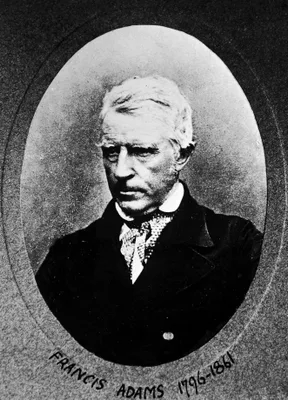
1844 –1847 PAUL OF AEGINA (ΠΑΥ͂ΛΟΣ ΑἸΓΙΝΉΤΗΣ; PAULUS AEGINETA) (625 – 690); ADAMS, Francis (1796 – 1861)
The seven books of Paulus Aegineta: Translated from the Greek, with a commentary embracing a complete view of the knowledge possessed by the Greeks, Romans, and Arabians on all subjects connected with medicine and surgery by Francis Adams. 3 vols.
Book VI is entirely devoted to operative surgery. Adams himself says that it “contains the most complete system of operative surgery which has come down to us from ancient times”. Book IV contains much information on …
GMN 8306 · https://historyofmedicine.com/id/10482
1845 MOREAU, Jacques-Joseph [Moreau de Tours] (1804 – 1884)
Du hachische et de l’aliénation mentale: Études psychologiques.
Moreau's experments may have been the first medical experiments with a psychotropic agent in the treatment of mental illness. English translation by G. J. Barnett as Hashish and mental illness (New York: Raven Press, …
GMN 2077.2 · https://historyofmedicine.com/id/2551
1845 LORINSER, Friedrich Wilhelm (1817 – 1895)
Necrose der Kieferknochen, in Folge der Einwikrung von Phosphor-Dämpfen. Ein Beitrag zur Ätiologie der Knochen-Krankheiten.
The production of matches with white phosphorus in German-speaking countries started in 1833. Between 1839 and 1845 Lorinser saw nine cases of what he called "phosphorimus chronicus" in workers with white phosphorus, …
GMN 9546 · https://historyofmedicine.com/id/11732
1848 TAYLOR, Alfred Swaine (1806 – 1880)
Poisons in relation to medical jurisprudence and medicine.
Taylor was the leading English toxicologist and medical witness of his time, and his works were revised, edited, and translated into other languages. He "performed an invaluable service in codifying legal precedents a…
GMN 10729 · https://historyofmedicine.com/id/12923
1849 –1851 HUSS, Magnus (1807 – 1890)
Alkoholismus Chronicus eller Chronik Alkoholssjukdom. Ett bidrag till dyskrasiernas kännedom; enligt egen och andras erfarenheit. . . . Första afdelningen.
The first monograph on alcoholism considered as a disease. Huss was the first to define alcoholism and to give a scientific analysis of its physical, psychological, moral and social effects. Translated into German, 1852.
GMN 12168 · https://historyofmedicine.com/id/14378
1854 PORCHER, Francis Peyre (1825 – 1895)
On the medicinal and toxicological properties of the cryptogamic plants of the United States.
Separate edition: New York: Baker, Godwin & Co, 1854. Digital facsimile from Google Books at this link.
GMN 10130 · https://historyofmedicine.com/id/12319
1854 LIZARS, John (1794 – 1860)
Practical observations on the use and abuse of tobacco. Greatly enlarged from the original communication on the effects of tobacco smoking, which appeared in Medical Times and Gazette, August 5, 1854.
Lizars was one of the first to recognize the addictive nature of tobacco and its potential damage to health. Digital facsimile of the 6th edition (1857) from wellcomecollection.org at this link.
GMN 13504 · https://historyofmedicine.com/id/15779
1855 HASSALL, Arthur Hill (1817 – 1894)
Food and its adulterations: Comprising the reports of the analytical sanitary commission of "The Lancet" for the years 1851 to 1854 inclusive, revised and extended being records of the results of some thousands of original microscopical and chemical analyses of the solids and fluids consumed by all classes of the public; and containing the names and addresses of the various merchants, manufacturers, and tradesmen of whom the analysed articles were purchased.
Digital facsimile from wellcomecollection.org at this link. Significantly expanded as Food: its adulterations and methods for their detection, London: Longmans, Green, 1876. Digital facsimile of the 1876 edition from …
GMN 13734 · https://historyofmedicine.com/id/16018
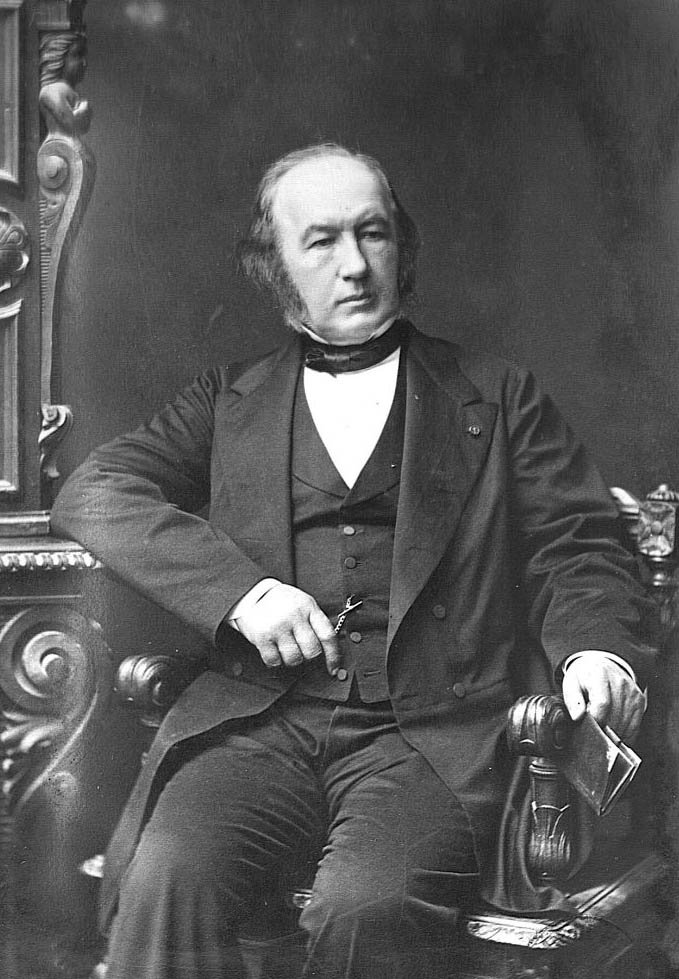
1856 BERNARD, Claude (1813 – 1878)
Analyse physiologique des propriétés des systèmes musculaires et nerveux au moyen de curare.
Bernard paralysed motor nerve-endings with curare and demonstrated the independent excitability of muscle. He showed that curare acted by stopping the transmission of impulses from motor nerves to voluntary muscles.
GMN 2079 · https://historyofmedicine.com/id/499
1856 KÖLLIKER, Rudolph Albert von (1817 – 1905)
Physiologische Untersuchungen über die Wirkung einiger Gifte.
First investigation of the effects of poisons on muscular contraction.
GMN 2078 · https://historyofmedicine.com/id/2553
1856 NICANDER OF COLOPHON (ΝΊΚΑΝΔΡΟΣ Ὁ ΚΟΛΟΦΏΝΙΟΣ; NIKANDER) (-125 – ); SCHNEIDER, Otto; KEIL, Henry
Nicandrea. Theriaca et Alexipharmaca recensuit et emendavit fragmenta collegit, commentationes addidit Otto Schneider. Accedunt scholia in Theriaca excensione Henrici Keil.
Digital facsimile from the Internet Archive at this link.
GMN 9603 · https://historyofmedicine.com/id/11790
1856 FONSSAGRIVES, Jean-Baptiste (1823 – 1884)
Traité d'hygiène navale, ou de l'influence des conditions physiques et morales dans lesquelles l'homme de mer est appelé à vivre et des moyens de conserver sa santé.
One of the first naval manuals to include discussions of zootoxicology. Digital facsimile from BnF Gallica at this link. Much expanded second edition (1877); digital facsimile from BnF Gallica at this link.
GMN 9667 · https://historyofmedicine.com/id/11854
1857 BERNARD, Claude (1813 – 1878)
Leçons sur les effets des substances toxiques et médicamenteuses.
Bernard included a summary of his experiments with curare in the Leçons to establish his priority in researching its effects. He demonstrated in these experiments the susceptibility of the nerve-muscle preparation to …
GMN 1863 · https://historyofmedicine.com/id/2419
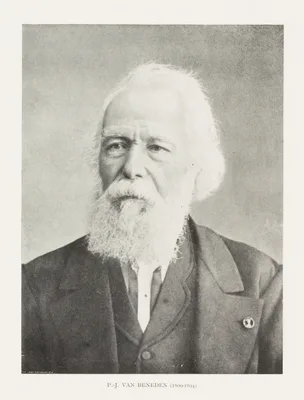
1859 BENEDEN, Pierre-Joseph van (1809 – 1894); GERVAIS, François Louis Paul (1816 – 1879)
Zoologie médicale exposé méthodique du régne animal basé sur l'anatomie, l'embryologie et la paléontologie comprenant la description des espèces employées en médicine de celles qui sont venimuses et de celles qui sont parasites de l'homme et des animaux. 2 vols.
Digital facsimile from Biodiversity Heritage Library at this link.
GMN 13815 · https://historyofmedicine.com/id/16104
1860 MITCHELL, Silas Weir (1829 – 1914); REICHERT, Edward Tyson (1855 – 1931)
Researches upon the venom of the rattlesnake.
See No. 2106.
GMN 2104 · https://historyofmedicine.com/id/2603
1860 WARING, Edward John (1819 – 1891)
Remarks on the uses of some bazaar medicines, and on a few of the common indigenous plants of India, according to European practice.
At the time of publication of this work, which contained texts in both Sanskrit and English, Waring was "Physician to His Highness The Maha Rajah of Travancore." Digital facsimile of the 1860 edition from the Biodiver…
GMN 8818 · https://historyofmedicine.com/id/10996
1866 WINSLOW, Forbes Benignus (1810 – 1874)
On uncontrollable drunkenness considered as a form of mental disorder. With suggestions for its treatment, and the organization of sanitoria for dipsomanics.
Digital facsimile from Google Books at this link.
GMN 13251 · https://historyofmedicine.com/id/15516
1867 WORMLEY, Theodor George (1826 – 1897)
Micro-chemistry of poisons.
The first American book entirely devoted to toxicology and an important contribution to the identification of poisons.
GMN 2080 · https://historyofmedicine.com/id/2555
1867 TARDIEU, Auguste Ambroise (1818 – 1879)
Etude médico-légale et clinique sur l’empoisonnement.
GMN 1745 · https://historyofmedicine.com/id/3108
1868 WILKS, Sir Samuel (1824 – 1911)
Drunkard’s or alcoholic paraplegia.
Classic account of alcoholic paraplegia.
GMN 4539 · https://historyofmedicine.com/id/400
1868 DRAGENDORFF, Georg Johann Noel (1836 – 1898)
Die gerichtlich-chemische Ermittelung von Giften in Nahrungsmitteln, Luftgemischen, Speiseresten, Körpertheilen, etc.
Dragendorff, Professor of Pharmacy at Dorpat, Marburg, and Vienna, contributed an important book on forensic chemistry. He was responsible for the introduction of several methods for the detection of poisons in the hu…
GMN 1746 · https://historyofmedicine.com/id/3112
1871 SCHMIEDEBERG, Johann Ernst Oswald (1838 – 1921)
Untersuchungen über einige Giftwirkungen am Froschherzen.
First investigation of the effect of poisons on the frog’s heart. In some cases Schmiedeberg found that stimulation of the vagus after administration of poisons produced acceleration of the heart rate.
GMN 821 · https://historyofmedicine.com/id/255
1872 HEIDENHAIN, Rudolf Peter Heinrich (1834 – 1897)
Ueber die Wirkung einiger Gifte auf die Nerven der glandula submaxillaris.
Study of the effect of poisons on the nerves of the submaxillary gland.
GMN 1011 · https://historyofmedicine.com/id/829
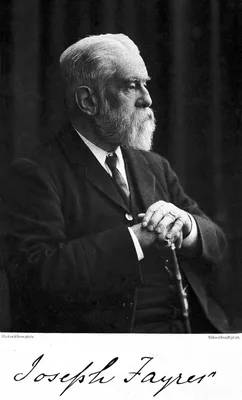
1872 FAYRER, Sir Joseph (1824 – 1907)
The thanatophidia of India. Being a Description of the venomous snakes of the Indian Peninsula, with an account of the influence of their poison on life and a series of experiments
Considered the first systematic work on venomous snakes. Describes all the venomous snakes of India. Digital facsimile from the Internet Archive at this link.
GMN 2105 · https://historyofmedicine.com/id/2604
1872 DRAGENDORFF, Georg Johann Noel (1836 – 1898)
Beiträge zur gerichtlichen Chemie einzelner organischer Gifte.
GMN 1747 · https://historyofmedicine.com/id/3114

![MOREAU, Jacques-Joseph [Moreau de Tours] (1804 – 1884)](/media/portraits/2779)