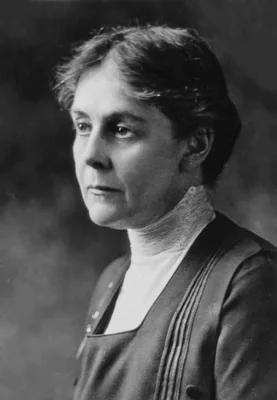
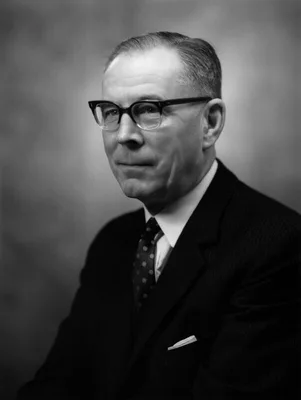
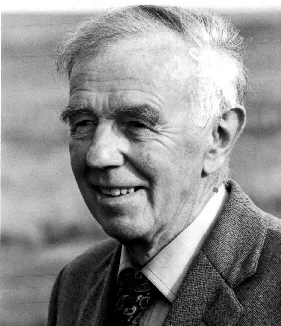
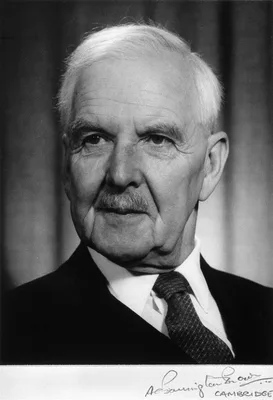
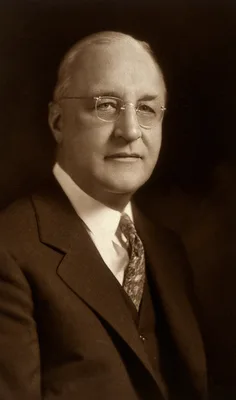
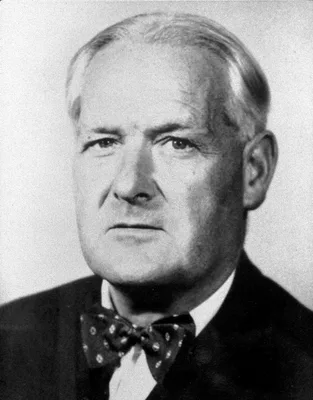
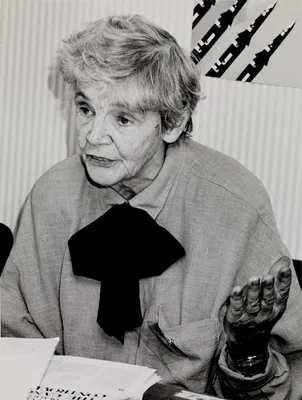
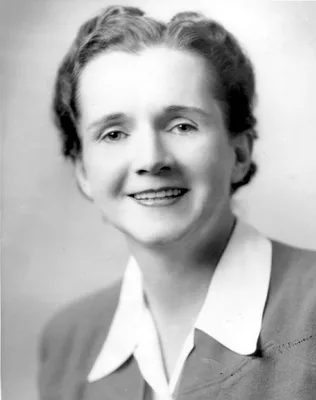
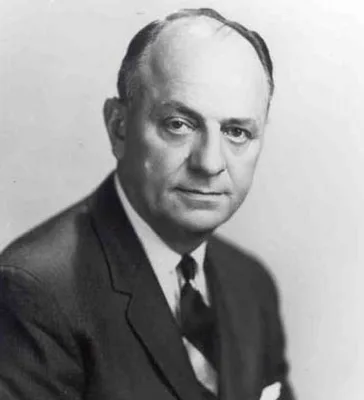
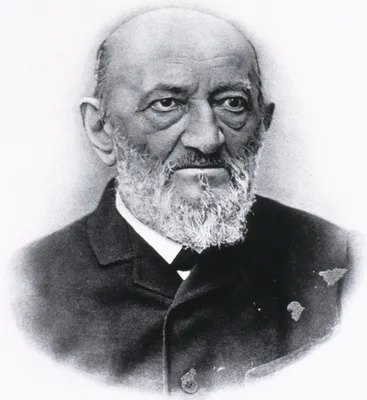
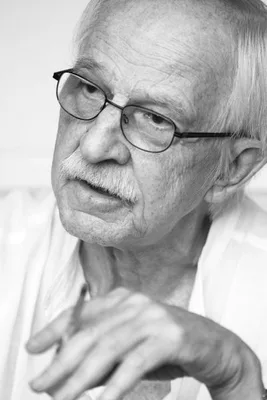
1925 HAMILTON, Alice (1869 – 1970)
Industrial poisons in the United States.
GMN 2134 · https://historyofmedicine.com/id/2670
1925 MARTLAND, Harrison Stanford (1883 – 1954)
Some unrecognized dangers in the use and handling of radioactive substances.
From autopsies on several young women who had painted radium dials, and ingested large cumulative doses by licking their brushes, Martland, medical examiner of Essex County, New Jersey, provided evidence that ingestio…
GMN 7785 · https://historyofmedicine.com/id/9957
1927 BERINGER, Kurt (1893 – 1949)
Der Meskalinrausch. Seine Geschichte und Erscheinungsweise.
The most comprehensive treatise on peyote and its active agent, mescaline, which was synthesized in 1919.
GMN 2086.1 · https://historyofmedicine.com/id/2567
1929 –1931 PATTON, Walter Scott (1876 – 1960); EVANS, Alwen Myfanwy (1895 – 1937)
Ticks, mites and venomous animals of medical and veterinary importance. Part 1: Medical. Part 2: Public health.
Part 1 by Patton and the female entomologist Alwen Evans; part 2 by Patton alone.
GMN 12146 · https://historyofmedicine.com/id/14356
1931 BROWN, Percy (1875 – 1950)
American martyrs to science through the Roentgen rays.
GMN 7788 · https://historyofmedicine.com/id/9960
1932 COOK, Sir James Wilfred (1900 – 1975)
The production of cancer by pure hydrocarbons.
Discovery of the carcinogenic properties of dibenzanthracene compounds. With I. Hieger, E. L. Kennaway, and W. V. Mayneord.
GMN 2654 · https://historyofmedicine.com/id/3319
1933 LESCHKE, Erich Friedrich Wilhelm (1877 – 1933)
Die wichtigsten Vergiftungen. Fortschritte in deren Erkennung und Behandlung.
GMN 2089 · https://historyofmedicine.com/id/2569
1934 MACFARLANE, Robert Gwyn (1907 – 1987); BARNETT, Burgess (1888 – 1944)
The haemostatic possibilities of snake-venom.
Snake venom used in the treatment of hemophilia.
GMN 3093 · https://historyofmedicine.com/id/3777
1935 KING, Harold (1887 – 1956)
Curare.
Isolation from curare of d-tubocurarine chloride.
GMN 5719 · https://historyofmedicine.com/id/6447
1937 PATEK, Arthur Jackson Jr. (1904 – 1991)
Treatment of alcoholic cirrhosis of the liver with high vitamin therapy.
A pioneer paper on the dietary treatment of cirrhosis.
GMN 3661 · https://historyofmedicine.com/id/4808
1937 BROWNING, Ethel (1891 – 1969)
Toxicity of industrial organic solvents.
GMN 11441 · https://historyofmedicine.com/id/13640
1937 –1969 BROOKS, Jerome E. (1895 – 1983); ARENTS, George Jr. (1875 – 1960)
Tobacco: Its history illustrated by the books, manuscripts and engravings in the library of George Arents, Jr. 5 vols. + 10 Supplements.
GMN 11629 · https://historyofmedicine.com/id/13829
1939 MÜLLER, Franz Hermann
Tabakmissbrauch und Lungencarcinom.
In the first case-control epidemiological study of the effects of tobacco Müller recorded a statistically significant correlation between cigarette smoking and lung cancer. See Alfredo Morabia, "Quality, originality, …
GMN 3213 · https://historyofmedicine.com/id/4354
1939 WILSON, William Griffith (1895 – 1971)
Alcoholics Anonymous: The story of how many thousands of men and women have recovered from alcoholism.
"Describes how to recover from alcoholism, primarily written by William G. "Bill W." Wilson, one of the founders of Alcoholics Anonymous (AA). It is the originator of the seminal "twelve-step method" widely used to tr…
GMN 10226 · https://historyofmedicine.com/id/12416
1944 MÜLLER, Paul Hermann (1899 – 1965); ET AL
Über Konstitution und toxische Wirkung von natürlichen und neuen synthetischen insektentötenden Stoffen.
Müller introduced Dichlordiphenyltrichlorethane (DDT) as an insecticide. With H. Martin and P. Läuger. In 1948 Müller received the Nobel Prize in Physiology or Medicine "for his discovery of the high efficiency of DDT…
GMN 1928.3 · https://historyofmedicine.com/id/2732
1945 PETERS, Sir Rudolph Albert (1889 – 1982); ET AL
British anti-lewisite (BAL).
British Anti-Lewisite BAL (dimercaprol), a medication used to treat acute poisoning by arsenic, mercury, gold, and lead, was discovered during the 1939-45 war. With L. A. Stocken and R. H. S. Thompson.
GMN 1929 · https://historyofmedicine.com/id/2736
1945 ROÍG Y MESA, Juan Tomás (1877 – 1971)
Plantas medicinale aromaticas o venenosas de Cuba. 2 vols.
GMN 13061 · https://historyofmedicine.com/id/15313
1947 MCINTYRE, Archibald Ross (1902 – )
Curare, its history, nature, and clinical use.
GMN 2090 · https://historyofmedicine.com/id/2571
1947 UNITED STATES STRATEGIC BOMBING SURVEY, MEDICAL DIVISION
The effects of atomic bombs on health and medical services in Hiroshima and Nagasaki. The United States Strategic Bombing Survey, Medical Division.
Digital facsimile from U.S. National Library of Medicine at this link.
GMN 13113 · https://historyofmedicine.com/id/15366
1948 HALD, Jens
The sensitizing effect of tetraethylthiuramdisulphide (Antabuse) to ethyl alcohol.
Introduction of “antabuse” in the treatment of alcoholism. With E. Jacobsen and V. Larsen. See also Lancet, 1948, 2, 1004.
GMN 2091 · https://historyofmedicine.com/id/2572
1948 BRADLEY, David John (1915 – 2008)
No place to hide.
Bradley's autobiographical account of his work in the Radiological Safety Section in the Pacific in the aftermath of the Bikini atomic bomb tests, Operation Crossroads, alerted the world to the dangers of radioactive …
GMN 7786 · https://historyofmedicine.com/id/9958
1949 ROCHA E SILVA, Mauricio (1910 – 1983); ET AL
Bradykinin, a hypotensive and smooth muscle stimulating factor releases from plasma globulin by snake venoms and by trypsin.
Discovery of bradykinin. With W. T. Beraldo and G. Rosenfeld.
GMN 1930 · https://historyofmedicine.com/id/2747
1950 GRAHAM, Evarts Ambrose (1883 – 1957); WYNDER, Ernst Ludwig (1922 – 1999)
Tobacco smoking as a possible etiologic factor in bronchogenic carcinoma: A study of 684 proved cases.
A case-control study proving an association between heavy prolonged cigarette smoking and bronchogenic carcinoma. See also the following paper on pp. 336-38. Reprinted in J. Amer. med. Assoc. 1985, 253, 2986-97.
GMN 3215.1 · https://historyofmedicine.com/id/4362
1950 DOLL, Sir William Richard Shaboe (1912 – 2005); HILL, Sir Austin Bradford (1897 – 1999)
Smoking and carcinoma of the lung. Preliminary report.
A study of 1,465 cases of lung cancer and 1,465 matched controls, which confirmed and extended the studies of Wynder and Graham, and others. See also later papers by the same authors in Brit. med. J., 1952, 2,1271-86;…
GMN 3215.2 · https://historyofmedicine.com/id/4373
1951 ROTH, Grace M. (1894 – 1982)
Tobacco and the cardiovascular system: The effects of smoking and of nicotine on normal persons.
GMN 11699 · https://historyofmedicine.com/id/13900
1952 FOLLEY, J. H.; BORGES, T.; YAMASAKI, T.
Incidence of leukemia in survivors of the atom bomb in Hiroshima and Nagasaki, Japan.
Leukemia was the first cancer to be linked with radiation exposure in atomic bomb survivors.
GMN 7764 · https://historyofmedicine.com/id/9936
1956 STEWART, Alice Mary (1906 – 2002); ET AL
Preliminary communication: Malignant disease in childhood and diagnostic irradiation in-utero.
Stewart was one of the earliest to study the effect of prenatal X-rays, later replaced by ultrasound. She found that the children of mothers who received these X-rays were almost twice as likely to develop leukemia or…
GMN 7782 · https://historyofmedicine.com/id/9954
1959 LINK, Karl Paul Gerhard (1901 – 1978)
The discovery of Dicumarol and its sequels.
An historical account of the discovery of the anticoagulant Warfarin by the primary investigator. The first use for this substance was rat poison. Digital facsimile from ahajournals.org at this link.
GMN 11405 · https://historyofmedicine.com/id/13604
1962 CARSON, Rachel Louise (1907 – 1964)
Silent spring.
This very carefully documented book convincingly proved the disastrous effects of DDT in the environment, and generated a storm of controversy. It was later credited with founding the "environmental movement" in the U…
GMN 7841 · https://historyofmedicine.com/id/10013
1962 WATT, John Mitchell (1892 – 1980); BREYER-BRANDWIJK, Maria Gerdina (1918 – 1945)
The medicinal and poisonous plants of southern and eastern Africa: Being an account of their medicinal and other uses, chemical composition, pharmacological effects and toxicology in man and animal. Second edition.
1457pp. The first edition of 1932 had only 314pp.
GMN 8793 · https://historyofmedicine.com/id/10971
1964 U.S. PUBLIC HEALTH SERVICE; TERRY, Luther (1911 – 1985)
Smoking and health: report of the Advisory Committee to the Surgeon General of the Public Health Service.
Definitive 386-page throughly documented study of the carcinogenic and pulmonologic effects of smoking, and the addictive aspects of nicotine. It was published under the supervision of Surgeon-General Luther Terry. Di…
GMN 7385 · https://historyofmedicine.com/id/9557
1965 VELLARD, Jehan Albert (1901 – 1996)
Histoire du curare. Les poisons de chasse en Amérique du Sud.
GMN 2068.8 · https://historyofmedicine.com/id/2403
1965 DOLL, Sir William Richard Shaboe (1912 – 2005); BROWN, William Michael Court (1918 – 1968)
Mortality from cancer and other causes after radiotherapy for ankylosing spondylitis.
GMN 7790 · https://historyofmedicine.com/id/9962
1965 –1970 HALSTEAD, Bruce W. (1920 – 2002); COURVILLE, Donovan Amos (1901 – 1996)
Poisonous and venomous marine animals of the world
Volume 1: Invertebrates; Vols. 2 & 3: Vertebrates. An unusually elaborate and finely printed, illustrated and bound set funded by the Department of Defense. Over 2000 pages. The first 155pp of Vol. 1 are a "History of…
GMN 9663 · https://historyofmedicine.com/id/11850
1968 MAKI, Hiroshi; ISHIMARU, Toranosuke; KATO, Hiroo; WAKABAYASHI, Toshiro
Carcinogenesis in atomic bomb survivors. Technical report 24-68. Atomic Bomb Casuality Commission.
Published 23 years after the atomic bombs dropped on Hiroshima and Nagasaki, allowing for carcinogenesis after the latency period. Digital facsimile available from the Radiation Effects Research Foundation at this link.
GMN 7789 · https://historyofmedicine.com/id/9961
1970 GOFMAN, John William (1918 – 2007); TAMPLIN, Arthur R.
Low dose radiation and cancer.
This paper, delivered at the 1969 Nuclear Science Symposium and Nuclear Power Systems Engineering Symposium, October, 1969, provided powerful scientific evidence that the then currently allowable radiation dose (Feder…
GMN 7761 · https://historyofmedicine.com/id/9933
1970 STEWART, Alice Mary (1906 – 2002); KNEALE, George W.
Radiation dose effects in relation to obstetric X-rays and childhood cancers.
In this study of ten million children Stewart and Kneale showed that obstetric X-rays significantly increased the rate of childhood leukemia and cancer.
GMN 7783 · https://historyofmedicine.com/id/9955
1971 STEINSCHNEIDER, Moritz (1816 – 1907)
Die toxikologischen Schriften der Araber bis Ende des XII. Jahrhunderts: Ein bibliographischer Versuch, grossenteils aus handschriftlichen Quellen.
First published in Archiv für pathologische Anatomie und Physiologie und für klinische Medizin 52 (1871 and 57 (1873).
GMN 8348 · https://historyofmedicine.com/id/10524
1973 MUSTO, David Franklin (1936 – 2010)
The American disease: Origins of narcotic control.
Third expanded edition (1999). "Supporting the theory that Americans' attitudes toward drugs have followed a cyclic pattern of tolerance and restraint, author David F. Musto examines the relations between public outcr…
GMN 8902 · https://historyofmedicine.com/id/11080
1974 WHORTON, James C. (1942 – )
Before Silent Spring: Pesticides and public health in pre-DDT America.
GMN 12444 · https://historyofmedicine.com/id/14676
1981 GOFMAN, John William (1918 – 2007)
Radiation and human health.
The first comprehensive book summarizing the evidence relating low-level ionizing radiation to cancer and other diseases.
GMN 7760 · https://historyofmedicine.com/id/9932
1982 COURTWRIGHT, David T. (1952 – )
Dark paradise: Opiate addiction in America before 1940.
Enlarged edition retitled: Dark paradise: A history of opiate addiction in America (2002).
GMN 9775 · https://historyofmedicine.com/id/11963
1983 HARDY, Harriet Louise (1906 – 1993)
Challenging man-made disease.
Hardy's "studies on beryllium began in 1945 when she started working for the Massachusetts Division of Occupational Medicine. She studied factories that produced fluorescent bulbs in Lynn, Salem, and Ipswich, Massachu…
GMN 10472 · https://historyofmedicine.com/id/12665
1984 PARSSINEN, Terry M.
Secret passions, secret remedies: Narcotic drugs in British Society, 1820-1930.
"....The major orientation is to opium, with two chapters on its alkaloid, morphine, occasional references to cocaine, and a mention of heroin. There is an enlightening discussion of reasons for the initial acceptance…
GMN 10243 · https://historyofmedicine.com/id/12433
1985 KARMALI, Mohamed A.; PETRIC, Martin; LIM, Corazon; ET AL
The association between idiopathic hemolytic uremic syndrome and infection by Verotoxin-producing Escherichia coli.
Order of authorship in the original publication: Karmali, Petric, Lim. The authors discovered that a hemolytic uremic syndrome, associated with E. coli 0157-H7 (first described in No. 11376), and which could not be cu…
GMN 11377 · https://historyofmedicine.com/id/13576
1986 LEAF, Alexander (1920 – 2012)
New perspectives on the medical consequences of nuclear war.
Leaf helped found Physicians for Social Responsibility (PSR) in 1961 and became a prominent member of International Physicians for the Prevention of Nuclear War (IPPNW). This paper highlighted "new research on estimat…
GMN 11476 · https://historyofmedicine.com/id/13675
1988 MAIMONIDES, (Moses ben Maimon; מֹשֶׁה בֶּן־מַימוֹן; Mōšeh bēn-Maymōn; موسى بن ميمون Mūsā bin Maymūn) (1135 – 1204); ROSNER, Fred (1931 – )
Moses Maimonides medical writings: Poisons, Hemorrhoids, and cohabitation, translated and annotated by Fred Rosner.
GMN 8268 · https://historyofmedicine.com/id/10444
1988 DAVIS, Wade (1953 – )
Passage of darkness: The Ethnobiology of the Haitian zombie.
GMN 8791 · https://historyofmedicine.com/id/10969
1989 SAUNERON, Serge (1927 – 1976)
Un traité égyptien d’ophiologie - Papyrus du Brooklyn Museum nos 47.218.48 et 85. Cairo: Institut français d'archéologie orientale.
Dating from about 450 BCE, this papyrus concerns snakes and the treatments for snake bites, and also the treatment of scorpion bites and spider bites.
GMN 8392 · https://historyofmedicine.com/id/10569
1989 ESCOHOTADO, Antonio (1941 – )
Historia general de las drogas.
The following works were issued separately and added as appendices to later editions: El libro de los venenos (1990), Para una fenomenología de las drogas (1992) and Aprendiendo de las drogas (1995). English translati…
GMN 10757 · https://historyofmedicine.com/id/12953