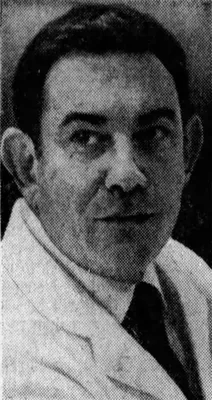
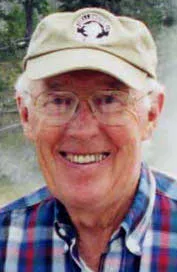
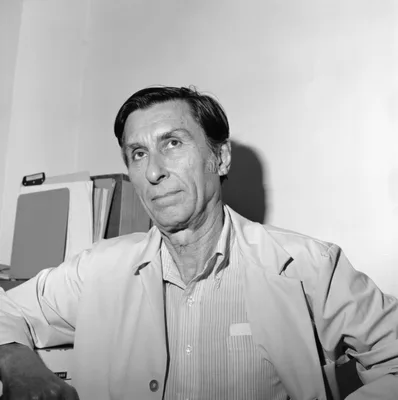
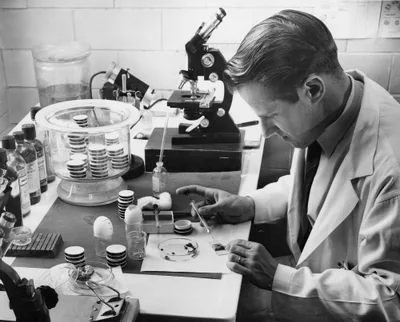
1945 FELDMAN, William Hugh (1892 – 1974); HINSHAW, Horton Corwin (1902 – 2001)
Streptomycin in treatment of clinical tuberculosis: a preliminary report.
GMN 2350 · https://historyofmedicine.com/id/3125
1945 FULTON, Forrest (1913 – 1971); JOYNER, L
Cultivation of Rickettsia tsutsugamushi in lungs of rodents. Preparation of a scrub-typhus vaccine.
Scrub-typhus vaccine.
GMN 5399 · https://historyofmedicine.com/id/7205
1946 TATUM, Edward Lawrie (1909 – 1975); LEDERBERG, Joshua (1925 – 2008)
Gene recombination in Escherichia coli.
Discovery of sexual processes in the reproduction of bacteria. In 1958 Lederberg shared the Nobel Prize in Physiology or Medicine with Tatum and Beadle (No. 254.3) "for his discoveries concerning genetic recombination…
GMN 255.4 · https://historyofmedicine.com/id/8693
1947 AINSWORTH, Geoffrey Clough (1905 – 1998); ET AL
“Aerosporin”, an antibiotic produced by Bacillus aerosporus Greer.
Discovery of aerosporin (polymyxin). With A. M. Brown and G. Brownlee.
GMN 1937 · https://historyofmedicine.com/id/2791
1948 MACCALLUM, Sir Peter (1885 – 1974); ET AL
A new mycobacterial infection in man.
Myco. ulcerans first described. With J. C. Tolhurst, G. Buckle, and H. A. Sissons.
GMN 2526 · https://historyofmedicine.com/id/3453
1951 GREER, William Edward R. (1918 – ); KEEFER, Chester Scott (1897 – 1972)
Cat-scratch fever. A disease entity.
First description.
GMN 5546.2 · https://historyofmedicine.com/id/6769
1951 LWOFF, André Michel (1902 – 1994)
Conditions de l'efficacité inductice du rayonnement ultra-violet chez une bactérie lysogène.
Lwoff successfully explained how the process of lysogeny works. The bacteriophage’s genes are incorporated into the bacteria’s genetic material, but remain latent until a trigger factor causes a new phage to be formed…
GMN 13937 · https://historyofmedicine.com/id/16234
1952 LEDERBERG, Joshua (1925 – 2008); ZINDER, Norton David (1928 – 2012)
Genetic exchange in Salmonella.
Description of a new mechanism (“transduction”) for the transfer of genetic characters from one bacterial strain to another.
GMN 256.1 · https://historyofmedicine.com/id/8698
1952 LEDERBERG, Joshua (1925 – 2008); LEDERBERG, Esther (1922 – 2006)
Replica plating and indirect selection of bacterial mutants.
Demonstration of the mutational basis of antibiotic resistance. Digital facsimile from PubMedCentral at this link.
GMN 9719 · https://historyofmedicine.com/id/11906
1952 LURIA, Salvador Edward (1912 – 1991); HUMAN, Mary L.
A nonhereditary, host-induced variation of bacterial viruses.
Order of authorship in the original publication: Luria, Human. Luria and Human discovered the restriction modification system found in bacteria and other prokaryotic organisms. This system provides a defense against f…
GMN 12032 · https://historyofmedicine.com/id/14240
1952 LWOFF, André Michel (1902 – 1994)
Rôle des cations bivalents dans l'induction du développement du prophage par les agents reducteurs.
Lwoff gave the name "prophage" to the form in which the genome of the bacteriophage is perpetuated in lysogenic bacteria. The bacteriophages produced by these bacteria, known as temperate bacteriophages, can therefore…
GMN 13938 · https://historyofmedicine.com/id/16235
1954 JACOB, François (1920 – 2013); WOLLMAN, Élie Léo (1917 – 2008)
Induction spontanée du développement du bactériophage lambda au cours de la recombinaison génétique, chez Escherichia coli K 12.
Wollman and Jacob discovered zygotic induction. This occurs when a bacterial cell carrying the silenced DNA of a bacteriophage transfers the viral DNA along with its own DNA in its chromosome to another bacterial cell…
GMN 13994 · https://historyofmedicine.com/id/16298
1958 GRAINGER, Thomas Hutchinson (1913 – )
A guide to the history of bacteriology.
A selective annotated bibliography.
GMN 2581.1 · https://historyofmedicine.com/id/4325
1958 EISEMAN, Ben (1917 – 2012); BASCOM, George S. (1927 – 1993); SILEN, W.; ET AL
Fecal enema as an adjunct in the treatment of pseudomembranous enterocolitis.
Order of authorship in the original publication: Eiseman, Silen, Bascom.... Report of the first "fecal transplant / fecal therapy," also known as "faecal microbiota transplanation," for recurrent / resistant C. diffic…
GMN 11458 · https://historyofmedicine.com/id/13657
1962 CHANOCK, Robert Merritt (1904 – 2010); HAYFLICK, Leonard (1928 – 2024)
Growth on artificial medium of an agent associated with atypical pneumonia and its identification as a PPLO.
Using a novel agar and fluid medium formulation he had devised, Hayflick isolated a unique mycoplasma Mycoplasma pneumoniae, a mycoplasma shown to be the cause of some cases of primary atypical pneumonia, or "walking …
GMN 3215.5 · https://historyofmedicine.com/id/4377
1962 STANIER, Roger Yate (1916 – 1982); NIEL, Cornelis Bernardus van (1897 – 1985)
The concept of a bacterium.
Order of authorship in the original publication: Stanier, Niel. For much of the 20th centurty prokaryotes were regarded as a single group of organisms, classified on the basis of their biochemistry, morphology and met…
GMN 12034 · https://historyofmedicine.com/id/14242
1964 YANOFSKY, Charles (1925 – 2018); CARLTON, Bruce C.; HENNING, U.; ET AL
On the colinearity of gene structure and protein structure.
Yanofsky and colleagues established that gene sequences and protein sequences are colinear in bacteria. Order of authorship in the original publication: Yanofsky, Carlton, ... Henning. In genetics, coliniarity is a pr…
GMN 13944 · https://historyofmedicine.com/id/16242
1966 BAUER, Alfred W.; KIRBY, W. M. M.; SHERRIS, John C.; ET AL
Antibiotic susceptibility testing by a standardized single disk method.
The disk diffusion test, or agar diffusion test, or Kirby–Bauer test (disc-diffusion antibiotic susceptibility test, disc-diffusion antibiotic sensitivity test, KB test), for the antibiotic sensitivity of bacteria. (T…
GMN 11105 · https://historyofmedicine.com/id/13301
1969 BROCK, Thomas Dale (1926 – ); FREEZE, Hudson
Thermus aquaticus gen. n. and sp. n., a nonsporulating extreme thermophile.
Discovery of Thermus aquaticus, a species of bacteria that can tolerate high temperatures. This is one of several thermophilic bacteria that belong to the Deinococcus–Thermus group, and the source of the heat-resistan…
GMN 7967 · https://historyofmedicine.com/id/10143
1970 FOSTER, William Derek (1925 – 1981)
A history of medical bacteriology and immunology.
GMN 2581.8 · https://historyofmedicine.com/id/4349
1976 CHIEN CHANG, Alice; EDGAR, David B.; TRELA, John M.
Deoxyribonucleic acid polymerase from the extreme thermophile Thermus aquaticus.
The authors showed that the heat resistant bacteria Thermus aquaticus discovered by Thomas Brock contained a vital polymerase enzyme that had evolved in this bacteria to allow it to metabolize and survive in exception…
GMN 11104 · https://historyofmedicine.com/id/13300
1977 FRASER, David William
Legionnaires’ disease. Description of an epidemic of pneumonia.
First major scientific account. With 11 co-authors. Legionnaire's disease acquired its name after an outbreak of a then-unknown "mystery disease" sickened 221 persons, causing 34 deaths. The people affected were atten…
GMN 3215.7 · https://historyofmedicine.com/id/4380
1977 SHEPARD, Charles Carter (1914 – 1985); FRASER, David William; MCDADE, Joseph E.; ET AL
Legionnaires’ disease. Isolation of a bacterium and demonstration of its role in other respiratory disease.
Order of authorship in the original publication: McDade, Shepard, Fraser.... See also p. 1218.
GMN 3215.8 · https://historyofmedicine.com/id/4382
1979 MCDADE, Joseph E.; BRENNER, Don J.; STEIGERWALT, A. G.
Classification of the Legionnaires' disease bacterium: Legionella pneumophila, genus novum, species nova, of the family Legionellaceae, familia nova.
Order of authorship in the original publication: Brenner, Steigerwalt, McDade. (Thanks to Juan Weiss for this reference and its interpretation.)
GMN 11256 · https://historyofmedicine.com/id/13453
1980 ROWBOTHAM, Timothy J.
Preliminary report on the pathogenicity of Legionella pneumophila for freshwater and soil amoebae.
Discovery of the pathogenic relationship between amoebas and Legionella bacteria--a key step in understanding how this bacteria infects mankind. Legionella bacteria, along with amoeba, live in the organic contaminatio…
GMN 11257 · https://historyofmedicine.com/id/13454
1982 BURGDORFER, Willy (1925 – 2014); BARBOUR, Alan G.; HAYES, Stanley F.
Lyme disease - a tick-borne spirochetosis?
Discovery of the agent causing Lyme disease. Though the authors initially thought the disease might be a spirochetosis, the agent was attributed to a bacterium Borrelia burgdorferi, named for Burgdorfer who discovered…
GMN 10782 · https://historyofmedicine.com/id/12978
1983 MARSHALL, Barry James (1951 – ); WARREN, John Robin (1937 – )
Unidentified curved bacilli on gastric epithelium in active chronic gastritis.
In 2005 Marshall and Warren shared the Nobel prize in Physiology or Medicine "for their discovery of the bacterium Helicobacter pylori and its role in gastritis and peptic ulcer disease." See also their follow-up pape…
GMN 8475 · https://historyofmedicine.com/id/10652
1985 DEISENHOFER, Johann (1943 – ); MICHEL, Hartmut (1948 – ); HUBER, Robert (1937 – ); ET AL
Structure of the protein subunit in the photosynthetic reaction centre of Rhodopseudomonas viridis at 3 Å resolution.
Discovery of the three-dimensional structure of a protein complex found in certain photosynthetic bacteria, called the photosynthetic reaction center. This was the first elucidation of the 3D crystal structure of any …
GMN 11060 · https://historyofmedicine.com/id/13256
1985 KARMALI, Mohamed A.; PETRIC, Martin; LIM, Corazon; ET AL
The association between idiopathic hemolytic uremic syndrome and infection by Verotoxin-producing Escherichia coli.
Order of authorship in the original publication: Karmali, Petric, Lim. The authors discovered that a hemolytic uremic syndrome, associated with E. coli 0157-H7 (first described in No. 11376), and which could not be cu…
GMN 11377 · https://historyofmedicine.com/id/13576
1987 MAEDA, Koichi; MARKOWITZ, Norman; HAWLEY, Robert C.; ET AL
Human infection with Ehrlichia canis, a leukocytic rickettsia.
Order of authorship in the original publication: Maeda, Markowitz, Hawley. First description of Ehrlichiosis in humans, description of the organism, and successful drug treatment with doxycycline. The pathogen was lat…
GMN 10899 · https://historyofmedicine.com/id/13095
1990 BROCK, Thomas Dale (1926 – )
The emergence of bacterial genetics.
GMN 7966 · https://historyofmedicine.com/id/10142
1990 RELMAN, David Arnold; LOUTIT, Jeffrey S.; SCHMIDT, Thomas M.; ET AL
The agent of bacillary angiomatosis - An approach to the identification of uncultured pathogens.
To identify an uncultured and unidentified pathogen that was often visualized in tissue sections of lesions of bacillary angiomatosis with Warthin-Starry staining, the authors utilized two different techniques that we…
GMN 11929 · https://historyofmedicine.com/id/14134
1990 HENSEL, Diane Marie (1948 – 2017); SLATER, Leonard N.; WELCH, David F.; ET AL
A newly recognized fastidious gram-negative pathogen as a cause of fever and bacteremia.
Order of authorship in the original publication: Slater, Welch, Hensel.... Hensel, a medical technologist working in the clinical microbiology laboratory, University Hospitals, Oklahoma City, used innovative culture m…
GMN 11930 · https://historyofmedicine.com/id/14135
1992 REGNERY, Russell L.; ANDERSON, Burt E.; CLARRIDGE, Jill E. III; ET AL
Characterization of a novel Rochalimaea species, R. henselae sp. nov., isolated from blood of a febrile, human immunodeficiency virus-positive patient.
Order of authorship in the original publication: Regnery, Anderson, Clarridge....The authors paid homage to the innovative work of medical technologist Diane Hensel by naming the species after her. It was initially gr…
GMN 11931 · https://historyofmedicine.com/id/14136
1993 REGNERY, Russell L.; DOLAN, Matthew J.; WONG, Michael T.; ET AL
Syndrome of Rochalimea henselae adenitis suggesting cat scratch disease.
Order of authorship in the original publication: Dolan, Wong, Regnery....The authors demonstrated that Rochalimea henselae (now Bartonella henselae) is the infectious agent causing cat scratch fever. (Thanks to Juan W…
GMN 11932 · https://historyofmedicine.com/id/14137
1994 BAKKEN, Johan S.; DUMLER, John Stephen; CHEN, Sheng-Min; ET AL
Human granulocytic Ehrlichiosis in the Upper Midwest United States. A new species emerging?
Order of authorship in the original paper: Bakken, Dumler, Chen. First description of the Ehrlichia ewingii species of Ehrlichiosis (HGE) from a patient in Duluth, Minnesota, though the infectious agent was not yet na…
GMN 10901 · https://historyofmedicine.com/id/13097
1995 PANCHOLI, Preeti; KOLBERT, Chris P.; MITCHELL, Paul D.; ET AL
Ixodes dammini as a potential vector of human granulocytic Ehrlichiosis.
Order of authorship in the original paper was Pancholi,Kolbert, Mitchell. The authors provided convincing evidence that the tick Ixodes dammini is a common vector for the transmission of HGE (Ehrlichia ewingii). (Than…
GMN 10902 · https://historyofmedicine.com/id/13098
1995 VENTER, John Craig (1946 – ); SMITH, Hamilton Othanel (1931 – ); FLEISCHMANN, Robert D.; ADAMS, Mark D.; WHITE, Owen; ET AL
Whole-genome random sequencing and assembly of Haemophilus influenzae Rd.
First sequence of the complete genome of a free-living non-viral organism—Haemophilus influenzae—the bacterium that causes lower respiratory tract infections and meningitis in infants and young children. This genome c…
GMN 11343 · https://historyofmedicine.com/id/13541
1995 SØRENSON, Anne L.; NAGAI, Sadamu; HOUEN, Gunnar; ANDERSEN, Peter Lawaetz; ET AL
Purification and characterization of a low-molecular-mass T-cell antigen secreted by Mycobacterium tuberculosis.
Andersen and colleagues found that a protein fraction obtained from M. tuberculosis was immunologically active in mice, suggesting that it was one of the proteins recognized by T cells. In this paper the authors ident…
GMN 11997 · https://historyofmedicine.com/id/14205
1996 CHOMEL, Bruno B.; KASTEN, Rickie W.; FLOYD-HAWKINS, Kim; ET AL
Experimenal transmission of Bartonella henselae by the cat flea.
Order of authorship in the original publication: Chomel, Kasten, Floyd-Hawkins.... Chomel and colleagues studied 47 cattery cats from a private home for 12 months. They found that such cats typically are bacteremic. S…
GMN 11933 · https://historyofmedicine.com/id/14138
1996 MAHAIRAS, Gregory G.; SABO, Peter J.; HICKEY, Mark J.; ET AL
Molecular analysis of genetic differences between Mycobacterium bovis BCG and virulent M. bovis.
Order of authorship in the original publication: Mahairas, Sabo, Hickey.... From the Abstract: "The live attenuated bacillus Calmette-Guérin (BCG) vaccine for the prevention of disease associated with Mycobacterium tu…
GMN 11995 · https://historyofmedicine.com/id/14203
1998 ROLAND, William E.; EVERETT, E. Dale; CYR, Tracy L.; ET AL
Ehrlichia chaffeensis in Missouri ticks.
Order of authorship in the original paper: Roland, Everett, Cyr. Using PCR, the authors demonstrated that the tick Amblyoma americanum (the Lone Star Tick) was the insect vector of Ehrlichia chaffeensis. Digital facsi…
GMN 10900 · https://historyofmedicine.com/id/13096
1998 VENTER, John Craig (1946 – ); SMITH, Hamilton Othanel (1931 – ); FRASER, Claire M. (1955 – ); NORRIS, Steven J.; WEINSTOCK, George M. (1949 – ); ET AL
Complete genome sequence of treponema pallidum, the syphilis spirochete.
Order of authorship in the original publication: Fraser, Norris, Weinstock....Smith, Venter. Sequence of the genome of the bacterium that causes syphilis. (Thanks to Juan Weiss for this reference and its interpretation.)
GMN 11342 · https://historyofmedicine.com/id/13540
1998 COLE, S. T.; ET AL
Deciphering the biology of Mycobacterium tuberculosis from the complete genome sequence.
Abstract: "Countless millions of people have died from tuberculosis, a chronic infectious disease caused by the tubercle bacillus. The complete genome sequence of the best-characterized strain of Mycobacterium tubercu…
GMN 11998 · https://historyofmedicine.com/id/14206
1999 BULLER, Richard; ARENS, Max; HMIEL, S. Paul; ET AL
Ehrlichia ewingii, a newly recognized agent of human Ehrlichiosis.
Order of authorship in the original publication: Buller, Arens, Hmiel. The authors confirmed that the agent of human granulocytic ehrlichiosis (HGE), is Ehrlichia ewingii, a pathogen carried by dogs and known in that …
GMN 10903 · https://historyofmedicine.com/id/13099
2002 MARSHALL, Barry James (1951 – )
Helicobacter pioneers: Firsthand accounts from the scientists who discovered helicobacters 1892-1982. Edited by Barry Marshall.
RE the history of this discovery see this Wikipedia timeline: https://en.wikipedia.org/wiki/Timeline_of_peptic_ulcer_disease_and_Helicobacter_pylori .
GMN 8476 · https://historyofmedicine.com/id/10653
2005 TAYLOR, Mark J.; MAKUNDE, Williams Holmes; MCGARRY, Helen F.; ET AL
Macrofilaricidal activity after doxycycline treatment of Wuchereria bancrofti: A double blind randomized placebo-controlled trial.
Order of authorship in the original paper: Taylor, Makunde, McGarry.... The authors treated infection by the parasitic worm Wuchereria bancrofti, cause of elephantiasis (lymphatic filariasis), by killing the Wolbachia…
GMN 11193 · https://historyofmedicine.com/id/13390
2005 FREDRICS, David N.; FIEDLER, Tina N.; MARRAZZO, Jeanne M.
Molecular identification of bacteria associated with bacterial vaginosis.
Order of authorship in the original publication: Fredricks, Fiedler, Marrazzo. Using molecular methods, the authors confirmed that absence or greatly reduced number of Lactobacilli was associated with vaginosis. They …
GMN 11396 · https://historyofmedicine.com/id/13595
2007 CRAWFORD, Dorothy H.
Deadly companions: How microbes shaped our history.
GMN 11348 · https://historyofmedicine.com/id/13546
2007 CORR, Sinéad Cristin; LI, Yin; REIDEL, Christian U.; HILL, Colin; ET AL
Bacteriocin production as a mechanism for the antiinfective activity of Lactobacillus salivarius UCC118.
Order of authorship in the original publication: Corr, Li, Reidel...Hill. The authors discovered that Lactobacilli produce a bacteriocin, a peptidic toxin that inhibits the growth of similar or closely related bacteri…
GMN 11478 · https://historyofmedicine.com/id/13677