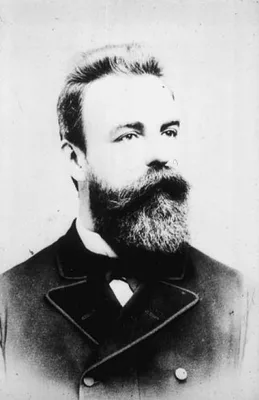
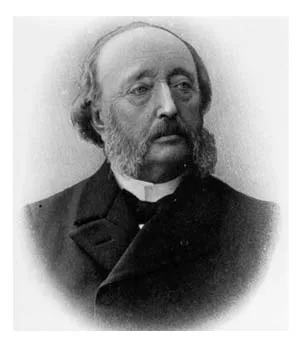
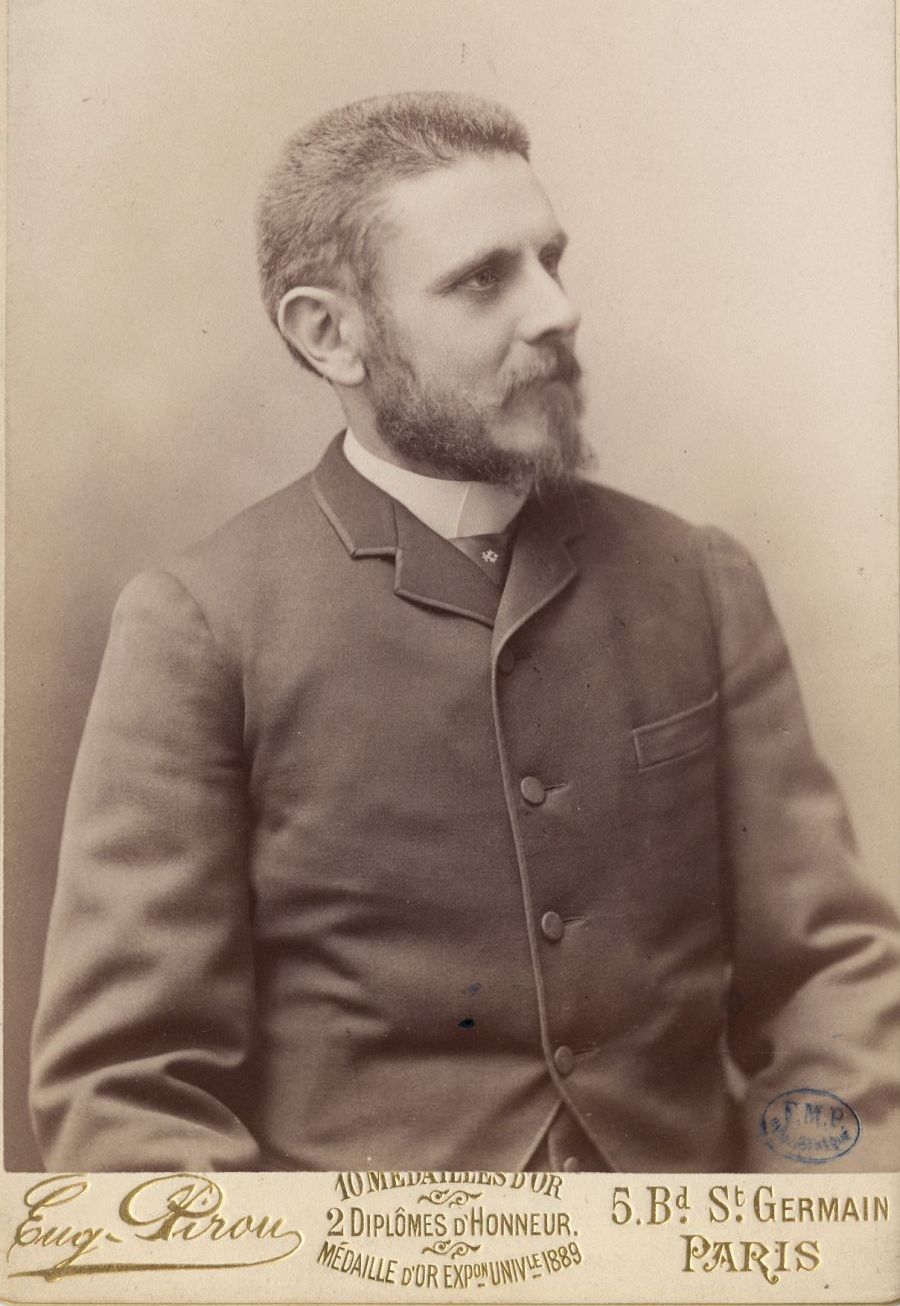
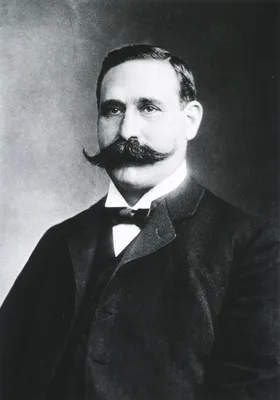
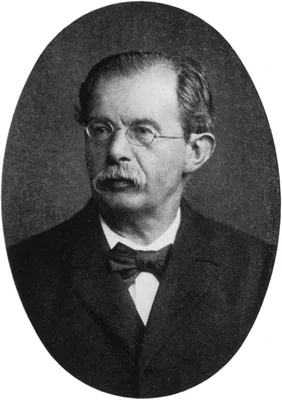
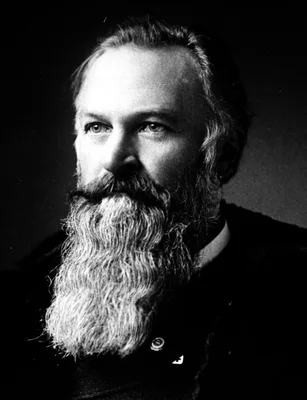
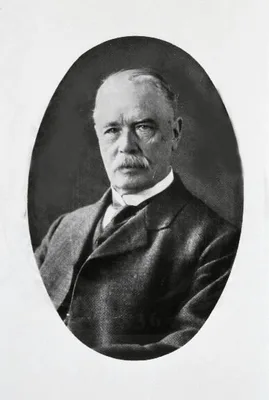
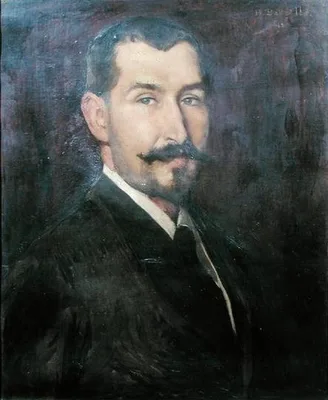
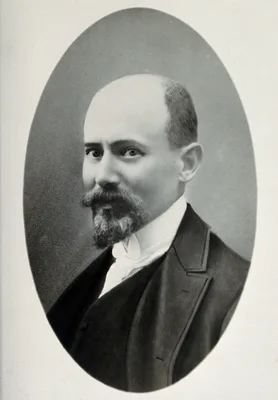
1884 ROSENBACH, Anton Julius Friedrich (1842 – 1923)
Mikro-Organismen bei den Wund-Infections-Krankheiten des Menschen.
Rosenbach proved that streptococci and staphylococci are distinct and differentiated two strains of staphylococci (“aureus” and “albus”). He cultured cocci from a considerable range of septic conditions, thus more acc…
GMN 5619 · https://historyofmedicine.com/id/7159
1888 KÖNIG, Franz (1832 – 1910)
Ueber freie Körper in den Gelenken.
König of Göttingen was the first to use the term “osteochondritis dissecans”.
GMN 4350 · https://historyofmedicine.com/id/5751
1889 KAHLER, Otto (1849 – 1893)
Zur Symptomatologie des multiplen Myeloms.
“Kahler’s disease” – multiple myeloma.
GMN 4351 · https://historyofmedicine.com/id/5753
1890 OLLIER, Louis Xavier Édouard Léopold (1830 – 1900)
Exostoses multiples.
“Ollier’s disease”. He described a form of dyschondroplasia.
GMN 4352 · https://historyofmedicine.com/id/5759
1890 MARIE, Pierre (1853 – 1940)
De l’ostéo-arthropathie hypertrophiante pneumonique.
Original description of hypertrophic osteoarthropathy, sometimes called “Bamberger–Marie disease”.
GMN 4354 · https://historyofmedicine.com/id/5766
1890 HOFFA, Albert (1859 – 1908)
Zur operativen Behandlung der angeborenen Hüftgelenksverrenkungen.
Hoffa’s method of operative treatment of congenital dislocation of the hip-joint.
GMN 4355 · https://historyofmedicine.com/id/5771
1891 RECKLINGHAUSEN, Friedrich Daniel von (1833 – 1910)
Die fibröse oder deformirende Ostitis, die Osteomalacie und die osteoplastische Carcinose in ihren gegenseitigen Beziehungen. In: Festschrift R. Virchow.
Recklinghausen gave an important description of generalized osteitis fibrosa. His reference to the earlier case reported by Engel (see No. 4335) has led to this condition being sometimes referred to as “Engel–Reckling…
GMN 4358 · https://historyofmedicine.com/id/5794
1891 SPRENGEL, Otto Gerhard Karl (1852 – 1915)
Die angeborene Verschiebung des Schulterblattes nach oben.
Classic description of “Sprengel’s deformity”, a congenital upward displacement of the scapula.
GMN 4359 · https://historyofmedicine.com/id/5797
1892 KÜMMELL, Hermann (1852 – 1937)
Traumatische rarefizierende Ostitis.
“Kümmell’s disease”. He described a form of traumatic spondylitis.
GMN 4357 · https://historyofmedicine.com/id/5779
1892 BECHTEREV, Vladimir Michailovich [BEKHTEREV] (1857 – 1927)
Oderevenielost pozvonochnika s iskrivleniyem yevo, kak osobaya forma zabolievaniya. [Ankylosis of the spine with curvature as a special form of disease.]
Bechterev’s disease – ankylosing spondylitis, previously described by Strümpell. A German translation of the paper is in Neurol. Zbl., 1893, 12, 426-34.
GMN 4360 · https://historyofmedicine.com/id/5805
1892 KAUFMANN, Edouard (1860 – 1931)
Untersuchungen über die sogenannte foetale Rachitis (Chondrodystrophia foetalis).
First study of the cartilage changes in achondroplasia.
GMN 4361 · https://historyofmedicine.com/id/5807
1892 KLIPPEL, Maurice (1858 – 1942)
De la pseudo-paralysie générale arthritique.
First description of “Klippel’s disease”, arthritic general pseudoparalysis.
GMN 4362 · https://historyofmedicine.com/id/5810
1893 ALBERT, Eduard (1841 – 1900)
Achillodynie.
Tendo Achilles bursitis, “Albert’s disease”.
GMN 4364 · https://historyofmedicine.com/id/5818
1895 LORENZ, Adolf (1854 – 1946)
The operative treatment of congenital dislocation of the hip-joint.
Lorenz suggested a bloodless method for closed reduction of congenital dislocation of the hip-joint – the “Hoffa–Lorenz” method.
GMN 4365 · https://historyofmedicine.com/id/5828
1895 TRENDELENBURG, Friedrich (1844 – 1924)
Ueber den Gang bei angeborener Hüftgelenksluxation.
“Trendelenburg’s sign” of congenital dislocation of the hip-joint.
GMN 4428 · https://historyofmedicine.com/id/6259
1896 MARFAN, Antoine Bernard-Jean (1858 – 1942)
Un cas de déformation congénitale des quatre membres, plus prononcée aux extrémités, charactérisée par l’allongement des os avec un certain degré d’amincissement.
“Marfan syndrome”. Marfan described only the skeletal deformities. He called the condition dolichostenomelia. Later writers recorded bilateral ectopia lentis and cardiovascular complications in this syndrome.
GMN 4365.1 · https://historyofmedicine.com/id/5831
1896 TUBBY, Alfred Herbert (1862 – 1930)
Deformities: A treatise on orthopaedic surgery.
Includes a valuable discussion of congenital anomalies of the bones and joints from the orthopedic point of view. Greatly expanded second edition, 2 vols., London, 1912.
GMN 4366 · https://historyofmedicine.com/id/5833
1897 BRUCK, Alfred (1865 – )
Ueber eine seltene Form von Erkrankung der Knochen und Gelenke.
“Bruck’s disease” – deformity of bones, multiple fractures, ankylosis of joints, and muscular atrophy.
GMN 4367 · https://historyofmedicine.com/id/5837
1898 MARIE, Pierre (1853 – 1940)
Sur la Spondylose rhizomélique.
Marie described as “spondylose rhizomélique” the ankylosing spondylitis or spondylitis deformans originally reported by Strümpell and called variously “Strümpell’s disease”, “Bechterev’s disease”, “Marie’s disease”.
GMN 4368 · https://historyofmedicine.com/id/5842
1898 MARIE, Pierre (1853 – 1940); SAINTON, Paul (1868 – 1958)
Sur la dysostose cléido-crânienne héréditaire.
In their important description of cleido-cranial dysostosis, Marie and Sainton gave to it its present name. It was first described by Morand (No. 4302.1) in 1760. English translation in Bick, Classics of orthopaedics,…
GMN 4369 · https://historyofmedicine.com/id/5850
1901 KIENBÖCK, Robert (1871 – 1953)
Ueber acute Knochenatrophie bei Entzündungsprocessen an den Extremitäten (fälschlich sogenannte Inactivitätsatrophie der Knochen) und ihre Diagnose nach dem Röntgen-Bilde.
“Kienböck’s atrophy” – acute atrophy of bone in inflammatory conditions of the extremities.
GMN 4370 · https://historyofmedicine.com/id/5852
1903 –1904 ALBERS-SCHÖNBERG, Heinrich Ernst (1865 – 1921)
Projektions-Röntgenbilder einer seltenen Knochenerkrankung.
First description of osteosclerosis fragilis, marble bones (“Albers-Schönberg disease”).
GMN 4372 · https://historyofmedicine.com/id/5858
1903 OSGOOD, Robert Bayley (1873 – 1956)
Lesions of the tibial tubercle occurring during adolescence.
Osgood was the first to draw attention to a condition of the tibial tuberosity; this is now referred to as “Osgood–Schlatter disease” (see also No. 4374).
GMN 4373 · https://historyofmedicine.com/id/5863
1903 SCHLATTER, Carl B. (1864 – 1934)
Verletzungen des schnabelförmigen Fortsatzes der oberen Tibia-epiphyse.
“Osgood–Schlatter disease”. A further description of the painful affection of the tibial tuberosity first noted by Osgood.
GMN 4374 · https://historyofmedicine.com/id/5869
1904 NAU, Pierre
Les scolioses congénitales.
First description of platyspondylia.
GMN 4375 · https://historyofmedicine.com/id/5872
1905 CODIVILLA, Alessandro (1861 – 1912)
On the means of lengthening in the lower limbs, the muscles and tissues which are shortened through deformity.
First attempt at surgical lengthening of limbs.
GMN 4375.1 · https://historyofmedicine.com/id/5875
1906 BÜDINGER, Konrad (1867 – 1944)
Ueber Ablösung von Gelenkteilen und verwandte Prozesse.
Büdinger was the first to describe pathological fracture of the cartilage of the patella. See also his later paper in the same journal, 1908, 92, 510-36. Later descriptions by Karl Ludloff, Verh. dtsch. Ges. Chir., 19…
GMN 4376 · https://historyofmedicine.com/id/5877
1906 LOOSER, Emil (1877 – 1936)
Ueber Osteogenesis imperfecta tarda.
Looser’s syndrome.
GMN 4376.1 · https://historyofmedicine.com/id/5880
1908 KÖHLER, Alban (1874 – 1947)
Ueber eine häufige, bisher anscheinend unbekannte Erkrankung einzelner kindlicher Knochen.
“Köhler’s disease” of the scaphoid bone of the foot in children. See No. 4387.
GMN 4377 · https://historyofmedicine.com/id/5882
1910 –1911 KIENBÖCK, Robert (1871 – 1953)
Über Luxationen im Bereiche der Handwurzel.
First description of a slowly progressive osteonecrosis of the lunate bone of the wrist; carpal lunate malacia. (“Kienböck’s disease”).
GMN 4379 · https://historyofmedicine.com/id/5889
1910 LEGG, Arthur Thornton (1874 – 1939)
An obscure affection of the hip-joint.
Juvenile osteochondritis deformans (“Calvé–Legg–Perthes disease”; see also Nos. 4381 and 4382.). Previously described by H. Waldenström, Z. orthop. Chir., 1909, 24, 486.
GMN 4380 · https://historyofmedicine.com/id/5890
1910 CALVÉ, Jacques (1875 – 1954)
Sur une forme particulière de pseudo-coxalgie greffée sur des déformations caractéristiques de l’extrémité supérieure du fémur.
See No. 4380.
GMN 4381 · https://historyofmedicine.com/id/5892
1910 PERTHES, Georg Clemens (1869 – 1927)
Ueber Arthritis deformans juvenilis.
See No. 4380.
GMN 4382 · https://historyofmedicine.com/id/5895
1911 GOLDTHWAIT, Joel Ernest (1866 – 1961)
The lumbo-sacral articulation. An explanation of many cases of “lumbago”, “sciatica” and paraplegia.
Goldthwait suggested that lumbago and sciatica might be due to intervertebral disc injury.
GMN 4383 · https://historyofmedicine.com/id/5898
1911 TEACHER, John Hammond (1869 – 1930); MIDDLETON, George Stevenson (1854 – 1928)
Injury of the spinal cord due to rupture of an intervertebral disc during muscular effort.
Report of a case of “sciatica” due to rupture of an intervertebral disc.
GMN 4384 · https://historyofmedicine.com/id/5908
1912 CROUZON, Octave (1874 – 1938)
Dysostose cranio-faciale héréditaire.
First description of cranio-facial dysostosis, hypertelorism (Crouzon's syndrome).
GMN 4385 · https://historyofmedicine.com/id/5913
1912 KLIPPEL, Maurice (1858 – 1942); FEIL, André (1884 – )
Un cas d’absence des vertèbres cervicales avec cage thoracique remontant jusqu’à la base du crâne (cage thoracique cervicale).
“Klippel–Feil syndrome” – absence or incomplete development of cervical vertebrae. English translation in Bick, Classics of orthopaedics, 511-16.
GMN 4386 · https://historyofmedicine.com/id/5919
1915 ALBERS-SCHÖNBERG, Heinrich Ernst (1865 – 1921)
Eine seltene, bisher nicht bekannte Strukturanomalie des Skelettes.
First definitive description of osteopoikilosis.
GMN 4386.1 · https://historyofmedicine.com/id/5929
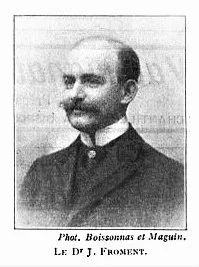
1915 FROMENT, Jules (1876 – 1946)
La préhension dans les paralysies du nerf cubital et le signe du pouce.
“Froment’s sign” of ulnar nerve paralysis.
GMN 4386.2 · https://historyofmedicine.com/id/5932
1920 KÖHLER, Alban (1874 – 1947)
Eine typische Erkrankung des 2. Metatarsophalangealgelenkes.
“Köhler’s second disease” – juvenile deforming metatarsophalangeal Osteochondritis. English translation in Amer. J. Roentgenol., 1923, 10,705-10. Also known as “Freiberg’s infraction” or “Freiberg–Köhler disease”.
GMN 4387 · https://historyofmedicine.com/id/5941
1921 EWING, James (1866 – 1943)
Diffuse endothelioma of bone.
Ewing described a form of bone sarcoma (“Ewing’s sarcoma”), usually involving the shaft of long bones.
GMN 4388 · https://historyofmedicine.com/id/5947
1921 LÉRI, André (1875 – 1930)
Une maladie congénitale et héréditaire de l’ossification: la pléonostéose familiale.
“Léri’s pleonosteosis” first described.
GMN 4388.1 · https://historyofmedicine.com/id/5952
1921 SCHEUERMANN, Holger Werfel (1877 – 1960)
Kyphosis dorsalis juvenilis.
“Scheuermann’s disease” – necrosis of the epiphyses of the vertebrae, causing kyphosis.
GMN 4389 · https://historyofmedicine.com/id/5957
1922 CAMURATI, M
Di un raro caso di osteite simmetrica ereditaria degli arti inferior.
"Camurati-Engelmann disease", a very rare autosomal dominant genetic disorder that causes characteristic anomalies in the skeleton. It is a form of dysplasia. See No. 4395.1.
GMN 7832 · https://historyofmedicine.com/id/10004
1923 APERT, Eugène Charles (1868 – 1940); ET AL
Nouvelle observation d’acrocéphalosyndactylie.
With Tixier, Hue, and Kermorgant.
GMN 4390 · https://historyofmedicine.com/id/5961
1924 GREIG, David Middleton (1864 – 1936)
Hypertelorism. A hitherto undifferentiated congenital cranio-facial deformity.
First description of hypertelorism as a separate entity.
GMN 4392 · https://historyofmedicine.com/id/5970
1925 CODMAN, Ernest Amory (1869 – 1940)
Bone sarcoma, an interpretation of the nomenclature used by the Committee on the Registry of Bone Sarcoma of the American College of Surgeons.
GMN 4393 · https://historyofmedicine.com/id/5977
1927 KOLODNY, Anatole (1892 – 1948)
Bone sarcoma. The primary malignant tumors of bone and the giant cell tumor.
Based on material collected by the Registry of Bone Sacrcoma in Boston since its foundation in 1921.
GMN 4394 · https://historyofmedicine.com/id/5979
1927 ARINKIN, Mikhail (1876 – 1948)
"Methodology of examining bone marrow in live patients, with haemopoietic disease."
Needle puncture of bone marrow biopsy. (In Russian.) German account in Folia haemat. (Lpz.), 1929, 38, 233-40. English translation from the German in Bick, Classics of orthopaedics, 339-44.
GMN 3088 · https://historyofmedicine.com/id/8947
1928 JANSEN, Murk (1863 – 1935)
Dissociation of bone growth. (Exostoses and enchondromata, of Ollier’s dyschondroplasia and associated phenomena.) In The Robert Jones Birthday Volume
Jansen’s theory of dissociation of bone growth.
GMN 4395 · https://historyofmedicine.com/id/5987