1587 ARANZI, Giulio Cesare [ARANZIO; ARANTIUS] (1530 – 1589)
De humano foetu liber tertio editus, ac recognitus. Eiusdem anatomicarum observationum liber: ac De tumoribus secundum locos affectos liber nunc primum editi.
First edition of Aranzi's Anatomicarum observationum published with the third edition of De humano foetu. In the Anatomicarum observationum Aranzi pointed out that the eye muscles arise from the margin of the optic ca…
GMN 7337 · https://historyofmedicine.com/id/9508
1592 BAUHIN, Caspar [BAUHINUS] (1560 – 1624)
Theatrum anatomicum infinitis locis auctum, ad morbos accommodatum....
Includes historical data. Bauhin was professor of anatomy at Basle.
GMN 379 · https://historyofmedicine.com/id/571
1594 CABROL, Barthélemy (1529 – 1603)
Alphabet anatomic, auquel est contenue l'explication exacte des parties du corps humain: Réduites en tables selon l'ordre de dissection ordinaire, avec l'ostéologie et plusieurs observations particulières. Avec l'osteologie, & plusieurs observations particulieres.
This innovative didactic work divided the study of anatomy into 91 tables, set in type, but without images. It was unusually popular, with eleven editions in the seventeenth century as well as translations into Latin …
GMN 10373 · https://historyofmedicine.com/id/12565
1597 BAUHIN, Caspar [BAUHINUS] (1560 – 1624)
Anatomica corporis virilis et muliebris historia.
GMN 437 · https://historyofmedicine.com/id/1088
1598 RUINI, Carlo (1530 – 1598)
Dell’anotomia, et dell’infermità del cavallo.
In 1598 Conte Ottavio Ruini edited and had published in Bologna, with a dedication to Cardinal Pietro Aldobrandini, Dell'anotomia [sic], et dell'infirmita del cavallo [Book ii: Dell'infirmita del cavallo] by il marche…
GMN 285 · https://historyofmedicine.com/id/8821
1599 HÉROARD, Jean (1551 – 1568)
Hippostologie, c’est a dire, discours des os du cheval.
The first work on equine anatomy published in France. Héroard wrote the work in 1579 and the manuscript was preserved in the library of Château de Chantilly, but it was not published until 1599, one year after the pub…
GMN 13240 · https://historyofmedicine.com/id/15505
1600 –1601 CASSERI, Giulio Cesare [Julius Casserius Placentinus; Giulio Casserio] (1552 – 1616)
De vocis auditusque organis historia anatomica. 2 pts.
Casseri, originally a servant to Fabrizio, was personally trained by his employer and eventually succeeded to Fabrizio’s chair of anatomy. Like Fabrizio, who studied the development of the chick for clues to human emb…
GMN 1540 · https://historyofmedicine.com/id/2863
1603 FABRIZIO, Girolamo [FABRICIUS AB AQUAPENDENTE] (1537 – 1619)
De venarum ostiolis.
Fabricius, teacher of Harvey at Padua, discovered the venous valves, and illustrated them in life-size copperplates in this monograph. He failed to recognize their true function, however, considering their function si…
GMN 757 · https://historyofmedicine.com/id/1744
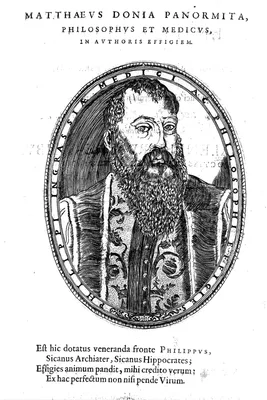
1603 INGRASSIA, Giovanni Filippo (Ioannis Philippi Ingrassiae) (1510 – 1580)
In Galeni librum de ossibus.
Ingrassia is by some accredited with the discovery of the stapes; he also observed the sound-conducting capacity of the teeth.
GMN 1541 · https://historyofmedicine.com/id/2864
1608 FIALETTI, Odoardo (1573 – 1638)
Il vero modo et ordine per dissegnar tutte le parti et membra del corpo humano.
An entirely etched book of 40 leaves, drawn and etched by Fialetti, this was probably the first printed manual on drawing the human body, as distinct from earlier manuals on anatomy for artists. For further informatio…
GMN 8002 · https://historyofmedicine.com/id/10178
1611 GUIDI, Guido [VIDIUS] (1508 – 1569)
De anatome corporis humani libri vii.
Guidi, professor of philosophy and medicine at Pisa, discovered the Vidian nerve, the Vidian canal, and the Vidian artery. The above was edited by his nephew.
GMN 380 · https://historyofmedicine.com/id/574
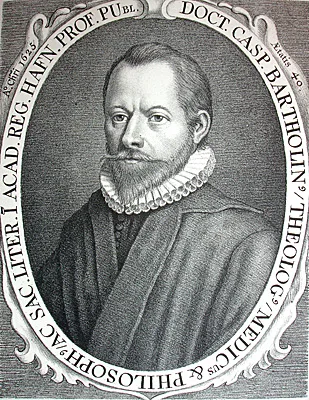
1611 BARTHOLIN, Caspar Senior (1585 – 1629)
Anatomicae institutiones corporis humani.
The elder Caspar Bartholin was the first to describe the workings of the olfactory nerve, and introduced the terms nervus olfactorius and nervus vagus. This was a standard textbook for many years, undergoing numerous …
GMN 6964 · https://historyofmedicine.com/id/9129
1613 REMMELIN, Johann (1583 – 1632)
Catoptri micorcosmici absolutam admirandae partium hominis creaturarum divinarum praestantissimi fabricae eximio artificio sculptam structuram revidendam exhibentis. Engraved by Stephan Michelspacher.
Three large anatomical plates with numerous flaps, in the tradition of fugitive sheets, but larger and more complex. The first edition was issued anonymously without identifying the place of publication or the publish…
GMN 11237 · https://historyofmedicine.com/id/13434
1615 CROOKE, Helkiah (1576 – 1648)
Microcosmographia [In Greek]. A description of the body of man. Together with the controversies thereto belonging. Collected and translated out of all the best authors of anatomy especially out of Gasper Bauhinus and Andreas Laurentius.
As the title page states, the work was a compilation. There were reissues in 1616 and 1618. The second edition (1631) included an engraved title page with the first illustration of a brain dissection. That edition als…
GMN 13123 · https://historyofmedicine.com/id/15379
1619 LAUREMBERG, Peter (1585 – 1639)
Procestria anatomica in quibus propununtur plaeraque ad generalem anatomia & partium contemplationeum attinent; quaedam etiam infimi ventris mebra explicantur; et Andreae Laurenti Historia anatomica multis locis castigatur & corrigitur.
Digital facsimile from Google Books at this link. Peter Lauremberg edited the first edition of this anonymous Byzantine text on anatomy. The first illustrated edition was edited by Johann Stephan Bernard and Daniel Wi…
GMN 13147 · https://historyofmedicine.com/id/15406
1627 CASSERI, Giulio Cesare [Julius Casserius Placentinus; Giulio Casserio] (1552 – 1616)
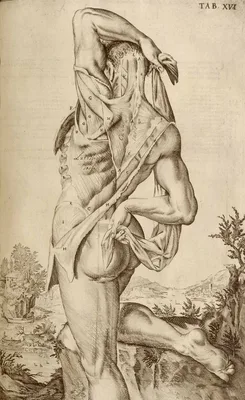
Tabulae anatomicae lxxiix.
First publication of the very beautiful copperplates engraved by Francesco Valesio after Odoardo Fialetti, a pupil of Titian. Casseri commissioned these plates covering the whole field of human anatomy for his unfinis…
GMN 381 · https://historyofmedicine.com/id/577
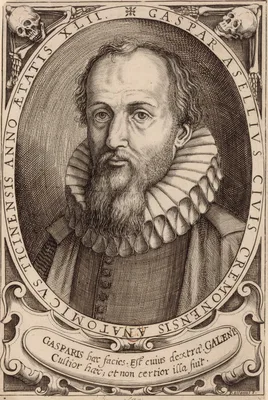
1627 ASELLI, Gaspare (1581 – 1626)
De lactibus sive lacteis venis.
Records the discovery of the lacteal vessels. While performing vivisection on a dog that had recently fed, Aselli noticed a network of vessels in the mesentery and along the peritoneal surface of the intestine. The ve…
GMN 1094 · https://historyofmedicine.com/id/916
1634 GRACHT, Jacob van der (1593 – 1652)
Anatomie der uuterlicke deelen van het menschelick lichaem: Dienende om te verstaen ende volkometlick wt te beelden alle beroerlicheit des selven lichaems.
The earliest of all independent works on anatomy for graphic or plastic artists. The author, a painter and etcher, drew and engraved all the images himself. Digital facsimile from Google Books at this link.
GMN 381.1 · https://historyofmedicine.com/id/579
1641 BARTHOLIN, Thomas (1616 – 1680); LE BÖE, Franz de [FRANCISCUS SYLVIUS] (1614 – 1672); BARTHOLIN, Caspar Senior (1585 – 1629)
Institutiones anatomicae, novis recentiorum opinionibus & observationibus, quarum innumerae hactenus editae non sunt, figurisque auctae ab auctoris filio Thoma Bartholino.
In this revision of his father’s anatomical treatise, Thomas Bartholin included the first depiction of the fissure of Sylvius, the lateral cerebral fissure, and the only part of the surface of the cerebral hemispheres…
GMN 1377.3 · https://historyofmedicine.com/id/1791
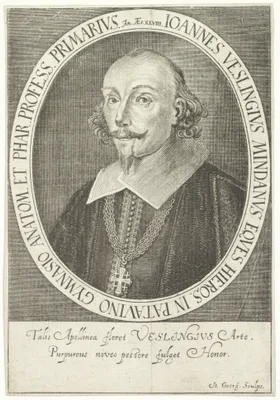
1641 VESLING, Johann (1598 – 1649)
Syntagma anatomicum, publicis dissectionibus, in auditorum usum, diligenter aptatum.
Vesling provided an early discussion of the human lymphatic system. He was one of the first physicians to describe the brain's circle of Willis. Digital facsimile from the Internet Archive at this link.
GMN 9417 · https://historyofmedicine.com/id/11600
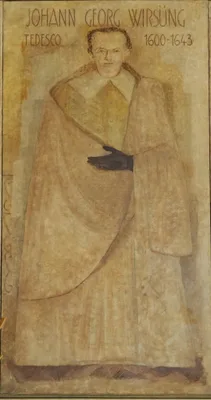
1642 WIRSUNG, Johann Georg (1589 – 1643)
Figura ductus cuiusdam cum multiplicibus suis ramulis noviter in pancreate in diversis corporibus humanis observati.
Wirsung, assistant to the celebrated German anatomist Johann Vesling, discovered the excretory duct of the pancreas named for him in 1642. To announce his discovery, Wirsung chose the extremely unusual method of publi…
GMN 7879 · https://historyofmedicine.com/id/10051
1645 FOLLI, Cecilio [FOLIUS, FUOLI] (1615 – 1660)
Nova auris internae delineatio.
An article which announces the discovery of the long process of the malleus. Folius “accurately discussed the general configuration of the middle ear, described the round and oval windows, delineated the three ossicle…
GMN 1542 · https://historyofmedicine.com/id/2865
1645 SPIEGHEL, Adriaan van der [SPIGELIUS] (1578 – 1625); LINDEN, Johannes Antonides van der (1609 – 1664)
Opera quae extant omnia. Ex recension Joh. Antonidae vander Linden.
Spieghel succeeded Casseri in the chair of anatomy at Padua. This edition of his collected writings contains the second printing of the 97 copperplates first printed in Casseri’s Tabulae anatomicae (No. 381) plus 9 ex…
GMN 61.2 · https://historyofmedicine.com/id/8777
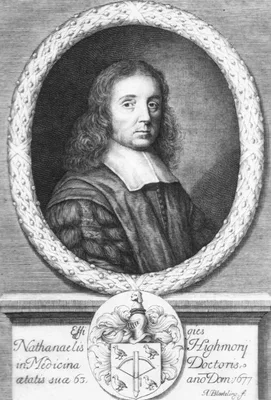
1651 HIGHMORE, Nathaniel (1613 – 1685)
Corporis humani disquisitio anatomica.
Highmore is remembered for his description of the maxillary sinus, known eponymically as the “antrum of Highmore” (already noticed by Casserius and figured by Leonardo da Vinci), the seminal ducts and the epididymis. …
GMN 382 · https://historyofmedicine.com/id/581
1651 PECQUET, Jean (1622 – 1674)
Experimenta nova anatomica, quibus incognitum chyli receptaculum, et ab eo per thoracem in ramos usque subclavis vasa lactea deteguntur.
Pecquet discovered the thoracic duct in dogs and its relation to the lacteals. Using a dog that was digesting, he described the thoracic duct, its entry into the subclavian veins, and the receptaculum chyli or chyle r…
GMN 1095 · https://historyofmedicine.com/id/929
1652 BARTHOLIN, Thomas (1616 – 1680)
De lacteis thoracicis in homine brutisque.
Contains Bartholin’s discovery of the thoracic duct. English translation, 1653.
GMN 1096 · https://historyofmedicine.com/id/932
1652 TULP, Nicolaes (1593 – 1674)
Observationes medicae.
One of the earliest accounts of beri-beri is on pp. 300-05 of this work. Tulp, notable as the demonstrator in Rembrandt’s “Anatomy Lesson”, was among the first, in the same book, to describe the ileo-caecal valve (“Tu…
GMN 3737 · https://historyofmedicine.com/id/4530
1653 BARTHOLIN, Thomas (1616 – 1680)
Vasa lymphatica.
Bartholin disputed the claim of Rudbeck as to priority in the discovery of the intestinal lymphatics. Although anticipated in this by Rudbeck, there is no doubt that Bartholinus was the first to appreciate the signifi…
GMN 1097 · https://historyofmedicine.com/id/1036
1653 RUDBECK, Olof (1630 – 1702)
Nova exercitatio anatomica, exhibens ductus hepaticos aquosos, et vasa glandularum serosa.
Rudbeck claimed to have discovered the intestinal lymphatics and their connexion with the thoracic duct in 1651, a claim disputed as to priority by Bartholin (Nos. 1096-97). This book was reproduced in facsimile in 19…
GMN 1098 · https://historyofmedicine.com/id/1045
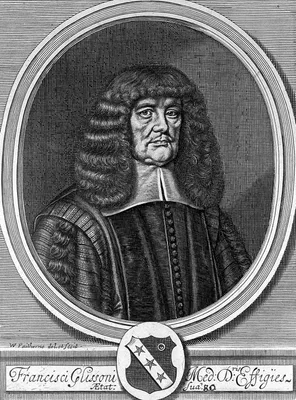
1654 GLISSON, Francis (1597 – 1677)
Anatomia hepatis.
First accurate description of the capsule of the liver (Glisson’s capsule) and its blood-supply. He also described the sphincter of the bile duct (“Glisson’s sphincter”, the sphincter of Oddi). This is the first book …
GMN 972 · https://historyofmedicine.com/id/563
1654 GLISSON, Francis (1597 – 1677)
Anatomia hepatis … subjiciuntur nonnulla de lymphae-ductibus nuper repertis.
Independently of Bartholin and Rudbeck, George Joyliffe (1621-58) observed the lymphatics. He communicated his discovery to Glisson early in 1652 and the latter included an account in the above work (Cap. xxxi). See N…
GMN 1098.1 · https://historyofmedicine.com/id/1120
1656 WHARTON, Thomas (1614 – 1673)
Adenographia: sive, glandularum totius corporis descriptio.
Wharton described the duct of the submaxillary salivary gland (“Wharton’s duct”). He described the thyroid more accurately than his predecessors, naming it. He also described “Wharton’s jelly” of the umbilical cord (p…
GMN 1116 · https://historyofmedicine.com/id/1196
1661 MALPIGHI, Marcello (1628 – 1694)
De pulmonibus observations anatomicae.
Discovery of the capillary circulation. Malpighi demonstrated that the pulmonary tissues are vesicular in nature and showed that the trachea ends in bronchial filaments. His De pulmonibus includes his demonstration of…
GMN 760 · https://historyofmedicine.com/id/1747
1662 STENO, Nicolas [Niels Steensen, Nicholaus Stenonis] (1638 – 1686)
Observationes anatomicae, quibus varia oris, oculorum & narium vas describuntur novique salivae, lacrymarum & muci fontes deteguntur.
Includes the first account of the excretory duct of the parotid gland (“Stensen’s duct”), discovered by Stensen. He first reported his discovery in a letter to his teacher, Thomas Bartholin, dated April, 22, 1661. Ste…
GMN 1543 · https://historyofmedicine.com/id/567
1662 BARTHOLIN, Thomas (1616 – 1680)
Cista medica Hafniensis: variis consiliis, curationibus, casibus rarioribus, Vitis medicorum Hafniensium, aliisq; ad rem medicam, anatomicam, botanicam & chymicam spectantibus referta. Accedit eiusdem Domus anatomica brevissime descripta.
Histories of famous physicians in Copenhagen along with the description of the building designed for the teaching of anatomy there, designated the "Anatomy House". Bartholin's Domus anatomica brevissime descripta was …
GMN 7690 · https://historyofmedicine.com/id/9862
1664 WILLIS, Thomas (1621 – 1675)
Cerebri anatome: cui accessit nervorum descriptio et usus.
The most complete and accurate account of the nervous system which had hitherto appeared, and the work that coined the term, “neurology". In its preparation Willis was helped by his students Richard Lower and Thomas M…
GMN 1378 · https://historyofmedicine.com/id/1789
1665 RUYSCH, Frederik (1638 – 1731)
Dilucidatio valvularum in vasis lymphaticis et lacteis.
First description of the valves of the lymphatics, discovered by Ruysch. Facsimile reprint, Niewkoop, De Graaf, 1964.
GMN 1099 · https://historyofmedicine.com/id/1121
1666 BLASIUS, Gerard "Gerrit" Leendertszoon [Blaes] (162 – 1682)
Anatome medullae spinalis, et nervorum.
The first separate work on the spinal cord. Blasius “illustrated the separate origin of the anterior and posterior roots, the dorsal root ganglia and the differentiation between the gray and white matter of the spinal…
GMN 1354.9 · https://historyofmedicine.com/id/1626
1666 PÉREZ FADRIQUE, Juan Eulogio
Modo practico de embalsamar cuerpos defunctos, para preservarlos incorruptos....
On embalming corpses, and on human cadavers. This work includes (pp. 98-127) instructions for the embalming process in Spain, with woodcut illustrations of the tools used and recipes for the ointments. The author also…
GMN 13899 · https://historyofmedicine.com/id/16191
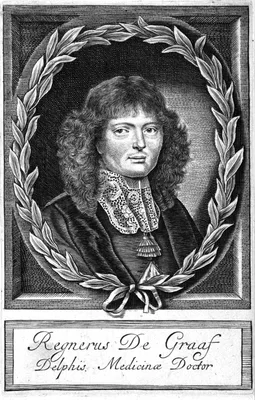
1668 GRAAF, Regnier de (1641 – 1673)
De virorum organis generationi inservientibus, de clysteribus et de usu siphonis in anatomia.
Exact and detailed account of the male reproductive system. This work and No. 1209 were translated into English and published as Suppl. 17 to J. Reprod. Fertil, 1972. Facsimile of originals, Nieuwkoop, De Graaf, 1965.
GMN 1210 · https://historyofmedicine.com/id/1867
1669 STENO, Nicolas [Niels Steensen, Nicholaus Stenonis] (1638 – 1686)
Discours sur l’anatomie du cerveau.
In this remarkably prescient argument for, and critique of, anatomical research into brain function Stensen opposed Descartes (No. 574) arguing that it was idle to speculate about cerebral function when so little was …
GMN 1378.1 · https://historyofmedicine.com/id/1783
1670 KERCKRING, Thomas Theodor (1640 – 1693)
Spicilegium anatomicum.
Kerckring made important investigations on the development of the foetal bones. He was the first to describe the large ossicle sometimes present at the lambdoidal suture; his name is remembered in the valvulae connive…
GMN 383 · https://historyofmedicine.com/id/587
1672 GENGA, Bernardino (1665 – 1734)
Anatomia chirurgica.
First book devoted entirely to surgical anatomy.
GMN 384 · https://historyofmedicine.com/id/591
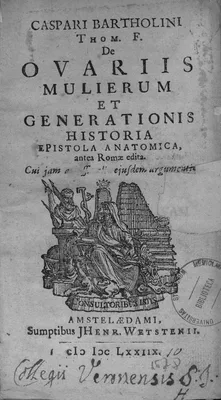
1672 GRAAF, Regnier de (1641 – 1673)
De mulierum organis generationi inservientibus.
De Graaf demonstrated ovulation anatomically, pathologically and experimentally. In the above work he included the first account of the “Graafian follicle”. Translation of Chapter XII, dealing with the ovaries, by G. …
GMN 1209 · https://historyofmedicine.com/id/1863
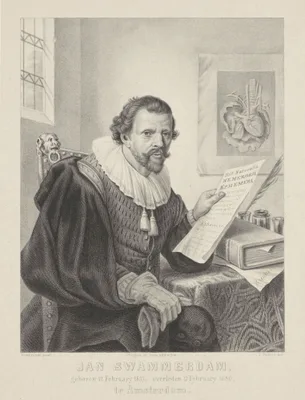
1675 SWAMMERDAM, Jan (1637 – 1680)
Ephemeri Vita. Of afbeeldingh van 's menschen leven, Vertoont in de Wonderbaarlijcke en nooyt gehoorde Historie van het vliegent ende een-dagh-levent Haft of Oever-aas. Een dierken, ten aansien van sijn naam, over al in Neerlandt bekent.
In his final publication Swammerdam studied the anatomy, development and behavior of the mayfly. Translated into English as Emphemeri vita: Or the natural history and anatomy of the ephemeron, a fly that lives but fiv…
GMN 13272 · https://historyofmedicine.com/id/15538
1676 –1680 WILLIS, Thomas (1621 – 1675)
Opera omnia. 2 vols.
Willis was remarkable for his careful clinical observation. He was second only to Sydenham in his day. To him we owe the original descriptions of several conditions. Digital facsimile of the Lyon, 1681 edition from th…
GMN 62 · https://historyofmedicine.com/id/990
1677 PEYER, Johann Conrad (1653 – 1712)
Exercitatio anatomico-medica de glandulis intestinorum, earumque usu et affectionibus.
Independently of Bartholin and Rudbeck, George Joyliffe (1621-58) observed the lymphatics. He communicated his discovery to Glisson early in 1652 and the latter included an account in the above work (Cap. xxxi). See N…
GMN 1100 · https://historyofmedicine.com/id/1075
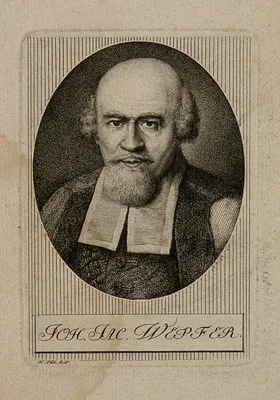
1679 WEPFER, Johann Jacob (1620 – 1695)
Cicutae aquaticae historia et noxae.
This is primarily a work on the poisonous water hemlock, its dangerous effects, its medicinal uses, and antidotes to counter the poison. However, it also contains the first description of the tiny glands in the mucosa…
GMN 974.1 · https://historyofmedicine.com/id/576
1684 BARTHOLIN, Caspar Junior (1655 – 1738)
Du ductu salivati hactenus non descriptio.
“Bartholin’s duct” and “gland”, the sublingual salivary gland and ducts.
GMN 974.2 · https://historyofmedicine.com/id/588
1684 VIEUSSENS, Raymond (1641 – 1715)
Neurographia universalis.
Vieussens, professor at Montpellier, was the first to describe the centrum ovale correctly. The publication of the above work threw new light on the subject of the configuration and structure of the brain, spinal cord…
GMN 1379 · https://historyofmedicine.com/id/1784