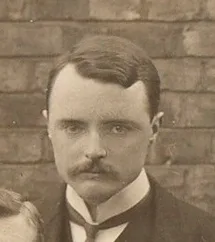
1874 PEUGNET, Eugène (1843 – 1879)
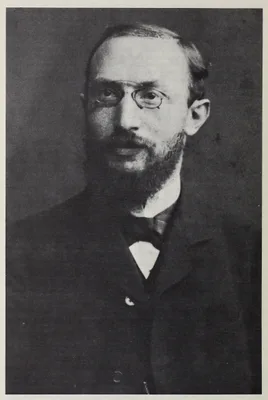
The nature of gunshot wounds of the abdomen, and their treatment: Based on a review of the case of the late James Fisk, Jr., in its medico-legal aspects.
Peugnet argued that over-medication, and not the pistol shot, caused Fisk's death. Peugnet, a surgeon who had served in the American Civil War, died at the early age of 43, having been struck by a locomotive while abs…
GMN 7848 · https://historyofmedicine.com/id/10020
1874 KEDZIE, Robert Clark (1823 – 1902)
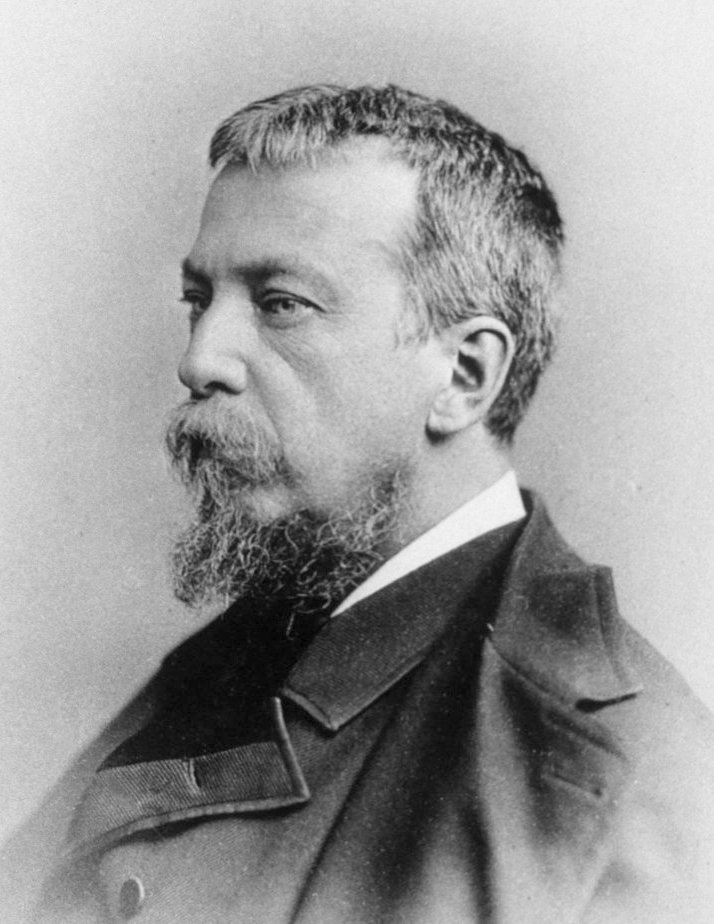
Shadows from the walls of death: Facts and inferences prefacing a book of specimens of arsenical wall papers.
To drive home the dangers of arsenic in wallpaper Kedzie took the step of publishing one of the most unusual books ever issued: Shadows from the Walls of Death: Facts and Inferences Prefacing a Book of Specimens of Ar…
GMN 9643 · https://historyofmedicine.com/id/11830
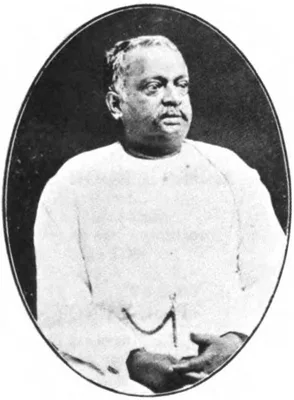
1877 DUTT, Uday Chand (1834 – 1884)
Materia medica of the Hindus compiled from Sanskrit medical works. With a glossary of Indian plants.
GMN 13781 · https://historyofmedicine.com/id/16068
1878 EWART, Joseph (1831 – 1906)
The poisonous snakes of India: For the use of the officials and others residing in the Indian Empire.
Digital facsimile from the Biodiversity Heritage Library at this link.
GMN 9497 · https://historyofmedicine.com/id/11682
1878 BAER, Abraham Adolf (1834 – 1908)
Der Alkoholismus seine Verbreitung und Wirkung auf den Individuellen und sozialen Organismus, sowie die Mittel Ihn zu Bekämpfen.
GMN 13475 · https://historyofmedicine.com/id/15749
1881 LEWIN, Louis (1850 – 1929)
Die Nebenwirkungen der Arzneimittel.
This was the first book of its kind. It deals with the borderline between the pharmacological and the toxicological action of drugs with the untoward or side-effects of all kinds of medicaments. For details regarding …
GMN 2081 · https://historyofmedicine.com/id/2556
1882 KANE, Harry Hubbell (1854 – )
Opium-smoking in America and China: A study of its prevalence, and effects, immediate and remote, on the individual and the nation.
The author claims (p. 1) that "the first white man who smoked opium in America is said to have been a sporting character named Clendenyn. The second—induced to try it by the first—smoked in 1871." Digital facsimile fr…
GMN 9506 · https://historyofmedicine.com/id/11691
1884 FREUD, Sigmund (1856 – 1939)
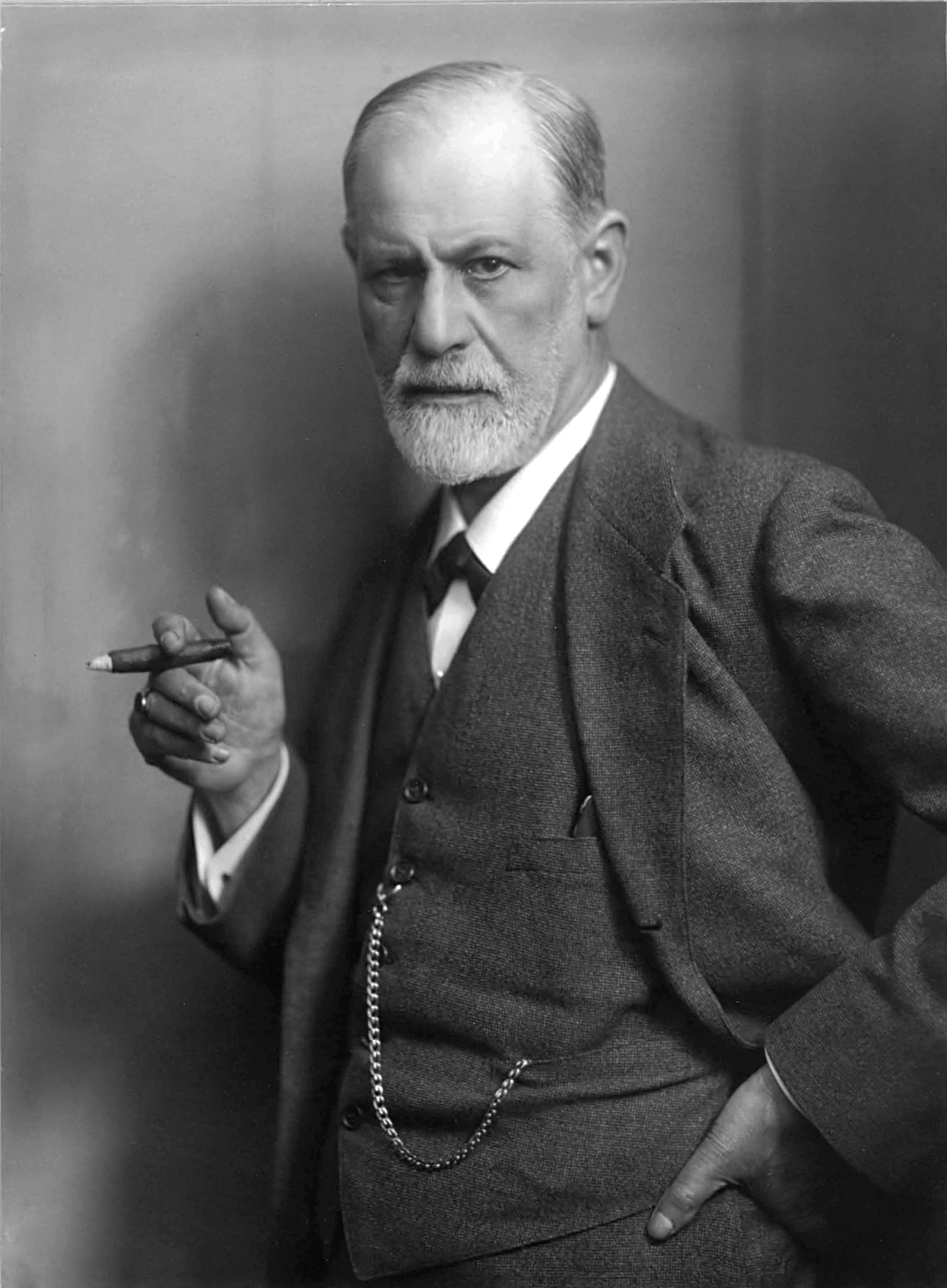
Ueber coca.
Freud described his observations (with himself as subject) on the effects of cocaine, including its abolition of hunger and fatigue, the “exhilaration and lasting euphoria”. He also described its supposed non-addictiv…
GMN 1880.1 · https://historyofmedicine.com/id/2515
1886 MITCHELL, Silas Weir (1829 – 1914); REICHERT, Edward Tyson (1855 – 1931)
Researches upon the venoms of poisonous serpents.
Mitchell (see also No. 2104) and Reichert showed that snake venom is protein, and demonstrated the presence of toxic albumins. Mitchell was one of the first to investigate snake venoms.
GMN 2106 · https://historyofmedicine.com/id/2607
1886 SAVTSCHENKO, Peter Nikolaevich (SAVCHENKO) (1846 – 1885)
Atlas des poissons vénéneux et descriptions des ravages produits par eux sur l'organisme humain, et des contre-poisons à employer. Atlas iadovitykh ryb s opisaniem vida ikh, deistviia iada na organizm cheloveka i ukazaniem protivuiadii.
The first well-illustrated medical military manual on toxic marine organisms. Text in French and Russian.
GMN 9665 · https://historyofmedicine.com/id/11852
1887 KORSAKOFF, Sergei Sergeievich (1853 – 1900)
Disturbance of psychic activity in alcoholic paralysis.
“Korsakoff’s psychosis” or syndrome – alcoholic polyneuritis with loss and falsification of memory. A second paper on the subject in Ezhened. klin. Gaz., 1889, 9, 85, 115, 136, is translated into English in Neurology,…
GMN 4945 · https://historyofmedicine.com/id/6233
1888 GÄRTNER, August Anton Hieronymous (1848 – 1934)
Ueber die Fleischvergiftung in Frankenhausen. a.K. und den Erreger derselben.
Discovery of Salmonella enteritidis, a cause of food poisoning.
GMN 2506 · https://historyofmedicine.com/id/3223
1889 DEJERINE-KLUMPKE, Augusta (1859 – 1927)
Des polynévrites en général et des paralysies et atrophies saturnines en particulier.
Madame Dejerine-Klumpke, famous neurologist, contributed an important work on lead palsies.
GMN 2100 · https://historyofmedicine.com/id/2596
1889 BOTTARD, Louis Alphonse (1854 – )
Les poissons venimeux. Contribution à l'hygiène navale.
The first systematic work on the venom organs of fishes.
GMN 9666 · https://historyofmedicine.com/id/11853
1893 MANN, John Dixon (1840 – 1912)
Forensic medicine and toxicology.
GMN 1750 · https://historyofmedicine.com/id/3124
1894 CALMETTE, Léon Charles Albert (1863 – 1933)
Contribution à l’étude du vénin des serpents.
Calmette carried out extensive investigations on the immunization of animals to venoms. He obtained antivenom sera with therapeutic properties.
GMN 2107 · https://historyofmedicine.com/id/2609
1895 FRASER, Sir Thomas Richard (1841 – 1919)
On the rendering of animals immune against the venom of the cobra and other serpents; and on the antidotal properties of the blood serum of the immunised animals.
Fraser investigated the possibilities of immunization against cobra venom and obtained “antivenene”, an antivenom serum.
GMN 2108 · https://historyofmedicine.com/id/2610
1896 CALMETTE, Léon Charles Albert (1863 – 1933)
Le vénin des serpents.
GMN 2109 · https://historyofmedicine.com/id/2612
1896 BROUARDEL, Paul Camille Hippolyte (1837 – 1906)
Les asphyxies par les gaz, les vapeurs et les anesthésiques.
GMN 9905 · https://historyofmedicine.com/id/12093
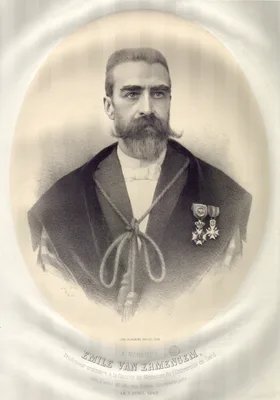
1897 ERMENGEM, Émile Pierre Marie van (1851 – 1932)
Contribution à l’ètude des intoxications alimentaires. Recherches sur des accidents à caractères botuliniques provoqués par du jambon.
Cl. botulinum was discovered by van Ermengem in cases of food poisoning.
GMN 2510 · https://historyofmedicine.com/id/3244
1897 BROUARDEL, Paul Camille Hippolyte (1837 – 1906)
Les intoxications.
GMN 9906 · https://historyofmedicine.com/id/12094
1898 DURHAM, Herbert Edward (1866 – 1945)
On an epidemic of gastro-enteritis associated with the presence of a variety of the Bacillus enteritidis (Gaertner), and with positive sero-diagnostic evidence (in vivo and in vitro).
Discovery of Salm. Aertrycke in patients suffering from food poisoning.
GMN 2513 · https://historyofmedicine.com/id/3256
1899 SULLIVAN, William Charles (1869 – 1926)
A note on the influence of maternal inebriety on the offspring.
Fetal alcohol syndrome – first serious study.
GMN 2082 · https://historyofmedicine.com/id/2557
1902 –1906 KOBERT, Eduard Rudolf (1854 – 1918)
Lehrbuch der Intoxikationen. 2te. Aufl. 2 vols.
GMN 2083 · https://historyofmedicine.com/id/2558
1902 FLEXNER, Simon (1863 – 1946); NOGUCHI, Hideyo (1876 – 1928)
Snake venom in relation to haemolysis, bacteriolysis, and toxicity.
GMN 2110 · https://historyofmedicine.com/id/2613
1902 KYES, Preston (1875 – 1949)
Ueber die Wirkungsweise des Cobragiftes.
While in Germany Kyes showed lecithin to be a complement of cobra-hemolysin. English translation in Ehrlich, Studies in immunity, 1910.
GMN 2111 · https://historyofmedicine.com/id/2614
1902 RICHET, Charles Robert (1850 – 1935); PORTIER, Paul (1866 – 1962)
De l’action anaphylactique de certains venins.
First full description of the phenomenon of “anaphylaxis,” the name of which was coined by Richet. Abbreviated English translation in Bibel, Milestones of immunology (1988). In 1913, Richet was awarded the Nobel Prize…
GMN 2590 · https://historyofmedicine.com/id/4397
1903 KYES, Preston (1875 – 1949); SACHS, Hans (1877 – 1945)
Zur Kenntniss der Cobragift activirenden Substanzen.
English translation in Ehrlich, Studies in immunity, 1910.
GMN 2112 · https://historyofmedicine.com/id/2617
1903 KYES, Preston (1875 – 1949)
Ueber die Isolirung von Schlangengift-Lecithiden.
English translation in Ehrlich, Studies in immunity, 1910.
GMN 2113 · https://historyofmedicine.com/id/2618
1903 MARCHIAFAVA, Ettore (1847 – 1935); BIGNAMI, Amico (1862 – 1929)
Sopra un’ alterazione del corpo calloso osservata in soggetti alcoolisti.
Marchiafava–Bignami disease – degeneration of the corpus callosum in alcoholism.
GMN 4955 · https://historyofmedicine.com/id/6287
1903 BOWDITCH, Henry Pickering (1840 – 1911); ATWATER, Wilbur Olin (1844 – 1907); CHITTENDEN, Russell Henry (1856 – 1943); WELCH, William Henry (1850 – 1934); BILLINGS, John Shaw (1838 – 1913)
Physiological aspects of the liquor problem. Investigations made by and under the direction of W. O. Atwater, John S. Billings, H. P. Bowditch, R. H. Chittenden, and W. H. Welch Sub-Committee of the Committee of Fifty to Investigate the Liquor Problem. 2 vols.
Digital facsimile from the Internet Archive at this link.
GMN 11627 · https://historyofmedicine.com/id/13827
1905 LANGLEY, John Newport (1852 – 1925)
On the reaction of cells and of nerve-endings to certain poisons, chiefly as regards the reaction of striated muscle to nicotine and to curari.
Langley introduced the concept of a receptor substance present in the biological object with which a drug has to interact in order to exert its biological effect. Digital facsimile from PubMedCentral at this link.
GMN 1893.2 · https://historyofmedicine.com/id/2538
1906 –1907 ABEL, John Jacob (1857 – 1938); FORD, William Webber (1871 – 1941)
On the poisons of Amanita phalloides.
Abel and Ford showed that there were two poisons in the fungus Amanita phalloides, and that immunity against them could be attained. A further study on the subject by the same authors is in Arch. exp. Path. Pharmak., …
GMN 2084 · https://historyofmedicine.com/id/2561
1908 WELLMANN, Max (1863 – 1933); PHILUMENOS, [Philumenus; Φιλούμενος] ( – 200)
Philumeni de venenatis animalibus eorumque remediis capita XXXVIII ed. M. Wellmann. Corpus medicorum graecorum X 1, 1.
This work on venoms and their antidotes is the only surviving work of the Byzantine physician Philomenos. Within this context Philomenos also discusses the bites of rabid dogs. Digital facsimile from Corpus medicorum …
GMN 9018 · https://historyofmedicine.com/id/11197
1909 NOGUCHI, Hideyo (1876 – 1928)
Snake venoms.
GMN 2114 · https://historyofmedicine.com/id/2621
1911 BRAZIL, Vital (1865 – 1950)
A defensa contra o ophidismo.
Brazil founded the Instituto Butantan, São Paulo, one of the first institutes to produce antivenin sera on a large scale. French translation, 1911. Digital facsimile of the Portuguese edition from Biodiversity Heritag…
GMN 2115 · https://historyofmedicine.com/id/2623
1911 –1912 ABEL, John Jacob (1857 – 1938); MACHT, David Israel (1882 – 1961)
Two crystalline pharmacological agents obtained from the tropical toad Bufo agua.
Isolation of bufagin. Preliminary communication in J. Amer. med. Assoc., 1911, 56, 1531-35.
GMN 1901 · https://historyofmedicine.com/id/2645
1912 LEGGE, Sir Thomas Morison (1863 – 1932); GOADBY, Sir Kenneth Weldon (1873 – 1958)
Lead poisoning and lead absorption.
GMN 2101 · https://historyofmedicine.com/id/8943
1912 TODD, John Lancelot (1876 – 1949)
Does a human tick-borne disease exist in British Columbia?
Report on the first cases of "tick paralysis", a potentially lethal disease treatable by removing the tick. Follow-up paper by Todd: "Tick bite in British Columbia," Canad. med. Assoc. J., 2 (1912) 1118-1119. Unlike m…
GMN 10921 · https://historyofmedicine.com/id/13117
1916 SCOTT, Sir Henry Harold (1874 – 1956)
On the ‘vomiting sickness’ of Jamaica.
Discovery of the cause of the “vomiting sickness of Jamaica”: ackee poisoning.
GMN 2085 · https://historyofmedicine.com/id/2564
1916 YAMAGIWA, Katsusaburo (1863 – 1930); ICHIKAWA, Koichi (1888 – 1948)
Ueber die künstliche Erzeugung von Karzinom.
First experimental production of tar cancer in rabbits by painting with tar products. This was the first proof of chemical carcinogenesis.
GMN 2643 · https://historyofmedicine.com/id/3273
1918 SCHMIEDEBERG, Johann Ernst Oswald (1838 – 1921)
Ueber die Pharmaka in der Ilias und Odyssee.
Medicines and poisons in the Iliad and Odyssey.
GMN 9986 · https://historyofmedicine.com/id/12175
1919 WARTHIN, Aldred Scott (1866 – 1931); WELLER, Carl Vernon (1887 – 1969)
The medical aspects of mustard gas poisoning.
Digital facsimile from the Internet Archive at this link.
GMN 9436 · https://historyofmedicine.com/id/11619
1920 LEWIN, Louis (1850 – 1929)
Die Gifte in der Weltgeschichte.
Lewin was a prolific writer, producing more than 200 books and papers. The above is perhaps his best work, and contains a history of poisonings from the most ancient times to the present century, enhanced by innumerab…
GMN 2116 · https://historyofmedicine.com/id/2625
1920 UNDERHILL, Frank Pell (1877 – 1932)
The lethal war gases, physiology and experimental treatment. An Investigation by the section on intermediary metabolism of the Medical Division of the Chemical Warfare Service at Yale University under the direction of Frank P. Underhill. Published with the permission of the Chemical Warfare Service.
Digital facsimile from the Hathi Trust at this link.
GMN 12067 · https://historyofmedicine.com/id/14276
1920 LEWIN, Louis (1850 – 1929)
Die Kohlenoxydvergiftung. Ein Handbuch für Mediziner, Techniker und Unfallrichter.
On carbon monoxide poisoning. Digital facsimile from the Hathi Trust at this link.
GMN 13824 · https://historyofmedicine.com/id/16113
1923 LEWIN, Louis (1850 – 1929)
Die Pfeilgifte, nach eigenen toxikologischen und ethnologischen Untersuchungen.
Digital facsimile from the Internet Archive at this link.
GMN 2117 · https://historyofmedicine.com/id/2627
1924 HALSTED, William Stewart (1852 – 1922); BURKET, Walter Cleveland (1888 – 1974)
Surgical papers.[Edited by Walter C. Burket]. 2 vols.
In spite of an addiction to cocaine hydrochlorate from experimentation with it as a surgical anesthetic in 1884 until his death, Halsted was among the greatest of all surgical innovators and teachers. While pioneering…
GMN 86.3 · https://historyofmedicine.com/id/1447
1924 LEWIN, Louis (1850 – 1929)
Phantastica.
The classic of psychoactive drug classification. Lewin established the following categories: Euphorics, Phantastics, Inebriants, Hypnotics, and Excitants. English translation, 1931.
GMN 2086 · https://historyofmedicine.com/id/2565
1924 KENNAWAY, Sir Ernest Laurence (1881 – 1958)
The formation of a cancer-producing substance from isoprene (2-methyl-butadiene).
Kennaway produced carcinogenic tars by submitting acetylene or isoprene to high temperatures in an atmosphere of hydrogen, thus proving that some carcinogens are pure hydrocarbons.
GMN 2646 · https://historyofmedicine.com/id/3288