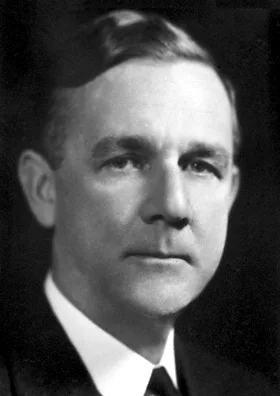
1930 WINTROBE, Maxwell Myer (1901 – 1986)
Classification of the anemias on the basis of differences in the size and hemoglobin content of the red corpuscles.
Wintrobe’s classification of the anemias.
GMN 3145 · https://historyofmedicine.com/id/3973
1931 TAYLOR, Francis Henry Laskey (1900 – 1959); CASTLE, William Bosworth (1897 – 1990)
Intravenous use of extract of liver.
GMN 3145.1 · https://historyofmedicine.com/id/3977
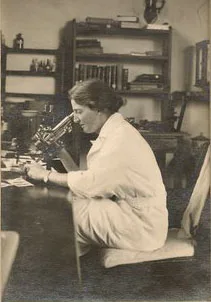
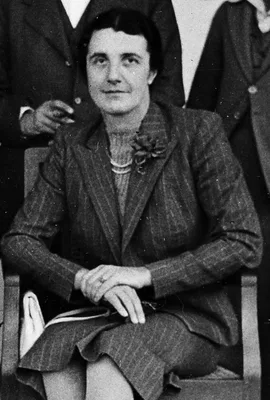
1931 WILLS, Lucy (1888 – 1964)
Treatment of “pernicious anaemia of pregnancy” and “tropical anaemia”, with special reference to yeast extract as a curative agent.
First observations of hemopoietic effect of folic acid.
GMN 3146 · https://historyofmedicine.com/id/3981
1932 DAVIDSON, Sir Leybourne Stanley Patrick (1894 – 1981)
The classification and treatment of anaemia, with special reference to the nutritional factor.
Davidson’s classification of the anemias.
GMN 3147 · https://historyofmedicine.com/id/3986
1934 VAUGHAN, Janet Maria (1899 – 1993)
The anemias.
GMN 14203 · https://historyofmedicine.com/id/16519
1935 WILKINSON, John Frederick (1897 – 1998); ISRAЁLS, Martin Cyril Gordon
Achresthic anaemia.
Achrestic anemia described.
GMN 3148 · https://historyofmedicine.com/id/3989
1936 WHIPPLE, George Hoyt (1878 – 1976); BRADFORD, William Leslie (1898 – 1983)
Mediterranean disease – thalassemia (erythroblastic anemia of Cooley); associated pigment abnormalities simulating hemochromatosis.
Whipple and Bradford contributed a classic paper on the pathology of thalassemia, a name introduced by them.
GMN 3148.1 · https://historyofmedicine.com/id/3991
1938 CAMINOPETROS, J
Recherches sur l’anémie érythroblastique infantile des peuples de la Méditerranée orientale. Étude anthropologique, étiologique et pathogénique. La transmission héréditaire de la maladie.
First evidence that thalassemia is genetically determined. Earlier report in Kliniki, Athens, 1936, 12, No. 5.
GMN 3148.2 · https://historyofmedicine.com/id/3993
1938 WILLS, Lucy (1888 – 1964); EVANS, Barbara Dorothy Fordyce (1909 – 1995)
Tropical macrocytic anaemia: Its relation to pernicious anaemia.
GMN 3149 · https://historyofmedicine.com/id/3996
1938 DAMESHEK, William (1900 – 1969); SCHWARTS, Steven Otto (1911 – )
Hemolysins as the cause of clinical and experimental hemolytic anemias.
Acquired hemolytic anemia was the first condition to be recognized as an auto-immune disease.
GMN 3787.1 · https://historyofmedicine.com/id/4694
1940 HOGAN, Albert Garland (1884 – 1961); PARROTT, Ernest Milford (1903 – 1994)
Anemia in chicks caused by a vitamin deficiency.
Isolation of vitamin Bc (folic acid, pteroylglutamic acid). Preliminary communication in J. biol. Chem., 1939, 128, xlvi-xlvii.
GMN 1086 · https://historyofmedicine.com/id/841
1945 SPIES, Tom Douglas (1902 – 1960); ET AL
Observations of the anti-anemic properties of synthetic folic acid.
Hemopoietic properties of folic acid reported. With C. F. Vilter, M. B. Koch, and M. H. Caldwell.
GMN 3150 · https://historyofmedicine.com/id/4002
1946 ANGIER, Robert Crane (1917 – )
The structure and synthesis of liver. L. casei factor.
Isolation, determination of structure, and final synthesis of folic acid.
GMN 3151 · https://historyofmedicine.com/id/4005
1946 GOETSCH, Anne Carlton Tompkins (1917 – 2003); ET AL
Observations on the effect of massive doses of iron given intravenously to patients with hypochromic anemia.
GMN 3152 · https://historyofmedicine.com/id/4008
1947 NISSIM, Joseph Abraham
Intravenous administration of iron.
GMN 3153 · https://historyofmedicine.com/id/4011
1948 SMITH, Ernest Lester (1904 – 1992)
Presence of cobalt in the anti-pernicious anaemia factor.
Independently of Rickes et al., Lester Smith isolated vitamin B12 in Britain. See also Nature (Lond.), 1948, 161, 638.
GMN 1092 · https://historyofmedicine.com/id/875
1948 WEST, Randolph (1890 – )
Activity of vitaminB12 in Addisonian pernicious anemia.
First demonstration of the effectiveness of vitamin B12 in pernicious anemia.
GMN 3154 · https://historyofmedicine.com/id/4013
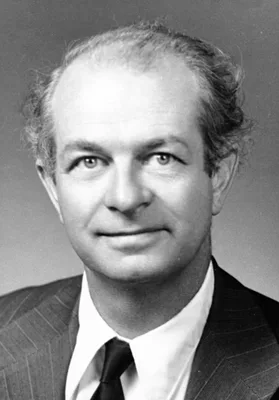
1949 PAULING, Linus Carl (1901 – 1994); ITANO, Harvey Akio (1920 – 2010); SINGER, Seymour Jonathan (1924 – 2017); WELLS, Ibert C. (1921 – 2011)
Sickle cell anemia, a molecular disease.
First recognition, by Pauling and colleagues, of a structural hemoglobin variant, and the beginning of the molecular approach to disease.
GMN 3154.1 · https://historyofmedicine.com/id/4015
1949 NEEL, James Van Gundia (1915 – 2000)
The inheritance of sickle cell anemia.
Genetic evidence that sickle-cell disease is inherited in a simple Mendelian manner.
GMN 3154.2 · https://historyofmedicine.com/id/4053
1949 UNGLEY, Charles Cady (1902 – 1958)
Vitamin B12 in pernicious anaemia: parenteral administration.
GMN 3155 · https://historyofmedicine.com/id/4054
1957 INGRAM, Vernon Martin (1924 – 2006)
Gene mutations in human haemoglobin: the chemical difference between normal and sickle cell haemoglobin.
Sickle-cell hemoglobin differs from normal hemoglobin by a single amino acid (valine for glutamic acid).
GMN 3155.1 · https://historyofmedicine.com/id/4055
1959 INGRAM, Vernon Martin (1924 – 2006); STRETTON, Antony Oliver Ward (1936 – )
Genetic basis of the thalassaemia diseases.
GMN 3155.2 · https://historyofmedicine.com/id/4056
1961 LOCK, Stephen Penford (1929 – ); ET AL
Stomatocytosis: a hereditary red cell anomaly associated with haemolytic anaemia.
With R. Sephton Smith and R. M. Hardisty.
GMN 3155.3 · https://historyofmedicine.com/id/4090
1966 LEHMANN, Hermann (1910 – 1985); HUNTSMAN, Richard George (1927 – 2015)
Man’s haemoglobins: including the haemoglobinopathies and their investigation.
Explains the current distribution of sickling throughout the world.
GMN 3155.4 · https://historyofmedicine.com/id/4091
1968 LEHMANN, Hermann (1910 – 1985); PERUTZ, Max Ferdinand (1914 – 2002)
Molecular pathology of human haemoglobin.
Perutz opened up "the field of 'molecular pathology,' relating a structural abnormality to a disease" (Aaron Klug, "Max Perutz 1914-2002," Science 295 ([2002] 2383). Specifically Perutz showed that hemoglobin molecule…
GMN 6916 · https://historyofmedicine.com/id/9081