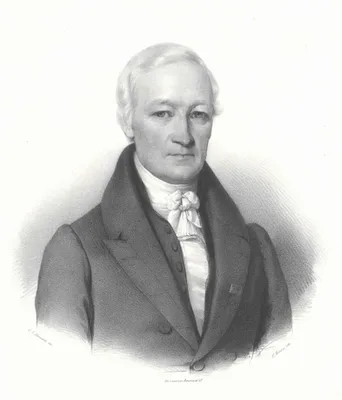
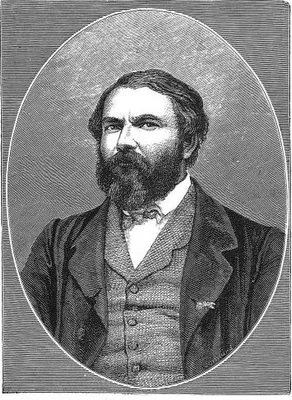
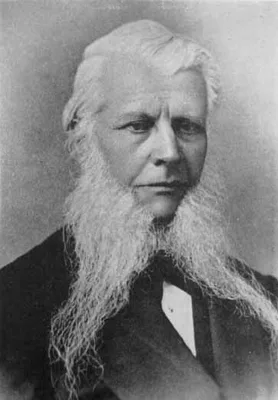
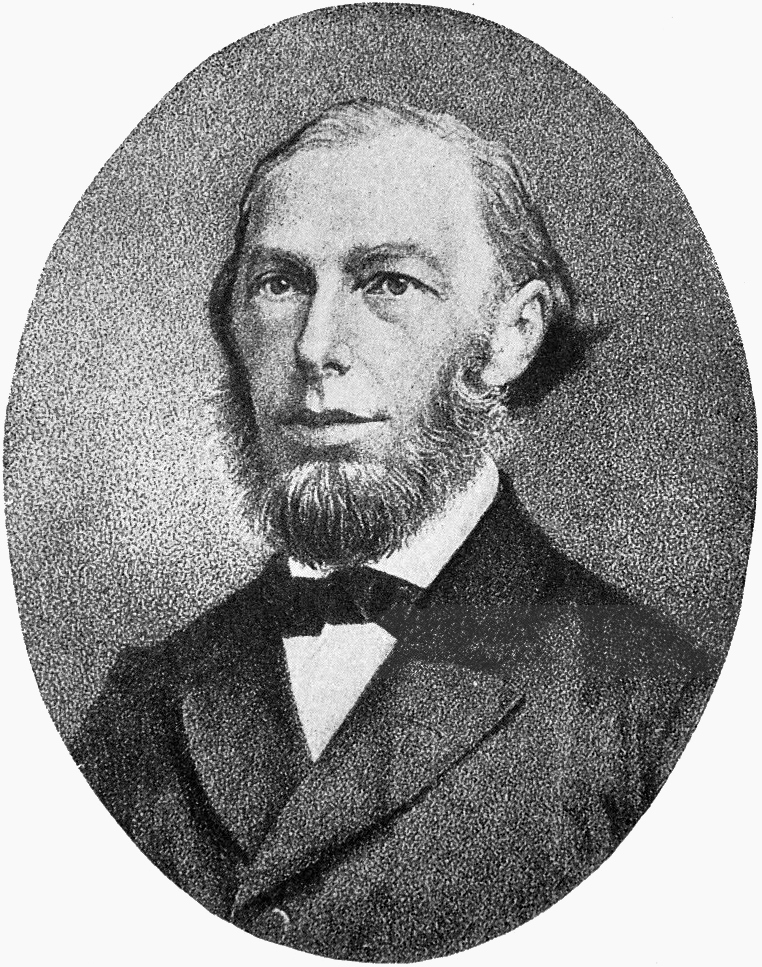
1821 TIEDEMANN, Friedrich (1781 – 1861)
Icones cerebri simiarum et quorundam mammalium rariorum.
"Although a few more reports were published furing the next hundred years [after Tyson] it was Tiedemann alone who gave a more detailed account, on monkeys, in his... Icones Simiarum.... In monkeys he found the brain …
GMN 9700 · https://historyofmedicine.com/id/11887
1836 TIEDEMANN, Friedrich (1781 – 1861)
On the brain of the negro, compared with that of the European and the orang-outang.
In this very thoroughly researched, highly documented, and well-illustrated paper Tiedemann demonstrated that there are no significant anatomical differences between the brains and mental capacities of Black people an…
GMN 11309 · https://historyofmedicine.com/id/13507
1839 –1857 LEURET, François (1797 – 1851); GRATIOLET, Louis Pierre (1815 – 1865)
Anatomie comparée du système nerveux. 2 vols. and atlas.
The first comprehensive systematic investigation of the mammalian brain. Leuret wrote vol. 1 without Gratiolet, who later became his collaborator, publishing vol. 2 and the atlas after Leuret’s death.
GMN 1396.01 · https://historyofmedicine.com/id/1988
1852 BIDDER, Friedrich Karl Heinrich von (1810 – 1894)
Ueber functionell verschiedene und räumlich getrennte Nervencentra im Froschherzen.
Discovery of the ganglion cells at the auriculo-ventricular junction, “Bidder’s ganglion”.
GMN 811 · https://historyofmedicine.com/id/203
1862 SCHULTZE, Max Johann Sigismund (1825 – 1874)
Untersuchungen über den Bau der Nasenschleimhaut, namentlich die Structur und Endigungsweise der Geruchsnerven bei dem Menschen und den Wirbelthieren.
Schultze’s classic paper on the nerves to the neuro-epithelium in the special sense organs marks an epoch in histology. He described the cells of the olfactory muccous membrane, “Schultze’s cells”.
GMN 936 · https://historyofmedicine.com/id/175
1899 –1904 CAJAL, Santiago Ramón y (1852 – 1934)
Textura del sistema nervioso del hombre y de los vertebrados. 2 vols. in 3.
From publication in fascicules, 1897-1904 (vol. 1 in 3 pts., vol. 2 in 4 pts.) This monumental work set out the cytological and histological foundations of modern neurology. Ramón y Cajal’s research confirmed the neur…
GMN 1293.1 · https://historyofmedicine.com/id/2335
1906 RETZIUS, Magnus Gustaf (1842 – 1919)
Cerebra simiarum illustrata. Das Affenhirn in bildlicher Darstellung.
Describes and illustrates with photographs the cerebral cortex of over 50 species of primate, including prosimians, monkeys, and apes..
GMN 7340 · https://historyofmedicine.com/id/9511
1906 BOLK, Louis [ Loedwijk] (1866 – 1930)
Cerebellum der Säugetiere. Eine Vergleichend Anatomische Untersuchung.
Bolk studied some 69 species of mammals, both in the adult and during development, and elaborated a basic plan for the cerebellum that remains influential today. "Lodewijk Bolk and the comparative anatomy of the cereb…
GMN 7341 · https://historyofmedicine.com/id/9512
1908 LEVI, Giuseppe (1892 – 1965)
I ganglî cerebrospinali. Studi di istologia comparata e di istogenesi.
"Using comparative and developmental approaches he examined dorsal root ganglion cells in the embryos of 18 vertebrate species, and adults of 56 species—using a variety of histological stains, particularly those of Go…
GMN 7342 · https://historyofmedicine.com/id/9513
1909 BRODMANN, Korbinian (1868 – 1918)
Vergleichende Lokalisationslehre der Grosshirnrinde in ihren Prinzipien dargestellt auf Grund des Zellenbaues.
Brodmann was a pioneer in the study of cytoarchitectonics, and this work forms the basis for localization of function in the cerebral cortex. Brodmann's "areas" are used to designate cortical function regions. Brodman…
GMN 1435 · https://historyofmedicine.com/id/2226
1909 VOGT-MUGNIER, Cécile (1875 – 1962)
La Myéloarchitecture du Thalamus du Cercopithèque.
"Ted Jones, in his encyclopedic The Thalamus (1985, p. 27), wrote that this is one of the best descriptive accounts of the thalamus, illustrated with photographic plates as elegant as any being produced today, with su…
GMN 7343 · https://historyofmedicine.com/id/9515
1917 WEED, Lewis Hill (1886 – 1952)
The development of the cerebro-spinal spaces in pig and man.
GMN 1440 · https://historyofmedicine.com/id/2239
1920 –1921 ARIENS KAPPERS, Cornelius Ubbo (1877 – 1946)
Die vergleichende Anatomie des Nervensystems der Wirbeltiere und des Menschen. 2 vols.
Ariëns Kappers was Professor of Neuroanatomy at Amsterdam. See also No. 14229.
GMN 1247 · https://historyofmedicine.com/id/2063
1924 DUSSER DE BARENNE, Johannes Gregorius (1885 – 1940)
Experimental researches on sensory localization in the cerebral cortex of the monkey (Macacus).
Dusser de Barenne demonstrated the major functional subdivisions of the sensory cortex.
GMN 1442 · https://historyofmedicine.com/id/2241
1928 TILNEY, Frederick (1875 – 1938); RILEY, Henry Alsop (1887 – 1966)
The brain from ape to man: A contribution to the study of the evolution and development of the human brain by Frederick Tilney. With chapters on the reconstruction of the gray matter in the primate brain stem by Henry Alsop Riley. 2 vols.
Classic study of the evolution of the central nervous system in the higher mammals. Digital facsimile from the Internet Archive at this link.
GMN 350 · https://historyofmedicine.com/id/269
1936 YOUNG, John Zachary (1907 – 1997)
The structure of nerve fibres in cephalopods and crustacea.
Young’s discovery of the giant nerve fibers of the squid (squid giant axon) Loglio forbesi made possible the study of the electrical phenomena of the nervous impulse in the interior as well as on the surface of a nerv…
GMN 1309.1 · https://historyofmedicine.com/id/1152
1936 ARIENS KAPPERS, Cornelius Ubbo (1877 – 1946); HUBER, Gotthelf Carl (1874 – 1943); CROSBY, Elizabeth Caroline (1888 – 1983)
The comparative anatomy of the nervous system of vertebrates, including man. 2 vols.
This edition and translation was so extensively reworked and expanded by Kappers, Huber and Crosby that it should be considered a new work. See No. 1247 for the original edition in German. Order of authorship as publi…
GMN 14229 · https://historyofmedicine.com/id/16546
1971 YOUNG, John Zachary (1907 – 1997)
The anatomy of the nervous system of Octopus vulgaris.
GMN 7159 · https://historyofmedicine.com/id/9326
1971 ANGEVINE, Jay Bernard Jr. (1928 – 2012); SIDMAN, Richard Leon; TABER PIERCE, Elizabeth
Atlas of the mouse brain and spinal cord.
"This is an exceptionally systematic, beautifully produced atlas of the mouse central nervous system in the three standard planes, with alternating cell-stained (Nissl method with cresyl violet) sections and myelin-st…
GMN 7353 · https://historyofmedicine.com/id/9525
1992 SWANSON, Larry William (1945 – )
Brain maps: Structure of the rat brain.
The first computer graphics atlas of the brain of any species, with the illustration files also available separately (1993). The work included a complete and systematic, hierarchically organized set of annotated nomen…
GMN 7354 · https://historyofmedicine.com/id/9526
1998 NIEUWENHUYS, Rudolf (1927 – ); DONKELAAR, Hendrik Jan, ten (1946 – ); NICHOLSON, Charles
The central nervous system of vertebrates. 3 vols.
A massive contribution to comparative vertebrate neuroanatomy, the life-work of the authors. Includes a comprehensive account of the structural organisation of all vertebrate groups, ranging from amphioxus and lamprey…
GMN 7350 · https://historyofmedicine.com/id/9522
2006 SCHMAHMANN, Jeremy Dan; PANDYA, Deepak (1932 – )
Fiber pathways of the brain
"... a comprehensive,well-illustrated study of the organization of the white matter pathways of the brain. Schmahmann and Pandya have analyzed and synthesized the corticocortical and corticosubcortical connections of …
GMN 12731 · https://historyofmedicine.com/id/14977