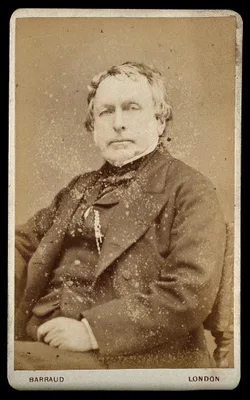
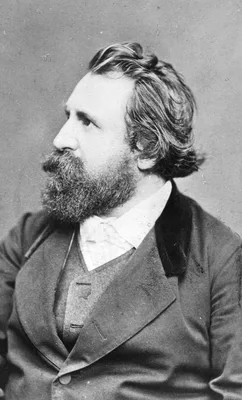
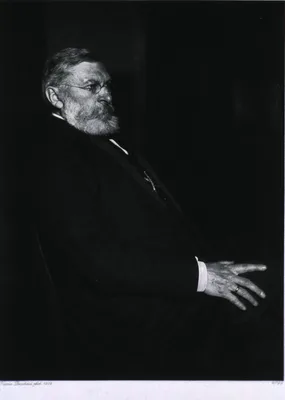
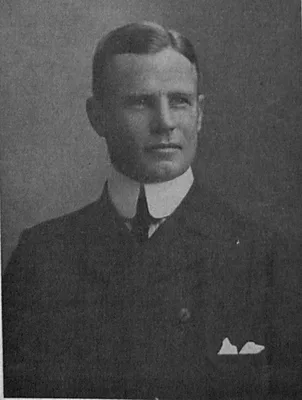
1836 –1842 QUAIN, Jones (1796 – 1865); WILSON, Sir William James Erasmus (1809 – 1884)
A series of anatomical plates. 5 vols.: The muscles of the human body. The vessels of the human body. The nerves of the human body. The viscera of the human body. The bones and ligaments of the human body.
The most ambitious 19th century English anatomy illustrated by lithography. Some copies were issued with hand-colored plates. The five volumes, containing a total of 201 plates, describe the muscles, blood vessels, ne…
GMN 13300 · https://historyofmedicine.com/id/15566
1846 STILLING (BENEDICT), Benedikt (1810 – 1879)
Disquisitiones de structura protuberantia annularis sive pontis Varolii. Untersuchungen über den Bau des Hirnknotens oder der Varoli’schen Brucke. Text and atlas.
Stilling’s great work on the pons Varolii, the structure that links the brain to the spinal cord, includes the first accurate description of the red nucleus (superior olive), a structure in the midbrain involved in mo…
GMN 14337 · https://historyofmedicine.com/id/16665
1867 MEYNERT, Theodor Hermann (1833 – 1892)
Der Bau der Gross-Hirnrinde und seine örtlichen Verschiedenheiten, nebst einem pathologisch-anatomischen Corollarium.
Meynert noticed regional variations in the histological structure of different parts of the gray matter in the cerebral hemispheres. He is credited with beginning the study of cytoarchitecture. Meynert described the f…
GMN 1403 · https://historyofmedicine.com/id/2035
1884 MEYNERT, Theodor Hermann (1833 – 1892)
Psychiatrie. Klinik der Erkrankungen der Vorderhirns.
Meynert, Professor of Neurology at Vienna, made many contributions to the study of the cellular architecture of the brain, and is often considered the founder of cerebral cortex cytoarchitectonics. English translation…
GMN 4942 · https://historyofmedicine.com/id/6221
1897 STRÜMPELL, Ernst Adolf Gustav Gottfried (1853 – 1925); JAKOB, Cristfried (1866 – 1956)
Neurologische Wandtafeln zum Gebrauch beim klinischen, anatomischen und physiologischen Unterricht.
This set of enormous chromolithographed color wall charts contains probably the largest charts of the brain and nervous system ever published. The two largest measure 5 feet 3 inches by 7 feet 2-5/8 inches! The 13 str…
GMN 10020 · https://historyofmedicine.com/id/12209
1898 FLECHSIG, Paul Emil (1847 – 1929)
Neue Untersuchungen über die Markbildung in den menschlichen Grosshirnlappen.
Flechsig devided the cytoarchitecture of the human brain into 40 areas.
GMN 12734 · https://historyofmedicine.com/id/14980
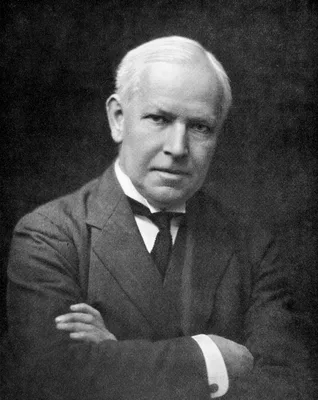
1905 CAMPBELL, Alfred Walter (1868 – 1937)
Histological studies on the localisation of cerebral function.
The precentral area of the cerebral cortex is known as “Campbell’s area”. Campbell and Brodmann were pioneers in the study of the architectonics of the cerebral cortex, or cerebral cytoarchitecture. Digital facsimile …
GMN 1430 · https://historyofmedicine.com/id/2195
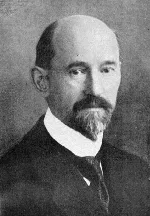
1907 SMITH, Sir Grafton Elliot (1871 – 1937)
A new topographical survey of the human cerebral cortex, being an account of the distribution of the anatomically distinct cortical areas and their relationship to the cerebral sulci.
Elliot Smith, Professor of Anatomy at Cairo, Manchester, and University College, London, initiated modern studies of cerebral function with his work on the cortical pattern of the human brain. He identified 50 areas.
GMN 1433 · https://historyofmedicine.com/id/2220
1909 BRODMANN, Korbinian (1868 – 1918)
Vergleichende Lokalisationslehre der Grosshirnrinde in ihren Prinzipien dargestellt auf Grund des Zellenbaues.
Brodmann was a pioneer in the study of cytoarchitectonics, and this work forms the basis for localization of function in the cerebral cortex. Brodmann's "areas" are used to designate cortical function regions. Brodman…
GMN 1435 · https://historyofmedicine.com/id/2226
1925 ECONOMO, Constantin von (1876 – 1931); KOSKINAS, Georg N. (1885 – 1975)
Die Cytoarchitektonik der Hirnrinde des erwachsenen Menschen. 1 vol. and atlas.
This work consisted of textbook of more than 800 pages and an atlas with 112 large-sized microphotographic plates of the cortex. The textbook contained detailed descriptions of their studies and an introduction to the…
GMN 1444 · https://historyofmedicine.com/id/2243
2012 SEUNG, Hyunjune Sebastian
Eyewire: A game to map the brain.
https://eyewire.org/explore Eyewire is a game to map the brain from Sebastian Seung's Lab at Princeton University. This citizen science human-based computation game challenges players to map retinal neurons. Eyewire l…
GMN 12751 · https://historyofmedicine.com/id/14997
2015 SWANSON, Larry William (1945 – ); BOTA, Mihail; SPORNS, Olaf (1963 – )
Architecture of the cerebral cortical association connectome underlying cognition.
"Significance "Connections between cerebral cortex regions are known as association connections, and neural activity in the network formed by these connections is thought to generate cognition. Network analysis of mic…
GMN 12736 · https://historyofmedicine.com/id/14982
2017 SWANSON, Larry William (1945 – ); SPORNS, Olaf (1963 – ); HAHN, Joel D.
Organizing principles for the cerebral cortex network of commissural and association connections.
"Significance "The cerebral cortex supports cognition and is a structure common to all mammals. The major cortical subdivisions (its gray matter regions) are connected by a complex network of axonal connections that i…
GMN 12737 · https://historyofmedicine.com/id/14983
2018 SWANSON, Larry William (1945 – ); SPORNS, Olaf (1963 – ); HAHN, Joel D.; JEUB, Lucas G. S.; FORTUNATO, Santo
Subsystem organization of axonal connections within and between right and left cerebral cortex and cerebral nuclei (endbrain).
"Significance "The right and left cerebral hemispheres (together forming the endbrain) support cognition and affect, and, structurally, each hemisphere consists of a cortical sheet and set of deep nuclei (often called…
GMN 12738 · https://historyofmedicine.com/id/14984