1653 HARTMAN [HARTMANNUS]
Thesis de carbunculo.
GMN 5160 · https://historyofmedicine.com/id/6222
1842 GOODSIR, John (1814 – 1867)
History of a case in which a fluid periodically ejected from the stomach contained vegetable organisms of an undescribed form.
First description of Sarcina ventriculi, discovered by Goodsir.
GMN 2471 · https://historyofmedicine.com/id/3048
1850 RAYER, Pierre François Olive (1793 – 1867)
Inoculation du sang de rate.
Rayer inoculated sheep with blood of other sheep dead of anthrax. Microscopically he saw the anthrax bacillus in the blood of the inoculated sheep. Rayer was associated with Davaine, who later, in Bull. Acad. Méd., 18…
GMN 5163 · https://historyofmedicine.com/id/6231
1855 POLLENDER, Franz Aloys Antoine (1799 – 1879)
Mikroskopische und mikrochemische Untersuchung des Milzbrandblutes sowie über Wesen und Kurdes Milzbrandes.
Pollender discovered the B. anthracis in 1849, but did not record this fact until 1855. He gave a more exact account of the organism than did Rayer (No. 5163).
GMN 5164 · https://historyofmedicine.com/id/6234
1857 PASTEUR, Louis (1822 – 1895)
Mémoire sur la fermentation appelée lactique.
First demonstration of the connection between a specific fermentation and the activity of a specific living micro-organism. This paper is often considered the beginning of bacteriology as a modern science. The above w…
GMN 2472 · https://historyofmedicine.com/id/3052
1863 DAVAINE, Casimir Joseph (1812 – 1882)
Recherches sur les infusoires du sang dans la maladie connue sous le nom de sang de rate.
Davaine showed that anthrax could be transmitted to sheep, horses, cattle, guinea-pigs, and mice, and that in such animals the bacilli did not appear in the blood until 4-5 hours before death.
GMN 5165 · https://historyofmedicine.com/id/6237
1865 DAVAINE, Casimir Joseph (1812 – 1882)
Recherches sur la nature et la constitution anatomique de la pustule maligne.
Davaine was the first conclusively to prove that a definite disease (anthrax) was due to a definite micro-organism (B. anthracis), and was thus one of the first to prove the germ theory of disease. He showed that the …
GMN 5166 · https://historyofmedicine.com/id/6239
1873 LISTER, Joseph, 1st Baron Lister (1827 – 1912)
A further contribution to the natural history of bacteria and the germ theory of fermentative changes.
Isolation of Bacterium lactis, the specific micro-organism responsible for the lactic acid fermentation of milk.
GMN 2484 · https://historyofmedicine.com/id/3092
1874 HANSEN, Gerhard Henrik Armauer (1841 – 1912)
Indberetning til det Norske mediciniske Selskab i Christiania om en med understottelse af selskabet foretaghen reise for at anstille undersogelser angaende spedalskhedens arsager, tidels udforte sammen med forstander Hartwig.
Hansen discovered the leprosy bacillus on 28 February 1873. He had been stimulated by the previous work of Danielssen and Boeck, and his own demonstration of the leprosy bacillus is one of the earliest observations of…
GMN 2436 · https://historyofmedicine.com/id/2901
1874 BILLROTH, Christian Albert Theodor (1829 – 1894)
Untersuchungen über die Vegetationsformen von Coccobacteria septica und den Antheil, Welchen sie an der Enstehung und Verbreitung der accidentellen Wundkrankheiten Haben. Versuch einer wissenschaftlichen Kritik der verscheidenen Methoden antiseptischer Wundbehandlung.
Billroth provided the first account of streptocci wound infection, calling the bacteria Coccobacteria septica. When Billroth introduced antisepic techniques in his surgical practice the number of surgical patients wit…
GMN 12064 · https://historyofmedicine.com/id/14273
1876 KOCH, Robert Heinrich Hermann (1843 – 1910)
Die Aetiologie der Milzbrand-Krankheit, begründet auf die Entwicklungsgeschichte des Bacillus anthracis.
In 1876 Koch first obtained pure cultures of B. anthracis and described its complete life history. With Davaine (Nos. 5165-66) he did much to prove that infectious diseases are caused by living reproductive microorgan…
GMN 5167 · https://historyofmedicine.com/id/6243
1877 –1878 LISTER, Joseph, 1st Baron Lister (1827 – 1912)
On the lactic fermentation and its bearings on pathology.
Lister was the first to obtain a pure culture of a bacterium (Bact. lactis). Lister first presented the results of this research in an address to the Royal Society on December 18, 1877. Because of its historic signifi…
GMN 2489 · https://historyofmedicine.com/id/3115
1877 PASTEUR, Louis (1822 – 1895); JOUBERT, Jules François (1834 – 1910)
Charbon et septicémie.
Discovery of Vibrion septique (Cl. septicum), the first pathogenic anerobe to be found. Pasteur and Joubert were probably the first to realize the practical implications of antibiosis. They noted the antagonism betwee…
GMN 1932.1 · https://historyofmedicine.com/id/3134
1877 PASTEUR, Louis (1822 – 1895); JOUBERT, Jules François (1834 – 1910)
Étude sur la maladie charbonneuse.
Pasteur confirmed Koch’s results regarding anthrax; with Joubert he carried the bacillus through 100 generations and succeeded in producing anthrax from the last, thus disposing of the idea of a separate virus.
GMN 5168 · https://historyofmedicine.com/id/6246
1879 PASTEUR, Louis (1822 – 1895)
Septicémie puerpérale.
Description of the streptococcus of puerperal sepsis.
GMN 6278 · https://historyofmedicine.com/id/7997
1880 PASTEUR, Louis (1822 – 1895)
De l’extension de la théorie des germes à l’étiologie de quelques maladies communes.
In this study of furunculosis (“boils”) and osteomyelitis Pasteur left the first recognizable descriptions of staphylococcus and streptococcus. The term streptococcus had been coined by Billroth in 1874; however, Past…
GMN 2492.1 · https://historyofmedicine.com/id/3143
1880 PASTEUR, Louis (1822 – 1895); CHAMBERLAND, Charles (1851 – 1908); ROUX, Pierre Paul Émile (1853 – 1933)
Sur l’étiologie du charbon.
First use of attenuated bacteria for therapeutic purposes. See also the same journal, 1881, 92, 1378-83.
GMN 5169 · https://historyofmedicine.com/id/6251
1881 OGSTON, Sir Alexander (1844 – 1929)
Report upon micro-organisms in surgical diseases.
Ogston showed that micrococci are constantly present in acute and chronic abscesses. He discovered Staphylococcus aureus. Ogston named staphylococcus in his paper, "Micrococcus poisoning," J. Anat. Physiol., 1882, 16,…
GMN 2494 · https://historyofmedicine.com/id/3152
1881 PARROT, Joseph (1829 – 1883)
L’organisme microscopique trouvé par M. Pasteur dans la maladie nouvelle provoquée par la salive d’un enfant mort de la rage.
Probably the earliest record of pneumococcus. Parrot reported the discovery made by Louis Pasteur.
GMN 3172 · https://historyofmedicine.com/id/4155
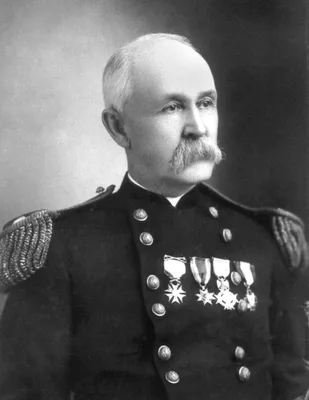
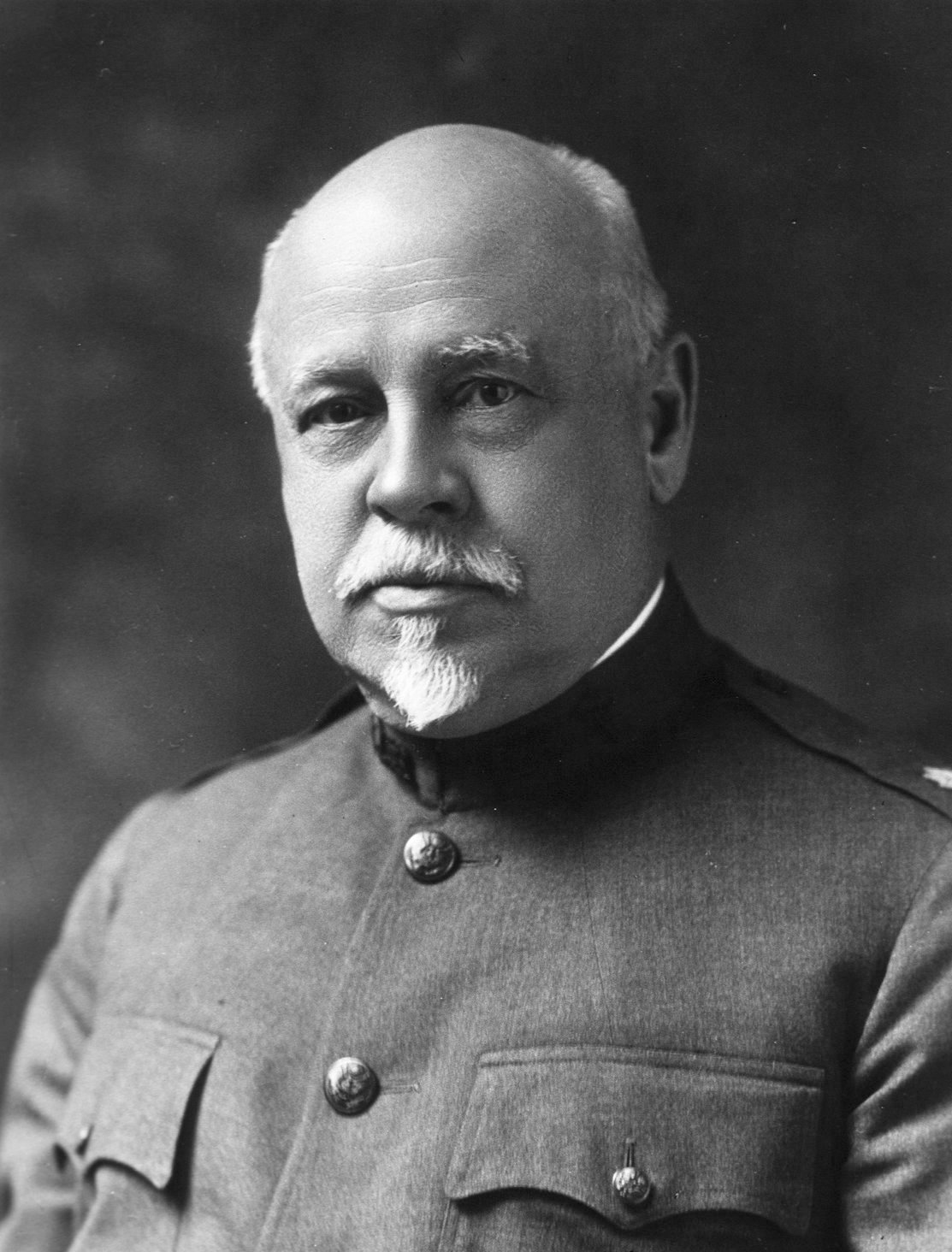
1881 STERNBERG, George Miller (1838 – 1915)
A fatal form of septicaemia in the rabbit, produced by the subcutaneous injection of human saliva.
In the same year as Pasteur, and independently, Sternberg discovered the pneumococcus (Streptococcus pneumoniae) demonstrating its carriage in the healthy human mouth.
GMN 3173 · https://historyofmedicine.com/id/4159
1882 KOCH, Robert Heinrich Hermann (1843 – 1910)
Die Aetiologie der Tuberkulose.
Discovery of the tubercle bacillus announced March 24, 1882. This paper also contains a statement of “Koch’s postulates”. See also Nos. 2536 and 5167. Koch published a fuller account as "Die Aetiologie der Tuberkulose…
GMN 2331 · https://historyofmedicine.com/id/3057
1882 FEHLEISEN, Friedrich (1854 – 1924)
Ueber Erysipel.
Discovery of Strep pyogenes, infectious agent of scarlet fever and other streptococcal illnesses. Fehleisen cultured it from perierysipelas lesions on humans. English translation, 1886.
GMN 2496 · https://historyofmedicine.com/id/3168
1883 KLEBS, Theodor Albrecht Edwin (1834 – 1913)
Ueber Diphtherie.
First account of Corynebacterium diphtheriae (Klebs–Loeffler bacillus), causal organism in diphtheria, discovered by Klebs.
GMN 5055 · https://historyofmedicine.com/id/5856
1884 LOEFFLER, Friedrich August Johann (1852 – 1915)
Untersuchungen über die Bedeutung der Mikroorganismen für die Entstehung der Diphtherie beim Menschen, bei der Taube und beim Kalbe.
Loeffler succeeded in cultivating C. diphtheriae, the diphtheria bacillus. He reproduced the characteristic membrane by swabbing the mucous membranes of various animals with pure cultures of the bacillus. In this pape…
GMN 5056 · https://historyofmedicine.com/id/5859
1884 NICOLAIER, Arthur (1862 – 1942)
Ueber infectiösen Tetanus.
The discovery of the tetanus bacillus, Clostridum tetani, is attributed to Nicolaier; he was, however, unable to isolate the organism in pure culture.
GMN 5148 · https://historyofmedicine.com/id/6182
1884 ROSENBACH, Anton Julius Friedrich (1842 – 1923)
Mikro-Organismen bei den Wund-Infections-Krankheiten des Menschen.
Rosenbach proved that streptococci and staphylococci are distinct and differentiated two strains of staphylococci (“aureus” and “albus”). He cultured cocci from a considerable range of septic conditions, thus more acc…
GMN 5619 · https://historyofmedicine.com/id/7159
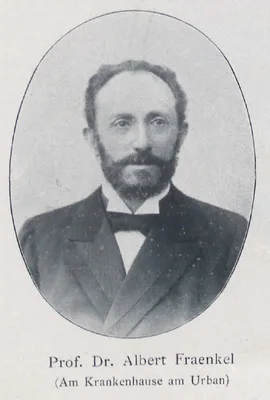
1886 FRAENKEL, Albert (1848 – 1916)
Die Mikrococcen der Pneumonie.
Fraenkel showed definitely that the organism found by Pasteur (No. 3172) and Sternberg (No. 3173) was a cause of pneumonia.
GMN 3175 · https://historyofmedicine.com/id/4165
1886 KLEIN, Edward Emanuel (1844 – 1925)
Report on a disease of cows prevailing at a farm from which scarlatina had been distributed along with the milk of cows.
Contains the first suggestion of the streptococcal origin of scarlet fever.
GMN 5080 · https://historyofmedicine.com/id/5937
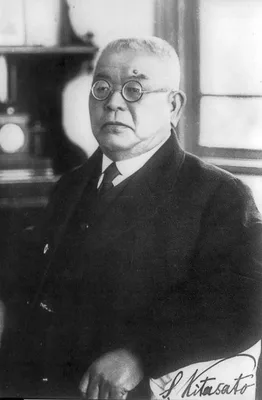
1889 KITASATO, Shibasaburō (1852 – 1931)
Ueber den Tetanusbacillus.
Kitasato obtained a pure culture of the tetanus bacillus, Cl. tetani.
GMN 5149 · https://historyofmedicine.com/id/6185
1892 NUTTALL, George Henry Falkiner (1862 – 1937); WELCH, William Henry (1850 – 1934)
A gas-producing bacillus (Bacillus aërogenes capsulatus nov. spec.) capable of rapid development in the blood-vessels after death.
Discovery of the gas gangrene bacillus (Welch bacillus) Cl. perfringens. Reprinted in Medical Classics, 1941, 5, 852-85.
GMN 2508 · https://historyofmedicine.com/id/3237
1892 WELCH, William Henry (1850 – 1934)
Conditions underlying the infection of wounds.
Discovery of Staph. epidermidis (albus) and its relation to the infection of wounds.
GMN 5621 · https://historyofmedicine.com/id/7179
1892 DÖDERLEIN, Albert Siegmund Gustav (1860 – 1941)
Das Scheidensekret und seine Bedeutung für das Puerperalfieber.
Döderlein's study of the vaginal secretion in relation to puerperal fever includes the first description of “Döderlein’s bacillus” (Lactobacillus). Döderlein introduced the concept of normal body bacteria or "normal b…
GMN 6279 · https://historyofmedicine.com/id/7999
1894 UNNA, Paul Gerson (1850 – 1929)
Die Histopathologie der Hautkrankheiten.
This monumental work is a landmark in dermatological history. Sir Norman Walker translated it into English in 1896. Unna, short in stature but a giant among dermatologists, initiated the study of the skin by means of …
GMN 4000 · https://historyofmedicine.com/id/5072
1895 SCLAVO, Achille (1861 – 1930)
Sulla preparazione del siero anti-carbonchioso.
Specific anti-anthrax serum. German translation in Zbl. Bakt., 1895, 1 Abt., 18, 744-45.
GMN 5170 · https://historyofmedicine.com/id/6253
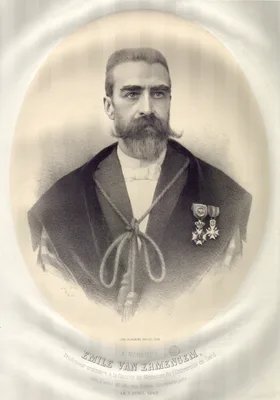
1897 ERMENGEM, Émile Pierre Marie van (1851 – 1932)
Contribution à l’ètude des intoxications alimentaires. Recherches sur des accidents à caractères botuliniques provoqués par du jambon.
Cl. botulinum was discovered by van Ermengem in cases of food poisoning.
GMN 2510 · https://historyofmedicine.com/id/3244
1897 SABOURAUD, Raymond Jacques Adrien (1864 – 1938)
La séborrhée grasse et la pelade.
Acne bacillus first cultivated.
GMN 4126 · https://historyofmedicine.com/id/5730
1898 TRIBOULET, Henri (1864 – 1920); COYON, Amand (1871 – 1928)
Bactériologie du rhumatisme articulaire. Endocardite végétante mitrale provoquée chez le lapin par inoculation intra-veineuse d’un cocco-bacille en points doubles extraits du sang du rhumatisme articulaire aigu de l’homme.
Isolation of streptococci from patients with acute rheumatism reported.
GMN 4504.1 · https://historyofmedicine.com/id/99
1898 SMITH, Theobald (1859 – 1934)
A comparative study of bovine tubercle bacilli and of human bacilli from sputum.
First clear differentiation between the bovine and human types of tubercle bacillus.
GMN 2335 · https://historyofmedicine.com/id/3074
1900 MORO, Ernst (1874 – 1951)
Ueber die nach Gram färbbaren Bacillen des Säuglingsstuhles.
Isolation of Lactobacillus acidophilus.
GMN 2515 · https://historyofmedicine.com/id/3263
1900 WELCH, William Henry (1850 – 1934)
Morbid conditions caused by Bacillus aërogenes capsulatus.
Welch grouped together the diseases caused by Cl. perfringens, earlier discovered by him in association with Nuttall (see No. 2508).
GMN 2516 · https://historyofmedicine.com/id/3266
1904 ROST, Ernest Reinhold (1872 – )
The cultivation of the Bacillus leprae.
Rost cultivated the leprosy bacillus, and he prepared leprolin, formerly used in treating leprosy.
GMN 2438 · https://historyofmedicine.com/id/2909
1906 METCHNIKOFF, Élie [MECHNIKOV] (1845 – 1916)
Quelques remarques sur le lait aigri.
Metchnikoff researched the effect of lactic acid produced by Lactobacilli on other non-desirable bacteria in the digestive tract. He thus expanded Döderlein's (No. 6279) concept of "normal flora" beyond the vagina. Tr…
GMN 2563 · https://historyofmedicine.com/id/3690
1908 MENDEL, Felix (1862 – 1925)
Die von Pirquet'sche Hautreaktion und die intravenöse Tuberkulinbehandlung.
First publication on the The Mantoux test or Mendel–Mantoux test (also known as the Mantoux screening test, tuberculin sensitivity test, Pirquet test, or PPD test for purified protein derivative) is a tool for screeni…
GMN 12385 · https://historyofmedicine.com/id/14611
1911 ASCOLI, Alberto (1877 – 1957)
La precipitina nella diagnosi del carbonchio ematico.
Ascoli’s thermoprecipitin reaction for the diagnosis of anthrax. German translation in Zbl. Bakt., 1911, 1 Abt., 58, Orig., 63-70. Preliminary note in Patbologica, 1910, 3, 101.
GMN 5171 · https://historyofmedicine.com/id/6255
1911 BECKER, Georg
Die bakteriologische Blutuntersuchung beim Milzbrand des Menschen.
Salvarsan first used in the treatment of anthrax.
GMN 5172 · https://historyofmedicine.com/id/6263
1912 KOCH, Robert Heinrich Hermann (1843 – 1910); GAFFKY, Georg Theodor August (1850 – 1918); SCHWALBE, Julius (1866 – 1930); PFUHL, Ernst (1876 – 1940)
Gesammelte Werke von Robert Koch. Unter Mitwirkung von G. Gaffky and E. Pfuhl. Herausgegeben von J. Schwalbe. 2 vols. [in 3).
For his work on tuberculosis Koch received the Nobel Prize in 1905. Digital facsimile from the Internet Archive at this link. See T.D. Brock, Robert Koch: A life in medicine and bacteriology, Madison, WS: Science-Tech…
GMN 86 · https://historyofmedicine.com/id/1437
1913 DOCHEZ, Alphonse Raymond (1882 – 1964); GILLESPIE, Louis John (1886 – 1941)
A biological classification of pneumococci by means of immunity reactions.
Dochez and Gillespie differentiated four types of pneumococci.
GMN 3192.1 · https://historyofmedicine.com/id/4234
1919 BROWN, James Howard (1884 – 1956)
The use of blood agar for the study of streptococci.
In this monograph with numerous charts and 34 full-page plates Brown classified streptococci into α, β, A prime and γ based on the type and degree of hemolysis produced by the bacteria on a blood agar plate. He also d…
GMN 12006 · https://historyofmedicine.com/id/14214
1922 –1925 MCINTOSH, James (1882 – 1948); JAMES, W. Warwick (1874 – 1965); LAZARUS-BARLOW, Percy (1895 – 1967)
An investigation into the aetiology of dental caries. I: The nature of the destructive agent and the production of artificial caries. II" The biological characteristics and distribution of B. acidolphilus odontolyticus. III: Further experiments on the production of artificial caries. IV: Accessory factors in dental caries. (1) Reaction of the saliva (2) Acid resistance of teeth.(3) Bacteriotropic action of saliva.
Isolation of Lactobacillus odontolyticus I and II from carious teeth. Digital facsimile of part 1 from PubMedCentral at this link. Digital facsimile of part 4 from PubMedCentral at this link.
GMN 3691 · https://historyofmedicine.com/id/5725
1922 RODRÍQUEZ VARGAS, Fernando E. (1888 – 1932)
Studies in the specific study of the bacteriology of dental cavities.
Rodríguez discovered that three types of the Lactobacillus species of bacteria, during the process of fermentation, are the causes of cavities. Digital facsimile from Google Books at this link.
GMN 12656 · https://historyofmedicine.com/id/14900