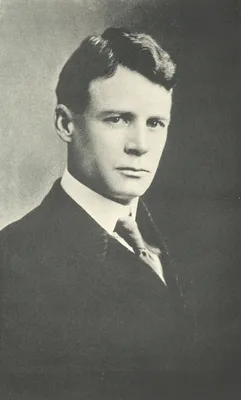
1910 RICKETTS, Howard Taylor (1871 – 1910); WILDER, Russell Morse (1885 – 1959)
The etiology of the typhus fever (tabardillo) of Mexico City. A further preliminary report.
Demonstration of the causal organism of typhus.
GMN 5380.1 · https://historyofmedicine.com/id/7067
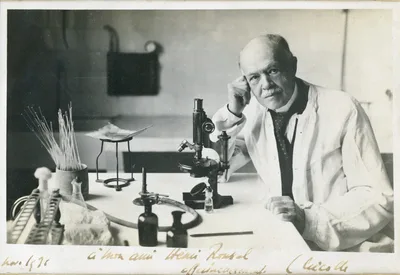
1910 –1911 NICOLLE, Charles Jules Henri (1866 – 1936)
Recherches experimentales sur le typhus exanthématique.
Nicolle demonstrated the transmission of typhus by the body louse Pediculus corporis. He also produced the disease in monkeys and guinea-pigs by the injection of infected blood. Preliminary communication in C. R. Acad…
GMN 5384 · https://historyofmedicine.com/id/7096
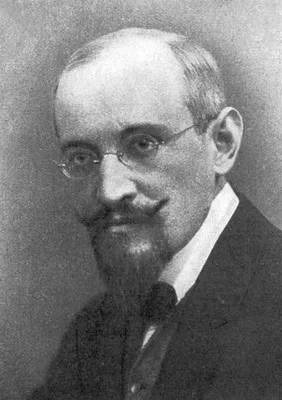
1915 PROWAZEK, Stanislaus Joseph Matthias von (1875 – 1915)
Ätiologische Untersuchungen über den Flecktyphus in Serbien 1913 und in Hamburg 1914.
Prowazek, like Ricketts and Wilder, demonstrated the specific causal agent in typhus. Like Ricketts he died of the disease.
GMN 5384.1 · https://historyofmedicine.com/id/7107
1916 ROCHA-LIMA, Henrique da (1879 – 1956)
Zur Aetiologie des Fleckfiebers.
Rickettsia prowazeki, cause of epidemic typhus, was first isolated by the Brazilian microbiologist Henrique da Rocha-Lima, who named it after Ricketts and Prowazek, both of whom died of the disease.
GMN 5388 · https://historyofmedicine.com/id/7136
1916 TÖPFER, Hans Willi (1876 – )
Zur Ursache und Uebertragung des Wolhynischen Fiebers.
Isolation of Rickettsia quintana (now called Bartonella quintana) from lice found on patients suffering from trench fever.
GMN 5389 · https://historyofmedicine.com/id/7140
1921 LOEWE, Leo (1896 – ); ET AL
Cultivation of rickettsia-like bodies in typhus fever.
Isolation of Rickettsia prowazeki from the blood. With S. A. Ritter and G. Baehr.
GMN 5392 · https://historyofmedicine.com/id/7151
1922 TODD, John Lancelot (1876 – 1949); WOLBACH, Simeon Burt (1880 – 1954); PALFREY, Francis Winslow (1876 – 1953)
The etiology and pathology of typhus. Being the main report of the Typhus Research Commission of the League of Red Cross Societies to Poland.
The carefully controlled experiments of Wolbach, Todd, and Palfrey eliminated all doubt that R. prowazeki was the causal agent in typhus. Digital facsimile from the U.S. National Library of Medicine at this link.
GMN 5393 · https://historyofmedicine.com/id/7155
1924 WOLBACH, Simeon Burt (1880 – 1954); HERTIG, Marshall (1893 – 1978)
Studies on Rickettsia-like micro-organisms in insects.
Hertig and Wolbach first described the parasitic microbe Wolbachia in the common house mosquito in 1924. In 1936 Hertig formally described the species as Wolbachia pipientis. Since then the genus Wolbachia has become …
GMN 10943 · https://historyofmedicine.com/id/13139
1925 FLETCHER, William ( – 1938); LESSLAR, J. E.
Tropical typhus in the Federated Malay States, with a compilation on epidemic typhus.
Bull. Inst. med. Res., F. M. S., No. 2. Drew attention to scrub typhus in Malaya.
GMN 5394 · https://historyofmedicine.com/id/7160
1926 MAXCY, Kenneth Fuller (1889 – 1966)
Clinical observations on endemic typhus (Brill’s disease) in Southern United States.
Maxcy described murine (flea-borne) typhus (“Maxcy’s disease”).
GMN 5396 · https://historyofmedicine.com/id/7169
1928 MOOSER, Hermann (1891 – 1971)
Experiments relating to the pathology and the etiology of Mexican typhus (tabardillo).
Mooser differentiated murine from epidemic typhus. The causative organism was later named Rickettsia mooseri.
GMN 5396.1 · https://historyofmedicine.com/id/7173
1931 DYER, Rollo Eugene (1886 – ); ET AL
Typhus fever. A virus of the typhus type derived from fleas collected from wild rats.
Murine typhus shown to be caused by an organism later named Rickettsia mooseri, transmitted by fleas from rats to man. With A. Rumreich and L. F. Badger.
GMN 5396.2 · https://historyofmedicine.com/id/7175
1931 OGATA, Norio (1883 – )
Aetiologie der Tsutsugamushi-Kiankheit: Rickettsia tsutsugamushi.
Ogata isolated the causal agent of tsutsugamushi disease, Orientia Tsutsugamushi, in 1927.
GMN 5396.3 · https://historyofmedicine.com/id/7176
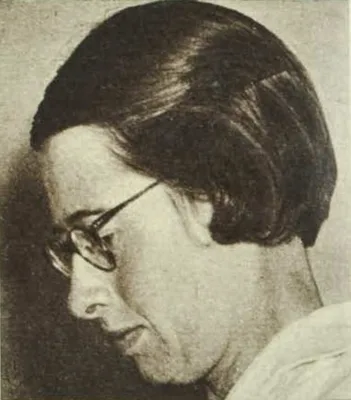
1937 BURNET, Sir Frank Macfarlane (1899 – 1985); FREEMAN, Mavis Louisa (1907 – 1992)
Experimental studies on the virus of “Q” fever.
Discovery of Rickettsia burneti, causal agent in Q fever.
GMN 5398 · https://historyofmedicine.com/id/7187
1940 LEWTHWAITE, Raymond (1894 – 1972); SAVOOR, S. R. (1900 – 1980)
Rickettsia disease of Malaya. Identity of tsutsugamushi and rural typhus.
Lewthwaite and Savoor showed scrub typhus to be identical to tsutsugamushi fever.
GMN 5398.2 · https://historyofmedicine.com/id/7195
1944 YEOMANS, Andrew (1907 – ); ET AL
The therapeutic effect of para-aminobenzic acid in louse-borne typhus fever.
With J. C. Snyder, E. S. Murray, C. J. D. Zarafonetis, and R. S. Ecke.
GMN 5398.3 · https://historyofmedicine.com/id/7199
1945 FULTON, Forrest (1913 – 1971); JOYNER, L
Cultivation of Rickettsia tsutsugamushi in lungs of rodents. Preparation of a scrub-typhus vaccine.
Scrub-typhus vaccine.
GMN 5399 · https://historyofmedicine.com/id/7205
1987 MAEDA, Koichi; MARKOWITZ, Norman; HAWLEY, Robert C.; ET AL
Human infection with Ehrlichia canis, a leukocytic rickettsia.
Order of authorship in the original publication: Maeda, Markowitz, Hawley. First description of Ehrlichiosis in humans, description of the organism, and successful drug treatment with doxycycline. The pathogen was lat…
GMN 10899 · https://historyofmedicine.com/id/13095
1994 BAKKEN, Johan S.; DUMLER, John Stephen; CHEN, Sheng-Min; ET AL
Human granulocytic Ehrlichiosis in the Upper Midwest United States. A new species emerging?
Order of authorship in the original paper: Bakken, Dumler, Chen. First description of the Ehrlichia ewingii species of Ehrlichiosis (HGE) from a patient in Duluth, Minnesota, though the infectious agent was not yet na…
GMN 10901 · https://historyofmedicine.com/id/13097
1995 PANCHOLI, Preeti; KOLBERT, Chris P.; MITCHELL, Paul D.; ET AL
Ixodes dammini as a potential vector of human granulocytic Ehrlichiosis.
Order of authorship in the original paper was Pancholi,Kolbert, Mitchell. The authors provided convincing evidence that the tick Ixodes dammini is a common vector for the transmission of HGE (Ehrlichia ewingii). (Than…
GMN 10902 · https://historyofmedicine.com/id/13098
1998 ROLAND, William E.; EVERETT, E. Dale; CYR, Tracy L.; ET AL
Ehrlichia chaffeensis in Missouri ticks.
Order of authorship in the original paper: Roland, Everett, Cyr. Using PCR, the authors demonstrated that the tick Amblyoma americanum (the Lone Star Tick) was the insect vector of Ehrlichia chaffeensis. Digital facsi…
GMN 10900 · https://historyofmedicine.com/id/13096
1999 BULLER, Richard; ARENS, Max; HMIEL, S. Paul; ET AL
Ehrlichia ewingii, a newly recognized agent of human Ehrlichiosis.
Order of authorship in the original publication: Buller, Arens, Hmiel. The authors confirmed that the agent of human granulocytic ehrlichiosis (HGE), is Ehrlichia ewingii, a pathogen carried by dogs and known in that …
GMN 10903 · https://historyofmedicine.com/id/13099
2005 TAYLOR, Mark J.; MAKUNDE, Williams Holmes; MCGARRY, Helen F.; ET AL
Macrofilaricidal activity after doxycycline treatment of Wuchereria bancrofti: A double blind randomized placebo-controlled trial.
Order of authorship in the original paper: Taylor, Makunde, McGarry.... The authors treated infection by the parasitic worm Wuchereria bancrofti, cause of elephantiasis (lymphatic filariasis), by killing the Wolbachia…
GMN 11193 · https://historyofmedicine.com/id/13390
2011 PRITT, Bobbi S.; SLOAN, Lynn M.; JOHNSON, Diep K. Hoang; ET AL
Emergence of a new pathogenic Ehrlichia species, Wisconsin and Minnesota, 2009.
Order of authorship in the original publication: Pritt, Sloan, Johnson. Discovery of a new species of Ehrlichia, initially denoted as "Wisconsin and Minnesota, 2009," that was not related to E. chaffeensiis or E. ewin…
GMN 10904 · https://historyofmedicine.com/id/13100
2014 TSIAMIS, George; FALCHETTO, Marco; BRELSFOARD, Corey; ET AL
Presence of extensive Wolbachia symbiont insertions discovered in the genome of its host Glossina morsitans morsitans.
Order of authorship in the original publication: Brelsfoard, Tsiamis, Falchetto....The authors suggested that infection by Wolbachia may give a reproductive advantage to the fly that carries the parasite causing Sleep…
GMN 11341 · https://historyofmedicine.com/id/13539
2015 PRITT, Bobbi S.; JOHNSON, Diep K. Hoang; SCHIFFMAN, Elizabeth K.; DAVIS, Jeffrey P.; ET AL
Human infection with Ehrlichia muris-like pathogen, United States, 2007-2013.
Order of authorship in the original publication: Johnson, Schiffman, Davis, Pritt. The authors, found some commonality in this pathogen, originally designated generally as "Wisconsin and Minnesota, 2009" with the mous…
GMN 10905 · https://historyofmedicine.com/id/13101
2016 DUTRA, Heverton Leandor Carneiro; ROCHA, Marcele Neves; MOREIRA, Luciano Andrade; ET AL
Wolbachia blocks currently circulating Zika virus isololates in Brazilian Aedes aegypti mosquitoes.
Order of authorship in the original paper: Dutra, Rocha, Moreira. The authors infected lab populations of mosquitos with Wolbachia pipientis, a common parasitic microbe that infects a high proportion of insects. They …
GMN 10942 · https://historyofmedicine.com/id/13138
2017 PRITT, Bobbi S.; SLOAN, Lynn M.; ALLERDICE, Michelle E. J.; ET AL
Proposal to reclassify Ehrlichia muris as Ehrlichia muris subsp. muris subsp. nov. and description of Ehrlichia muris subsp. eauclairensis subsp. nov., a newly recognized tick borne pathogen of humans.
Order of authorship in the original publication: Pritt, Allderdice, Sloan. By extremely complex genotyping methods and fine electron microscopic analysis of the organism, the authors showed that the infectious agent i…
GMN 10906 · https://historyofmedicine.com/id/13102