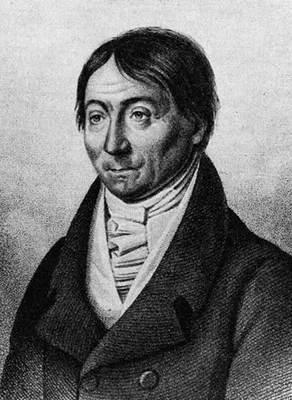
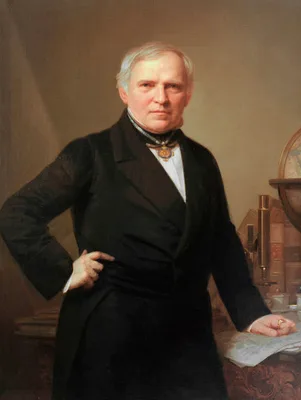
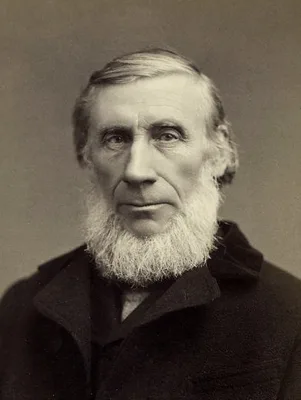
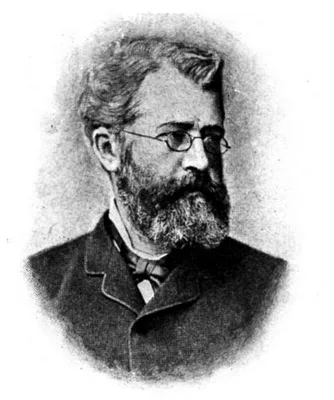
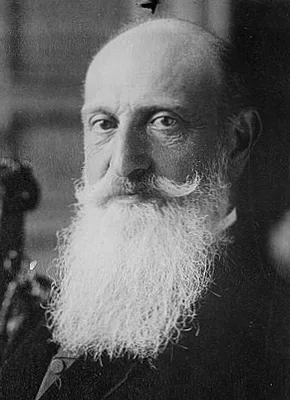
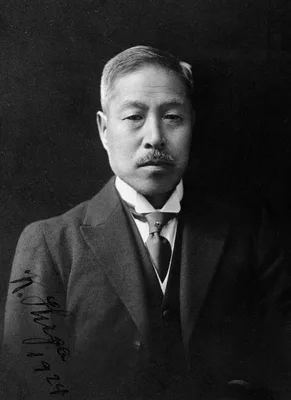
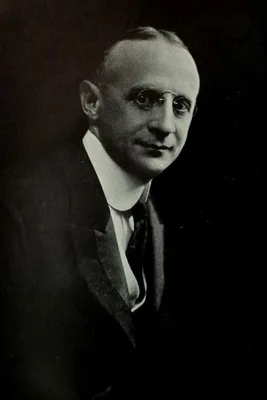
1786 MÜLLER, Otto Friedrich (1730 – 1784)
Animalcula infusoria fluviatilia et marina, quae detexit, systematice descripsit et ad vivum delineari.
Müller was the first to attempt a systematic classification of infusoria. He published several papers on the subject, the best being the above posthumous work. Muller described 8 species of the genus Vibrio (included …
GMN 2466 · https://historyofmedicine.com/id/3031
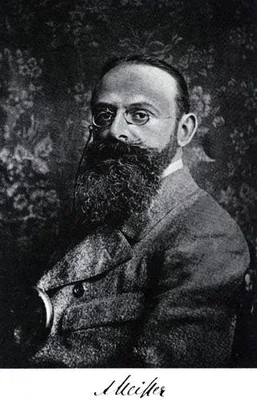
1809 LINK, Johann Heinrich Friedrich (1767 – 1851)
Observationes in Ordines plantarum naturales. Dissertatio prima complectens Anandrarum ordines Epiphytas, Mucedines, Gastromycos et Fungo.
Link described Polyangium, the first bacterium to be described that is still recognized today. Link also described Penicillium for the first time.
GMN 11403 · https://historyofmedicine.com/id/13602
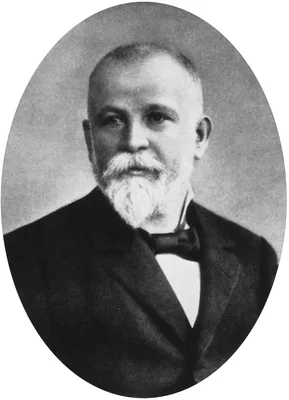
1838 EHRENBERG, Christian Gottfried (1795 – 1876)
Die Infusionsthierchen als vollkommene Organismen. 1 vol. and atlas of 64 hand-colored engraved plates.
In this monumental work in folio format Ehrenberg extended Otto Friedrich Müller’s bacteriological classification. Like Müller, he made no distinction between protozoa and bacteria, classing them both as infusoria. Hi…
GMN 111 · https://historyofmedicine.com/id/1664
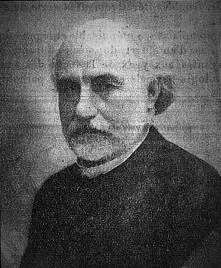
1876 TYNDALL, John (1820 – 1893)
The optical deportment of the atmosphere in relation to the phenomena of putrefaction and infection.
Tyndall observed the selective bacteria-inhibiting effect of Penicillium and the resistance of Ps. pyocyanea to it. See No. 2495.
GMN 1932 · https://historyofmedicine.com/id/2765
1877 BOLLINGER, Otto (1843 – 1909)
Ueber eine neue Pilzkrankheit beim Rinde.
First effective description of Actinomyces bovis.
GMN 5510 · https://historyofmedicine.com/id/6511
1878 ISRAEL, James Adolf (1848 – 1926)
Neue Beobachtungen auf dem Gebiete der Mykosen des Menschen.
Israel contributed an important early paper on the ray fungus Actinomyces. He included some drawings made by Langenbeck in 1845 and was the first to describe a human case of actinomycosis.
GMN 5511 · https://historyofmedicine.com/id/6512
1879 NEISSER, Albert Ludwig Siegmund (1855 – 1916)
Ueber eine der Gonorrhoe eigentümliche Micrococcusform.
Discovery of the gonococcus – causal organism in gonorrhoea.
GMN 5208 · https://historyofmedicine.com/id/7802
1880 PONFICK, Emil (1844 – 1913)
Ueber Actinomykose.
Ponfick recognized the causative role of Actinomyces in human actinomycosis; he established the identity of the human and animal forms of the disease. He published a book on the subject, Die Actinomykose des Menschen,…
GMN 5512 · https://historyofmedicine.com/id/6513
1880 EBERTH, Carl Joseph (1835 – 1926)
Die Organismen in den Organen bei Typhus abdominalis.
Salmonella typhi, causal organism of typhoid, was discovered by Eberth. Some European writers refer to the disease as “Eberth’s disease”.
GMN 5030 · https://historyofmedicine.com/id/6764
1880 LEISTIKOW, Leo (1847 – 1917)
Ueber Bacterien bei den venerischen Krankheiten.
Leistikow was first to report the cultivation of the gonococcus.
GMN 5209 · https://historyofmedicine.com/id/7804
1881 KLEBS, Theodor Albrecht Edwin (1834 – 1913)
Der Bacillus des Abdominaltyphus und dertyphöse Process.
Klebs probably saw the typhoid bacillus before Eberth, reporting it later.
GMN 5031 · https://historyofmedicine.com/id/5741
1882 GESSARD, Carle (1850 – 1925)
Sur les colorations bleue et verte des linges à pansements.
Isolation of Pseudomonas aeruginosa (Ps. pyocyanea).
GMN 2497 · https://historyofmedicine.com/id/3173
1882 FRIEDLÄNDER, Carl (1847 – 1887)
Ueber die Schizomyceten bei der acuten fibrösen Pneumonie.
Isolation of Klebsiella pneumoniae (“Friedländer bacillus”), which Friedländer regarded as the causal organism in all cases of lobar pneumonia.
GMN 3174 · https://historyofmedicine.com/id/4160
1883 MALASSEZ, Louis Charles (1842 – 1909); VIGNAL, W.
Sur une forme de tuberculose sans bacilles.
Isolation of Pasteurella pseudotuberculosis.
GMN 2498 · https://historyofmedicine.com/id/3178
1883 KOCH, Robert Heinrich Hermann (1843 – 1910)
Bericht über die Thätigkeit der deutschen Cholerakommission in Aegypten und Ostindien.
Koch–Weeks bacillus, Hemophilus conjunctivitidis, or Hemophilus aegyptius. Koch discovered the bacilli of two varieties of Egyptian conjunctivitis. See also No. 5930.
GMN 5923 · https://historyofmedicine.com/id/6839
1884 FINKLER, Dittmar (1852 – 1912); PRIOR, J
Untersuchungen über Cholera nostras.
Finkler and Prior isolated Vibrio proteus from stools in a case of acute gastro-enteritis.
GMN 3481 · https://historyofmedicine.com/id/5685
1884 GAFFKY, Georg Theodor August (1850 – 1918)
Zur Aetiologie des Abdominaltyphus.
Gaffky was the first to grow pure cultures of Salmonella typhi; he showed it to be the true activator of the disease. English translation, New Sydenham Society, 1886. Digital facsimile of the 1884 printing from Google…
GMN 5032 · https://historyofmedicine.com/id/5747
1884 KOCH, Robert Heinrich Hermann (1843 – 1910)
Sechster Bericht der deutschen wissenschaftlichen Commission zur Ehrforschung der Cholera.
In this paper, dated 2 February 1884, written while Koch and his team were in Calcutta, Koch first published his discovery of the cholera bacillus and the main route of its transmission. He based his discovery on the …
GMN 5108 · https://historyofmedicine.com/id/6047
1885 HAUSER, Gustav (1856 – 1935)
Ueber Fäulnissbacterien.
Isolation of Proteus vulgaris.
GMN 2502 · https://historyofmedicine.com/id/3199
1885 BUMM, Ernst (1858 – 1925)
Der Mikro-Organismus der gonorrhöischen Schleimhaut-Erkrankungen, Gonococcus-Neisser.
Bumm cultured the gonococcus. By human inoculations he demonstrated its pathogenicity in pure culture.
GMN 5209 · https://historyofmedicine.com/id/7808
1886 ESCHERICH, Theodor (1857 – 1911)
Die Darmbakterien des Säuglings und ihre Beziehungen zur Physiologie der Verdauung.
Includes the first account of Bact. coli infection. The organism was later renamed Escherichia coli (E.coli).
GMN 1017 · https://historyofmedicine.com/id/877
1886 SMITH, Theobald (1859 – 1934); SALMON, Daniel Elmer (1850 – 1914)
The bacterium of swine-plague.
Discovery of Salmonella choleraesuis. The Salmonellae tribe was named after Salmon, even though the discovery was made by Smith. See Bibel, Milestones in immunology (1988) 31-32.
GMN 2505 · https://historyofmedicine.com/id/3214
1886 WEICHSELBAUM, Anton (1845 – 1920)
Ueber die Aetiologie der acuten Lungen- und Rippenfellentzündungen.
Weichselbaum definitely established that Friedländer’s bacillus was responsible for pneumonia in a small percentage of cases.
GMN 3176 · https://historyofmedicine.com/id/4169
1886 LOEFFLER, Friedrich August Johann (1852 – 1915)
Die Aetiologie der Rotzkrankheit.
Discovery of Burkholderia mallei, causative organism of glanders. Preliminary notice in Dtsch. med. Wschr., 1882, 8, 707.
GMN 5156 · https://historyofmedicine.com/id/6204
1886 WEEKS, John Elmer (1853 – 1949)
The bacillus of acute conjunctival catarrh or “pink eye”.
In 1883 Koch discovered the bacilli of two different forms of infectious conjunctivitis (Egyptian ophthalmia); in 1886. Weeks discovered the same organism to be the cause of “pink-eye”. The organism has become known a…
GMN 5930 · https://historyofmedicine.com/id/6860
1887 WEICHSELBAUM, Anton (1845 – 1920)
Ueber die Aetiologie der akuten Meningitis cerebro-spinalis.
Weichselbaum discovered the meningococcus, Neisseria meningitidis, causative agent of cerebrospinal meningitis.
GMN 4678 · https://historyofmedicine.com/id/949
1887 BRUCE, Sir David (1855 – 1931)
Note on the discovery of a micro-organism in Malta fever.
Malta fever was shown by Bruce to be due to Micrococcus (Brucella) melitensis. The disease was later named Brucellosis.
GMN 5098 · https://historyofmedicine.com/id/6020
1888 GÄRTNER, August Anton Hieronymous (1848 – 1934)
Ueber die Fleischvergiftung in Frankenhausen. a.K. und den Erreger derselben.
Discovery of Salmonella enteritidis, a cause of food poisoning.
GMN 2506 · https://historyofmedicine.com/id/3223
1888 WIDAL, Georges-Fernand Isidor (1862 – 1929); CHANTEMESSE, André (1851 – 1919)
Sur les microbes de la dysentérie épidémique.
The dysentery bacillus was isolated by Chantemesse and Widal, although they failed to establish its etiological relationship to the disease.
GMN 5090.1 · https://historyofmedicine.com/id/5996
1888 NOCARD, Edmond Isidore Etienne (1850 – 1903)
Note sur la maladie des boeufs de la Guadeloupe, connue sous le nom de farcin.
The first pathogenic aerobic actinomycete to be described. It was later named Nocardia farcinica and is probably identical with N. asteroides.
GMN 5512.1 · https://historyofmedicine.com/id/6515
1889 EMMERICH, Rudolf (1852 – 1914); LÖW, Oscar [Loew] (1844 – 1941)
Bakteriolytische Enzyme als Ursache der erworbenen Immunität und die Heilung von Infectionskrankheiten durch dieselben.
Emmerich and Löw prepared a water-soluble antibiotic substance, pyocyanase, from Pseudomonas pyocanea. It inhibited pathogenic cocci and the organisms responsible for diphtheria, plague, cholera, and typhoid.
GMN 1932.2 · https://historyofmedicine.com/id/2768
1889 DUCREY, Augusto (1860 – 1940)
Il virus dell’ ulcera venerea.
Announcement of the discovery of Haemophilus ducreyi (Ducrey’s bacillus), causal organism in chancroid.
GMN 5205 · https://historyofmedicine.com/id/7796
1890 BOSTROEM, Eugen Woldemar (1850 – 1928)
Untersuchungen über die Aktinomykose des Menschen.
Isolation of Actinomyces graminis from human actinomycosis, and staining method for Actinomyces.
GMN 5513 · https://historyofmedicine.com/id/6516
1891 ISRAEL, James Adolf (1848 – 1926); WOLFF, Max (1844 – 1923)
Ueber Reincultur des Actinomyces und seine Uebertragbarkeit auf Thiere.
Isolation of Actinomyces bovis, later called Actinomyces israelii.
GMN 5514 · https://historyofmedicine.com/id/6520
1892 LOEFFLER, Friedrich August Johann (1852 – 1915)
Ueber Epidemieen unter den im hygienischen Institute zu Greifswald gehaltenen Mäusen und über die Bekämpfung der Feldmausplage.
Isolation of Salm. typhi-murium.
GMN 2507 · https://historyofmedicine.com/id/3231
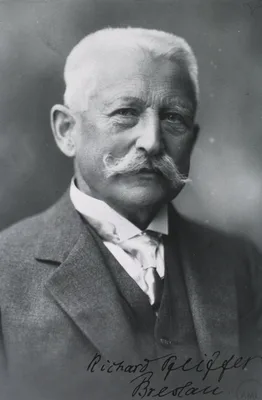
1892 PFEIFFER, Richard Friedrich Johannes (1858 – 1945)
Vorläufige Mittheilungen über die Erregerder Influenza.
Pfeiffer discovered a bacillus, Haemophilus influenzae, “Pfeiffer’s bacillus”, which he believed to be the causal organism of influenza.
GMN 5490 · https://historyofmedicine.com/id/6434
1894 VINCENT, Jean Hyacinthe (1862 – 1950)
Étude sur le parasite du “pied de Madura”.
Isolation of Streptothrix (Actinomyces) madurae.
GMN 4117 · https://historyofmedicine.com/id/5703
1894 YERSIN, Alexandre Émile Jean (1863 – 1943)
La peste bubonique à Hong-Kong.
Yersin discovered the plague bacillus Pasteurella (Yersinia) pestis, isolating it from excised buboes. He published the first account of this organism. Preliminary note in C. R. Acad. Sci. (Paris), 1894, 119, 356.
GMN 5125 · https://historyofmedicine.com/id/6113
1895 ODRIOZOLA, Ernesto (1862 – 1921)
La erupción en la enfermedad de Carrión (verruga peruana).
“Carrion’s disease” (Oroya fever) was named by the Peruvian physician Ernesto Odriozola, after Daniel Alcides Carrión Garcia (1859-85), a student. In order to prove or disprove the connection between Oroya fever and v…
GMN 5530 · https://historyofmedicine.com/id/6655
1896 DURHAM, Herbert Edward (1866 – 1945); GRUBER, Max von (1853 – 1927)
Eine neue Methode zur raschen Erkennung des Choleravibrio und des Typhusbacillus.
The discovery of bacterial agglutination. Gruber and Durham discovered the agglutinating action of the serum of typhoid patients upon the typhoid bacillus. First briefly reported by Durham: On a special action of seru…
GMN 2549 · https://historyofmedicine.com/id/3604
1896 MORAX, Victor (1866 – 1935)
Note sur un diplobacille pathogène pour la conjunctiva humaine.
Morax and Axenfeld (No. 5941) independently isolated a diplobacillus which causes a chronic conjunctivitis – the Morax – Axenfeld haemophilus.
GMN 5942 · https://historyofmedicine.com/id/6909
1898 DURHAM, Herbert Edward (1866 – 1945)
On an epidemic of gastro-enteritis associated with the presence of a variety of the Bacillus enteritidis (Gaertner), and with positive sero-diagnostic evidence (in vivo and in vitro).
Discovery of Salm. Aertrycke in patients suffering from food poisoning.
GMN 2513 · https://historyofmedicine.com/id/3256
1898 NOBELE, Jules de (1865 – 1946)
Du séro-diagnostic dans les affections gastro-intestinales d’origine alimentaire.
Discovery of Salmonella aertrycke, independently of Durham.
GMN 2514 · https://historyofmedicine.com/id/3259
1898 GWYN, Norman Beechey (1875 – 1952)
On infection with a para-colon bacillus in a case with all the clinical features of typhoid fever.
Isolation of Salmonella paratyphi A.
GMN 5038 · https://historyofmedicine.com/id/5784
1898 SHIGA, Kiyoshi (1870 – 1957)
Ueber den Dysenteriebacillus (Bacillus dysenteriae).
Discovery of the dysentery bacillus, Shigella. Preliminary paper in the same journal, 1898, 23, 599-600.
GMN 5091 · https://historyofmedicine.com/id/6000
1900 KRUSE, Walther (1864 – 1943)
Ueber die Ruhr als Volkskrankheit und ihren Erreger.
Further work on dysentery by Kruse led to the coupling of his name with Shiga to designate both the “Shiga–Kruse bacillus” and “Shiga–Kruse disease”.
GMN 5092 · https://historyofmedicine.com/id/6002
1900 FLEXNER, Simon (1863 – 1946)
On the etiology of tropical dysentery.
The organism isolated by Flexner was at first thought to be identical with Shiga’s bacillus. Later Martini and Lentz, Z. Hyg., 1902, 41, 540, showed it to be different; it was named Bact. flexneri, and later Shigella …
GMN 5093 · https://historyofmedicine.com/id/6006
1900 POYNTON, Frederick John (1869 – 1943); PAINE, Alexander
The etiology of rheumatic fever.
After extensive bacteriological researches, Poynton and Paine considered that a diplococcus was the cause of rheumatic fever.
GMN 4505 · https://historyofmedicine.com/id/8890
1902 LIGNIÈRES, Joseph Léon Marcel (1868 – 1933); SPITZ, J
Actinobacilosis.
Discovery of the actinobacillus.
GMN 5531 · https://historyofmedicine.com/id/6671
1906 MORGAN, Harry de Riemer (1863 – 1931)
Upon the bacteriology of the summer diarrhoea of infants.
Morgan’s bacillus, Proteus morgani.
GMN 2518.1 · https://historyofmedicine.com/id/3281