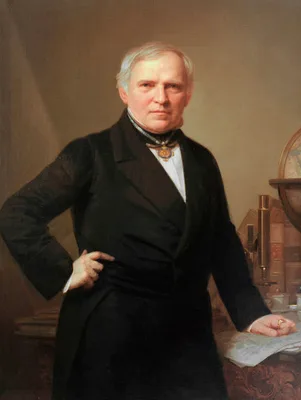
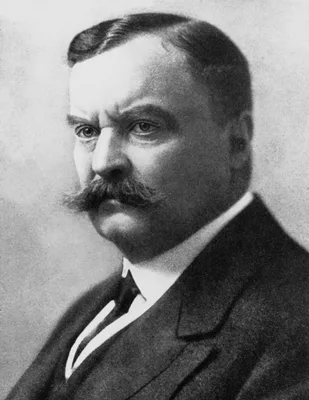
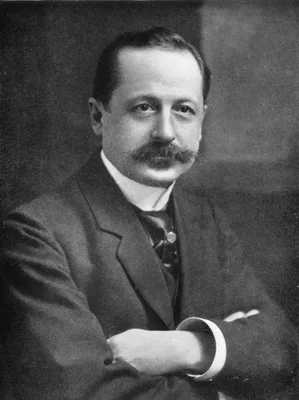
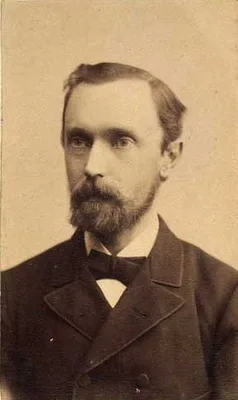
1838 EHRENBERG, Christian Gottfried (1795 – 1876)
Die Infusionsthierchen als vollkommene Organismen. 1 vol. and atlas of 64 hand-colored engraved plates.
In this monumental work in folio format Ehrenberg extended Otto Friedrich Müller’s bacteriological classification. Like Müller, he made no distinction between protozoa and bacteria, classing them both as infusoria. Hi…
GMN 111 · https://historyofmedicine.com/id/1664
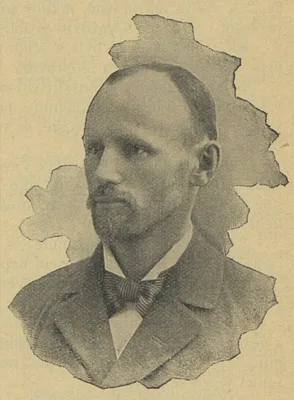
1873 OBERMEIER, Otto Hugo Franz (1843 – 1873)
Vorkommen feinster, eine Eigenbewegung zeigender Fäden im Blute von Recurrenskranken.
Discovery (in 1868) of Borrelia recurrentis, causative agent in relapsing fever.
GMN 5314 · https://historyofmedicine.com/id/6602
1887 BRUCE, Sir David (1855 – 1931)
Note on the discovery of a micro-organism in Malta fever.
Malta fever was shown by Bruce to be due to Micrococcus (Brucella) melitensis. The disease was later named Brucellosis.
GMN 5098 · https://historyofmedicine.com/id/6020
1896 VINCENT, Jean Hyacinthe (1862 – 1950)
Sur l’étiologie et sur les lésions anatomo-pathologiques de la pourriture d’hôpital.
Vincent described a fusiform bacillus and a spirillum which, in association, were responsible for hospital gangrene. Later, in Arch. int. Laryng., 1898, 11, 44-48, he showed these two organisms to be present in “Vince…
GMN 3309 · https://historyofmedicine.com/id/4512
1897 BANG, Bernhard Laurits Frederik (1848 – 1932)
Die Aetiologie des seuchenhaften (“infectiösen”) Verwerfens.
Discovery of Brucella abortus.
GMN 5099 · https://historyofmedicine.com/id/6023
1905 CASTELLANI, Aldo (1877 – 1971)
On the presence of spirochaetes in two cases of ulcerated parangi (yaws).
Castellani demonstrated in scrapings of yaws tissue a spirochaete, T. pertenue, later found to be the causal organism. He thus finally established it as a distinct organism from the syphilis spirochaete. Preliminary n…
GMN 5306 · https://historyofmedicine.com/id/6557
1905 WELLMANN, Frederick Creighton (1871 – 1960)
On a spirochaete found in yaws papules.
Independently of Castellani (No. 5306) Wellmann discovered Treponema pertenue. "In addition to being an author, Wellman was also a doctor of tropical medicine, scientist, administrator, artist, educator, spy, and engi…
GMN 5307 · https://historyofmedicine.com/id/6559
1905 DUTTON, Joseph Everett (1877 – 1905); TODD, John Lancelot (1876 – 1949)
The nature of tick fever in the eastern part of the Congo Free State.
Independently of Ross and Milne, Dutton and Todd demonstrated relapsing fever in monkeys conveyed by infected ticks, Omithodorus moubata. The organism was named Sp. (now Borrelia) duttoni. Both Dutton and Todd contrac…
GMN 5318 · https://historyofmedicine.com/id/6610
1906 REUTER, Karl
Ueber Spirochaeta pallida in der Aortenwand bei Hellerscher Aortitis.
Treponema pallidum first discovered in the diseased aorta.
GMN 2824 · https://historyofmedicine.com/id/3531
1906 NORRIS, Charles (1867 – 1935); ET AL
Study of a spirochete obtained from a case of relapsing fever in man, with notes on morphology, animal reactions, and attempts at cultivation.
Spirochaete causing the American variety of relapsing fever first isolated. With A. W. Pappenheimer and T. Flournoy.
GMN 5319 · https://historyofmedicine.com/id/6613
1906 NOVY, Frederick George (1864 – 1957); KNAPP, Richard Edward (1884 – )
Studies in Spirillum obermeieri and related organisms.
Novy and Knapp made important observations on the spirochaete isolated by Norris et al. from a case of (American) relapsing fever, proving it to be different from Borrelia obermeieri, sometimes referred to as “Novy’s …
GMN 5320 · https://historyofmedicine.com/id/6616
1907 STIMSON, Arthur Marston (1876 – )
Note on an organism found in yellow-fever tissue.
Stimson discovered a spirochete in the organs of persons dying of (?) yellow fever. He called it Sp. interrogans, but it was almost certainly Leptospira icterohaemorrhagiae.
GMN 5333 · https://historyofmedicine.com/id/6661
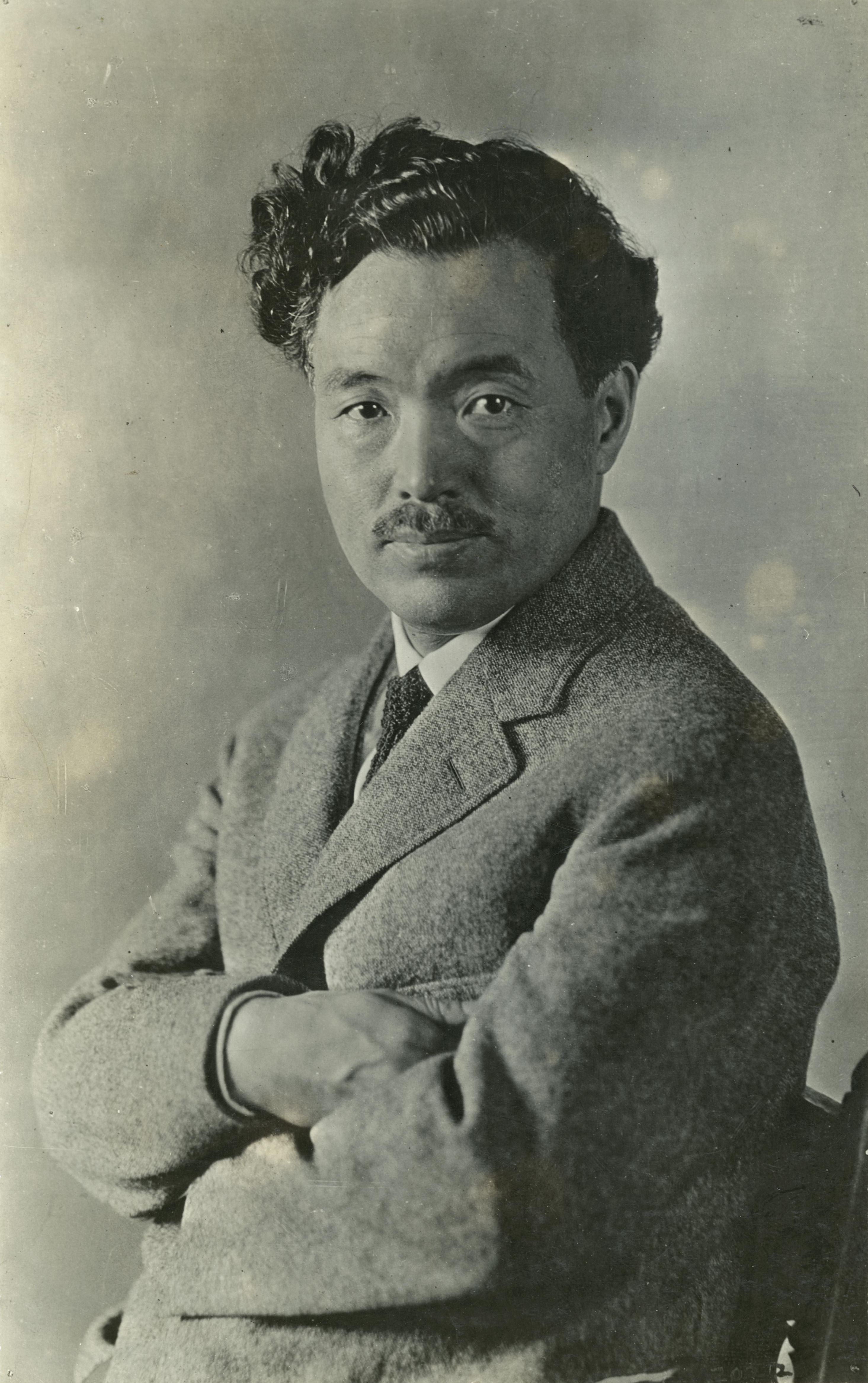
1911 NOGUCHI, Hideyo (1876 – 1928)
A method for the pure cultivation of pathogenic Treponema pallidum (Spirochaeta pallida).
Pure culture of T. pallidum first obtained. Digital facsimile from digitalcommon.oshu.edu at this link.
GMN 2404 · https://historyofmedicine.com/id/3368
1912 NOGUCHI, Hideyo (1876 – 1928)
Pure cultivation of Spirochaeta refringens.
Noguchi obtained pure cultures of spirochaetae. See also his later papers in the same journal, 1912, 16, 199-210, 620-28.
GMN 2519 · https://historyofmedicine.com/id/3289
1913 NOGUCHI, Hideyo (1876 – 1928); MOORE, Joseph Waldron (1879 – )
A demonstration of Treponema pallidum in the brain in cases of general paralysis.
A pure culture of Trep. pallidum was obtained from a case of dementia paralytica.
GMN 4805 · https://historyofmedicine.com/id/1575
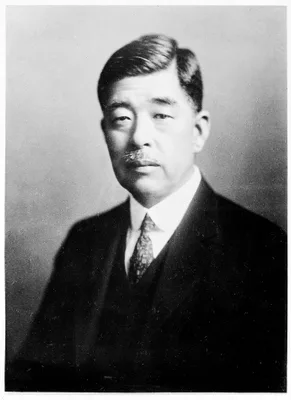
1916 INADA, Ryukichi (1874 – 1950); ET AL
The etiology, mode of infection, and specific therapy of Weil’s disease (Spirochaetosis icterohaemorrhagica)
Inada, Y. Ido, R. Hoki, R. Kaneko, and H. Ito proved that Sp. (Leptospira) icterohaemorrhagiae is the causal organism in Weil’s disease (Leptospirosis). Preliminary report (in Japanese) in Tokyo Ijishinshi, 1915, No. …
GMN 5334 · https://historyofmedicine.com/id/6668
1917 IDO, Yutaka (1881 – 1919); ET AL
The rat as a carrier of Spirochaeta icterohaemorrhagiae, the causative agent in Weil’s disease (spirochaetosis icterohaemorrhagica)
Rats shown to be the carriers of Leptospira. With R. Hoki, H. Ito, and H. Wani.
GMN 5334.1 · https://historyofmedicine.com/id/6673
1918 IDO, Yutaka (1881 – 1919)
Spirochaeta hebdomadis, the causative agent of seven-day fever (nanukayami)
Discovery of Leptospira hebdomadis, carried by a mouse. With H. Ito and H. Wani.
GMN 5334.2 · https://historyofmedicine.com/id/6679
1933 KLARENBEEK, Arie (1888 – ); SCHÜFFNER, Wilhelm August Paul (1867 – 1949)
Het voorkomen van een afwijkend Leptospira-ras in Nederland.
Leptospira canicola first isolated (1913) from the urine of a dog.
GMN 5335 · https://historyofmedicine.com/id/6683
1933 WANI, Hidetsune
Ueber die Prophylaxe der Spirochaetosis icterohaemorrhagica Inada (Weilschen Krankheit) durch Schutzimpfung.
Prophylactic vaccination against leptospirosis.
GMN 5335.1 · https://historyofmedicine.com/id/6688
1934 DHONT, C. M.; ET AL
De leptospiroses bij den hond, en de beteekenis der Leptospira canicola.
First reported cases of human infection with L. canicola. With A. Klarenbeek, W. A. P. Schüffner, and J. Voet.
GMN 5336 · https://historyofmedicine.com/id/6696
1938 SAENZ RICART, Braulio (1886 – 1961)
Demonstratión de un treponema en el borde activo un caso de pinto de las manos y pies y en la linfa de ganglios superficiales (reporte preliminar).
B. Saenz, J. Grau Triana, and J. Alfonso Armenteros indicated that pinta is caused by a treponeme, T. carateum.
GMN 5308.1 · https://historyofmedicine.com/id/6564
1982 BURGDORFER, Willy (1925 – 2014); BARBOUR, Alan G.; HAYES, Stanley F.
Lyme disease - a tick-borne spirochetosis?
Discovery of the agent causing Lyme disease. Though the authors initially thought the disease might be a spirochetosis, the agent was attributed to a bacterium Borrelia burgdorferi, named for Burgdorfer who discovered…
GMN 10782 · https://historyofmedicine.com/id/12978
1998 VENTER, John Craig (1946 – ); SMITH, Hamilton Othanel (1931 – ); FRASER, Claire M. (1955 – ); NORRIS, Steven J.; WEINSTOCK, George M. (1949 – ); ET AL
Complete genome sequence of treponema pallidum, the syphilis spirochete.
Order of authorship in the original publication: Fraser, Norris, Weinstock....Smith, Venter. Sequence of the genome of the bacterium that causes syphilis. (Thanks to Juan Weiss for this reference and its interpretation.)
GMN 11342 · https://historyofmedicine.com/id/13540