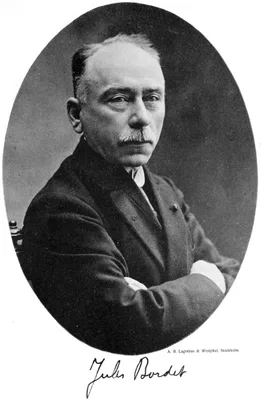
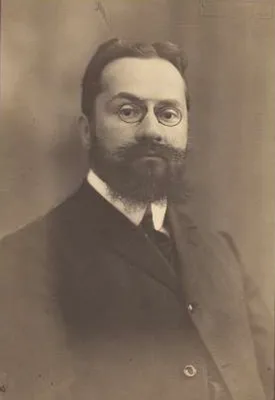
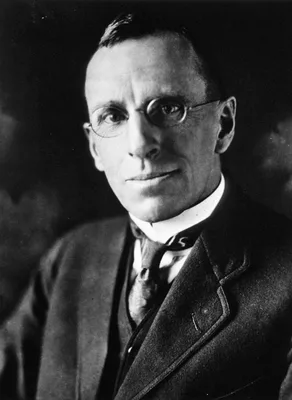
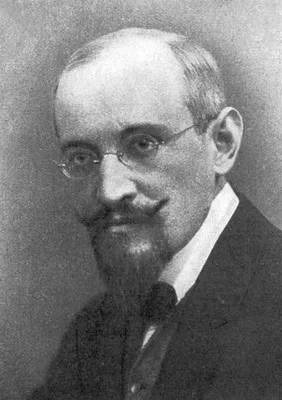
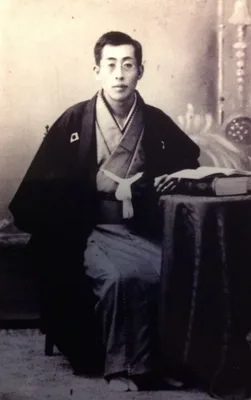
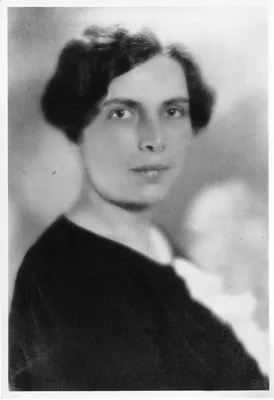
1906 BORDET, Jules Jean Baptiste Vincent (1870 – 1961); GENGOU, Octave (1875 – 1957)
Le microbe de la coqueluche.
The cocco-bacillus Haemophilus pertussis, commonly regarded as the causal organism of whooping cough, was at first named “Bordet–Gengou bacillus” after its discoverers. It has later renamed Bordetella pertussis.
GMN 5087 · https://historyofmedicine.com/id/5968
1906 GOTSCHLICH, Felix (1874 – 1914)
Über Cholera- und choleraähnliche Vibrionen unter den aus Mekka zurückkehrenden Pilgern.
Isolation of El Tor vibrio, a particular strain of the bacterium Vibrio cholerae. Gotschlich first identified this strain in 1905 at a quarantine camp on the Sinai Peninsula in El Tor, Egypt . The vibrios were found i…
GMN 5111.1 · https://historyofmedicine.com/id/6061
1906 NORRIS, Charles (1867 – 1935); ET AL
Study of a spirochete obtained from a case of relapsing fever in man, with notes on morphology, animal reactions, and attempts at cultivation.
Spirochaete causing the American variety of relapsing fever first isolated. With A. W. Pappenheimer and T. Flournoy.
GMN 5319 · https://historyofmedicine.com/id/6613
1906 NOVY, Frederick George (1864 – 1957); KNAPP, Richard Edward (1884 – )
Studies in Spirillum obermeieri and related organisms.
Novy and Knapp made important observations on the spirochaete isolated by Norris et al. from a case of (American) relapsing fever, proving it to be different from Borrelia obermeieri, sometimes referred to as “Novy’s …
GMN 5320 · https://historyofmedicine.com/id/6616
1907 FLEXNER, Simon (1863 – 1946)
Concerning a serum therapy for experimental infection with Diplococcus intracellularis.
Flexner prepared an antiserum for use in cerebrospinal meningitis.
GMN 4683 · https://historyofmedicine.com/id/958
1907 STIMSON, Arthur Marston (1876 – )
Note on an organism found in yellow-fever tissue.
Stimson discovered a spirochete in the organs of persons dying of (?) yellow fever. He called it Sp. interrogans, but it was almost certainly Leptospira icterohaemorrhagiae.
GMN 5333 · https://historyofmedicine.com/id/6661
1908 UHLENHUTH, Paul Theodor (1870 – 1957); HUBENER, Erich August (1870 – )
Weitere Mitteilungen über Schweinepest mit besonderer Berücksichtigung der Bakteriologie der Hogcholeragruppe.
First description of Salmonella paratyphi C.
GMN 5041 · https://historyofmedicine.com/id/5815
1908 MENDEL, Felix (1862 – 1925)
Die von Pirquet'sche Hautreaktion und die intravenöse Tuberkulinbehandlung.
First publication on the The Mantoux test or Mendel–Mantoux test (also known as the Mantoux screening test, tuberculin sensitivity test, Pirquet test, or PPD test for purified protein derivative) is a tool for screeni…
GMN 12385 · https://historyofmedicine.com/id/14611
1909 BARTON, Alberto Leonardo (1870 – 1950)
Descripción de elementos endo-globulares hallados en las enfermos de fiebre verrucosa.
The causal organism of Oroya fever and verruga peruana, endemic in Peru, was named Bartonella bacilliformis after Barton, who was one of the first to observe it.
GMN 5533 · https://historyofmedicine.com/id/6681
1910 RICKETTS, Howard Taylor (1871 – 1910); WILDER, Russell Morse (1885 – 1959)
The etiology of the typhus fever (tabardillo) of Mexico City. A further preliminary report.
Demonstration of the causal organism of typhus.
GMN 5380.1 · https://historyofmedicine.com/id/7067
1910 –1911 NICOLLE, Charles Jules Henri (1866 – 1936)
Recherches experimentales sur le typhus exanthématique.
Nicolle demonstrated the transmission of typhus by the body louse Pediculus corporis. He also produced the disease in monkeys and guinea-pigs by the injection of infected blood. Preliminary communication in C. R. Acad…
GMN 5384 · https://historyofmedicine.com/id/7096
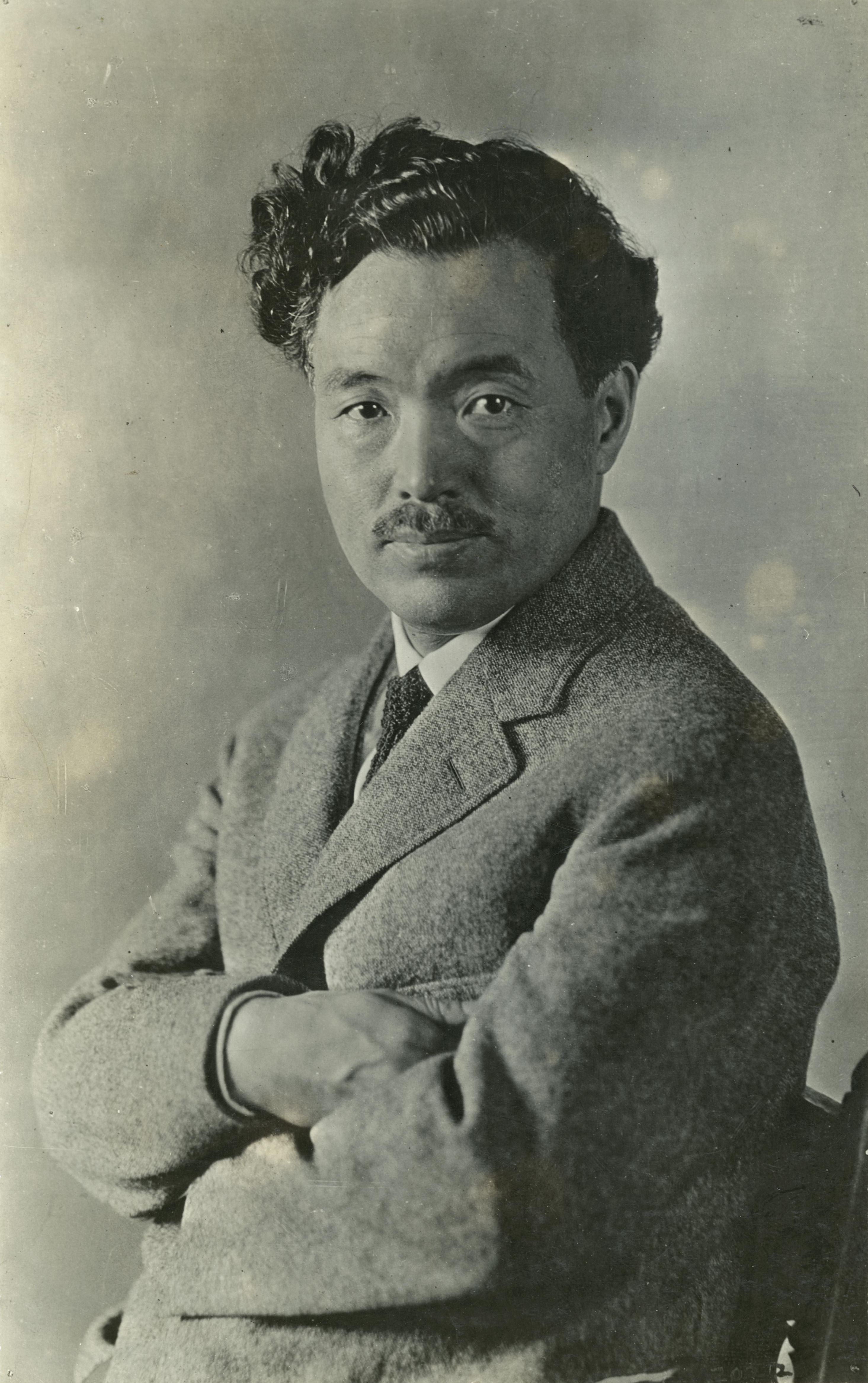
1911 NOGUCHI, Hideyo (1876 – 1928)
A method for the pure cultivation of pathogenic Treponema pallidum (Spirochaeta pallida).
Pure culture of T. pallidum first obtained. Digital facsimile from digitalcommon.oshu.edu at this link.
GMN 2404 · https://historyofmedicine.com/id/3368
1911 ASCOLI, Alberto (1877 – 1957)
La precipitina nella diagnosi del carbonchio ematico.
Ascoli’s thermoprecipitin reaction for the diagnosis of anthrax. German translation in Zbl. Bakt., 1911, 1 Abt., 58, Orig., 63-70. Preliminary note in Patbologica, 1910, 3, 101.
GMN 5171 · https://historyofmedicine.com/id/6255
1911 BECKER, Georg
Die bakteriologische Blutuntersuchung beim Milzbrand des Menschen.
Salvarsan first used in the treatment of anthrax.
GMN 5172 · https://historyofmedicine.com/id/6263
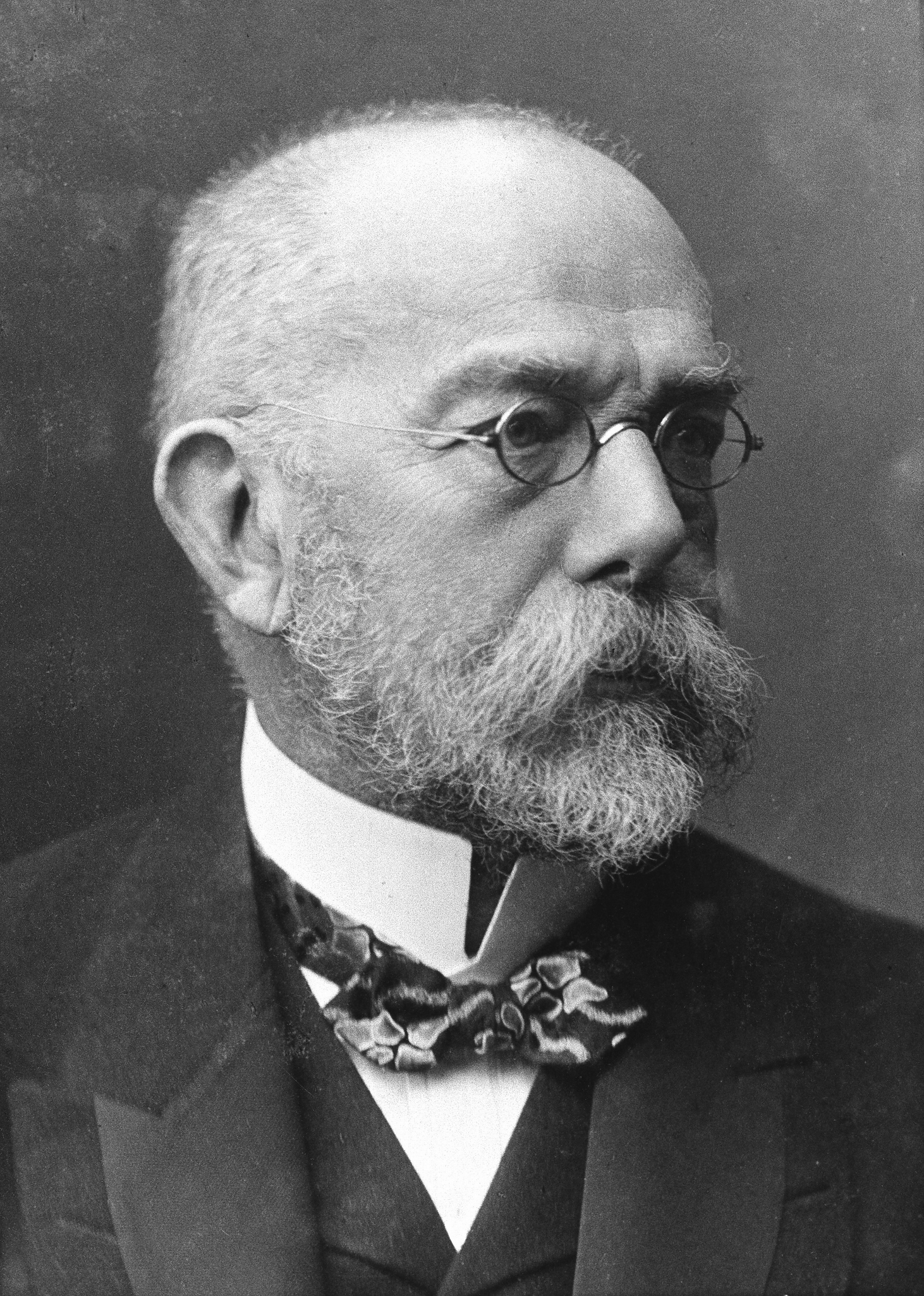
1912 KOCH, Robert Heinrich Hermann (1843 – 1910); GAFFKY, Georg Theodor August (1850 – 1918); SCHWALBE, Julius (1866 – 1930); PFUHL, Ernst (1876 – 1940)
Gesammelte Werke von Robert Koch. Unter Mitwirkung von G. Gaffky and E. Pfuhl. Herausgegeben von J. Schwalbe. 2 vols. [in 3).
For his work on tuberculosis Koch received the Nobel Prize in 1905. Digital facsimile from the Internet Archive at this link. See T.D. Brock, Robert Koch: A life in medicine and bacteriology, Madison, WS: Science-Tech…
GMN 86 · https://historyofmedicine.com/id/1437
1912 NOGUCHI, Hideyo (1876 – 1928)
Pure cultivation of Spirochaeta refringens.
Noguchi obtained pure cultures of spirochaetae. See also his later papers in the same journal, 1912, 16, 199-210, 620-28.
GMN 2519 · https://historyofmedicine.com/id/3289
1912 WHITMORE, Alfred (1876 – 1946); KRISHNASWAMI, C. S.
An account of the discovery of a hitherto undescribed infective disease occurring among the population of Rangoon.
First description of melioidosis. Together with C.S. Krishnaswami, Whitmore identified Burkholderia pseudomallei, the causative agent of melioidosis (also known as "Whitmore's disease") in opium addicts in Rangoon in …
GMN 5159 · https://historyofmedicine.com/id/6213
1912 MCCOY, George Walter (1876 – 1952); CHAPIN, Charles Willard (1877 – )
Further observations on a plague-like disease of rodents with a preliminary note on the causative agent, Bacterium tularense.
Isolation of Pasteurella tularensis, causal organism in tularemia.
GMN 5174 · https://historyofmedicine.com/id/6273
1912 NICOLLE, Charles Jules Henri (1866 – 1936); ET AL
Le magot animal réactif du trachôme. Filtrabilité du virus. Pouvoir infectant des larmes.
Filtration of the trachoma agent, Chlamydia trachomatis. With L. Blaisot and A. Cuénod.
GMN 5961 · https://historyofmedicine.com/id/6981
1913 NOGUCHI, Hideyo (1876 – 1928); MOORE, Joseph Waldron (1879 – )
A demonstration of Treponema pallidum in the brain in cases of general paralysis.
A pure culture of Trep. pallidum was obtained from a case of dementia paralytica.
GMN 4805 · https://historyofmedicine.com/id/1575
1913 DOCHEZ, Alphonse Raymond (1882 – 1964); GILLESPIE, Louis John (1886 – 1941)
A biological classification of pneumococci by means of immunity reactions.
Dochez and Gillespie differentiated four types of pneumococci.
GMN 3192.1 · https://historyofmedicine.com/id/4234
1914 WHERRY, William Buchanan (1875 – 1936); LAMB, Benjamin Harrison (1889 – 1955)
Infection of man with Bacterium tularense
Wherry and Lamb were first to isolate P. tularensis from lesions in man.
GMN 5175 · https://historyofmedicine.com/id/6279
1914 SCHOTTMÜLLER, Hugo (1867 – 1936)
Zurt Aetiologie und Klinik der Bisskrankheit.
Isolation of Streptothrix (Actinomyces) muris ratti from human patients bitten by rats.
GMN 5325 · https://historyofmedicine.com/id/6627
1915 WEINBERG, Michel (1868 – 1940); SÉGUIN, P
Notes bactériologiques sur les infections gazeuses.
Isolation of Cl. oedematiens.
GMN 2520 · https://historyofmedicine.com/id/3293
1915 SONNE, Carl Olaf (1882 – 1948)
Ueber die Bakteriologie der giftarmen Dysenteriebacillen (Para-dysenteriebacillen).
Sonne’s bacillus (Shigella sonnei) was probably described earlier by others, but it was Sonne who first drew serious attention to it. First published as inaugural dissertation, 1914.
GMN 5094 · https://historyofmedicine.com/id/6008
1915 PROWAZEK, Stanislaus Joseph Matthias von (1875 – 1915)
Ätiologische Untersuchungen über den Flecktyphus in Serbien 1913 und in Hamburg 1914.
Prowazek, like Ricketts and Wilder, demonstrated the specific causal agent in typhus. Like Ricketts he died of the disease.
GMN 5384.1 · https://historyofmedicine.com/id/7107
1915 GRAHAM, John Henry Porteus (1869 – 1957)
A note on a relapsing febrile illness of unknown origin.
First reported case of “trench fever”.
GMN 5385 · https://historyofmedicine.com/id/7113
1915 HUNT, George Herbert (1884 – 1926); RANKIN, Allan Coats (1877 – 1959)
Intermittent fever of obscure origin, occurring among British soldiers in France. The so-called “trench-fever”.
In this paper trench fever is so named for the first time.
GMN 5386 · https://historyofmedicine.com/id/7118
1916 WEINBERG, Michel (1868 – 1940); SÉGUIN, P
Contribution à l’étiologie de la gangrène gazeuse.
Isolation of Cl. histolyticum.
GMN 2521 · https://historyofmedicine.com/id/3297
1916 FUTAKI, Kenzo (1873 – 1966); ET AL
The cause of rat-bite fever.
K. Futaki, I. Takaki, T. Taniguchi, and S. Osumi found a spirillum (Sp. morsus muris) in the lymphatic glands and blood stream in cases of rat-bite fever (sodoku).
GMN 5326 · https://historyofmedicine.com/id/6630
1916 INADA, Ryukichi (1874 – 1950); ET AL
The etiology, mode of infection, and specific therapy of Weil’s disease (Spirochaetosis icterohaemorrhagica)
Inada, Y. Ido, R. Hoki, R. Kaneko, and H. Ito proved that Sp. (Leptospira) icterohaemorrhagiae is the causal organism in Weil’s disease (Leptospirosis). Preliminary report (in Japanese) in Tokyo Ijishinshi, 1915, No. …
GMN 5334 · https://historyofmedicine.com/id/6668
1916 HIS, Wilhelm Jr. (1863 – 1934)
Ueber eine neue periodische Fiebererkrankung (Febris Wolhynica).
His encountered a form of “trench fever” in Volhynia, Russia, and named it after that district.
GMN 5387 · https://historyofmedicine.com/id/7134
1916 ROCHA-LIMA, Henrique da (1879 – 1956)
Zur Aetiologie des Fleckfiebers.
Rickettsia prowazeki, cause of epidemic typhus, was first isolated by the Brazilian microbiologist Henrique da Rocha-Lima, who named it after Ricketts and Prowazek, both of whom died of the disease.
GMN 5388 · https://historyofmedicine.com/id/7136
1916 TÖPFER, Hans Willi (1876 – )
Zur Ursache und Uebertragung des Wolhynischen Fiebers.
Isolation of Rickettsia quintana (now called Bartonella quintana) from lice found on patients suffering from trench fever.
GMN 5389 · https://historyofmedicine.com/id/7140
1917 SCHMITZ, Karl Eitel Friedrich (1889 – )
Eine neuer Typus aus der Gruppe der Ruhrbazillen als Erreger einer grösseren Epidemie.
Schmitz’s bacillus – Bact. ambiguum (Shigella schmitzii),a cause of dysentery.
GMN 5095 · https://historyofmedicine.com/id/6010
1917 STANTON, Sir Ambrose Thomas (1875 – 1938)
A form of pseudo-tuberculosis (melioidosis).
Stanton identified the bacillus of melioidosis and reproduced the disease in animals by feeding and inoculation of cultures.
GMN 5159.1 · https://historyofmedicine.com/id/6218
1917 IDO, Yutaka (1881 – 1919); ET AL
The rat as a carrier of Spirochaeta icterohaemorrhagiae, the causative agent in Weil’s disease (spirochaetosis icterohaemorrhagica)
Rats shown to be the carriers of Leptospira. With R. Hoki, H. Ito, and H. Wani.
GMN 5334.1 · https://historyofmedicine.com/id/6673
1918 ANDREWES, Sir Frederick William (1859 – 1932)
Dysentery bacilli: the differentiation of the true dysentery bacilli from allied species.
Shigella alkalescens described.
GMN 3542 · https://historyofmedicine.com/id/4049
1918 IDO, Yutaka (1881 – 1919)
Spirochaeta hebdomadis, the causative agent of seven-day fever (nanukayami)
Discovery of Leptospira hebdomadis, carried by a mouse. With H. Ito and H. Wani.
GMN 5334.2 · https://historyofmedicine.com/id/6679
1919 HIRSZFELD, Ludwik Maurycy [Hirschfeld] (1884 – 1954)
A new generation of paratyphoid.
Hirszfeld gave an important description of Salmonella paratyphi C. (“Hirszfeld’s bacillus”).
GMN 5044 · https://historyofmedicine.com/id/5822
1919 BROWN, James Howard (1884 – 1956)
The use of blood agar for the study of streptococci.
In this monograph with numerous charts and 34 full-page plates Brown classified streptococci into α, β, A prime and γ based on the type and degree of hemolysis produced by the bacteria on a blood agar plate. He also d…
GMN 12006 · https://historyofmedicine.com/id/14214
1921 LOEWE, Leo (1896 – ); ET AL
Cultivation of rickettsia-like bodies in typhus fever.
Isolation of Rickettsia prowazeki from the blood. With S. A. Ritter and G. Baehr.
GMN 5392 · https://historyofmedicine.com/id/7151
1922 –1925 MCINTOSH, James (1882 – 1948); JAMES, W. Warwick (1874 – 1965); LAZARUS-BARLOW, Percy (1895 – 1967)
An investigation into the aetiology of dental caries. I: The nature of the destructive agent and the production of artificial caries. II" The biological characteristics and distribution of B. acidolphilus odontolyticus. III: Further experiments on the production of artificial caries. IV: Accessory factors in dental caries. (1) Reaction of the saliva (2) Acid resistance of teeth.(3) Bacteriotropic action of saliva.
Isolation of Lactobacillus odontolyticus I and II from carious teeth. Digital facsimile of part 1 from PubMedCentral at this link. Digital facsimile of part 4 from PubMedCentral at this link.
GMN 3691 · https://historyofmedicine.com/id/5725
1922 TODD, John Lancelot (1876 – 1949); WOLBACH, Simeon Burt (1880 – 1954); PALFREY, Francis Winslow (1876 – 1953)
The etiology and pathology of typhus. Being the main report of the Typhus Research Commission of the League of Red Cross Societies to Poland.
The carefully controlled experiments of Wolbach, Todd, and Palfrey eliminated all doubt that R. prowazeki was the causal agent in typhus. Digital facsimile from the U.S. National Library of Medicine at this link.
GMN 5393 · https://historyofmedicine.com/id/7155
1922 RODRÍQUEZ VARGAS, Fernando E. (1888 – 1932)
Studies in the specific study of the bacteriology of dental cavities.
Rodríguez discovered that three types of the Lactobacillus species of bacteria, during the process of fermentation, are the causes of cavities. Digital facsimile from Google Books at this link.
GMN 12656 · https://historyofmedicine.com/id/14900
1924 CALMETTE, Léon Charles Albert (1863 – 1933); GUÉRIN, Camille (1872 – 1961); WEILL-HALLÉ, Benjamin (1875 – 1958); ET AL
Essai d’immunisation contre l’infection tuberculeuse.
B.C.G. (Bacille Calmette–Guérin) vaccine was first produced in 1906 and subcultured for 13 years. It was first used as a prophylactic against tuberculosis in children in 1921. It remains in use. See also No. 2346.
GMN 2343 · https://historyofmedicine.com/id/3094
1924 DICK, George Frederick (1881 – 1967); DICK, Gladys Rowena Henry (1881 – 1963)
A skin test for susceptibility to scarlet fever.
The “Dick test” for the determination of individual susceptibility to scarlet fever.
GMN 5082 · https://historyofmedicine.com/id/5946
1924 DICK, George Frederick (1881 – 1967); DICK, Gladys Rowena Henry (1881 – 1963)
The etiology of scarlet fever.
Proof that streptococcus is the cause of scarlet fever.
GMN 5082.1 · https://historyofmedicine.com/id/5949
1924 ROBERTSON, Andrew
Observations on the causal organism of rat-bite fever in man.
Robertson proved one of the causal organisms of rat-bite fever to be Sp. morsus muris. He re-named it Spirillum minus Carter, 1887, identifying it as the first spiral micro-organism to be described from a rodent.
GMN 5327 · https://historyofmedicine.com/id/6633
1924 WOLBACH, Simeon Burt (1880 – 1954); HERTIG, Marshall (1893 – 1978)
Studies on Rickettsia-like micro-organisms in insects.
Hertig and Wolbach first described the parasitic microbe Wolbachia in the common house mosquito in 1924. In 1936 Hertig formally described the species as Wolbachia pipientis. Since then the genus Wolbachia has become …
GMN 10943 · https://historyofmedicine.com/id/13139