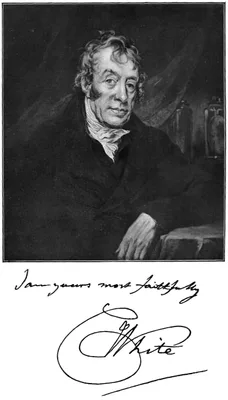
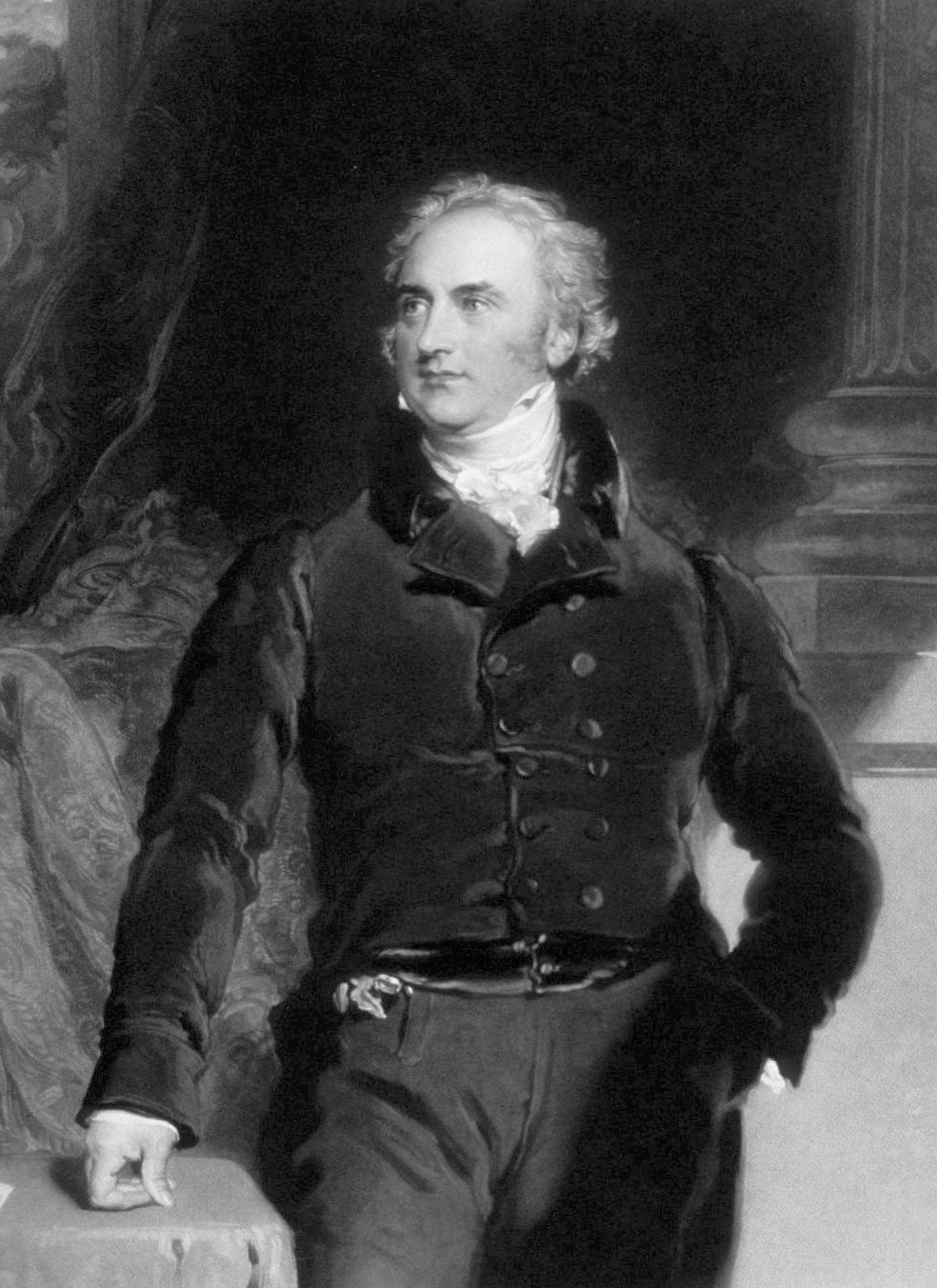
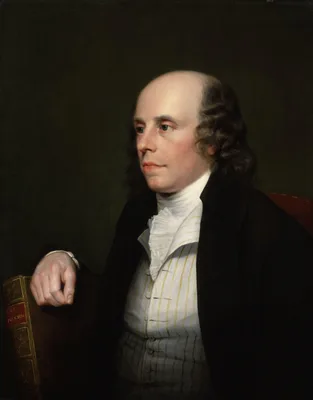
1808 WHITE, Charles (1728 – 1813)
A catalogue of the anatomical preparations, casts, drawings, machines, instruments, &c. in White's Museum, Lying-in hospital.
GMN 7682 · https://historyofmedicine.com/id/9854
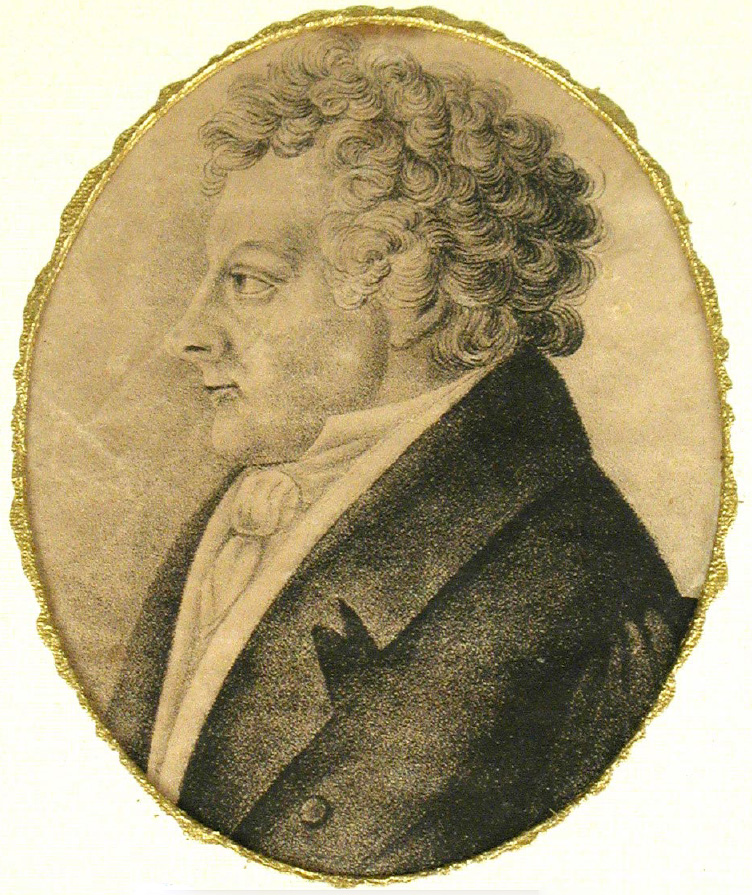
1809 MECKEL, Johann Friedrich (1781 – 1833)
Ueber die Divertikel am Darmkanal.
“Meckel’s diverticulum”.
GMN 984 · https://historyofmedicine.com/id/639
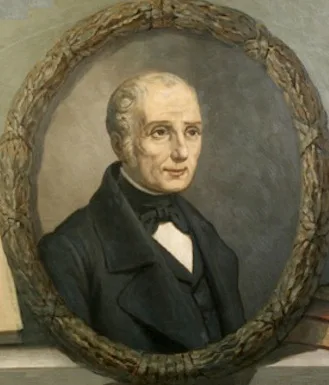
1809 ROLANDO, Luigi (1773 – 1831)
Saggio sopra la vera struttura del cervello dell’uomo e degl’animali e sopra le funzioni del sistema nervoso.
Includes description of “Rolando’s substance”, “tubercle”, and “funiculus”. Rolando described ablation experiments for brain localization similar to Flourens (No. 1391). They were largely unknown until Magendie publis…
GMN 1388 · https://historyofmedicine.com/id/1920
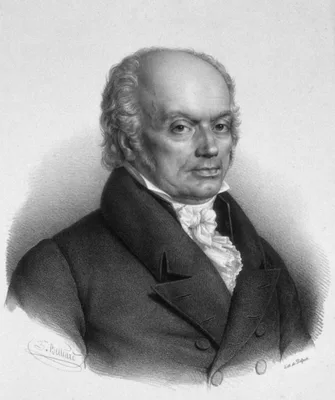
1810 –1819 GALL, Franz Joseph (1758 – 1828); SPURZHEIM, Johann Caspar (1776 – 1832)
Anatomie et physiologie du système nerveux en général, et du cerveau en particulier. 4 vols. and atlas.
Introduced the theory of localization of cerebral function, although in a somewhat fantastic form. This pioneer attempt to map out the cerebral cortex according to function gave rise to the pseudo-science of phrenolog…
GMN 1389 · https://historyofmedicine.com/id/1922
1811 BURNS, Allan (1781 – 1813)
Observations on the surgical anatomy of the head and neck.
Burns was the first to suggest (p. 31) ligature of the innominate artery. His book describes “Burns’s space”, the fascial space at the suprasternal notch. The first recorded case of chloroma (myeloid sarcoma, granuloc…
GMN 3055 · https://historyofmedicine.com/id/832
1811 MEDICO, Giuseppe del
Anatomia per uso de’pittori e scultori.
This anatomy for artists and sculptors contains 38 good copperplates in black and red.
GMN 406 · https://historyofmedicine.com/id/840
1811 –1813 WISTAR, Caspar (1761 – 1818)
A system of anatomy or the use of students of medicine. 2 vols.
The first American textbook of anatomy. The first edition contained nearly 1000 pages of text, but no illustrations. Later editions were expanded, illustrated and updated by William E. Horner, and Joseph Pancoast. Dig…
GMN 11320 · https://historyofmedicine.com/id/13518
1812 SALVAGE, Jean Galbert (1772 – 1813)
Anatomie du gladiateur combattant, applicable aux beaux arts . . . .
Salvage's 21 plates after his own drawings "are based on three casts of bodies dissected to different anatomical layers and set in the pose of the Borghese Gladiator. For these casts he preferred to use the bodies of …
GMN 14179 · https://historyofmedicine.com/id/16494
1813 MITANI, Soshu (Koki) (1774 – 1823)
Kaitai hatsumo [Explanation of Human Anatomy]. 5 vols.
The first Japanese exposition of the whole system of human anatomy, based on original observation. The work includes the records of three dissections performed in Kyoto in 1783, 1798, and 1802. “A Japanese treatise on…
GMN 13214 · https://historyofmedicine.com/id/15477
1815 –1820 MECKEL, Johann Friedrich (1781 – 1833)
Handbuch der menschlichen Anatomie. 4 vols.
GMN 407 · https://historyofmedicine.com/id/851
1816 MASCAGNI, Paolo (1752 – 1815)
Anatomia per uso degli studiosi di scultura e pittura.
Mascagni's anatomy for artists and sculptors, edited for posthumous publication by Mascagni's literary execultor Francesco Antonmarchi. 15 hand-colored engraved plates after drawings by Antonio Serantoni (1780j-1837),…
GMN 7488 · https://historyofmedicine.com/id/9660
1818 RIEMER, Pieter de (1760 – 1831)
Afbeeldingen van de juiste plaatsing der inwendige deelen van het menschelijk ligchaam.
First anatomical illustrations of frozen sections. De Riemer appears to have been the first to freeze tissues in order to permit fine sectioning for the purposes of diagnosing diseased tissue. Digital facsimile from U…
GMN 408 · https://historyofmedicine.com/id/860
1818 –1822 GEOFFROY SAINT-HILAIRE, Étienne (1772 – 1844)
Philosophie anatomique. Tome Premier. Des organes respiratoires sou le rapport de la détermination et de l'identité de leur pièces osseuses. Avec figures de 116 nouvelles preparations d'anatomie. [Tome Deuxième]. Des monstruosités humaines, ouvrage contenant une classification des monstres; la description et la comparaison des principaux genres; une histoire raisonnée des phénomènes de la monstruosité et des faits primitifs qui la produisent; des vues nouvelles touchant la nutrition du foetus et d'autres circonstrances de son développement....Avec figures des détails anatomiques. 2 vols.
The elder Geoffroy Saint-Hilaire is credited with coining the word teratology, and was the first seriously to attempt the experimental production of anomalies, by manipulating chick eggs. See T. Cahn, La vie et l'oeuv…
GMN 534.57 · https://historyofmedicine.com/id/1811
1818 HEAVISIDE, John (1748 – 1828)
Catalogue of the museum of John Heaviside, Esq.: Comprising human anatomy, natural and morbid, comparative anatomy, and natural history.
Digital facsimile from the Internet Archive at this link.
GMN 10614 · https://historyofmedicine.com/id/12807
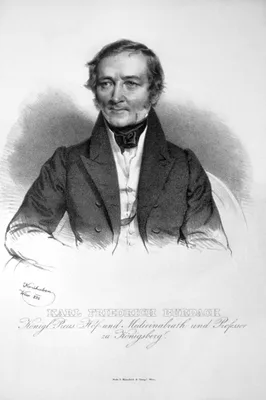
1819 –1826 BURDACH, Karl Friedrich (1776 – 1847)
Vom Baue und Leben des Gehirns. 3 vols.
Includes description of “Burdach’s column”, the posterior column of the spinal cord. This work is also “an unrivalled source of historical information on macroscopical neuroanatomy” (Meyer).
GMN 1358 · https://historyofmedicine.com/id/1661
1820 SĀNĪZĀDE, Mehmed Atāullah Efendi (1771 – 1826)
Hamse-i Şanizade. Miratü'l Ebdan fi Teşrih-i Azaü'l-İnsan [About anatomy]; Usulü't Tabia [Book of physiology]; Miyaru'l-Etibba [Practice of medicine].
This illustrated compendium of anatomy, physiology, and internal medicine was first medical work in Turkish printed by letterpress in the Ottoman Empire. It was also one of the first medical works in Turkish to draw t…
GMN 9696 · https://historyofmedicine.com/id/11883
1820 CHÂNI-ZÂDÉH MEHEMMED ATAOULLA
Mirât ul-abd fi techrīhh azâ il-insân.
The first book on anatomy and medicine printed in Turkish. The title may be translated as Miroir des corps dans l'anatomie des membres de l''homme. The work was primarily derived from European sources and included 56 …
GMN 13116 · https://historyofmedicine.com/id/15369
1821 –1831 CLOQUET, Jules Germain (1790 – 1883)
Anatomie de l’homme, ou descriptions et figures lithographiées de toutes les parties du corps humain. 5 vols.
The first anatomical atlas illustrated by lithography, containing 300 plates in folio format. This was one of the most elaborate of the lithographic “incunabula” produced by Charles Philibert de Lasteyrie, one of the …
GMN 409 · https://historyofmedicine.com/id/864
1821 TIEDEMANN, Friedrich (1781 – 1861)
Icones cerebri simiarum et quorundam mammalium rariorum.
"Although a few more reports were published furing the next hundred years [after Tyson] it was Tiedemann alone who gave a more detailed account, on monkeys, in his... Icones Simiarum.... In monkeys he found the brain …
GMN 9700 · https://historyofmedicine.com/id/11887
1822 –1832 MASCAGNI, Paolo (1752 – 1815)
Anatomia universa… 2 vols.
The largest of all medical books from the standpoint of format. The 44 life size engraved plates are reproduced in double elephant folio size measuring 950 x 635 mm., and include an almost incredible level of detail. …
GMN 409.1 · https://historyofmedicine.com/id/884
1822 ANDERSON, William; DURAND, Asher Brown (1796 – 1886)
System of surgical anatomy. Part first [all published]: On the structure of the groin, pelvis, and perineum. As connected with inguinal and femoral hernia; Tyeing the iliac arteries; and the operation of lithotomy. Illustrated by nine copper-plate engravings
Anderson trained at the Royal College of Surgeons in Edinburgh, emigrated to America in 1820 and, after delivering a series of anatomical lectures in New York under the patronage of Valentine Mott, became affiliated w…
GMN 13314 · https://historyofmedicine.com/id/15580
1822 –1826 LIZARS, John (1794 – 1860); LIZARS, William Home (1788 – 1859)
A system of anatomical plates of the human body. By John Lizars. Text in 8vo in 12 pts., plus folio atlas with engraved title and 101 plates engraved by William Home Lizars.
Lizars's System of anatomical plates was by far his most successful work, going through many editions. The text of the work was originally issued in 12 parts in octavo format, which were then bound together in book fo…
GMN 13508 · https://historyofmedicine.com/id/15783
1823 –1826 MASCAGNI, Paolo (1752 – 1815); ANTOMMARCHI, Francesco (1789 – 1838)
Planches anatomiques du corps humain executes d’après les dimensions naturelles. Double elephant folio atlas and small folio text.
Considering that it is among the rarest of all anatomies, and certainly the largest and probably the most spectacular, it is remarkable that two nearly identical editions of Mascagni’s posthumous life-size anatomy wer…
GMN 7242 · https://historyofmedicine.com/id/9411
1825 GRANVILLE, Augustus Bozzi (1783 – 1872)
An essay on Egyptian mummies; with observations on the art of embalming among the ancient Egyptians.
Granville was the first to perform a dissection of an Egyptian mummy. He reported histological observations of samples from a twenty-seventh dynasty Egyptian mummy that he dissected, and he illustrated dissected views…
GMN 7702 · https://historyofmedicine.com/id/9874
1825 VELPEAU, Alfred Armand Louis Marie (1795 – 1867)
Traité d'anatomie chirurgicale, ou anatomie des régions, considérée dans ses rapports avec la chirurgie; ouvrage orné de quatorze planches représentant les principales régions du corps. 2 vols.
Some copies were issued with the plates hand-colored. Digital facsimile of a black & white copy from Google Books at this link.
GMN 13301 · https://historyofmedicine.com/id/15567
1826 BLEULAND, Jan (1756 – 1838)
Descriptio musei anatomici.
Bleuland's catalogue of his museum of anatomical and pathological specimens. Digital facsimile from Universiteit Utrecht at this link.
GMN 7511 · https://historyofmedicine.com/id/9683
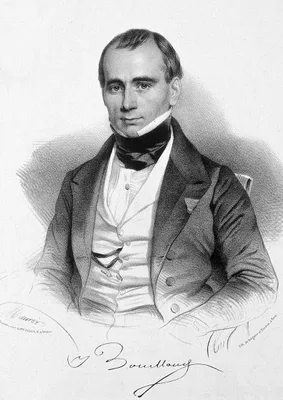
1827 BOUILLAUD, Jean Baptiste (1796 – 1881)
Recherches expérimentales tendant à prouver que le cervelet préside aux actes de la station et de la progression, et non à l’instinct de la propagation.
Bouillaud identified the anterior lobes as the speech center. Refuting Gall, he showed that the brain controls equilibration, station, and progression. Title of second paper varies. His earlier Traité clinique et phys…
GMN 1395 · https://historyofmedicine.com/id/1967
1828 QUAIN, Jones (1796 – 1865)
Elements of descriptive and practical anatomy.
Among the most important of the English textbooks on anatomy. An eleventh edition was published in 1908-29.
GMN 410 · https://historyofmedicine.com/id/908
1828 GREAT BRITAIN. PARLIAMENT
Report from the select committee on anatomy. House of Commons, 22 July 1828.
In the first half of 1828, in response to increasing calls for reform, the British Parliament appointed a committee to "enquire into the manner of obtaining subjects for dissection by schools of Anatomy and the State …
GMN 7096 · https://historyofmedicine.com/id/9263
1828 BLEULAND, Jan (1756 – 1838)
Otium academicum, continens descriptionem speciminum nonnullarum partium corporis humani et animalium subtilioris anatomiae ope in physiologicum usum praeparatarum, aliarumque, quibus morborum organicorum natura illustrator.
Issued in 12 fascicules from 1826 to 1828. Consists of 3 parts concerning anatomy and physiology, comparative anatomy specimens and pathological specimens. Includes 37 plates printed in color; 35 plates in black & whi…
GMN 7512 · https://historyofmedicine.com/id/9684
1828 TUSON, Edward William (1802 – 1865)
Myology, illustrated by plates.
This large folio work contains 8 hand-colored lithographed plates by F. R. Say, each with multiple lift-up flaps. It is probably the largest format anatomical work ever published in English with lift-up flaps, with up…
GMN 10023 · https://historyofmedicine.com/id/12212
1829 ROLANDO, Luigi (1773 – 1831)
Della struttura degli emisferi cerebrali.
GMN 1394 · https://historyofmedicine.com/id/1962
1829 GERDY, Pierre Nicolas (1797 – 1856)
Anatomie des formes extérieures du corps humain appliquée à la peinture, à la sculpture et à la chirurgie.
Digital facsimile from the Internet Archive at this link.
GMN 11162 · https://historyofmedicine.com/id/13359
1829 WARREN, John Collins (1778 – 1856); MASSACHUSETTS MEDICAL SOCIETY
Address to the community, on the necessity of legalizing the study of anatomy
The petition to the Massachusetts legislature to legalize "the procuring of subjects for anatomical dissections" (from George Hayward's printed notice on the verso of the title page). Nine members of the Massachusetts…
GMN 11760 · https://historyofmedicine.com/id/13961
1830 MÜLLER, Johannes Peter (1801 – 1858)
De glandularum secernentium structura penitiori.
Müller’s most important histological work. In it he described the microscopic anatomy of a large series of secreting glands. Müller’s greatest influence was not so much through his own work as through the influence he…
GMN 538 · https://historyofmedicine.com/id/166
1830 SCHLEMM, Friedrich (1795 – 1858)
Arteriarum capitis superficialium icon nova.
Includes description of the “canal of Schlemm”, the circular canal at the junction of the cornea and the sclerotic.
GMN 1456.1 · https://historyofmedicine.com/id/2360
1830 HOME, Sir Everard (1756 – 1832)
A short tract on the formation of tumours, and the peculiarities that are met with in the structure of those that have become cancerous; with their mode of treatment.
Contains the first illustrations of microscopic sections of cancer; however, Home drew no worthwhile conclusion from his microscopic studies. Digital facsimile from the Internet Archive at this link.
GMN 2611 · https://historyofmedicine.com/id/3093
1830 SWAN, Joseph (1791 – 1874)
A demonstration of the nerves of the human body.
The largest and most splendidly produced atlas of neuroanatomy originally published in English, with plates that remain unsurpassed as works of art. Later editions were in reduced format.
GMN 6952 · https://historyofmedicine.com/id/9117
1831 HALL, Marshall (1790 – 1857)
A critical and experimental essay on the circulation of the blood.
Marshall Hall clearly distinguished arterioles and venules from capillaries, and he described arteriovenous shunts.
GMN 768.1 · https://historyofmedicine.com/id/1757
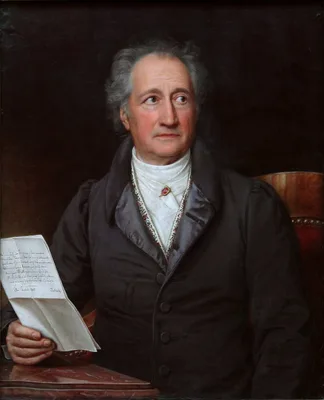
1831 GOETHE, Johann Wolfgang von (1749 – 1832)
Über den Zwischenkiefer des Menschen und der Thiere von Goethe. Jena, 1786. Mit 5 Kupfertafeln.
Goethe believed that in 1784 he demonstrated the presence of the intermaxillary (premaxillary) bone in man, proving an anatomical connection between man and the lower animals, and certifying to Goethe that there is no…
GMN 200 · https://historyofmedicine.com/id/3544
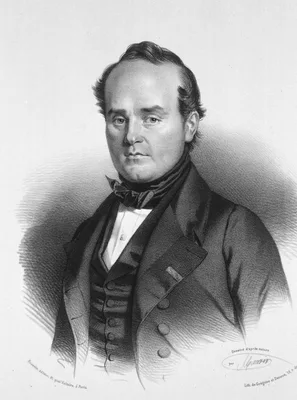
1831 –1854 BOURGERY, Jean Baptiste Marc (1797 – 1849); JACOB, Nicolas-Henri (1782 – 1871)
Traité complet de l'anatomie de l'homme, comprenant la médecine opératoire. 16 vols.
With over 2000 pages of text and 726 lithographed plates (incorporating 3604 individual figures), this work is the most comprehensive, and perhaps the most beautiful anatomical surgical atlas of the 19th century. It w…
GMN 7246 · https://historyofmedicine.com/id/9415
1831 RIEMER, Pieter de (1760 – 1831)
Beredeneerde beschrijving van het Museum Anatomico-Physiologicum van P. de Riemer.
Digital facsimile from Universiteit Utrecht at this link.
GMN 9807 · https://historyofmedicine.com/id/11995
1831 ROYAL COLLEGE OF SURGEONS OF ENGLAND
Anatomy. Copy of a letter from the council of the Royal College of Surgeons in London, to Viscount Melbourne.
On December 5, 1831, the notorious London "resurrection men" John Bishop and Thomas Williams were executed for the murder of an itinerant fourteen-year-old (known only as the "Italian Boy"), whose corpse they had then…
GMN 9995 · https://historyofmedicine.com/id/12184
1831 MASSACHUSETTS. GENERAL COURT. HOUSE OF REPRESENTATIVES
Report of the Select Committee of the House of Representatives ... legalizing the study of anatomy.
This was the first law passed in the United States consigning the bodies of those who died in workhouses, hospitals, and similar institutions, the bodies of whom were "unclaimed," to medical schools for dissection. "S…
GMN 11759 · https://historyofmedicine.com/id/13960
1832 COOPER, Sir Astley Paston (1768 – 1841)
The anatomy of the thymus gland.
Cooper, the most popular surgeon in London during the early part of the 19th century, was connected with both Guy’s and St. Thomas’s Hospitals. Among his best works is his description of the thymus; he described the “…
GMN 1119 · https://historyofmedicine.com/id/1224
1832 NATIONAL POLITICAL UNION
Anatomy. Proceedings at the National Political Union, respecting legislative interference in the study of anatomy, and the supply of bodies for anatomical research.
Digital facsimile from the Internet Archive at this link.
GMN 9993 · https://historyofmedicine.com/id/12182
1833 FLAXMAN, John (1755 – 1826); LANDSEER, Sir Edwin Henry (1802 – 1873)
Anatomical studies of the bones and muscles, for the use of artists. From drawings by the late John Flaxman, Esq. R.A. Engraved by Henry Landseer. With two additional plates, and explanatory notes, by William Robertson.
Digital facsimile from digitalcollections.nypl.org at this link.
GMN 411 · https://historyofmedicine.com/id/912
1833 BELL, Sir Charles (1774 – 1842)
The hand: Its mechanism and vital endowments as evincing design.
Classic work on the anatomy, physiology, bio-mechanics, comparative anatomy, and adaptive importance of the hand. Issued as a volume in a series entitled the "Bridgewater Treatises." The first edition has 288pp. An en…
GMN 411.1 · https://historyofmedicine.com/id/917
1834 DALRYMPLE, John (1804 – 1852)
The anatomy of the human eye.
First English work on ocular anatomy.
GMN 1497 · https://historyofmedicine.com/id/2575
1834 TUSON, Edward William (1802 – 1865)
The anatomy and surgery of inguinal and femoral hernia.
Published in the same large folio format as Tuson's Myology (1828), this was the largest work on hernia ever published with multiple hand-colored. lift-up flats on three plates.
GMN 10024 · https://historyofmedicine.com/id/12213