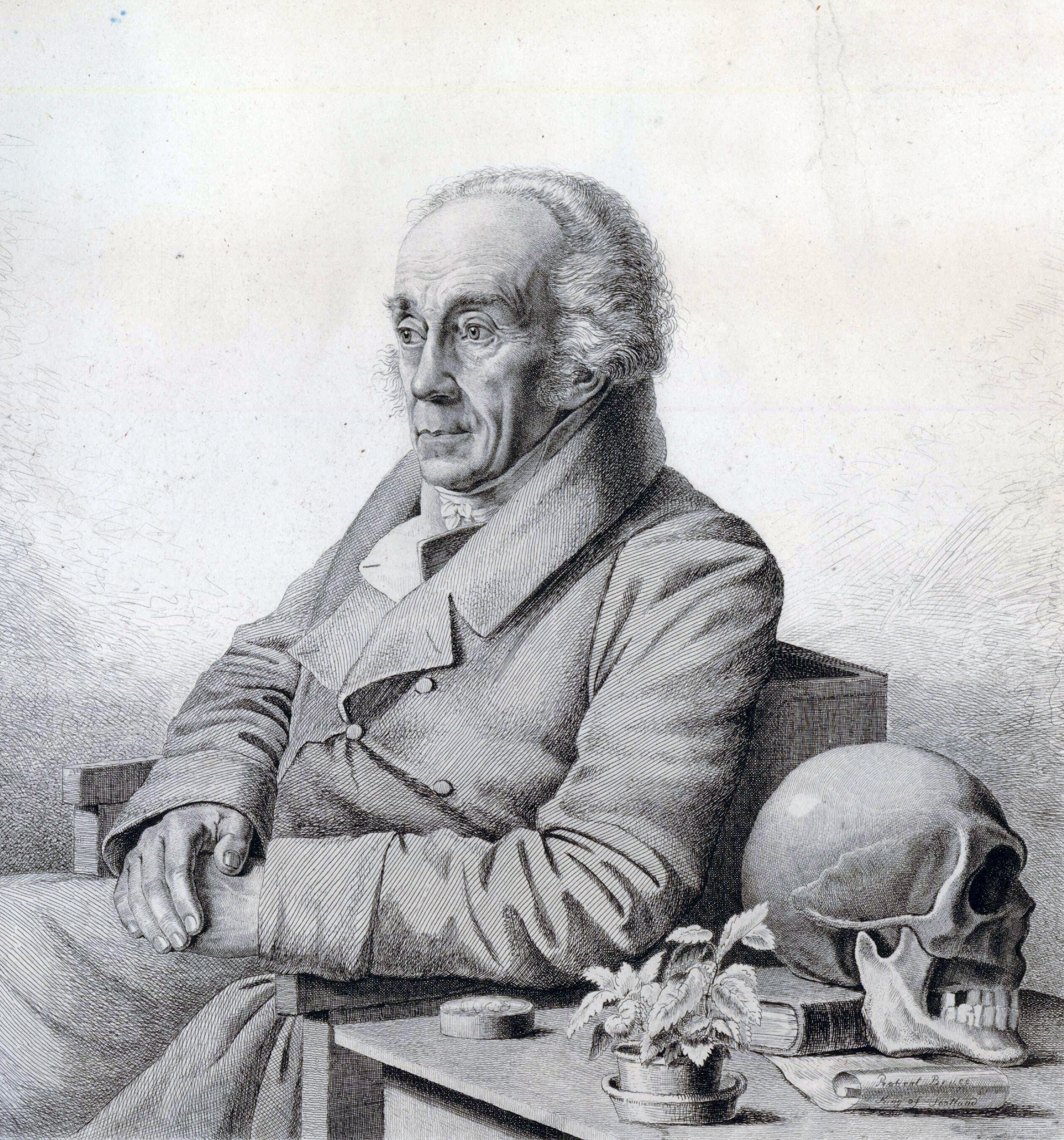
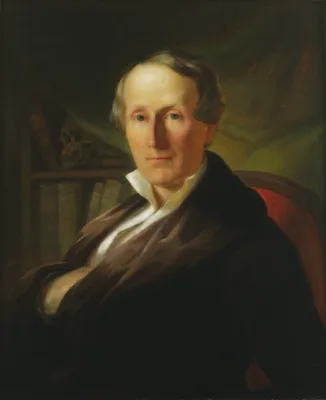
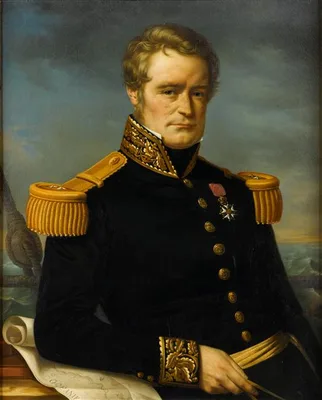
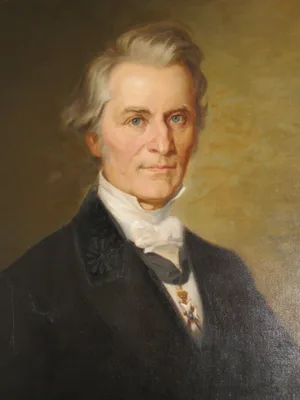
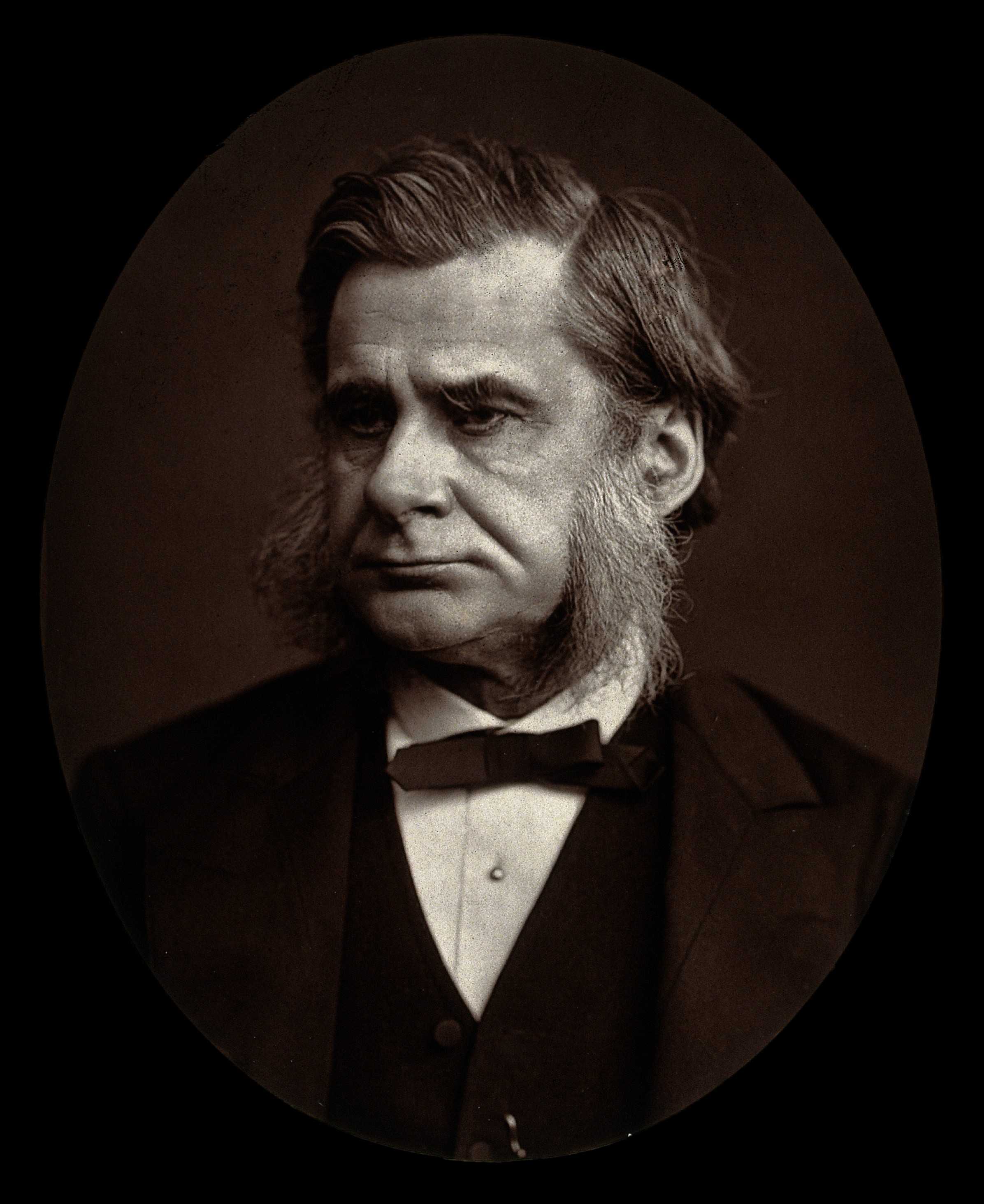
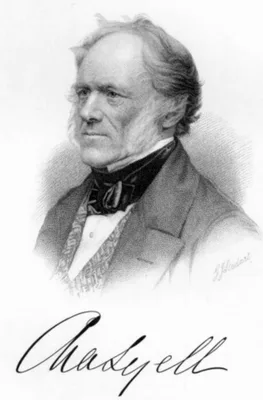
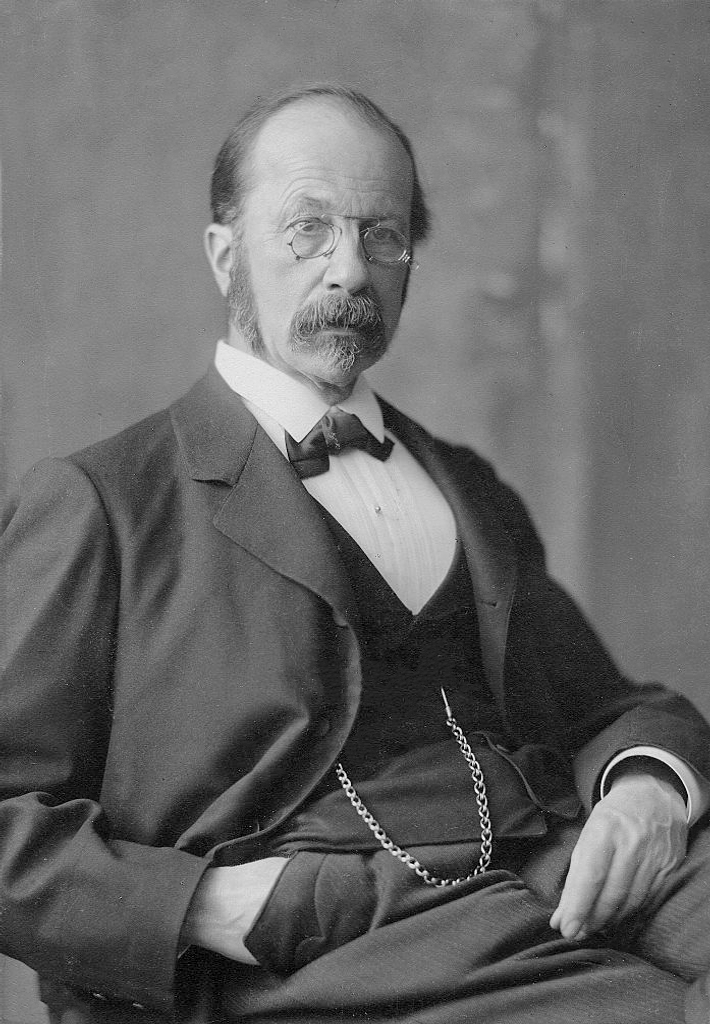
1840 BLUMENBACH, Johann Friedrich (1752 – 1840)
Verzeichniss der vom weil. Obermedicinalrath Blumbach nachgelassen Bucher. . . .
Catalogue of the library of Johann Friedrich Blumenbach, prepared for its sale at auction. Books were listed for sale individually, organized by size. Author and title and place published were listed, as were the numb…
GMN 6946 · https://historyofmedicine.com/id/9111
1840 MORTON, Samuel George (1799 – 1851)
Catalogue of skulls of man, and the inferior animals, in the collection of Samuel George Morton.
Numbers 901-929 in Morton's catalogue are "Thirty Skulls of genuine unmixed NEGROES born in Africa. This interesting series series was collected by Don José Rodriguez Cisnerso, M. D. of Havana, in the island of Cuba, …
GMN 8828 · https://historyofmedicine.com/id/11006
1841 –1854 DUMONT D'URVILLE, Jules Sébastien César (1790 – 1842); DUMOUTIER, Pierre-Marie-Alexandre (1797 – 1873); BLANCHARD, Charles Émile (1819 – 1900); JACQUINOT, Charles Hector (1796 – 1879); HOMBRON, Jacques Bernard (1798 – 1852); PUCHERAN, Jacques (1817 – 1895); GUICHENOT, Antoine Alphonse (1809 – 1876); LUCAS, H.; ROUSSEAU, L.; MONTAGNE, Jean Pierre François Camille (1784 – 1866); DECAISNE, Joseph (1807 – 1882); GRANGE, J.; VINCENDON-DUMOULIN, Clément Adrien (1811 – 1858); COUPVENT-DESBOIS, Aimé Auguste Élie (1814 – 1892)
Voyage au Pôle Sud et dans l'Océanie sur les corvettes l'Astrolabe et la Zélée, exécuté...pendant...1837-1840, sous le commandement de M. J. DUMONT D'URVILLE... publié... sour la direction supérieure de M. [C. H.] Jacquinot, &c. 23 vols. in 22.
In 1836 King Louis-Philippe, enthusiastic for Southern Hemisphere exploration, sponsored Dumont d'Urville's plan for a circumnavigation focusing on the South Seas. D'Urville had already distinguished himself on two Pa…
GMN 11902 · https://historyofmedicine.com/id/14107
1842 RETZIUS, Anders Adolf (1796 – 1860)
Om formen af nordboernes cranier.
Retzius introduced the method of classifying races according to the cranial or cephalic index. A German translation of his paper is available in the Arch. Anat. Physiol. wiss. Med., 1845, 84-129.
GMN 202 · https://historyofmedicine.com/id/3565
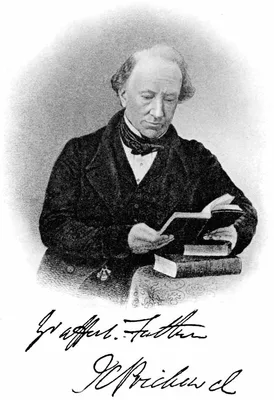
1843 PRICHARD, James Cowles (1786 – 1848)
Six ethnographic maps illustrative of "The natural history of man".
An atlas of six large hand-colored folding maps originally issued to accompany Prichard's popular work, The natural history of man, first issued in 1843. The maps were revised and re-issued in 1851 and 1861.
GMN 7696 · https://historyofmedicine.com/id/9868
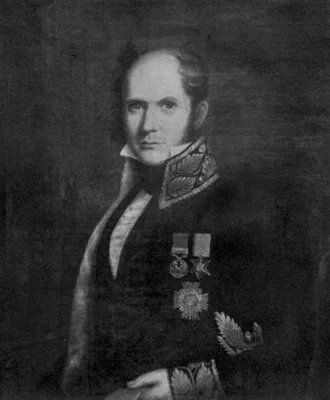
1844 SLEEMAN, Sir William Henry (1788 – 1856)
Rambles and recollections of an Indian official. 2 vols.
Lathyrism, a disease occuring in India, and parts of Africa, was known to Hippocrates. Sleeman, an Indian official and major general who presided over the suppression of Thuggee, had no special knowledge of medicine, …
GMN 2077.1 · https://historyofmedicine.com/id/2548
1844 MORTON, Samuel George (1799 – 1851)
Crania Aegyptiaca: or, observations on Egyptian ethnography, derived from anatomy, history and the monuments. From the Transactions of the American Philosophical Society, Vol. IX.
Morton argued that blacks and whites had been racially distinct since the Egyptian First Dynasty and drew the following conclusions, long since debunked: "Conclusions. "1. The valley of the Nile, both in Egypt and in …
GMN 8832 · https://historyofmedicine.com/id/11010
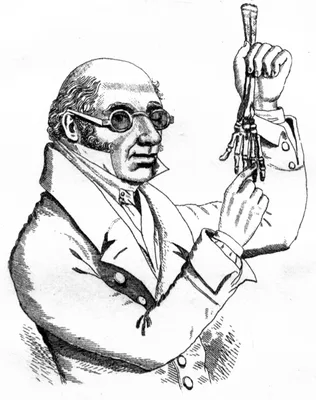
1850 KNOX, Robert (1791 – 1862)
The races of men.
Knox, anatomist at Edinburgh, and notorious for his association with the resurrectionists, made important researches in the field of ethnology while serving as an army surgeon at the Cape of Good Hope.
GMN 161 · https://historyofmedicine.com/id/3218
1853 WALLACE, Alfred Russel (1823 – 1913)
A narrative of travels on the Amazon and Rio Negro, with an account of the native tribes and observations on the climate, geology and natural history of the Amazon Valley.
Digital facsimile from Google Books at this link.
GMN 7445 · https://historyofmedicine.com/id/9617
1854 DOUGLASS, Frederick (1818 – 1895)
The claims of the Negro, ethnologically considered: An address before the literary societies of Western Reserve College, at commencement, July 12, 1854.
Digital facsimile from the Hathi Trust at this link.
GMN 8383 · https://historyofmedicine.com/id/10560
1854 AGASSIZ, Louis Jean Rodolphe (1807 – 1873); MORTON, Samuel George (1799 – 1851); NOTT, Josiah Clark (1804 – 1873); GLIDDON, George Robbins (1809 – 1857); PATTERSON, Henry Stuart (1815 – 1854); USHER, William
Types of mankind: or, ethnological researches based upon the ancient monuments, paintings, sculptures and crania of races, and upon their natural, geographical, philological, and biblical history; illustrated by selections from the indedited papers of Samuel George Morton, and by additional contributions by L. Agassiz, W. Usher, and H. S. Patterson
Nott, a prominent physician and anthropologist in Mobile, Alabama, employed polygenist arguments to justify slavery. This required resoilving the problem of racial hybridity. Polygenists claimed that different races w…
GMN 8827 · https://historyofmedicine.com/id/11005
1855 BERTHERAND, Émile-Louis (1821 – 1890)
Médecine et hygiène des Arabes. Études sur l’exercice de la médecine et de la chirurgie chez les Musulmans de l’Algérie, leurs connaissances en anatomie, histoire naturelle, pharmacie, médecine légale, etc. Leurs conditions climatériques générales, leur pratiques hygiéniques publiques et privées, leurs maladies, leurs traitements les plus usités. Précédées de considérations sur l’état général de la médecine chez les principales nations Mahométanes.
Digital facsimile from the Internet Archive, at this link.
GMN 6503 · https://historyofmedicine.com/id/8048
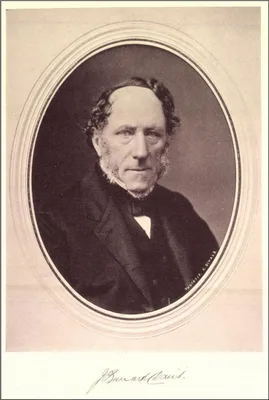
1856 –1865 DAVIS, Joseph Barnard (1801 – 1881); THURNHAM, John (1810 – 1873)
Crania Britannica. Delineations and descriptions of the skulls of the aboriginal and early inhabitants of the British Islands: With notices of their other remains. 6 "Decades" in 2 vols.
Digital facsimile from Google Books at this link.
GMN 203 · https://historyofmedicine.com/id/3571
1856 BARBASTE, Mathieu (1814 – 1889)
De l'homicide et de l'anthropophagie.
One of the earliest works on cannibalism, and probably the first work to combine a discussion of homicide and cannibalism from the medical viewpoint. The author, who was very widely read on these subjects, searched fo…
GMN 11072 · https://historyofmedicine.com/id/13268
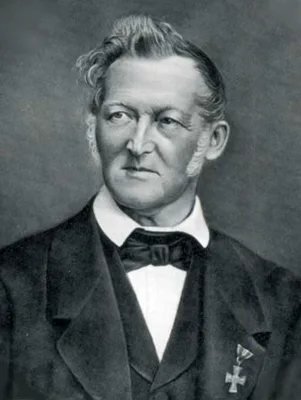
1857 SCHAAFHAUSEN, Hermann (1816 – 1893); FUHLROTT, Johann Carl (1804 – 1877)
[On the Feldhofer Neanderthal.]
The first account of the Neanderthal remains (Neanderthal 1), discovered in 1856 in the the Feldhofer cave of the Neander valley. The remains, which consist of a partial skull, pelvis and assorted long bones, were sen…
GMN 7250 · https://historyofmedicine.com/id/9419
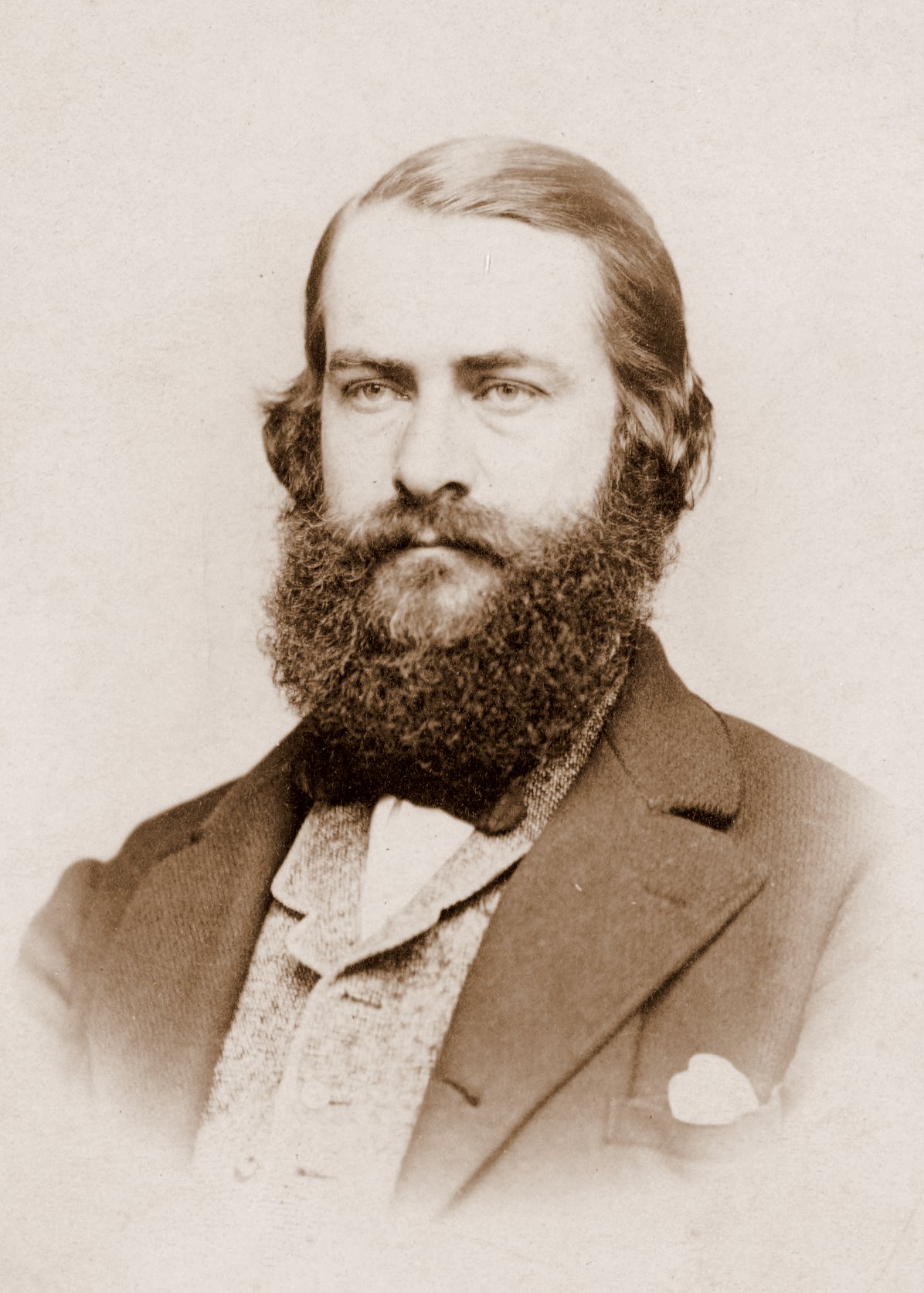
1857 AGASSIZ, Louis Jean Rodolphe (1807 – 1873); LEIDY, Joseph (1823 – 1891); NOTT, Josiah Clark (1804 – 1873); GLIDDON, George Robbins (1809 – 1857); MAURY, Louis Ferdinand Alfred (1817 – 1892); PULSZKY DE CESLFALVA ET LUBÓCZ, Ferenc Aurél (Francis Pulszky) (1814 – 1897); MEIGS, James Aitken (1829 – 1879)
Indigenous races of the earth; or new chapters of ethnological enquiry: Including monographs on special departments of philology, iconography, cranioscopy, palaeontology, pathology, archaeology, comparative geography and natural history: Contributed by Alfred Maury, Francis Pulszky, and J. Aiken Meigs. With contributions from Jos. Leiden and L. Agassiz. Presenting fresh investigations by J. C. Nott and Geo. R. Glidden.
Expensively produced, and sold in both standard and large paper subscriber editions, Nott and Gliddon's work was one of the most egregiously racist publications in the history of physical anthropology. Nott, a promine…
GMN 8825 · https://historyofmedicine.com/id/11003
1857 MORTON, Samuel George (1799 – 1851); MEIGS, James Aitken (1829 – 1879)
Catalogue of human crania, in the collection of the Academy of Natural Sciences of Philadelphia: Based upon the third edition of Dr. Morton's "Catalogue of Skulls," &c.
"Since the death of the late lamented President of the Academy of Natural Sciences,- Dr. Samuel George Morton,- his magnifcent Collection of Human Crania, recently increased by the receipt of 67 skulls from various so…
GMN 8829 · https://historyofmedicine.com/id/11007
1857 WILLIAMSON, George (1818 – 1865)
Observations on the human crania contained in the Museum of the Army Medical Department, Fort Pitt, Chatham.
Reprinted from the Dublin Quarterly Journal of Medical Science, May and August, 1857. Digital facsimile from the Internet Archive at this link.
GMN 10376 · https://historyofmedicine.com/id/12568
1858 SCHAAFHAUSEN, Hermann (1816 – 1893)
Zur Kenntniss der ältesten Rassenschädel.
The first comprehensive description of the Neanderthal skull, following Schaaffhausen’s and Fuhlrott’s preliminary announcements of the discovery in the Verhandlungen des naturhistorischen Vereines der preussischen Rh…
GMN 204 · https://historyofmedicine.com/id/3844
1859 FUHLROTT, Johann Carl (1804 – 1877)
Menschliche Ueberreste aus einer Felsengrotte des Düssenthals. Ein Beitrag zur Frage über die Existenz fossiler Menschen.
Fuhlrott’s first detailed account of the “Neanderthal 1” skeleton discovered in 1856 in the Kleine Feldhofer Grotte, located in the Düssel River gorge in southwestern Germany.
GMN 7251 · https://historyofmedicine.com/id/9420
1861 QUATREFAGES DE BRÉAU, Jean Louis Armand de (1810 – 1892)
Unité de l’espèce humaine.
De Quatrefages was one of the most eminent French anthropologists.
GMN 164 · https://historyofmedicine.com/id/3236
1862 –1866 HUXLEY, Thomas Henry (1825 – 1895)
On the methods and results of ethnology.
Includes Huxley’s classification of mankind by means of the hair. The full text was originally published in the Fortnightly Review, I, 1865, 257-76. The full text was reprinted in Huxley's Critiques and addresses (1873).
GMN 167 · https://historyofmedicine.com/id/3245
1862 STOUT, Arthur B.
Chinese immigration and the physiological causes of the decay of a nation.
Medical justification for racism, racial prejudice, and xenophobia in its purest sense. The author, a physician, also published several works of conventional medicine. Digital facsimile from the Internet Archive at th…
GMN 10440 · https://historyofmedicine.com/id/12633
1863 HUXLEY, Thomas Henry (1825 – 1895)
Evidence as to man’s place in nature.
Huxley showed that in the visible characters man differs less from the higher apes than do the latter from lower members of the same order of primates. He also provided the first thorough and detailed comparative desc…
GMN 165 · https://historyofmedicine.com/id/3242
1863 LYELL, Sir Charles (1797 – 1875)
The geological evidences of the antiquity of man with remarks on theories of the origin of species by variation.
Lyell’s summary discussion of the evidence for human antiquity “introduced a wide readership to the new view and to the facts that supported it, thus laying the synthetic foundation for future work” (Grayson). This wo…
GMN 204.1 · https://historyofmedicine.com/id/3847
1863 BATES, Henry Walter (1825 – 1892)
The naturalist on the river Amazons, a record of adventures, habits of animals, sketches of Brazilian and Indian life, and aspects of nature under the equator, during eleven years of travel. 2 vols.
Digital facsimile from the Internet Archive at this link.
GMN 7442 · https://historyofmedicine.com/id/9614
1864 HIS, Wilhelm Sr. (1831 – 1904); RÜTIMEYER, Ludwig (1825 – 1895)
Crania Helvetica: Sammlung schweizerischer Schädelformen.
Digital facsimile from Google Books at this link.
GMN 203.1 · https://historyofmedicine.com/id/3575
1864 KING, William (1809 – 1886)
The reputed fossil man of the Neanderthal.
King believed that the Feldhofer Neanderthal skull discovered by Fuhrott and Schaafhausen differed significantly from all known ancient and modern human crania. In this paper he proposed the name Homo neanderthalensis…
GMN 14042 · https://historyofmedicine.com/id/16350
1864 WALLACE, Alfred Russel (1823 – 1913)
The origin of human races and the antiquity of man deduced from the theory of “natural selection."
Wallace delivered this paper to the polygenist Anthropological Society of London on 1 March 1864. It represents “the first effort to connect natural selection to the touchy problem of the evolution of human races” (Wa…
GMN 14047 · https://historyofmedicine.com/id/16355
1865 PRUNER, Franz Ignaz [PRUNER-BEY] (1808 – 1882)
De la chevelure comme caractéristique des races humaines.
Pruner-Bey did the first important work on the classification of races according to texture and shape in section of hair. Digital facsimile from Persee.fr at this link.
GMN 168 · https://historyofmedicine.com/id/3249
1865 LUBBOCK, John (1834 – 1913)
Pre-historic times, as illustrated by ancient remains, and the manners and customs of modern savages.
Lubbock introduced the terms "Paleolithic" and "Neolithic". His work addressed not only the topic of human antiquity but also the lives and cultures of people in the Stone Age. In contrast to researchers who focused o…
GMN 7257 · https://historyofmedicine.com/id/9426
1865 POLAK, Jakob Eduard (1818 – 1891)
Persien. Das Land und seine Bewohner. Ethnographische Schilderungen. 2 vols.
In this wide-ranging ethnographic study Polak provided the most authoritative account of his introduction of western medicine into Iran as well as the state of medicine in Iran generally. "Polak (1865, II, pp. 192-348…
GMN 14037 · https://historyofmedicine.com/id/16345
1867 BROCA, Pierre Paul (1824 – 1880)
Cas singulier de trépanation chez le Incas.
Broca attributed a defect in an ancient Peruvian skull to antemortem trepanation; prior to this paleopathologists and paleoanthropologists were unaware that the Incas practiced trepanation.
GMN 7704 · https://historyofmedicine.com/id/9876
1868 HAECKEL, Ernest Heinrich Philipp August (1834 – 1919)
Natürliche Schöpfungsgeschichte. Gemeinverständlich wissenschaftliche Vorträge über die Entwickelungslehre im Allgemeinen und diejenige von Darwin, Goethe und Lamarck im Besonderen, über die Anwendung derselben auf den Ursprung des Menschen . . .
Haeckel constructed the first of the now commonplace ancestral trees, depicting the evolution of life from the simplest organisms through 21 stages of development to modern man – the 22nd and final stage. Within this …
GMN 224 · https://historyofmedicine.com/id/4402
1868 LARTET, Louis (1840 – 1899)
Mémoire sur une sépulture des anciens troglodytes du Périgord.
In March 1868, railway workers clearing away debris from a rock shelter known locally as the Abri de Crô-Magnon (shelter of Crô-Magnon) at Les Eyzies, Dordogne, noticed stone tools and pieces of skeleton imbedded in t…
GMN 7252 · https://historyofmedicine.com/id/9421
1869 BERCHON, Ernest (1825 – 1895)
Histoire médicale du tatouage. Anatomie - Physiologie - Médecine légale - Pathologie - Applications chirurgicales.
Médecin Principal de la Marine, Berchon based his research on the increasing numbers of tattooed sailors in the French navy. In 1861 he observed the transmission of syphilis from one sailor to another, who claimed to …
GMN 13817 · https://historyofmedicine.com/id/16106
1870 QUETELET, Lambert Adolphe Jacques (1796 – 1874)
Anthropométrie, ou mesure des différentes facultés de l’homme.
In his classification of various populations, Quetelet adopted the plan of determining the standard or typical “mean man” as a basis, using stature, weight, or complexion, etc., as a measure in each particular race or…
GMN 171 · https://historyofmedicine.com/id/3258
1871 –1888 BROCA, Pierre Paul (1824 – 1880)
Mémoires d’anthropologie. 5 vols.
Most often remembered for his contributions to neurology, Broca was also among the greatest of the French anthropologists. He originated modern craniometry and in that connection devised many craniometric and craniosc…
GMN 169 · https://historyofmedicine.com/id/3253
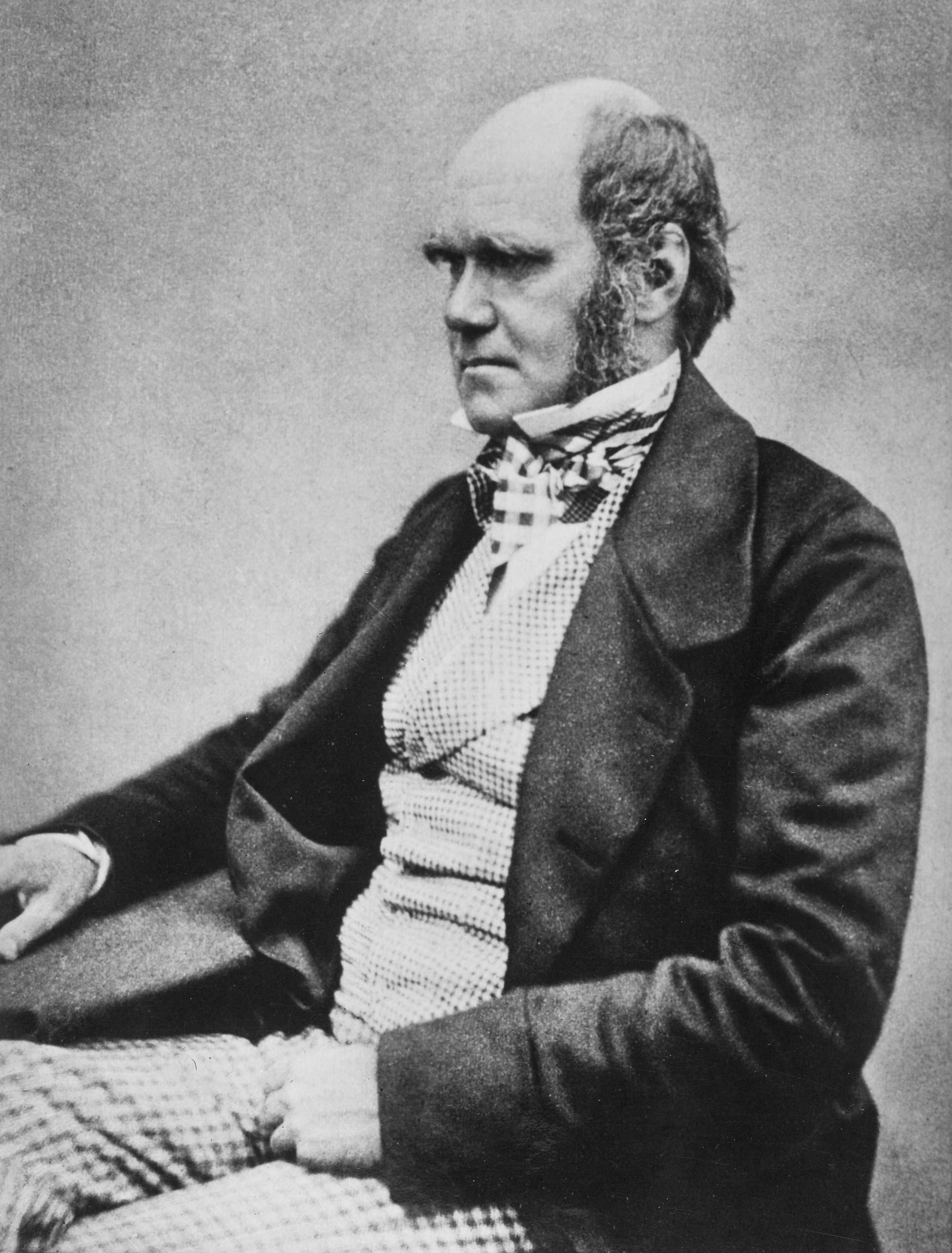
1871 DARWIN, Charles Robert (1809 – 1882)
The descent of man, and selection in relation to sex. 2 vols.
This is really two works. The first demolished the theory that the universe was created for humans while in the second Darwin presented a mass of evidence in support of his earlier hypothesis regarding sexual selectio…
GMN 170 · https://historyofmedicine.com/id/3255
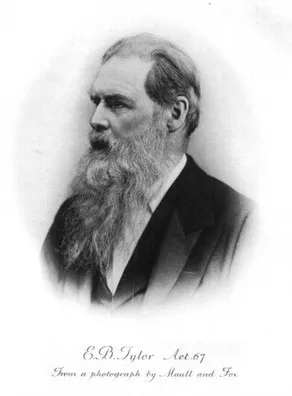
1871 TYLOR, Sir Edward Burnett (1832 – 1917)
Primitive culture: Researches into the development of mythology, philosophy, religion, art, and custom. 2 vols.
The standard work on primitive religion for many years. Tylor approached his subject from the point of view of psychology, exploring the nature of belief in spirits, omens, magic, etc. His work has important ties with…
GMN 172 · https://historyofmedicine.com/id/3280
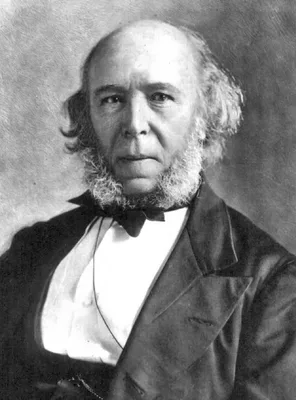
1873 –1881 SPENCER, Herbert (1820 – 1903)
Descriptive sociology: A cyclopaedia of facts; representing the constitution of every type and grade of human society, past and present, stationary and progressive; classified and tabulated for easy comparison and convenient study of the relations of social phenomena. 8 pts.
Spencer founded and edited this series.
GMN 173 · https://historyofmedicine.com/id/3290
1874 PRUNIÈRES, Pierre Marie Barthélémy (1828 – 1893)
Sur les crânes artificiellement perforés à l'époque des dolmens.
Prunières separated postmortem trepanations and rondelles from antemortem operations, and also described tuberculous lesions in Neolithic bones.
GMN 7705 · https://historyofmedicine.com/id/9877
1875 BAXTER, Jedediah Hyde (1837 – 1890)
Statistics, medical and anthropological, of the Provost-Marshal-General's Bureau, derived from records of the examination for military service in the armies of the United States during the late War of the Rebellion, of over a million recruits.... 2 vols.
Digital facsimile from the Internet Archive at this link.
GMN 7818 · https://historyofmedicine.com/id/9990
1876 LOMBROSO, Cesare (1836 – 1909)
L’uomo delinquente, studiato in rapporto alla antropologia, alla medicina legale ed alle discipline carcerarie.
Lombroso inaugurated the doctrine of a “criminal type”. His systematic studies showed that in general the criminal population exhibits a higher percentage of physical, nervous and mental anomalies than the normal popu…
GMN 174 · https://historyofmedicine.com/id/3316
1876 TOPINARD, Paul (1830 – 1912)
L’anthropologie.
Topinard was curator of the museum of the Société d’Anthropologie de Paris. “Topinard’s angle” and “line”, both described in this book, are landmarks employed in anthropometry. English translations 1878 and 1894.
GMN 175 · https://historyofmedicine.com/id/3324
1876 PELIKAN, Evgeny Ventseslavovich (1824 – 1884)
Gerichtlich-medicinische Untersuchungen über das Skopzenthum in Russland nebst historischen Notizen.
Pelikan, professor of forensic medicine in St. Petersburg, published this German version of his treatise on the fanatical Russian Christian sect Skoptsy, known for its practice of castration, clitoridectomies, and mas…
GMN 12995 · https://historyofmedicine.com/id/15244
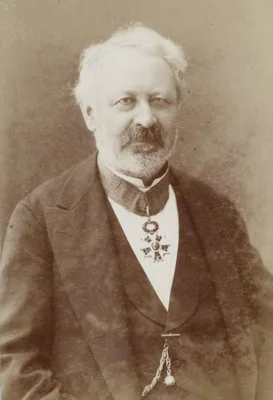
1877 VIRCHOW, Rudolf Ludwig Karl (1821 – 1902)
Beiträge zur physischen Anthropologie der Deutschen. Mit besonderer Berücksichtigung der Friesen.
Virchow made an important survey of the physical characters of the German people. Outside pathology of which he was the Master, Virchow’s greatest scientific interest was anthropology.
GMN 176 · https://historyofmedicine.com/id/3335
1878 RETZIUS, Magnus Gustaf (1842 – 1919)
Finska kranier: Jämte några natur- och literatur-studier, inom andra områden af finsk antropologi.
GMN 203.3 · https://historyofmedicine.com/id/3596
1879 –1891 HUNTER, John (1728 – 1793); FLOWER, William Henry (1831 – 1899); SHARPE, Richard Bowdler (1847 – 1909)
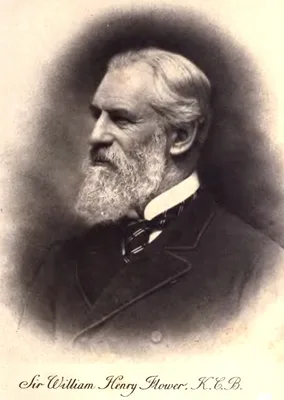
Catalogue of the specimens illustrating the osteology and dentition of vertebrated animals, recent and extinct, contained in the Museum of the Royal College of Surgeons of England. 3 vols.: Part 1. Man: Homo sapiens.... Part II: Class Mammalia, other than man... Part III: Class Aves.
Parts 1 and 2 by Flower; part 3 by Sharpe. Digital facsimile of Part 1 from the Biodiversity Heritage Library at this link, of Part 2 at this link, and Part 3 at this link.
GMN 7591 · https://historyofmedicine.com/id/9763
1881 LE BARON, Jules Prosper (1855 – 1902)
Lésions osseuses de l'homme préhistorique en France et en Algérie.
Le Baron attempted diagnosis and predicted etiology on thousands of bones collected at the Musée Broca, the Musée Dupuytren, and the Musée d'Histoire Naturelle.. Digital facsimile from BnF Gallica at this link.
GMN 7707 · https://historyofmedicine.com/id/9879